Science
Asteroid 2024 YR4 Could Strike Earth, Researchers Say, But the Odds are Small


You may hear about a large asteroid headed toward Earth. Don’t panic.
Just after Christmas Day, astronomers spotted something zipping away from Earth: a rock somewhere between 130 feet and 330 feet long that they named 2024 YR4. Over the next few weeks, they simulated its possible future orbits. They now say, based on the most up-to-date information, that there is a 1.3 percent chance that this asteroid will strike somewhere on Earth on Dec. 22, 2032.
Should this keep you up at night?
“No, absolutely not,” said David Rankin, a comet and asteroid spotter at the University of Arizona.
The object’s current odds of striking Earth may sound scary — and it’s fair to say that an asteroid in this size range has the potential to cause harm. Should it strike a city, the damage would not cause anything close to a mass extinction, but the damage to the city itself would be catastrophic.
But a 1.3 percent chance of a hit is also a 98.7 percent chance of a miss. “It’s not a number you want to ignore, but it’s not a number you need to lose sleep over,” Mr. Rankin said.
And the odds may diminish over time, as astronomers gather new data about the object.
For now, experts say, calm is warranted. The asteroid has been spotted several years ahead of its close shave with Earth — and that’s a good thing.
“The international systems we’re putting in place to find, track and characterize — and, if it comes to it, mitigate the impacts of — hazardous asteroids and comets are working as intended,” said Andy Rivkin, an astronomer and planetary defense researcher at the Johns Hopkins Applied Physics Laboratory in Maryland.
Here’s what you need to know about 2024 YR4.
How was this asteroid discovered?
It was identified by the Asteroid Terrestrial-impact Last Alert System, or ATLAS, four telescopes around the world that hunt near-Earth objects and are funded by NASA. Its telescope in Chile found 2024 YR4 on Dec. 27, just two days after a close approach to Earth.
It’s now speeding away from the planet and getting fainter by the day.
How big is 2024 YR4?
According to the European Space Agency’s Near-Earth Object Coordination Centre, it is between 130 and 330 feet long. This size range is based on the amount of sunlight it is reflecting. Without knowing exactly how reflective 2024 YR4’s surface is, only a range of sizes can be given.
A more accurate estimate could be made using radar, but that won’t be possible until the asteroid makes another close, but perfectly safe, pass by Earth on Dec. 17, 2028.
Is an asteroid of this size a concern?
Yes.
A 130-foot asteroid is comparable to the Tunguska impactor, a meteor that exploded over a remote patch of Siberia in 1908 and decimated an 800-square-mile forest (that’s over twice the size of New York City). A 330-foot asteroid would cause far greater localized damage: A strike on a city would destroy much of it. If the object survives its journey through the atmosphere and strikes the ocean just offshore, the resulting tsunami could devastate nearby coasts.
How do we know there is a chance of an impact in 2032?
The Center for Near-Earth Object Studies, at NASA’s Jet Propulsion Laboratory in California, is home to America’s asteroid and comet cartographers. Using sophisticated software, they track the motion of all known near-Earth objects.
One of their programs, Sentry, assesses the possible orbits of known near-Earth objects and determines whether they stand even a tiny chance of striking Earth within the next century. Those whose impact odds cannot be confidently reduced to (essentially) zero remain on the Sentry Risk List.
“The possibility that 2024 YR4 might impact in 2032 was identified right after discovery,” said Davide Farnocchia, a navigation engineer at the NASA center. But based on just a few observations, the prediction uncertainties for 2032 were initially very large. As the number of observations grew to the hundreds, he said, “the impact probability has gradually increased over the last month and has now surpassed 1 percent, an important threshold.”
The Torino Scale is a tool for communicating how concerned the public and policymakers should be about an asteroid. It ranges from 0 (the likelihood of a potentially deadly collision is effectively zero) to 10 (a collision is certain and may imperil all of human civilization).
2024 YR4 currently sits at 3: a close encounter, less than a decade away, meriting attention by astronomers, one that has a chance of 1 percent or greater of a collision capable of localized destruction.
This is the second-highest rating ever given to an asteroid. Only Apophis, an asteroid once thought to be a threat, briefly reached a 4. But as we learned more about Apophis, we found it had no chance of striking Earth for at least a century.
When can we expect the impact odds to change?
What normally happens is that the impact odds plummet to zero as more observations come in and the asteroid’s orbit is better known with more precision.
The same story will probably unfold with 2024 YR4. “The most likely outcome is that further observations will rule out an impact,” Mr. Rankin said.
2024 YR4 is getting extremely faint as it travels away from Earth, meaning most telescopes are going to struggle to track it. “However, given this is a special case, members of the community have requested (and received) time on some of the larger and more capable facilities,” Dr. Rivkin said. “Those should do OK through April.”
Astronomers will also have an even greater opportunity to refine their predictions during the December 2028 flyby. But until then, it’s possible that an impact in 2032 won’t be entirely ruled out.
“We expect the impact probability to go to zero rather than 100 percent,” Dr. Rivkin said. “But it may take a few years before we get the data to show that.”
Ultimately, should we be worried about 2024 YR4?
No, not at present. It’s very likely to miss the planet in 2032.
And if we find out that it will hit, “we might be able to do something about it,” Mr. Rankin said.
One option, if space agencies had enough time to mount an operation, would be to attempt to alter the asteroid’s path by crashing a spacecraft into it.
If that failed, or wasn’t possible, and governments worked out a precise impact location, they could evacuate people who might be at immediate risk.
Robin George Andrews is the author of “How to Kill an Asteroid,” a book about the science of planetary defense.



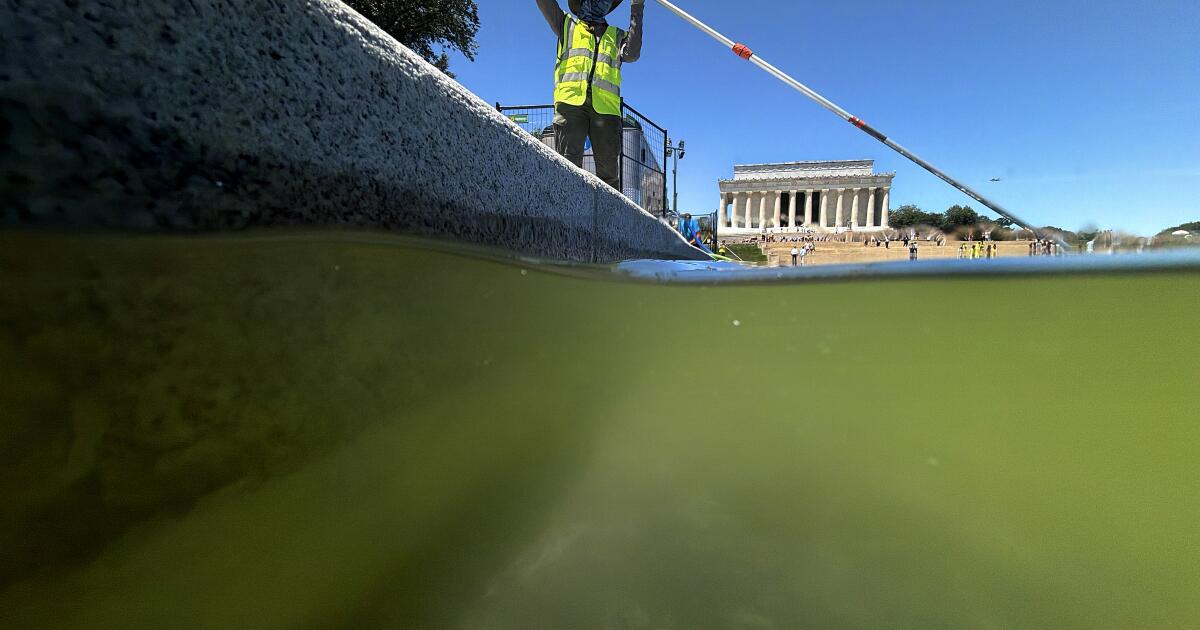
Just days after the Trump administration completed millions of dollars in renovations on the Lincoln Memorial Reflecting Pool to make it American flag-blue, residents and online users noted it had turned a phosphorescent green.
Here’s why:
The calm, still waters of the Reflecting Pool make it an ideal nursery for algae growth. Algae need nitrogen and phosphorus to grow, and the Reflecting Pool is primarily fed by the Potomac River, which gets heavy doses of those nutrients from nearby urban and agricultural lands.
The Potomac also absorbed one of the largest sewage spills in U.S. history earlier this year when a pipe burst five miles upstream of Washington, although that event probably happened too long ago to contribute to the algal bloom today.
Untreated sewage is high in nitrogen and phosphorus. When nutrient levels are high, feasting algae can quickly reproduce.
The Department of the Interior said when the algae first appeared that it was “residual,” from the supply lines to the pool.
Experts also speculate that the darker blue color may be helping the Reflecting Pool absorb more heat. The higher temperatures promote algae growth by allowing their metabolisms to shift into overdrive.
Summer temperatures in D.C. aren’t helping. This week, temperatures are as high as 95 degrees in the city, prompting a heat alert.
The combination probably explains the excessive growth, turning the water surface an opaque green and preventing onlookers from seeing the new blue hue of the concrete basin.
Algae are important and beneficial organisms when the ecosystem is in balance. They’re the base of the aquatic food chain, fed on by herbivores of all shapes and sizes, including shrimp and juvenile fish, which in turn feed organisms higher up the food chain. The single-celled organisms use the power of the sun to produce energy through photosynthesis, similar to houseplants on your balcony.
In an effort combat the algae in the Reflecting Pool, employees of the National Park Service were seen pouring in gallons of hydrogen peroxide, a chemical commonly used in pool maintenance.
The Department of the Interior also is employing a “high-tech nanobubble ozone technology” to destroy the cells of the algae.
Ozone — yes, the same irritant that is in smog — is a gas composed of three oxygen molecules, and the small size of the bubbles allow the most gas transfer into the water, where it can damage algal cells, similar to how it irritates our lungs.
This only treats the symptoms, however. Generally, ozone nanobubbling is effective as a temporary solution for algae blooms. Longer-term fixes would have to address what makes the Reflecting Pool so ideal for algae, such as its depth, darker color and inflow of nitrogen and phosphorus.
In California, ozone nanobubbles also have been used in a project to improve water quality in the Tijuana River. The 120-mile river that runs near the border in northern Mexico and Southern California was the site of a pilot study in 2025. The U.S. section of the International Boundary and Water Commission reported that the nanobubbling reduced “odors and bacteria,” but the project concluded prematurely after a flood swept some of the instrumentation into the river.

A plant extract that’s gaining popularity as a pain cure-all and has been associated with multiple California deaths in its concentrated, synthetic form has been approved for research as a treatment for opioid addiction by the federal government.
Kratom is derived from the leaves of Mitragyna speciosa, a tree native to Southeast Asia, and is commonly made into a powder or pill.
Researchers say people in the U.S. are using kratom to alleviate anxiety, treat chronic pain or as a remedy for the symptoms associated with quitting opioids, due to its ability to bind with opioid receptors in the body. But recently, public health officials have raised alarms about a component of the leaf called 7-hydroxymitragynine, also known as 7-OH, an alkaloid that has the potential for abuse and addiction in high doses.
Last year, the Los Angeles County Public Health Department linked the deaths of six county residents to the use of 7-OH mixed with other substances. The toxicology screens for some of the deceased revealed both kratom and 7-OH, leading to a countywide crackdown of products with either compound because they’re unregulated.
Although there is no scientific consensus on whether kratom has therapeutic value, the Food and Drug Administration has recommended that its potent 7-OH form be classified as a controlled substance. Consumers who use 7-OH as a pain reliever expecting an experience similar to consuming kratom are at risk, said Dr. Mason Turner, president-elect of the California Society of Addiction Medicine.
“I have a couple of patients that I work with who use 7-OH for chronic pain management, not realizing the potential of the medication, and then developed an opioid use disorder,” Turner said. “I think in that case it was very clear they were seeking it for the chronic pain, not to get high, not to have some kind of experience, but really to reduce their pain.”
About two decades ago, Turner said, the healthcare industry started acknowledging the limits and risks of prescribing opioids for chronic pain. Some doctors pulled back on prescriptions, recognizing the potential for abuse.
That led some patients to find alternative solutions, he said.
“Maybe they don’t get a good benefit, or maybe the benefit from some of the other treatments is not as robust as what they got from opioids,” Turner said. “So they seek out some of these illicit products … or they look for kratom or 7-OH to be able to mitigate the pain.”
Turner said he supports further research into kratom and regulation because “it could be worth exploring as a treatment for chronic pain.”
On June 1, the National Institutes of Health announced that researchers from the University of Florida would begin the first phase of clinical trials on kratom to evaluate it as a potential treatment for opioid addiction. The research would be done with the FDA’s approval, according to officials.
“This … is a major step toward expanding treatment options for the millions of Americans struggling with opioid use disorder, which has contributed to historically high overdose mortality rates,” said Dr. Nora Volkow, director of NIH’s National Institute on Drug Abuse, in a statement.
Interest in kratom surged in the last couple of years as users have reported consuming the compound in the form of a pill, powder or tea to treat various ailments. A John Hopkins survey conducted in 2020 reported that 91% of respondents used kratom to treat chronic pain, 67% to treat anxiety, 64% for depression and 41% to treat opioid dependence.
A more recent study by the University of Michigan and Texas State University found that more than 5 million people in the U.S., including more than 100,000 children ages 12 to 17, have used kratom, the compound experts say is growing in popularity with young adults.
In the study, which analyzed data from the National Survey on Drug Use and Health collected between 2021 and 2024, researchers say that despite numerous state-level bans on kratom across the nation, its use is at an all-time high and is increasing.
People between the ages of 21 and 34 said they used kratom at least once and 1% said they used it in the last year. The share of children ages 12 and older who said they had used kratom increased from 1.6% in 2021 to 1.9% in 2024.
The FDA has stated that neither kratom nor 7-OH are approved as drug products, dietary supplements or food additives, but that hasn’t stopped storefronts and companies from selling them as such.
Up until November you could find kratom and 7-OH products in smoke shops and specialty stores in California, but that has stopped.
“Until kratom and its pharmacologically active key ingredients mitragynine and 7-OH are approved for use, they will remain classified as adulterants in drugs, dietary supplements and foods,” the California Department of Public Health told The Times via email.
Kratom “Feel Free Classic” liquid products are displayed at a smoke shop in Los Angeles in 2024 before they were banned.
(Michael Blackshire / Los Angeles Times)
In May, the California Department of Public Health and Atty. Gen. Rob Bonta filed a complaint against Ashlynn Marketing Group Inc., accusing the company of repeatedly flouting the state’s regulations on kratom products.
The filing, submitted in the San Diego County Superior Court, seeks a judge’s order to condemn and destroy the embargoed kratom products, halt ongoing unlawful manufacturing and impose civil penalties.
The California Department of Public Health “is pursuing legal action because Ashlynn’s continued manufacture and sale of these products pose a clear and preventable public‑health risk and violates state and federal law,” said Dr. Erica Pan, the department’s director and state public health officer. “7-OH and kratom-derived products have been associated with addiction, serious health harms, overdose and death.”
The state is alleging its inspectors visited Ashlynn Marketing Group’s facility in Santee in May 2025 and found kratom powders, capsules, liquids and chewable tablets being manufactured and held for sale.
During the visit, inspectors issued an embargo to prohibit the sale and distribution of all kratom-related materials on-site, according to the complaint.
Public health inspectors conducted follow-up visits at the facility in October and April, “collecting evidence at both inspections that indicated embargoed kratom products had been moved, tampered with and repackaged,” according to public health officials.
“In addition, investigators observed evidence of continued manufacturing and distribution of kratom materials,” officials said. “The firm’s owner continues to manufacture kratom products and ships orders weekly.”
To date, the California Department of Public Health has seized more than $5 million worth of kratom and 7-OH products, a spokesperson for the department told The Times.
California and Los Angeles County are considering whether to tighten regulations or ban the compounds altogether.

NEW YORK — Scientists have unearthed communities of marine life — including jellyfish, tubeworms and brittle stars — thriving on a whale graveyard that is millions of years old.
These graveyards form when whale carcasses fall to the sea floor, becoming a sustaining snack for nearby critters. This one, located up to 23,000 feet below the surface of the southeastern Indian Ocean, spans the largest area and is so far the deepest and oldest found.
A whale’s sheer size and the unique chemistry of its bones are the keys to forming these unique underwater neighborhoods, said Xikun Song, a biologist with the Chinese Academy of Sciences’ Institute of Deep-sea Science and Engineering.
“At the same time, the very nature of the deep ocean makes these sites exceptionally difficult for scientists to locate,” Song, who was involved with the latest find, wrote in an email.
Researchers explored the remains during multiple deep-sea submersible trips in 2023, collecting samples and mapping the extent of the necropolis. They found five carcass sites and fossils, including skulls belonging to beaked and baleen whales. The oldest bones date back 5.3 million years.
Feeding and living on the carcasses were myriad creatures, large and small, including sea cucumbers, squat lobsters and saltwater clams. Many of them are likely species that have never been documented, according to findings published Wednesday in the journal Nature.
“The potential number of specimens is just astounding,” said paleontologist Stephen Godfrey with the Calvert Marine Museum in Maryland, who wasn’t involved in the research.
Many factors likely conspired to preserve the bones for millions of years, according to the study authors. They’re dense enough to outlast attacks from bone-eating worms, and located deep enough in the ocean to avoid getting buried by dust and loose particles. The bones also were coated with a light layer of minerals from the surrounding seawater, which may have prevented them from degrading.
Why did so many whales die here? Maybe they were already living in the area and died of natural causes. A few could have perished from exhaustion or illness caused by deep-sea diving. The area’s shape, akin to the letter V, could also have funneled the remains to their resting spot, the authors wrote.
Such discoveries are important because they clue scientists into the vibrant communities that find a way to live even in remote, hard-to-reach environments.
Studying the whale graveyards “is important for understanding how life can adapt to such extreme conditions, not only due to the lack of light and oxygen but also to the incredibly high pressure,” said study co-author and paleontologist Giovanni Bianucci with the University of Pisa in Italy in an email.
Ramakrishnan writes for The Associated Press.
The Associated Press Health and Science Department receives support from the Howard Hughes Medical Institute’s Department of Science Education and the Robert Wood Johnson Foundation.
-

 Miami, FL3 minutes ago
Where to watch San Francisco Giants vs Miami Marlins: TV channel, start time, streaming for June 20
-

 Boston, MA5 minutes ago
Duck parades, outdoor drinking, and Gronk in a kilt. Here’s how Friday’s World Cup festivities unfolded. – The Boston Globe
-

 Denver, CO11 minutes ago
Rockies ride Kyle Freeland’s gem, Braxton Fulford’s double to 4-3 win over Pirates
-

 Seattle, WA18 minutes ago
Suarez’s no-hit try ends on Naylor double in seventh, but Boston still tops Seattle
-

 San Diego, CA21 minutes ago
Neymar expected to return from right calf injury and play for Brazil in World Cup against Scotland
-
 Milwaukee, WI26 minutes ago
Today’s Summerfest schedule and picks: Saturday, June 20
-

 Atlanta, GA33 minutes ago
Atlanta Ballet Returns to the Fox Theatre to Present Cinderella for One Weekend Only This Fall
-

 Minneapolis, MN35 minutes ago
MERAUDER, JUDGE, ARKANGEL and many more announced for Minneapolis’ Snow and Flurry 2026

