Lifestyle
See Angelina Jolie, Nicole Kidman and More at W Magazine’s Golden Globes Party


In the movie “The Substance,” Demi Moore plays an entertainer in her 50s so intent on hanging onto stardom that she signs up to take a potion that will restore her youth, but at a horrific price.
“This is more joyous,” Ms. Moore said of the beautification process leading up to W Magazine’s Golden Globes party held on Saturday evening, the night before the ceremony, in a top floor suite of the Chateau Marmont hotel in West Hollywood.
She was decked out in a black and white polka-dot dress from Nina Ricci as she stood in a tented area where the smell of cigarette smoke was surprisingly strong and household-name celebrities and fellow Globe nominees were everywhere.
The party, co-hosted by W’s Magazine’s editor in chief Sara Moonves, and its editor at large, Lynn Hirschberg, was celebrating the magazine’s annual Best Performances issue, and the walls were covered with enlarged photographs of the featured celebrities.
On one side of the room, the real-life Nicole Kidman stood underneath a giant image of the actor Daniel Craig, nominated for a Globe for his role in the movie “Queer.” On the other side, the real-life Mr. Craig, in a pair of tinted glasses, a black shirt and wide trousers, stood beneath a giant image of Ms. Kidman, who was nominated for her part in the film “Babygirl.”
“Not a bad year,” someone said to Ms. Kidman as she made her way through the crowd with her daughter Sunday Rose Kidman-Urban.
“Not a bad year, indeed,” Ms. Kidman said as a DJ played Blondie’s Rapture while Sabrina Carpenter and Cynthia Erivo shimmied by.
Did Ms. Erivo, who is up for a Globe for the film “Wicked,” have an outfit picked out for the next evening?
Of course she did.
“LV,” she said, by which she meant Louis Vuitton. Nicolas Ghesquière, the artistic director women’s collections at the brand, happened to be out on the terrace, a few yards from Ms. Moore and within spitting distance of Angelina Jolie, a nominee for her performance in the film “Maria,” in which she plays the opera diva Maria Callas.
She seemed to be the only attendee who had a handler stopping photographers from taking pictures of her. But a moratorium on her moratorium took place when Ms. Moonves ambled over to say hello and to politely make it clear that, for history’s sake, the moment would be captured.
Kevin Mazur, a celebrity photographer for Getty Images, raced through the crowd with his camera. The pop stars Charli XCX and Ms. Carpenter huddled together with the model and actress Cara Delevingne.
By 10 p.m., the place was so crowded that the designer Christian Louboutin realized he was going to have to leave the penthouse suite for his room elsewhere in the hotel.
But only for a moment.
“I have to pee!” he said.
“You can get in but you can’t get out,” said Pamela Anderson, who was by the door, hoping to make an exit.
And who could blame her?
After all, Ms. Anderson is featured in the magazine’s issue and is nominated for a Globe for her role in the film “The Last Showgirl.”
Clearly, she had a full weekend ahead of her, although so did the celebrity stylist Law Roach, who seemed to have no interest in leaving.
What was his client Zendaya, nominated for the movie “Challengers,” wearing to the awards the next evening?
“Vuitton,” he said, adding that the jewelry would be Bulgari and that the whole look would be inspired by Joyce Bryant, the glamorous Black singer of the 1940s and ’50s who broke racial barriers in nightclubs.
A few feet away, Eddie Redmayne, nominated for his role in the television series, “The Day of the Jackal,” was hanging out with Andrew Garfield, who is scheduled to present at the Globes.
Colman Domingo, nominated for his part in the movie “Sing Sing,” mingled with Tilda Swinton, nominated for her role in the film “The Room Next Door,” and then headed to the dance floor around the time that DJ Ross One began pumping Shannon’s “Let the Music Play.”
Around 11:30 p.m., the party was still going strong. Waiters paraded around the room with chocolate truffles and French fries.
Kevin Bacon, with his wife, Kyra Sedgwick, was by one of the sofas inside the suite wearing a blazer and a vintage Iron Maiden T-shirt. It was one of only a few outfits not selected by a stylist.
“My son got it for me for Christmas,” he said.



Sydney (Ayo Edebiri) and Carmy (Jeremy Allen White).
FX
hide caption
toggle caption
FX
There has always been a metaphorical parallel between The Bear, the television show, and The Bear, the fictional restaurant on the television show. Even as Carmy (Jeremy Allen White) and Sydney (Ayo Edebiri) transformed the Italian beef joint into the fancy restaurant of their dreams and wished for a Michelin star, there were undoubtedly locals who thought, “This is great and all, and I’m sure the food is good, but … I liked the beef sandwiches.” There’s still a window at The Bear to get them, but the focus is certainly elsewhere.
When it started, The Bear was mostly about the work that took place in the kitchen. The stresses of too many orders, territoriality from Richie (Ebon Moss-Bachrach), the arrival of Sydney, and the tightly wound but undeniably talented Carmy, making everybody both extremely stressed and significantly better. Over time, it shifted and grew, putting together beloved departure episodes like “Fishes” in Season 2, which introduced a boatload of guest stars for a flashback story of a disastrous family dinner before Mikey (Jon Bernthal) died. It spent time with Sydney’s family, it explored the way Tina (Liza Colón-Zayas) and Mikey originally met, it followed Marcus (Lionel Boyce) to Copenhagen, and it went with Richie to work for Andrea (Olivia Colman). All these episodes were excellent. And there was still a kitchen. But the focus seemed to be elsewhere.

At times, the show seemed to have disappeared up its own nose, to the point where you weren’t watching the show The Bear as much as you were watching the phenomenon The Bear. There were too many real-life chef cameos, until it seemed like those chefs were checking a box on a list of “things all the cool kids do.” There were too many other cameos, culminating in a rare miss from the reliably charismatic John Cena. The show placed a lot of narrative weight on Carmy’s love interest, Claire (Molly Gordon) — weight that the underwritten character couldn’t support. But even if every experiment and every diversion had worked, viewers couldn’t be blamed for missing the close focus on the kitchen and the camaraderie — for thinking, “This is all really special, but I do miss the beef sandwiches.”
The fifth and final season dispenses with the departure episodes, and it mostly dispenses with cameos. It all takes place on one day, just after Carmy tells Richie and Sydney that he wants to step back from the restaurant and give it to them and Sugar (Abby Elliott) to run, and it mostly takes place right there at The Bear. Now that the clock set by Jimmy (Oliver Platt) has run out, his money has run out as well, and a series of cascading disasters puts Sydney, Carmy and Richie behind the 8-ball from very early in the day, not least because of the tension hanging over all three of them as they prepare to tell the staff about Carmy’s decision to leave.

Tina (Liza Colón-Zayas).
FX
hide caption
toggle caption
FX
We spend this day mostly with the people we know best: our three leads, along with Sugar, Tina, Marcus, and the rest of the staff — including Luca (Will Poulter), who has stayed around to keep working with Marcus. Jimmy is running around with Computer (Brian Koppelman) and a young apprentice of his named Cheese (Elsie Fisher of Eighth Grade), trying to figure out what to do about his finances since it is Jimmy, and not just the restaurant, who’s out of money.
This day takes a while to get cooking, so to speak. The first three episodes of the season are slow, the first two in particular. It’s pouring rain outside, the lighting is dim, and the score maintains the same contemplative melancholy for a long, long time. For about two and a half episodes, it feels like one extended, low-energy scene.
But after that, there’s a shift in tone as the staff looks to get through service, and through seven episodes (FX did not make the finale available in advance for critics), the rest of the season is terrific. What you see is the core story of The Bear, which is people trying to serve food and overcome problems, but through the lens of everything that has happened over the show’s run: Carmy’s retreat from his obsessiveness, Richie’s expansive (and inspiring) discovery of his gift for hospitality; Sydney’s stepping forward from second-in-command to leader; Tina’s complex relationship with the restaurant and her grief over Mikey; Sugar and Carmy’s relationship with Donna (Jamie Lee Curtis); the arrival of Marcus as a high-end pastry chef.
The question the show asks over the last four episodes is: Given all those digressions and flashbacks, given all those visits with families and others, given everything we know about where all these people have been and what they’ve experienced, how does a high-pressure service — of the same kind we used to see in that first season — look now? How do they behave differently, and how does their behavior read differently? How are they the same people we have always known, but at a different juncture, in a different context? How do their wins mean more to them, and to the audience?
On the one hand, making a season this way, there are fewer surprising grace notes, like “Napkins,” the Tina/Mikey flashback episode in Season 3, or “Worms,” the episode in Season 4 where Sydney hung out with her cousin (Danielle Deadwyler) and her cousin’s kid. The Bear feels less daring and more conventional.
But oh, when they have victories under pressure? Victories, large or small? It is immensely, richly satisfying. There’s also more comedy other than just the goofy Faks family than we’ve had in a few seasons; Richie is perhaps the MVP of the season, and that’s partly because of how often he gets to be really funny. Ayo Edebiri continues to be the show’s best reactor, showing Syd eternally a little bit surprised (dismayed?) that she’s chosen to throw in her lot with these people.
There are a couple of questions yet to answer in the finale, both little plot items and broader character resolutions. Over these seven episodes, though, there is much to cheer.


Lifestyle
John Cena wanted to step away from the WWE ring before he became ‘too slow for the show’ : Wild Card with Rachel Martin

A note from Wild Card host Rachel Martin: First a confession: I have never watched a WWE match in its entirety. Don’t get me wrong, I appreciate the athleticism and the performance, it’s just not my thing. But there is something about John Cena I’ve never been able to shake.
Yes, he is a wrestling legend, but he has built a career as an entertainer that transcends the ring. The first time I saw him lead a cast was the 2019 family movie “Playing with Fire” and his rapport with kids in that film didn’t seem like acting at all. The man contains multitudes!
He co-stars with Eric Andre in his newest film, “Little Brother.”
Xie Miao and Yang Enyou in The Furious.
Norachai Kajchapanont/Lionsgate
hide caption
toggle caption
Norachai Kajchapanont/Lionsgate
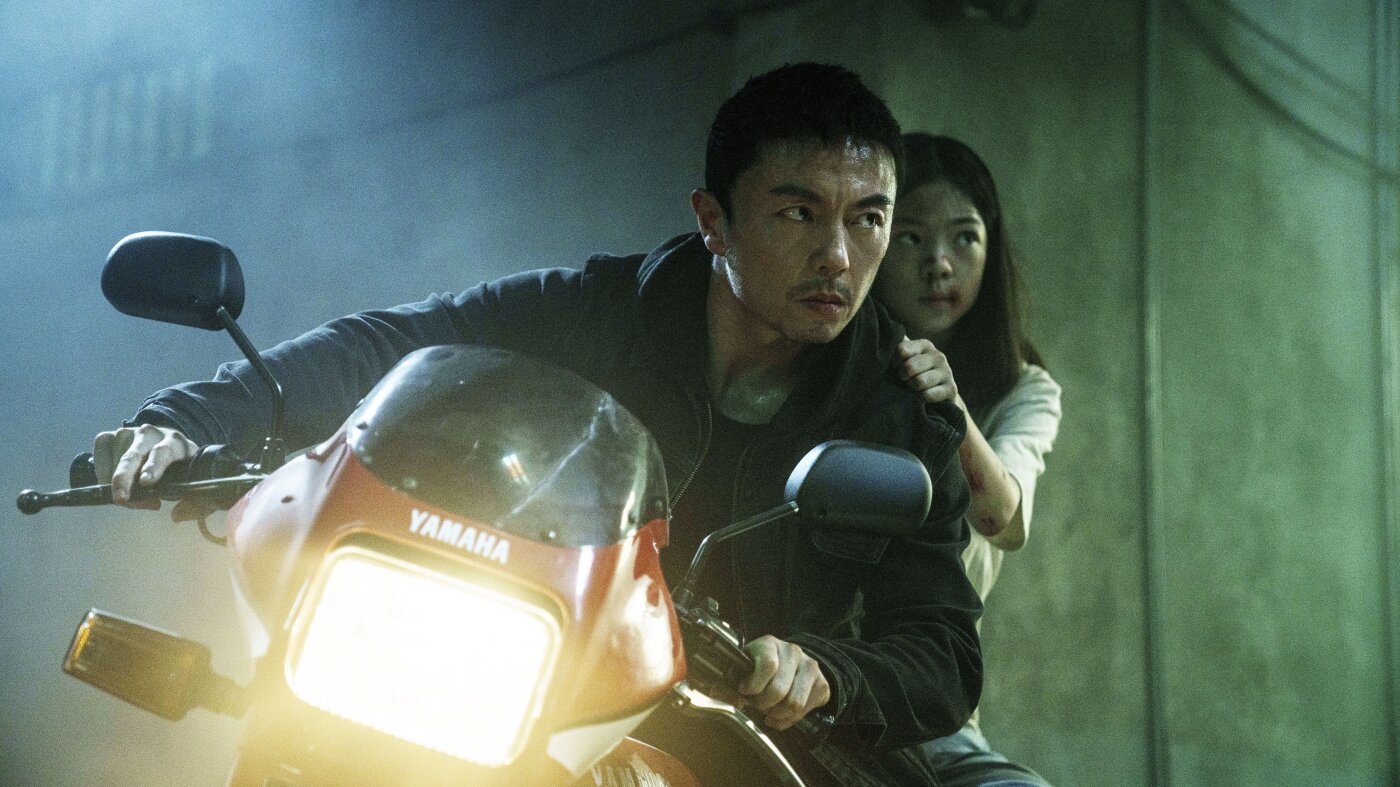
There have been some fantastic movies released this year, and we know you can’t see them all. So we’re recommending four recent movies we missed that you should add to your watchlist: The Furious, Tuner, She’s The He, and Heresy.
If you need a few more fun film recommendations, check out these episodes:
Fun movies you may have missed
Our favorite movies on Tubi
We debate the best movies to watch on an airplane
Connect with Pop Culture Happy Hour:
Letterboxd / Facebook
Our weekly newsletter
Support Pop Culture Happy Hour+
-

 Movie Reviews6 minutes ago
‘Camp’ Review: Friendship Is Magic, and Tragic, in the Eerie World of Avalon Fast
-

 World14 minutes ago
A glowing red room in southern Lebanon shows life after the fighting
-
News21 minutes ago
The Maine Town That Actually Wants a Data Center
-
Lifestyle54 minutes ago
‘The Bear’ is back in the kitchen
-

 Technology1 hour ago
Android 17’s new foldable gaming mode could make flippy phones more fun
-

 World1 hour ago
Shark attack survivor wakes from 10-day coma and shares first words with family at her hospital bedside
-

 Politics1 hour ago
Trump administration pledges $150M in aid, deploys Navy warships after deadly Venezuela earthquakes
-

 Sports1 hour ago
Second Lady Usha Vance joins celebrity-filled crowd for Team USA’s group-stage finale in LA

