Movie Reviews
Thangalaan Movie Review


Thangalaan is a historical drama set in the 18th century, directed by Pa Ranjith. Starring Vikram in the lead role, the film depicts the struggles of a tribal community against colonial forces, set against the backdrop of gold mines. Initially released in theaters on August 15, 2024, it became available on OTT platforms starting December 10, 2024, in Tamil, Telugu, Malayalam, and Kannada.
Plot
The story is set in a tribal village under North Arcot’s jurisdiction during the British era. The village chief, Thangalaan (Vikram), and his wife Jangamma (Parvathi Thiruvothu) lead their community amidst dire challenges. When their land is seized and they are forced into bonded labor, the situation escalates.
Meanwhile, British officer Lord Clement (Daniel Caltagirone) is determined to discover hidden gold mines in the region. Believing the tribal knowledge holds the key, he offers Thangalaan a share of the gold in exchange for his assistance. Motivated by the hope of a better future, Thangalaan agrees but warns Clement about the mystical guard of the mines, Aarathi (Malavika Mohanan), a sorceress.
The narrative unfolds with the tribe’s journey to the gold mines, their struggles, and Thangalaan’s connection with Aarathi. What challenges await them? What is Aarathi’s true role? These questions drive the plot forward.
Analysis
The story of Thangalaan is penned by Tamil Prabha, focusing on a tribal community’s struggle to escape bonded labor and confront mystical forces and venomous snakes. Set against the backdrop of forests and hills, the narrative is rooted in the 18th century during the British colonial era. While the story is set in this period, the presence of British officers on screen is minimal. However, the tribal village setup feels natural and authentic.
Given the forest-centric narrative, the director did not face significant challenges in recreating the atmospheric setting. Particular attention has been paid to costumes and makeup, enhancing the authenticity of the characters. The involvement of established actors like Vikram and Parvathi Thiruvothu adds credibility and interest, making their on-screen presence commendable.
The director maintains a serious tone throughout the film, presenting it as a unique piece of content. However, this approach distances the film from mainstream entertainment, offering limited moments of joy or light-heartedness. Consequently, it feels closer to a documentary in certain parts.
There are a few controversial scenes and dialogues, and the Telugu dubbing fails to align seamlessly with the characters. For instance, the protagonist, a tribal leader, uses formal phrases like “Niksheptamai,” “Sanrakshinchu,” and “Mitrama,” which feel out of place for the character and setting, reducing the impact of the dialogues.
Performances
Vikram shines as Thangalaan, delivering a performance that elevates the film. His physical transformation and intense acting make the character memorable.
Parvathi Thiruvothu impresses in a supportive yet pivotal role as Thangalaan’s wife.
Malavika Mohanan and Daniel Caltagirone bring depth to their respective roles, adding intrigue to the narrative.
Supporting cast members, including Pasupathy, justify their parts well.
Technical Aspects
Cinematography: Kishore Kumar captures the rugged terrains and tribal life beautifully, adding a layer of realism to the narrative.
Music: G.V. Prakash Kumar’s background score is adequate, and the songs blend well with the period setting.
Editing: Selva’s editing maintains a steady pace but struggles to make the lengthy runtime feel engaging.
Strengths
Authentic depiction of tribal life and struggles.
Vikram’s stellar performance.
Strong technical execution, especially in costume design and cinematography.
Drawbacks
Slow-paced narrative with limited entertainment value.
Overly serious tone, making it feel more like a documentary.
Lack of emotional depth in certain scenes.
Verdict
Thangalaan is not your typical commercial entertainer. It is a serious, visually compelling drama that highlights the struggles of a tribal community during the colonial era. While it may not have performed well in theaters, its unique content and historical backdrop may find a niche audience on OTT platforms. For viewers seeking a raw, unglamorous cinematic experience rooted in history, Thangalaan offers a distinct take.



Movie: Maa Inti Bangaaram
Rating: 2.5/5
Banner: Tralala Moving Pictures
Cast: Samantha, Gulshan Devaiah, Srinivas Gavireddy, Manjusha Mukkavilli, Diganth, Sreemukhi, Gautami, Anand, Lakshmi, Rachana, and others
Music Director: Santhosh Narayanan
DOP: Om Prakash
Editor: Dharmendra Kakarala
Producers: Raj Nidimoru, Samantha, Himank Reddy Duvvuru
Written by: Raj Nidimoru, Vasanth Maringanti
Directed by: BV Nandini Reddy
Release Date: June 19, 2026
Nearly three years after her last lead-role outing, Samantha returns to the big screen with “Maa Inti Bangaaram.” The film marks an important milestone in her career, serving as a comeback vehicle and also her first collaboration with husband Raj Nidimoru, who has co-produced the film and penned the story for this family action drama.
The big question is: has Samantha delivered a strong comeback with “Maa Inti Bangaaram”? Let’s find out.
Story
Swarna (Samantha) arrives with her husband at her in-laws’ village home to attend a family wedding. It is their first visit after marriage, as her husband had married her against his parents’ wishes.
Hoping to win over the family, Swarna settles into the household and tries to impress everyone, even seeking help from a friend for her cooking.
Just when she begins to feel accepted, trouble arrives. A group of men starts searching for her, determined to find out whether she is really Swarna or someone named Jhansi.
As the story unfolds, her hidden past comes to light. Years ago, she escaped from her mentor Karuna (Gulshan Devaiah) after discovering his true intentions. Since then, she has been living under different identities before eventually finding love and marrying her husband. Now, Karuna, who has completed a prison sentence, is back and determined to reclaim her at any cost.
Can Swarna protect herself and her newfound family from Karuna?
Performances
Samantha slips comfortably into the role. Despite returning to a lead role after nearly three years and overcoming health challenges, she retains her star presence and carries much of the film on her shoulders. While this may not rank among her best, she convincingly handles both the emotional and action-heavy portions, particularly in the second half.
Diganth plays her husband and delivers a decent performance, though the role offers him little scope. Gulshan Devaiah initially makes an impact as the antagonist, but the character gradually becomes routine, limiting his effectiveness.
Manjusha Mukkavilli gets a well-written supporting role and leaves a positive impression. Sreemukhi is adequate in her brief part.
Vennela Kishore appears in a cameo, while the rest of the cast performs within the requirements of their conventional roles.
Technical Aspects
Santosh Narayanan’s background score works reasonably well and elevates several scenes, especially in the latter half.
Cinematography is functional without offering any standout visuals. Production design serves the narrative adequately.
The film’s biggest technical shortcomings lie in its writing and editing. The dialogues rarely stand out, and the screenplay unfolds without enough surprises or dramatic highs.
A tighter edit and shorter runtime could have significantly improved the film’s overall impact.
Highlights
Samantha’s screen presence and performance
A few engaging moments in both halves
Some clever references
Drawbacks
Predictable screenplay
Unconvincing backstory
Lack of strong dramatic moments
Analysis
“Maa Inti Bangaram” is neither the emotional family drama audiences typically associate with Nandini Reddy nor the stylish action-driven narrative one expects from Raj Nidimoru’s storytelling sensibilities. Instead, it attempts to blend family drama with action, placing Samantha in a role usually reserved for a male commercial hero.
The basic premise feels familiar. Like many mainstream action films, it revolves around a protagonist whose troubled past threatens the peaceful life they have built. The difference here is that Samantha occupies the center of that narrative, taking on responsibilities and action beats traditionally assigned to male stars.
The first half unfolds largely as a family drama. Nandini Reddy focuses on the dynamics between the new daughter-in-law and her in-laws, presenting a series of domestic situations and emotional tests. The portions involving Samantha seeking help from her friend to impress the family with her cooking generate some humor and provide the film with a few enjoyable moments. Apart from these stretches, however, the narrative progresses at a measured pace.
The film gradually reveals why Jhansi became Swarna and why Karuna remains obsessed with finding her. While the backstory involving Naxalism provides the necessary motivation for the conflict, it never feels entirely convincing or emotionally compelling.
Once the central conflict is fully revealed by the interval, the film shifts gears. The second half becomes a straightforward battle between Swarna and the force threatening her family. While this creates a clear objective, it also reduces the scope for surprises.
A couple of scenes work reasonably well, and the climax action sequence inside the house provides some excitement, but the overall narrative goes on expected manner.
The film deserves credit for attempting something different within the commercial framework. Giving a female protagonist the kind of role usually written for male stars is a refreshing idea. Unfortunately, the execution lacks the emotional depth and dramatic strength needed to make the concept truly resonate.
Even the husband’s character feels somewhat artificial, functioning largely as a gender-reversed version of the supportive spouse often seen in hero-centric films.
Interestingly, some of the film’s most enjoyable moments come not from the action but from its lighter touches. References to older films, the creative use of the song “Mutyamantha Muddu,” and Samantha’s largely saree-clad appearance throughout the film, including during action sequences, add a distinctive flavor.
Ultimately, “Maa Inti Bangaram” attempts to merge family drama with female-led action. However, predictable storytelling and underdeveloped drama prevent it from reaching its full potential. The film remains watchable largely because of Samantha’s star appeal, but it never evolves into the engaging and emotionally satisfying experience it aspires to be. It makes an okay watch.
Bottomline: Not Pure Gold
Movie Reviews
Movie Review: ‘Leviticus’ makes a demon out of desire in an auspicious debut for Adrian Chiarella – Sentinel Colorado

What if the object of your desire was also the thing that’s trying to kill you? Not slowly irritating you to death for leaving the toilet seat up again. We mean actively trying to strangle you.
That’s the intriguing premise behind the horror-satire “Leviticus,” an auspicious feature film debut for writer-director Adrian Chiarella that’s both deeply scary and a queer revolt.
Named for the book of the Old Testament often used to justify homophobia, the movie explores the burgeoning relationship between two young men that is shattered when so-called “conversion therapy” — a scientifically discredited practice — unleashes a demon that stalks them. Some have called the movie “It Follows” meets “Heated Rivalry,” but that’s a disservice to Chiarella’s ambition.
The film centers on Naim (Joe Bird, the breakout star of A24’s “Talk to Me” )and Ryan (newcomer Stacy Clausen), who we watch fitfully, awkwardly fall for each other, slowly exploring their sexuality and stutter-stepping into their true selves. Wrestling turns to flirtation, which becomes longing and tenderness.
That doesn’t go over well in the small Australian town where the movie is set, a blue-collar community with belching smoke stacks, low-slung houses, barking dogs and a Christian pastor — with a “deliverance healer” — who prefers his flock much more heterosexual.
Chiarella is leaning not only into the notion that sexual desire makes you vulnerable, but also the harm that repressing who you are can do. In this case, the demon takes the form of your crush. It has weaponized lust.
“You shouldn’t be near me. I shouldn’t be near you, either,” one of the would-be lovers says to the other.
Chiarella starts his movie with a nod to Alfred Hitchcock — a shower scene worthy of “Psycho” — and nods to others in the genre, like “A Nightmare on Elm Street.” He can be a bit clunky with his images — a frog being eaten by a snake — but his pacing is flawless and his ramping up of terror is sure. “Leviticus” might be an indie film, but it’s got the blessing of Frank Ocean, who gave the filmmakers the right to use his song “Self Control.”
The monsters — in addition to the nasty one only the boys can see, of course — are the adults: the parents and caregivers and friends who turn on vulnerable, scared young men and make them scared of each other. Mom might kindly take some disliked olives off her son’s pizza, but she won’t accept him kissing another boy.
Chiarella’s pro-queer filmmaking extends to his ability to perfectly capture the fumbling ecstasy of new love, the fierce longing of stolen kisses and how scary it is to submit to a new partner. Kudos to Bird and Clausen for capturing that universal feeling.
With his film, Chiarella forms a triumvirate of young filmmakers making horror brilliant in summer 2026, alongside Curry Barker with “Obsession” and Kane Parsons’ “Backrooms.” The future of movies is in good hands.
“Leviticus,” a Neon release that’s in theaters Friday, is rated R by the Motion Picture Association for “bloody violent content, language, some sexual content and teen drug use.” Running time: 88 minutes. Three and a half stars out of four.
Related
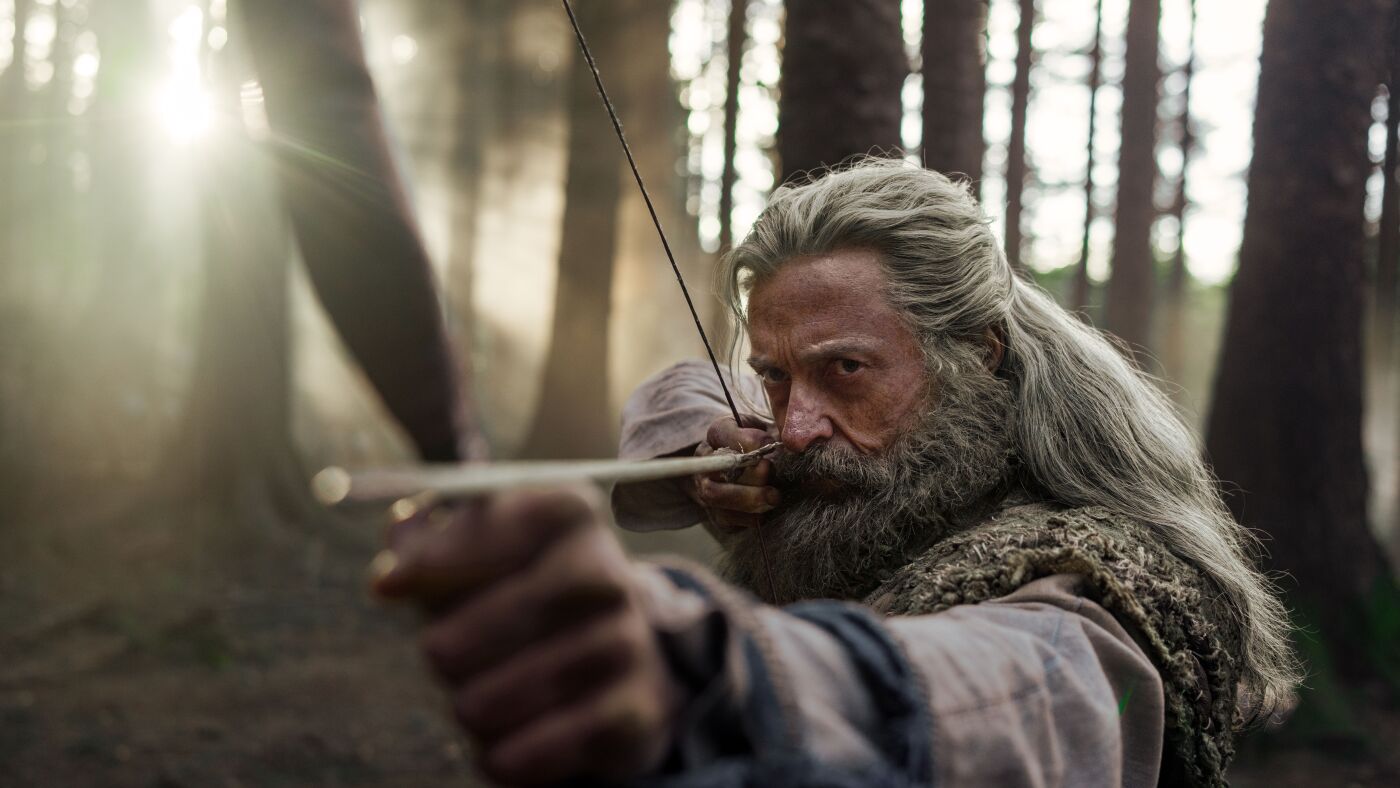
Hugh Jackman as Robin Hood.
A24
hide caption
toggle caption
A24
Gunmetal gray sky, barren muddy terrain, a half-starved child begging a wizened title character for a scrap of food moments before he slashes her throat. It’s hardly the opening you imagine for a film about a folk hero — especially one who robs the rich and gives to the poor. But then, The Death of Robin Hood is the brainchild of Michael Sarnoski (Pig, A Quiet Place: Day One), so maybe leave expectations in the lobby.
Sarnoski gives us Hugh Jackman’s battle-scarred, gray-bearded Robin as a tormented wretch, not the brash strapping outlaw of legend — alone, wracked by regret over the countless lives he’s ended or ruined. When we meet Robin in 1247 A.D., he seems pursued as much by his own guilt as by avenging relatives of the innocents he murdered in younger days (say, that half-starved but surreptitiously knife-clutching little girl).
So he tries to beg off when Little John (Bill Skarsgård, unrecognizable) approaches him with the promise of one more “adventure” — to rescue the wife John’s claimed after killing her husband, from the neighbors who then rescued her from John. Robin notes correctly that she’s not really John’s wife, yet he reluctantly brings his quiver, and an arm that can still shoot an arrow through a skull and out an eye socket at 50 paces.


He proves formidable, but not immortal. This “adventure” leaves him gravely wounded, dragged across forbidding terrain to a remote, cliff-top convent, where a prioress (Jodie Comer) with a curative touch and a marginally gentler way with a knife will attempt to bleed him back to health.
Sarnoski’s indie-realist approach to blood-letting — whether Pitt-ishly clinical, or Game of Thrones-esque in its brutality — is never less than arresting, and Jackman’s certainly up for the gore, extinguishing his torch in one opponent’s mouth and burying a hatchet in another’s back.
But it’s in the film’s later stages, where the character grapples with what his youthful righting of wrongs has cost both him and bystanders, that the actor and this medieval thriller find their emotional footing. Sarnoski is exploring the way we edit and augment the tales we tell about ourselves as we pass through the world, noting that hedges and embellishments will ultimately be laid bare.
If we live long enough, we’ll face a reckoning, a lesson Jackman’s delivered before as Logan, another troubled figure of legend. This film’s latter moments have a similarly eulogistic quality, augmented by Comer’s affecting turn as an accepting if anguished guardian at the hour when life ends, and myth takes flight.
-

 World9 minutes ago
On the South Lawn, a UFC fighter’s victory frames an unusual White House scene
-

 Politics21 minutes ago
Video: Demining the Strait of Hormuz
-

 Health36 minutes ago
Video: Wii Bowling Takes Over Tulsa Retirement Homes
-
Lifestyle51 minutes ago
This Pride month, teen flicks are recasting familiar tropes with a queer sensibility
-

 Technology59 minutes ago
NASA selects Eric Schmidt’s rocket company for a 2028 mission to Mars
-

 World1 hour ago
British Prime Minister Keir Starmer faces potential leadership challenge from newly-elected Andy Burnham
-

 Politics1 hour ago
Reporter’s Notebook: How Trump’s surprise move on DNI confirmation upended key Senate deal on FISA
-

 Health1 hour ago
Weight-loss drugs linked to ‘Ozempic ears’ and other cosmetic complaints, surgeons say


