Washington, D.C
String of morning robberies across DC leaves residents shaken


DC police searching for suspects in string robberies
D.C. police are asking the public for help tracking down those suspects responsible for the string of early morning robberies in the nation’s capital.
WASHINGTON – D.C. police are asking the public for help tracking down those suspects responsible for the string of early morning robberies in the nation’s capital.
The seven attacks happened in just under two hours on Monday morning. FOX 5’s Sierra Fox spoke with some of the victims by phone who say they’re still processing those terrifying encounters.
The thieves got away with eight iPhones, an iPad a Macbook, several wallets with hundreds of dollars worth of cash inside and even credit cards.
MORE FROM FOX 5: Rash of retail break-ins across DC causes concern amid holiday shopping season
“Definitely very, very concerning. I hate to hear that in the city in which I live for sure,” one DC resident said.
The first robbery happened just after 6 a.m. on 10th Street in Northeast. In that instance, three suspects threatened a family.
The next attempt at 3rd and K Street in Northeast happened at 6:30 a.m. The robbery was unsuccessful because the victim fought back.
Just 25 minutes later at 6:55 a.m., one of the suspects held up someone at gunpoint and demanded their personal belongings on East Capitol Street in Northeast.
At 7 a.m., the thieves approached a victim on Burke Street in Southeast and did the same thing.
Thirty minutes later, the suspects assaulted a man and took off with his technology and money. Then at 7:46 a.m., a person was robbed at gunpoint on Constitution Avenue in Northeast.
MORE FROM FOX 5: Woman shaken, confused after man randomly punches her in Northeast DC
“When you get any density of people together, I think it’s going to be difficult. People are going to have difficulties and try to take advantage of each other,” another D.C. resident said.
Investigators believe the suspects used this white getaway vehicle caught on surveillance cameras. In addition, they say these individuals allegedly used the stolen credit cards from a robbery to purchase items.
The victims tell FOX 5 that the persons of interest appeared to be teenagers.
One person who lives nearby the incidents said, “I would definitely discourage any young people from doing that kind of activity. I don’t think it’s helpful for their futures or helpful for people now. If you’re doing it for selfish reasons, it’s not going to be good for you, it’s not going to look good for you and it’s harming others and that’s really never a good thing.”
D.C. police are offering a $10,000 reward for any information that leads to an arrest. If you recognize the suspects, contact authorities right away.



Washington, D.C
Vans Warped Tour Day One at RFK Festival Grounds in Washington, DC – Loud Hailer Magazine

Despite the hottest temperatures of the season, fans packed Washington, D.C.’s RFK Festival Grounds for an unforgettable kickoff to Vans Warped Tour 2026.
The two-day event captured everything that has made Warped Tour a cultural institution for three decades: a diverse lineup spanning punk, emo, hardcore, ska, alternative rock, and everything in between—from the Scumdogs of the Universe, GWAR, to the Juggalos of Insane Clown Posse. It was an atmosphere built on community, discovery, and a passionate fanbase willing to brave the elements for the music they love. From legendary acts that helped define generations to emerging artists making their Warped Tour debut, the festival delivered nonstop energy across its stages while continuing its tradition of bringing together music, skate culture, charitable organizations, and fans from all walks of life.
Doors opened at 11 AM, and fans immediately sprinted toward the coveted red inflatable schedule board to find out who was playing, where, and when. It’s one of the few mysteries left in modern entertainment. There are no official leaks, no advance schedules posted online—just fans piecing together clues from tour dates and social media posts in hopes of predicting who will be playing each day. The diehard Warped Tour faithful love the tradition. For newer fans raised on instant information, it takes some getting used to, but once they experience the excitement of discovering the lineup in real time, many quickly understand why it’s such a beloved part of the festival.
One theme echoed throughout the festival grounds all day long: it’s a dream to be here. Band after band spoke about growing up attending Warped Tour or dreaming of one day performing on its stages. For many artists, that dream became a reality this weekend. At the same time, longtime fans who grew up with Warped Tour were sharing the experience with a new generation, bringing their children and younger family members to experience the culture, community, and music that shaped so many summers. Perhaps somewhere in the crowd was the next generation of musicians, discovering the same dream that inspired so many of the artists performing this weekend.
One of the first bands we caught after arriving at Warped Tour was Girlfriends on the main stage, and they immediately brought a burst of energy to the festival grounds. Their set balanced infectious pop-punk anthems with emotionally charged lyrics, as fans sang along to favorites like “MOUTH LIKE A LOADED GUN,” “GOOD LUCK,” and “Where Were You.” The duo kept the momentum rolling with “Jessica” before treating the crowd to a nostalgic cover of Blink-182’s “What’s My Age Again?” that had fans of all ages joining in. Closing out with “Tattoo” and “California,” Girlfriends delivered the kind of upbeat, feel-good performance that perfectly captured the spirit of Warped Tour and set the tone for the rest of the day on the festival’s main stage.
Next up was The Wrecks, who brought an infectious burst of energy to the stage that perfectly matched the spirit of Warped Tour. The band had fans moving from the start with “Freaking Out,” before delivering a spirited cover of Jet’s “Are You Gonna Be My Girl.” Crowd favorites, including “Out of Style,” “James Dean,” and “Favorite Liar,” turned the set into one massive sing-along, showcasing the band’s knack for blending catchy hooks with high-energy performances. Their charismatic stage presence and connection with the audience made them one of the day’s standout acts.
The Home Team showcased the melodic sound and polished musicianship that have helped them build a growing fanbase. Highlights included fan favorites “Hell,” “Brag,” “Slow Bloom,” and “Somebody Else’s Face,” with the crowd responding strongly throughout the set. The band’s blend of pop-punk, rock, and R&B influences stood out on the Warped Tour lineup, while “Loud” and set closer “Worthy” provided memorable moments for longtime fans and newcomers alike.
Thrice delivered one of our most anticipated sets of the weekend, reminding fans why they remain one of the most respected and influential bands in post-hardcore. Opening with the iconic “The Artist in the Ambulance,” the band immediately had the crowd engaged before rolling through fan favorites including “Yellow Belly,” “Black Honey,” and “In Exile.” Over the course of more than two decades, Thrice has continually evolved their sound, expanding far beyond their post-hardcore roots while maintaining the songwriting and musicianship that first earned them a devoted following. That evolution was on full display throughout the set, which seamlessly blended material from across their extensive catalog. The band closed with “The Earth Will Shake,” sending fans out on a high note and providing a fitting end to one of the weekend’s most anticipated performances.
Underoath delivered a crowd-pleasing set packed with the songs that helped make them one of the defining bands of the Warped Tour era. Fan favorites, including “It’s Dangerous Business Walking Out Your Front Door,” “Reinventing Your Exit,” and “Down, Set, Go,” had longtime listeners singing along throughout the performance. The band’s signature blend of melody and intensity was on full display, while set closer “A Boy Brushed Red Living in Black and White” provided a nostalgic ending that reminded fans why Underoath remains such an important part of the scene.
Sleeping With Sirens delivered a nostalgic trip through the songs that helped define a generation of Warped Tour fans. Frontman Kellin Quinn’s unmistakable vocals led the crowd through fan favorites including “The Bomb Dot Com V2.0,” “A Trophy Father’s Trophy Son,” “Do It Now Remember It Later,” and “If I’m James Dean, You’re Audrey Hepburn.” The loudest sing-alongs came during the closing stretch, as thousands of fans joined in for every word of “If You Can’t Hang,” proving that Sleeping With Sirens remains one of the most beloved bands to emerge from the Warped Tour scene.
Taking Back Sunday leaned heavily into nostalgia during their Warped Tour appearance, delivering the songs that helped define an entire generation of emo and pop-punk fans. While the set spanned multiple eras of the band’s catalog, it was the classics that transformed the RFK Festival Grounds into one massive sing-along. “You’re So Last Summer” had fans screaming every word back at the stage, while “A Decade Under the Influence” showcased the emotional intensity and infectious hooks that made the band a staple of the early 2000s scene. The energy reached another level during “Cute Without the ‘E’ (Cut From the Team),” as thousands of voices joined Adam Lazzara for one of the genre’s most iconic anthems. Closing with “MakeDamnSure,” Taking Back Sunday delivered the perfect ending to a hit-filled set, proving that their songs remain just as powerful and beloved today as they were during Warped Tour‘s original run.
Third Eye Blind proved that great songs never go out of style, drawing one of the largest and most diverse crowds of the day. The band’s set expertly balanced newer material with the hits that have defined their career, including “Never Let You Go,” “Graduate,” “Losing a Whole Year,” and the always emotional “Motorcycle Drive By.” Late in the set, frontman Stephan Jenkins paused to acknowledge the incredible energy coming from the audience, explaining that the passion and atmosphere they were experiencing at Warped Tour had helped inspire the band’s upcoming album. He told the crowd that he hoped fans would welcome Third Eye Blind back next year, a sentiment that was met with enthusiastic cheers. Fans then sang every word to “Jumper” before joining together for a powerful rendition of David Bowie’s “Heroes.” The celebration reached its peak with the unmistakable opening notes of “Semi-Charmed Life,” turning the festival grounds into a massive sing-along, while “How’s It Going to Be” provided a fitting and nostalgic close to a set that showcased exactly why Third Eye Blind continues to connect with audiences nearly three decades after their debut.
Few bands embody the spirit of Warped Tour quite like The Used, and their set was a chaotic, emotional, and unforgettable highlight of the weekend. Opening with “Pretty Handsome Awkward” and “Take It Away,” the band immediately ignited the crowd before rolling through fan favorites including “The Bird and the Worm,” “Buried Myself Alive,” and “I Caught Fire.” Frontman Bert McCracken remained as charismatic and outspoken as ever, using the stage not only to connect with fans but also to voice his thoughts on the current political climate. Before launching into “F**k You,” McCracken dedicated the song to political figures and issues he felt deserved the message, encouraging the crowd to raise their middle fingers in the air as thousands enthusiastically joined in. The energy continued to build through “Blow Me,” “Sound Effects and Overdramatics,” and a dramatic performance of “Blood on My Hands,” complete with its signature Macbeth-inspired introduction. As the set neared its conclusion, fans screamed every word to “The Taste of Ink” before The Used closed with “A Box Full of Sharp Objects,” incorporating an outro of Nirvana’s “Smells Like Teen Spirit” that sent the crowd into one final frenzy. It was a reminder of why The Used remain one of the defining bands of the Warped Tour generation.
Rise Against had the honor of closing out the first day of Vans Warped Tour, and the Chicago punk rock veterans delivered a set worthy of the occasion. Opening with “Re-Education (Through Labor),” the band immediately commanded the attention of a crowd that had endured hours of heat and nonstop music. Favorites including “Satellite,” “Give It All,” “Help Is on the Way,” and “Ready to Fall” kept the energy high, while “The Good Left Undone” and “Prayer of the Refugee” inspired massive sing-alongs across the festival grounds. A stripped-down performance of “Swing Life Away” provided a brief moment of reflection before the band launched back into high gear with “Chamber the Cartridge” and set closer “Savior,” which brought thousands of voices together one final time.
As the last notes faded into the warm Washington night, it was hard to believe that fans had experienced just one day of the festival. With more than 60 bands performing across multiple stages, day one offered everything from legendary Warped Tour veterans to emerging artists making their mark on a new generation of fans. If the opening day was any indication, Warped Tour‘s return is proving to be more than a nostalgic reunion; it’s a reminder that the festival’s spirit of discovery, community, and live music remains alive and well. And with an entire second day still ahead, there was plenty more music, memories, and surprises waiting to unfold.
VANS WARPED TOUR
Website Facebook X

WASHINGTON – Washington, D.C., mayoral candidate Kenyan McDuffie on Thursday conceded the Democratic primary race to Janeese Lewis George.
Although the official certification of the primary race is continuing, McDuffie said in a statement that “it is clear that the voters have chosen a different path.” The former member of the D.C. council said he had contacted Lewis George and congratulated her. He thanked his supporters and urged them to continue working for the city.
“The campaign may be over, but the work of building a safer, more affordable, more prosperous city continues.”
The Associated Press has not declared a winner in the race. Lewis George had a little less than 53% of the vote Thursday morning, which is just a few percentage points above the 50% threshold to avoid ranked choice voting.
The city is scheduled to release preliminary ranked choice voting results on Sunday. AP will call the race before then if it is clear that the ranked choice process will be avoided.
Lewis George has pledged to aggressively stand up to federal intervention into Washington, D.C.’s, affairs, setting up a potential showdown with President Donald Trump over his administration’s moves to challenge the city’s limited autonomy.
If the results stand, Lewis George is likely to win November’s general election in the heavily Democratic city. The winner in the general election will replace Muriel Bowser, who decided not to run again after three terms.
Lewis George would join Robert White Jr., who won the Democratic primary for the district’s delegate to Congress, as the top local officials who likely will contend with the federal government’s intentions for the city. They each campaigned on a promise to take a harder line than their predecessors against the Trump administration’s moves on the district, including its deployment of the National Guard on an ongoing, open-ended mission meant to fight crime.
“As mayor, I will work with anyone who makes D.C. safer,” Lewis George told a crowd of cheering supporters Tuesday night, “but I will also stand up to Trump.”
Washington has limited autonomy and federal leaders retain significant control over local affairs, including approval of the budget and laws passed by the D.C. Council.
Trump further encroached on that autonomy last year when he briefly federalized the city’s police force and deployed an ongoing law enforcement surge that included the National Guard. His efforts to downsize the federal government also roiled the capital region, costing thousands of people their jobs. And he has been reshaping the city by renovating storied landmarks and putting his name or image on buildings.
Lewis George, a self-described democratic socialist and a member of the D.C. Council, has already come under fire from Trump, who last week threatened to place the city under federal control if she won.
“Maybe we’d take back Washington, run it on the federal basis,” he said.
Lewis George, 38, and a third generation Washingtonian, has vowed to overrule an executive order by the city’s police chief permitting local law enforcement to cooperate with Immigration and Customs Enforcement agents. Lewis George argued the order “hurt the trust of our community.”
She also pledged to use any levers available to her through the city’s home rule compact to resist what she called authoritarian infringements on the district’s local governance.
“We have legal tools we can use to fight back,” she told the AP in an interview before the vote. “And we know that when we have gone to court, we’ve won.”
Bowser found herself walking a fine line between staying in Trump’s good graces and responding to the concerns of constituents, many of whom said she didn’t push back hard enough on Trump’s actions. Eleanor Holmes Norton, the 18-term, 89-year-old delegate to Congress, meanwhile, faced mounting concern from critics who said she wasn’t forcefully pushing back on the Trump administration’s moves against the city.
Copyright 2026 The Associated Press. All rights reserved. This material may not be published, broadcast, rewritten or redistributed without permission.
Darren Lyn
18 June 2026•Update: 18 June 2026
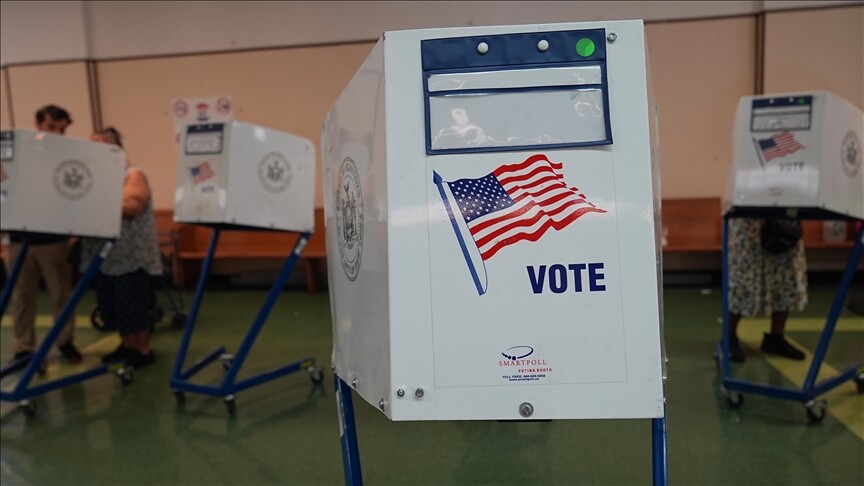
Democratic socialist Janeese Lewis George currently leads the vote tally as of Wednesday versus six other candidates in the Washington, DC Democratic mayoral primary, and if victorious, could be following in the footsteps of the most notable democratic socialist in the United States — New York Mayor Zohran Mamdani.
With 73% of the ballots counted since Tuesday’s primary election in the nation’s capital, the Associated Press (AP) has Lewis George leading with 52.9% of the vote. Her closest challenger is Kenyan McDuffie, who currently holds 36.5%.
The mayor’s office in the District of Columbia has traditionally been a Democratic stronghold, and political experts have said that any Republican challenger is not expected to put up meaningful competition for the mayor’s seat in the general election.
If Lewis George keeps her current lead and wins the majority, she will head to the November election as the favorite to replace three-term Mayor Muriel Bowser, who decided not to run for a fourth term.
A victory for Lewis George would be to the ire of US President Donald Trump, who told reporters that he could attempt a federal takeover of Washington if she won the mayor’s race, according to local media reports.
“We won’t put up with it,” Trump told reporters at a news conference.
Yet Trump has already seen a democratic socialist take power in America’s largest city, with the election of Mamdani as mayor of New York City.
Not to be outdone, the race for the mayor’s office in Los Angeles, California — the second largest city in the US by population — has a democratic socialist, Nithya Raman, in the runoff to vie for the position in November’s general election. Raman will face incumbent Democratic Mayor Karen Bass, who narrowly edged out Raman in the primary 34.3% to 29.0%.
In California’s 14th congressional district, two candidates will head to a runoff election to replace former US Rep. Eric Swalwell, who resigned from Congress in April amid allegations of sexual assault, including rape.
Aisha Wahab secured the first runoff spot on Tuesday with 38.3% of the vote, with the AP on Wednesday calling the second position to go to Melissa Hernandez, who tallied 17.2%.
The runoff election will be held on Aug. 18, with the winner finishing out the rest of Swalwell’s term.
-

 Iowa6 minutes ago
Iowa man injured in 3-vehicle crash on I-35 near Albert Lea
-
 Kentucky9 minutes ago
Demetrus Liggins disputes Fayette County board’s claim he resigned, attorneys allege misconduct
-

 Kansas9 minutes ago
Where to watch St. Louis Cardinals vs Kansas City Royals: TV channel, start time, streaming for June 19
-

 Louisiana21 minutes ago
After redistricting battles, Southern gathers for Juneteenth celebration: ‘Continue the fight’
-

 Maine24 minutes ago
What a Maine researcher has learned studying woodchucks for nearly 3 decades
-

 Maryland36 minutes ago
Early voting ends with light turnout at polls, thousands of mail-in ballots so far
-

 Michigan39 minutes ago
West Michigan celebrates Juneteenth with parades, more
-

 Massachusetts44 minutes ago
Here’s how to enter for a chance at a low-number Mass. license plate

