Entertainment
For the guest rappers on 'GNX,' recording with Kendrick Lamar means 'You’ve got to be a student.'

A few months ago, the Compton rapper Siete7x was up in the Bay Area shooting a music video. Around 4 a.m., he got a call from mutual friend of Kendrick Lamar’s who told Siete to drop whatever he was doing and get to Conway Studios in Los Angeles. Now.
“He was like ‘Kendrick wants you to pull up.’ At first I didn’t believe him,” Siete said. “But me and my manager, we got in the car and drove six hours right back to L.A.”
That night drive turned into a session that got Siete lines on “dodger blue,” a soulful hometown-pride anthem and a local favorite on Lamar’s surprise-release “GNX.”
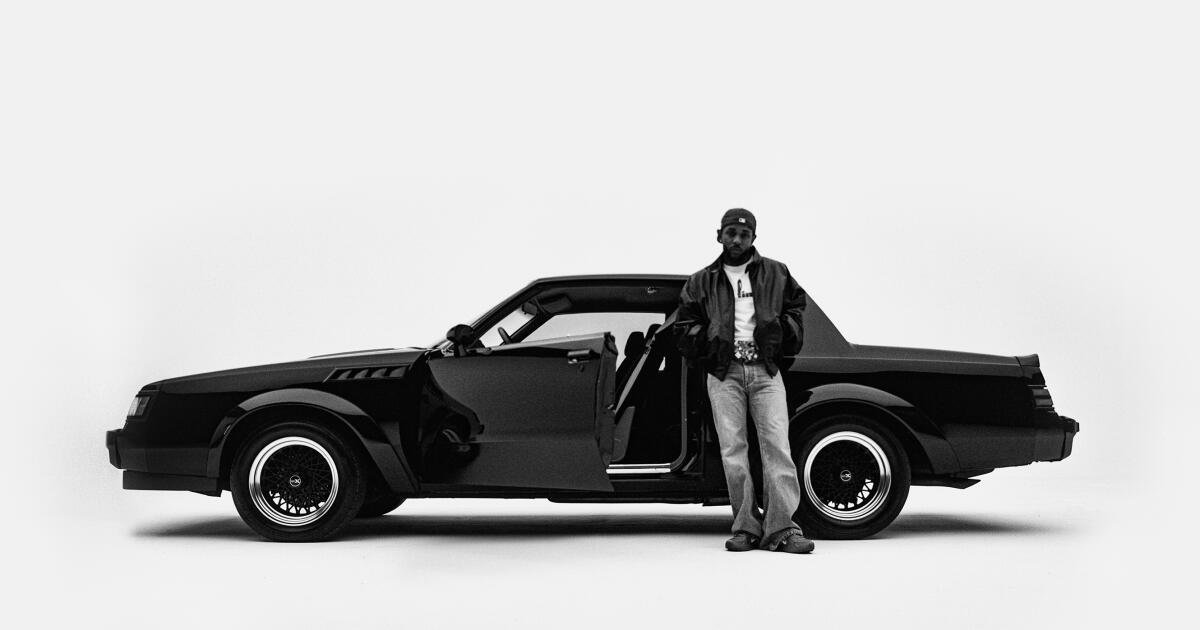
That album was a rich text of West Coast hip-hop history and invention, imbued with the venom of his recent feud with Drake. In just a week, it’s spun off singles like “squabble up” and “tv off” that have redefined the year in rap, just in time for Lamar’s Super Bowl appearance next year.
But “GNX” is full of cameos from emerging SoCal acts, who Lamar sees as crucial voices right now. The cast of guests — hailing from Compton to Baldwin Park and beyond — proves his ear is still close to the ground. For those local artists that got sudden shine from it, “GNX” feels like a piece of history — and a chance to show what they’re capable of.
“I feel like this album will be a classic for a new generation,” Siete said. “Kendrick gave me a shot. Now I’m even more motivated to show the world what I can really do.”
Rapper Siete7x, who guested on Kendrick Lamar’s album “GNX.”
(EMPIRE)
In the hours after “GNX” dropped last week, fans combed through the lyrics for new twists in the Drake war, and parsed its samples of Tupac Shakur, Luther Vandross and SWV.
While SZA and saxophonist Kamasi Washington are the only cameos on “GNX” that pop music fans are likely to recognize, the album is a comprehensive roster of SoCal scene-beloved veterans like Wallie the Sensei, AzChike and Hitta J3, and fast-rising local acts like Dody6 and YoungThreat.
When Lamar insists on “dodger blue” that you can’t “say you hate L.A. when you don’t travel past the 10,” these are the artists you’re missing if you don’t venture down.
“GNX” kicks off with evocative mariachi vocals from singer Deyra Barerra, whom Lamar discovered when she performed at Dodger Stadium. But he also nodded towards the city’s Latino rap scene, with guest bars from Maywood’s Peysoh on the album’s title track.
When Peysoh got the call, he said “I was chilling at my house, half asleep, when [Lamar] threw us on a FaceTime and was like ‘I need you later today.’ Even after the surprise release of the album, Peysoh said he was still a little dazed from the experience. Earlier this year, he’d finished a three-year stint in jail. To go from that to recording on a Kendrick album was head-spinning. “I’d been counted out and blackballed, and now it’s happening just like I told y’all,” Peysoh said.

Rapper Peysoh and Kendrick Lamar recording for Lamar’s album “GNX.”
(EMPIRE)
Peysoh, known for the noirish viral hit “6 Block,” has a distinct Chicano tang to his voice, unmistakable in any mix. When Peysoh got to the studio, Kendrick played the tricky, technically challenging beat that became “gnx.” Peysoh got the first verse, and the two swapped lines in the chorus. “Lеt ‘em claim it, we the ones who really pop, bro,” he raps. “Opps know, let ‘em piss him off and it’s a flop show.”
“It’s so dope that he embraced the culture and did right by us,” Peysoh said. “There’s a lot of controversy with Mexican rap, but he knows what he wants and he had a blueprint. He’s a legend and I’m so grateful for the chance he gave to me to prove my keep.”
For the younger acts he called into the studio, “GNX” was a rare glimpse behind the curtain to see how Lamar works. Few rappers get to write alongside a Pulitzer Prize-winning lyricist.
“I didn’t know what I signed on for,” Siete said. “It was a real different process for how to record, definitely leveled up from what I’m used to. I had to record certain bars five times to have different options in how I’m coming in with my energy, different cadences that were out of my element to make it hit better.”
“Kendrick came with crazy ideas,” Siete added. “You’ve just got to be a student sometimes.”
Even for the artists with very brief cameos, simply getting your name in the credits of a Lamar album is a life-altering vouch.
Lefty Gunplay, a relentless MC from the atypical rap neighborhood of Baldwin Park, has perhaps the shortest cameo on the record — repeating a four-word outro on the smash hit “tv off” in his trademark rasp.
While the song’s memes were all about screaming “MUSTAAAARD,” listeners will leave the track wondering about the guy taunting “Crazy, scary, spooky, hilarious.”
“Four words was all it took to have the best song,” he laughed. “All the other artists Kendrick features are real street dudes, and I’m so glad I got to be a part of that class. He sees something in us — he ran the play and gave me the alleyoop.”
Lefty Gunplay served nine years in Pelican Bay State Penitentiary, released just last year. For the guests whose careers got a shock of new fame on “GNX,” they’re hitting the pavement to make the most of it.
Many said they recorded more music with Kendrick beyond what appears on “GNX,” and while nobody would speak about their plans for it, it’s clear that Lamar has much more in the tank.
In the weeks to come, Peysoh has a gig at the Teragram Ballroom on Sunday, likely be mobbed by new fans from “GNX.” Siete7x has a new album, “Stucc in the Hole,” out Dec. 6. And in a masterstroke of lucky timing, Lefty Gunplay dropped his new album, “Most Valuable Gangbanger,” the same day the “GNX” landed.
“It’s gonna open every door for me. I know I’m not the best lyrically yet, but every day I’m getting better and I’ve got to capitalize on this moment,” Lefty Gunplay said. He’s still getting used to the idea that he’s already part of L.A. rap history.
“It still hasn’t hit me yet,” he laughed. “I’m on a Kendrick album. What a trip.”

Movie Reviews
Bandar Movie Review: Bobby Deol roars in Anurag Kashyap’s unsettling legal thriller that refuses to spoon-feed

Name: Bandar
Director: Anurag Kashyap
Cast: Bobby Deol, Sanya Malhotra, Sapna Pabbi, Saba Azad, Jitendra Joshi, Raj B Shetty
Writer: Sudip Sharma, Abhishek Banerjee
Rating: 3.5/5
Plot:
Bandar follows Sameer Mehra’s character, essayed by Bobby Deol, a fading star who is desperately clinging to his past glory. Just as he attempts to rebuild his life and finds solace in a new relationship, his world comes crashing down. A former girlfriend files a heinous allegation against him, dragging him into a vicious, high-profile legal battle. Written by Sudip Sharma and Abhishek Banerjee, the film moves away from standard Bollywood courtroom setups. Instead, it dives straight into the murky waters of social media trials, public perception, and a sluggish judicial system where the truth gets buried under layers of gray.
What works:
Known for his chaotic energy, Anurag Kashyap takes a remarkably mature and controlled approach here. He avoids sensationalizing a highly sensitive topic, choosing instead to focus on the psychological claustrophobia of the protagonist. The prison sequences are exceptionally well-shot. They create a suffocating, raw atmosphere that makes you feel the weight of the character’s confinement. The script successfully avoids preachy, black-and-white monologues. It bravely forces the audience to confront their own biases regarding modern-day public trials and the digital judge-and-jury culture.
What doesn’t:
Clocking in at nearly two hours and twenty minutes, Bandar feels heavily weighed down in the second half. The narrative stretches thin, and a few subplots demand too much patience, making you wish for a tighter edit. The film stubbornly refuses to take a definitive moral stance or offer a neat resolution. While film enthusiasts might appreciate the complexity, mainstream viewers looking for a clear-cut ending or emotional payoff might walk away feeling detached and frustrated.
Performances:
- Bobby Deol is the beating heart of this film. Stripping away the massive macho swagger and menacing villainy of his recent hits, he delivers a deeply vulnerable, understated performance. He plays Samar with a mix of arrogance, confusion, and raw helplessness, proving his immense range.
- Sanya Malhotra anchors her screen time with her trademark reliability, turning in a grounded and impactful performance.
- Saba Azad and Sapna Pabbi excel in their respective roles, bringing genuine nuance to characters that could have easily been sidelined.
- Jitendra Joshi is an absolute scene-stealer, commanding your attention every single time he steps into the frame.
- Indrajith Sukumaran and Raj B Shetty are absolute show stealers with their raw acting.
Final Verdict:
Bandar is an unsettling, morally complex thriller that refuses to spoon-feed its audience. It isn’t a comfortable watch, nor does it try to be. While the sluggish pacing in the second half prevents it from being an absolute masterpiece, it is worth a watch for Bobby Deol’s spectacular acting reinvention and Anurag Kashyap’s gritty, thought-provoking storytelling.
Disclaimer: The views and opinions expressed in this article are solely those of the author and do not reflect the official policy or position of Pinkvilla. No statement in this article is intended to defame, harm, or malign any individual or entity.
ALSO READ: Maa Behen Movie Review: Madhuri Dixit, Triptii Dimri, and Dharna Durga save a slow-burning mystery

Kathy Hilton will no longer be the grand marshal of West Hollywood’s pride parade.
The city and WeHo Pride on Wednesday released a joint statement, announcing that “The Real Housewives of Beverly Hills” star would no longer serve as the Grand Marshal Icon for the 2026 WeHo Pride Parade. The event is scheduled for Sunday.
“After thoughtful discussions, the City of West Hollywood, the WeHo Pride production team, and Kathy Hilton have determined that the 2026 WeHo Pride Parade will not designate a Grand Marshal Icon honoree,” read the statement.
The decision comes less than a week after Hilton was announced. That May 28 announcement was met with swift backlash from the LGBTQ+ community and allies, who called out Hilton’s ties to President Trump and alleged MAGA-leaning politics. Critics also cited accusations that the socialite had used a homophobic slur while on a trip with other cast members of “The Real Housewives of Beverly Hills,” an action she has previously denied.
In their joint statement, West Hollywood and the WeHo Pride team expressed their appreciation for “the respectful and sincere dialogue” around both the event and the “role and significance” of Pride honorees.
“The City of West Hollywood has always believed that Pride belongs to the community,” the joint statement said. “Since its earliest days, Pride has served as both a celebration and a platform for activism, visibility, resilience, and the ongoing pursuit of equality, dignity, and justice for LGBTQ+ people. … These conversations reflect the passion people have for WeHo Pride and underscore the importance of ensuring that WeHo Pride continues to honor the history, values, and diverse voices of the LGBTQ+ community.”
In a statement, Hilton expressed gratitude for being considered for grand marshal and reaffirmed her commitment to the LGBTQ+ community and causes.
“My reason for wanting to be involved in this year’s WeHo Pride weekend was simple: to celebrate, support, and share in the joy of a community that means a great deal to so many people,” Hilton said. “Pride is, and always will be, about celebrating and uplifting LGBTQ+ voices, experiences, and achievements. … My support for the community and WeHo Pride is unwavering.”
She also mentioned several queer advocacy organizations and events she has supported over the years, including GLAAD, the Elton John AIDS Foundation, the Elizabeth Taylor AIDS Foundation, Dr. Mathilde Krim, God’s Love We Deliver and Project Angel Food.
The latest Pride-related dust-up follows the abrupt cancellation of the Long Beach Pride Festival in May. The city’s Pride Parade took place as planned.
Both snafus have occurred as conservative politicians and advocates continue to attack LGBTQ+ rights and visibility nationwide. Some Republican governors have even pushed for conservative alternatives to Pride month festivities. A recent Gallup poll has found that after years of steady gains, support for marriage equality and same-sex relationships has slipped, particularly among Republicans.
Movie Reviews
Movie Review: Travolta’s “Propeller: One-Way Night Coach” is One for the Ages — All Ages

Back in the good ol’days — the ’90s — John Travolta would love to get off the topic of “Michael,” “Pulp Fiction” or “Get Shorty” in interviews with film journalists like me and regale us with how utterly besotted he had been with his first flying experience, how that drove his passion for piloting and buying planes and airfield-adjacent luxury houses.
He didn’t even seem to mind having to move house when this or that development balked at him flying his Boeing 707 out of there on the way to locations.
Travolta would tell any journalist who asked that he was writing a kid-friendly book, “Propeller: One Way Night Coach,” based on his first flights as a child in old propeller driven airliners — cheap red-eye overnight treks with too many connections for your average jet age traveller to tolerate.
I remember picking up the book when it came out later in the ’90s — at an airport gift shop — and thinking “Well, that’s as cute as I figured.”
And now, decades later and trapped in the B-movie hell of his post “Gotti” career, Travolta’s turned that cute book into the most delightful, fanciful and colorful bon bon of a movie.
“One Way Night Coach” is a child’s fantasy of flight and flying the way it used to be — with pristine, uncrowded, futuristic airports, an early ’60s era of jets and prop planes with over-uniformed stewardesses in white gloves, the days “Back before every Joe Sweatsock could wedge himself behind a lunch tray and jet off to Raleigh-Durham,” as Sideshow Bob memorably sneered on “The Simpsons’.”
It’s a fictionalized account of Travolta’s childhood about an only child (at least two Travolta siblings have bit parts in this movie) of a never-made-it/never-will actress/single-mom (Kelly Eviston-Quinnett) who indulges her aviation-obsessed eight-year-old with a cheap cross-country overnight flight.
Little Jeff (Clark Shotwell) will revel in almost every Idlewild to Pittsburgh to Dayton to Chicago to Kansas City to Denver and Los Angeles minute. He strolls into the cockpit to meet pilots, charms the stewardesses and checks out the sleeping bunks on the TWA Lockheed Super Constellation, loving even the delays if not the Chicken Cordon Bleu he’s offered on legs of the journey that offer a meal.
And as he’s an observant child, he comments (Travolta narrates) on his 50ish mother’s vamping and posing, her choice of cigarettes (Newports) and drinks, the solo traveling men whose attention she pursues and earns.
“I was her best audience,” adult Jeff remembers of the mother who’d read him plays as bedtime stories and delusionally hopes that this trip to Los Angeles might be her “big break” even though she’s pushing 50.
“Hollywood called,” she’d explain about their overnight cheap flight arrangements to ticket agents and crew. “They told me to take the next flight!”
At every turn, Jeff meets or sees kindness — stewardesses who indulge his many questions and bump them up to first class on the mostly-empty planes, a captain who fixes his toy model of a Constellation, a mentally ill flyer who flips out but is calmed by a flight attendant who isn’t overworked and frazzled in jet-powered tin-can jammed with Joe and Jane Sweatsocks who think nothing of traveling in their pajamas.
Normally, I cringe at pictures this reliant on voice-over narration. I recoil from stars who populate their picture with Sandler etc. offspring. But “Propeller” is unfailingly sweet and never cloying.
Sure, it’s fictionalized. But if you’ve followed Travolta’s life and career, a lot of him is in this — his raptoruous engagement with flying, an indulged child who developed a taste for fine food and creature comforts, a mother who was his guiding star as an actor.
I get why there are less adoring reviews than mine floating around “Propeller.” It’s unfailingly sweet. Mom’s man-hunting is seriously dated. This TWA tale is decorated with Gershwin’s majestic “Rhapsody in Blue” — United Airlines’ signature tune. And Travolta’s been around long enough for recent generations to come up and not feel a connection to the “Saturday Night Fever/Get Shorty” star whose career has fallen off and life has been visited by too much tragedy.
But I’d hate to be seated next to anybody who doesn’t appreciate this adorable, pristine and nearly perfect aviation fantasy on any flight, much less an overnight one.
Rating: TV-PG
Cast: Clark Shotwell, Kelly Eviston-Quinnett, Ellen Travolta, Ella Beau Travolta, Olga Hoffmann and John Travolta.
Credits: Scripted and directed by John Travolta, based on his book. An Apple TV+ release.
Running time: 1:01

-

 San Diego, CA3 minutes ago
Mater Dei Catholic rallies, beats Point Loma in rematch of last week’s final
-
 Milwaukee, WI10 minutes ago
Milwaukee health department monitors 3 people for low-risk Ebola after travel; ‘No public health concern’
-

 Atlanta, GA13 minutes ago
Caitlin Clark’s stats Thursday in Indiana Fever vs Atlanta game
-

 Minneapolis, MN18 minutes ago
For Minneapolis reporters, Operation Metro Surge was a reckoning – Poynter
-

 Indianapolis, IN25 minutes ago
‘Thrill is gone’: Jason Whitlock says Caitlin Clark fever is over in Indianapolis
-

 Pittsburg, PA28 minutes ago
Pittsburgh promises its largest firework show yet for America’s 250th
-

 Augusta, GA33 minutes ago
Gaines endorses Kendrick in Augusta mayoral runoff
-

 Washington, D.C40 minutes ago
Juvenile injured after gunfire reported in DC’s Michigan Park neighborhood

