World
Georgia’s president will not step down until ‘illegitimate’ election rerun


Pro-EU critic of governing Georgian Dream party says she won’t leave office next month as parliament elected fraudulently.
Georgian President Salome Zourabichvili said she will not leave office when her term ends because the parliament is “illegitimate”, while the prime minister warned against a “revolution” amid continuing pro-European Union protests.
Thousands of Georgians protested on Saturday for a third straight night after Prime Minister Irakli Kobakhidze announced the government will suspend talks on EU accession.
The goal to join the 27-member is now enshrined in Georgia’s constitution, but the prime minister – who has been building closer ties with Russia – suspended the talks for four years and accused Brussels of “blackmail”.
In an address on Saturday, Zourabichvili, a pro-EU critic of the Georgian Dream governing party, said parliament had no right to elect her successor when her term ends in December, and that she would stay in post.
The president, whose powers are largely ceremonial, maintains that the country’s October 26 election, which was won by Georgian Dream with 54 percent of the vote, was fraudulent and therefore renders the elected parliament illegitimate.
“There is no legitimate parliament, and therefore, an illegitimate parliament cannot elect a new president. Thus, no inauguration can take place, and my mandate continues until a legitimately elected parliament is formed,” she said.
Georgia’s election commission earlier this month confirmed the governing party as the winner, but watchdogs and politicians in the EU and the United States have also suggested an investigation needs to look into potential fraud.
The country’s Interior Ministry said on Saturday it had arrested 107 people in the capital, Tblisi, overnight during protests which saw some demonstrators build barricades and throw fireworks at riot police, who used water cannon and tear gas.
The unrest came as Kobakhidze, the prime minister, accused opponents of the government’s move to halt EU accession talks of plotting a revolution, similar to Ukraine’s 2014 Maidan protest, which deposed a pro-Russian president.
“In Georgia, the Maidan scenario cannot be realised. Georgia is a state, and the state will not, of course, permit this,” Kobakhidze was quoted as saying by local media.
The US State Department said on Saturday it had suspended its strategic partnership with Georgia following the decision by the Georgian Dream party to suspend accession to the EU.
“We condemn excessive force used against Georgians rightfully protesting this betrayal of their constitution – EU is a bulwark against Kremlin,” State Department spokesperson Matthew Miller wrote on X.
“We have therefore suspended our Strategic Partnership with Georgia.”
Georgia gained independence from neighbouring Russia in 1991 after the fall of the Soviet Union, and the two countries have not had any diplomatic relations since a brief 2008 war over Moscow-backed territories of South Ossetia and Abkhazia.
But the Georgian Dream party’s efforts to build closer relations with Russia had already stalled the country’s application to join the EU.
The bloc has said laws against “foreign agents” and LGBTQ rights are among the main reasons behind the stall, as they curtail human rights and are modelled after legislation in Russia.



Al Jazeera’s Robert McBride brings you the latest from southern Lebanon as Israeli attacks intensify amid ongoing diplomatic efforts.
Published On 22 Jun 2026

new video loaded: First Round of U.S.-Iran Talks End, Mediators Say
transcript
transcript
First Round of U.S.-Iran Talks End, Mediators Say
The first round of negotiations between Washington and Tehran in Switzerland ended with a “roadmap” to reach a final deal within 60 days, Pakistani and Qatari mediators said.
-
Can we turn over a new leaf? Can we change relations in the Middle East permanently? Or, do we go back to doing things the old way, which is not our preference, but is certainly very much something that can happen. Thank you all for being here.
By Jiwoong Hong
June 22, 2026

NEWYou can now listen to Fox News articles!
The U.S. military on Sunday announced a lethal strike on another vessel in the Caribbean carrying alleged narco-traffickers, killing two people.
The U.S. Southern Command said it conducted a “lethal kinetic strike on a vessel operated by Designated Terrorist Organizations” at the direction of the leader of the Southern Command, Gen. Francis L. Donovan of the Marine Corps.
The military claimed, citing intelligence, that the vessel “was transiting along known narco-trafficking routes in the Caribbean and was engaged in narco-trafficking operations.”
ALLEGED NARCO-TERRORISTS KILLED AS US FORCES STRIKE SUSPECTED DRUG-TRAFFICKING VESSEL IN CARIBBEAN
A U.S. military strike on a vessel in the Caribbean on June 21, 2026. (U.S. Southern Command)
There were six male survivors in addition to the two men killed in the strike.
“Following the engagement, USSOUTHCOM immediately notified U.S. Coast Guard to activate the Search and Rescue system for the survivors,” the military said.
This is the latest attack that the Trump administration has said was launched in an attempt to eliminate alleged narco-terrorists, with the death toll in these strikes carried out since September sitting at more than 200.
The military claimed, citing intelligence, that the vessel “was transiting along known narco-trafficking routes in the Caribbean and was engaged in narco-trafficking operations.” (U.S. Southern Command)
The Pentagon has refused to release the identities of those killed in the strikes since last fall or provide evidence of drugs on board.
The administration has been scrutinized in recent months over the strikes by Democrats and even some Republicans, including Sen. Rand Paul, R-Ky., who has raised concerns about killing people without due process and the possibility of killing innocent people.
RAND PAUL SAYS GOP COLLEAGUES ‘DON’T GIVE A S‑‑T ABOUT THESE PEOPLE IN THE BOATS’: THEY ‘SAY THEY’RE PRO-LIFE’
The Pentagon has refused to release the identities of those killed in the strikes since last fall or provide evidence of drugs on board. (Jacquelyn Martin/AP)
“I look at my colleagues who say they’re pro-life, and they value God’s inspiration in life, but they don’t give a s‑‑- about these people in the boats,” Paul said in January. “Are they terrible people in the boats? I don’t know. They’re probably poor people in Venezuela and Colombia.”
CLICK HERE TO DOWNLOAD THE FOX NEWS APP
The senator previously cited Coast Guard statistics that show a significant percentage of boats boarded on suspicion of drug trafficking are innocent.
The attacks have also been denounced by human rights groups as “extrajudicial killings.”
-
Business10 minutes ago
Music mogul Clive Davis, producer and label executive who signed musicians like Janis Joplin, Bruce Springsteen and Whitney Houston, has died
-
Entertainment13 minutes ago
Netflix expands library of kid-centric programs
-
 Lifestyle18 minutes ago
Contributor: ‘The Fast and the Furious’ took the Asians out of an Asian American story
-
 Politics25 minutes ago
Supreme Court says ex-LAPD officer may be sued for excessive force in street shooting
-
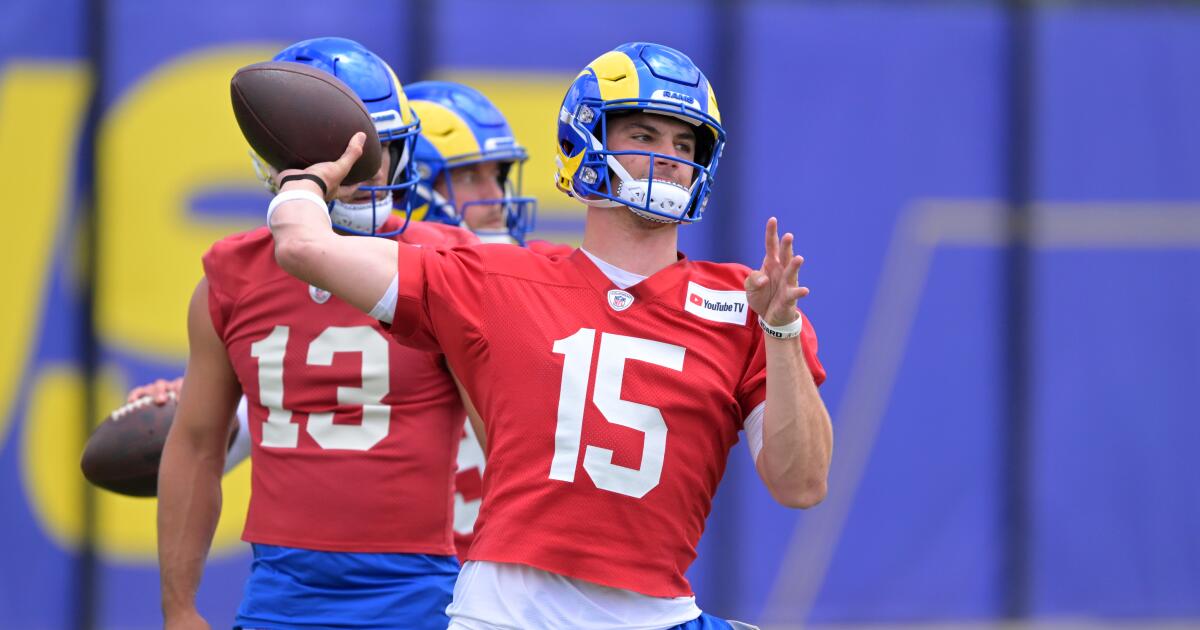 Sports33 minutes ago
Rams QB Ty Simpson embracing an unusual bedtime routine to spur his development
-

 World43 minutes ago
Lebanon Latest: Israeli attacks surge despite ceasefire efforts
-
 News1 hour ago
Supreme Court allows a ruling that ends a tool to protect minority voters in 7 states
-

 New York2 hours ago
How a Security Guard Lives on $46,000 a Year in the East Bronx