Connect with us

Midwest

Perez Hilton says Jussie Smollett decision won't help 'tanked' career: Court didn't dispute hate crime hoax

Published

on

Perez Hilton says Jussie Smollett decision won't help 'tanked' career: Court didn't dispute hate crime hoax

Join Fox News for access to this content

You have reached your maximum number of articles. Log in or create an account FREE of charge to continue reading.

By entering your email and pushing continue, you are agreeing to Fox News’ Terms of Use and Privacy Policy, which includes our Notice of Financial Incentive.

Please enter a valid email address.

Having trouble? Click here.

Pop culture expert and crime buff Perez Hilton says the Illinois Supreme Court’s Jussie Smollett decision didn’t dispute the accusations against him when it let him go from prison. It just ruled on a technicality.

And that may not help revive the disgraced actor’s “tanked” career.

Advertisement

“Unfortunately for Jussie Smollett, this won’t do him much good,” Hilton said. “Even though it has spared him from any time behind bars – so it literally did him good in that sense – but he wasn’t going to spend that much time locked up anyways.”

Smollett, who is Black and gay, initially told Chicago police that he was the victim of a racist and homophobic attack by two men wearing ski masks in January 2019. Then two brothers, Olabinjo and Abimbola Osundairo, said they were the masked men and that they helped Smollett pull off a hoax.

JUSSIE SMOLLETT CONVICTION OVERTURNED BY ILLINOIS SUPREME COURT

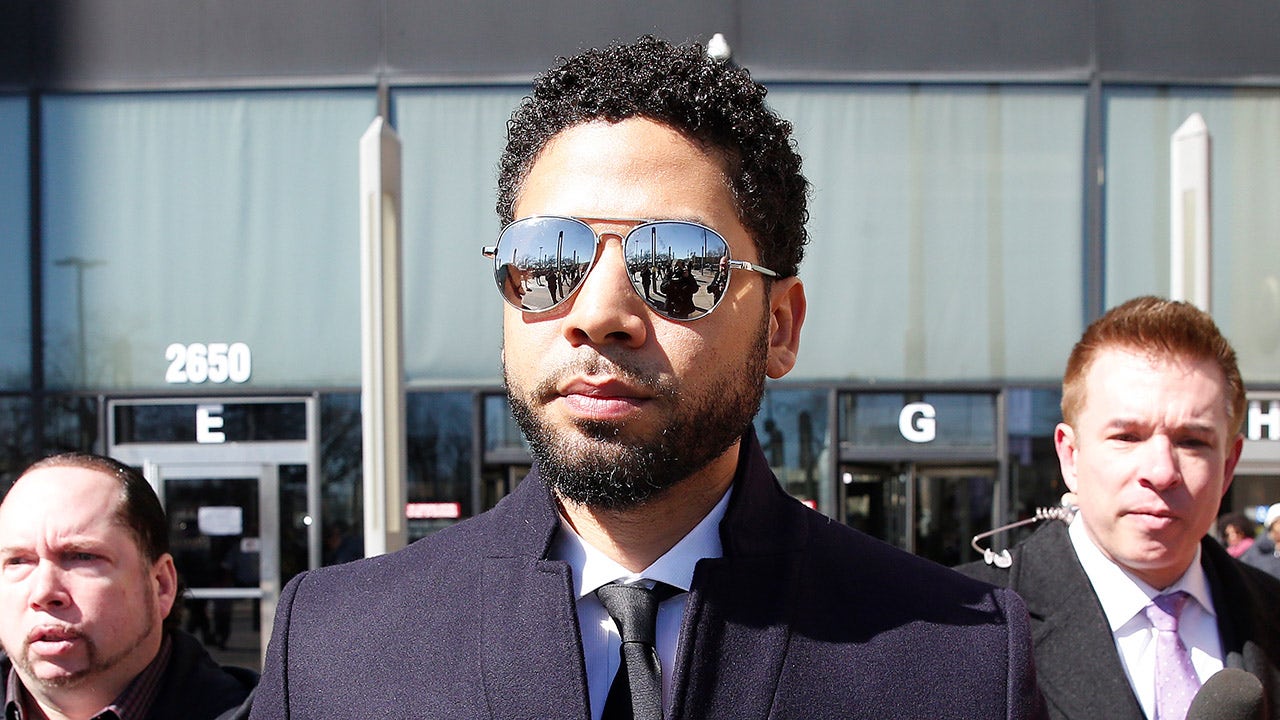
Smollett was convicted on five of six charges of disorderly conduct. (Nuccio DiNuzzo)

Kim Foxx, a progressive Democrat district attorney who oversaw the initial case, dropped the hoax charges against Smollett as part of an agreement in which he forfeited his bail money and was told to do community service. But he was later indicted by a grand jury with a special prosecutor on the case, tried and convicted.

Advertisement

People are going to see the headline, gloss over the details and continue to keep their opinions of him, Hilton said.

Special prosecutor Dan K. Webb blasted the court’s decision as “unprecedented.”

Hilton, like Webb, noted that the court didn’t address the allegations or throw out the evidence that Smollett conducted a hoax and then led Chicago police to waste limited resources trying to solve a hate crime that didn’t happen.

Hear more from Perez Hilton on the Jussie Smollett decision:

JUSSIE SMOLLETT’S CAREER HAS ‘HIT BOTTOM’ DESPITE MAINTAINING INNOCENCE OVER HATE CRIME HOAX: EXPERT

Advertisement

“Today’s decision is only possible because of the unprecedented resolution of Mr. Smollett’s initial case by the Cook County State’s Attorneys’ Office (CCSAO) in March 2019, which the Illinois Supreme Court determined barred Mr. Smollett from any further prosecution,” Webb said in a statement.

“The Illinois Supreme Court reached this decision notwithstanding the fact that the CCSAO dismissed the initial Smollett case via a nolle prosequi, which does not bar re-prosecution under Illinois law, and Mr. Smollett’s own lawyers told the public immediately following the dismissal of his initial case in March 2019 that there was ‘no deal’ with the CCSAO.”

This booking photo provided by the Cook County Sheriff’s Office shows Jussie Smollett. (Cook County Sheriff’s Office via AP/File)

Some legal experts agreed with the court’s finding.

James Scozzari, a Michigan-based defense attorney who handles cases in multiple Midwest states, said it’s similar to what happened with disgraced actor Bill Cosby, when he was released from a Pennsylvania prison for similar reasoning.

Advertisement

Cosby had entered a non-prosecution agreement with a Philadelphia district attorney only to have another one bring charges against him over the same accusations.

Brothers Olabinjo Osundairo, right, and Abimbola Osundairo appear outside the Leighton Criminal Courthouse in Chicago on Feb. 24, 2020. (AP Photo/Charles Rex Arbogast)

“Similar to the Cosby reversal, the DA initially agreed to non-prosecution dismissal in exchange for Smollett giving up his bond money,” Scozzari told Fox News Digital. “Refiling the case violated that agreement, hence double jeopardy.”

Smollett’s lawyer, Mark Geragos, said it boiled down to whether the state has a responsibility to honor its agreements in court.

“We hold that a second prosecution under these circumstances is a due process violation and we, therefore, reverse the defendant’s conviction,” he said.

Advertisement

Read the ruling:

BILL COSBY’S LAWYER ASKS SUPREME COURT NOT TO REVIVE HIS SEXUAL ASSAULT CASE

“Justin Smollett’s career has tanked, and I don’t see that changing as a result of this outcome,” he said.

Still, Hilton said, people shouldn’t be canceled “forever.”

He shared some advice for Smollett, if he has the work ethic to hit the ground running.

Advertisement

“He doesn’t need a ton of money,” Hilton said. “He just needs the work ethic and the ideas, and if he has that, he can make things happen.”

But he’d be wise to let other people be the face of his projects, he added.

“He should be making these projects for others to star in and not as vehicles for himself,” he added. “So I think my suggestion would be, be a creative behind the scenes, and you can hopefully still be fulfilled and monetizing that way.”

Fox News’ Lauryn Overhultz and Matt Finn contributed to this report.

Advertisement

Read the full article from Here

Continue Reading
Click to comment

Leave a Reply

Your email address will not be published. Required fields are marked *

This site uses Akismet to reduce spam. Learn how your comment data is processed.

Milwaukee, WI

Why are Milwaukee-area students protesting ICE actions?

Published

on

Why are Milwaukee-area students protesting ICE actions?


Ever since the shooting deaths of Renee Good and Alex Pretti, both by federal agents in Minneapolis in January, there have been numerous student protests by high school students across the country – including several in Wisconsin and the Milwaukee area.

Students at Milwaukee Public Schools’ high schools including Milwaukee King, Ronald Reagan, and others; Wauwatosa East High School, Shorewood High School, Menomonee Falls High School, Nicolet High School, Whitefish Bay High School – even one student at Marquette University High School – have all walked out of school to protest Immigrations and Customs’ Enforcement actions in Minneapolis and nationwide.

What is it about ICE’s actions that have students walking out? How are school districts handling it, and what do students and parents think?

UW-Madison political science professor shares thoughts on what’s behind student walkouts

Advertisement

Political science professor emeritus Howard Schweber of the University of Wisconsin-Madison said several factors play into why students are protesting.

One of those factors is that ICE raids have taken place near schools. In some school districts, teachers have been arrested and students have disappeared. In some areas of Minneapolis, schools have had to switch to remote learning because students feared ICE raids, Schweber said.

Second, Schweber said the walkouts tie in to past student protests over guns in schools; high school students are feeling unsafe in their schools.

“They’re feeling threatened by forces, you know, far beyond their control, and feeling like first, it was their government wouldn’t protect them. This time it’s their government that’s doing it to them. Of course I’m only speaking from the perspective of the students who are protesting. I don’t mean to suggest that all students feel this way, but the ones who are protesting, this is, I think, what is driving them,” he said.

Advertisement

“Unlike some other issues, I think this one – like the guns in schools issues – hits very close to home, and makes them feel personally involved and threatened by the situation,” he said.

Schweber also talked about where the First Amendment applies during these situations.

He said students, particularly high school students, do have First Amendment rights. He said that schools may not punish students for expressing one viewpoint as opposed to another, and that any policy must be neutral. However, he said, students who walk out, and especially students who engage in conduct that disrupts school activities, can be disciplined.

“The legal background to this is students have a right to express themselves, but while they’re in school or while they’re supposed to be in school, that right is quite curtailed,” he said. “I noticed that in Madison, for example, there were some protests that were held after school ended in order to avoid this problem, which is certainly one way to avoid the issue, but then it’s not a walkout.”

How school districts deal with the walkouts

When it comes to walkouts, school districts typically approach them from several perspectives: attendance, neutrality, recognizing freedom of speech and safety.

Advertisement

In general, school districts will mark students who participate in walkouts as absent and unexcused unless their parents call in to excuse them. Most districts surveyed by the Milwaukee Journal Sentinel also stressed that walkouts are student-sponsored and not organized or sanctioned by the districts.

For example, Pewaukee High School principal Brian Sniff said in a letter to parents that a Feb. 4 walkout at that school was student-initiated and student-led. He said that while students planning the walkout consulted with administration for clarity on the school’s expectations and potential consequences so they could make an informed decision about their plans, the district did not endorse or encourage the activity.

At the same time, some districts have acknowledged that students have free speech rights, as guaranteed by the First Amendment.

While reiterating that students who walk out are unexcused unless a parent excuses them, the Wauwatosa School District said in a letter to parents in advance of a Jan. 12 walkout that it values and encourages student self-expression and recognizes the “importance of civic engagement as part of a well-rounded education.”

“We view moments like this as opportunities for young people to explore their voices, deepen their understanding of social issues, and learn about the power of collective action in a safe and constructive way,” the letter said.

Advertisement

Safety is also another factor that districts consider.

South Milwaukee School District Superintendent Deidre Roemer, Shorewood High School principal Tim Kenney and Franklin High School principal Michael Vuolo said in their letters to parents before planned walkouts that staff would not supervise students who left school grounds.

Sniff said that if students walked out, administrators and security would monitor the situation, ensure they remained in designated safe areas on campus and prevent conflict. But he added that supervision means ensuring safety, and does not equal support.

Parent, student perspective

Jamie Esser, a parent of a child attending Pewaukee High School, said she supported the walkout there. She said teens getting involved with politics and social issues was “heartwarming” to her.

“I think our children, ever since lockdown, have been isolated and stuck in their cell phones and stuck on social media and not really interacting with each other or looking at the world at large. So I think – especially with all the controversy around ICE and around the treatment of their fellow Americans or even fellow human beings – I think it’s great that kids are taking up concerns, and as far as I’m concerned, it’s very promising for the future that today’s generation sees the injustice and just wants to be heard that they don’t agree with it,” Esser said.

Advertisement

Conversely, Joe Rivera, a parent and school board candidate for the Wisconsin Hudson School District in northwestern Wisconsin, said he was concerned about inconsistencies in how that district told parents it would handle a walkout v. what actually happened.

The walkout took place, even though the district told parents that students would not be allowed to leave campus and that classes would continue as scheduled, a Feb. 14 post on his campaign Facebook page said.

“Allowing a large, pre-planned demonstration during the school day – after communicating it would not be allowed – created confusion, undermined trust, and placed students in unnecessary danger, the post said. “We do not have to look far to see how similar situations, even nearby, have escalated quickly and turned tragic.”

“As a parent in this district, I find it unacceptable that families were told one thing and experienced another – especially when it involves student supervision and safety during the school day,” the post said.

Thomas Stilp, a Marquette University High School student, said he was among several students who were organizing a walkout at his school in February. Things looked ready to go until the night before the walkout. That’s when organizers heard concerns that the walkout might draw unwanted attention from ICE; those concerns led them to cancel the event.

Advertisement

Stilp said he thinks students fear that what’s happening in Minnesota will eventually happen in Milwaukee.

“What we really want is the whole country to be doing this, and if people are leaving schools and people are shutting down their offices and are not showing up to work, like businesses are closed; if you can’t get your coffee in the morning because of these ICE raids that are happening and businesses are calling for that to be stopped, that’s when you’re going to notice,” he said.

However, not all students support the walkouts.

One of those students is Turner Dittrich, a senior at Arrowhead High School and a founder, former president and current member of the school’s chapter of the conservative organization Turning Point. He is also the son of Terry Dittrich, the Waukesha County Republican Party chairman.

Advertisement

Turner Dittrich said that while people have the right to protest, they should not interfere with ICE, which is investigating criminal behavior.

“My whole take on it is, is why should undocumented illegal citizens get the same immunity as the ones who sacrifice to follow the law? We are America. We are a country of laws,” he said.

Dittrich said anti-ICE protests have been boosted by students who simply do not want to be in school. He also said he does not think it’s right for students to miss school for protests, out of respect for teachers.

“At Arrowhead especially, I’ve met some phenomenal teachers, some phenomenal individuals. They wake up tired and they’re really pouring out their energy into what they’re teaching students. For the ICE protests to not be done at 3:30 or 4 [after school] is just shocking to me because it’s like, what are these teachers possibly doing? Now, I understand freedom of speech. They can’t control kids necessarily, but at the end of the day, when teachers are getting paid to show up and work hard, it just unfortunately saddens me.

“It’s the same thing if there was a pro-ICE protest. I would think that during school hours, it’d be wrong, right? So I think on both sides of the aisle, the fact that we’re doing this during school hours, is wrong. It can’t be done that way,” Dittrich said.

Advertisement

Contact Alec Johnson at (262) 875-9469 or alec.johnson@jrn.com. Follow him on X (Twitter) at @AlecJohnson12.


Source link

Continue Reading

Minneapolis, MN

Minneapolis Ranked Among U.S. Cities With The Most People In Financial Distress

Published

on

Minneapolis Ranked Among U.S. Cities With The Most People In Financial Distress


MINNEAPOLIS — Minneapolis is ranked among the American cities with the most people in financial distress nationwide, according to a recent analysis by WalletHub.

The personal finance website, which defines financial distress as having a credit account in forbearance or with deferred payments, looked at the country’s 100 largest cities without data limitations across nine metrics, including average credit score, change in bankruptcy filings year-over-year, and share of people with accounts in distress.

Minneapolis came in 44th on the list, between Stockton, California, at 43rd and Fresno, California, at 45th, according to the ranking.

Nationwide, the cities with the most people in financial distress were Chicago at No. 1, Houston at No. 2 and Las Vegas at No. 3, the ranking said.

Advertisement

“Getting out of the downward spiral of financial distress is no easy feat,” according to WalletHub analyst Chip Lupo.

“You may get temporary relief from your lenders by not having to make payments, but all the while interest will keep building up, making the debt even harder to pay off. People who find themselves in financial distress should budget carefully, cut non-essential expenses, and pursue strategies like debt consolidation or debt management to get their situation under control.”

Read more from WalletHub.


Source link

Advertisement
Continue Reading

Indianapolis, IN

More than 25% of downtown offices sit empty as north side booms

Published

on

More than 25% of downtown offices sit empty as north side booms


play

Companies are increasingly looking north for space, a sign that employers still want in-person offices just not in the downtown high-rises that once drew business. The trend means downtown office space remains in high-supply and low-demand — unless, that is, the office space comes flush with amenities, the market shows.

The overall Indianapolis office market sat at 21.2% vacant at the end of 2025, a slight dip from earlier in the year but an improvement over the year before, according to research published in January by Colliers.

Advertisement

The downtown office market vacancy rate, however, did not budge, remaining at 26%, signaling the challenges landlords face in drawing companies to move to or resign leases in the city’s urban core. Leasing on the north side of the city and Hamilton County largely buoyed the overall health of the Indianapolis metro office market, said Nick Svarczkopf, CBRE senior vice president of office and medical properties.

The reason is relatively simple, tenant representatives say: Companies downsized as employees work more hybrid hours and those who still want office space lean toward shared, untraditional layouts. Most downtown office space, especially in the largest office buildings, tends to be older, more old-fashioned workspaces dotted with cubicles and individual office walls.

The rare exception is Bottleworks, a development off the main strip of Mass Ave. The Hendricks Commercial Properties space is completely filled, with a fully pre-leased building in the pipeline.

In June, law firm Ice Miller signed an 85,000-square-foot lease in the Bottleworks Phase III under development off Mass Ave set to open in 2028. The contract became the largest downtown lease since 2019 and made the firm the largest tenant at the state-of-the-art Bottleworks campus.

Advertisement

Bottleworks offers many of the features workplace real estate experts say employees in 2026 value most: fitness centers, walkable areas and close dining spots to grab lunch. Employers have taken note, paying premium rent to move into office space that has access to these more experiential options, said Rich Forslund, executive vice president at Colliers’ Indianapolis office.

“Downtown has some but the suburbs have quite a bit,” Forslund said. “So people are moving to those spots in order to try to draw folks back to the office.”

Companies put employee experience first

A stroll through the Indiana Members Credit Union’s new headquarters at 835 N. College Ave., part of Bottleworks, reveals all of those aforementioned amenities — plus an employee-only outdoor patio, a custom soda and sparkling water machine and a state-of-the-art golf simulator, saving the company time-consuming and costly bonding outings to Top Golf.

For IMCU employees, the new office represents a drastic change from their old headquarters on the south side that cobbled together several strip mall-like buildings and a surface parking lot into a corporate campus. Roughly 120 of the company’s 467 employees work at the Bottleworks office, where they are required to come at least four days a week. The remaining employees work at customer branches around the city.

Advertisement

President and CEO John Newett said the credit union ran out of space at its south-side location, prompting the need for the company’s move at the start of the new year. To ensure that doesn’t happen again soon, IMCU built in space for additional workers in the new office and hopes the spot just off Mass. Ave. will attract younger employees looking for an up-and-coming place to work as well as draw new employees from other suburbs to the north and west.

Part of that strategy included finding as many “wow factors” in the new space as possible, Newett said.

“It’s a little more fun than the traditional office,” Newett said.

Advertisement

Indy lags behind other major downtowns

Across the country, office vacancy is hovering around 20.5% as the U.S. market shows signs of stabilizing after years of growing vacancies following the pandemic. Yet statistics from cities across the nation show that Indianapolis is relatively unique with suburban areas outpacing dense downtown neighborhoods.

While Indianapolis’ downtown real estate market still struggles, other cities are leaning on downtown office space for new leases. Nationwide, downtown districts accounted for 42% of leasing activity in the final three months of the year, despite comprising just 35% of overall supply, CBRE reported. Leasing rose 8% year-over-year in 2025, while suburban activity fell 7% over the same period.

In Indianapolis, those numbers are much lower: Just 17% of leases during the same timeframe were located downtown.

The stats are not too worrisome to experts, as Indianapolis typically lags behind the bigger coastal markets, Forslund said. But Indianapolis will need to decide where it wants to go in the future, whether that means upgrading older buildings or converting more empty space to apartments and hotels.

Advertisement

“I refer to it as we are still in our teenage years, trying to figure out what we want to be,” Forslund said.

Indy employers will have to get more creative, or less picky, in the near future as supply dries up on the booming north side market. For instance, Midtown Carmel sits virtually full. And just one commercial office building for rent is under construction in Hamilton County, the Union at Fishers District, a mixed-use development with luxury office space set to open in early 2027 next to IKEA.

Elsewhere around the area, companies are constructing build-to-own properties but those won’t be available to other companies looking for open space and workstations for their employees. Those projects include Republic Airways’ corporate headquarters expansion in Carmel, a Merchants Bank project in Carmel and Elanco’s new headquarters, which opened in October on the west side of Indianapolis.

Advertisement

As building new office space has become more and more expensive, more landlords are choosing to reinvest in and upgrade their existing offices in a bid to make them more attractive, Svarczkopf said.

“Based on the way the market is right now, they have to upgrade in order to compete,” Svarczkopf said. “The ones that have been successful have gone through the process of reinvesting in the property.”

Even with upgrades, the competition will be hot. At Indiana Members Credit Union, employees have responded well to the new office, executives said. Many amenities, like indoor parking that is patrolled, are not available elsewhere downtown.

“It just answered a lot of the questions we had and the amenities we wanted to provide for our team,” Newett said.

Alysa Guffey writes business and development stories for IndyStar. Have a story tip? Contact her at amguffey@usatodayco.com.

Advertisement


Source link

Continue Reading

Trending
