West
An Idaho health department isn’t allowed to give COVID-19 vaccines anymore. Experts say it’s a first

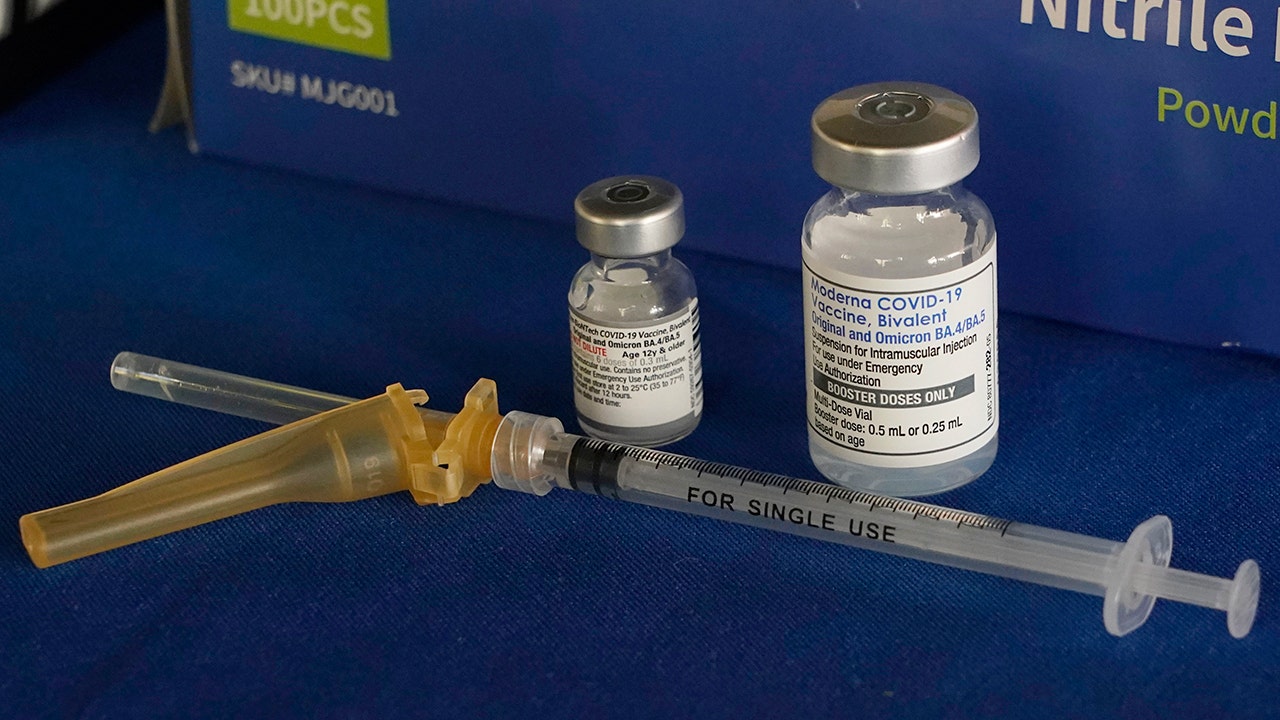
A regional public health department in Idaho is no longer providing COVID-19 vaccines to residents in six counties after a narrow decision by its board.
Southwest District Health appears to be the first in the nation to be restricted from giving COVID-19 vaccines. Vaccinations are an essential function of a public health department.
TUBERCULOSIS HAS OVERTAKEN COVID AS WORLD’S DEADLIEST INFECTIOUS DISEASE
While policymakers in Texas banned health departments from promoting COVID vaccines and Florida’s surgeon general bucked medical consensus to recommend against the vaccine, governmental bodies across the country haven’t blocked the vaccines outright.
“I’m not aware of anything else like this,” said Adriane Casalotti, chief of government and public affairs for the National Association of County and City Health Officials. She said health departments have stopped offering the vaccine because of cost or low demand, but not based on “a judgment of the medical product itself.”
The six-county district along the Idaho-Oregon border includes three counties in the Boise metropolitan area. Demand for COVID vaccines in the health district has declined — with 1,601 given in 2021 to 64 so far in 2024. The same is true for other vaccines: Idaho has the highest childhood vaccination exemption rate in the nation, and last year, the Southwest District Health Department rushed to contain a rare measles outbreak that sickened 10.
On Oct. 22, the health department’s board voted 4-3 in favor of the ban — despite Southwest’s medical director testifying to the vaccine’s necessity.
A syringe lies next to vials of COVID-19 booster vaccines at an inoculation station in Jackson, Miss., Friday, Nov. 18, 2022. (AP Photo/Rogelio V. Solis)
“Our request of the board is that we would be able to carry and offer those (vaccines), recognizing that we always have these discussions of risks and benefits,” Dr. Perry Jansen said at the meeting. “This is not a blind, everybody-gets-a-shot approach. This is a thoughtful approach.”
Opposite Jansen’s plea were more than 290 public comments, many of which called for an end to vaccine mandates or taxpayer funding of the vaccines, neither of which are happening in the district. At the meeting, many people who spoke are nationally known for making the rounds to testify against COVID vaccines, including Dr. Peter McCullough, a Texas cardiologist who sells “contagion emergency kits” that include ivermectin and hydroxychloroquine — drugs that have not been approved to treat COVID-19 and can have dangerous side effects.
Board Chairman Kelly Aberasturi was familiar with many of the voices who wanted the ban, especially from earlier local protests of pandemic measures.
Aberasturi, who told The Associated Press that he’s skeptical of COVID-19 vaccines and national public health leaders, said in the meeting and in an interview with the AP that he was supportive of but “disappointed” in the board’s decision.
He said the board had overstepped the relationship between patients and their doctors — and possibly opened a door to blocking other vaccines or treatments.
Board members in favor of the decision argued people can get vaccinated elsewhere, and that providing the shots was equivalent to signing off on their safety. (Some people may be reluctant to get vaccinated or boosted because of misinformation about the shots despite evidence that they’re safe and have saved millions of lives.)
The people getting vaccinated at the health department — including people without housing, people who are homebound and those in long-term care facilities or in the immigration process — had no other options, Jansen and Aberasturi said.
“I’ve been homeless in my lifetime, so I understand how difficult it can be when you’re … trying to get by and get ahead,” Aberasturi said. “This is where we should be stepping in and helping.
“But we have some board members who have never been there, so they don’t understand what it’s like.”
State health officials have said that they “recommend that people consider the COVID-19 vaccine.” Idaho health department spokesperson AJ McWhorter declined to comment on “public health district business,” but noted that COVID-19 vaccines are still available at community health centers for people who are uninsured.
Aberasturi said he plans to ask at the next board meeting if the health department can at least be allowed to vaccinate older patients and residents of long-term care facilities, adding that the board is supposed to be caring for the “health and well-being” of the district’s residents. “But I believe the way we went about this thing is we didn’t do that due diligence.”
Read the full article from Here

Alaska
A sympathetic shooter and botched prosecution: How did Lovely Lois get away with murder in 1960s Anchorage?

Part of a continuing weekly series on Alaska history by local historian David Reamer. Have a question about Anchorage or Alaska history or an idea for a future article? Go to the form at the bottom of this story.
We begin with a reminder. There was once a well-known musher named Charlie Cannon, certifiably Alaska-famous in his time. He even had a brief affair with the national spotlight when he drove a dog sled in President Dwight Eisenhower’s 1953 inaugural parade. With his bearded, weather-bitten face haloed by a parka, he was every bit the archetype outsiders expected of an Alaska sourdough, in pictures that ran in newspapers across the country. When he returned north, “nearly half” of Seward turned out to welcome him.
He split time at his Anchorage and Lake Louise homes with this vivacious wife, Ruth. In 1955, Ruth Cannon disappeared from their Lake Louise cabin. Charlie waited two months to inform the authorities, conveniently prompted by the arrival of Ruth’s mother. After weeks of investigation, Charlie broke down. He failed a lie detector test twice, then confessed to shooting Ruth in the back of her head. He burned her body in a pyre over two days and scattered the ashes on the still-frozen lake.
A few more weeks passed, then Charlie accompanied several officers back to Lake Louise, where he calmly reenacted the murder. He showed them the new 12-foot-high smokehouse directly over the fire site, built to obscure the evidence. The lake had long since melted, meaning no ashes to collect. The Anchorage Daily Times quoted one officer saying, “He did his job well.” There were no other theories or suspects. However, when a grand jury convened that December, they deliberated for only 45 minutes before declining to indict him. Charlie Cannon was released from jail as a free man. He never faced a trial and resumed his life as a prominent Alaska musher.
[He reenacted his wife’s killing in 1955 and confessed — but a grand jury refused to indict him]
[The enigmatic life and mysterious death of Matanuska Valley schoolteacher Zelda King]
Alaska has a long, ugly history of intimate partner violence. Per the 2020 Alaska Victimization Survey conducted by the University of Alaska Anchorage Justice Center, 57.7% of female respondents reported experience with intimate partner violence, sexual assaults or both. Charlie Cannon is far from the only man to get away with killing his partner.
This context raises larger questions of public safety and gendered iniquities, inquiries that lack acceptable answers. But there is a simpler, more easily resolved question. What would it take for a woman to get away with murder in Alaska? So, for the ladies, I offer the tale of the Lovely Lois.

Lois Elaine Harris was a young immigrant to Alaska by way of Pennsylvania. She was an exotic entertainer, a stripper, a topless go-go dancer and many other things besides. Whatever ambitions, attributes and hobbies she possessed, her occupation would define her public reputation. Lovely Lois was her stage name, and she was a standout, consistent presence in late 1960s Anchorage, making a circuit of all the finer nightclubs like the Embers, Club Penguin, Club Oasis, Personality Lounge, Pink Garter, and Bonfire Lounge. All of these are interesting places where the walls were liberally painted with colorful backstories. And before everyone asks all at once, I’m sorry, but no, I do not have a picture of her at work. Please stop asking.
There were more popular entertainers of her ilk on the Anchorage scene. The stars of that sky featured the notoriously flexible Miss Wiggles and the more monumental Big Bertha. Miss Wiggles could strip down to a G-string and pasties while upside down, on her head upon a chair, usually in accompaniment to some hot jazz. She married local bail bondsman Fred Adkerson. Her real name was Velma, but everyone called her Wiggles, even her pastor and now her headstone at the downtown cemetery.
Big Bertha was advertised as a 275- to 300-pound go-go dancer. She was such an area celebrity that the local papers covered her marriage, though they still referred to her as Big Bertha. The Lovely Lois wasn’t in the class of these luminaries, but she was a big enough deal to be an advertised feature, even performing with Miss Wiggles. Lois had skills and a certain appeal, is what I’m saying.
And the 23-year-old Lovely Lois was married to a 48-year-old mechanic named Bill Harris. As perhaps suggested by the age gap, their relationship possessed some structural concerns. The couple was prone to frequent, heated arguments. Lois would later claim that Bill physically abused her.
Their friend circle — his friend circle — included several drug dealers and hardcore narcotic addicts that offered limited social assistance. One of their closer confidantes was James Abner Holt, whose arms were riddled with collapsed veins from needle use. On Nov. 30, 1967, Holt was murdered in Fairview. The assailant fired four bullets through a pillow to muffle the sound. That case was never solved.
About two months later, on Feb. 1, 1968, Lois and Bill were arguing in their trailer home in back of Bill’s garage, off the Seward Highway and a little way south of Fairview. They had been married for only six weeks, but Lois was young, vulnerable and in a dangerous world, a long and winding road from home. The decisions of her past, many of them picked among poorer alternatives, dimmed and limited her future. This was before no-fault divorces. In many ways, she was trapped.
That afternoon, she decided that enough was enough. She took their automatic pistol and fired two shots into Bill, who tumbled through the door and collapsed outside, still alive but leaking, so to speak. His dog, at least, was loyal, standing guard over the bloody site. When the state troopers arrived, Lois was inside the trailer. The first trooper through the door asked her what happened, and she bluntly stated, “I shot him.”

Bill was declared dead upon arrival at Providence. Lois was tossed into the city jail with a $100,000 bond. Though she had swum in deep, dark waters previously, this was her first legal offense, the first with charges at least.
There she sat for four months. The prosecutors initially sought a first-degree murder conviction, and though she admitted to shooting Bill directly after the incident, she pleaded innocent. The evidence was clear, but as the trial approached, the district attorney’s office was open to a deal. They lowered the charges to manslaughter, murder in the third degree, and Lois changed her plea to guilty.
The district attorney’s office worried that a jury would be sympathetic to Lois’ case. Given the preestablished fact that Mr. Harris married a stripper 25 years his junior, it will come as no shock to learn that this was not his first marriage. Prepare yourself, Lois was not even his first wife to shoot him, although she was the first to actually cross the finish line. It is easy to imagine a jury choosing not to throw the book at a young woman led astray by an older, nasty man.
And when it came to sentencing, wouldn’t you know it, Superior Court Judge Ralph Moody was also in a generous mood. He announced in court that Lois’ background, young age and her positive attitude were weighed against the passionate moment when she murdered her husband. Instead of 10 years in jail, he sentenced her to only four months, time served in other words, plus five years’ probation.

There were the usual stipulations — she couldn’t own a gun during the probationary period — but she was also required to move back to Pennsylvania to live with her father, and either attend school or find some form of acceptable employment. Stripping was out, as were stripping derivatives such as being an exotic entertainer or topless go-go dancer.
The magnanimous Judge Moody told her, “Even though this is your first offense, I’m certainly not indicating that if I go along with probation in this case that the next time someone kills someone in this situation — because it’s their first offense — they’re not going to serve time.”
He continued, more so his words would be recorded and shared, “Because I think if we ever set a policy like that — if we give someone a free murder — we’re setting a bad policy from the standpoint that you get a free chance to murder someone and then get probation. This court is not setting any policy, and I want to make it clear now — the fact that if someone comes in under a first offense for shooting someone, whether in the heat of passion or otherwise, he may not expect to get a suspended sentence of probation.”
Again, those are his exact words, given a likewise explicit attempt to seem exceedingly generous. Surely, that’s all it was. The judge and district attorney’s office were your run-of-the-mill Alaska officials, innately understanding and sympathetic to the plight of women in rough, old Alaska. If all went well, Lois would be a free and clear woman at only 28 years old.
Except, it was all a front. The words and kindness, the supposed generosity, they were a weak attempt at a cover-up. The real story was that the troopers had screwed up the case from the very beginning.
In 1966, less than two years earlier, the Supreme Court issued a ruling in Miranda v. Arizona, establishing the need to inform suspects of their constitutional rights before interrogating them. This, of course, changed policing and popular culture forever. Thanks to television shows and movies, you’ve all heard the Miranda warning more times than you could count.
Recall the description of the immediate aftermath from the shooting. A trooper drove up, entered the trailer, and started talking to Lois, who freely admitted to the shooting. This information was the basis of her original first-degree murder charge. However, the officer had not informed the soon-to-be widow of her rights, most importantly here, the right to not instantly admit to a felony.
In addition, the autopsy had been exceedingly sloppy. Rather than the usual hours required for a first-degree murder case, Bill Harris’ autopsy was completed in a mere 10 minutes. The doctor even left bullets in the body. No one in the justice system wanted to see that autopsy presented as evidence in a major trial that further possessed significant public appeal. The Alaska press was going to show up for the trial of a stripper who killed her husband regardless of how the investigation was handled. The details, therefore, would get out, and the embarrassment would be public.
Unsurprisingly, there was some public furor about the sentence. As many saw it, the Lovely Lois had done well in the exchange: a murder for four months at a city jail — not even a prison — and not having to strip at any Anchorage nightclubs. The local papers mocked Judge Moody for his “no free murder” declaration. In the Daily Times, publisher Bob Atwood wrote sarcastically, “Well, thank heaven. We now have it as an official policy of the Superior Court that a person killing another person for the first time cannot automatically expect to receive a suspended sentence.” Given the circumstances, Atwood had wondered what the court’s policy was on letting murderers escape justice. As he concluded, “And now we know.”
In full, she shot her husband, admitted to the same and eventually pleaded guilty. Her only time inside was time served before sentencing. She got away with it. How did the Lovely Lois escape the repercussions of her actions? Everyone around her had to fail at their jobs and then attempt to whitewash their failures with false, self-aggrandizing altruism.
The Harris murder fell within something of a boom in wives killing husbands. In 1959, Regina Bowker killed her husband in their Spenard trailer home, an area that’s now Northwood Park. In 1960, Wilma O’Neal killed her husband, Joe, at their Spenard trailer home. In 1965, Margaret Sims killed her husband, Raymond, at their Spenard trailer home. There are more besides, and yes, there is also something of a theme. A Spenard Divorce was a local idiom for a while because of these murders.
Each of these cases occurred with sympathetic contexts. Each woman said their husbands abused them. One of the men beat their children. Another threatened to commit the wife to an asylum, something possible then. One of them was still married to another woman. They were all trapped in vicious realities. Yet each was sentenced to 15 to 20 years in prison. Unlike Cannon, no grand juries declined to indict such a noble local celebrity. Unlike Lois Harris, an entire system of men did not abandon protocol. Instead, these other women paid dearly for their crimes, punishments that yet did not seem like justice.
• • •
Key sources:
“Anchorage Area Woman Charged with Murder.” Anchorage Daily News. February 2, 1968, 2.
“Entertainer Jailed in Husband’s Death.” Anchorage Daily Times. February 2, 1968, 2.
“Harris Funeral Slated Tuesday at Chapel Here.” Anchorage Daily Times. February 5, 1968, 2.
“A Policy on First-Offense Killings.” Anchorage Daily Times. June 27, 1968, 4.
Radloff, Judy. “State Witness Relates Sleziak’s Behavior.” Anchorage Daily News. November 28, 1967, 2.
Webster, Dave. “LSD Less Prevalent Here Than Use of Hard Narcotics.” Anchorage Daily Times. February 15, 1968, 1, 2.
Webster, Dave. “’Lovely Lois’ Will Go East, Out of Jail.” Anchorage Daily Times. June 26, 1968, 3.
Arizona
Where to watch Arizona Diamondbacks vs San Diego Padres: TV channel, start time, streaming for July 6


What to know about MLB’s ABS robot umpire strike zone system
MLB launches ABS challenge system as players test robot umpire calls in a groundbreaking season.
The 2026 MLB season has surpassed the quarter mark, and after each team’s first 40 games, there’s plenty of reasons to tune in all summer long.
Chicago White Sox slugger Munetaka Murakami has already proven doubters wrong by launching 17 home runs, Pittsburgh’s Paul Skenes consistently looks like the best version of himself on the mound and Milwaukee ace Jacob Misiorowski is throwing harder than any starter in the majors.
The MLB action continues on Monday as the Arizona Diamondbacks visit the San Diego Padres.
Here’s everything you need to know to tune in for the first pitch.
See USA TODAY’s sortable MLB schedule to filter by team or division.
What time is Arizona Diamondbacks vs San Diego Padres?
First pitch between the San Diego Padres and Arizona Diamondbacks is scheduled for 9:40 p.m. (ET) on Monday, July 6.
How to watch Arizona Diamondbacks vs San Diego Padres on Monday
All times Eastern and accurate as of Monday, July 6, 2026, at 6:34 a.m.
Watch MLB all season long with Fubo
MLB regional blackout restrictions apply
MLB scores, results
MLB scores for July 6 games are available on usatoday.com . Here’s how to access today’s results:
See scores, results for all of today’s games.

Charlie Childs, the CEO of a biotechnology startup, moved the company to Colorado for the lifestyle and because she believes the state is an up-and-coming hub for the industry.
Ditto for Blake Herren, head of the startup Raven Space Systems, on Colorado’s quality of life. And outreach by the state and the business community made an impression as he was considering moving from Kansas City.
Their moves to Colorado come as a business coalition has raised concerns that the state’s status as a draw for tech and innovation companies is in danger. More than 230 business, technology and civic leaders sent a letter in April to elected leaders, saying that Colorado is losing companies and jobs to other states.
Palantir Technologies’ relocation of its headquarters early this year from Denver to Miami was a warning sign for those who believe Colorado’s reputation as a national leader in innovation and high tech is eroding. In a filing with the U.S. Securities and Exchange Commission, the data-analytics and artificial-intelligence powerhouse said the effects of climate change in Colorado and the state’s regulation of AI were risks to the company.
But beyond the splashy headlines about Palantir’s exit, the coalition’s letter warned that other states are luring away companies and beating out Colorado for investment and entrepreneurs “by offering clearer policy signals, faster regulatory pathways, and stronger alignment between government and growth.”
The letter has been signed by more than 430 business and tech leaders and investors, the coalition said on its website.
Gov. Jared Polis was a tech and internet entrepreneur before entering politics. After Ensuring Colorado’s Innovation Future released its letter, Polis said he was committed to making the state “an even better place” for companies to grow and innovate.
“We always want to double down on our successes and we want to change whatever isn’t working,” Polis told The Denver Post.
He said his administration has been working on one of the coalition’s recommendations: improving the supply and affordability of housing.
“We’ve removed a lot of barriers to housing. We did condo liability reform,” Polis said. “You make it easier to build, reduce regulation and red tape, speed up the approval process.”
But a bill limiting local governments’ ability to set minimum lot sizes for single-family homes to make more room for housing failed in this year’s legislative session.
Making it through the legislature was a bill requiring state departments to establish a schedule to review rules and determine whether they’re still needed. The bill was signed into law.
Polis and Eve Lieberman, executive director of the Colorado Office of Economic Development and International Trade, or OEDIT, met with about 70 business leaders last month. The session was the first in a series planned across the state to focus on the business community, innovation, supporting good paying jobs and Colorado’s economy, according to OEDIT.
“That acknowledgement that we want to do better is an important part of showing the business community that Colorado is the place to be and the place to invest, because we’re always excited to learn how we can be more competitive,” Polis said.
One of the tools the state uses is the Opportunity Now Colorado program, which aims to grow existing companies, attract new ones and “train up” workers for new positions.
The program focuses on the state’s strategic priorities, such as promoting advanced industries, and helps fill training gaps where there are workforce shortages, Lieberman said.
The Opportunity Now program is in its second year and the tax credits that companies can apply for will build on the $90 million in grants that have been awarded, Lieberman said. The grants are projected to serve 20,000 Coloradans across almost every county in the state.
“We have already placed almost over 8,000 workers into those advanced industries, healthcare and education, where there are workforce shortages,” Lieberman said.
The biotech company that Childs co-founded with Madeline Eiken received a $250,000 advanced industries grant from OEDIT. They moved the company, Intero Biosystems, to Colorado from Michigan over Christmas.
Childs and Eiken trained with Jason Spence at the University of Michigan. Childs said Spence was the original inventor of the process that develops miniature human intestines, or “organoids,” from stem cells that she and Eiken then commercialized.
“If you have a drug that you want to take into clinical trials, you can test it on our organ instead of a mouse or a dog or a monkey and hopefully get a better data point on how it’s going to react in humans and ethically not use animals,” Childs said.
Intero hopes to work on other organ systems as well. The company chose to move to Colorado because people didn’t want to be in the industry hubs on the two coasts.
“We feel like we can live a much better life here. Our employees can live a much better life here,” Childs said. “From the business side, there are so many resources here, like the OEDIT grant.”
Up-and-coming biotech hub?
Childs said the Colorado Bioscience Association was welcoming, helping Intero employees plug into networks. The company has set up shop in a building for startups on the University of Colorado Anschutz medical campus.
“One thing about Colorado is it’s not one of the big biotech hubs, but it is like the up-and-coming biotech hub. We’re just really excited to be here at the early stages of it really coming into fruition,” Childs said.
Herren, CEO of Raven Space Systems, had a personal connection to Colorado. He grew up in Oklahoma and has visited Colorado since he was a child to go mountain climbing.
There’s also the fact that Colorado has a robust aerospace and defense ecosystem and didn’t seem to be as expensive as other areas where a lot of other aerospace startups are located, Herren said. “It seemed like a good balance of access to talent and access to investors that would be interested in what we’re building.”
The company developed a 3D printing technology that specializes in aerospace-grade composites. The applications include hypersonics, propulsion systems, reentry vehicles, satellites, aircraft, missiles and rockets.
Raven moved from Kansas City to Colorado last year and decided on Broomfield as the site for its pilot facility. Herren said the company just started shipping its first parts for rocket motors.
When the company was looking at relocating to Colorado, Herren said state officials and the people in the industry reached out. He said OEDIT briefed him on available grants.
The company landed a $250,000 advanced industries grant from OEDIT. Last year, the Colorado Economic Development Commission approved up to $5.8 million in job growth tax incentives over eight years for the company. The tax credits are contingent on meeting job creation and salary requirements.
“There have been a lot of examples of successful startups before us to kind of give us that level of confidence,” Herren said.
But it’s also good to have the kind of major aerospace companies found in Colorado because they draw investors, other companies and government interests, he said.
Polis and Lieberman stressed the benefits that Colorado’s research universities, federal laboratories and the density of tech and aerospace companies offer businesses looking to relocate or expand. Denver International Airport is an important asset, Polis said.
“It’s one of the top North American airports with easy access to both coasts the same day, to Europe,” Polis said. “It’s a good selling point for companies to do international business or business across the United States.”
Colorado is a federally designated technology and innovation hub for the quantum computing industry.
The Colorado Chamber of Commerce Foundation has blamed regulations in the state, the cost of doing business and other problems for what it says are lost opportunities and declining competitiveness. A tracker the foundation released in 2025 said 98 companies represented “lost opportunities” since 2019, including relocations, expansions outside of Colorado and lost site selection opportunities.
According to OEDIT, just two of the state’s expansion programs led 143 businesses to choose to expand in or relocate to Colorado over other locations from 2019 through 2025. The agency said the businesses are poised to create 42,145 new jobs and generate $4.8 billion in wages.
Lieberman said in 2025, $7.46 billion in venture capital flowed into the state, the second-highest amount seen in Colorado.
Get more business news by signing up for our Economy Now newsletter.
-

 Minneapolis, MN1 minute ago
Longtime Star Tribune Columnist Retires After 36 Years
-

 Indianapolis, IN6 minutes ago
Crash on Indy’s East Side Kills a Man
-

 Pittsburg, PA13 minutes ago
The Eastman aims to reinvigorate an East Allegheny space with new energy
-

 Augusta, GA16 minutes ago
Crews battle fire along Boy Scout Road
-

 Washington, D.C21 minutes ago
White supremacist group demonstrates on Capitol Hill ahead of America 250 celebrations
-
 Cleveland, OH28 minutes ago
Rittman police officer among 4 dead in Wayne County
-

 Austin, TX31 minutes ago
Dinosaur Day Returns to Austin with Fossil Identifications, T. rex and Family Fun
-

 Alabama36 minutes ago
The 5 most important position battles facing Kalen DeBoer, Alabama ahead of fall camp

