Northeast
Harvey Weinstein back in New York court for hearing ahead of retrial in sex crime case

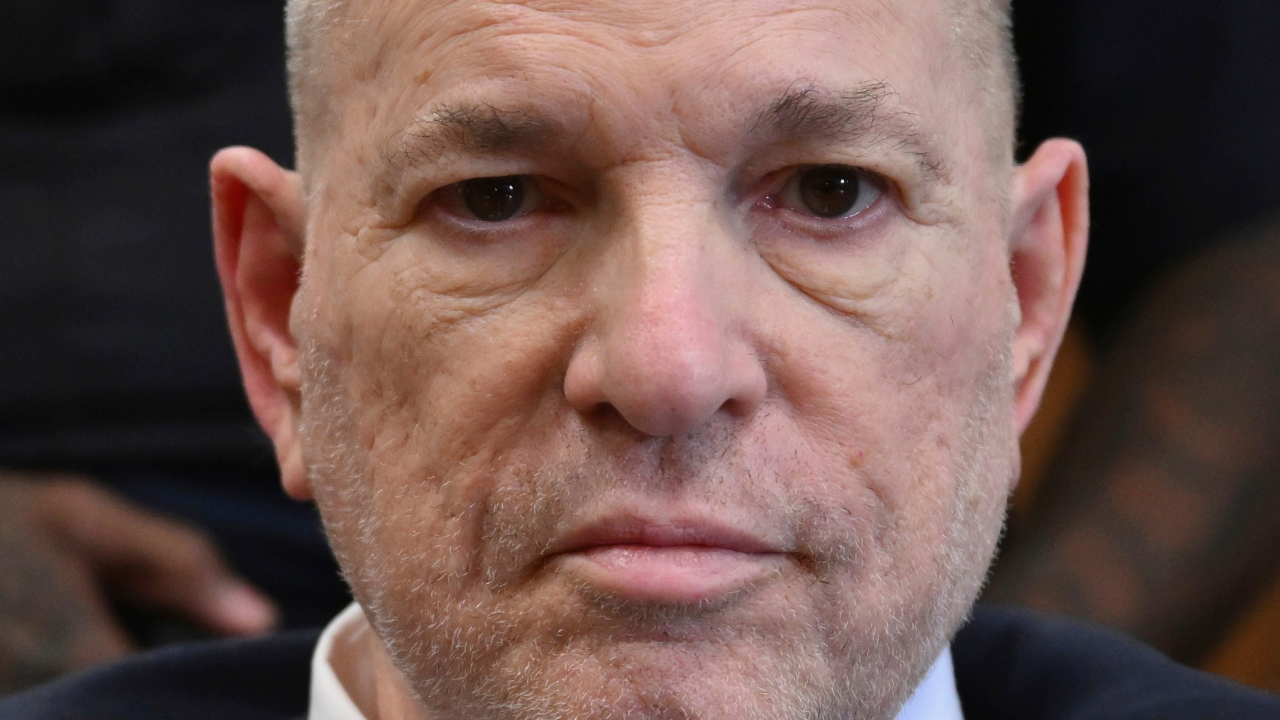
- Harvey Weinstein appeared in a New York court on Wednesday for a hearing ahead of his retrial on sex crimes charges.
- Judge Curtis Farber granted the prosecution’s request to combine Weinstein’s original case and a new charge into a single trial.
- Weinstein faces retrial on two sex crime charges after his 2020 conviction was overturned earlier this year, and in September, he was charged with a new assault. He pleaded not guilty.
Harvey Weinstein is back in court in New York on Wednesday for a hearing ahead of his retrial on sex crimes charges stemming from his landmark #MeToo case.
After the hearing got underway, Judge Curtis Farber granted a prosecution request to consolidate that case and a newer charge into a single trial.
The former movie mogul was facing retrial on two sex crime charges after the state’s highest court overturned his 2020 conviction earlier this year. Then in September, he was hit with a new charge accusing him of another assault. He has pleaded not guilty.
HARVEY WEINSTEIN PLEADS NOT GUILTY TO NEW SEX CRIME CHARGE IN NEW YORK
Weinstein was convicted on charges that he forcibly performed oral sex on a TV and film production assistant in 2006, and rape in the third degree for an attack on an aspiring actor in 2013. In the new charge, prosecutors say he forced oral sex on a different woman in a Manhattan hotel in the spring of 2006.
Harvey Weinstein appears in Manhattan Criminal Court on May 29, 2024, in New York. (Angela Weiss/Pool Photo via AP, File)
Manhattan District Attorney Alvin Bragg’s office had argued in court filings that holding separate trials would be “extraordinarily inefficient” and waste judicial resources. Prosecutors said the cases have significant overlap as they involve similar criminal statutes, witnesses, expert testimony and documentary evidence.
Weinstein’s lawyers had argued in court filings that the cases should remain separate. They said prosecutors are attempting to “expand the scope” of the court-ordered retrial and transform it into “an entirely new proceeding” by including the new charges.
There’s also the question of when Weinstein’s retrial is expected to actually begin.
HARVEY WEINSTEIN’S NEW SEXUAL ASSAULT TRIAL SET AFTER RAPE CONVICTION OVERTURNED
Faber had tentatively scheduled Weinstein’s trial to open on Nov. 12, but both defense lawyers and prosecutors have voiced concerns the date won’t give their side enough time to prepare.
Weinstein has been in custody at the city’s Rikers Island jail complex and has faced numerous health complications while behind bars.
He was also convicted of rape in Los Angeles in 2022, though his lawyers have appealed.
The sexual assault and harassment allegations against Weinstein turbocharged the #MeToo movement in 2017.
The 72-year-old former producer co-founded the film and television production companies Miramax and The Weinstein Company. He produced films including “Shakespeare in Love” and “The Crying Game.”
Read the full article from Here

Boston, MA
Duck parades, outdoor drinking, and Gronk in a kilt. Here’s how Friday’s World Cup festivities unfolded. – The Boston Globe

Despite concerns about transportation and crowd management, the region’s biggest World Cup day yet appeared to unfold largely without major problems.
Morocco fans, many of whom celebrated on Shirley Avenue in Revere, rejoiced after their win against Scotland.
“We’re going to go very far in this World Cup,” predicted David Lalou, a Moroccan fan from Casablanca who saw the game live.
Here’s how Friday’s festivities unfolded.
The drinks continued flowing
Mayor Michelle Wu announced Thursday that in two zones in the city – the Temple Place Social District and the Union-Marshall Street district – it would be legal for patrons to consume alcohol outdoors.
The measure took effect Friday, and by game time the two zones had quickly become lively block parties, complete with live music and hearty Scottish accents.
Zachary Lobel, 22, of Newton, and Ruairidh Davidson, 24, of Inverness, Scotland, independently brought their bagpipes to Union Street. The pair found each other, and a crowd of people gathered to watch them play.
George Comeau, a senior event manager with the Downtown Boston Alliance, organized the outdoor alcohol consumption zone on Temple Place. He estimated at 6:30 p.m. that 4,000 fans were watching the Scotland-Morocco game from the party there.
On the Common, a free watch party attracted fans of every competing team.
Stan Abraham, 38, of Jamaica Plain, came with friends to support Haiti in its match against Brazil.
“I just got to be around my people, around the energy,” he said.

Massachusetts Senator Ed Markey, who is up for reelection this year, shook hands and posed for pictures with gleeful Scottish fans outside The Dubliner, the popular Government Center bar.
“I would’ve said it was impossible to drink Boston dry, but clearly [the Scots] are here and they are testing the capacity of the city to serve them,” Markey said. “It’s just a happy week.”

In the Boston Public Market, which extended its hours for FIFA Fan Fest, thirsty Scottish fans did just that, lining up through the narrow Boston Beer Alley, their arms filled with as much alcohol as they could carry.
“I don’t think we’ll last all night,” said owner Dawa Sangpo.
Also in the Public Market were Moroccan fans, many of whom frequented Mo’Rockin Fusion, a fast-casual restaurant where the food is inspired by owner Morad Bouzidi’s childhood in Morocco.
“It’s 100 percent the Moroccan experience,” Bouzidi said.
Yes, the World Cup is in Boston, but, like, not actually in Boston.
As was the case before last week’s game, South Station was packed, but some fans reported an easier commuting experience this time and Globe reporters observed a quick-moving queue.
“I had a pretty smooth experience,” said James Pennie, who is visiting from Vancouver but is originally from Scotland.
Near 3 p.m., as a final few fans jogged through the queue to enter South Station, MBTA employees yelled out encouragement.
“No Scotland, no party!” they said.

Richard Sullivan, the Transit Police superintendent, said the fans were “a very orderly crew.” The MBTA sold over 19,000 tickets to and from Foxborough as of 3 p.m. Friday.
“The queues were very minimal,” said Phil Eng, the MBTA’s general manager. “We got everyone through.”
But not everyone took the commuter rail. A Globe photographer witnessed a convoy of 12 school buses, packed to the brim with Scottish fans, pulling into South Bay to pick up online alcohol orders, before going on to Foxborough.

A duck ? Leading a parade? And what was that about Gronk?
Patriots legends Rob Gronkowski and Julian Edelman appeared on Fox’s pregame show wearing kilts, accompanied by a man playing bagpipes.
Edelman and Gronkowski applauded the Scots’ drinking prowess after they drank some Boston bars out of beer over the last week.
“The last time it happened was after we won the Super Bowl in 2015 against the Seattle Seahawks,” quipped Gronkowski.
And in Providence, a famous duck named Dawn led Scottish fans on a very orderly march. In a video shared on Dawn’s Tiktok page, the little creatures waddles forwards, a small Scottish flag on its back, while leagues of kilted men with bagpipes march behind it.
Jessica Rinaldi, Omar Mohammed, and Amin Touri of the Globe staff contributed to this report. Globe correspondents Ariela Lopez, Aayushi Datta, Lauren Albano, Audrey Tomlin, Jaden Perry, and Emily Spatz also contributed.
Truman Dickerson can be reached at truman.dickerson@globe.com.
Pittsburg, PA
Analysis: Most Pittsburgh‑area communities are losing residents — here’s why that might be OK


WETHERSFIELD, Conn. (WFSB) – A tractor trailer’s diesel fuel saddle tank ruptured on I-91 north between exits 25 and 27, state police said.
Approximately 25 to 30 gallons of fuel was released to the road surface, according to the state Department of Energy and Environmental Protection. No ground soil or waterways were involved, DEEP said.
The two right lanes were closed, according to the state Department of Transportation.
No other vehicles were involved and no injuries were reported, state police said.
Wethersfield Fire Department solidified the diesel fuel on the ground surface with Speedy Dry, DEEP said. An environmental cleanup contractor was en route for cleanup.
Copyright 2026 WFSB. All rights reserved.
-

 Detroit, MI16 minutes ago
Today in History: June 20, race-related rioting erupts in Detroit
-

 San Francisco, CA25 minutes ago
San Francisco hotels see steady World Cup business, but fall short of Super Bowl surge
-

 Dallas, TX30 minutes ago
Dallas International Piano Competition brings finalists June 23
-

 Miami, FL37 minutes ago
Where to watch San Francisco Giants vs Miami Marlins: TV channel, start time, streaming for June 20
-

 Boston, MA40 minutes ago
Duck parades, outdoor drinking, and Gronk in a kilt. Here’s how Friday’s World Cup festivities unfolded. – The Boston Globe
-

 Denver, CO45 minutes ago
Rockies ride Kyle Freeland’s gem, Braxton Fulford’s double to 4-3 win over Pirates
-

 Seattle, WA52 minutes ago
Suarez’s no-hit try ends on Naylor double in seventh, but Boston still tops Seattle
-

 San Diego, CA55 minutes ago
Neymar expected to return from right calf injury and play for Brazil in World Cup against Scotland

