News
Money for cutting-edge climate technology could dry up in a second Trump term


Power lines lead into the coal-fired Intermountain Power Plant outside Delta, Utah. The plant, which is getting new turbines that can burn natural gas and hydrogen, is at the center of an ambitious project to cut greenhouse gas emissions.
George Frey/Getty Images
hide caption
toggle caption
George Frey/Getty Images
A couple hours south of Salt Lake City, the open desert is a hive of activity. Hundreds of workers push gravel and pull cables around low-slung green buildings. Beyond a guard shack, a stream of pickup trucks buzz along a two-lane highway that fades into sagebrush.
The workers spill into Delta, a nearby town of about 3,700. Motels and trailer parks are full. And at dinnertime, there’s a line inside El Jalisciense, a taco shop on Main Street. “If you watch the overpass, people coming into town at five and six in the evening, it’s just nonstop,” says John Niles, Delta’s mayor.
Big companies — including a major oil and gas producer — have come to this corner of Utah looking for a new way to reduce the greenhouse gas emissions that drive climate change. But even with the backing of deep-pocketed corporations, it’s hard to fund innovative projects like the hydrogen plant that’s being built near Delta. So, the developers got help from the federal government’s Loan Programs Office, part of the Department of Energy that supports groundbreaking endeavors.
The government has a long history of nurturing emerging industries and technologies, including the oil and gas drilling technique known as fracking, an early version of the internet and civilian aviation.
However, funding for cutting-edge energy projects like the one in Utah could dry up if Donald Trump is reelected. During Trump’s first term, his administration tried to strip funding from the Loan Programs Office. The agency survived, but lending slowed dramatically. Conservative activists are still pushing to eliminate the office, saying in a policy agenda called Project 2025 that the government shouldn’t back “risky business ventures or politically preferred commercial enterprises.”
Democrats take a different view. Laws signed by President Biden turbocharged the agency’s lending ability and authorized it to invest in new areas like mining for critical minerals. In general, a lot of the Biden administration’s climate spending is going to Republican-controlled states.
The debate around the Loan Programs Office underscores the stakes in this election for America’s role in developing clean energy and the future of climate action.
Without government investment in innovation, the United States would struggle to make deep cuts in climate pollution or to compete with China and other nations that are racing to dominate emerging technologies, says Tanya Das, who works on energy innovation at the Bipartisan Policy Center.
“It is very helpful for us as a society for government to be investing in technologies that better our lives,” Das says. “Because it really won’t happen otherwise.”

Electrolyzers fill a pair of warehouses in the desert near Delta, Utah. The machines make hydrogen by splitting water molecules.
Michael Copley/NPR
hide caption
toggle caption
Michael Copley/NPR
Funding innovative projects is hard, even for big companies
The Loan Programs Office was created almost two decades ago through the Energy Policy Act of 2005, which was passed by a Republican Congress and signed by President George W. Bush. At the time, energy costs were rising, and the country was increasingly dependent on foreign oil.
The legislation was shaped by lawmakers’ “competing concerns about energy security, environmental quality, and economic growth,” according to the nonpartisan Congressional Research Service. Buried in the law were instructions for the government to support innovative technology to cut air pollution and greenhouse gas emissions.
With a budget that totals less than 1% of government spending, the power of the Loan Programs Office is its ability to provide hundreds of billions in loans and loan guarantees to companies. The office has issued $42.4 billion since it started. It recently provided a loan guarantee to reopen a nuclear power plant in Michigan, and it’s lending money to build battery plants in Michigan, Ohio and Tennessee.
That support can be crucial even for big companies like the oil giant Chevron and Mitsubishi Power Americas, which are building the Utah hydrogen plant with help from a $504 million loan guarantee.
The problem companies face is that it’s hard to get a loan in the private sector to build groundbreaking infrastructure: Banks need to get paid back, and they don’t like taking a chance on something new.
“The reality of pretty much everything in this space is that it’s still very early days, and this is all about making progress” toward climate targets, says Austin Knight, vice president of hydrogen at Chevron New Energies. “And that requires policy. It requires support to get some of these new technologies off the ground and up and running so that they can compete with some of what’s already in the system today.”
Hydrogen developers found a ‘unicorn’ in the Utah desert
Chevron and Mitsubishi Power’s hydrogen plant is designed to solve a challenge that’s emerged hundreds of miles away in California, as it tries to get off fossil fuels.
California has installed more solar than any other state. Sometimes, solar panels produce more power than California needs. It happens mostly in spring, when it’s sunny but people don’t use a lot of electricity for air conditioning because temperatures are mild. That’s a problem because power grids have to keep a perfect balance between electricity supply and demand. So at certain times, California regulators cut back how much electricity solar panels produce, essentially wasting clean energy. In April alone, California “curtailed” enough renewable energy to power nearly 78,000 homes for a year.
That’s where Chevron and Mitsubishi Power come in. When California has too much renewable energy, some of the state’s utilities can send it over transmission lines to the Utah project. There, the Chevron-Mitsubishi plant will take the extra power to run machines called electrolyzers that split water molecules to make hydrogen, a fuel that doesn’t create greenhouse gas emissions when it’s burned. At about eight feet across, the electrolyzers are made of metal plates and membranes held together by huge bolts. They fill a pair of warehouses in the Utah desert.
The hydrogen, once it’s created, will be stored in underground salt caverns the size of the Empire State Building. From there, the gas can be piped to run turbines at the nearby Intermountain Power Plant, which is already hooked up to a transmission line to send electricity back to California.

Workers install solar panels on a home in California in 2023.
Sandy Huffaker/Bloomberg via Getty Images
hide caption
toggle caption
Sandy Huffaker/Bloomberg via Getty Images
The idea is to use the excess renewable energy to make hydrogen that can be stored and then used to generate and deliver power months later when electricity demand soars with hotter temperatures.
“This location, I’ve called it a bit of a unicorn,” says Sophie Hayes, who promotes clean energy in Utah for Western Resource Advocates, a nonprofit whose mission is fighting climate change. “Because it does tick a lot of boxes in terms of easing the logistical challenges of a big, pioneering hydrogen project.”
After burning coal for decades, the Intermountain Power Plant is getting new turbines that will initially run on a blend of natural gas and hydrogen. By 2045, Chevron and Mitsubishi Power say the plant will exclusively burn so-called green hydrogen, which is made with renewable energy. And as new wind and solar plants are built across the western U.S., the companies say they can expand the project.
Hayes says it’s easy for companies to say they’ll produce green hydrogen, so watchdogs need to ensure projects like this one actually run on renewable energy, not fossil fuels. But Hayes is hopeful the Utah plant will deliver.
“Hydrogen is not a panacea for replacing fossil fuels,” Hayes says. But climate change is “a huge challenge,” Hayes says, “and we need all the tools we can get.”

Piles of coal wait to be burned at the Intermountain Power Plant near Delta, Utah, in 2022.
Rick Bowmer/AP
hide caption
toggle caption
Rick Bowmer/AP
The Energy Department is still haunted by a big failure
The problem with projects like the one in Utah, according to some conservatives, is that taxpayer money is involved.
Attacks on the Loan Programs Office go back to at least 2011, when a solar panel manufacturer called Solyndra defaulted on a $535 million loan guaranteed by the Energy Department. Project 2025, the governing proposal for the next Republican administration from the Heritage Foundation, a conservative think tank, calls for eliminating the office, as well as a part of the Energy Department called the Advanced Research Projects Agency-Energy, which funds early-stage technology that has the potential to “radically improve U.S. economic prosperity, national security, and environmental well being.”
It’s one thing for the government to support “fundamental scientific research,” Project 2025 says, but it shouldn’t be “picking winners and losers in dealing with energy resources or commercial technology.”
The Trump campaign didn’t respond to requests for comment. A spokesperson for the Harris campaign declined to comment.
Trump has distanced himself from Project 2025, but dozens of its writers and architects worked in his administration. And the plan’s vision for climate and energy policy aligns with the former president’s. Both downplay threats from global warming, talk of boosting fossil fuel production and criticize government support for cleaner sources of energy.
“Where it makes sense to have new technology, we should have new technology,” says Diana Furchtgott-Roth, director of the Center for Energy, Climate, and Environment at the Heritage Foundation. “But we shouldn’t be subsidizing this new technology if it results in higher electricity prices for Americans, fewer jobs, higher food prices, and problems for small [businesses] and farmers.”
Bill Wright agrees. An elected official in Utah’s Millard County, where the hydrogen plant is being built, Wright says the development’s welcome, but he doesn’t think taxpayer money should be used for it. Government-backed projects are “profit centers for globalists,” Wright says, describing himself as “really to the right of average” in deep-red Millard, where nearly 90% of voters supported Trump in 2020. “That’s why [companies] do it. That’s the only way they can get money out of my pocket.”

Power lines run through the Utah desert near the hydrogen plant that Chevron and Mitsubishi Power Americas are building.
Micheal Copley/NPR
hide caption
toggle caption
Micheal Copley/NPR
Sitting in his backyard surrounded by alfalfa farms, Wright criticizes government subsidies of all kinds. “Solar’s terrible this way,” he says. “I like solar, but they all want a tax rebate.”
In recent years, a large share of federal energy subsidies have gone to renewables, according to the Energy Information Administration. But the country’s oil and gas industry was built up over decades with the government’s support, says John Morton, a managing director at an investment and advisory firm called Pollination and a former climate counselor to Treasury Secretary Janet Yellen.
Shifting to cleaner sources of energy promises a more affordable system for consumers than the one that exists now, according to the International Energy Agency. But that kind of change — across entire economies — requires big investments in new technology that individual companies are unlikely to make on their own, Morton says.
“We absolutely need to be leaning into this as a country and playing a leadership role by supporting our industries to move more quickly in this transition,” he says.
Sometimes that means government investments don’t work out, and that’s OK, says Das of the Bipartisan Policy Center. “That’s part of how innovation works.”
But failure is rare at projects supported by the Loan Programs Office. The agency recently reported losses of 3%.
After Solyndra, the Loan Programs Office might be best known for lending the electric-vehicle maker Tesla $465 million in 2010. Tesla repaid the loan a few years later.

Intermountain Power Agency spokesperson John Ward walks through the coal plant near Delta, Utah, in 2022.
Rick Bowmer/AP
hide caption
toggle caption
Rick Bowmer/AP
The U.S. is chasing economic development while cutting climate pollution
In Delta, Mayor John Niles is guarded about the hydrogen project. The coal plant outside town was an economic cornerstone for the city. Niles worked there for 30 years, and two sons followed him there. He’s not sure the hydrogen and gas plants will have the same impact.
“You could hire on out there right out of high school, they would teach you your skill while paying you a good wage,” Niles says in his office at Delta’s municipal building, next to the town’s only stoplight. “And that, to me, has been a lifesaver for our community, for our young people.”
The hydrogen plant will have about 20 full-time workers, according to an environmental assessment. And the gas plant will employ around 120 more, compared to about 300 at the coal plant, John Ward, a spokesperson for the Intermountain Power Agency, the plant’s owner, said in an email. Utah’s Republican-led government is trying to keep the coal units running, but it’s unclear how those efforts will play out.
“We are doing everything we can from a hiring standpoint,” says Michael Ducker, chief executive of MHI Hydrogen Infrastructure, a subsidiary of Mitsubishi Power Americas. “In the long run, we’re looking at different opportunities for scaling out this hydrogen hub” to deliver more economic benefits.
As communities like Delta wrestle with lost coal jobs, they also face worsening impacts from climate change. Last year was the hottest on record, this year will be among the five hottest, and scientists warn the next decade will be hotter still. Utah endured record heat this summer, a hallmark of human-caused global warming. At a recent meeting of local officials from around the state, Niles says there was a lot of talk about water shortages.
“They actually can’t grow, because [there’s] no water,” he says. Delta has reserves, “but we need another well,” Niles says, “because our wells right now are running 24/7 when it’s this hot.”

Chevron and Mitsubishi Power Americas will take renewable energy from California to run electrolyzers inside these green buildings in the Utah desert.
Michael Copley/NPR
hide caption
toggle caption
Michael Copley/NPR
The Environmental Protection Agency expects that in the coming decades, rising temperatures will reduce the flow of water on Utah’s rivers, raise the threat of wildfires and make farms and ranches less productive.
With that outlook, Jigar Shah, director of the Loan Programs Office, says his agency will work with anyone who has a credible plan to deal with the challenge, including fossil fuel companies that are distrusted by climate activists.
“I totally understand why the track record of some of these companies would be offensive to some of these groups,” Shah says. “But from our perspective, we are solving the toughest problem that, frankly, the human species has today. That means every single super-smart person in our entire country gets to play.”
With two months to go before an election that could shake up U.S. energy and climate policy, Shah sounds upbeat. The Inflation Reduction Act, a 2022 landmark climate law, is driving big investments in Republican-led states. And Shah says there’s a line of companies at his door looking for help funding ambitious energy projects.
“That makes me excited,” Shah says, “about the economic growth potential in our country.”


Supreme Court Justice Amy Coney Barrett speaks at the Reagan Library on Sept. 9, 2025, in Simi Valley, Calif. Barrett discussed and signed copies of her new book, Listening to the Law: Reflections on the Court and Constitution.
Mario Tama/Getty Images
hide caption
toggle caption
Mario Tama/Getty Images
Even as the Supreme Court was handing down one legal thunderbolt after another last week, the justices were quietly releasing their annual financial reports. Justice Samuel Alito was the only sitting justice to request an extension, which he has done for 15 years. The disclosures do not give a complete account of the justices’ total income and wealth, but they give insights into their concertgoing, guest professorships and even their involvement in youth sports.
In addition to their salaries, much of the justices’ reported income came from their book deals. Justice Ketanji Brown Jackson led the pack earning more than $1.1 million last year for a total of roughly $4 million since her memoir, Lovely One, was published in 2024.

Justices Sonia Sotomayor, Neil Gorsuch, Amy Coney Barrett and retired Justice Anthony Kennedy also reported income from published books. Earnings from their books ranged from $849,000 for Barrett, to $300,000 for Gorsuch and $88,000 for Sotomayor, whose books include her 2013 autobiography and five children’s books. Justice Clarence Thomas, who previously earned $1.5 million for his 2007 memoir, listed no publisher payments last year, and Justice Brett Kavanaugh, one of 13 co-authors of a 2016 legal treatise, also received no payments last year. Kavanaugh is said to be working on a memoir but he listed no payments for the anticipated book. Alito does have a book coming out in the fall, but with his financial report still outstanding, there is no data on how much he was paid for the work in 2025.
The only two sitting justices who have not written books are Chief Justice John Roberts and Justice Elena Kagan.
Many justices also earned income from teaching at law schools. Roberts reported income from New England Law, located in Boston, and Gorsuch reported teaching income from George Mason University in Virginia. Thomas taught classes at Catholic University in Washington, D.C., and Barrett and Kavanaugh taught at Notre Dame Law School. Barrett graduated from the school and began teaching there 23 years ago; Kavanaugh has family connections to Notre Dame.

The disclosures also report gifts, travel, food and lodging that the justices received in 2025. Jackson and Sotomayor were the only two to report gifts. Jackson was given a painting for her chambers valued at $2,500, and Sotomayor reported a trip to Kansas City to watch the opening of a musical based on her children’s book, Just Ask.
In addition, she reported receiving free tickets worth $4,333 while on “a private trip to Puerto Rico.” The tickets were from the record label that represents Bad Bunny, and her trip coincided with the artist’s months-long concert series in San Juan. Sotomayor’s parents were from Puerto Rico, and she has spent much time there over the years.
The justices also disclosed significant reimbursements for travel throughout 2025. Thomas’ travel, food and lodging expenses were paid for by the Hoover Institution for speaking at a celebration of conservative economist Thomas Sowell.
Sotomayor, Gorsuch, Barrett and Jackson were reimbursed for international travel, where they gave speeches, spoke about their books or taught. Roberts was the only sitting member of the court not to report any gifts or travel reimbursements.
The annual filings also shed some light on the justices’ activities off the bench. Kavanaugh reported that in addition to his duties as a Supreme Court justice, he serves as a coach to multiple D.C.-area Catholic Youth Organization girls’ basketball teams. Coach K, as he is known by his players, wrote the court’s June decision declaring that states can ban transgender women and girl athletes from playing on women’s and girls’ sports teams.

The justices’ salaries are established by law. The chief justice earns the most, at $320,700 per year. The eight associate justices earn $306,600 per year. While that is a lot of money to most Americans, the justices and even their law clerks could earn more the minute they leave their Supreme Court jobs for large law firms.
Roberts was the only member of the court to report investing in individual stocks. Alito in the past has also owned shares of individual stocks, but his report is not due for three months when his extension runs out. For the most part, the justices do not own individual stocks, but do invest in index funds, mutual funds and other such investment programs in order to both make money and limit potential conflicts of interest that would require their recusal from certain cases.
However — and this is a big however — the financial reporting forms the justices are required to fill out are so unspecific and the reporting ranges for investment earnings are so broad that it is impossible to determine any justice’s overall wealth. In addition, the current value of the justices’ homes isn’t reported. Neither is their spouses’ income, which in the case of the chief justice, for instance, likely far exceeds his take-home pay.

At least two structural columns buckled and failed in a 37-story office tower in Midtown Manhattan on Tuesday, prompting evacuations of nearby streets and buildings. While city officials asserted that the tower was in no danger of collapsing completely, outside engineers said further failures in the structure could not be ruled out.
A pair of columns that failed completely were part of the tower’s existing structure. A New York Times review of images and videos from inside the building has found that several floors were added atop these columns.
City officials said in a news conference on Tuesday that the building was continuing to move, while they simultaneously assured the city that the building would not suffer “total collapse.” “The way this building is constructed, it’s a steel-frame building,” John Esposito, a chief in the Fire Department in New York, said at the afternoon news conference. “So, it would not be a total collapse. It would be more of a localized collapse.” Still, he said, “that remains our concern, that it’s moved.”
Engineers said that the movement itself was cause for concern. In a properly designed steel building, they said, loads should redistribute quickly to surviving structural supports if columns failed.
Joe DiPompeo, a former president of the Structural Engineering Institute at the American Society of Civil Engineers, said that if the structure had been overloaded, he would expect any movement “to happen very quickly,” rather than gradually.
“Generally when a column buckles, it’s a sudden failure,” Mr. DiPompeo said. He said that a full collapse remained unlikely given the redundancies built into the building codes.
Engineers often refer to the most dangerous possibility as a progressive collapse, a process in which structures near the initial failure become overstressed and also fail, potentially bringing down the building if the sequence continues. While unlikely, it cannot be ruled out, Mr. DiPompeo said.
Footage recorded from inside the building shows at least two structural columns appear to have failed completely, Mr. DiPompeo said. Other nonstructural, interior walls — or at least the metal “studs” that were in place to hold them up — also appear to have deformed.
“The only way that really happens is if the floor above them dropped. It looks like the floor above could have dropped a foot or two, which is obviously not a good situation,” Mr. DiPompeo said.
The 37-story building is in the process of being converted from office space into residential units. Four new floors and a large vertical portion were added onto the existing building in recent months. The vertical portion consists of a stack of over a dozen new floors cantilevered out over the existing building below.
Engineers said that there was nothing inherently wrong with adding residential floors or the cantilevered section above the columns that failed, as long as the original structure and the modifications had properly accounted for the added weight and wind loads.
“The cantilever alone doesn’t change anything,” Mr. DiPompeo said, but it does put additional load on the columns underneath — a factor that should have been reflected in the design.
Nathan Berman, managing principal and founder of MetroLoft, the developer overseeing the conversion, said on Tuesday that “this incident is nothing more than a typical construction mishap.”
He said two columns near the northwest corner of the tower had bent under the weight of additions to the building above, most likely because those columns had not been properly reinforced, though he said an investigation would determine the cause. The rest of the columns, he said, “picked up the weight.” He estimated the affected floors above the failed columns had sagged by a maximum of four inches.
Mr. Berman said that he expected the problems to be fixed and the project to be completed with, at most, a slight delay.
On Tuesday evening, installation of temporary shoring was set to begin shortly, in order to help stabilize the 20th and 21st floors of the building.

The Justice Department sent letters warning election officials in all 50 states and the District of Columbia that they could face criminal prosecution over noncitizen voting, a spokesperson for the Justice Department confirmed Tuesday.
The letters, signed by Assistant Attorney General Harmeet Dhillon, who heads up the department’s Civil Rights Division, give states five days to explain how they will comply with federal voter eligibility laws and how they will maintain “clean voter lists.”
“The Department sent these letters to all 50 states and the District of Columbia, asking for voluntary compliance in a timely manner with their obligations under federal law to ensure only citizens vote in federal elections,” a Justice Department spokesperson said in a statement.
Noncitizen voting in federal elections is extremely rare, but Trump and his administration have falsely portrayed it as a widespread issue.
Michigan Secretary of State Jocelyn Benson, Nevada Secretary of State Francisco Aguilar and Utah Lt. Gov. Deidre Henderson are among those who said they received the letters from the Justice Department.
The letters say state election officers “could be criminally prosecuted for aiding and abetting” noncitizen voting. They further specify that any election officer who knowingly retains noncitizens on a statewide voting registration list or who facilitates noncitizens’ receiving and casting ballots could be subject to criminal liability.
“An intentional act that is aimed at diluting the votes of citizens could also constitute a violation” of federal law, the letters said.
Henderson wrote on social media that the threats constitute “truly bizarre behavior.”
“Got another love letter this morning from the DOJ sprinkled throughout with threats of criminal prosecution,” she wrote. “I’m sure I’m not the only chief election officer of a state who is being targeted for following state and federal laws by resisting DOJ’s demands for private voter data that have thus far been ruled illegal by at least a dozen courts.”
The letters are the latest move in the Justice Department’s campaign to assert more federal control over state elections.
While some states have complied with the administration’s demands that they hand over voter roll data, the Justice Department has sued 30 states and Washington, D.C., for resisting. So far, 11 different federal courts have dismissed the Justice Department’s efforts to seize voter rolls.
-

 Washington, D.C42 seconds ago
Police search for suspect caught on camera slashing tires in Georgetown
-

 Cleveland, OH8 minutes ago
Ohio ICAC Task Force’s “Operation Guardians’ Watch” Results in 25 Individuals Arrested and Charged for Attempting to Meet with an Underage Child to Engage in Sexual Activity
-

 Austin, TX11 minutes ago
Texas’ Goosby hosts camp to benefit heart research
-

 Alabama16 minutes ago
Alabama teen charged with stabbing mom to death issued vile threat to dad — as new pic shows bloodbath left behind
-

 Alaska23 minutes ago
Outmigration, inflation, choice schools: Alaska school closures likely to continue without changes
-
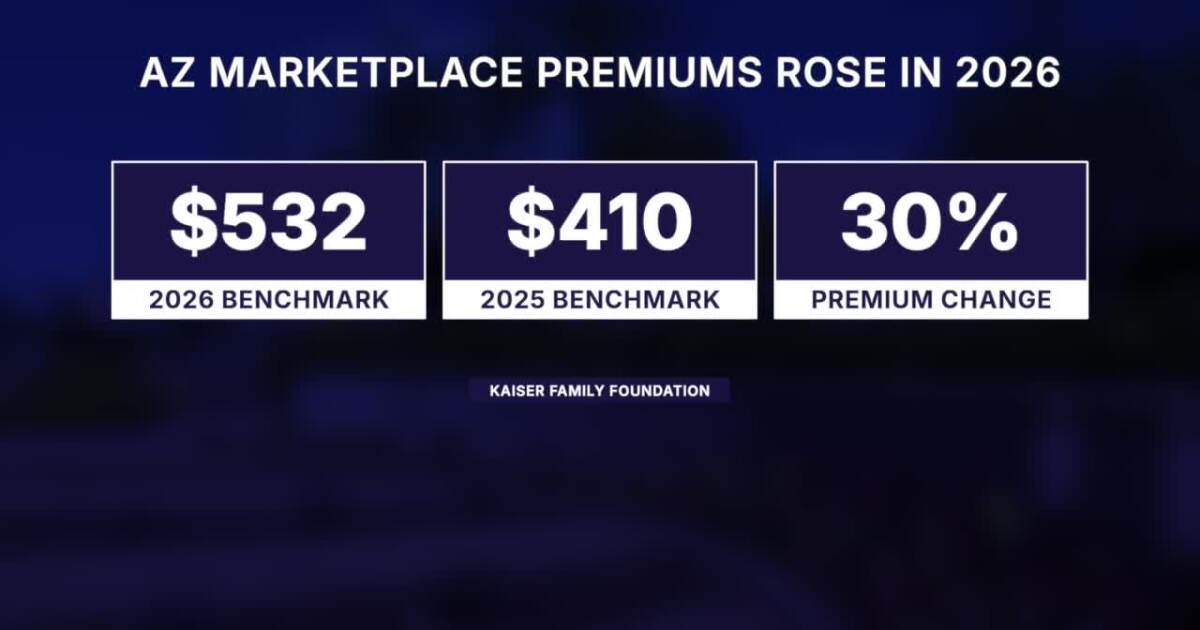 Arizona26 minutes ago
WATCH: Arizona’s health insurance marketplace is seeing dropping enrollment
-

 Arkansas31 minutes ago
ARKANSAS SIGHTSEEING: Randolph County can claim many firsts in Arkansas | Northwest Arkansas Democrat-Gazette
-

 California38 minutes ago
Toddler sustains brain injury in fall after California childcare worker threw him into the air, lawsuit says

