Business
Why workers still swelter, weeks after new heat standards took effect for indoor worksites

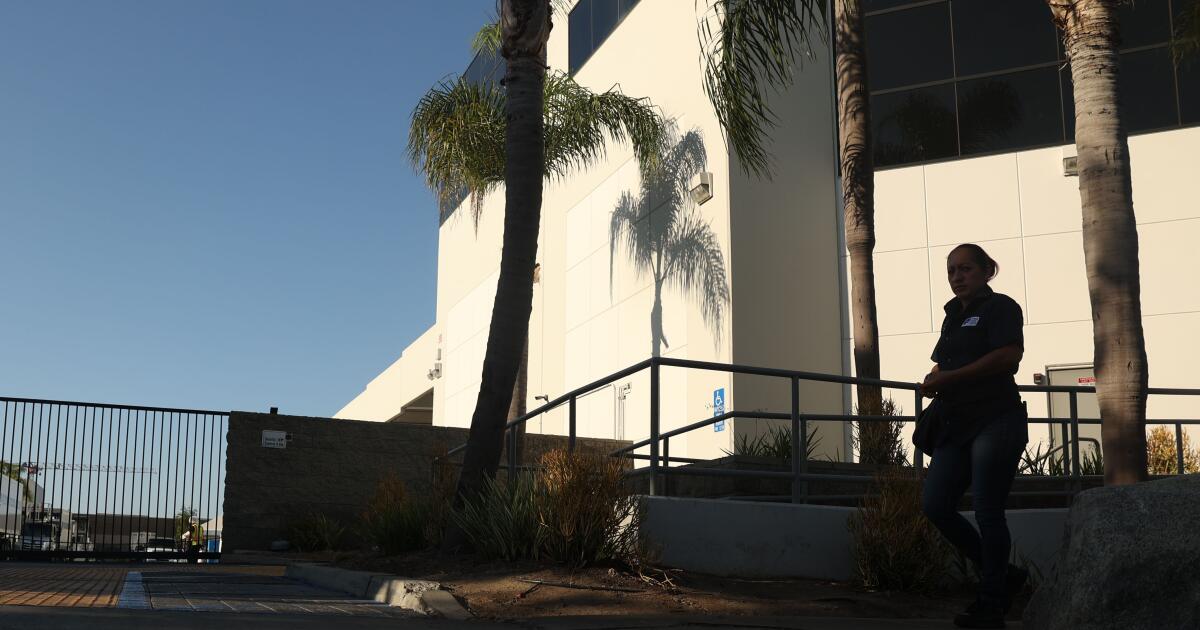
Alexia Rangel recalled sweating as she rang up customer orders at a Taco Bell in Alhambra during an early August heat wave. The air conditioning wasn’t working, she and fellow workers said, and heat radiated from the grills in the kitchen.
She remembers feeling dizzy a few hours into her shift, then her vision shifting to black and white. The color drained from her face, she said, and her lips turned purple.
“I nearly, almost passed out,” recounted Rangel, 20.
Despite new state regulations requiring workplaces to cool indoor climates when they reach unsafe levels, the temperature in the restaurant’s kitchen that day registered 104 degrees, according to a hand-held thermometer that Rangel said a co-worker showed her. Workers would include a photo of the temperature reading in a complaint filed with state regulators.
After years of delays, California’s new rule regulating heat in indoor workplaces took effect in late July. The rule, adopted by the California Division of Occupational Safety and Health, lays out heat illness prevention measures for indoor workplaces. It requires employers to provide easy access to clean drinking water and cooling areas, and to monitor workers for signs of heat illness whenever work site temperatures reach or exceed 82 degrees.
If temperatures climb to 87 degrees, or employees are required to work near hot equipment, employers must cool the work site or rotate workers out of hot environments. Workers are to be allowed an unlimited number of cool-down breaks to protect themselves from overheating.
Under California’s new indoor heat standards, employers are required to provide easy access to clean drinking water and cooling areas.
(Jason Armond / Los Angeles Times)
But more than four weeks after the regulations took effect, interviews with workers and union leaders indicate compliance varies by industry and workplace. Some workers interviewed by The Times said they continue to swelter. Many weren’t aware of the new rules.
The places where heat safety measures were in effect tended to be union shops where regulations had been written into existing contracts, or in industries such as demolition and hazardous materials removal where such precautions have become ingrained in workplace culture.
While employers have a legal responsibility to implement the new measures, advocates stressed that labor groups and community organizations will need to work with the state to raise awareness of the regulations and ensure employees have the information they need to push for changes. A major challenge will be supporting workers who fear retaliation, labor experts said.
“The timeline should be as soon as possible, because heat was killing workers yesterday,” said Renee Guerrero Deleon, an organizer at the Southern California Coalition for Occupational Safety and Health.
Some occupational health experts worry that Cal/OSHA won’t be up to the task of promoting and enforcing the new standards. The agency is confronting a severe staffing shortage that is hampering its ability to conduct workplace inspections. Cal/OSHA is already under fire for failing to aggressively enforce heat regulations for outdoor laborers, raising questions about its ability to ensure compliance with nearly 200,000 indoor sites.
Cal/OSHA spokesperson Peter Melton said in an emailed statement that the agency has begun “extensive campaigns on social media.” It will continue to ramp up inspections and work to increase hiring, Melton said.
The state estimates the heat standards will apply to about 1.4 million workers. The job sites expected to be most affected include industrial warehouses, commercial laundries, manufacturing facilities and restaurant kitchens.
Employers who fail to comply could face Cal/OSHA inspections and penalties of up to $15,873 per violation; penalties rise for deliberate or repeat violations.
At the Taco Bell in Alhambra where Rangel works, employees initially weren’t aware of the heat standards. Still, they were so concerned about conditions that, days after Rangel nearly fainted, workers held a one-day strike in front of the restaurant. They learned of the new rules while filing a complaint with Cal/OSHA.
Taco Bell Corp. did not respond to specific questions about its compliance with the heat law, but issued a more general statement saying it prioritizes the health and safety of employees. “In this case, the franchise owner and operator of this location took swift action to address the issue,” the company said.
Rangel said the restaurant, indeed, has felt cooler in recent days, adding: “It took for someone to almost pass out for them to do all this stuff, like fix the A/Cs.”

Ana Solis is a dishwasher with Flying Food Group, a catering company that services airlines. She says the heat emanating from dishwashing machines can be suffocating.
(Michael Blackshire / Los Angeles Times)
Ana Solis, 65, is among the workers who said they hadn’t heard about the new regulations until interviewed by The Times.
Solis is a dishwasher with Flying Food Group, a catering company that services airlines. Her work area in Inglewood has air conditioning, but she said that the system isn’t powerful enough to cool a room filled with steamy dishwashing machines.
She said the high heat sometimes leaves her struggling to breathe and with red, irritated skin that she treats at home with creams. Solis said workers at the site are allowed to go to an air-conditioned cafeteria for 10-minute breaks and lunch, but that she sometimes needs additional breaks, escaping to a cool hallway to catch her breath.
“We don’t have the right to a cool-down break,” she said, unaware the new regulations provide that right. “But sometimes I take it, because the heat makes me feel like I’m suffocating.”
Flying Food representatives did not respond to questions from The Times regarding how the company is complying with the heat standards.
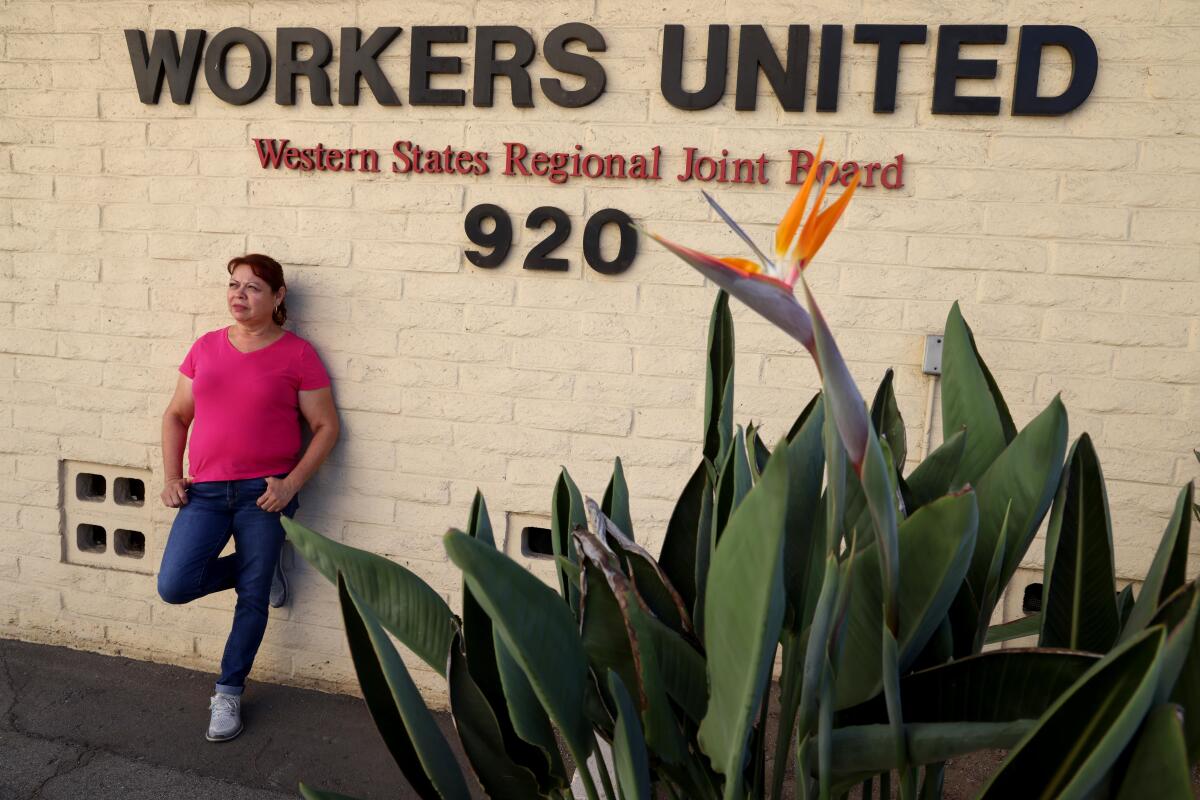
Margot Alvarez, an employee with Braun Linen, a commercial laundry company, was among the workers The Times interviewed who said they were unaware of the state’s new indoor heat regulations.
(Genaro Molina / Los Angeles Times)
Margot Alvarez, who sorts soiled bedding and other materials from convalescent homes and medical facilities at Braun Linen, a commercial laundry in Paramount, was also unaware of the regulations.
Hot steam wafts from a large washing machine as she works in a vinyl gown and gloves. She said the heat generated by sanitizing appliances makes the room feel at least 10 degrees hotter than the outdoor temperature.
After Alvarez raised concerns, she said, management installed a fan by her work station. But she said the fan mainly blows hot air in her direction. Twice in recent weeks, Alvarez said, she grew lightheaded and vomited in the restroom.
Scott Cornwell, owner of Braun Linen, declined to comment on specific concerns Alvarez raised. He said his company works closely with the union that represents its workers, and has installed fans and air conditioning. He said workers have access to cooling areas and water.
“We are in compliance,” Cornwell said.
Bertha Servin, 58, works at Mission Linen Supply in Chino, an industrial laundry where workers sanitize and iron linens, uniforms and bedding for nearby hospitals.
“The big industrial machines, the big dryers, the ironers, everything is hot,” Servin said.
But because of long-standing provisions built into their union contract, Servin said, she and her colleagues have access to fans and cooling machines, and workers come together to make requests, such as asking the company to repair a broken ice maker. The contract also requires the company to provide annual training sessions, where workers are told to be attentive to their bodies in the heat and to feel free to go to the lunch room for a cool-down break.
“If you don’t feel good, you have to report immediately to a supervisor,” she said.
For demolition and construction workers laboring on sizzling roofs or handling hazardous materials in humid plastic enclosures, heat has long been a serious threat. Several workers who specialize in asbestos, lead and mold removal said efforts to safeguard against heat illness predate the state standards. Instead, the industry serves as an example of what protocols can look like once they are ingrained in workplace culture.
Often, buildings undergoing construction have the power shut off, which means there is no air conditioning. On some sites, workers wear respirators and protective body suits as they extract hazardous materials. They often are slinging sledgehammers and crowbars “in a sauna-like environment,” said Fabian Plascencia, of the Northern District Council of Laborers Local 67.
Each morning, PARC Environmental, a hazardous services company based in Fresno, convenes a meeting to discuss the dangers presented by that day’s job site, and review a worksheet that outlines safety protocols, including heat illness prevention, said foreman Rodolfo Nunes.
“The company has always been really strict on heat, since we are from the Central Valley. Our guys need to stay hydrated at all times,” said Nunes, 35.

For demolition and construction workers laboring on sizzling roofs or handling hazardous materials in humid plastic enclosures, heat has long been a serious threat.
(Brian van der Brug / Los Angeles Times)
Nunes frequently works in triple-digit conditions. “Oh man, it gets overwhelming,” he said, adding that he’s finally developed a habit of drinking water before he’s thirsty.
“It’s adapting, just getting used to routines,” Nunes said. “When you’re new, you don’t know the first symptoms, like dry mouth. The small things that are going to take you to dehydration.”
Eco Bay, a Bay Area company that does hazardous materials remediation, convened supervisors for a meeting earlier this summer to discuss the new indoor heat rule.
Workers had already been trained to hydrate and take breaks, and to check in with each other for symptoms of heat illness using a buddy system, said Juan Carlos Moreno, 51, a supervisor at Eco Bay. The main changes communicated at the training involved monitoring temperatures throughout the job site and emphasizing to workers that there are no break limits in the heat.
Michelle Moreno, Eco Bay’s safety director, said the company now places thermometers in different areas of the job site and checks them throughout the day to ensure the temperature is under the 82-degree threshold.
During a months-long project inside a poorly ventilated building in the Sacramento area last year, Eco Bay provided workers with respirators that had built-in cooling systems, called a “powered air-purifying respirator.” Moreno said the company’s owner was a laborer himself before he started the company, and so he takes safety seriously and is “more than willing to spend money on it.”
“It comes down to companies having the right culture,” Moreno said, “and making sure people in charge are trained properly to recognize hazards and how to put controls in place, and also training workers so that they know how to recognize warning signs and to speak up if they aren’t feeling well.”
This article is part of The Times’ equity reporting initiative, funded by the James Irvine Foundation, exploring the challenges facing low-income workers and the efforts being made to address California’s economic divide.

Johnny Beig may have played in a semi professional cricket league in Australia, but this summer he’s a big fan of soccer in the United States.
It’s not just because he’s rooting for the World Cup team, though.
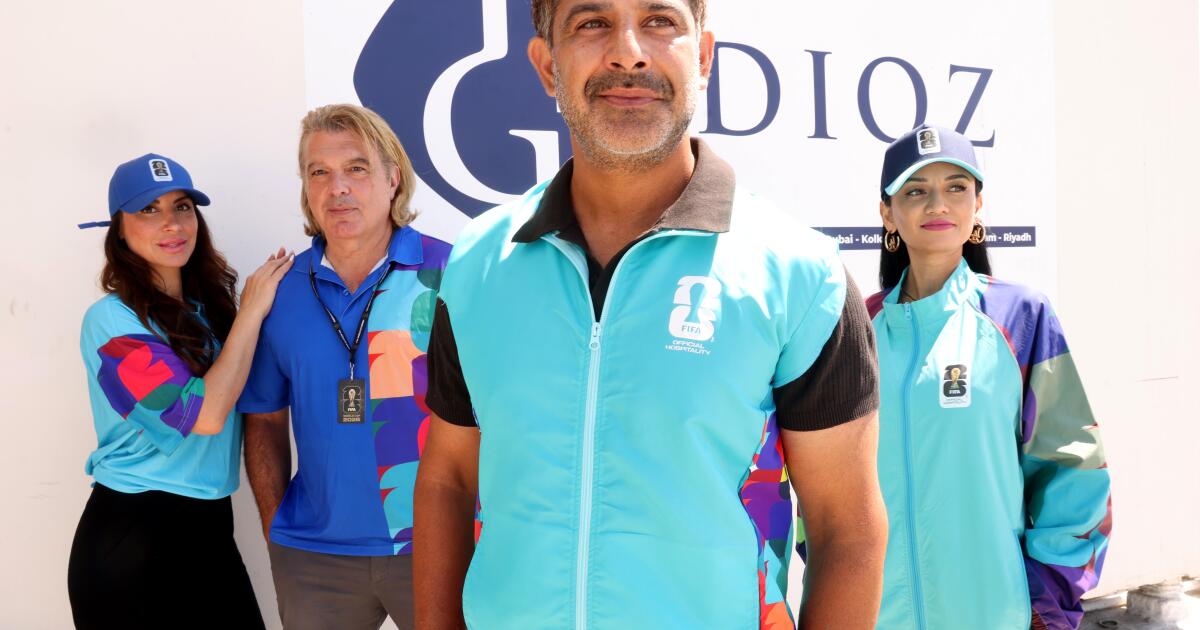
FIFA emblems are featured on jerseys that were created by the Dioz Group and distributed for all employees at the 16 FIFA World Cup venues this summer.
(Genaro Molina / Los Angeles Times)
Last year, Beig’s Beverly Hills-based company, Dioz Group, won a $2.5 million contract with On Location, FIFA’s hospitality partner, to design, manufacture and distribute uniforms for all employees working at FIFA World Cup venues this summer.
These include the people welcoming attendees into stadiums, VIP lounge chefs, waiters and the flagbearers during the opening ceremony.
After a multi-step application process, including presentations of its planning and strategy, Dioz says it produced more than 50,000 clothing garments including suits, jackets, shirts and hats and delivered them to the 16 World Cup venues around the U.S., Canada and Mexico in June.
Thanks in part to the World Cup contract, the company’s revenue has reached $15 million so far this year, compared with $20 million last year, Beig said. He declined to disclose the company’s net income but said the business was profitable.
“We are working with larger names that we would have never imagined we would,” he said. “The FIFA World Cup is the pinnacle. Working with the largest sporting event in the world is what we’re very proud of. I don’t think it gets any bigger than that.”

Volunteers line up to prepare to display the Canadian flag before a World Cup round of 32 knock-out match between Canada and South Africa at SoFi Stadium on Sunday.
(Kelvin Kuo / Los Angeles Times)
Dioz is among the many small businesses across Los Angeles that are getting a boost from the global sporting event, said Kevin Klowden, a senior fellow at the Milken Institute.
The influx of hundreds of thousands of fans into the city has been a boon to hotels, transportation services and restaurants, in addition to those in the special events and logistics economy, Klowden said, calling the event the “equivalent of multiple Super Bowls.”
“The number of contracts that are there, it’s a big deal,” he said. “Given the fact that L.A.’s filming is only slowly recovering, having something like the World Cup is definitely a boost.”
Dioz was co-founded by Johnny, 44, and his brother Tony in 2006. The brothers were born in India and raised in Australia, where Johnny enjoyed a brief career as a semi professional cricket player.
He realized his future wasn’t as a professional athlete, but he wanted to stay connected to the sports world, so he began making uniforms for his cricket team in 2006.
He then got a referral to make uniforms for multiple teams in the area before starting an apparel company.
“I wanted to stick with something I was passionate about, which is sports,” he said.

Volunteers unravel the center field display before a World Cup round of 32 knock-out match between Canada and South Africa at SoFi Stadium on Sunday.
(Ronaldo Bolanos / Los Angeles Times)
In 2012, Beig moved to Los Angeles and established Dioz‘s Los Angeles headquarters to tap into the U.S. market. During the pandemic, the company started supplying medical apparel to hospitals and schools, and the business took off, with revenue doubling in 2020, Beig said.
Dioz now has over 150 employees, including 15 in L.A., and manufactures its apparel at factories in China, India, Bangladesh, Turkey and the Philippines. Tony runs an office in Dubai.
Before the World Cup, Dioz provided employee uniforms for events including Super Bowl LIX and Copa America, which may have given it a leg up on the FIFA contact.
Now, with a World Cup contract on their resume, Beig said he’s setting his sights on even bigger events.
“This gives us an edge over the next FIFA events worldwide as well, where we can showcase our skills and we can handle it,” Beig said. “So it gives us a good opportunity to work with sporting events like the UEFA Championship and Premier League.”
As companies get new business from the World Cup, Klowden said it’s important that they leverage their new position to continue that growth.
Companies that benefited from the World Cup might be in a position to bid on even bigger contracts, especially with the Olympics coming up in 2028, Klowden said.
“The really important part in any of these deals is that if a company ran something like this, then they are able to build off of that success,” Klowden said. “Let’s say you’re a company that did a big uniform order or a big food order, and the World Cup goes, and you invested in new manufacturing capacity, or you invested in new clothing machines, or whatever you do; suddenly you don’t have that market anymore, then you’ve just wasted all that money ramping up.”
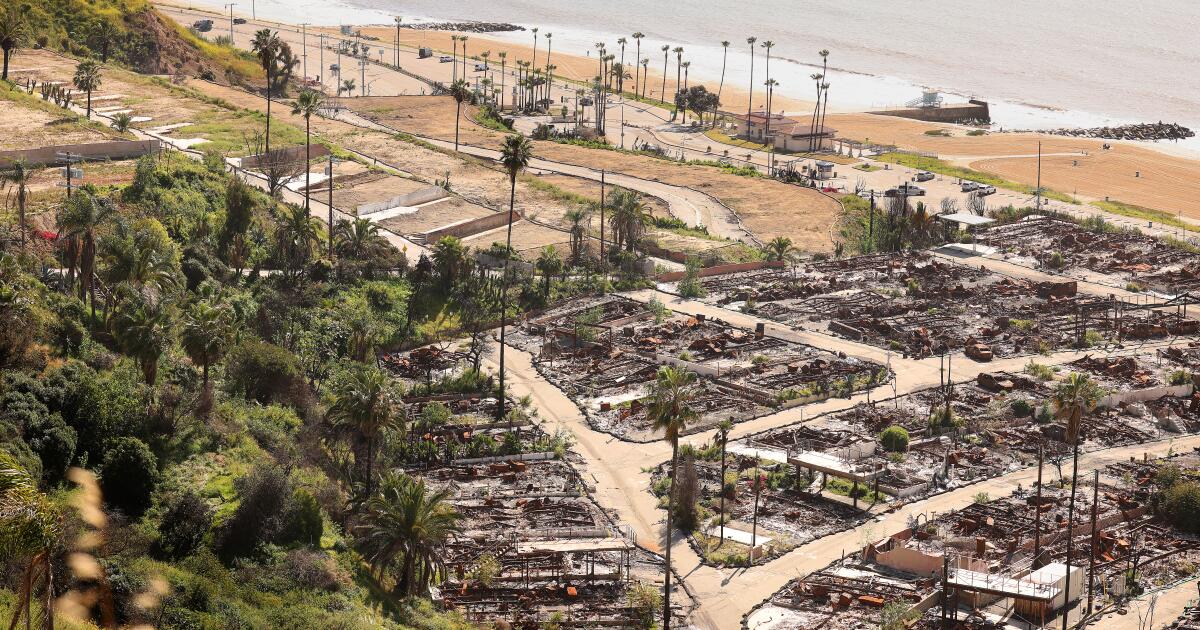
Surcharges that California homeowners have been hit with statewide by insurers defraying the costs of Los Angeles County’s wildfires were ruled legal in a decision released late Tuesday.
L.A. County Superior Court Judge Tiana Murillo turned down a petition by advocacy group Consumer Watchdog to halt the charges, which insurers began levying last year after the state’s insurer of last resort couldn’t pay all its January 2025 fire claims.
The California FAIR Plan, financially backed and operated by the state’s licensed home insurers, needed a $1-billion bailout from the insurers after it was hit with some $4 billion in claims.
Under a deal Insurance Commissioner Ricardo Lara worked out with the FAIR Plan in 2024, the insurers could seek state approval to surcharge their residential policyholders for up to half of any assessment totaling $1 billion in case the plan needed a bailout in an “extreme worst case scenario” — as it turned out it did.
A total of 105 insurers, including State Farm General — California’s largest home insurer — Farmers and Mercury sought and received approval for the surcharges.
Because the FAIR Plan assessed its member insurers based on their share of the state’s home insurance market, the policyholder surcharges were in the same ballpark. The median fee for homeowners was $28, according to the department of insurance.
The fee can be more or less according to the size of a homeowner’s premium and is split into monthly payments that insurers can spread over one or two years. Condo owners and renters on average were surcharged less.
In a court filing, Consumer Watchdog said $420 million in surcharges were approved.
In its April 2025 lawsuit filed against Lara, the Los Angeles group made a series of arguments in seeking to overturn the residential surcharges, which it deemed an industry bailout. It did not sue over related commercial surcharges.
Consumer Watchdog contended in its lawsuit that the surcharges violated Proposition 103 — the 1988 measure that governs insurer rate hikes — because the proposition does not allow for them.
It also claimed Lara did not follow regulatory protocol in promulgating the new policy.
The group further alleged that the FAIR Plan’s governing statutes do not give Lara the authority to permit the surcharges — and that the statutes require insurers to share in the plan’s profits and losses, and not shift losses to policyholders.
Murillo, and another judge who previously heard the case, turned down all of the consumer group’s arguments in separate rulings, the last of which Murillo issued Tuesday night.
Lara celebrated his legal victory over Consumer Watchdog, which has accused Lara of having close ties to insurers and sought to oust him from office. His terms ends in January.
“This victory sends a loud and clear message: The era of allowing special interests to derail consumer choice is over. We have the momentum, we have the authority, and we will continue to fight until every Californian has access to the coverage they deserve,” Lara said in a statement.
Attorney Will Pletcher, litigation director of Consumer Watchdog, said the group disagreed with the decision and would “consider all options to move this forward.”
“It’s important to try to protect California consumers from these surcharges that we think are in pretty clear conflict with both Proposition 103 and the FAIR Plan,” he said.
Hilary McLean, a spokesperson for the plan, said in a statement it did not have any position on the ruling, given the plan “does not have a role in determining how insurers manage costs associated with assessment.”
Denni Ritter, vice president of state government relations for the American Property Casualty Insurance Assn., a major industry trade group, said the decision rejected “the reckless lawsuit brought by the self-interested group Consumer Watchdog…”
“This ruling preserves a vital tool to protect the stability of the California insurance market. Blocking cost recovery would have undermined the state’s last-resort coverage option,” she said in a statement.
The 2024 policy was issued in response to the rapid growth of the plan due to a series of wildfires over the last decade that prompted multiple insurers to retreat from the state’s home insurance market.
The plan had 264,000 homeowners on its rolls in September 2022, a figure that rose to 452,0000 in the months before the fires — and its residential policyholders have since increased to 663,000 as of March.
The FAIR Plan offers policies that typically cost more than those issued by regular insurers while offering less coverage.
A Times analysis last year found that in the Palisades and Eaton fire zones, the plan’s rolls nearly doubled to 28,440 from 2020 to 2024.
That concentration of policyholders led to the plan’s large losses during the Jan. 7 wildfires, which damaged or destroyed more than 18,000 structures, killing at least 31 people.
It’s been estimated that the insured losses for the wildfires could ultimately total as much as $40 billion, exceeding any past wildfires worldwide. Ritter said that so far insurers have paid $23.7 billion in claims.
The 2025 wildfires were not the only time the FAIR Plan has needed a bailout, though it is the first time its member insurers surcharged policyholders.
In 1993, it assessed carriers after fires in Altadena and Malibu, and in 1994 it did so after the Northridge earthquake. The assessments totaled $260 million.
The plan received approval this year from the insurance department for a 29% rate increase for its homeowner dwelling policy that will take effect in October.

An electric Tesla Semi truck crashed into two vehicles in Dayton, Nev., over the weekend, killing two people and raising questions about the truck’s safety features.
The Lyon County Sheriff’s Office responded to a major collision around 7 a.m. on Sunday at the intersection of Highway 50 and Traditions Parkway about 40 miles east of Reno, the office said.
The office confirmed a semi-truck was involved in the accident, and footage of the scene shows it was a Tesla Semi.
It is the first known crash involving a Tesla Semi, an electric Class 8 truck that Tesla is building in Nevada and plans to ramp up production of. As interest in Tesla’s electric passenger vehicles wanes, the company is betting on the truck to give it a needed boost.
The trucks do not have the Full Self-Driving mode available in Tesla cars, but Tesla’s website says they come standard “with active safety features that pair with advanced motor and brake controls to deliver traction and stability in all conditions.”
According to the Lyon County Sheriff’s Office, preliminary statements obtained at the scene suggest the truck driver may have fallen asleep behind the wheel.
The crash is under investigation by the Nevada State Police Highway Patrol, which said additional information may be released next week.
The Record-Courier identified the victims as Sergio and Jennifer Villanueva, a couple who got married in 2022.
Tesla has not clarified if its semitruck has an automatic emergency braking system. Federal regulators are currently weighing a mandate for emergency braking systems in vehicles more than 10,000 pounds.
-

 Hawaii7 minutes ago
State parks superintendent accused of having 2 million secret nude recordings of employees
-

 Idaho10 minutes ago
Idaho Falls Chamber of Commerce CEO resigns amid podcast allegations – East Idaho News
-

 Illinois15 minutes ago
Illinois legislation to regulate cannabis market
-

 Indiana22 minutes ago
Prostitution charges filed against two women in Westfield
-

 Iowa25 minutes ago
After convictions for theft and abuse, Iowa nurse faces sanctions from licensing board
-

 Kansas30 minutes ago
Kansas man injured after jet ski incident at Lake of the Ozarks
-

 Kentucky37 minutes ago
Kentucky Picks Up Latvian Record Holder Nikolass Deicmans For Class of 2026
-

 Louisiana40 minutes ago
Republicans outpace registered Democrats in Louisiana for first time in history

