West
Federal prison worker dies after touching drug-laced package sent to inmate: DOJ

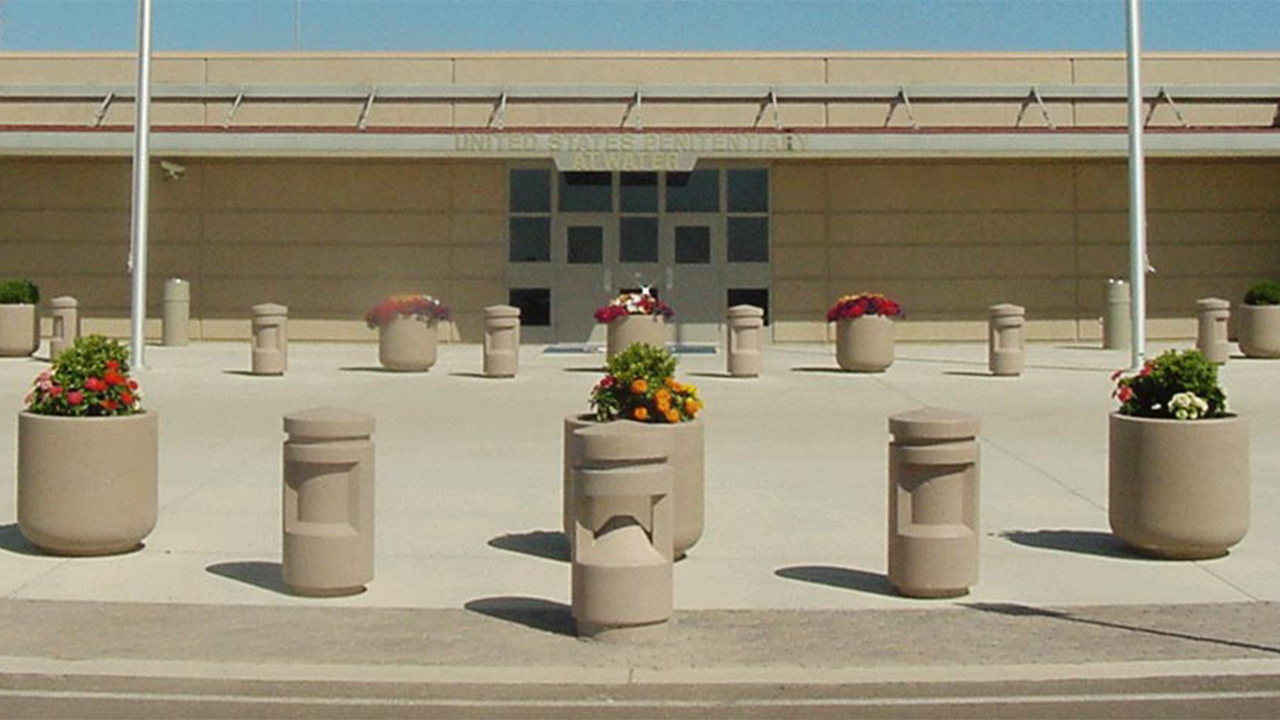
Three people are facing charges in the death of a federal prison worker in California who died earlier this month after handling a drug-laced package sent to an inmate at U.S. Penitentiary Atwater, the Justice Department (DOJ) announced Tuesday.
Inmate Jamar Jones, 35; Stephanie Ferreira, 35, of Indiana; and Jermen Rudd III, 37, of Missouri, are charged with conspiring to introduce narcotics into USP Atwater, the DOJ said.
Between July 15 and Aug. 9, Jones and Ferreira allegedly had Rudd mail a package laced with drugs that was fraudulently labeled as legal mail, according to court documents.
On Aug. 9, a USP Atwater corrections officer opened that package and, within minutes “began to feel ill,” the DOJ said. Federal officials said the package contained what they described as wet or waxy paper.
CASEY TIED TO CHINESE FIRM HE CLAIMED MCCORMICK-LED COMPANY INVESTED IN TO ‘PROFIT’ OFF FENTANYL CRISIS
An exterior view of USP Atwater in Atwater, Calif. (BOP)
Medical staff evaluated the officer and rushed him to a hospital, where he died. Another correctional officer became ill after handling the package but later recovered, the DOJ said.
Federal officials said the material handled by the officers “tested presumptively positive for amphetamines, fentanyl and ‘spice,’ or synthetic cannabinoids, among other substances.”
Jones, Ferreira and Rudd were arrested Tuesday.
A man prepares to smoke fentanyl on a park bench in downtown Portland, Ore., May 18, 2023. (Beth Nakamura/The Oregonian)
OVER 2,000 POUNDS OF METH SMUGGLED IN CELERY AT ATLANTA FARMERS’ MARKET
Each has been charged in a criminal complaint with conspiring to distribute controlled substances and introducing narcotic drugs to an inmate at USP Atwater, U.S. Attorney Phillip A. Talbert said.
Ferreira will be arraigned in the Southern District of Indiana, Rudd will be arraigned in the Eastern District of Missouri and Jones will make his initial court appearance next week in Fresno.
Each defendant faces between 20 and 30 years in prison and a fine of up to $250,000.
Read the full article from Here


The Washington Commanders are looking for a bounce back performance from their offense, and they’ll need their wide receivers to take a step up to do so.
Terry McLaurin is the clear No. 1 option at the position, but after him, there are several questions about how the rest of the room will shake out. The No. 2 spot is wide open, and there are several players who could fit the role and others in David Blough’s new scheme. Analysts Santana Moss, Logan Paulsen and Fred Smoot broke down the position on one of the most recent “Command Center” podcast episodes, and as one of the franchise’s all-time best receivers, Moss had a few thoughts on the group. Here’s his assessment on three wideouts and how they could fit into the offense.
“Knowing that he can play both outside and inside, I would think with some of the guys and their size and their experience, I would mainly probably see Antonio attack that middle. I think his route running ability is already to the level of some of these guys who have already played at this level. And just showing me that you don’t look like that this is new to you … He ain’t scared to go out and compete against these guys. To me — and we don’t know anything; we’re just sitting here speculating and assuming — I’d say he’s a slot guy out the gate.”
“I think if I had to just say if I look at that paper, and I asked any coach in this building by name how they think this guy played…if you tell me that Burks played well this offseason, he would be my No. 2 out the gate. He would be my No. 2 wide receiver because one: he brings size, he brings speed, he brings a gear at that size that a lot of people ain’t comfortable checking … You got a guy with size, leaping ability, the catch radius and can run.”
“They talk about how he was one of those guys from Day 1 that could play every position, and that’s stemming from him being a quarterback. Quarterbacks learn the game a little different from just a regular skill position guy. Luke came in here, and he knew X, he knew Z, he knew Gator. When you have those intangibles and you have that kind of mindset when it comes to playing that position, they can use him where they want to use him. That’s why I said he’s a great committee guy. He’s a guy that I know I’m gonna have on special teams as a returner, and guess what? If he’s not the starter, I’m okay with that because I know I’m going to ask more of him if somebody needs to take a breather.

Laramie Jubilee Days 2026 is in full swing!
Have you ever wondered about the history of Laramie’s signature summer event?
It Started Out As A One-Day Event
In fact, the first such celebration was known as ”Equality Days.” And despite the “Days’ as opposed to “Day” in the title, that very first celebration was a one-day event. It was held in conjunction with the anniversary of Wyoming Statehood on July 10, 1940
That’s according to the American Heritage Center at the University of Wyoming. That first celebration included a “fiddlers’ contest, chariot races, and a parade” according to the Heritage Center.
But people liked it so much they added two more days the following year and started calling it “Jubilee Days.”
Jubilee Days as it is now wouldn’t be possible without help from the city and private volunteers. To quote a 2025 City of Laramie news release “City of Laramie staff team has a big hand in coordinating the event. To ensure a successful week of events, this team includes staff members from various departments, including Parks & Recreation and Solid Waste.”
Private citizen volunteers also handle a wide range of duties, ranging from helping with parking to picking up trash to setting up and tearing down booths, to name only a few.
In doing so they are practicing some of the values that make both Laramie and Wyoming such a great place to live, such as pitching in to help neighbors and going the extra mile to do what is needed!
Torrington Tailslide AcroRodeo 2026
The Torrington Tailslide AcroRodeo is a major, high-stakes precision aerobatic competition hosted over the Memorial Day weekend at the Torrington Municipal Airport in Wyoming.
It is not an airshow, but a judged aviation contest where pilots perform specific maneuvers (rolls, loops, and vertical lines) within a strict box of airspace
Gallery Credit: Glenn Woods
San Francisco, CA
A Locals-Approved Modern Guide to Fisherman’s Wharf: Seafood, Beer Gardens + Iconic Bay Views

Most locals wouldn’t come within a quarter mile of kitschy, over-touristed Fisherman’s Wharf if they didn’t have to.
But if the last time you visited the neighborhood was when family were in town, prepare to be surprised. There’s more to this waterfront neighborhood than meets the eye—and more to come, as the resurgence of the area, hit hard in the pandemic, picks up speed.
In our locals guide to Fisherman’s Wharf, we remove the wheat from the chaff, directing you only to the good stuff that’s hiding in plain sight—along with a neighborhood hotel recommendation for when those out-of-towners inevitably come to visit.
Where to Eat in Fisherman’s Wharf
Contemporary Filipino at Abacá
(Courtesy of @restaurantabaca)
Scoma’s (1965 Al Scoma Way) is one of the city’s best seafood spots, and not just because it’s located right where the city’s last working fishermen bring in their daily catch. The bayfront restaurant has been in business since 1965 and it has a classy, old-school vibe with a warren of small dining rooms with views, signed memorabilia on the walls, and a mid-century-style showpiece bar at its center. Their cioppino is legendary, along with their Dungeness crab cakes, Louie salads, and perfectly-spiced Bloody Marys. // A leader in San Francisco’s contemporary Filipino food boom, Abacá (2700 Jones St.) chef Francis Ang is known for his creative, California-influenced takes on traditional flavors and dishes. Inside an airy atrium on the ground floor of the Kimpton Alton, the bright and unintimidating restaurant has an extensive lineup of seasonal small plates, barbecued skewers, noodle and rice dishes (you must try the lobster noodles!), and mains like stuffed quail tinutungan with fava beans and morel mushrooms. Don’t skip the cocktails: they’re inventive, unexpected, and pair beautifully with the food. // Stop by Cafe de Casa (685 Beach St.) at breakfast and lunch for Brazilian cheese bread sandwiches, tapioca crepes, and escondidinho, along with a variety of espresso drinks. // A recent addition to the neighborhood is the Japanese-inspired grab-n’-go vegetarian eatery, coffee shop, and market, Bunny Cafe (1327 Columbus Ave.), so named for its lounge full of adorable, adoptable rabbits. They work with a different local rescue organization every quarter, helping to find needy bunnies new homes, and you can reserve a 30-minute spot to visit them whether you’re in the market for a rescue or not. // Korean restaurant Surisan (505 Beach St.) serves up a mix of American-style and K-breakfasts by morning (think jook, bulgogi fried rice, and benedicts) and Korean fried chicken, BBQ, and dishes like bibimbap for lunch and dinner in an inviting, industrial-accented space off the tourist track. // On the second level at the entrance to Pier 39 is Eagle Cafe (Pier 39, Floor 2, A-201), a Fisherman’s Wharf staple since 1928 serving up crowd-pleasing classic breakfasts and lunches like fish and chips and burgers. If the weather is cooperating, eat out on their balcony overlooking the water. // Fog Harbor Fish House is the best spot for dinner on Pier 39. You may be one of the few locals in the crowd but if you’re in the mood to crack into a whole Dungeness crab or take down some clam chowder in a sourdough bread bowl, this family-owned restaurant specializing in responsibly-sourced, sustainable seafood is the place to do it (plus, you can’t beat the views).
Coming Soon
The second location of affordable, delicious Saigon Sandwich (333 Jefferson St., #125) is set to open in Fisherman’s Wharf later this summer, adding soju cocktails to the menu alongside its beloved banh mi. // Cult-favorite fast-foodery Raising Cane’s is also planning to open later this summer, bringing their famous chicken fingers and Texas toast to the neighborhood (211 Jefferson St.).
Where to Drink Coffee, Cocktails + Beer

Humble Sea opened a beer garden on Pier 39 in 2025.
(Courtesy of @humblesea.sf)
The Buena Vista (2765 Hyde St.) has built its reputation on Irish Coffee, which was allegedly invented by a bartender here in 1952. But the classic cafe with wide windows overlooking the bay next to the cable car turnaround has charmed many a local and visitor for decades (check out the behind-the-bar memorabilia from frequent patron, Hunter S. Thompson). It’s an ideal spot for a nostalgic cocktail—coffee-flavored or otherwise. // Humble Sea (Pier 39, Unit N-111-1) may be a fairly recent addition to Pier 39 but the whimsical, ocean-themed brewery has been making waves since it opened its first taproom in Santa Cruz in 2017. Its newest location has a beer garden on the wharf, and a colorful indoor bar with plenty of hoppy IPAs on tap. // Tiny Signal Coffee Roasters (2701 Leavenworth St.) will brighten up your morning with small-batch, house-roasted coffee drinks and beans, specialty bevvies, and in-house bakes.
Coming Soon
Later this summer, homegrown SF brewery Woods Beer & Wine Co. will open their new taproom in the nautical-themed remains of the historic former seafood spot, Fishermen’s Grotto No. 9 (2847 Taylor St.). The long-term pop-up is slated to have a full liquor license that will add barrel-aged and batched cocktails to their craft beer and wine offerings.
What to Do in Fisherman’s Wharf
A scene from one of the antique games at Musée Mécanique
(Courtesy of @museemecaniquesf)
If you’re not charmed by the Musee Mechanique (Pier 45), you’re dead inside. No, seriously: This place is an absolute gem, featuring more than 300 antique mechanical arcade games (one of the world’s largest private collections) kept lovingly in working order. Many originally came from Playland, the amusement park that operated on Ocean Beach from 1928 to 1972, (along with creepy Funhouse mascot Laffing Sal) and each machine costs just 25 to 50 cents to play. // You don’t have to be from away to want to spend some time with the sea lions at the Viewing Area at K Dock (Pier 39). The pinnipeds post up here by the dozens all year round, barking, sparring, and swimming in the bay, oblivious to the crowd of onlookers. Come in spring to see babies just old enough to climb onto the docks. // If you get a kick out of the more gruesome side of science, check out the Truhlsen-Marmor Museum of the Eye (645 Beach St.). On the ground floor of the American Academy of Ophthalmology, it’s chock-full of interesting exhibits about eyeball anatomy, vision, perception, and medical innovation. // Despite its recent scandal, the Cartoon Art Museum (781 Beach St.), an institution endowed by comic god Charles Schulz, is worth a visit for its small but well-curated collection of cartoon and comic book art. // If you’re into naval history, step on board the S.S. Jeremiah O’Brien (Pier 35) or U.S.S. Pampanito (Pier 45), a restored naval ship and submarine from the World War II era.
Where to Stay in Fisherman’s Wharf
Guest rooms at Hyatt Centric Fisherman’s Wharf have just been completely renovated with an eye towards guest wellness and sustainability.
(Courtesy of Hyatt Centric Fisherman’s Wharf San Francisco)
If you’ve got friends or family coming into town who’d rather avoid staying in the hustle of downtown, Fisherman’s Wharf is a good, transportation-connected alternative. While the Kimpton Alton (2700 Jones St.) is the most luxurious option in the neighborhood, the Hyatt Centric Fisherman’s Wharf (555 North Point St.) is an excellent, more affordable alternative that’s just been completely renovated with a special emphasis on sustainable design and guest wellness. The freshly redone guest rooms—some of the most spacious in town—have a modern look accented in responsibly harvested wood and natural materials free of toxic substances, bronzed lighting and mirrors, patterned wall coverings, and subtle nautical accents.
An outdoor sun deck framed by the hotel’s upper floors has a heated pool and hot tub, along with new loungers and cabanas, and the 24-hour fitness center is full of top notch equipment including treadmills, bikes, and free weights (in-room yoga classes are also available on demand). Brick & Beam, the hotel’s signature, brick-walled gastropub, is open all day, serving generous plates of brioche French toast and croissant sandwiches at breakfast, and a wide range of handhelds, flatbreads, and other crowd pleasers at lunch and dinner. Note the happy hour at the full bar (5:30pm to 7:30pm), where margaritas, beer, and wine are just $6—definitely among the lowest prices in town. A 24-hour market in the lobby also offers snacks and drinks to go. You can’t beat the location which is just two blocks back from the water and a short walk from Pier 39.
-

 Virginia4 minutes ago
How Virginia became the world’s data center capital and how it’s going – WTOP News
-
Washington7 minutes ago
Question of the week: What does Santana Moss think of Washington’s WR depth?
-

 Wisconsin12 minutes ago
Wisconsin Supreme Court puts ICE detainers suit on hold pending appeal
-

 West Virginia19 minutes ago
DEP Report: Parkersburg plant had prior fire containment issues
-

 Wyoming22 minutes ago
History of Laramie Jubilee Days: It Started As A One-day Fiddlers Contest And Chariot Race
-

 Crypto27 minutes ago
U.K.’s sanctions on cryptocurrency exchanges signal new focus on illicit digital financing – Compliance Week
-

 Finance34 minutes ago
UK Watchdog Urged to Consider Broader Oversight of AI Financial Firms | PYMNTS.com
-
Fitness37 minutes ago
How ‘exercise snacking’ can help you stay on track in winter


