Lifestyle
After 25 years, I wanted to quit drinking and couldn’t. Here’s how I finally got sober

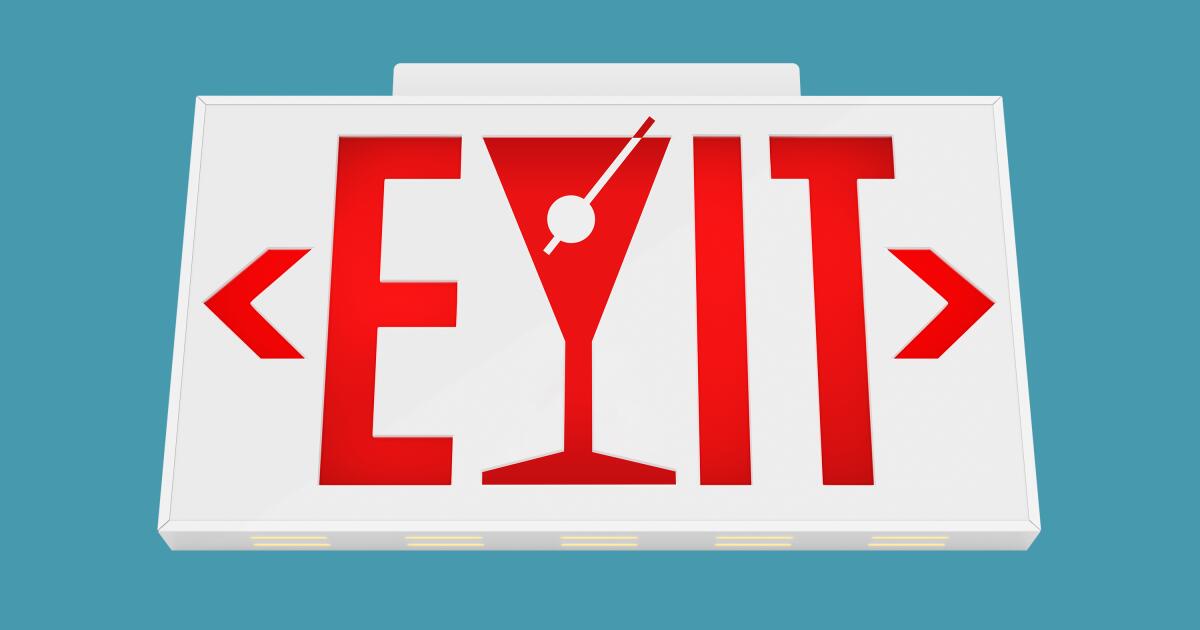
“Want a glass of wine?” my friend yelled at me down the hall, yanking a cork out of a wine bottle. My writer’s group had rented a lake house in Vermont this past June on an island in the middle of Lake Champlain, where shorebirds and ducklings paddled past.
The thought of relaxing at the firepit in an Adirondack chair with an ice-cold glass of rosé made me salivate, the way my dog does when I pull the lid off the treat jar. Any other time, I would’ve had a glass (or two), but I was trying out sobriety.
For years, I toyed with the idea but couldn’t ever seem to do it until my drinking started to keep me up at night. I tried natural sleep supplements and acupuncture but neither worked.
At 44, I didn’t drink enough to experience major hangovers like I did when I was a journalist in my 20s living in New York City. And though I imbibed nightly during the initial throes of the COVID pandemic, I’d recently cut way back. When I unexpectedly hit perimenopause in my early 40s, my body began reacting to alcohol differently. Even if I had just one glass of wine, I’d wake up multiple times during the night. I suppose I could have avoided those moonlight bathroom trips with a sleeping pill, but that would have only masked the bigger problem: I wanted to quit drinking and couldn’t.
“People’s relationship to alcohol changes at different stages in life.”
— Elaine Skoulas, L.A.-based marriage and family therapist
I wrote about my frustration in my journal. Was a Thursday night Grey Goose martini worth the three cappuccinos I’d need to shake off brain fog on Friday morning?
I was not alone in my sudden questioning of a lifelong habit. Elaine Skoulas, a licensed marriage and family therapist based in L.A. who specializes in addiction, said it’s not uncommon to reevaluate your drinking habits as you age.
“Often I hear how much people’s relationship to alcohol changes at different stages in life,” said Skoulas, who has been sober for 12 years. Whether it’s due to aging or a change in metabolism, many people slow down their alcohol consumption as they get older because the negative effects of drinking worsen over time, she said.
But what would quitting do to my personal life? Alcohol was entwined with some of my biggest life milestones. I met my husband at a bar over a Northern Standard cocktail and then wrote about it for Food & Wine magazine. I received a bottle of Vermont WhistlePig rye for my 40th birthday and a Merry Edwards Russian River Pinot as a wedding present. And I did unabashedly love to drink — Miraval rosé under the summer stars, mezcal margaritas on lazy Saturday afternoons, boozy Bloody Marys with scrambled eggs and croissants on Sunday mornings.
If alcohol hadn’t started affecting my sleep, I probably would have never given it up. I didn’t even stop when my husband and I started fertility treatment in 2020. Ordering a cozy whiskey cocktail at my favorite local bar dulled the disappointment of every IVF failure.
I don’t think anyone would have called me an alcoholic, but I knew I had a problem when I realized how often I was writing in my journal about how crappy wine made me feel.
Then last December, an astrologer told me that my chart suggested I could benefit immensely from giving something up. It made me think about how I was only 7 years old when I stopped eating meat. I’d managed to stick with it my entire life.
Could I give up alcohol too? Christmas was just around the corner. I worried that my friendships would suffer. And what would my husband and I do for fun if we couldn’t go to our favorite bar on the weekend?
I finally reached my breaking point in March when I met two friends out for dinner. We all ordered drinks, then spent most of the meal discussing our not-so-great relationship with alcohol. I slept terribly that night and decided the next morning to try and stop for good.
I was tired of feeling guilty for giving my body something that made it miserable, tired of strategizing and rationalizing my alcohol consumption and tired of trying to get my brain to focus with so little sleep.
My husband was supportive, and so were my friends. I was lucky. Skoulas says having a reliable circle of loved ones can make all the difference in staying sober.
“It creates a sense of accountability because if you’re trying to get through an event on your own and nobody knows, of course it’s easier to reach for alcohol than if you have a friend standing next to you who knows that you weren’t planning to drink for the night,” she said.
“It’s kind of like a jet airliner: It takes a lot of energy to get it up into the sky, but once you get there, it’s much easier to manage.”
— Steve Kobashigawa, L.A.-based marriage and family therapist, on getting sober
I couldn’t have picked a worse time to try out sobriety. One week in, I attended a funeral for a woman in my writer’s group, then went out for dinner later that night, where I kept replaying the events of the day. I was grieving her absence, and I urgently needed a drink to take away some of the sadness. I leaned toward my husband.
“Maybe we could split a drink?” I asked.
“Do you really want one?” he replied.
I did. Anything to take away my emotional pain. But then I thought about the next morning. My sadness would still be there, and even harder to process on poor sleep. By the time we saw our waiter again we had finished our meal, and my wave of wanting had passed.
The following weeks were really hard. I was still waking up in the middle of the night, and it felt like I was competing against my own desires. I drank seltzer at weddings and took my 83-year-old father to stressful doctors’ appointments without later unwinding with a martini. When my friend’s fiancée took his own life, I was surrounded by wine bottles strewn across the kitchen counter, but each time I walked out the door stone-cold sober, I could breathe a sigh of relief.
Steve Kobashigawa, a marriage and family therapist based in L.A., said that when you feel a craving come on, do what you need to do to get into a more positive headspace. Call someone, journal or use a mindful drinking app like Sunnyside. Sometimes avoiding alcohol can seem impossible, but staying sober gets “exponentially easier” over time, he said.
“It’s kind of like a jet airliner: It takes a lot of energy to get it up into the sky, but once you get there, it’s much easier to manage,” said Kobashigawa, who specializes in addiction treatment and has been sober for 25 years.
Skoulas advised staying away from places where you used to drink regularly while you set new, healthful patterns and rewire your brain. If you go back to where you used to drink, even if you don’t have alcohol, your brain still experiences some of the more euphoric parts of drinking, which can be triggering.
“When you walk into familiar places, some of those neurotransmitters start to get released,” she said.
I learned that if I’m going to be around drinkers, it’s best to plan ahead. When I went away with my friends to the lake house, I called my local cocktail bar ahead of time and asked if they could make me a nonalcoholic beverage to-go. I felt silly doing it, but they told me that my order wasn’t all that unusual.
I had a great time that weekend, even though I was the only sober one in the group. Sometimes when people ask why I’m not drinking, it’s easier to say that I’m suffering from insomnia than it is to talk about my complicated relationship with alcohol.
Recently, a friend asked why I wasn’t drinking.
“I’m just taking a break,” I said. She responded with a sly smile — she knew I’d tried IVF before.
“I’m not pregnant,” I said, surprised that I could talk about my infertility without getting upset. That’s when I realized how much alcohol — a depressant — had been affecting my mood. A cocktail could only mask the pain for so long. I eventually had to face reality.
Alcohol provides a surge of dopamine and when that’s taken away, you initially might feel sad, but that usually fades within a few months, Kobashigawa said. Sometimes giving up drinking involves anhedonia, which is an inability to find pleasure in the activities you once enjoyed. But you can help avoid that feeling by keeping active.
“If you’re feeling flat, it’s unfortunately part of the recovery process, but try to take a walk or re-engage in the activities that used to be pleasurable for you,” he said.
In a few months, I’m going to Italy on my honeymoon. I had thought I’d want to spend evenings there imbibing with a Super Tuscan wine, but now I’m not so sure. These days, I feel more like myself. I’ve lost weight and have fewer wrinkles. Sobriety, it turns out, is way cheaper than Botox. It’s hard to imagine going back to how things used to be.
I had always thought that if I gave up my weekend martinis, I’d be imprisoned by the desire to drink, but here I am — sober for almost five months. Aside from the occasional craving, I don’t really think about alcohol. I drink raspberry shrub cocktails when I vacation with my girlfriends and go out for ice cream with my husband on the weekends. I’m less anxious and more present in conversations and in the world around me. In sobriety, I actually feel freer than ever.
Betsy Vereckey’s’ debut memoir is forthcoming next summer from Rootstock Publishing. She lives in Vermont with her husband and four boisterous terriers.


Sunday Puzzle
NPR
hide caption
toggle caption
NPR

On-air challenge
I’m going to give you two five-letter words. Add the same two letters at the end of the first one and the start of the second one, in each case to complete a familiar seven-letter word.
Ex. Later Ready –> LATERAL/ALREADY
1. Habit Tempt
2. Laten Press
3. Blank Ching
4. Since Venue
5. Shack Groom
6. Surge Stage
Last week’s challenge
Last week’s challenge came from Rawson Sheinberg. of Plymouth, Mich. Think of a U.S. city with a two-word name. Add a letter to the first word, without rearranging letters, to name a country. Then, without adding a letter, rearrange the letters of the second word to name another country. What places are these?
Answer: Los Angeles –> Laos, Senegal
Winner
Elaine Neel of Derby, Kansas.
This week’s challenge
Next weekend will be the 186th convention of the National Puzzler League, in Bloomington, Ind., which I’ll be attending as always. Two other people who will be there are Henri Picciotto and Joshua Kosman, who created this week’s challenge. Name two words that are opposites. They share a single letter. Remove that shared letter from each word, put a hyphen between the two starting words, and you’ll get a term you sometimes see in food ads. What are the two words?
If you know the answer to the challenge, submit it here by Thursday, July 9 at 3 p.m. ET. Listeners whose answers are selected win a chance to play the on-air puzzle. Important: include a phone number where we can reach you.
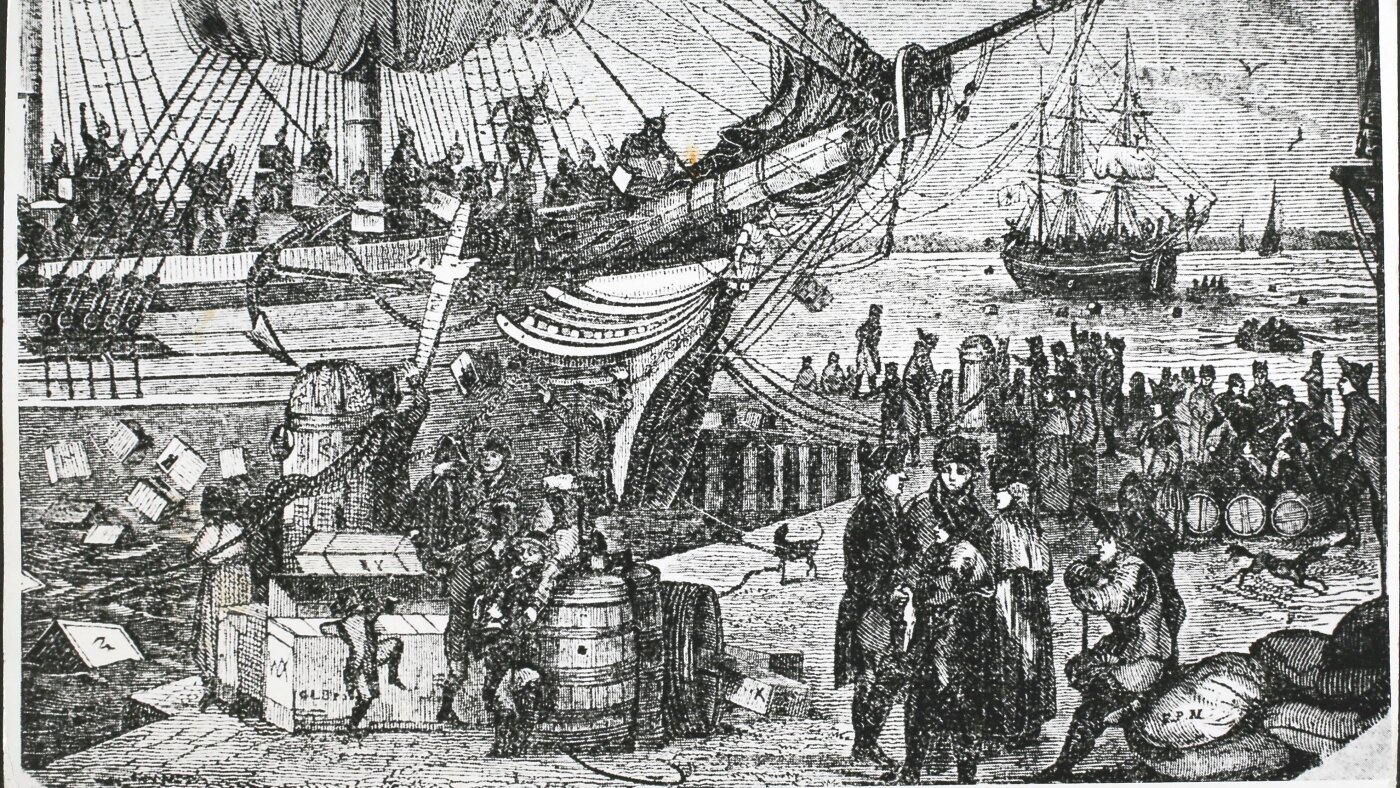
An illustration of the Boston Tea Party, when colonists dumped British East India Company tea into the harbor on Dec. 16, 1773. Some accounts say this marked a pivotal moment when Americans started loving coffee. But one historian says Americans were drinking lots of coffee before then.
Hulton Archive/Getty Images
hide caption
toggle caption
Hulton Archive/Getty Images
A consequential act of defiance secured tea’s place as perhaps the most iconic beverage of America’s colonial era.
The Boston Tea Party became an essential ingredient in the recipe for revolution in the following years.
But tea wasn’t the only hot beverage with a prominent role in America’s fight for independence.
Coffee was an important part of American culture from the start. And coffeehouses were essential, too — serving as hubs for brewing ideas of independence.
As the United States celebrates 250 years, here’s what to know about America’s early history of coffee.

Colonists were drinking coffee long before the United States existed
Europeans brought coffee with them when they came to America.
“The first documented example of a mortar and pestle used to grind coffee beans was on the Mayflower” in 1620, says historian Michelle Craig McDonald, the author of Coffee Nation: How One Commodity Transformed the Early United States.
“The fact that coffee was present so early is not surprising if you think about it,” McDonald says. “A number of those who were on the Mayflower came to North America from Amsterdam, which was a major coffee trading center in Western Europe by the 17th century.”
The first coffeehouse in the colonies opened in 1676 in Boston, a century before the U.S. declared independence, she says. Some taverns sold coffee even earlier.
The Boston Tea Party probably wasn’t the dramatic turning point toward coffee that some claim
On the night of Dec. 16, 1773, disgruntled colonists boarded three ships moored in Boston Harbor and threw overboard more than 92,000 pounds of tea owned by the British East India Company.
Tensions had been building between the Crown and the colonies over the previous decade, as Britain tried to levy taxes on its colonies to recoup war debts.
The Boston Tea Party protest was targeted at the British government’s passing of the Tea Act in 1773, which granted the East India Company a monopoly over tea sales in the colonies. While the British had removed some unpopular taxes in the preceding years, they left tea taxes in place. Colonial merchants were especially upset that the act allowed the East India Company to undercut their tea business.
To build solidarity for their cause of sovereignty, some patriots called on colonialists to swear off tea in favor of coffee. It’s why many histories point to the Boston Tea Party as a turning point when Americans switched from mostly drinking tea to mostly coffee. The anti-tea sentiment was immortalized in a founding father’s now-famous letter.
In July 1774, John Adams (before he became the second U.S. president) wrote to his wife Abigail, recounting an incident during his travels. After a long day, he asked the proprietor of the house where he was lodging for a cup of tea, provided it was smuggled and free of British taxes.
” ‘No sir, said she, we have renounced all Tea in this Place. I cant make Tea, but I’le make you Coffee.’ Accordingly I have drank Coffee every Afternoon since, and have borne it very well. Tea must be universally renounced. I must be weaned, and the sooner, the better,” Adams wrote.
Despite John Adams claiming a newfound patriotic duty to appreciate coffee, McDonald says colonists had been drinking lots of coffee all along.
She studied advertisements from the 1760s and ’70s to estimate how many shops sold coffee versus tea. Even before the Boston Tea Party, she says, “coffee is definitely more broadly available than tea is.”
A big reason? It was cheaper. “Its price again per pound is significantly less, which tells you about its availability, its accessibility to drinkers.”
Historians say it’s hard to definitively compare tea with coffee consumption, though, as official records from before America gained independence were inconsistent.
And smuggling was rampant, making official records even less reliable.
“There is a vast amount of smuggling,” says Joyce Chaplin, a professor of early American history at Harvard University. “So they’re not paying formal duties on tea that they get from the Dutch. They’re probably not paying formal duties on coffee from the French Caribbean.”
And Chaplin notes that people who loudly proclaimed a new appreciation for coffee over tea weren’t always doing what they said. It could have been political pandering. “I do not drink tea that comes via the East India Company,” she posits someone of the era saying. “But, you know, other sources are fine. Ditto for the coffee.”
Coffeehouses were a hub for revolutionary ideas
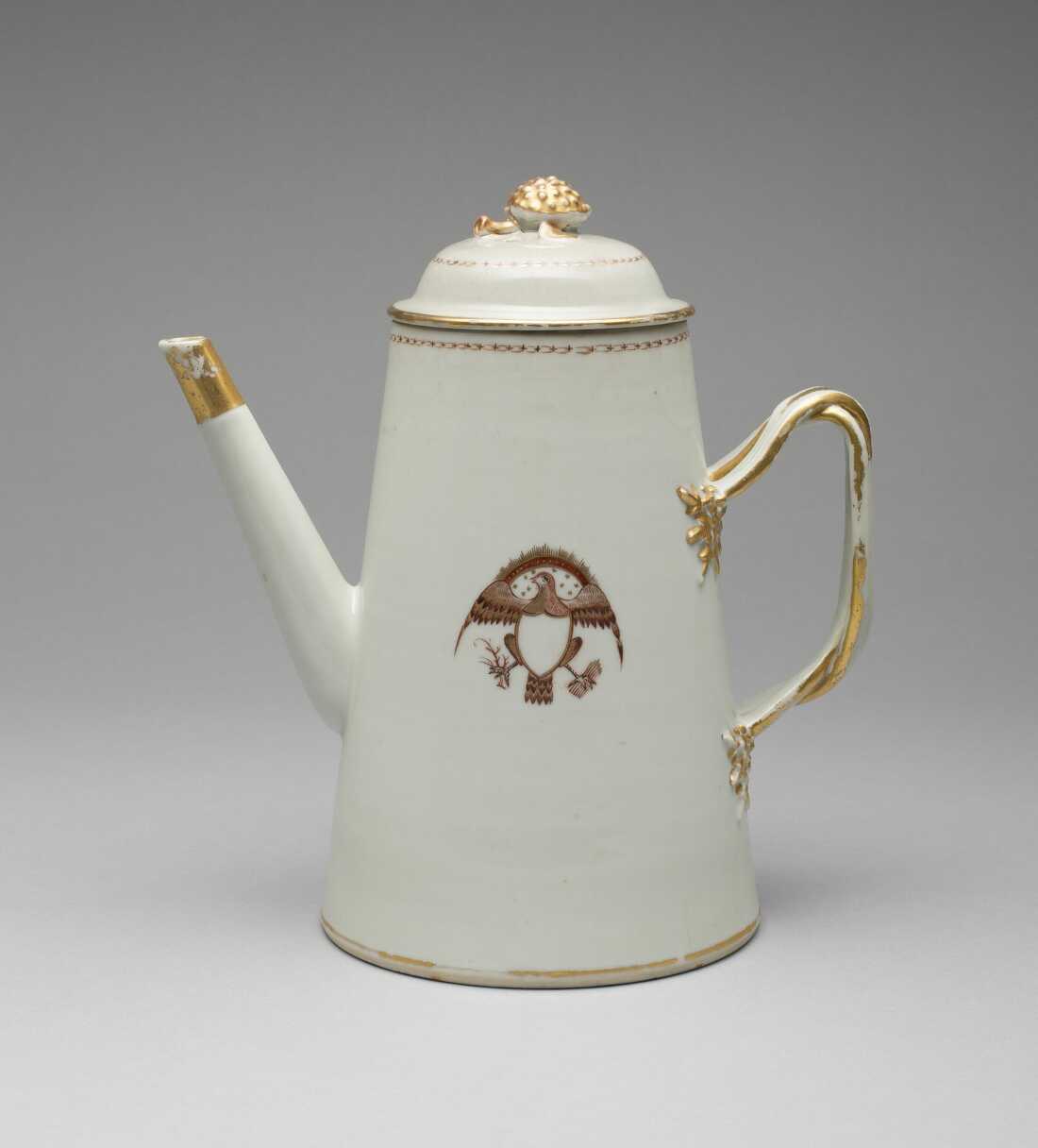
A coffeepot with cover, circa 1795. It has an American eagle motif, made in China for the American market. Coffee was part of a growing trend of globalization in the colonial era.
Heritage Art/Heritage Images via Getty Images
hide caption
toggle caption
Heritage Art/Heritage Images via Getty Images
In the colonial era, coffeehouses were hotbeds for seditious thought — where people planned acts of revolution.
“Coffeehouses are kind of famous for being places where people think and plot things,” says Mark Pendergrast, author of Uncommon Grounds: The History of Coffee and How It Transformed Our World.
A coffeehouse called the Green Dragon served as one of the locations for planning the Boston Tea Party. Years earlier, the Old London Coffeehouse in Philadelphia was a meeting place for strategizing responses to another British tax, the Stamp Act of 1765.
In Britain, coffeehouses were nicknamed “penny universities,” Pendergrast says: “because for a penny you could go and learn a whole lot by sitting around in a coffeehouse and discussing everything.” The same attitude traveled across the Atlantic.
Early American coffeehouses would commonly have city business directories, libraries of newspapers and currency exchange information. People could get maritime insurance there or buy things at auction.

“There’s a reason why coffeehouses become places of colonial protest … in the 1760s, in the 1770s, and it’s because it is the place where traders and merchants tended to gather,” historian McDonald says. “That’s where they heard about the economics of the day.”
Taverns were more likely than coffeehouses to have rooms for rent and stables for travelers’ horses. They were also more likely to have food.
Interestingly enough, coffeehouses could serve alcohol and taverns could serve coffee.
But the vibes at each were different. While women and men could “riotously drink together” in taverns, coffeehouses often didn’t allow women, according to Chaplin of Harvard.
“The sense was the coffeehouse was the place where you had a clear head — to argue about politics, to find out what was going on in the business world, to cut a business deal,” she says. “Whereas taverns were places where, in a sense, you refueled.”
Still, she says, the lines between the two “weren’t completely clear.”
The cost of America’s revolutionary drink
Coffee (and tea for that matter) was part of a growing globalization of trade around this time.
Much of the coffee in the colonies was grown in the Caribbean, while tea came from China.

Supply was up and coffee was easier than ever to drink. “Trade and frankly, imperialism, are making it possible for … colonial products to be produced and transferred to other parts of the world in greater and greater quantities,” says Chaplin.
As a result, by the time of the American Revolution, both coffee and tea were in reach for many common people. “They’re both becoming affordable luxuries,” Chaplin says.
Fancy coffee and tea paraphernalia were also part of this increasingly global market. Middle and upper-class people would have wanted special implements for drinking these beverages and a place to drink it. That meant they needed wood for coffee tables, silver for coffeepots, and porcelain for teapots.
“These two beverages are encouraging people to consume all kinds of new stuff,” says Chaplin. “The mahogany that comes out of the Caribbean, the china coming out of China, silver that is mined principally in South and Central America and processed in a lot of the parts of the world.”
There’s a dark side to coffee’s history, too. The plantations that supplied the crop ran on the labor of enslaved people. By 1790, half of the world’s coffee was being grown in the French colony of Saint-Domingue, in what is today Haiti, Pendergrast says, where slaves were routinely mistreated, raped and murdered.

The Declaration of Independence, signed in 1776, is infamous for a contradiction. It proclaimed that “all men are created equal,” but failed to acknowledge the hundreds of thousands of enslaved people living in America at the time.
Coffee carried a similar contradiction. The beverage that fueled conversations that inspired America’s fight for independence — centered on the ideals of life, liberty and the pursuit of happiness — depended on enslavement.
“Coffee had this paradoxical effect, that it did promote revolutionary thought,” Pendergrast says. “But it was also grown by slaves.”
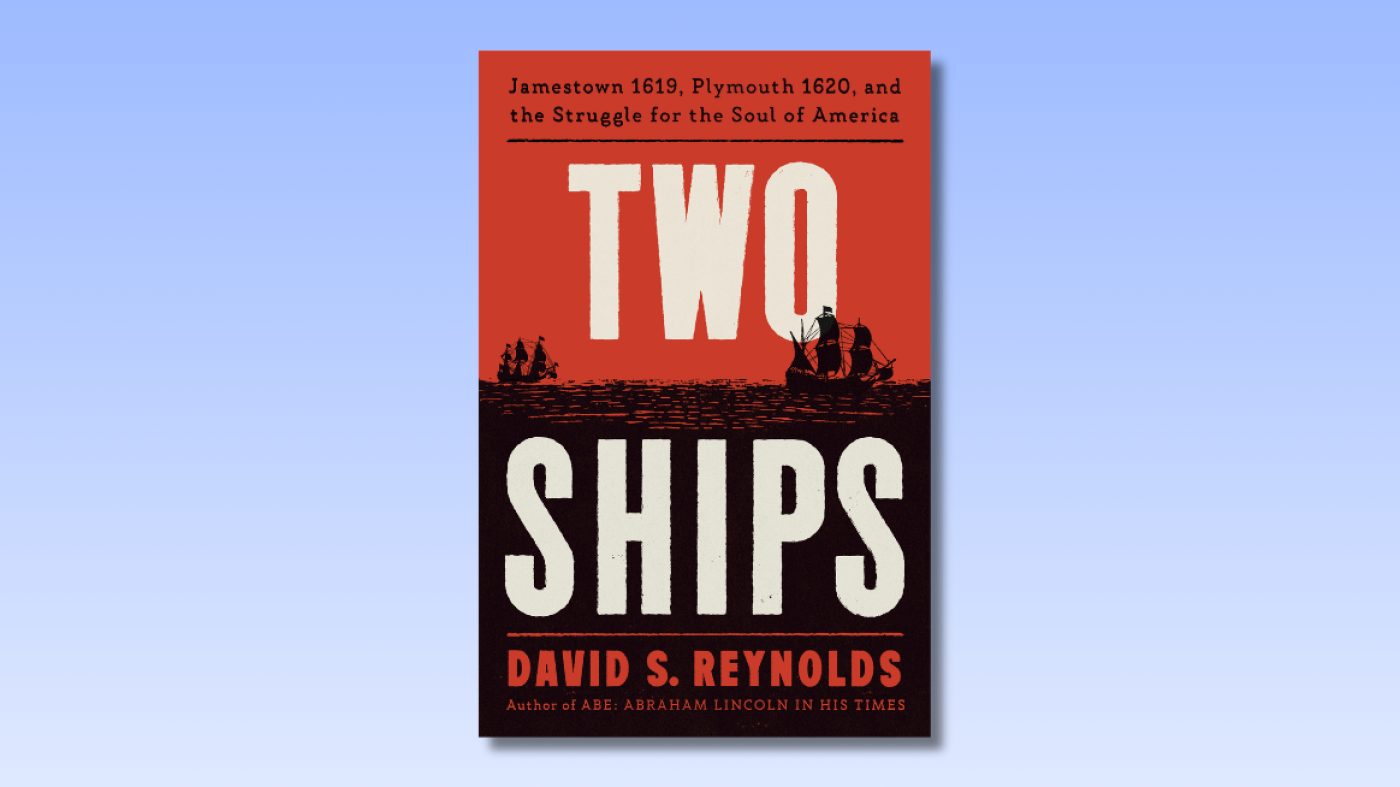
Just in time for a contentious 250th anniversary of the United States of America, historian David S. Reynolds’ latest book, Two Ships, helps us realize that any country that couldn’t agree on its own origin story is destined for divisive times.
Two Ships is about the complicated, conjoined legacy of the landings of the Mayflower, which carried the Pilgrims to Plymouth, Mass., in 1620, and the White Lion, which arrived in Jamestown a year earlier, bringing the first enslaved Africans to Virginia.
As Reynolds demonstrates, it’s not so much the facts of these two voyages, as it is the meanings ascribed to them, that made them such a powerful metaphor for two conflicting visions of American identity.
To simplify, the Mayflower’s passengers were separatist Puritans, dissenters to the reign of the English king, James I. As the United States developed, the Mayflower was credited with carrying the seeds of a radical democracy to the New World, one in which all men (in theory, at least) were equal before God.
In contrast, the European settlers of Jamestown were Royalists, also known as Cavaliers. Loyal to the monarchy, they believed in a strict hierarchy.
But the meaning of the images of the two ships shifted depended on who was invoking them and when. Not surprisingly, the metaphor was deployed most vigorously during the Civil War. In abolitionist speeches and writings, the White Lion or the “Slave-Ship,” as it was commonly called, was condemned for infecting America with the “plague-spot” of slavery.
Reynolds says that Frederick Douglass resorted to the “two ships” metaphor frequently, while Lincoln avoided it, hoping to preserve a unified ship of state. Meanwhile, Southern descendants of Cavaliers invoked the Mayflower to emphasize the intolerance and “cruel, persecuting” character of the Puritans. In a comment that resonates for our own times, Reynolds says:
It didn’t matter to the South that … by the mid-nineteenth century, the North had become a kaleidoscope of religious denominations, …, few of which resembled the faith of the Plymouth colonists. Distortion is intrinsic to cultural memory, especially when amplified by sectional or political bias. For Southerners, the Mayflower had brought Puritanism, which had yielded fanatical movements like abolitionism, now a dire threat to the Union.
In a brief-but-fascinating digression into the unpredictable power of literary fiction, Reynolds observes that the South’s fondness for Nathaniel Hawthorne’s anti-Puritan novel, The Scarlet Letter, and, even more, for the medieval historical romances of Sir Walter Scott, bolstered its nostalgia for a largely-imagined feudal society.

Reynolds quotes the always-quotable Mark Twain, no fan of Scott’s, as saying that Scott “did measureless harm; more real and lasting harm, perhaps, than any other individual that ever wrote …”
Two Ships is a dazzling survey of some three centuries of American history through a close reading of a metaphor. By the 1890s, Reynolds says, the interpretive tide had turned again: “Southern and Northern whites, feeling threatened by people of color and by an array of European immigrants, were retreating to a cocoon of racial solidarity that Mayflower celebrations helped reinforce.”
By the later-20th century, the image of the Mayflower was depoliticized and commercialized into Pilgrim hats and Black Friday sales. The powerful metaphor of the two ships receded into the mist.
Seven years ago, however, the 1619 Project piloted the White Lion — “The Slave-Ship” — back into view and anchored it at the center of debates about slavery’s place in the national story. The 1619 Project has been faulted for its historiography, and it does lie outside of the chronological boundaries of Reynolds’ book; still, it seems too momentous a reappearance of the White Lion not to at least acknowledge in this book.
That criticism noted, I think reading Two Ships would be an excellent way to observe this particular Fourth of July. It’s wise for all of us to have a more informed awareness of how Americans have understood, misunderstood and, often, flattened each other into stereotypes. Or, as Ernest Hemingway, one of the Mayflower Pilgrims’ more cynical descendants, might say in response to that sentiment: “Isn’t it pretty to think so?”

-

 Detroit, MI19 minutes ago
Mallory McMorrow drops out of Michigan’s US Senate race
-

 San Francisco, CA27 minutes ago
Waymo Vehicle Catches Fire in San Francisco
-

 Dallas, TX28 minutes ago
Dallas police and fire teams seize of nearly a ton of illegal fireworks
-

 Miami, FL34 minutes ago
Triple shooting, crash sends adults to hospital, Miramar police say
-

 Boston, MA37 minutes ago
After monthlong break, Boston Legacy FC battles back to earn a draw with Bay FC – The Boston Globe
-

 Denver, CO42 minutes ago
Denver airport to add underground walkways between concourses – The Points Guy
-

 Seattle, WA49 minutes ago
READER REPORT: ‘My hero’
-

 San Diego, CA52 minutes ago
Hand Over the Hero San Diego Comic-Con Exclusive 2026

