Colorado
US Plans to Limit Water Usage from Colorado River


The U.S. government plans to reduce the amount of Colorado River water several states are permitted to use next year.
The river supplies water to seven Western states, more than 20 Native American tribes, and two states in Mexico.
Those states and the country of Mexico are also considering plans for how to share the water after 2026. That is when many current rules and agreements about the use of Colorado River water will come to an end.
The river brings water to millions of hectares of farmland in the American West. Hydroelectric dams on the river produce power. Experts say increased water use, combined with rising temperatures and dry weather, are the reasons for the need to make cuts.
In 2007, following years of dry weather, the U.S. states in the river’s basin and the federal government agreed to rules to help deal with lower water levels. The states involved were Arizona, Nevada, California, Colorado, New Mexico, Utah and Wyoming.
Those rules determine when some of the states must cut their water usage based on levels at Lake Mead. The lake is on the border of Nevada and Arizona. It provides water for hydropower, farming, and other needs.
Because of the need for new rules, states, Native American tribes, and others are forming new plans to deal with even deeper water cuts that might happen in 2026.
The federal government will announce water cuts for 2025 based on levels at Lake Mead. If Lake Mead drops below a level that has been agreed to, Arizona, California, Nevada and Mexico will face cuts. However, California might not face cuts because the current rules give that state special water rights.

Last year, Arizona, California and Nevada agreed to save an extra 3 million acre-feet of water in addition to the cuts the federal government had already required. An “acre-foot” is equal to about 1.2 million liters. In return, the U.S. government agreed to pay water districts and other users for much of that reduction in water use.
Colorado, New Mexico, Utah and Wyoming are in the river’s Upper Basin. Those states have not used all of the water the rules permit them to use. For this reason, they have not yet had to reduce the amount of water they take from the river.
Wet weather in 2023 and efforts to save water by Lower Basin states have increased the level of Lake Mead and Lake Powell. Lake Powell in Utah is another body of water that holds and releases water from the river.
However, experts say higher temperatures will continue to reduce water in the Colorado River in the coming years.
In March, Upper and Lower Basin states, tribes and environmental groups proposed plans to deal with likely water reductions in the future.
Arizona, California and Nevada asked the federal government to include water levels at other reservoirs besides Lake Mead and Lake Powell. Their plan says that if the whole system drops below 38 percent of the maximum amount of water it can hold, the Upper Basin and Mexico should share deeper cuts equally with the Lower Basin.
Colorado, New Mexico, Utah and Wyoming want larger and sooner cuts when water is low at Lake Mead and Lake Powell. The cuts would affect California, Arizona and Nevada. Their plan does not call for reductions in how much water Upper Basin states use.
The federal government is expected to propose new rules by December. The rules would consider the different plans and possible steps for the future. Until then, states, tribes and other groups will continue negotiations on water.
I’m Andrew Smith. And I’m Anna Matteo.
Suman Naishadham wrote this story for The Associated Press. Andrew Smith adapted it for VOA Learning English.
________________________________________________
Words in This Story
basin –n. the area drained by a river
determine –v. to officially decide
acre-feet –n. a measure of volume used specifically in the United States for large-scale water use which is equal to about 1.2 million liters
district –n. a special area created by a government for a special purpose
reservoir –n. a body of water usually formed by a dam that is meant to be used as a water supply



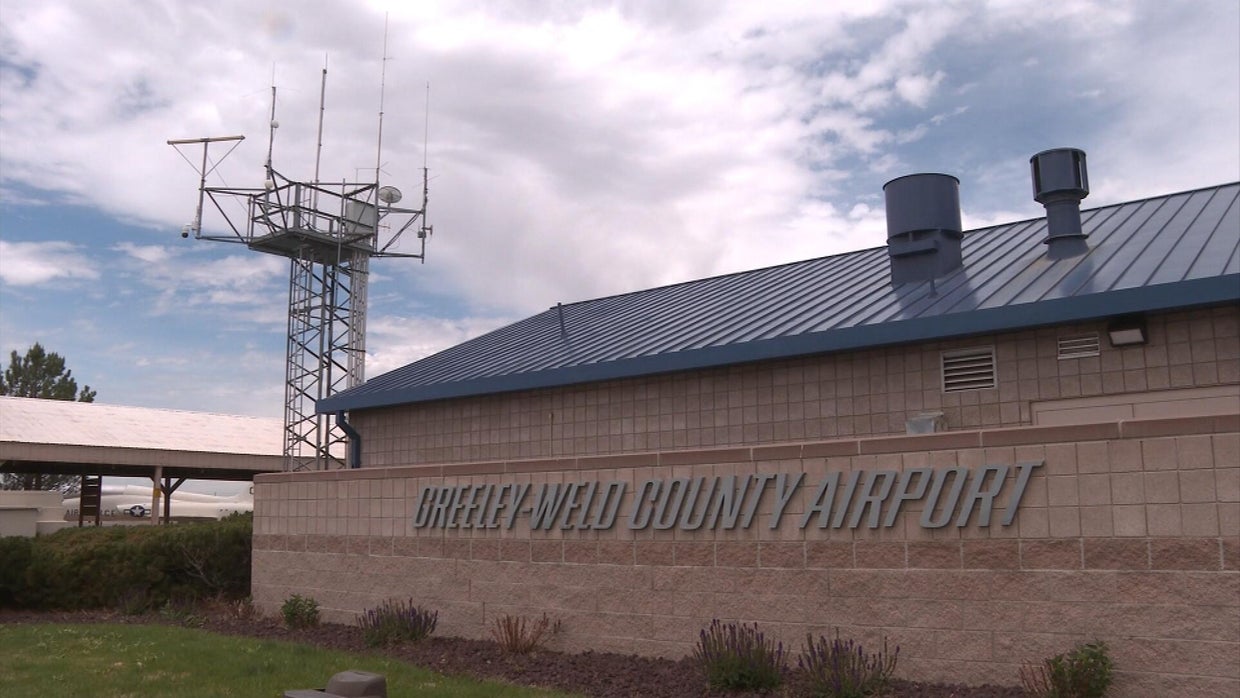
As Weld County and Northern Colorado continue to grow, leaders at the Greeley-Weld County Airport are preparing for an expansion they say will position the facility as a major transportation and economic hub for the region.
Airport director Cooper Anderson said the airport has reached a point where additional growth on its current footprint is no longer possible.
“We have reached our capacity, here, as far as growth on the south side of the airport,” Anderson said.
The airport is now developing land northeast of its existing facilities to accommodate larger aircraft and future aviation services.
“We needed to find a new area to expand and allow larger corporate jets, and eventual charters and commercial service down the road,” Anderson said.
Construction is already underway or completed on several infrastructure projects, including expanded taxiways and sites for future hangars. Anderson said the area being developed was farmland just a few years ago.
“It used to be corn fields, but since then we have ran water, sewage and gas is coming next week,” Anderson said.
The expansion effort has been supported by a combination of local and federal funding. Anderson noted that approximately $850,000 in federal funding was previously secured to develop a master design and long-term vision for the airport, with local money helping execute the plan. Additional federal tax dollars in recent years also helped fund taxiway expansion projects that have prepared the airport for future growth.
Now, Colorado leaders in congress are seeking millions more in federal funding to continue that momentum.
Rep. Gabe Evans, who represents Colorado’s 8th Congressional District, said the airport plays an important role in one of the nation’s busiest aviation corridors.
“The northern Front Range of Colorado is one of the densest airspace systems in the nation,” Evans said.
Before entering Congress, Evans served as a Black Hawk helicopter pilot out of Buckley Air Force Base and frequently flew throughout Northern Colorado. He said improvements at the Greeley airport would have benefits extending well beyond Weld County, noting other airports are overcrowded to the point of causing some nearby residents to complain of sound.
“It really does impact the entire Front Range,” Evans said.
Evans is working to secure additional federal funding that would help construct and staff an air traffic control tower in Greeley while supporting continued infrastructure improvements.
“When those bills are passed and sent to the president’s desk, writtten into those bills as a line item is several more million dollars to continue to expand the infrastructure at the Greeley airport,” Evans said. “So you can actually start to bring business flights into the Greeley airport and pull a lot of that traffic off of some of the overburdened airports in the metro area.”
Anderson said federal support demonstrates broad confidence in the airport’s future as a hub for business and travel.
“Having the addition of Congressman Evans’ office, and their congressional funding, I think shows how much everybody believes in this,” Anderson said.
That confidence is already attracting attention from the private sector, Anderson said, with major companies expressing interest in locating operations at the airport.
“Greeley’s population is booming. Weld County’s population in general is growing,” Anderson said.
Airport leaders view the expansion as a way to support economic development across the region.
“By us growing, and expanding our services, we are also helping the city of Greeley, Weld County and surrounding Northern Colorado communities and being able to grow economic opportunities for them,” Anderson said.
As the airport prepares for future growth, officials have also upgraded emergency response capabilities. The airport recently acquired two fire trucks that will improve its ability to respond to incidents involving larger aircraft. The vehicles also allow firefighters to use newer, non-toxic firefighting foam, replacing older products that posed environmental concerns.
Airport officials say those improvements will help ensure the facility can safely accommodate larger aircraft and increased traffic in the years ahead.
Colorado
‘We couldn’t do this in another place’: Horror film looks to make Southern Colorado the next Hollywood

COLORADO SPRINGS, Colo. (KKTV) – It’s commonly understood that many of the best blockbusters are made in Southern California but a group of local filmmakers wants to prove Southern Colorado can be a destination for both aspiring and established auteurs.
Shooting began in Fountain this spring on ‘Devil In The Trunk’, a new horror film set in Colorado’s eastern plains.
“Devil In The Trunk is about a small-town woman who encounters a mysterious traveler driving this car right here who claims to have the actual devil trapped in the trunk of her car,” executive producer Leon Kelly said. “As you can imagine, when the devil comes to your small town, terrible and dangerous things can happen.”
Director, writer, and producer Evan Alderson said they wanted to make the film as Colorado as possible.
“We ended up finding a local Colorado writer, and we ended up collaborating to come up with this idea that could act as a love letter to Colorado,” he said.
While Colorado may be most famous for its soaring mountain peaks, Kelly said the plains were a much more fitting setting.
“It’s both beautiful and dangerous at the same time,” he said. “One of the underlying themes is the desolation and the loneliness and how vulnerable some folks can be in small towns and out in rural areas.”
Kelly said not only is the film meant to showcase Colorado’s natural beauty, but also to showcase the talent of the people who live there.
“It’s a proof of concept, to show that we have not only the talented people but the infrastructure that can support really high-quality, independent films,” he said. “We know we’ve got great filmmakers here, we know we have really talented craftspeople here, but they don’t necessarily have the opportunities to work on something like this on this scale that’s a narrative film.”
With the Sundance Film Festival set to make its debut in Boulder in 2027, Kelly said people are asking new questions about what Colorado can do for those looking to tell stories on the big screen.
“Can Colorado become a hub? Can that be a place, a destination where others come? Can that be a place where our own filmmakers can come into their own?” he said.
Alderson said once the film is finished they will put it out on the film festival circuit, and even look for distribution.
“That will look like a theatrical release, potentially, in an ideal world, or it will be straight to streaming services like Amazon, Hulu, that type of stuff,” he said.
Copyright 2026 KKTV. All rights reserved.
-

 Pittsburg, PA5 minutes ago
Steelers WR finally escapes doghouse after one game-changing phone call
-

 Augusta, GA8 minutes ago
What is the cheapest place to buy a home in GA? This city ranks 8 in US
-

 Washington, D.C13 minutes ago
Storm Team4 Forecast: May ends with sunshine and clear skies
-

 Cleveland, OH20 minutes ago
Watches & Wonders Comes to Cleveland Hosted by Alson Jewelers
-

 Austin, TX23 minutes ago
Texas agency denies Austin ISD pause for 3 middle schools facing takeover risk
-

 Alabama28 minutes ago
Oklahoma State Baseball Live Scoring for NCAA Regional vs. Alabama State
-

 Alaska35 minutes ago
Here’s Why Alaska Air Shares Popped Higher This Week | The Motley Fool
-

 Arizona38 minutes ago
Arizona Lottery Mega Millions, Pick 3 results for May 29, 2026

