Northeast
FBI fires back at claims it released Crooks' body for cremation days after Trump assassination attempt

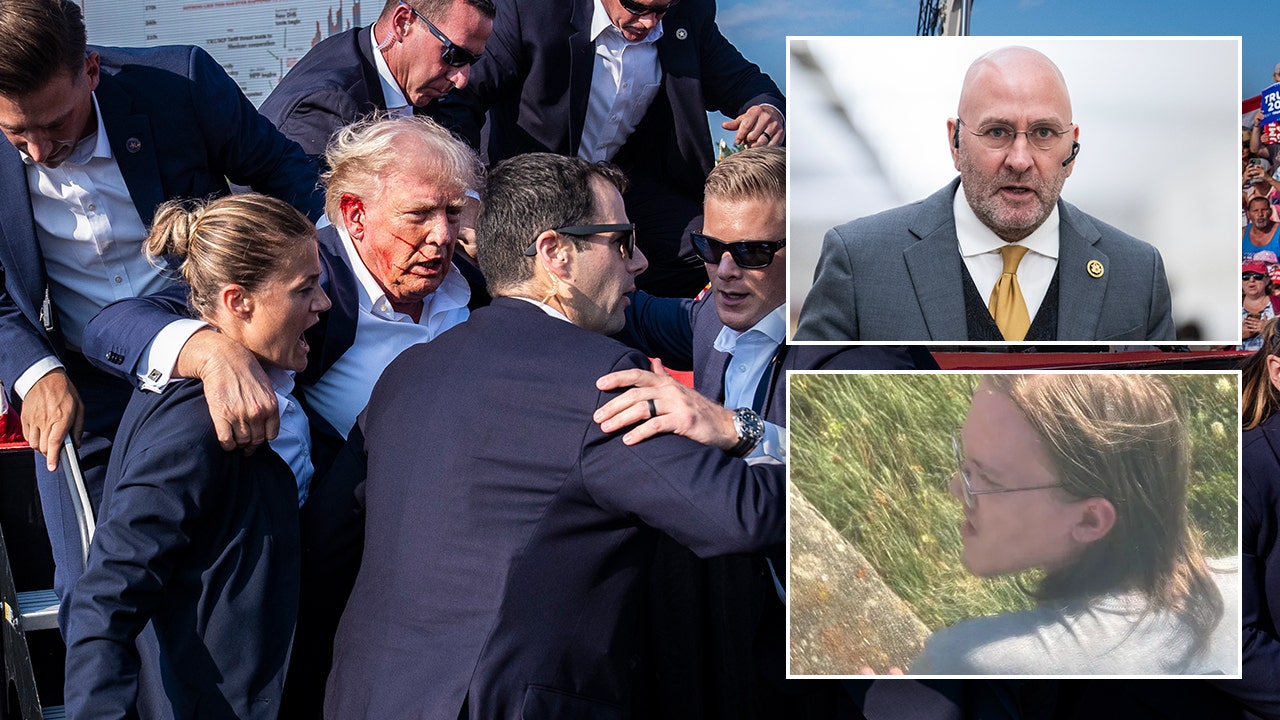
The FBI has fired back at claims by a GOP congressman that the agency released the body of Thomas Matthew Crooks for cremation just 10 days after his assassination attempt on former President Donald Trump in Butler, Pennsylvania, last month.
The agency says it refutes allegations by Rep. Clay Higgins, R-La., who says that when he requested to view Crooks’ body on Aug. 5, nobody on the ground in Butler knew it had been handed back to the suspect’s family on July 23. Higgins said the revelation “caused quite a stir and revealed a disturbing fact.”
Higgins is looking into the deadly July 13 incident as part of a bi-partisan congressional task force and made the claims in a stunning preliminary report which is highly critical of the FBI’s investigation into the matter. Higgins says the releasing of the body, and other claims of bad practice leveled at the FBI, amounts to an “obstruction to any following investigative effort.”
The FBI has snapped back against claims it released Thomas Matthew Crooks’ body for cremation just 10 days after the assassination attempt on former President Trump. Former President Donald Trump, left, Thomas Matthew Crooks, bottom right, GOP congressman Clay Higgins, top left. (Jabin Botsford/The Washington Post via Getty Images, main, Tom Williams/CQ Roll Call, top right, Fox News, bottom right.)
An FBI spokesperson tells Fox News Digital that any suggestion the agency is interfering with congressional efforts to look into the attempted assassination “is inaccurate and unfounded.”
The agency said that Crooks’ body was released to his family after coordination with the coroner’s office as well as state and local law enforcement partners “in keeping with normal procedures.”
Higgins, a former police captain, said that he visited Butler, Pennsylvania, earlier this month to investigate the crime scene and that when he asked to view Crooks’ body, he discovered that it “was gone.”
BUTLER RESIDENTS STILL FURIOUS ABOUT TRUMP ASSASSINATION ATTEMPT, SAY MORE THAN INCOMPETENCE TO BLAME
“My effort to examine Crooks’ body on Monday, August 5, caused quite a stir and revealed a disturbing fact . . . the FBI released the body for cremation 10 days after J13 [July 13],” Higgins writes in the report sent to task force chairperson Mike Kelly, R-Pa.
“Nobody knew this until Monday, August 5, including the County Coroner, law enforcement, Sheriff, etc,” Higgins writes. “Yes, Butler County Coroner technically had legal authority over the body, but I spoke with the Coroner, and he would have never released Crooks’ body to the family for cremation or burial without specific permission from the FBI.”
Higgins doubled down on his claims late Friday in a statement to Fox News Digital.
“My report states the precise truth, which is that the coroner released Crooks body to the family for cremation only after the FBI had specifically authorized the coroner to release Crooks’ body to the family for cremation.”
Furthermore, Higgins writes in his preliminary investigatory report that the coroner’s report and autopsy report are both “late,” and as of Aug. 5, they were a week late.
Higgins says that the problem with him not being able to examine Crooks’ body is that he won’t know for sure if the coroner’s report and the autopsy report are accurate.
“We will actually never know. Yes, we’ll get the reports and pictures, etc., but I will not ever be able to say with certainty that those reports and pictures are accurate according to my own examination of the body,” Higgins writes.
As well as the release of Crooks’ body, Higgins also panned the FBI for releasing the crime scene after three days, “much to everyone’s surprise.”
Higgins said they did this despite it being common knowledge that Congress would be investigating the shooting, which resulted in Trump being struck in the ear. Crooks killed highly regarded local firefighter Corey Comperatore, who was trying to shield his daughters from the gunfire, while two other victims suffered life-threatening injuries but are expected to make a full recovery.
LIFE-SIZE SCULPTURE OF ‘FIGHTING’ TRUMP MADE FROM NAILS UNVEILED AT ASSASSINATION ATTEMPT SITE
“They had to know that releasing the J13 crime scene would injure the immediate observations of any following investigation,” Higgins writes.
Higgins also alleges that the FBI cleaned up biological evidence from the crime scene, which he says is “unheard of.”
“Cops don’t do that, ever,” Higgins writes.
But the FBI also hit back against those claims, telling Fox News Digital that the crime scene was released to the property owners in phases and that “nothing was rushed and everything was documented as part of the investigation.”
The FBI also says it arranged for the cleaning of the location where Crooks died, which is in keeping with standard procedures.
“The FBI has been working closely with our law enforcement partners to conduct a thorough investigation into the shooting, and we have followed normal procedures in the handling of the crime scene and evidence,” the FBI says in the statement. “The FBI continues its painstaking work on the investigation to develop as complete a picture as possible of what led to the shooting, and we remain committed to maximum transparency as we continue to brief Congress and publish information for the public regarding the ongoing investigation.”
Republican presidential candidate and former U.S. President Donald Trump reacts as multiple shots rang out during a campaign rally at the Butler Farm Show in Butler, Pennsylvania on Saturday, July 13, 2024. (Reuters/Brendan McDermid)
The preliminary report also sheds more light on the shocking event that could have plunged the nation into a political crisis.
Higgins heaps praise on local law enforcement, particularly the Butler County Emergency Services Unit (ESU), who he says were professionally deployed and commanded.
However, one concerning point highlighted was that the Secret Service did not retrieve radios that had been set aside for them by Butler County’s tactical command, even though they had been reminded to do so by Butler County tactical command the day before and the morning of the shooting, Higgins says.
He also discovered that before July 13, the Secret Service had never assigned a counter-sniper team to a former president, including Trump.
Higgins said Crooks fired off eight shots, and that all eight casings were recovered and are allegedly in proper possession of the FBI. He said that Crooks’ position on the roof of the gar building provided him with excellent concealment from the northern counter-sniper team due to the foliage and branches of two trees.
A screenshot image from James Copenhaver, one of the victims critically wounded in the July 13 assassination attempt against former President Trump, shows a figure, likely Crooks, moving across a rooftop just minutes before gunfire rang out at Trump’s rally in Butler, Pennsylvania. (James Copenhaver)
The ninth shot was fired by a Butler SWAT operator from the ground, about 100 yards away from the AGR building. The shot hit Crooks’ rifle stock and fragged his face and shoulder area from the stock breaking up. Higgins believes this shot damaged the buffer tube on Crooks’ rifle, meaning that the rifle would not fire after his eight shot.
“The SWAT operator who took this shot was a total badass; when he had sighted the shooter Crooks as a mostly obscured by foliage moving target on the AGR rooftop, he immediately left his assigned post and ran towards the threat, running to a clear shot position directly into the line of fire while Crooks was firing 8 rounds,” Higgins writes.
Higgins writes that Crooks “went down” from his firing position when shot 9 was fired, recovered after just a few seconds, and “popped back up.”
The tenth, and final shot, was fired by the southern Secret Service counter-sniper team, which entered the left mouth area and exited the right ear area.
Officers surround Thomas Crooks on the AGR roof after countersnipers killed him. (Butler Twp Police Dept.)
Higgins also says that Crooks did not use a ladder to scale the roof and ruled out a possible second shooter being on top of the water tower. Videos circulating online show a dark figure or a shadow on the water tower, but Higgins says that ESU Commander Edward Lenz had cleared the tower with a drone that morning.
He also says that a window below Crooks’ firing position on the roof of the AGR building did not open and never did open after videos online suggested a “muzzle flash” had come from it.
“The ‘muzzle flash’ from inside that window was either a digital fabrication or an iPhone light or iPhone camera flash reflected from the glass of the widow,” Higgins writes.
Higgins said he has yet to take a deep dive into how Crooks came to be a shooter or how he manufactured a remote trigger bomb.
“I have not investigated the life and actions of Thomas Matthew Crooks outside of his actions on J13. But I will. We will. We’re just getting started, Mr. Chairman.”
Read the full article from Here

Boston, MA
Celtics’ Jaylen Brown trade leaves Boston fans, community feeling bankrupt: ‘A huge void’

Jaylen Brown came to Boston in 2016 as a raw lottery pick out of California; he leaves a decade later, following a stunning trade to Philadelphia, as an NBA champion and an essential piece of the city’s social fabric.
“What this trade does is show young fans what sports heartbreak is,” Celtics superfan Chris Soldani told the Herald. “There is now a huge void, and a lot of people don’t know how to process this situation.”
Look no further than Randolph for proof. Immediately after learning about the trade, 6-year-old Giovanni “Gio” Jean cried uncontrollably while wearing a No. 7 Celtics jersey autographed by Brown.
His mother, Gigi Durand, captured the moment on video as Gio sobbed, “You are my favorite player in the whole NBA.” Holding up a handmade sign pleading for his idol to “come back one day,” the youngster asked his mother to mail it.
The footage went viral, racking up over 10 million views and drawing a direct response from Brown: “It’s ok lil bro,” he posted, adding a heart emoji. “We will always be friends.”
That instinct to connect directly with the fan base is exactly what drew superfans like Soldani to Brown.
In early May, Brown invited Soldani — known as “Caveman on Causeway” — and several others onto a Twitch livestream he hosted just after the 76ers eliminated Boston. The stream stirred controversy as the longtime Celtic described last year as the favorite of his career despite playing most of it without Jayson Tatum.
Soldani called the bond “one of the most unlikely connections.”
Under the blockbuster deal, Boston sends the 29-year-old 2024 Finals MVP to their bitter Atlantic Division rival for 36-year-old veteran Paul George and four draft picks. Fans say it will take time to overcome losing a superstar who doubled as one of Massachusetts’ most impactful civic anchors.
“With all the impact that Jaylen has on the city, and the youth, and putting money into the city,” Soldani said, “it truly bankrupts the city as a community.”
This spring, Boston Magazine ranked Brown the eighth most influential Bostonian, detailing his work hosting fundraising bowling events and education fairs in Roxbury.
That legacy echoes across local sports talk radio as fans process the gamble taken by front-office architect Brad Stevens — a decision complicated by reports that Brown feels his decade of service ended without the mutual respect he earned.
Gov. Maura Healey noted on social media that it’s “hard to imagine” the Celtics without Brown. She added, “You’ll always have a home in Boston.”
In 2019, Brown founded the 7uice Foundation, a nonprofit providing healthcare, education, and digital literacy resources to underserved youth through its STEM-focused Bridge Program camp.
The work recently drew criticism from the Massachusetts Fiscal Alliance, a state watchdog, after lawmakers approved a $700,000 state earmark for the charity.
“Jaylen Brown is expected to earn roughly $60 million this year,” the Alliance posted. “If he wants to support charitable work through his foundation, that’s commendable. But why are Massachusetts taxpayers being asked to subsidize the private foundation of a multi-millionaire?”
In 2024, Brown also launched the Boston XChange with teammate Jrue Holiday, an incubator aiming to generate $5 billion in wealth for communities of color by providing $100,000 in funding to 10 local businesses annually.
Superfan KJ Green, creator of the “Green Runs Deep” brand, cut straight to the raw reality: “I want to (expletive) die right now.”
Green, who also appeared on the May livestream, praised Brown for making fans feel seen and knowing them by name. “This guy cared about using his platform to build other people up,” Green said. “He helped so many businesses in Boston get to the next level.”
For special education teacher Kaiya Santos, who partnered with Brown in 2023 to redesign a basketball court at Fenelon Street Playground in Dorchester, the loss is personal. “It was clear that the project was not just about beautifying a court,” Santos told the Herald. “It was about the role the space would play in the community. Boston will miss him.”
Mayor Michelle Wu thanked Brown for “shifting the energy” and always “showing up” for the city, even as he became a “Celtics great.”
“We won’t forget the looks on young players’ faces as you pulled up unannounced to tournaments in the park,” Wu posted, “or the hope and determination of entrepreneurs and students reaching for their dreams through the opportunities you made possible. Because of your example, kids in Boston know that faith, consistency, hard work pays off.”
For now, the city seems unwilling to let go: Brown’s larger-than-life posters still hang untouched inside the TD Garden ProShop and throughout the busy North Station concourses.

Noah Kahan is appropriating Will Toledo’s culture. The viral folk star’s eventful Great Divide tour happened to stop by Pittsburgh last night while the furry convention was in town, and he was for some reason very excited about that, welcoming the furries and even trying on the head of an audience member’s furry costume.
“Pittsburgh: if you are caught between attending the worlds largest furry convention or my show tonight then please know you are welcome to combine the two,” Kahan wrote on X before the show. Responding to a poster who asked what his fursona would be, he posted “Squid man.”
“Furries are welcome. All the animal kingdom is welcome tonight,” Kahan then said onstage at PNC Park. “I don’t see any so far but I will be looking and asking a lot of questions after the show.” At the prop payphone booth that’s been a part of his show setup, he took a phone call from the “National Center For Furry Awareness” and learned furries do not necessarily have sex in their suits.
“The National Center For Furry Awareness? Oh, they don’t have sex… not necessarily? Okay, well that’s good to know.”
“If there are any furries in the crowd, say, ‘Hell yeah,’” he added to a mostly furryless crowd. Watch below.

As Hartford celebrated America’s 250th birthday Saturday, one of the city’s oldest attractions welcomed visitors for one of the few days each year when admission is free.
The Bushnell Park Carousel opened its doors at no cost as part of the city’s Independence Day festivities, giving families a chance to experience a piece of Hartford history while escaping the summer heat.
“It’s one of the most incredible pieces that we have here in downtown Hartford,” said Morgan Fippinger, executive director of the Bushnell Park Conservancy.
The carousel itself is older than many visitors realize.
“It is a 1914, so it’s a true antique carousel,” Fippinger said.
For many Hartford residents, the carousel has long been a fixture in Bushnell Park. For others, including newcomers to the city, it offered a chance to experience one of Hartford’s most recognizable landmarks for the first time.
Fippinger said the free ride day is one of the conservancy’s ways of participating in Hartford’s celebration of America’s 250th birthday.
“The free days when we have thousands of people in the park, it can be a lot,” Fippinger said. “It’s a lot of impact on the park and the infrastructure of the park. But also it’s an amazing time for so many people that are not necessarily always from Hartford, get to come in and see the amazing resources that Hartford has.”
While the Bushnell Park Conservancy cares for much more than the carousel, Fippinger said the attraction often serves as an introduction to the city’s rich history.
“There’s an amazing amount of history here, resources here,” Fippinger said. “And, you know, so we are kind of the eyes and ears for the City of Hartford.”
The air-conditioned carousel building also offered visitors a chance to cool off as temperatures climbed during the holiday celebration.
“We do want to make sure that everybody stays hydrated,” Fippinger said. “And the carousel building is air conditioned. So if people are feeling hot or feeling like they need to get cool, they can come in and take a ride. Plus, when you’re on the ride, it feels amazing.”
-

 San Francisco, CA7 minutes ago
Why Vogue World Should Definitely Head to San Francisco Next
-

 Dallas, TX12 minutes ago
Mistake avoided? Cowboys FA signing could’ve been drafted… but fate
-

 Miami, FL19 minutes ago
No Room For LB Ronnie Harrison In Miami?
-

 Boston, MA22 minutes ago
Celtics’ Jaylen Brown trade leaves Boston fans, community feeling bankrupt: ‘A huge void’
-

 Denver, CO27 minutes ago
Kalshi Promo Code DENVER: Claim $10 Bonus for July 4th World Cup, MLB Trades – Denver Stiffs
-

 Seattle, WA34 minutes ago
Experts release new WNBA predictions for Portland Fire vs. Seattle Storm tonight
-

 San Diego, CA37 minutes ago
Local bestselling author Jim Dutton to speak at DMCC in-person meeting in Del Mar
-

 Milwaukee, WI42 minutes ago
Game Discussion: Milwaukee Brewers (54-32) @ Arizona Diamondbacks (43-43)

