Connect with us

Midwest

Chicago anti-Israel DNC protest groups handed loss by federal judge just days before start

Published

on

Chicago anti-Israel DNC protest groups handed loss by federal judge just days before start
Join Fox News for access to this content

Plus special access to select articles and other premium content with your account – free of charge.

By entering your email and pushing continue, you are agreeing to Fox News’ Terms of Use and Privacy Policy, which includes our Notice of Financial Incentive.

Please enter a valid email address.

Having trouble? Click here.

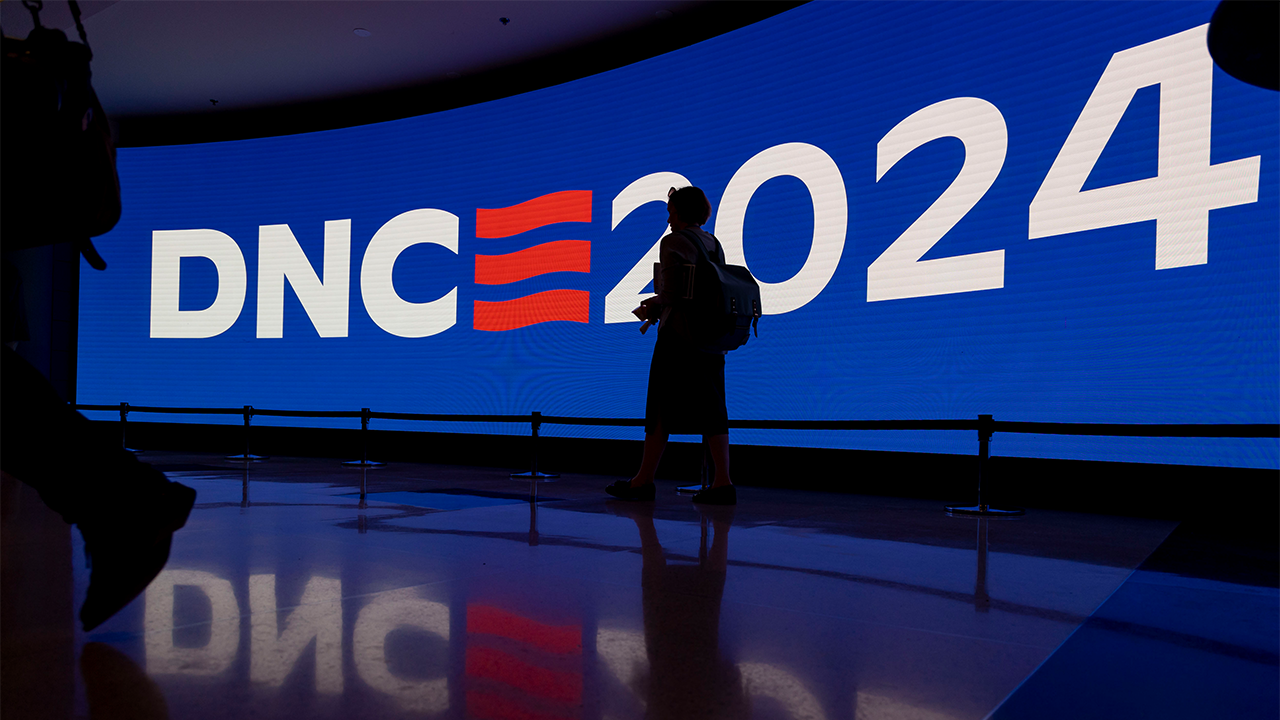
A federal judge in Chicago handed anti-Israel protest groups a loss this week, rejecting their request for more space to protest the Gaza counteroffensive outside the Democratic National Convention next week.

Four groups seeking to organize protests – the Alliance Against Racist and Political Repression, the Anti-War Committee, Students for a Democratic Society at UIC, and the U.S. Palestinian Community Network – asked for parade permits giving them authorization to march over an expanded area.

Advertisement

The judge shut them down this week, rejecting their claim that the city’s preferred protest route violates their First Amendment rights.

CHICAGO GETTING ‘WINDOW DRESSING’ TREATMENT FOR DEMOCRATIC NATIONAL CONVENTION: FORMER CHIEF

Mayor Brandon Johnson speaks during a Secret Service Democratic National Convention security briefing on July 25, 2024, in Chicago. (Vincent Alban/Getty Images)

They want to take their protest nearer to the United Center, one of two locations for the DNC next week, and through a street that the Secret Service and local law enforcement planners have chosen to block off during the convention as part of the secured perimeter.

The judge denied all four permits and told the groups to use a different route, proposed by the city of Chicago, according to court filings.

Advertisement

The United Center in Chicago on Aug. 1, 2024. The city will host the Democratic National Convention at the United Center and at the McCormick Place Convention Center from Aug. 19 to 22. (Tannen Maury/AFP via Getty Images)

The groups sued the city and its transportation commissioner, alleging First Amendment violations, and asked for a preliminary injunction and for permission to march closer to the United Center.

Pro-Palestinian protesters have already held demonstrations outside the United Center. This group is pictured during a media walk-through of the facility in Chicago, May 22, 2024. (Reuters/Jim Vondruska)

The judge ruled against them Monday.

Chicago lawyers told the judge that the city had already granted concessions to the organizers, including allowing them to get closer to the United Center, one of two places where the convention will be held, FOX 32 Chicago reported.

Advertisement

Signage is displayed during a walk-through of the Democratic National Convention on May 22, 2024, at the United Center. (Brian Cassella/Chicago Tribune/Tribune News Service via Getty Images)

Law enforcement sources previously told Fox News Digital that the original plan would have kept protesters out of sight and sound.

“We are going to basically never see a protester or rioters, period,” one source said before the court fight. “The convention sites are completely cordoned off. There will be nobody that is not authorized.”

Protest organizers reportedly expect tens of thousands of people to show up.

Signs to help prepare residents for the Democratic National Convention are posted near the United Center on Aug. 12, 2024 in Chicago. (Scott Olson/Getty Images)

Advertisement

Separately, pro-Israel organizers are looking to conduct counter demonstrations. 

ANTI-ISRAEL AGITATORS PLAN DEMONSTRATIONS FOR DNC: ‘EQUIVALENT’ TO 1968

Chicago has hosted more major party political conventions than any other city – 14 Republican conventions and 11 Democratic ones between 1860 and 1996, according to the Chicago History Museum.

Police officers run in formation as the Chicago Police Department conducts officer training at McCormick Place on June 6, 2024, in preparation for the Democratic National Convention. (Antonio Perez/Chicago Tribune/Tribune News Service via Getty Images)

Nominees coming out of Chicago conventions have included Abraham Lincoln, Dwight D. Eisenhower, Theodore Roosevelt, Franklin D. Roosevelt and Bill Clinton.

Advertisement

The infamous 1968 Democratic Convention nominated Hubert Humphrey, who went on to lose to Richard Nixon – who was himself nominated in Chicago in 1960.

The city has also hosted third-party conventions, including Libertarian and Green Party events.

A police officer escorts a protester to a squad car surrounded by dozens of anti-Vietnam War demonstrators outside the Democratic National Convention, Chicago, August 1968. (Hulton Archive/Getty)

But the specter of violent 1968 clashes between anti-Vietnam War protesters and police is haunting this year’s event as the anti-Israel groups hope to push the Democratic Party to drop its support for Israel’s ongoing operation in Gaza, which came in response to a deadly terror attack that killed 1,200 on Oct. 7, 2023.

Advertisement

The DNC runs from Aug. 19 to 22.

Read the full article from Here

Continue Reading
Click to comment

Leave a Reply

Your email address will not be published. Required fields are marked *

This site uses Akismet to reduce spam. Learn how your comment data is processed.

North Dakota

North Dakota troopers escort semi truck hauling 81 foot wide building on five mile journey

Published

on

North Dakota troopers escort semi truck hauling 81 foot wide building on five mile journey


The North Dakota Highway Patrol (NDHP) was on scene to assist with the move of a large building in Cass County on Wednesday.

NDHP

On January 14, 2026, NDHP troopers were on hand to assist a heavy haul team with moving a building on a five mile journey along Highway 46 from Co. Rd. 17 in Cass County to west of Kindred.

Troopers say that the building is 81 feet wide, 81 feet long and 35 feet high.

Advertisement
NDHP

NDHP warned motorists that the building’s track would be “slow moving” and would take up the entire roadway. Troopers advised alternate routes.


Source link

Continue Reading

Ohio

Sen. Jon Husted cites Ohio case in push for abortion drug restrictions

Published

on

Sen. Jon Husted cites Ohio case in push for abortion drug restrictions


WASHINGTON – U.S. Sen. Jon Husted questioned witnesses at a Senate hearing Wednesday about cases where men allegedly slipped mifepristone to women without their consent, citing examples from Ohio and Texas to argue for reinstating in-person dispensing requirements for the abortion drug.

“I’ve seen some of the horrors of men who are trying to use the drug to end pregnancies against the will of the woman that they give the drug to,” Husted told the Senate Health, Education, Labor and Pensions Committee during its hearing titled “Protecting Women’s Health: Exposing the Dangers of Chemical Abortion Drugs.”

“This is not the choice of a woman controlling her own body,” he said.

Ohio case among examples cited

Husted presented two cases to illustrate his concerns, including one where Toledo-area doctor Hassan-James Abbas was indicted after he was accused of obtaining the drug from an out-of-state telemedicine provider and used it to secretly end his girlfriend’s pregnancy.

Advertisement

Abbas is accused of ordering mifepristone and misoprostol after the woman said she didn’t want an abortion by using his estranged wife’s identity and then forcing them into the woman’s mouth while she slept. His license to practice medicine has been suspended.

Husted also cited a 2025 Texas case where a man is accused of obtaining mifepristone and slipping it into the hot chocolate of a woman he had impregnated, and who was refusing to get an abortion.

Senator’s personal connection

Husted opened his questioning by sharing his own adoption story, which he has discussed publicly before.

“I started out in foster care, was adopted, and know that my birth mother was under a lot of pressure to have an abortion, and thankfully for me, she didn’t,” the Republican senator said. “I know that my biological father had pressured her to do so, and she chose an adoption.”

He said reflecting on his background made him question whether he would exist today if mifepristone had been as easily accessible when his birth mother was pregnant. “I would like to think that my birth mother would have still chosen to have an adoption, but I’ve seen some of the horrors of men who are trying to use the drug to end pregnancies against the will of the woman that they give the drug to,” he said.

Advertisement

Question of access vs. safety

Louisiana Attorney General Liz Murrill, a witness at the hearing, told Husted that putting an in-person dispensing requirement in place would address the problem.

Murrill responded that Louisiana believes “putting the in-person dispensing requirement back in place would substantially protect women.” She noted that Louisiana has placed the drugs on its state controlled substances list “so that we can track who’s prescribing them and make sure that there’s some accountability for the use of these medications.”

The hearing featured sharply contrasting testimony about mifepristone’s safety and the impact of FDA regulations governing its distribution.

In her written testimony, Murrill argued that the Biden administration’s 2023 decision to remove in-person dispensing requirements for mifepristone was “not a legal or medically-informed decision, but a purely political one.”

She presented cases from Louisiana where she said women were harmed by mail-order abortion drugs, including a teenager allegedly coerced by her mother and cases where women experienced medical emergencies.

Advertisement

Testimony from Dr. Monique Chireau Wubbenhorst, an Adjunct Professor, Indiana University School of Medicine, outlined various complications associated with medication abortion and argued that “telemedicine abortion” and “self-administered abortion are unsafe and endanger women.”

However, Dr. Nisha Verma of Physicians for Reproductive Health stated that “the science on mifepristone’s safety and effectiveness is longstanding and settled,” noting the drug “has been rigorously researched and proven safe and effective in hundreds of high-quality, peer-reviewed studies.”

She testified that serious adverse events with medication abortion “are very rare, consistently occurring in well under one percent of cases.”


Source link

Advertisement
Continue Reading

South Dakota

Acquitted in beheading case, South Dakota man sues, claiming malicious prosecution

Published

on

Acquitted in beheading case, South Dakota man sues, claiming malicious prosecution


WATERTOWN, S.D. — A man who spent 1,217 days as the only suspect in the 2020 murder and beheading of an Indigenous woman filed a civil rights lawsuit in federal court on Thursday, Jan. 8, alleging he was negligently and maliciously prosecuted.

The complaint, filed in the United States District Court of South Dakota Northern Division, on behalf of Jeremiah Peacemaker, 49, names nearly three dozen defendants, including current Watertown Police Chief Timothy Toomey, department officers, South Dakota Attorney General Marty Jackley, as well as agents from the South Dakota Division of Criminal Investigation, the city of Watertown, and others.

Peacemaker was

acquitted on March 5, 2024,

Advertisement

of murdering 28-year-old Kendra Rae Owen, an enrolled member of the Sisseton Wahpeton Oyate.

Jeremiah Peacemaker, now 45 years old, leaving the courtroom at the Codington County Courthouse in Watertown, South Dakota, on Monday, March 4, 2024.

Patrick Lalley / Sioux Falls Live

Peacemaker argues his rights under the 4th, 5th, 8th and 14th amendments to the U.S. Constitution were intentionally, recklessly and willfully violated, and claims the ordeal has left permanent damage to his reputation, his emotional well-being, his livelihood and his relationships.

Represented by Steven Beardsley, Kate Benson and Scott Bratland, of South Dakota law firms, Peacemaker is seeking compensatory damages in an amount to be determined by a jury at trial.

Advertisement

In the complaint, Peacemaker claims little of Owen’s case was actually investigated: Witnesses were ignored, evidence was ruined, misplaced and lost, and other suspects besides Peacemaker were not investigated.

“Investigators refused to consider the possibility that they had arrested the wrong person,” his complaint states.

Peacemaker told investigators that he met Owen only once, days before her murder, and he was the victim of a beating and a hit-and-run the night before his arrest.

At the time, police thought Peacemaker’s story strange, according to the complaint, and fingered him as the primary suspect hours after Owen’s body was found.

“They wanted to prove that (the) plaintiff made up the story about the assault and hit and run. When they actually did an investigation, what they discovered is that he had told the truth,” the complaint states.

Advertisement

Shortly after Owen’s murder, investigators agreed to trick Peacemaker, according to the complaint. Outwardly, they pretended they were going to investigate the hit and run, but quickly focused on placing Peacemaker at the scene of the murder.

At the police station, Peacemaker alleges he was tricked into giving a DNA sample, and into talking about a woman with pink hair.

Owen had pink hair.

IMG_5346.jpg
South Dakota Attorney General Marty Jackley talks to media after closing arguments in the Jeremiah Peacemaker trial at the Codington County Courthouse in Watertown, South Dakota, on Tuesday, March 5, 2024.

Patrick Lalley / Sioux Falls Live

Advertisement

Eventually, he was read his Miranda Rights. A photograph of Owen’s corpse and her head propped on a mattress was “slapped” in front of him, the complaint stated.

Even though Peacemaker tried to tell investigators that he had only met Owen one time, two days before the hit-and-run, they called him a psychopath and a serial killer.

“He was completely blindsided and stunned,” the complaint stated.

Video evidence later revealed that Peacemaker was telling the truth, according to the complaint — he was seen with Owen buying beer from a nearby bar.

“The plaintiff explained that he was not trying to hook up with her and that she did not make him mad. He was happy to meet her and to have made a new friend,” the complaint stated.

Advertisement

After an entire night of interrogation, Peacemaker was arrested.

Scott Bratland 022824.jpg
Watertown lawyer Scott Bratland at the Condington County Courthouse during the murder trial of Jeremiah Peacemaker on Wednesday, Feb. 28, 2024.

Patrick Lalley / Sioux Falls Live

Nearly three years after Owen’s death, Peacemaker’s defense lawyers returned to the crime scene. While walking around the house, they saw a strange saw on the roof. After reviewing crime scene photographs from 2020, the saw was visible in the same spot, according to the complaint.

“Defendants did not find it because they did not look. It remained on the roof for three years. By the time it was finally collected, the forensic evidence was gone,” the complaint stated, adding that there were reddish-brown stains on the roof under the saw.

Advertisement
Kate Benson 022824.jpg
Watertown, South Dakota, lawyer Kate Benson at the Condington County Courthouse during the murder trial of Jeremiah Peacemaker on Wednesday, Feb. 28, 2024.

Patrick Lalley / Sioux Falls Live

No reasonable investigating officer could have believed there was probable cause to arrest Peacemaker, the complaint stated.

“Because of the quick arrest of Mr. Peacemaker and subsequent press releases, the public was led to believe that this was an open and shut case. Law enforcement officers were hailed as heroes for the quick arrest. The victim’s family had no idea how flawed the case was until they showed up to watch the trial,” the complaint stated.

Kendra Owen, provided by her mother, Jewel DeMarrias.jpg
Kendra Owen, before her murder in 2020.

Contributed / Jewel DeMarrias

Advertisement

Owen, whose Indigenous name according to her obituary was Gakiya Nagun Wiyan or “Hears the Voice in the Distance Woman,” lived a “high-risk lifestyle,” the complaint stated, adding that she had disabilities that impaired her judgment. She had a substance abuse disorder, but she was also independent and a fighter.

Owen’s case worker, Marciella Espinoza, from the Human Service Agency, called her “Mike Tyson” because her initials were “K.O.,” and at times she was involved in fights, both as an assailant and a victim, according to the complaint.

But Owen was much more than that, her mother Jewel DeMarrias told Forum News Service in a brief interview.

She played bowling, basketball and softball in the Special Olympics. She was a churchgoer, DeMarrias said.

Advertisement

“She was an earth angel. She would give you her last penny to help you,” DeMarrias said.

kendra-owen-before-her-death-photograph-provided-by-jewel-demarrias.jpg
Kendra Owen before her murder in 2020.

Contributed / Jewel DeMarrias

Because of her lifestyle, intoxicated people were frequently in her home, according to the complaint. From Jan. 1, 2020, until the day her body was found, she called 911 six times, usually asking for help removing people from her home.

“A quick search of Ms. Owen’s record yielded a ton of potential suspects. The 911 records had the names of individuals who should have been interviewed because they were recently in altercations with Ms. Owens, but they were not,” the complaint stated.

Advertisement

From that suspect list of eight people, some have already died since the trial, according to the complaint.

One possible suspect had had Owen’s keys and threatened to kill her.

A second possible suspect — a woman — tried to hire an undercover FBI agent to commit murder, and when asked what she would do to help with the murder, she offered to cut up the body, according to the complaint.

A third potential suspect, who made the last nine phone calls to Owen, stopped by her house numerous times looking for his jean jacket. Owen was wearing a jean jacket at the time of her death.

A fourth potential suspect once broke Owen’s arm, and a fifth was with Owen when she met Peacemaker. Both these people are now deceased.

Advertisement

The sixth person on the list described by the complaint was described as Owen’s occasional boyfriend.

The seventh was a violent meth user who once gouged out a person’s eye.

And the eighth possible suspect was once married to a woman who assaulted Owen. While in jail, he made a “strange phone call” to Peacemaker, saying that whoever killed Owen was after him.

Cigarette butts found in Owen’s apartment were also not tested until defense attorneys in Peacemaker’s felony trial insisted. When DNA evidence came back, the genetic trail led to a woman named Brianna Lawrence, who spent time in prison for hiring a hit man to kill the father of her children, according to the complaint.

“She planned to assist the hit man by chopping the body into pieces,” the complaint stated, adding that Lawrence was also not interviewed until three years after the murder, a delay that made documentation of Lawrence’s location difficult.

Advertisement

The Watertown Police Department’s failure to properly investigate the case “shocks the conscience,” the complaint stated.

“Key pieces of evidence were recklessly ignored. Evidence proving Mr. Peacemaker was innocent, lost, not collected, not tested and not documented,” the complaint stated. “Investigators were more worried, tiptoeing around each other’s egos, than doing a proper investigation.”

Watertown Police Capt. Ryan Beauchamp — one of the defendants — told Forum News Service that the department could not comment on the lawsuit at this time.


Source link

Advertisement
Continue Reading
Advertisement

Trending