Plus special access to select articles and other premium content with your account – free of charge.
By entering your email and pushing continue, you are agreeing to Fox News’ Terms of Use and Privacy Policy, which includes our Notice of Financial Incentive.
Please enter a valid email address.
The Statue of Liberty, perhaps the most celebrated symbol of American ideals and exceptionalism, reopened after the 9/11 attacks on this day in history, August 3, 2004.
The globally recognized landmark had been closed to the public for nearly three years following the destruction of the nearby World Trade Center on Sept. 11, 2001.
Advertisement
Lady Liberty stood stoically watching over the horror in Lower Manhattan that day, little more than a mile across New York Harbor.
ON THIS DAY IN HISTORY, AUG. 2, 1943, JFK SAVES PT-109 CREW AFTER COLLISION WITH JAPANESE DESTROYER
“This beacon of hope and liberty is once again open to the public, sending a reassuring message to the world that freedom is alive in New York and shining brighter than ever before,” said then-Gov. George Pataki, as he reopened the Statue of Liberty along with Michael Bloomberg, NYC’s then-mayor, plus the Secretary of the Interior Gale Norton, other officials and members of the public.
The celebration featured pomp and circumstance, including a performance of “You’re a Grand Old Flag” and the national anthem by a military choir.
ICONIC 9/11 PHOTOS AND THE PHOTOGRAPHERS WHO SHOT THEM: HERE ARE THEIR STORIES
Advertisement
But the event also came amid concerns about terror attacks that loomed over the nation long after 9/11. New York City, nearby Newark, N.J. and Washington, D.C., all faced terror threats in the days before the reopening ceremony.
Thick smoke billows into the sky from the area behind the Statue of Liberty, lower left, where the World Trade Center was, on Sept. 11, 2001.(AP Photo/Daniel Hulshizer)
“I think it shows the world that liberty cannot be intimidated,” Craig Manson, assistant interior secretary, said before the festivities.
“I think it’s significant that despite the raising of the alert levels, we are still going ahead with the reopening.”
STATUE OF LIBERTY’S ‘LITTLE SISTER’ ARRIVES IN UNITED STATES FROM FRANCE IN TIME FOR FOURTH OF JULY
Advertisement
The Statue of Liberty, a gift from the people of France, opened to the public in 1886. French sculptor Frederic Bartholdi conceived of it; he visited the United States in 1871 after serving his nation in the Franco-Prussian War.
Lady Liberty’s interior metal framework was fabricated by Gustave Eiffel, who immediately afterward began building the iconic tower in Paris that bears his name.
The Statue of Liberty has stood proudly in New York Harbor since 1886. It attracts about 3.5 million visitors per year, but has been closed for extended periods several times in its history. (Kerry J. Byrne/Fox News Digital)
The Statue of Liberty has been shuttered for various reasons through its history.
It was closed for two years from 1984 to 1986 for extensive restoration work before its centennial celebration.
Advertisement
STATUE OF LIBERTY RESTRICTS TOURS AMID ‘OVERCROWDING’ CONCERNS
The scaffolding around the Statue of Liberty became a pop-culture symbol of the 1980s that appeared in everything from movies to music videos.
The National Historic Landmark closed for eight months after Superstorm Sandy in Oct. 2012, before reopening on July 4, 2013.
The Statue of Liberty closed again to the public for four months at the start of the COVID-19 outbreak in March 2020, before a phased period of reopening began in July.
Advertisement
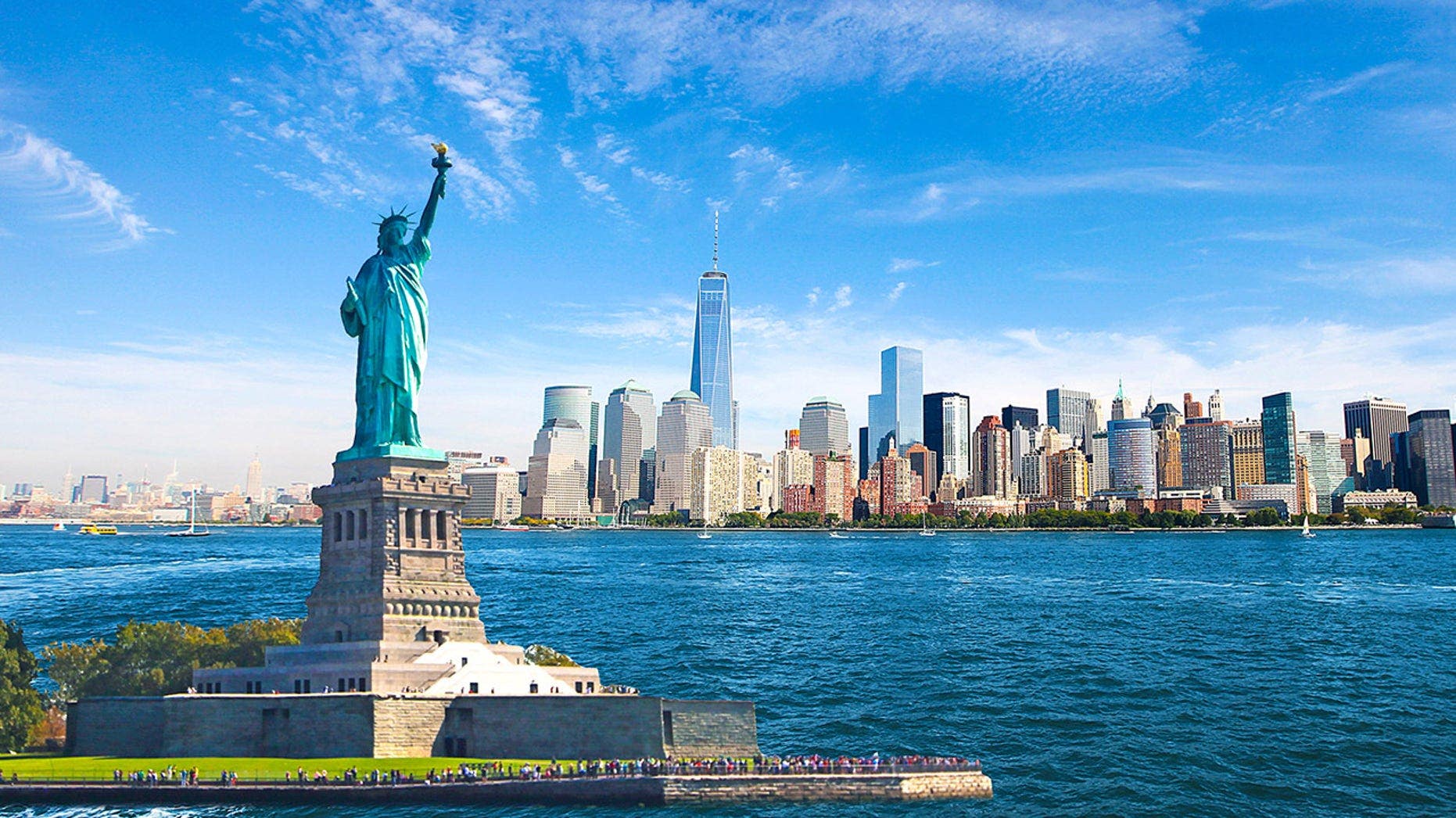
An amazing view of the Statue of Liberty, the skyline and One World Trade Center.(iStock)
Visitors could access the statue’s famous torch for the first 30 years of its existence.
For more Lifestyle articles, visit foxnews.com/lifestyle
But public access to the torch ended following the deadly “Black Tom explosion” of July 30, 1916.
The Statue of Liberty’s torch was among the structures damaged by explosion fragments.
Advertisement
As the U.S. contemplated entry into World War I, German spies sabotaged a barge in New York Harbor filled with an estimated 2 million pounds of arms and munitions destined for Allies in Europe.
The horrific explosion could be felt as far away as Philadelphia.
Remarkably, it killed only four people, but it caused an estimated $500 million in damage in New Jersey and New York City.
The Statue of Liberty’s torch was among the structures damaged by explosion fragments.
Advertisement
It has been open only to National Park Service officials in the 106 years since the Black Tom attack.
BOSTON (WHDH) – The Boston Pops are preparing for their Fourth of July Fireworks Spectacular this weekend with half a million people expected to celebrate the United States’ 250th birthday on the Charles River Esplanade.
The President and CEO of Boston Symphony Orchestra said an even bigger celebration is being prepared at the hatch-shell this year.
“Everything is bigger. You only turn 250 once!” said Chad Smith, President and CEO of Boston Symphony. “We recognize that Massachusetts has been a center of revolution, not just in the Revolutionary War, but through the last 250 years. That spirit, sense of innovation, the sense of pushing our country forward is going to be on display as well.”
Organizers are bringing in lighting, sound equipment, extra stages, and of course – the fireworks.
Advertisement
“Planning to bring in new details and amplify the experience on the Fourth of July with a bigger firework show. They’re going to have drones for the first time, amazing talent,” said Kate Fox, Executive Director at the Massachusetts Office of Travel & Tourism.
This year’s spectacular is being hosted by actress Jane Lynch, and will feature performances by country star Lainey Wilson, Chance the Rapper, Trombone Shorty, and Broadway star Megan Hilty.
“We’re going to have remarkable artists that represent the vast diversity and breadth of American music,” Smith said.
The Boston Pops have been performing on the Esplanade for the Fourth of July Fireworks Spectacular for 52 years, and organizers said this year’s show will highlight the history of Massachusetts.
“The history of the Pops is so closely tied to the Massachusetts story on the Fourth of July,” Fox said.
Advertisement
The fireworks show will begin at 9:15 p.m., and will be set to live music from the Pops.
(Copyright (c) 2026 Sunbeam Television. All Rights Reserved. This material may not be published, broadcast, rewritten, or redistributed.)
Join our Newsletter for the latest news right to your inbox
Pittsburgh officials are partnering with a nonprofit to provide a unique way to thank veterans for their service while getting a grand look at the Steel City.
A 90-foot Ferris wheel dubbed the Salute to Service Wheel will be spinning on the North Shore from Wednesday through Sunday.
It’s provided by Piatt Companies and Piatt Sotheby’s International Realty with half of ticket sale proceeds going to Veterans Leadership Program.
First launched in 1982, VLP helps veterans navigate life’s transitions. Efforts include wellness services, housing, career development and various support programs.
Advertisement
Mayor Corey O’Connor, parks and recreation director Eric Sloan, Piatt Companies CEO Lucas Piatt and representatives from the Veterans Leadership Program are expected to host a grand opening celebration Wednesday around 12:30 p.m. at North Shore Drive and Art Rooney Avenue and take the first rides.
It is part of Pittsburgh’s Independence Day celebration.
Tickets are on sale now and cost $11.20, including a $1.20 service fee. They can be found at pittsburghpa.gov.
Bookings are in hour intervals from 2-9 p.m. Wednesday, Thursday, Friday and Sunday and from 2-8 p.m. Sunday.
Riders smaller than 48 inches tall must be accompanied by an adult.
HARTFORD, Conn. (WFSB) – The U.S. Supreme Court said Tuesday it will take up an appeal challenging bans on the AR-15 and other semi-automatic firearms, including the ban in Connecticut and in the Chicago area.
Similar bans are in place in about a dozen states. The case is expected to be heard in the fall.
Connecticut Attorney General William Tong said the state’s assault weapons ban is lawful and that his office is prepared to fight the challenge in court.
“Connecticut’s assault weapon ban is lawful, lifesaving, and broadly supported. The gun lobby has flooded the courts in states across the country to get an assault weapons case up to this Supreme Court. We are prepared for this fight, and we are going to go in with everything we’ve got to keep these weapons of war off our streets, out of our schools, and away from our families,” said Attorney General Tong.