Kansas
Kansas lawmakers use subpoena to force Ford County clerk to cooperate with election audit • Kansas Reflector


TOPEKA — The Kansas Legislature’s bipartisan auditing committee voted to issue a subpoena to compel the Ford County clerk to cooperate with the state’s security examination of voting-related documentation and equipment used in the 2022 general election.
House and Senate members participating in the committee meeting Monday took the extraordinary step of immediately relaunching the election security audit investigation that had been stalled long ago by Ford County Clerk Debbie Cox.
The committee directed Cox to comply with audit team information requests helpful in evaluating accuracy of voting machines relied on during the statewide election two years ago. In addition, Cox must provide auditors access by Aug. 14 to storage units, ballots and devices used to count votes in that election.
Rep. Shannon Francis, a Republican from Liberal in southwest Kansas, offered the motion to affirm the post-auditing staff’s authority to investigate Ford County’s election processes. He proposed a separate motion triggering Article 10, Chapter 46 of Kansas statute that outlined how investigating committees could use power of a subpoena to compel individuals to cooperate with audits. Both motions were approved without debate.
“If any person fails to make any books, accounts, contracts or records, files, documents and correspondence, confidential or otherwise, related to such audit available to the post auditor or any officer or employee of the division of post audit upon request … the post auditor shall report such failure immediately in writing to the legislative post audit committee, the governor and the attorney general,” Francis said.
Cox wasn’t at the audit committee’s brief meeting at the Capitol. She was given until 1 p.m. Aug. 14 to transfer requested materials to auditors.
When the Division of Post Audit initiated a 15-county review of election security standards, they discovered Ford and Chase county officials sealed most election documents in the same containers with original paper ballots. The practice of locking away ballot activity documents or equipment transfer records in containers with ballots didn’t comply with the Kansas Open Records Act mandating retention and inspection of certain election-related records.
In addition, Ford County refused to let the Legislature’s auditors inspect the county’s election management computer. That meant auditors couldn’t determine whether the election computer was properly disconnected from the internet or had non-election software installed on it.
Kristen Rottinghaus, deputy of the auditing division, said the legislative committee’s objective was to answer two basic questions about election security in Ford County. They are the same questions directed at the 13 counties featured in the audit report released in mid-2023.
The examination in Ford County would address accuracy and security of voting machines used in the November 2022 election, she said.
“And,” Rottinghaus said, “their policies and procedures for ensuring the security of storage units, ballots and devices used to tabulate votes during that same election.”
In July 2023, the auditing division reported to the Legislature that the 13 cooperating county governments had adequate overall election security practices but none met all 55 best practices or state laws during the 2022 primary or general elections. Auditors concluded most of the 13 counties examined in that audit provided inadequate levels of security for ballots and tabulation machines.
“They’re also missing or have weak practices in several important areas,” the audit report said. “That means security isn’t as good as it could or should be.”
The auditors recommended Secretary of State Scott Schwab provide counties with standardized election forms and policies. In addition, auditors proposed Schwab train county election officers on what election materials could be sealed in ballot containers and kept from public view.
“Secretary of state’s office officials told us county officials often indiscriminately seal election documents with ballots,” the audit said. “But this doesn’t align with the purpose of ballot sealing, which is to maintain an accurate paper record of the election results.”
Auditing of county election security practices in Kansas was driven by Republican state legislators convinced by former President Donald Trump’s false claim President Joe Biden stole the 2020 presidential election in a multi-state conspiracy.
Trump, who carried Kansas in the 2016 and 2020 elections, has continued to perpetuate that myth on the 2024 campaign trail.
In 2018, the American Civil Liberties Union of Kansas filed a lawsuit against Cox challenging her decision to move the city’s voting location serving a population of 27,000 people to a facility outside city limits. The suit claimed the change interferred with a fundamental right to vote and disproportionately would impact Hispanic voters.
Cox also forwarded to then-Secretary of State Kris Kobach a letter from ACLU Kansas requesting a voter help line, but wrote on top of the document, “LOL,” meaning to laugh out loud.



Kansas
Where to watch Kansas City Royals vs Tampa Bay Rays: TV channel, start time, streaming for June 24


What to know about MLB’s ABS robot umpire strike zone system
MLB launches ABS challenge system as players test robot umpire calls in a groundbreaking season.
The 2026 MLB season has surpassed the quarter mark, and after each team’s first 40 games, there’s plenty of reasons to tune in all summer long.
Chicago White Sox slugger Munetaka Murakami has already proven doubters wrong by launching 17 home runs, Pittsburgh’s Paul Skenes consistently looks like the best version of himself on the mound and Milwaukee ace Jacob Misiorowski is throwing harder than any starter in the majors.
The MLB action continues on Wednesday as the Kansas City Royals visit the Tampa Bay Rays.
Here’s everything you need to know to tune in for the first pitch.
See USA TODAY’s sortable MLB schedule to filter by team or division.
What time is Kansas City Royals vs Tampa Bay Rays?
First pitch between the Tampa Bay Rays and Kansas City Royals is scheduled for 6:40 p.m. (ET) on Wednesday, June 24.
How to watch Kansas City Royals vs Tampa Bay Rays on Wednesday
All times Eastern and accurate as of Wednesday, June 24, 2026, at 6:33 a.m.
- Matchup: KC at TB
- Date: Wednesday, June 24
- Time: 6:40 p.m. (ET)
- Venue: Tropicana Field
- Location: St. Petersburg, Florida
- TV: Royals.TV and Rays.TV
- Streaming: MLB.TV on Fubo
Watch MLB all season long with Fubo
MLB regional blackout restrictions apply
MLB scores, results
MLB scores for June 24 games are available on usatoday.com . Here’s how to access today’s results:
See scores, results for all of today’s games.

Tonight, the Kansas City Royals dismantled the Tampa Bay Rays in a cathartic 12-5 victory. It was a full-team showing, with Carter Jensen extending his hit streak to 14 games, Nick Loftin swatting a home run on a four-hit night, and Luinder Avila navigating his way through five tough innings of one-run ball in front of some of some incredibly bad infield defense.
But you’re here for Jac Caglianone, who ended the day with three hits and a pair of home runs. Here’s his first, which came immediately after Loftin’s home run in the first frame of the game and sounded like a thunderclap.
And here’s the other one, an arguably more impressive center-left shot to the deepest part of the ballpark.
To say that Caglianone has been on fire would not be accurate, because he is fire right now. Tonight’s gigantic dongs were his eighth and ninth of the month of June; they extended his hitting streak to five games and his home run streak to four games.
This was one of those games were so much happened that, paradoxically, nothing much happened, because each successive hit meant less and less as the score ballooned and ballooned. I mentioned the infield defense–Salvador Perez lost two popups, and the rest of the infield didn’t see them, either. That required Avila to essentially get five outs in one inning. It was really quite comical in hindsight, but groan-worthy in the moment for sure.
Pretty much everyone got involved in the offense. Lane Thomas and Starling Marte were the only two batters without a hit. Michael Massey, Perez, and Kameron Misner recorded doubles, which in addition to the home runs made six extra base hits. The Royals did a nice job totally putting the game away in the eighth inning against Steven Matz, who was just tossing batting practice out there.
Kansas City’s bullpen also did a nice job (mostly). It helps to have such a big lead, but Stephen Cruz and Matt Strahm pitched before the lead was quite as big as it was, and you know what? They both turned in clean innings! So, too, did Beck Way. Someone named “Connor Seabold” came in to pitch the ninth, and the Royals might as well have sent Tyler Tolbert out there. Seabold gave up a trio of runs, but the Royals closed it out.
At 34-46, the Royals are still closer to the American League basement than they are the penthouse. But have you looked at the AL right now? The current owners of the third Wild Card slot, the Toronto Blue Jays, don’t even have a .500 record. What a weird year.

KANSAS CITY, Mo. (KCTV) – Kansas City police say extra help from other departments is giving the agency more flexibility during World Cup-related events, matches and regular patrols across the city.
KCPD said officers from dozens of other departments are helping with safety efforts around major events, including watch parties, Fan Fest and crowds at Kansas City Stadium.
The department said officers from across Kansas and Missouri have stepped up to help. Officers from Oklahoma City and Ohio are also assisting, including mounted officers who brought horses.
Police said the extra staffing is needed because officers still have to respond to regular calls across the metro during the events. KCPD blocked vacation time this month to keep officers available.
Sgt. Jake Becchina with KCPD’s Media Relations Unit said people attending the events may notice officers from several agencies.
“If you walk through Fan Fest, you may see a dozen police officers from a dozen different departments that are here helping us out,” Becchina said.
Becchina said people have noticed the added police presence.
“Probably one of the most overwhelming themes or regular themes I hear is, ‘I feel safe here. I see a lot of police officers. Thank you guys for being here,’” Becchina said.
With the Netherlands playing Thursday, the Orange Bus and Army are en route, with a large parade planned that morning. Becchina said police are prepared for the crowds expected around the events.
Copyright 2026 KCTV. All rights reserved.
-

 Sports40 seconds ago
2026 World Cup Third-Place Standings: Who’s In, Who’s On The Bubble
-

 Technology8 minutes ago
FCC phone ID plan could end burner phones
-
 Business11 minutes ago
Sony Pictures invests $100 million in virtual reality venue Cosm
-
 Entertainment16 minutes ago
Culture Clash knows the end is near. It wants to go out with a bang
-
 Politics26 minutes ago
Vice President JD Vance’s visit gives ‘The View’ a ratings boost
-
 Sports38 minutes ago
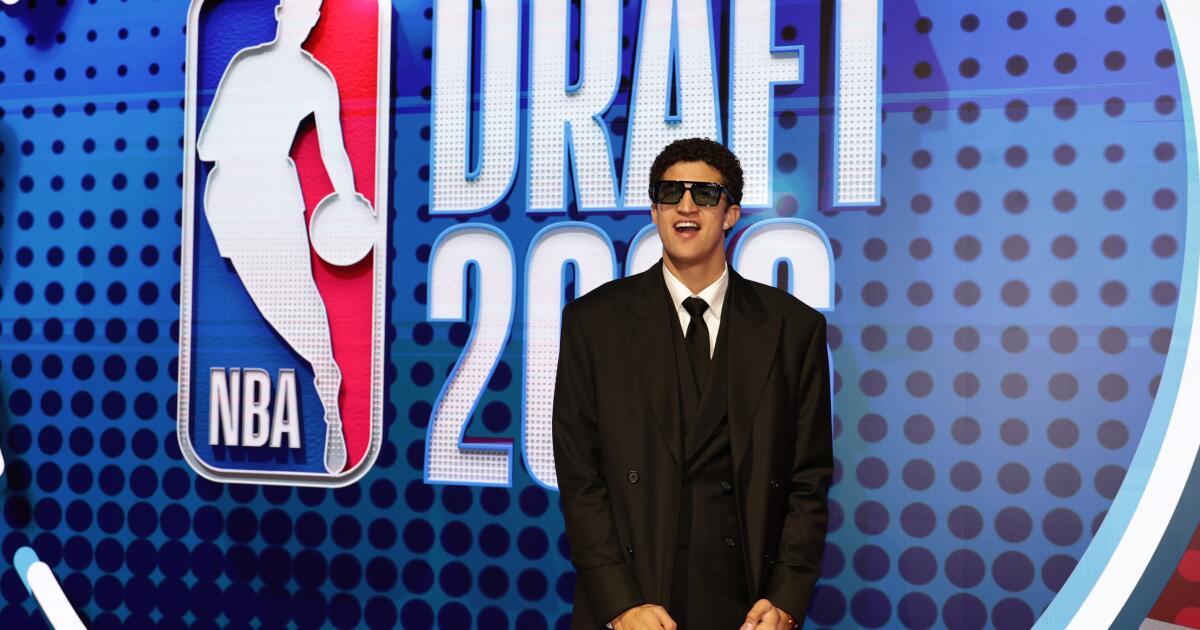
‘Super blessed’: Karim López makes NBA history as first Mexican-born first-round draft pick
-

 World46 minutes ago
Will the UK rejoin the European Union? MEPs debate Brexit on The Ring
-
News1 hour ago
Federal judge bars Trump from implementing proof of citizenship requirement to vote


