Austin, TX
Houston power politics, big changes in 2024 race: This Week in Texas Politics


Houston power outages; Kamala Harris campaign
FOX 7 Austin chief political reporter Rudy Koski and his panel of experts speak on this edition of This Week in Texas Politics
AUSTIN, Texas – This week saw big changes in the 2024 presidential race with President Joe Biden dropping out and endorsing Vice President Kamala Harris, as well as the continued impact on the Houston area from Hurricane Beryl.
FOX 7 Austin’s Chief Political Reporter Rudy Koski and our panel of analysts take a look at This Week in Texas Politics.
RUDY KOSKI: This week in Texas politics, got presidential and also kind of got into the dirt, literally. Let’s get the headlines from our panel and we’ll start first with Brad Johnson with the Texan News. Brad, what’s your headline for the week?
BRAD JOHNSON/ TEXAN NEWS: How many more game changing events are on the horizon?
RUDY KOSKI: Annie Spielman with MainStreet Relations. What’s your headline?
ANNIE SPILEMAN/ MAINSTREET RELATIONS: Austin’s DECA announces historic $1 million small business loan fund.
RUDY KOSKI: Patrick Svitek with the Washington Post. What’s your headline?
PATRICK SVITEK/ WASHINGTON POST: Democrats have a likely new presidential nominee.
RUDY KOSKI: Top officials with CenterPoint went before the PUC Thursday and issued an apology. More hearings are promised. So do you think that this crisis remains an issue when the session starts?
ANNIE SPILEMAN/ MAINSTREET RELATIONS: I want to note two things here. You know, I don’t just think that the power companies will be front and center at the chopping block. We’re going to see leaders bring in the property and casualty insurance companies, front and center as well. Secondarily, I want to mention in 2021, the business community worked with the Texas Legislature to create a program that would create a temporary emergency loan program for small business owners. But the problem is, is that program was never funded.
RUDY KOSKI: A statehouse hearing was held this week on how to prevent hostile nations from buying Texas land. Brad, this was supposed to be more of a reboot of legislation that failed to pass in the past session. Then all of a sudden, it kind of morphed into a much broader issue on cyberattacks.
BRAD JOHNSON/ TEXAN NEWS: These issues all meld into one. It starts with the land purchases. It’s not surprising at all that it’s going to take that route. The biggest thing for me, though, is it’s this question of, on the land front, competing interests between national security and private property rights, the ability to sell your property to whom you want for how much you want. How do you find that balance? I really don’t know. That’s going to be a tough task for lawmakers.
VP Kamala Harris visits Houston
Vice President Kamala Harris made a stop in Houston at the American Federation of Teachers convention.
RUDY KOSKI: Vice President Harris brought her presidential campaign to Texas, speaking to a teacher union group there in Houston. But just before [her] going on and speaking, on Capitol Hill, House members passed a resolution condemning her work dealing with legal immigration. Regardless of how you know, you want to describe it, was she a border czar or not? And Patrick, even a few Democrats voted for that resolution, Henry Cuellar among them.
PATRICK SVITEK/ WASHINGTON POST: No, I wasn’t surprised to see some Democratic crossover support for that resolution. That issue is no doubt going to be one of Kamala Harris’s biggest political liabilities as she takes over the Democratic presidential ticket.
RUDY KOSKI: Earlier in the week, Texas Democrats, who are delegates to the party’s convention, that’s going to happen, later on in August, up in Chicago, jumped on the Harris bandwagon. And was it what does the business community want to hear when the DNC starts up?
ANNIE SPILEMAN/ MAINSTREET RELATIONS: You know, business owners want to hear if anything has or will change in regard to her talking points from 2020, when she ran for president and during her time in the Senate in regard to economic politics. Will she be Biden 2.0 or make her way economically?
How does Biden’s exit change the race?
So much has happened so fast since President Biden announced he would not seek reelection just days ago. In that time, Vice President Kamala Harris has catapulted to the front as the presumptive Democratic nominee
RUDY KOSKI: Brad, Texas Democrats think that maybe, just maybe, all this energy that Harris is generating could help them flip some statehouse seats and be a defense against school choice. What are you hearing?
BRAD JOHNSON/ TEXAN NEWS: I heard Republicans say yesterday, they think it’s possible they lose three seats in the House. That’ll be a problem for Republicans on the school choice front. Probably not the death knell, but it would be a difficulty. Also, that would significantly impact the Speaker’s race.
RUDY KOSKI: As for school choice, Lieutenant Governor Dan Patrick accused House Speaker Dade Phelan of not listing that topic as a top priority in a budget document leading up to the session. Feeling on Friday swung back, claiming there are hearings on education, have already begun. Annie, clearly, what we’re seeing, there’s not going to be a cooldown in August regarding this issue, right?
ANNIE SPILEMAN/ MAINSTREET RELATIONS: This is all kind of new territory. And I think this goes to show that when we go into next session, you know, it’s going to be really hard for, for groups to be trying to move their legislation forward.
Democratic Rep. Sheila Jackson Lee dies
U.S. Congresswoman Sheila Jackson Lee, who was known by many in Houston for her hard work and public service, passed away at the age of 74.
RUDY KOSKI: Now, a congressional seat is up for grabs. One that was held by, Representative Sheila Jackson Lee, who recently passed away. Former Houston Mayor Sylvester Turner is among the names being tossed around right now as a possible successor. Patrick, what are you hearing up on Capitol Hill as who’s going to throw their hat in the ring on this one?
PATRICK SVITEK/ WASHINGTON POST: What’s fascinating here is it’s going to be, you know, the way that this election is going to be handled is is rather unique. We’ve seen it happen before in Texas, but it doesn’t happen all the time. But what’s going to happen is that the Democratic Party Precinct Chairs in Harris County are going to meet, likely in mid August, and select a replacement nominee. The governor does have the power to call a special election. But why give the Democrats won more seats that they currently now don’t have.
RUDY KOSKI: You can catch our longer discussion on the Fox7 YouTube page, but let’s wrap things up right now with one word, and we’ll start with Annie. What’s your one word for the week?
ANNIE SPILEMAN/ MAINSTREET RELATIONS: Deluge?
PATRICK SVITEK/ WASHINGTON POST: Kamala.
BRAD JOHNSON/ TEXAN NEWS: Patrick stole mine. I was gonna say Kamala, too. I’ll go with Feuding.
RUDY KOSKI: And that is This Week in Texas Politics.



Two police officers shot and killed an armed man after a brief foot chase in downtown Austin, Texas, hours after multiple people reported that he was pointing a handgun at people near a busy trail system, according to officials.
Police began receiving 911 calls shortly after 8 a.m. Saturday about a white man armed with a handgun near the trails around Lamar Boulevard and Cesar Chavez Street, according to Police Chief Lee Rogers. Callers reported that the man was pointing the weapon at multiple people throughout the area.
Officers searched the downtown area for several hours before encountering a man matching the description at about 11 a.m. He was initially on a scooter when officers approached and attempted to detain him and question him about the earlier calls.
The man left the scooter behind and ran away, leading officers on a short foot chase. Officers saw that he had a firearm and repeatedly ordered him to stop and drop the weapon, but he refused.
When the officers caught up with him, both opened fire and struck him. Rogers did not explain what immediately caused the officers to shoot, but said more than one round was fired.
Officers provided medical aid, but the man was pronounced dead from his injuries.
Rogers said he could not confirm reports that the man was homeless. The shooting is being investigated administratively with Austin Police Oversight and criminally by the department’s Special Investigations Unit and the Travis County District Attorney’s Office.
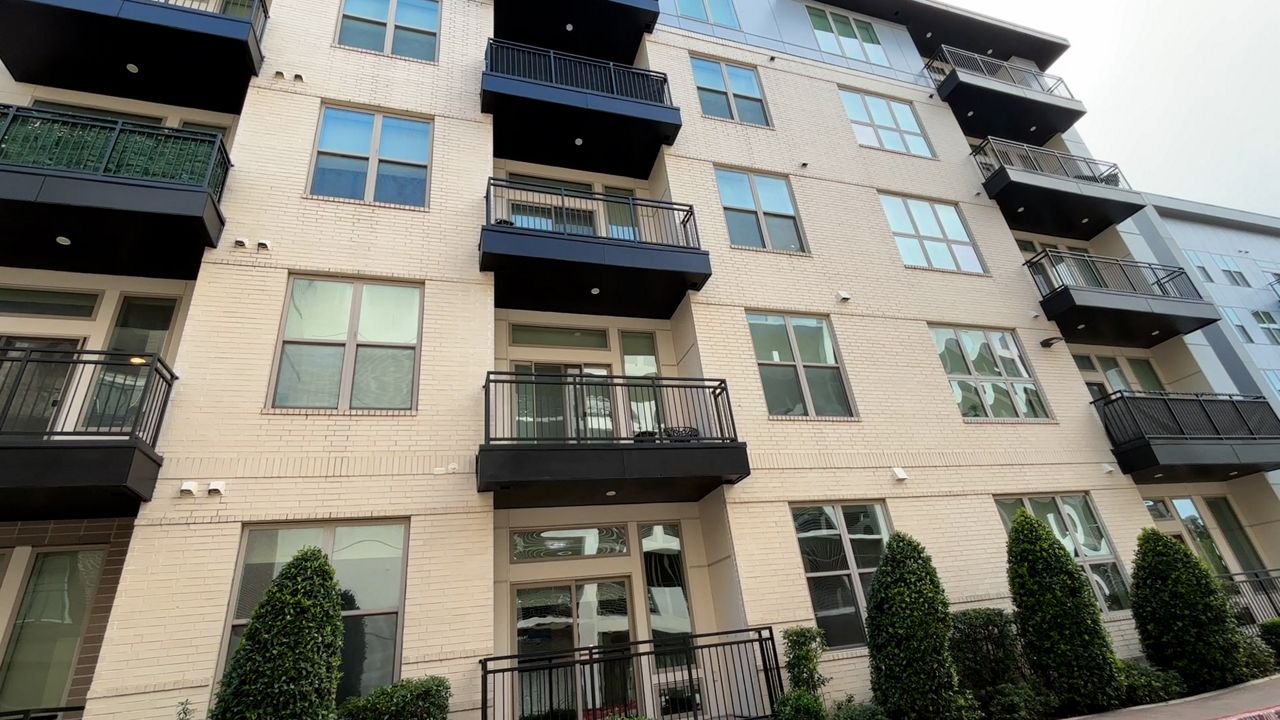
TEXAS — According to Redfin, a national real estate brokerage firm, the top three most affordable cities for renters in the country are in Texas. The firm released its study in 2025, which also lists the median incomes needed to afford the average rent.
Renters living in the Sawyer Heights neighborhood near downtown Houston say apartments in that area come with a hefty price tag.
“It’s not cheap to live in this city, especially with income the way it is,” said Evan Camp, a renter.
Jacinto Cepeda shares his sentiment, adding you get what you pay for.
“It’s just increasing in price if you want to live somewhere nicer or a little bit safer, I would say, it’s definitely on the pricier side,” Cepeda said.
However, Redfin’s report ranking the top 10 most affordable metros for renters across the country shows renters in the Houston metro area may be better off compared to other Texans. Austin, Houston and Dallas took the top three spots, respectively.
The study analyzes Census Bureau data on median incomes and average rent costs, based on the affordability criteria of renters spending no more than 30% of their income on rent.
“In the most recent American Community Survey, we found that, for the first time, the majority of renters in Harris County in Houston are cost-burdened, meaning they spend more than 30% of their income on rent,” said Dr. Stephen Sherman, an associate director of research at the Kinder Institute for Urban Research at Rice University.
Sherman says while some may consider Houston rent as more reasonable than New York City and Los Angeles, Harris County incomes have not kept up with inflation.
“When you start to look at how that compares to people’s incomes, how high eviction rates are, the quality of multifamily building here, you start to see that that cheery story has some cracks and fissures,” he said.
The Redfin study shows the typical U.S. renter earns nearly $9,000 less than the income needed to afford the median apartment. It shows a median rent in the Houston metro of $1,239, meaning the affordability required for annual income needed is closer to $50,000. As of December 2024, Houston’s median renter income was roughly $58,000, which was nearly $9,000 more than needed to cover the rent. Sherman says that means nearly half of renters don’t make enough.
“Apartment rents and home prices, as well, have stabilized, but when you look at incomes, especially after adjusting for inflation, they’ve actually gone down,” said Sherman, adding this is while expenses like groceries and gas have gone up. “Everything is a trade-off. You can find affordable places to live in Houston, but it might be in an older building in dire need of repairs.”
Cepeda said walkability is one thing he appreciates about the Heights area.
“It’s just a matter of where you’re willing to live where you’re willing to live, and how you’re willing to live is the most important thing,” he said.

An outbreak of cyclosporiasis, an intestinal illness that can cause explosive diarrhea, has been confirmed in Texas, prompting health officials to urge extra precautions when handling fresh produce.
The Texas Department of State Health Services has confirmed 48 cases of cyclosporiasis across 10 Texas counties. State health officials say there have been no deaths linked to the outbreak so far.
There are no reported cases in Southeast Texas at this time, and Port Arthur officials say they have not received any reported cases from area hospitals or health care providers. Still, health officials say now is the time to take extra precautions.
Judith Smith, Port Arthur’s director of health services, said cyclosporiasis is caused by “a microscopic parasite that is usually found in contaminated food and contaminated water.”
Smith said contamination typically stems from floodwater or sewage water when produce is harvested, allowing parasites to transfer to produce long before it reaches consumers.
“I have not heard of an outbreak like this. It’s been a while. It might have been 2023, 2024, and so, you know, and of course, Texas is not immune,” Smith said.
Smith said foods that are eaten raw can pose a higher risk. “Those foods that are not cooked are the ones that really make you more at risk,” she said.
Health officials recommend washing raw produce, including lettuce, cilantro, raspberries and basil. They also recommend cleaning cutting boards, refrigerating fresh goods and throwing away any remaining produce after experiencing symptoms.
Symptoms can include watery diarrhea, fatigue, lack of appetite and a low-grade fever. “Those individuals that may have that watery diarrhea or really just more than two to three days should seek medical attention,” Smith said.
Testing can confirm the parasite, and early treatment can help prevent more serious complications, especially for children and elderly relatives. Health care experts recommend contacting a health care provider as soon as possible if persistent stomach cramps and other symptoms develop after eating fresh produce.
-

 Technology8 minutes ago
Oregon’s Attorney General withdraws effort to delay Paramount and Warner Bros. merger
-

 World11 minutes ago
Gunfire shatters Toronto Latin street festival, leaving at least 2 dead and multiple wounded
-

 Politics16 minutes ago
Sen. Lindsey Graham dead at 71 after ‘brief and sudden’ illness, office says
-

 Health23 minutes ago
Last American to use an iron lung dies at 78 years old after childhood polio diagnosis
-

 Sports26 minutes ago
Conor McGregor’s long-awaited Octagon return cut short by apparent knee injury seconds into UFC 329
-

 Technology31 minutes ago
Robotaxi pit stops could pop up near you
-
 Business38 minutes ago
‘Moana’ debuted just 10 years ago. Why Disney is remaking it as a live-action movie
-
 Entertainment41 minutes ago
Wes Anderson’s needle-drop genius gets its due at his Hollywood Bowl tribute

