Wisconsin
Will guns be allowed at the 2024 RNC in Milwaukee or in the security zone? Here’s what Wisconsin law says.


Watch the moment Trump is injured at Pennsylvania rally
Watch the moment that former President Donald Trump was rushed off stage after gunshots rang out as he was speaking to supporters at Butler, Pa., near Pittsburgh.
Just days before his expected confirmation as the Republican Party’s presidential nominee in Milwaukee, former President Donald Trump was rushed off stage — his ear and face streaked with blood — after an assassination attempt at a rally in Butler, Pennsylvania.
Secret Service spokesman Anthony Guglielmi said in a statement that the suspected shooter, now dead, fired multiple shots toward from an elevated position outside of the rally venue.
The shooting comes two days before the Republican National Convention is set to convene in Milwaukee.
Here are the rules on guns for the event.
Will guns be allowed at the RNC?
Guns will not be allowed inside Fiserv Forum or other buildings where RNC events are set to take place, or in the “hard perimeter” around the convention, where credentials are required for entry, aside from those those possessed by working law enforcement officers, according to Secret Service spokesperson.
Most guns, however, will not be banned in the area immediately outside the RNC perimeter, known as the security “footprint,” because the city is prevented by state law from enacting such a ban.
Wisconsin law prohibits Milwaukee, local governments from regulating legal firearms
Wisconsin law prevents the city of Milwaukee, and all local governments “from prohibiting the possession or carrying of legal firearms,” City Attorney Evan Goyke told the Milwaukee Journal Sentinel in May.
“Municipalities cannot regulate firearm possession beyond regulations in state statute,” Goyke wrote in May.
A Milwaukee alderman in the lead-up to the convention sought to ban guns within the security “footprint” following revelations that a city ordinance would allow most firearms but prohibit typically innocuous items in the area.
The ordinance enacted ahead of the RNC prohibits bringing into the footprint “any dangerous ordnance, weapon, or firearm that is prohibited by the laws of the state of Wisconsin under” specific statutes that reference machine guns and other weapons; short-barreled shotguns and short-barreled rifles; and silencers.
Ald. Robert Bauman argued the state law was not written with an event like the RNC in mind, but his effort failed to gain traction on the council.
Earlier this week, another Milwaukee alderman’s proposals to prohibit bump stocks in the city and increase city penalties for disorderly conduct while armed with a dangerous weapon failed to move forward. The bump stock proposal was determined to be illegal under state law by the City Attorney’s Office, and the disorderly conduct proposal was held in council after a lengthy and heated discussion.
REACTIONS: RNC delegates, Milwaukee residents comment on Trump assassination attempt
What are Wisconsin’s laws on guns?
In Wisconsin, like under federal law, convicted felons may not own guns. People under certain types of court orders related to mental health and addiction are also banned from possessing guns here, as well as people under certain types of restraining orders related to abuse or harassment.
Background checks are required to purchase a firearm from a federal firearms licensed dealer and to apply for a concealed carry license in Wisconsin.
Carrying a concealed weapon in Wisconsin is legal for individuals over age 21 who have met the state’s requirements, which include training and a background check.
OPINION: We want to hear your thoughts about the shooting at the Trump rally



(WLUK) – A couple challenging the decision not to award them a 50-50 raffle prize at a Milwaukee Brewers game asked the Wisconsin Supreme Court to take the case, calling it one of “statewide importance.”
Matthew and Annette Flynn purchased ten raffle tickets at the July 7, 2023, game, and held the winning number which was originally selected for $13,000. According to court records, the raffle rules in effect at the time required the winning ticket holder to claim the prize at a designated 50-50 table by the end of the top of the seventh inning. Flynn said she did not see the winning number displayed or hear it announced and was directed by stadium personnel to another location before making her way to the claim table. Officials determined she did not arrive before the deadline and selected a new winning ticket.
The Flynns sued, but the circuit and appeals courts ruled the raffle’s rules gave the foundation sole discretion to determine the official winner and that the rules clearly stated a participant who failed to claim the prize within the specified time would be disqualified.
In a petition to the Wisconsin Supreme Court filed Wednesday, the Flynn’s asked the high court to take the case, saying the decision “affects not only the parties to this action but potentially every Wisconsin resident who participates in charitable raffles and similar gaming activities.”
“This case presents significant questions concerning contractual discretion, discovery, judicial review of charitable gaming decisions, and the treatment of digital evidence within Wisconsin’s appellate system. For these reasons, Petitioners respectfully request that this Court grant review of the decision of the Court of Appeals,” the petition states.
The high court does not have to take the case. At some point, it will vote on if to take it. If it does, a months-long process to review the issues will begin. If it does not, the appeals court ruling would stand.
According to the rules posted on the Milwaukee Brewers’ website, the deadline to claim the prize is no longer during the game the tickets were purchased.
BE THE FIRST TO COMMENT
“The Participant in possession of the Raffle ticket with the potential winning number may claim the Prize at the 50/50 Table located on the Loge (2nd) level concourse behind Sections 216/217 until such time as the Ballpark officially closes to fans after the end of the game. If the Participant in possession of the Raffle ticket with the potential winning number does not claim the Prize by the time the Ballpark closes to fans after the end of the game, that Participant may still claim the Prize within thirty (30) days after the conclusion of the Raffle Period for the respective baseball game by contacting the Raffle hotline (414-902-4334). A Prize that is not claimed within thirty (30) days after the conclusion of the Raffle Period will be awarded in compliance with applicable regulations,” the site states.

ONEIDA COUNTY, Wis. (WFRV) — The Wisconsin DOJ is investigating an officer-involved death that occurred on the morning of June 17 in the town of Lake Tomahawk.
According to a press release, around 10:30 a.m., two Oneida officers arrived at Lumen Lake Drive to arrest a subject in a felony investigation.
Upon contact with the officers, the subject brandished and shot a firearm. One officer shot the subject in return.
EMS pronounced the subject dead on the scene. No members of law enforcement or the public were injured.
Both officers will be placed on administrative assignment, per the agency’s policy.
WFRV will update this story as needed.

Body camera shows Wisconsin officer shooting, killing dog in Mequon
Body camera footage from April 23, 2026 shows a Thiensville officer firing at two dogs running at him. He continues to fire as they run away, killing one.
A Thiensville officer fired 16 shots at two stray dogs, killing one, and the Milwaukee Journal Sentinel has been tracking the fallout.
The officer, Richard C. McCormick, resigned during an internal investigation. The shooting is now under review by the Ozaukee County District Attorney’s Office.
Here’s what to know about the case and what to do if you encounter a stray or lost dog:
What brought the Thiensville officer to the Mequon intersection?
On April 23, 2026, Mequon police responded to a call shortly after 1 a.m. for two loose dogs at Highland and Cedarburg Roads. The Mequon officers decided to return in the morning, when they could seek help from the humane society.
About two hours later, McCormick saw the dogs at the same intersection, outside his jurisdiction. McCormick stopped and tried to capture them. He was not responding to a new 911 call or other request for help. He was aware of the earlier call about the dogs.
What happened during the shooting?
Body camera footage obtained by the Journal Sentinel showed the dogs bounding toward McCormick after he opened a rear door of his squad.
The officer fired at least two shots near the ground, in what he later said was an attempt to scare the dogs. Video showed the dogs running away and McCormick continuing to fire across the road, even after one of the dogs collapsed on the ground and howled.
Six minutes later, McCormick fired a final shot from close range to euthanize the dog on the ground. The other dog escaped into the woods.
A national expert on police-dog encounters told the Journal Sentinel there were “valid concerns” about the shooting, noting that McCormick continued firing even as the dogs ran away from him.
What happened to the second dog?
The shooting came to light after three women tracked and safely trapped the second dog that had been wounded.
The dog, whom they named Ranger, had a bullet in his hip.
Ranger underwent surgery and was still receiving care at the Wisconsin Humane Society Ozaukee Campus as of June 17.
The rescue volunteers – Danielle Dietz, Alicia Hegedus and Karen Bohlmann – pieced together what happened to Ranger and the other dog, whom they nicknamed BD, using public records requests.
They learned that Ranger had been out for 17 days since he had been shot.
What should you do if you encounter a lost or stray dog?
Angela Speed, a spokeswoman for the Wisconsin Humane Society, offered the following suggestions:
- Be cautious. Fearful, injured or ill animals can be reactive when confronted.
- Watch the dog’s body language carefully.
- If the dog is obviously friendly and approachable, check for a collar with information. If an owner cannot be located, take the dog to a local animal shelter.
- If you have safety concerns, call a local non-emergency police or sheriff’s office line.
The volunteers who rescued Ranger have years of experience tracking and safely capturing stray or missing dogs, on their own and with local rescue groups. They offered additional suggestions:
- Note the location where you saw the dog and take a photo, if possible.
- Share that information in local neighborhood groups online, which can include Facebook, NextDoor or Ring.
- Look up nearby lost dog and recovery organizations online and contact those groups for help.
- Never chase a dog.
-

 Sports3 minutes ago
2026 FIFA World Cup Golden Boot Race Tracker: Lionel Messi Is Alone At The Top
-

 Technology10 minutes ago
McDonald’s AI drive-thru may take your next order
-
Business13 minutes ago
Uber, California lawyers say deal reached to avert dueling ballot initiative showdown
-
 Entertainment18 minutes ago
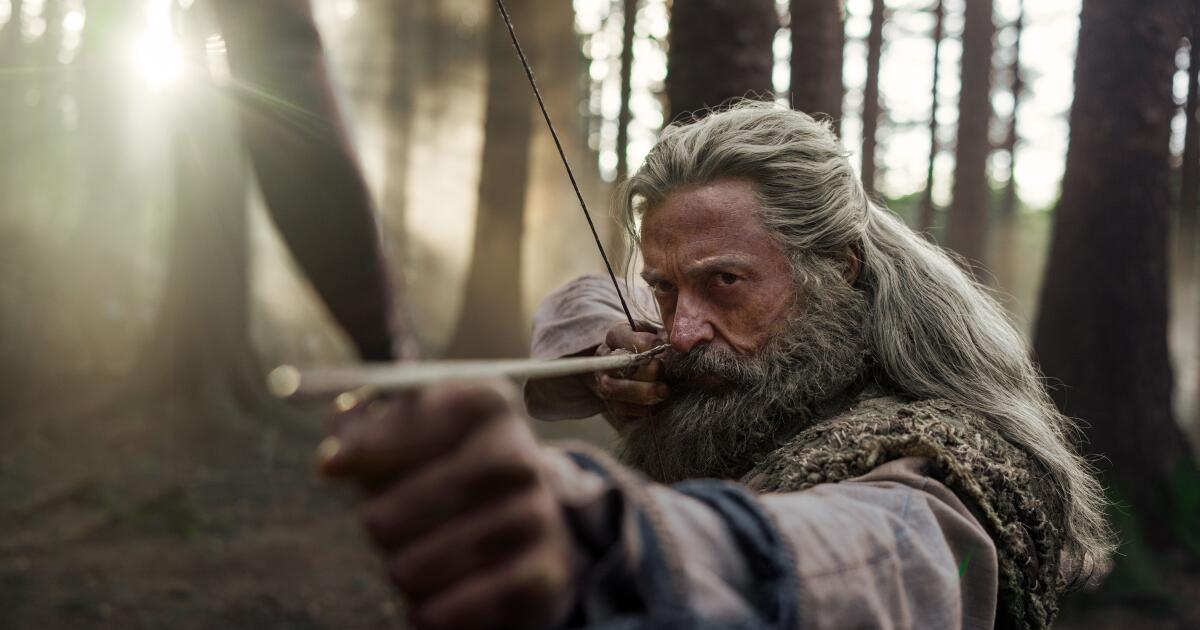
Review: Dour and dull, ‘The Death of Robin Hood’ steals our time to give to the gloom
-
 Politics28 minutes ago
Long list of U.S. concessions to Iran raises specter of a ‘lost war’
-
 Sports40 minutes ago
Justin Gaethje and Ilia Topuria receive lengthy medical suspensions after UFC Freedom 250 fight
-

 World48 minutes ago
EU of six, not 27, is needed to ‘stay relevant’ – Bruno Le Maire
-

 News1 hour ago
GOP Rep. Tom Kean, missing from Congress for months, set to return on June 30


