Iowa
Over 30K Iowa students OK’d for education savings accounts


DES MOINES — More than 30,000 Iowa students have been approved for a state program to use state dollars to pay private school tuition in the upcoming school year, Gov. Kim Reynolds said Friday.
The numbers indicate an increase of more than 11,000 students from the 2023-24 school year. It’s about 10,000 more than the nonpartisan legislative services agency estimated would participate when the law was passed in 2023.
The Republican governor made the announcement at the annual Family Leadership Summit hosted by the conservative evangelical organization The Family Leader during a conversation with Betsy DeVos, the former U.S. secretary of education under then-President Donald Trump.
The state received 35,417 applicants for the program before the June 30 deadline, Reynolds’ spokesperson Kollin Crompton said. Applications are still being reviewed, but more than 30,000 have been approved so far.
Approved students will be able to use their full per-pupil state funding to pay for tuition at an accredited private school. Not all of those students may end up attending a private school with the funds. If a student does not attend a private school, the account is closed and the money remains with the state.
During the conference, DeVos praised Reynolds’ push to pass the education savings account program. Reynolds endorsed primary challengers to Republicans who opposed a narrower version of the plan in 2022, many of which lost their primaries to candidates who supported the program.
“She really did set a new tone when taking on members of her party who refused to make that step to give families more power,” DeVos said. “And it was not without a lot of difficulty and a lot of political capital, shall we say. But clearly she knew where her constituents in Iowa were and are on that subject.”
Reynolds said the COVID-19 pandemic, when instruction was moved primarily online and parents had a closer view of educational instruction, solidified her support for private school choice initiatives.
She said the program will give families who otherwise could not afford private school the opportunity to send students to a school that best fits their needs. About 60 percent of the approved applicants last year already attended private school, while 40 percent were public school students.
“We had school choice prior to this … but it was only if you had the means to do that,” Reynolds said. “And that is just not right. It’s not fair. And so I forged on a mission to get things turned around.”
Reynolds said she believes her education policies will improve public schools as well as private schools. She pointed to open enrollment changes, a teacher salary increase and literacy standards passed in this year’s legislative session as examples of improvements to public schools under her administration.
The education savings account program was Reynolds’ top policy priority in 2023, and one of several education changes she has pursued in recent years as governor. The program cost the state about $128 million last budget year.
This year, Reynolds signed a bill into law that overhauls the state’s area education agencies, which provide special education support to Iowa school districts. The law also increased the minimum teacher salary to $50,000 by the 2025-26 school year.
Under the law, funding that now goes to the AEAs will eventually go directly to school districts, and they will need to contract with the AEAs to provide special education services. AEA funding for media and other education services will go directly to the school districts, which can spend it on any general fund purpose outside the AEAs.
Reynolds calls DeVos role model
DeVos served as the U.S. secretary of education under Trump from 2017 to 2021. She is a strong proponent of private school choice policies and has led several conservative education think tanks.
Reynolds said DeVos has been a role model for her and said she was inspired by DeVos’ work as secretary of education.
“You never backed away from your beliefs or what you went there to do and I thought if she can do this at the federal level, I could do this at the state level,” Reynolds said.
Reynolds in May denied suggestions, first reported in the Daily Caller, that she was interested in serving as secretary of education in a potential second Trump administration.
The conservative outlet attributed an unnamed spokesperson who said Reynolds may be interested in the position. But Reynolds said the report “mistook the way I talk about education” as being interested in the job.
“I am passionate about education. I’m proud of what we’re doing,” Reynolds said at the time. “I mean, it started with STEM, it started with registered apprenticeship programs, literacy, parental choice. So I’ve got a lot of work to do as governor.”
Democrats have opposed many of Reynolds’ education policies, saying they will weaken public schools and funnel taxpayer dollars to unaccountable private institutions. In a statement, Iowa House Minority Leader Jennifer Konfrst, D-Windsor Heights, said the Iowa GOP has gone too far in its education policies.
“Iowans are sick and tired of politics. Governor Reynolds celebrating her voucher bill with billionaire Betsy DeVos and the special interests today is a huge reason why,” Konfrst said in a statement. “Iowans overwhelmingly oppose vouchers because public money is for public education. They don’t want more public schools to close and they sure don’t want their kids to lose access to special education services.”


Iowa
Zach Lahn projected to win Iowa GOP governor primary, upsetting Trump’s pick in a state Democrats hope to flip

Zach Lahn will win the Republican primary for Iowa governor, CBS News projects, overcoming a Trump-backed congressman and setting up a November contest against Democrat Rob Sand that could be one of this year’s most competitive gubernatorial races.
Lahn — a farmer and businessman who has touted his ties to the “Make America Healthy Again” movement — prevailed over a crowded GOP field on Tuesday. Sand, who serves as state auditor, ran for the Democratic nomination unopposed.
His victory bucks the recent winning streak of Trump-backed candidates and marks an upset over Rep. Randy Feenstra, who didn’t attend any primary debates and was viewed by many observers as a frontrunner. President Trump endorsed Feenstra last week, calling him “MAGA all the way,” and several top Iowa GOP figures backed him.
Feenstra conceded late Tuesday night, saying in a speech surrounded by his family that the outcome “wasn’t what I wanted.”
Describing himself as a sixth-generation Iowan, Lahn owns a family farm and runs the agriculture, real estate and technology investment firm Homeplace Ventures. He previously worked for the conservative group Americans for Prosperity. He’s running on a populist-inflected platform that he branded “Iowa First” and has said he wants to boost local ownership of farmland, stem the flow of younger Iowans out of the state and address Iowa’s high cancer rate.
“I fear every day we are losing the Iowa we love,” Lahn said in his victory speech Tuesday, castigating out-of-state investors that he says “treat Iowa land like it’s a commodity instead of our inheritance.”
Lahn was endorsed last year by MAHA Action, a group founded by allies of Health and Human Services Secretary Robert F. Kennedy Jr., and he picked up support from the late Charlie Kirk’s Turning Point Action last week. He was also endorsed by former Rep. Steve King, who was known for incendiary comments about race before Feenstra ousted him in a 2020 primary.
Three other candidates also ran: former Iowa Department of Administrative Services Director Adam Steen, state Rep. Eddie Andrews and former state Rep. Brad Sherman.
Lahn will now face Sand, a two-term state auditor who defeated a GOP incumbent in 2018 after working in the state attorney general’s office.
Sand has focused his campaign on government accountability and faulted Republicans for the state’s economic issues, while pitching universal pre-K and criticizing a school voucher program introduced by GOP officials. He has also sought to cultivate a moderate image on social issues, as Republicans try to cast him as a liberal in centrist’s clothing.
In a campaign video late Tuesday, Sand said Republican voters are “welcome in this campaign,” adding that the state’s political system is “broken” and “all you would get with Zach Lahn it is more of the same.”
Once considered a swing state, Iowa has trended sharply red in recent years as Democrats increasingly struggle on rural Midwestern terrain. Mr. Trump won the state three times in a row, including by a 13-point margin in 2024, and GOP Gov. Kim Reynolds won reelection by 18 points four years ago. Iowa hasn’t elected a Democratic governor in two decades, and Sand is the only statewide elected Democrat, after he won reelection by fewer than 3,000 votes in 2022.
But Democrats are hopeful that a challenging political environment for Republicans, both nationally and in Iowa, could make them more competitive in the midwestern state. The Cook Political Report has rated the Iowa gubernatorial race a tossup, one of five states with that distinction this year, and the University of Virginia’s Center for Politics says the race leans red.
Reynolds — who has led the state since 2017 — has one of the lowest approval ratings of any governor nationwide. Iowa farmers also struggled last year after the trade war with China caused Beijing to cut American soybean imports, pushing down prices of one of Iowa’s most widely grown crops, and the war with Iran has caused a run-up in fuel and fertilizer prices.
Reynolds declined to run for reelection this year, setting up Iowa’s first gubernatorial election without an incumbent in the race since 2006.
Lahn lent his campaign $2 million last year, but is heading into the general election at a fundraising disadvantage. His campaign had just over $700,000 on hand as of mid-May, compared to nearly $18.3 million for the Sand campaign. Sand’s wife runs a sizable food and health products company founded by her family called the Lauridsen Group, and the Democrat’s campaign coffers have been bolstered by millions in contributions from his in-laws.
Sand raised about $9.7 million between the start of the year and mid-May, just over $3 million of which came from members of his wife’s family. Lahn raised just under $1 million.
Beyond the governor’s race, Iowa also has an open Senate contest after Ernst declined to seek reelection, drawing interest from Democrats, though Republicans likely have a sizable edge. Democrats are also heavily targeting two of Iowa’s four House seats, including the 1st District, where incumbent GOP Rep. Mariannette Miller-Meeks won by fewer than 1,000 votes in 2024.
Iowa
Elections live updates: Key races to watch in California, Iowa, Montana and New Jersey primaries

Live Coverage
In California, competition is fierce for the gubernatorial and Los Angeles mayoral nominations. Iowa, Montana and New Jersey have open U.S. Senate seats. In New Jersey, a silent congressman could lose his House seat.
-
 Lifestyle6 minutes ago
Firings at CBS’ ’60 Minutes’ reflect the fight for media control in the age of Trump
-

 Technology14 minutes ago
Microsoft Is Pulling the Plug on Publisher This Fall. These 8 Alternatives Prove You Don't Need It
-

 World21 minutes ago
Trump expands Cuba sanctions beyond US companies in major crackdown on foreign enablers
-

 Politics24 minutes ago
Bessent flips script on Dem senator with reminder about his son’s past ties to Epstein
-

 Health36 minutes ago
New ways to prevent flu revealed in ‘accidental’ lab breakthrough, study finds
-

 Sports39 minutes ago
Russell Wilson announces retirement from NFL after 14 seasons
-

 Technology44 minutes ago
Dark web monitoring: does it put your data at risk?
-
 Business51 minutes ago
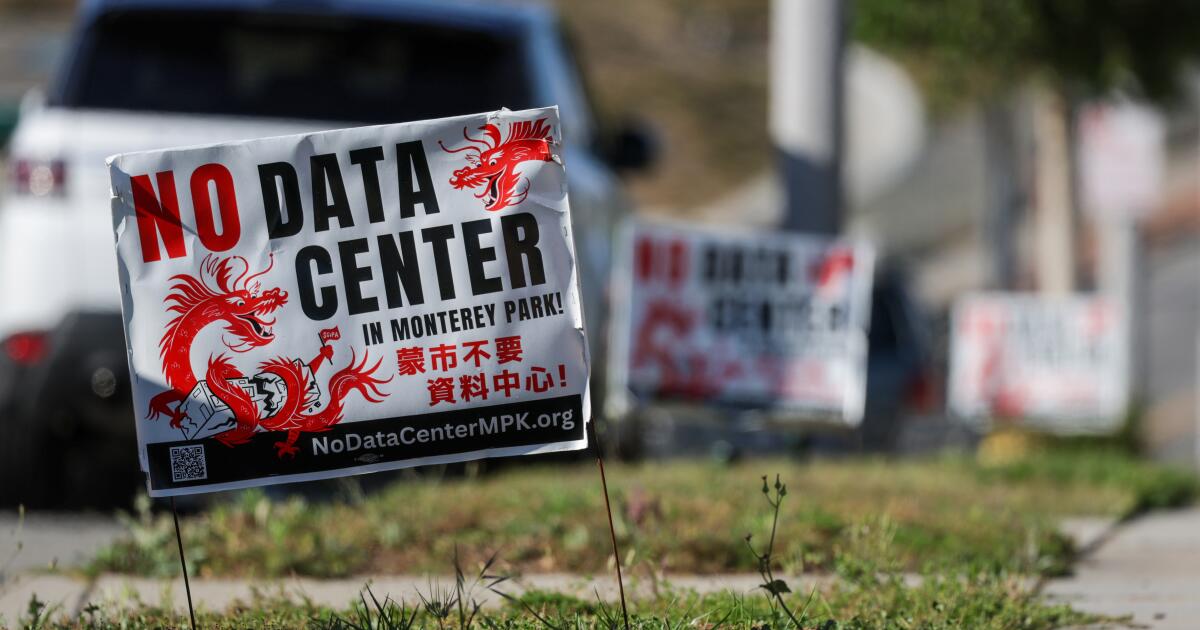
In a first for the country, voters in Monterey Park ban data centers

