Science
Opinion: It's not just hype. AI could revolutionize diagnosis in medicine

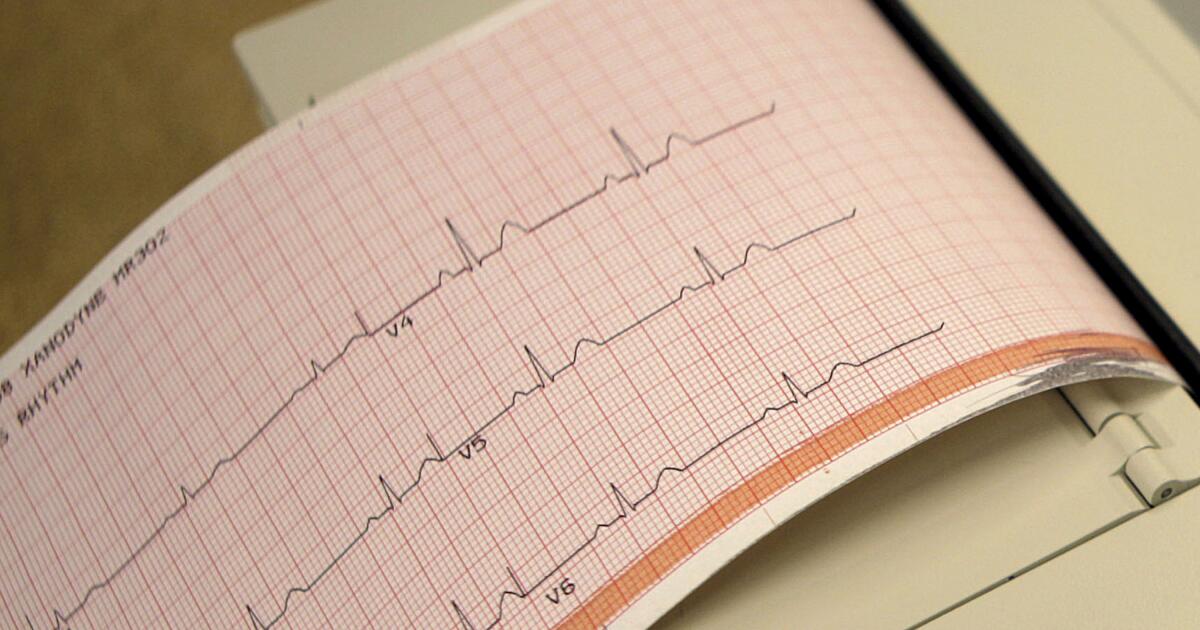
The history of medical diagnosis is a march through painstaking observation. Ancient Egyptian physicians first diagnosed urinary tract infections by observing patterns in patients’ urine. To diagnose diseases of the heart and lungs, medieval doctors added core elements of the physical examination: pulse, palpation and percussion. The 20th century saw the addition of laboratory studies, and the 21st century of sophisticated imaging and genetics.
Despite advances, however, diagnosis has largely remained a human endeavor, with doctors relying on so-called illness scripts — clusters of signs, symptoms and diagnostic findings that are hallmarks of a disease. Medical students spend years memorizing such scripts, training themselves to, for example, identify the sub-millimeter variations in electrocardiogram wave measurements that might alert them to a heart attack.
But human beings, of course, err. Sometimes, misdiagnosis occurs because a doctor overlooks something — when the patterns of illness fit the script, but the script is misread. This happens in an estimated 15% to 20% of medical encounters. Other times, misdiagnosis occurs because the illness has features that do not match known patterns — they do not fit the script, such as when a heart attack occurs without telltale symptoms or EKG findings.
Artificial intelligence can help solve these two fundamental problems — if it’s given enough financial support and deployed correctly.
First, AI is less susceptible to common factors that lead doctors to make diagnostic errors: fatigue, lack of time and cognitive bandwidth when treating many patients, gaps of knowledge and reliance on mental shortcuts. Even when illnesses conform to scripts, computers will sometimes be better than humans at identifying details buried within voluminous healthcare data.
Using AI to improve the accuracy and timeliness with which doctors recognize illness can mean the difference between life and death. Ischemic stroke, for example, is a life-threatening emergency where a blocked artery impedes blood flow to the brain. Brain imaging clinches the diagnosis, but that imaging must be performed and interpreted by a radiologist quickly and accurately. Studies show that AI, through superhuman pattern matching abilities, can identify strokes seconds after imaging is performed — tens of minutes sooner than by often-busy radiologists. Similar capabilities have been demonstrated in diagnosing sepsis, pneumonia, blood clot in the lungs (pulmonary embolism), acute kidney injury and other conditions.
Second, computers can be useful for illnesses for which we haven’t developed the right scripts. AI can, in fact, diagnose disease using new patterns too subtle for humans to identify. Consider, for example, hypertrophic cardiomyopathy, a rare genetic condition in which the heart’s muscle has grown more than it should, leading to eventual heart failure and sometimes death. Experts estimate that only 20% of those affected are diagnosed, a process that requires consultation with a cardiologist, a heart ultrasound and often genetic testing. What, then, of the remaining 80%?
Researchers across the country, including at the Mayo Clinic and UC San Francisco, have demonstrated that AI can detect complex, previously unrecognized patterns to identify patients likely to have hypertrophic cardiomyopathy, meaning AI-driven algorithms will be able to screen for the condition in routine EKGs.
AI was able to recognize these patterns after examining the EKGs of many people with and without the disease. The rapid growth in healthcare data — including detailed electronic health records, imaging, genomic data, biometrics and behavioral data — combined with advancements in artificial intelligence technology has created a major opportunity. Because of its unique ability to identify patterns from the data, AI has helped radiologists to find hidden cancers, pathologists to characterize liver fibrosis and ophthalmologists to detect retinal disease.
One challenge is that AI is expensive, requiring large-scale data to train computer algorithms and the technology to do so. As these resources become more ubiquitous, that can make the associated intellectual property difficult to protect, discouraging private investment in these products. More generally, diagnostics have long been considered unattractive investments. Unlike their therapeutic counterparts, which see around $300 billion in research and development investment a year, diagnostics receive a modest $10 billion in private funding.
Then there’s the question of who pays for the use of AI-based tools in medicine specifically. Some applications, such as detecting strokes, save insurers money (by preventing costly ICU stays and subsequent rehabilitation). These technologies tend to get reimbursed more quickly. But other AI solutions, such as detecting hypertrophic cardiomyopathy, may lead to increased spending on costly downstream therapies to treat newly identified chronic illness. Although the use of AI may improve quality of care and long-term outcomes in such cases, without financial incentives for insurers, reimbursement and thus adoption may be slow.
Life sciences companies have on rare occasion agreed to subsidize development or reimbursement of AI-based diagnostics. This will help bridge the gap, but the federal government may need to play a greater role. Federal support for COVID diagnostics during the pandemic drove rapid development of critical tests, and the cancer moonshot project has helped drive R&D in screening and new treatments.
It is usually tough to marshal funding at the scale needed for new medical frontiers. But the National Academies of Medicine has estimated that tens of billions of dollars and countless lives could be saved from improving diagnosis in medicine.
Artificial intelligence offers a path toward that. It should complement, rather than replace, the human expertise that already saves so many lives. The future of medical diagnosis doesn’t mean handing over the keys to AI but, rather, making use of what it can do that we can’t. This could be a special moment for diagnosis, if we invest enough and do it right.
Gaurav Singal is a computer scientist and physician at Harvard Medical School and was previously the chief data officer of Foundation Medicine, a cancer diagnostics company. Anupam B. Jena is an economist, physician and professor at Harvard Medical School and co-author of “Random Acts of Medicine: The Hidden Forces That Sway Doctors, Impact Patients, and Shape Our Health” and the Random Acts of Medicine Substack.


The Pacifica Municipal Pier was shut down and taped off Thursday after city workers noticed cracks running through the landmark structure and concrete chunks falling into the ocean.
It’s just one of many coastal California structures that have recently crumbled under pressure from a rising and relentless ocean.
Officials from the small, beach city south of San Francisco said the pier was closed due to “cracking, separation, and displacement of the concrete walkway and structural elements.”
It will stay closed while structural engineers asses its safety.
Photos taken by city employees show a wide crack that runs from top to bottom and across the structure as well. Other photos show a large horizontal crack under the foundation of a small restaurant on the pier, the Chit Chat Cafe.
The cafe was also shut down.
This is not the first time the 53-year-old pier has shown signs of stress. In 2021, part of it was shut down after handrails along the edge collapsed. And in 2023, after a series of storms pummeled the Central California coast, damaging parts of the pier, the structure was partially closed for more than year.
Those same storms caused extensive damage in Aptos and Capitola, 70 miles south, where piers and waterfront infrastructure were swept away or damaged.
In 2024, a 150- to 180- foot section of the Santa Cruz wharf was ripped off by powerful waves.
At least 10 of the state’s dozens of coastal public piers were closed for part or all of 2024 due to structural damage sustained in winter storms since 2022. At least five others have longer-term upgrades planned to address structural issues.
“These things are costly to maintain,” said Zach Plopper, senior environmental director at Surfrider. “They are a part of our California coastal culture in many ways, but we’re going to need to reckon with, one, the state that they’re in, and two, the continuous and worsening threats they’re going to experience,”
He said most of the piers were constructed in the early 1900s, and they weren’t built to withstand decades of rough seas, storms and rising sea level.
“With this incoming El Niño, which is forecasted to be significant, and this marine heat wave we’re in the midst of, we’re kind of in uncharted waters as far as what this winter could bring in terms of storms and swells to the California coast, and we’re likely going to see a lot more damage,” he said. “Not just piers, but roads and other coastal infrastructure up and down the state.”
There was no storm in Pacifica earlier this week, so no single event could be blamed for the destruction.
However, a 2025 report from an outside engineering firm, GHD, found that several sections of the pier were in “poor” or “serious” condition, and they recommended closure before anticipated storms or events that could “subject the piles to high winds, swells and large waves.”
The firm found several areas of the pier where concrete was missing and rebar was exposed and corroding.
“The pier has continued to experience high winds and large waves in a harsh marine environment,” the engineers wrote in the report, noting that continuous exposure to seawater or marine spray was “detrimental” to the structure.
A 2023 city report estimated it would cost $19 million to repair.
That same year, a state law was enacted to require local governments along the California coast to plan for sea level rise in the coming decades.
Sea level has risen some 8 inches, on average, along the coast in the past 150 years, Plopper said, and researchers anticipate another foot in the next 25 years.
“We’re going to see profound shifts on our coastline, none that we have ever experienced before, and building static structures on the coast just doesn’t work all that well,” he said. “We’re going to have to make some really hard decisions.”

The first five months of 2026 in Southern California have been the smoggiest — with the highest number of unhealtful air days — in more than a decade, according to statewide air monitoring.
So far this year, the South Coast air basin, which includes Los Angeles, Orange, Riverside and San Bernardino counties, has seen 39 days when the concentration of lung-irritating ozone (commonly known as smog) exceeded the federal standard, according to preliminary state air quality data.
That’s even worse than the infamously hot and hazy 2017, when Greater Los Angeles had 36 unhealthful air days by June 4 and ultimately saw 145.
Many of the roughly 18 million people who live in the air basin have been subjected to unhealthful levels of ozone, a highly corrosive gas that triggers asthma attacks and a wide range of respiratory illnesses. This has taken many by surprise since successive days of smog more commonly happen in summer, when heat waves and intense sunlight convert man-made pollution into ozone.
“If we have this many violations by this time, this could be a really awful year for air quality,” said Adrian Martinez, director of Earthjustice’s Right to Zero campaign, an initiative calling for the transition away from fossil fuels. “We’re already the worst place in the country for summertime smog pollution. So it could be one of the worst years in one of the worst places in the country.”
The pollution has been especially severe in valleys. On April 18, an air monitor in Reseda in the San Fernando Valley measured the second highest spike in hourly ozone levels in the last decade.
Greater Los Angeles has seen more high-smog days so far in 2026 than any other year in the past decade.
(Courtesy of South Coast Air Quality Management District)
The South Coast Air Quality Management District says the high ozone levels are due to early heat waves. Officials said they were not aware of any increase in the pollutants — most of them from different kinds of exhaust — that lead to ozone formation.
Local temperatures have been well above normal, climbing into the mid-80s and high 90s between January and April, breaking several daily high temperature records, according to the National Weather Service.
March in particular was the warmest on record in California. Riverside had an unprecedented 13 days of temperatures above 90 degrees, the weather service said.
“It was really that heat wave — conditions we typically see in July or August, we saw them in March,” said Sarah Rees, deputy executive officer of the air district. “That put us ahead of the curve in terms of how much ozone we got.”
Air district officials urged residents to monitor pollution levels on the agency’s website and mobile app, and spend only limited time outdoors when smog levels are high.
“People generally know when there’s a wildfire, because you see the smoke and smell it,” said Scott Epstein, the air district’s manager of planning and rules. “Then, it’s like, I’ve got to take precautions. Ozone, you can’t really tell.”
Southern California has been particularly susceptible to smog formation because of its millions of gas-powered cars releasing tons of tailpipe emissions each day. The region’s sunshine acts as a catalyst for smog formation. Then the mountains trap this pollution over densely populated communities.
For nearly half a century, state and local air regulators have made rules designed to alleviate this pollution, enacting the nation’s first tailpipe emission standards in 1966 and requiring catalytic converters in 1975.
Smog-forming pollution has been dramatically reduced over the last two decades, but the region still does not meet federal air quality standards for ozone.
At an air district meeting Friday in Diamond Bar, the governing board held a moment of silence for William Burke, a former longtime chair. During his tenure, the agency enacted nearly 270 rules that are credited with reducing smog-forming pollution by hundreds of tons per day. Burke, who also founded the Los Angeles Marathon, died in May at 87.
“Those are just emission reductions,” air district Chair Michael Cacciotti said at the Friday meeting. “But what it doesn’t tell you is how many kids, families, seniors were prevented from going to the hospital from an asthma attack, didn’t get cancer or other respiratory problems.”
Several residents from the Inland Empire, which suffers some of the worst smog pollution, expressed their appreciation for the air district’s efforts. But they also stressed the need for more progress.
“I’m old enough to remember growing up in the ‘70s and ‘80s … and not being able to see the mountains for weeks and months at a time,” said Erik Morden, one of several residents who spoke at the meeting.” I know things have improved, and I want to thank all of you for all the hard work that you’re doing. But there’s a lot of invisible stuff that you don’t see, that’s still out there — a lot of particulates in the ozone and chemicals that are causing a lot of problems.”
Martinez, the Earthjustice attorney, said the abnormally early outbreak of smog should be a wake-up call to government regulators that there’s work to be done, including offering more incentives to help residents and businesses transition to zero-emission appliances.
“We shouldn’t over-complicate it. We’ve got a lot of heat, we’ve got a lot of pollution,” Martinez said. “Our contention is, this agency can’t control the weather. But the one thing it can control is the pollution.”

Federal agricultural inspectors detected a case of New World screwworm larvae — maggots that burrow into the flesh of living animals and sometimes humans — on a 3-week-old calf in south Texas, near the U.S.-Mexico border. Officials anticipated the arrival of screwworm in the United States and say they’re prepared to contain it.
New World screwworm, also known as Cochliomyia hominivorax, is starkly different from the average maggot that feeds on decaying organic matter such as garbage, rotting food or dead animals, said Tom Talbot, veterinarian and member of the California Cattlemen’s Assn.
That’s because a screwworm larva “attacks living flesh,” Talbot said.
On Thursday, the U.S. Department of Agriculture confirmed the detection of New World screwworm in the umbilical area of a bovine in Zavala County, Texas, more than 60 miles from the northern Mexico border.
As of Friday morning, there have been no additional cases of infected animals reported.
Screwworm is endemic in South America and parts of the Caribbean, according to the Centers for Disease Control and Prevention. However, the parasitic fly has been steadily moving north from Central America to Mexico since 2023.
The USDA says it has actively monitored the fly’s movement. Last month, the USDA was aware of more than 200 active screwworm infestation cases in the border states of Nuevo León and Tamaulipas, according to Mexico’s Secretary of Agriculture and Rural Development dashboard. There are currently more than 2,000 active cases throughout Mexico.
It was believed that the New World screwworm would enter the U.S. in 2025, “however, thanks to the hard work across the entire Trump administration and our industry, state, and local partners, we were able to buy time for this moment,” said Dudley Hoskins, undersecretary for Marketing and Regulatory Programs for the USDA, in a statement.
The potential economic impact of New World screwworm on the cattle industry due to import restrictions, reduced productivity and animal loss is substantial, said Sally DeNotta, director of the University of Florida’s Equine Performance Laboratory.
Last year, 175 key agricultural organizations signed a letter urging additional federal funding for screwworm-control measures, emphasizing USDA estimates that a New World screwworm outbreak in the U.S. could cost producers $4.3 billion annually and cause economic losses of more than $10.6 billion across the southern United States.
“While the fly does not survive at temperatures at or below freezing, infected animals could carry the parasite northward and spread infection during the summer months, and the temperate climate of Southern California could certainly support year-round New World screwworm populations,” DeNotta said.
Talbot said from the federal to the local level, everyone in the ranching community has been talking about the arrival of screwworm and how to combat it.
“My expectation is that there will be a minimal number of cases of [New World screwworm] in California,” he said.
That’s because there are several stations on the border in Southern California, he said, that are collecting data, monitoring for any incidents of the parasitic fly and trapping them.
Talbot says he’s confident that the proactive measures on behalf of the federal government will mitigate the screwworm’s reach and therefore not impact the beef supply locally or nationally.
How screwworm infection spreads
Female screwworm flies are attracted to the smell of wounds — that can be as small as a tick bite — and body openings such as the nose, eyes, ears and mouth where they can lay eggs, according to the CDC.
A female screwworm fly can lay 200 to 300 eggs at a time and may lay up to 3,000 eggs during her 10 to 30-day lifespan.
When the eggs hatch into maggots, the maggots eat live tissue, causing a worsening, often painful and foul-smelling wound, according to the CDC.
Screwworm has hit the United States before
There was a screwworm outbreak in the southwestern region of the United States in 1965 that prompted Mexican and U.S. livestock producers to sign a declaration to establish a joint program for the eradication of the screwworm from the states on either side of the Mexico-U.S. border, according to the National Agricultural Library.
By 1966, the United States had eradicated screwworms, but livestock remained vulnerable to reinfestation from screwworms migrating from Mexico.
Eradication was possible through the sterile insect technique, which uses gamma radiation to irradiate screwworm pupae and create sterile male flies.
The U.S. Department of Agriculture’s Animal and Plant Health Inspection Service maintains a screwworm pupae sterilization facility in North America and is currently building a new center in southern Texas.
When produced and released in large numbers, sterile male flies mate with wild female flies, which then lay unfertilized eggs, according to the USDA.
“Since female screwworm flies normally mate only once, the population progressively reduces and is, ultimately, eradicated,” according to USDA officials.
Last year, the Trump administration cut thousands of grants and programs from the U.S. Agency for International Development, which includes U.S.-funded animal disease monitoring projects operated by the United Nations Food and Agriculture Organization, Argi-Pulse Communications reported. Among the slashed programs were some dedicated to monitoring and containing New World screwworm in Central America.
Today, screwworm infestations aren’t a regular occurrence in the U.S., but cases have occurred in travelers returning from areas where the flies are present, according to the CDC.
Can infected animals be treated?
Infected wounds are cleaned and debrided to remove any screwworm larvae, after which the animal is treated with an approved insecticide, DeNotta said.
Last month, the U.S. Food and Drug Administration issued an emergency use authorization for several insecticides known to be effective against screwworm.
There are approved systemic and topical options for a variety of species, including cattle, horses, small ruminants, cats and dogs, DeNotta said.
“Multiple days of treatment are often required, and antibiotics and analgesics may also be administered to treat secondary infection and control pain,” she said.
If left untreated, the tissue destruction caused by flesh-eating larvae can be extensive and severe, often resulting in debilitation and eventual death of the host, DeNotta said.
“Animals that survive may suffer weight loss, poor growth and reduced productivity as a result of pain and discomfort,” she said.
Screwworm can infect humans
Human infection is rare, DeNotta said, but it can happen.
Humans are at risk of being infected by screwworms if they travel to an area where the flies are present, such as South America and the Caribbean, according to the CDC.
CDC officials said your risk of screwworm infection increases when you:
- Spend a lot of time outdoors during the day, especially if sleeping or unable to keep the flies at bay.
- Have any open wounds. A small break in the skin, including from a scratch, insect bite or recent surgery, may attract screwworm flies.
- Have a medical condition that causes bleeding or open sores, such as from skin or sinus cancer, or from treatments that can create breaks in the skin.
- Live, work or spend an extended amount of time with or near, livestock or other warm-blooded animals in areas where screwworm flies are present.
The symptoms humans experience when infected by screwworm
The following are symptoms of screwworm according to the CDC:
- Feeling maggots move or seeing maggots within a skin wound, sore or body opening.
- Painful skin wounds or sores that worsen within a few days.
- Foul-smelling odor from the site of the infestation.
- Bleeding from open sores.
Bacteria can also infect wounds where screwworm maggots are present and may cause an infection that can lead to symptoms like fever or chills.
To treat a screwworm infection, DeNotta said, people undergo the same combination of wound debridement and insecticides used in animals.
-

 Minneapolis, MN54 seconds ago
Minneapolis Woman Paralyzed Before Wedding Rebuilds Life After 2nd Heart Transplant
-

 Indianapolis, IN8 minutes ago
Indianapolis Colts 2026 Positional Spending: Defense & Special Teams
-

 Pittsburg, PA11 minutes ago
Recently retired Steelers WR praises Aaron Rodgers
-

 Augusta, GA16 minutes ago
City of Augusta launches ‘2027 Budget Priorities Survey’
-

 Washington, D.C23 minutes ago
Holly area veteran to travel to Washington D.C. on honor flight mission
-

 Cleveland, OH26 minutes ago
Historic steam locomotive Big Boy No. 4014 rolling through Northeast Ohio
-

 Austin, TX31 minutes ago
Hinojosa launches program to fight Texas school closures, citing public school crisis
-

 Alabama38 minutes ago
Alabama investment group plans redevelopment of 2 long-vacant Montgomery properties

