Sports
Political football: How soccer has shaped the UK general election


A generous estate agent might describe the two-up, two-down terraced houses on the cramped side streets that lead towards Gillingham’s Priestfield Stadium as “snug”.
On this warm day, the windows of several are open and the smell of frying mince and onions hangs over the turnstiles in the Brian Moore Stand, an open ‘temporary’ structure held together by scaffolding that has now been in place for more than 20 years.
Priestfield seems an unusual place to launch a General Election campaign that — if the opinion polls are correct — is likely to end at 10 Downing Street. Yet it is here where Labour leader Sir Keir Starmer appeared, with his deputy Angela Rayner, at the end of May, making a quip about Manchester City being an opponent of Gillingham the last time Labour were in government.
Starmer spoke broadly about his aspirations to “rebuild our country”, but rather less expansively about the place he was visiting. Yet there was a purpose for his presence: the constituency of Gillingham and Rainham — in the county of Kent, not far beyond London’s southeastern outskirts — is a key Labour target, with its candidate, Naushabah Khan, looking to overturn Conservative incumbent Rehman Chishti’s 15,119 majority.
From left: Rayner, Starmer and Khan (Dan Kitwood/Getty Images)
Football has helped shape this election.
Starmer, an Arsenal fan, has also visited Crewe Alexandra and Northampton Town, lower-division clubs also located in target constituencies, as well as Aldershot Town, the non-League side representing one of the UK’s biggest military garrison towns. There was also a visit to Bristol Rovers, of third-tier League One and in a seat currently held by Labour on a narrow majority, and a party political broadcast with Gary Neville, the former Manchester United and England defender turned pundit and podcaster.
Football has crept into policy, with Labour promising to introduce an independent regulator to the sport.
The same policy was first floated by the ruling Conservatives in 2021 and is part of their manifesto this year, too.
Prime Minister Rishi Sunak, a Southampton fan, has also attempted to weaponise the sport. He, along with the other major party leaders, has made a point of tweeting regularly in support of England and Scotland at the European Championship, although there was an early campaign misstep when he asked an audience of Welsh brewery workers whether they were “looking forward to all the football”. Wales failed to qualify for Euro 2024, losing a play-off against Poland on penalties at the final hurdle.
Tense finish but they got the job done.
Jude Bellingham is something special. Onto the next one! 🏴 pic.twitter.com/0rMAV2cs0l
— Rishi Sunak (@RishiSunak) June 16, 2024
Football has often proved a convenient PR vehicle for politicians in search of a photoshoot.
Margaret Thatcher posed with Emlyn Hughes and Kevin Keegan, then two of England’s most popular footballers, before the 1980 Euros, while Tony Blair took part in a game of head tennis with Keegan, then Newcastle United manager, in 1995, two years before his first landslide election win as Labour leader.
Blair and “New Labour” coincided with a revolution in British football following huge investment by Sky television. While this has since led to a boom in interest, it has also created a financial gulf and huge challenges for clubs such as Gillingham, currently in England’s fourth division, albeit with a wealthy foreign owner now backing them.
“There is an increasing probability that a distressed town has a distressed football club, because local people can’t afford to invest in it,” says Tom McTague, the political editor of news and opinion website UnHerd.
“If a fan then sees a politician at that football club, it can say to the fan, ‘I care about your club and the place you come from’. Potentially, this can be a very powerful combination.”
Most people in Gillingham tend to agree that the town’s biggest problem is the decay of its high street, now dominated by charity shops and takeaways. The local Conservative club nestles near a Poundland discount supermarket and a pawnbroker.
Stuart Bourne, the Liberal Democrat candidate running against Khan and Chishti, says the place is a “skeleton” of what it used to be. Gillingham, he suggests, is a town where “people just want their lives to become a bit easier. Lots are struggling. Bills are going up and up”.

London is less than an hour away by train, yet Gillingham has little of the capital’s affluence.
McTague sees Kent as the most ‘northern’ of the southern counties because of its sense of de-industrialisation and large working-class communities, thanks largely to the dockyard at neighbouring Chatham. In 1984, Chatham ceased being a naval base, causing a surge in unemployment.
In recent years, Gillingham has reflected the UK’s wider political trends. Having previously returned a Labour MP just once, in 1945, it turned red in 1997 as Blair swept to power on a wave of optimism.
The town’s football club, too, felt upwardly mobile back then, after a significant investment from its owner, Paul Scally.
Four years later, as Starmer recalled, Gillingham went to Wembley for the first time in their history and were minutes away from promotion to the second tier of English football, only for opponents Manchester City — very much in their pre-Sheikh Mansour era — to rescue a 2-2 draw with a couple of late goals and progress, on penalties, instead. Promotion did come for Gillingham 12 months later but, while they stayed in the Championship for five years, they have bobbed between the bottom two divisions ever since.

Gillingham, like many towns in England, has suffered in the economic downturn (Dan Kitwood/Getty Images)
Scally would become a target for criticism and in 2022, he sold the club to Brad Galinson, a property magnate from Florida; mainly, he claimed, because of the abuse he was getting from fans.
Scally had been an advocate for Chishti, whose majority has increased with every election since 2010. Chishti wrote columns in the club’s matchday programme and, on his website, there is a testimonial from Scally, where he calls him “a strong supporter of Gillingham Football Club”.
Local reporters wonder whether some of the people running Gillingham day-to-day on Galinson’s behalf welcomed Labour to Priestfield because they wanted to separate the club from that recent past.
Bourne is unconvinced. The “stunt”, as he describes it, was particularly frustrating for him as he is a season-ticket holder at Priestfield with his son. Yet he can understand why Labour did it: Gillingham’s fanbase spreads across the local Medway region, where most of the towns are poor, and along the northern coast of Kent towards neighbouring towns Rochester and Sittingbourne. The club, potentially, are a gateway to a bigger area.
While it might matter to some people in Gillingham that the man who could well be prime minister come the weekend visited the town’s football club, for Starmer, it reminded voters in other parts of the country that he is invested in football.

Gillingham’s ground is sandwiched between tight streets of terraced houses (Simon Hughes/The Athletic)
On the day of his appearance, there was a fuss between his advisors and local photographers, who wanted to picture him in front of the club’s badge. The feeling was that Gillingham people would know he was in Gillingham anyway, but those watching from further afield would not care: a generic football stadium, however, made the point that he was in touch with ‘ordinary’ voters.
Given he went on to visit Crewe (Conservative majority: 8,508) and Northampton (Conservative majority: 4,697), Labour’s leader knows that persuading even a small percentage of these towns’ football fans to hand him their vote this Thursday could be crucial.
The lower leagues also present far more fertile territory for Labour, as they plot a path to power, than the Premier League and Championship. While just nine of the 44 clubs in those top two divisions are in Conservative seats — unsurprising, given they are dominated by clubs from big cities, which tend to vote Labour — 28 out of 48 in Leagues One and Two are currently Conservative.
Many of these clubs are either in smaller provincial towns and cities or in areas such as the old ‘Red Wall’ — the band of northern towns which had been staunchly Labour until the 2019 election when a combination of Brexit and concerns over Labour’s then leader Jeremy Corbyn persuaded them to turn Conservative.
McTague believes Conservative success in some of these areas was, in part, down to the party seeing that the struggles of these towns were also being experienced by their football clubs.
He was part of the posse of political reporters who followed Boris Johnson to Hartlepool United’s Victoria Park ground in 2021 ahead of a by-election in the town. The then Conservative prime minister was an avowed rugby union follower but understood the political capital that could be gained by participating in a kickabout with non-League Hartlepool’s youth team. The Tories won the seat for the first time since its creation in 1974, with a swing from Labour of 16 per cent.

Boris Johnson visited Hartlepool United in 2021 before the local by-election (Ian Forsyth/AFP via Getty Images)
It did not really matter to the people of Hartlepool that Johnson was hopeless at football. According to McTague, it would have been worse for him had he tried to convince people he was, in fact, a football supporter — “because fans tend to notice a mile off when someone is trying to kid them”.
According to Lord Daniel Finkelstein, the journalist and former Conservative adviser and parliamentary candidate, now a director at Premier League club Chelsea, Johnson understood much of Britain’s frustrations with the proposals for a European Super League which were making waves around then. Even though he has never been “remotely interested” in football, he was able to brand some of his campaign around that.
Finkelstein insists there isn’t a great difference with Starmer’s strategy. “Whoever is stitching it together is very smart,” he suggests. Like Starmer, Finkelstein says, Sunak is a genuine football supporter, and he believes this election is the first where the Labour and Conservative leaders are “serious fans of their clubs”.
Some of Sunak’s mistakes when talking about football have struck against his authenticity, but Finkelstein, as a Chelsea director, remembers a conversation with him when he was acting as UK chancellor. “Rishi told me that when he was a kid, it was his dream to be a director at Southampton.”

Prime Minister Rishi Sunak at a Southampton game in 2023 (Charlie Crowhurst/Getty Images)
Given Bourne has been a match-goer at Gillingham for most of his life, nobody locally can question his commitment to the club he loves, as well as his knowledge of the area. He wonders whether it might be significant that in another part of Medway, neighbouring Chatham and Aylesford, the former Conservative cabinet minister Tracey Crouch has decided not to seek re-election in this week’s vote.
In 2021, Crouch was appointed to chair a fan-led review of English football in the wake of that attempt to launch a European Super League. One of her key recommendations was the introduction of a regulator in a bid to ensure fewer clubs across the English football pyramid do not run into financial difficulties like those experienced by Maidstone United, which, before 1992, was the only other place in Kent with a Football League club.
While respect for Crouch increased because of her work on this issue, it could count against the party she represented that the Conservatives have since failed to deliver on her proposals.
Currently, it seems as though a regulator is the one thing relating to football that all parties agree is a good idea. This includes Corbyn, who was expelled from Labour by Starmer last month after a row over antisemitism and is now running in his old London constituency of Islington North as an independent.
“I would want there to be a strong independent regulator that can ensure the proper running of clubs, grassroots football survival and fairer spending,” Corbyn told The Athletic before he went out canvassing for his seat last week. “At the moment, the gap between the Premier League and Championship is so big.
“I hope they (Labour) are serious about it. I just get the feeling that the big, powerful clubs, those that tried to form a breakaway European League, are going to be at it again.”
Yet football can be more than just a convenient backdrop for publicity-savvy politicians; it can also be an active campaigning issue in its own right.
Around 260 miles (420km) north-west of Gillingham, in the north of Greater Manchester, is Bury, a former mill town where the demise of the local football club in 2019 — one with 134 years of history — was one of the prompts for the demand for a regulator.
At the general election later that year, the Conservatives regained the seat of Bury North, where Bury FC’s Gigg Lane stadium is located, by just 105 votes, making it the most marginal seat in the country.

The collapse of Bury was subsequently named as one of three catalysts for the fan-led review, along with the Covid-19 pandemic and the ill-fated proposal to launch a European Super League.
But Bury are just one north-west club to run into financial problems this century.
Bolton Wanderers, Rochdale, Oldham Athletic, Stockport County and Macclesfield Town — all based in satellite towns encircling Manchester, a city where two enormous Premier League clubs command the attention of people across the region and beyond — have all tumbled, in some cases down into non-league.
Bury ceased to exist entirely. Having been expelled by the Football League, which represents the three divisions below the Premier League, they resurfaced as a so-called phoenix club named Bury AFC in the first division of the North West Counties League — six levels below fourth-tier League Two.
Initially, Bury AFC, run by a group called the Shakers Community (after the original club’s nickname), could not afford to purchase Gigg Lane, so they played at Stainton Park, a couple of miles closer to Manchester.
Meanwhile, the local Conservative MP, James Daly, supported a separate fan group, the Bury Football Club Supporters Society (BFCSS), by securing the funding to buy Gigg Lane as part of the government’s commitment to ‘levelling up’ the distribution of wealth between the north and south of the country.
Bury AFC were commanding crowds in the thousands, but BFCSS, a much smaller group, arguably had greater influence because it included donors to the Conservative Party. Though the group was vocal and it had the land, it did not have the same following or a team. All of this brought division and made Bury — and its football club — a political battleground.
Leading politicians visited the town, with Sunak accidentally heaping praise on the “world famous Burnley market”, a gaffe that prompted Greater Manchester Labour Mayor Andy Burnham to say it was “nice to know he’s very familiar with the north” (Burnley is a town 20 miles from Bury.)
In 2023, the Labour-controlled Bury Council committed £450,000 in funding on the condition the separate fan groups agreed to form a single society that would bring football back to Gigg Lane.

Bury applaud their fans after returning to Gigg Lane (Charlotte Tattersall/Getty Images)
The English FA approved this merger last summer and this past season, a football club played competitive matches in the town for the first time in four years, missing out on promotion to the Northern Premier League after losing in a play-off final.
James Frith, the Labour candidate now looking to take Daly’s seat, insists the local authority’s contribution to Bury’s current position was “far more generous proportionately” than the government’s. Starmer’s hope is that, locally, people share that view.
This is part of a wider Labour strategy aimed at winning back swathes of the north-west, including the “Footballer Belt” in the leafiest parts of Cheshire that have traditionally been Conservative but are changing in attitude.
Over the past 20 years, there has been a transformation in Bury, too, due to its proximity to Manchester and the tramline that connects the town with that city. Wealthier commuters are moving in, but mainly into the Bury South constituency, another marginal Conservative seat that is home to Salford City FC, the League Two club part-owned by Gary Neville.
The former England international has made no secret of his political affiliations, but his recent interview with Starmer — which has been viewed more than 3.5million times on X, despite football barely being mentioned — will presumably do Labour’s prospects in Bury South no harm.
Back in Bury North, Frith says the town’s football club became “the ultimate victim of a wholly inadequate system and structure”. What has since happened has been “bloody hard and bloody hurtful. It’s been difficult and divisive. But it has also been full of hope, self-purpose and collectivism”.
While Daly did not respond to The Athletic’s invitation for comment, Frith does not believe the position of Bury will prove to be a vote-winner like it may have been in 2019, when the Conservatives campaigned off the back of Brexit (Bury was 54.1 per cent in favour of the UK leaving the European Union) and used football as a way of “taking back control”.
According to Frith, the Conservatives’ failure to introduce a football regulator might just make people “press a little harder on the pen” come Thursday, rather than influence who they vote for.
“We’ve got some momentum back in the town, because of what is now happening with the football club,” he said. “But it still doesn’t improve the 41 per cent child poverty rates in Bury, or the hospital waiting times being the second-worst in the country.”
Head west out of Gillingham and before too long you meet the urban sprawl of London’s eastern fringe, where docks on the River Thames and car manufacturing plants used to be key sources of employment for a largely low-income workforce.
The biggest football club in these parts are West Ham United of the Premier League. While the constituency where their London Stadium home is situated has changed due to the redrawing of electoral boundaries — it is now in Stratford and Bow — the political trend is clear.

Keir Hardie, the Scottish trade unionist who co-founded Labour before becoming its first parliamentary leader, was sent to the House of Commons from West Ham in 1892, and Lyn Brown won the seat for the party in 2019 with a vast majority of over 32,000, despite Labour’s worst performance at a national level since 1935.
This is hardly surprising.
Newham, the London borough in which West Ham are located, is a hotspot for homelessness, with a 2018 report by the charity Shelter stating that one in every 24 people there had insecure housing. The club’s website recognises this, with a page dedicated to raising awareness about poverty in the borough and their majority owner David Sullivan is said to be a regular donor to Irons Supporting Foodbanks, a group set up independently from the club to help local people struggling with food poverty.
But the politics at West Ham are complicated. The club’s fanbase is a mix of inner-city Labour voters, a minority with more extreme views (the right-wing British National Party won 12 council seats in nearby Barking as recently as 2006), and many who have moved to suburban or rural Essex edging towards the Conservatives, who control all of the county’s 18 constituencies.
Tory sympathies extend to the club’s boardroom. West Ham’s vice chair, Baroness Karren Brady, is a Conservative member of the House of Lords and in March 2023 it was revealed that club money had been used to make a £9,000 donation to the Conservative Party the previous year.
It was not the first time West Ham have funded the Conservatives. Electoral Commission records reveal they made a donation of £12,500 in 2016, while Sullivan donated £75,000 ahead of the general election in 2019 through a property company he controlled.

West Ham’s fanbase is politically divergent (Richard Pelham/Getty Images)
Sullivan, who made his money in the pornography industry before buying West Ham with fellow businessman David Gold in 2010, is not uncritical of the Conservatives, despite his financial contributions. He was particularly unimpressed by the independent regulator proposal, which he said was a “terrible idea”, and has branded the current government “the worst I’ve seen in my lifetime. They think it will be good PR to be seen backing the ordinary football fan and smaller clubs, but I bet you it won’t get them a single extra vote. I believe in free enterprise, not government interference”.
Both Sullivan and Gold, who died in January 2023, owed their fortunes to that “free enterprise” spirit of Thatcher’s Conservative government, where deregulated markets provided no shortage of opportunities for entrepreneurs.
In March last year, a spokesman for West Ham described the club as a “private company”, which made donations to a number of organisations and charities. “Our donations often relate, as is the case here, to attending events that are of interest to our key sponsors and partners.”
There is no record, however, of West Ham or any of its key directors donating to any political party other than the Conservatives since Sullivan and Gold bought them and appointed Brady to the board.
But club owners displaying their political allegiances is not unique to West Ham.
Sir John Hall gave money regularly to the Conservatives when he was in charge of Newcastle United (another city with deep Labour roots), while the late Bill Kenwright was a prominent donor to Labour during his time as Everton chairman. Dale Vince, the businessman, environmental activist and owner of Forest Green Rovers — relegated from the Football League at the end of last season — has donated to both Labour and the Green Party in recent years.
At West Ham, however, the politics are particularly pointed — especially in relation to the club’s controversial decision to leave their historic Boleyn Ground stadium at Upton Park and move two miles west to the stadium built for the athletics events at the 2012 London Olympics, a relocation rooted in politics.

From left: West Ham joint-chairman David Sullivan, then London Mayor Boris Johnson, West Ham vice chair Karren Brady, Mayor of Newham Robin Wales and club joint chairman David Gold at the London Stadium in 2013 (Leon Neal/AFP via Getty Images)
Andy Payne of West Ham’s Independent Supporters group says the club have “a very split fanbase” politically. It certainly has not helped a mood which was already fractious in the wake of a new ticket policy relating to concessions, with price rises targeting especially elderly fans who, in Payne’s view, “are being punished for their loyalty to the club”.
There are plans to boycott a friendly match with Celta Vigo in August in protest, although West Ham — when contacted by The Athletic for a piece explaining the price hikes last month — said they believe they offer generous concessionary pricing. They will review the approach to concessions with the fan advisory board during the 2024-25 season.
For many, however, the damage is already done.
Payne compares West Ham to clubs with a local influence at ownership level in other parts of the country. Middlesbrough’s Steve Gibson, for example, became a multi-millionaire through a freight company, having already become the youngest Labour councillor in the north-eastern town’s history. Gibson has since intervened on political issues on multiple occasions, most recently in the elections for the Tees Valley mayoralty, where he backed the Labour candidate.

Steve Gibson is an active political presence in Middlesbrough (Martin Willetts/Getty Images)
Like West Ham, Middlesbrough — the club Gibson bought in 1993 — have had many ups and downs, but when Payne imagines him walking through a crowd of Middlesbrough fans, he pictures them shaking his hand.
“I suspect if the same thing happened at West Ham, the measure of respect would be somewhat different,” Payne said.
It is little surprise that politics and football — which spark extreme reactions even in sedate times — can be a volatile mix.
This has been a relatively sedate election campaign, with few commentators expecting anything other than a Labour victory. Yet there remains a risk attached to any would-be parliamentarian bringing football into their pitch to the people, as Starmer knows only too well.
One of the party’s electoral pledges is to bring in a ‘Hillsborough Law’ which, according to the party’s manifesto, “will place a legal duty of candour on public servants and authorities and provide legal aid for victims of disasters or state-related deaths”.
The policy, named after the 1989 Hillsborough disaster in Sheffield, where 97 Liverpool supporters were unlawfully killed in crushes at an FA Cup semi-final, has long been campaigned for by families of the victims.
Yet Starmer’s pledge, however well-intentioned, has left him open to charges of hypocrisy.
In 2020, he attended a hustings (meeting) in Liverpool where he vowed during his leadership campaign not to speak to The Sun, a tabloid newspaper that has been largely boycotted on Merseyside due to lies it published about the causes of the Hillsborough disaster.
A year later, however, Starmer wrote a column for the paper, and has given interviews to it during this campaign, as well as allowing Labour to advertise with it. His rationale, as he told UK broadcaster ITV News, was a desire to “make sure that what we have to say is communicated to as many people as possible”. The Sun remains the most-read newspaper in Britain, and therefore is a potential vote-winner.

Liverpool fans mark the 35th anniversary of Hillsborough in April (Paul Ellis/AFP via Getty Images)
But Starmer’s engagement has brought condemnation across Merseyside, including from within his own party.
Kim Johnson, Labour’s candidate for Liverpool Riverside, where Liverpool FC’s Anfield stadium is located, said she was “very disappointed” at Starmer’s decision, saying he had failed “to recognise just how deep the hurt runs in this city”.
Starmer’s policy on The Sun is unlikely to impact his party’s chances on Merseyside — last month, a poll predicted Labour would win every seat there, including Southport for the first time in the constituency’s history — but it underlined the problem with trying to reach a broader audience. By doing so, it can increase the chances of alienating some of the people who instinctively might support you.
Twelve months after Blair’s government decided not to order an inquiry into Hillsborough, the city voted in a Liberal Democrat council which stood for 12 years, until Labour were beaten by the Conservatives at the 2010 general election.
It is another example of football and politics’ high-wire act. Get it right and the sport is an invaluable conduit to a vast audience, but get it wrong and the mistakes may never be forgiven.
The result of the 2024 general election may appear a foregone conclusion, but football fans from Gillingham to Bury, and West Ham to Merseyside, will be monitoring the fall-out closely.
(Top photos: Getty Images; design: Eamonn Dalton)



Sports
World Cup referee, denied entry to U.S. because of suspected ties to terrorists, hailed in return to Somalia
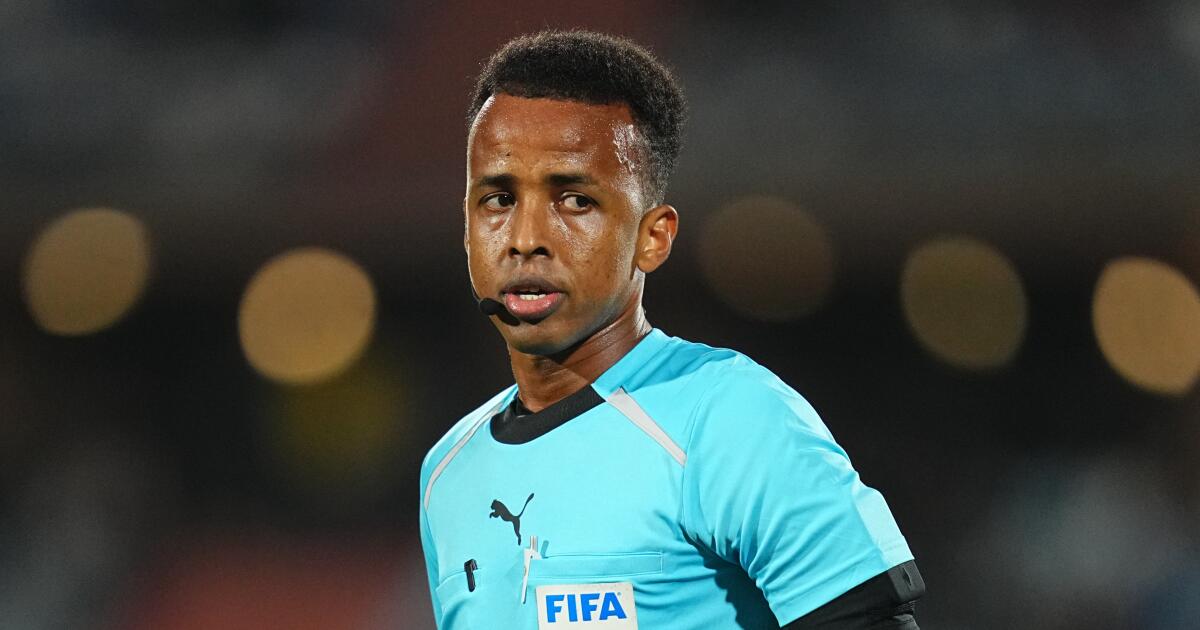
Somali referee Omar Abdulkadir Artan was denied entry into the United States for the World Cup after enduring an 11-hour interrogation in Miami, according to media reports. Andrew Giuliani, head of the White House Task Force on the World Cup, indicated Artan was suspected to having ties to a Somali militant group.
“We want to make sure we are not going to allow a soccer tournament to be the opportunity for terrorists to potentially get in the country or anybody who is actually talking to them,” Giuliani told the British Broadcasting Corporation.
The New York Times reported that Artan’s name is similar to that of a man identified as linked to Al Shabab, a group that has been the target of U.S. government sanctions.
“I am very, very disappointed,” Artan told the Times from Istanabul, where he stopped on his way back to Somalia. “I’m just simply a referee who’s trying to live his dream, the biggest dream of my life, to come to the World Cup.”
Safety was purportedly the concern with Artan, whose interrogation was conducted by the U.S. Customs and Border Protection.
“During processing, the traveler underwent additional inspection, a routine part of CBP’s inspection process when officers need to verify information or determine admissibility,” CBP said in a statement. “Following inspection, the traveler, a referee for the FIFA World Cup, was determined to be inadmissible due to vetting concerns and was denied entry.”
Somalia is on the U.S. list of banned countries for immigration, although exceptions can be made. Artan is considered one of the best referees in Africa, having officiated in the Somali national football league championship and at the African Cup of Nations.
“Despite the circumstances, I am in a positive mood and focused on the next challenges in my refereeing career,” Artan said in a statement. “I would like to thank FIFA and [the African federation] for all their support and I promise to keep my refereeing levels up as I concentrate on the future.”
Artan, Africa’s Referee of the Year in 2025, was greeted Wednesday at Aden Adde International Airport in Somalia by government officials and hundreds of well-wishers.
“I want to thank FIFA for supporting me all the way, and for Somali people also,” he told Al Jazeera. “So I am very grateful for FIFA and for CAF also. This is what I have to say.”
Sports
Jordan Staal’s two-goal night lifts Hurricanes past Golden Knights, evening Stanley Cup Final series

Tyler Reddick Makes History! Inside His 3-Peat and Historic Start to the Season
Fresh off his victory at Circuit of the Americas, Tyler Reddick joins Kevin Harvick on this week’s Victory Lap to break down his historic third consecutive NASCAR Cup Series win to open the 2026 season. Reddick discusses how he and 23XI Racing have built early-season momentum, what has clicked across the organization, and how the team has elevated its performance to championship level. He details his intense battle with road course standout Shane van Gisbergen at COTA, the strategy and execution that helped him secure the win, and what it means to become the first Cup driver to win the first three races of a season. Reddick also reflects on his viral 3-peat photo tribute to team owner Michael Jordan, the confidence inside the garage, and how this dominant start shapes expectations for the rest of the year.
NEWYou can now listen to Fox News articles!
The Carolina Hurricanes have evened up the Stanley Cup Final once more thanks to Jordan Staal’s two-goal night in Las Vegas to beat the Golden Knights in Game 4, 5-3.
The series now sits at 2-2 with Game 5 slated for a return back to Carolina’s Lenovo Center on Thursday to see who will have the edge in this pivotal clash on ice.
This game didn’t need overtime like the previous two, but it did need someone to break the 3-3 tie that went into the third period between these opponents.
Jordan Staal of the Carolina Hurricanes celebrates his power play goal with teammates against the Vegas Golden Knights during the first period of Game Four of the Stanley Cup Final at T-Mobile Arena in Las Vegas, Nev., on June 9, 2026. (Brian Babineau/NHLI via Getty Images)
With 13:39 left in Game 4, Shea Theodore made a disastrous turnover in the Golden Knights’ own zone, and Hurricanes star Seth Jarvis picked it off right in front of the net.
Luckily for Vegas, Carter Harter stopped Jarvis’ backhand, but the threat wasn’t averted just yet. Jarvis battled to get the puck back out in front, and it ended up trickling to the stick of Nikolaj Ehlers, who tried flipping it to Staal.
SETH JARVIS SCORES OVERTIME GAME-WINNER AS HURRICANES STORM BACK FROM 2-0 DEFICIT TO EVEN STANLEY CUP FINAL
Staal lost his edge on his skate, but that didn’t stop him from swatting a back-handed shot of his own toward the net. It just trickled past Hart, and Staal celebrated while still down on the ice. He became the first player in 44 years to score a goal in each of the first four games of the Stanley Cup Final.
With the way these games have been going, though, a one-goal lead was not safe. This time, however, the Hurricanes had the defense and timely saves by Brandon Bussi, who head coach Rod Brind’Amour went with over Frederik Anderson, and the decision paid off.
The Golden Knights took 20 shots on goal, with Bussi saving 7 in his first time on ice for Carolina in this series. And Ehlers sealed victory when he cleverly banked the puck out of his own zone with an empty net on the other end that walked into the net for the 5-3 win.
Jordan Staal of the Carolina Hurricanes scores a first-period goal against Carter Hart of the Vegas Golden Knights in Game Four of the 2026 Stanley Cup Final at T-Mobile Arena in Las Vegas, Nev., on June 9, 2026. (Bruce Bennett/Getty Images)
The Hurricanes came out roaring in the first period in this one as well, scoring three goals to the Golden Knights’ one by captain Mark Stone. Logan Stankoven notched his 11th of these playoffs just 1:06 into the game. Jackson Blake quickly followed on a goal assisted by Taylor Hall and Ehlers.
Then, Staal’s first goal of the game came 12:48 into the period on a power play. Shayne Gostisbehere ripped a shot on goal, and after Hart made the save, Staal was first to find the puck and a clear shot right in front of the goal.
With a 3-1 lead after the first 20 minutes, the Hurricanes had to feel good. But again, no lead is safe, and Vegas reminded them of that in the second period.
Logan Stankoven of the Carolina Hurricanes celebrates after scoring a first-period goal against the Vegas Golden Knights in Game Four of the 2026 Stanley Cup Final at T-Mobile Arena in Las Vegas, Nevada, on June 9, 2026. (Bruce Bennett/Getty Images)
CLICK HERE TO DOWNLOAD THE FOX NEWS APP
William Karlsson got Vegas closer with his third goal of the playoffs, while Brett Howden, adding to his case for the Conn Smythe Trophy, scored his 14th to tie it all up at three.
In the end, Staal’s heroics for the Hurricanes is why he has a “C” on his sweater.
Follow Fox News Digital’s sports coverage on X and subscribe to the Fox News Sports Huddle newsletter.

The first serious legal challenge to the House settlement will come courtesy of a USC freshman linebacker.
Talanoa Ili, a top-100 recruit in the Trojans’ vaunted 2026 class, joins Stanford quarterback Charlie Mirer as one of two lead plaintiffs in a class-action lawsuit that takes aim at the system implemented since the settlement ushered in a new era of direct payment from universities to athletes. The suit, which was filed Tuesday, accuses the NCAA, the Power Four conferences and the enforcement arm they created — the College Sports Commission — of participating in a “conspiracy” by creating a system of policies that have “direct anti-competitive effects, including the suppression of [name, image and likeness] compensation below competitive levels.”
Those policies, their attorneys argue, violate state laws in California that prohibit restrictions on NIL rights, as well as federal antitrust statutes. They’re seeking monetary damages, as well as an injunction that would upend the enforcement structure created to determine whether individual NIL deals over $2,500 meet criteria, including whether they have “a valid business purpose” or fall within a reasonable range of market value.
The clearinghouse, NIL Go, was created with the hope of eliminating an influx of booster-funded NIL deals that were basically direct payments from donors to the program. But since its inception, the system has been more restrictive and worked less efficiently than some schools and athletes might have hoped. As of last month, according to Yahoo Sports, more than $125 million worth of NIL compensation that had been promised to athletes had been rejected by the clearinghouse or was still under review.
In Ili’s case, the complaint states that he received a “substantial multi-year offer” from USC’s House of Victory collective in 2024 that led him to commit to the Trojans, only to have the offer disappear after approval of the House settlement.
“Absent the NIL Restrictions on Direct Pay NIL Compensation, Ili would have received more for his NIL rights than he now receives,” the complaint states. “The Agreement has thus injured Ili.”
Mirer, meanwhile, claims that he has received no NIL compensation from Stanford’s collective or revenue-sharing money from the university since 2024 as a result of the settlement.
Stanford quarterback Charlie Mirer during a game last season.
(Godofredo A. Vásquez / Associated Press)
“The [CSC agreement] has suppressed, deterred, and effectively terminated the economic relationships that had produced his prior NIL compensation,” the lawsuit says.
Even the plaintiffs in the House settlement, which created the CSC, are in the process of challenging the current system. On Wednesday, plaintiff attorney Jeffrey Kessler will argue in a hearing that school-affiliated businesses such as multimedia rights holders or corporate sponsors, should not be subject to the CSC’s rigorous criteria for NIL deals. That decision could also open the floodgates, with schools using those entities to circumvent the cap.
Two U.S. senators are hoping to pass legislation they believe would bring more stability to college athletics and thwart legal challenges. Ted Cruz (R-Texas) and Maria Cantwell (D-Texas) spoke with presidents and chancellors from the Big Ten Conference on Tuesday about a bipartisan bill, the Protect College Sports Act, which would codify some of the CSC’s policies into federal law.
-
 Entertainment4 minutes ago
Glen Walker is returning to broadcast news, months after being cut from KTLA
-
 Lifestyle11 minutes ago
A new L.A. Times feature: Now you can save our expert recs for your next adventure
-
 Politics14 minutes ago
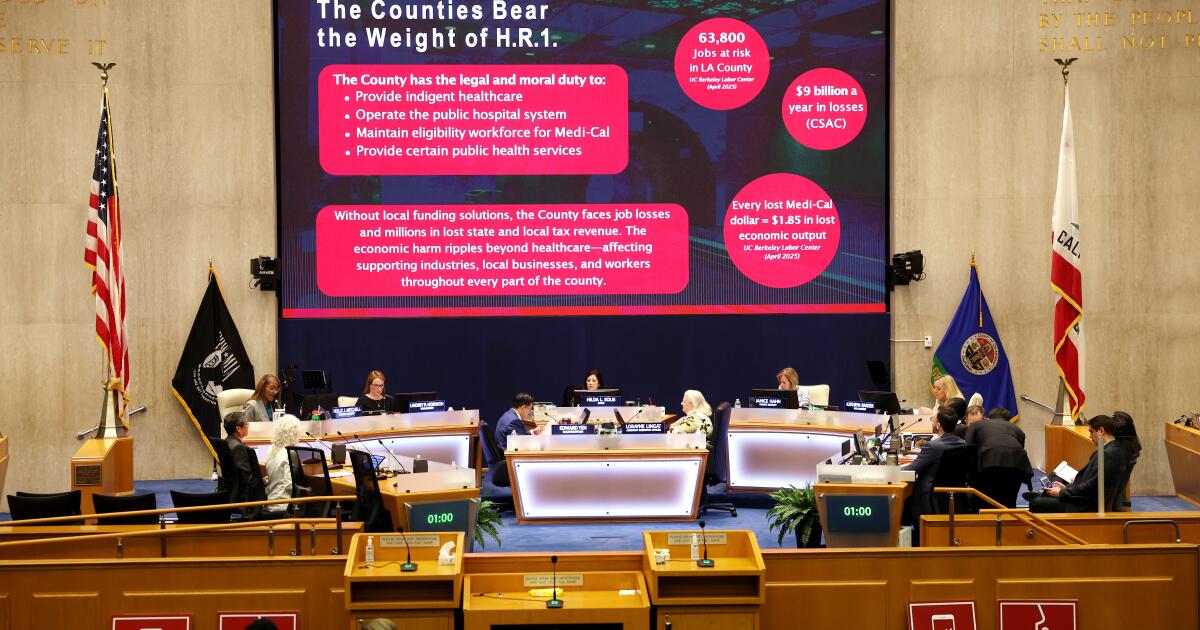
Supporters cheer new L.A. County healthcare sales tax: ‘It’s a lifesaver’
-
 Science19 minutes ago
Why new dads shouldn’t panic about low testosterone
-
Sports26 minutes ago
World Cup referee, denied entry to U.S. because of suspected ties to terrorists, hailed in return to Somalia
-

 World34 minutes ago
US military chief Hegseth warns Cuba against acquiring military arms
-
 News59 minutes ago
July 1 brings big student loan changes. Here’s what you need to know
-

 Los Angeles, Ca2 hours ago
Los Angeles High School locked down as police search for armed juvenile

