Business
Scams tied to Ozempic and other new weight-loss drugs are surging. How to protect yourself


Ozempic, Wegovy and other new weight-loss drugs have proved so good at helping users shed pounds, they’ve quickly become a multibillion-dollar industry.
The prescription-only medications have also been in consistently short supply, which is why they’ve grown increasingly popular — with scammers.
Online con artists are luring victims with discount offers of Ozempic and similar drugs with no prescription required. After they take the money, however, they deliver something their clients didn’t order — fake drugs, perhaps, or just the disappointment that comes when people realize they’ve been taken.
A new report by threat researchers at McAfee found 176,871 phishing emails and 449 malicious websites tied to offers of Ozempic, Wegovy and semaglutide, the generic name for these drugs, from January to April 2024. Phishing attempts were almost 200% higher during the period than they were from October to December, the internet security company reported.
In addition, the researchers found that scammers were creating fake profiles on Facebook so they could run weight-loss-drug swindles there. Others took hundreds of fake offers to Craigslist — including 207 of them in a single day in April.
Novo Nordisk originally developed the semaglutide it dubbed Ozempic as a treatment for Type 2 diabetes, but clinicians found that semaglutide could help people lose significant amounts of weight by suppressing appetite. The Food and Drug Administration approved Novo Nordisk’s Wegovy as a weight-loss drug in 2021; since then, it has approved an alternative drug, Eli Lilly’s Zepbound, which is based on its diabetes treatment Mounjaro.
Although Ozempic costs nearly $1,000 a month without insurance, the demand for these drugs has grown rapidly. Sales of Ozempic alone are projected to reach $11 billion this year, according to one analysis.
The combination of high prices and insufficient supply has proved irresistible to scammers.
Abhishek Karnik, head of threat research at McAfee, said the fraudsters typically have two types of victims: people who can’t get a prescription for Ozempic, and people who have a prescription but can’t find it at their local pharmacies.
The scams can be personalized and targeted at people who’ve shown some interest in weight-loss drugs, using information collected about them and their browsing habits, said Iskander Sanchez-Rola, director of privacy innovation for the internet security company Norton. The pitches may come through email or ads placed on search engines or websites, he said, including sites that are well-established and trustworthy.
“Anywhere a human can have their eyes on, they will be there,” Sanchez-Rola said of the scammers. Just because a website is legitimate, he added, that’s no guarantee that the ads there will be.
To pull off the scam, Karnik said, the fraudsters will often interact with the prospective buyer through a social media network or platform such as Telegram to win their trust. That could include offering over-the-top testimonials to their legitimacy and to the quality of the products. “You’ll have people claiming they had huge success with these drugs,” he said, “but none of it is true.”
Scam sellers may also pose as doctors or pharmacists, often from foreign countries, and claim they can sell Ozempic without having to examine you or see a prescription. That may seem sketchy, but many Americans have imported real medications such as insulin illicitly from Canada and Mexico for years because the prices are so much lower outside the U.S.
“One example on Facebook Marketplace included a ‘Doctor Melissa’ based in Canada who could provide Mounjaro and Ozempic without a prescription, with payment available through bitcoin, Zelle, Venmo and Cash App — all of which are nonstandard payment methods for prescription drugs and should be red flags for consumers,” McAfee said.
According to McAfee, some scammers just take your money and disappear, possibly after getting you to share sensitive personal information (unwittingly, in many cases). Others will deliver an injection pen — the typical format for these weight-loss drugs — filled with something other than the advertised medication; they may be insulin injectors, EpiPens or even injectors loaded with salt water, McAfee said.
That sort of counterfeit shipment poses a significant health risk. For example, McAfee said, one person who used Ozempic to help manage her diabetes bought some injectors online after local pharmacies ran out, only to discover that the pens she received were filled with insulin. Had she not been tipped off by the flimsy packaging and different appearance, McAfee said, she could have injected herself with a fatal dose.
Another type of con, Sanchez-Rola said, is when the scammer will deliver a bottle of aspirin or some other drug you didn’t order, then make it so burdensome for you to obtain a refund that you give up.
How to detect Ozempic scams
The first rule, McAfee said, is never to buy one of these drugs without a prescription. After all, doing so is illegal in the United States.
Sticking to licensed pharmacies is wise too. You can check whether a California pharmacy is licensed at the State Board of Pharmacy website; for other states, consult the FDA’s website.
But scammers also target people who have prescriptions they can’t fill locally, as well as offering medications they tout as nonprescription alternatives that are just as good as Ozempic. And to make their products more attractive, they may use AI tools to produce eye-popping before-and-after images that are persuasively realistic.
Here are more red flags to look for before buying a weight-loss drug online:
Strikingly deep discounts. Fraud experts say that if a price looks too good to be true, it almost certainly is. Another thing to bear in mind, Sanchez-Rola said: “You didn’t find the best deal, the best deal found you, which is already a big red flag.”
Misleading claims. McAfee warns that overly rosy promises of results are a sign of a scam. Be especially wary if the site offers none of the usual disclaimers about side effects, possible negative reactions or details about how the product should be used.
Payment methods other than credit cards. Scammers prefer systems that act more like cash, such as Zelle, Cash App or gift cards, or are untraceable, such as cryptocurrency. Sanchez-Rola said sometimes scammers will also offer a credit card option that looks real, but it’s designed to display an error message when you try to use it so you’ll be forced to use a different, sketchier payment method.
A mix of 5-star and 1-star reviews. Sanchez-Rola said that fraudsters’ websites often try to bury the actual reviews posted by unhappy customers under a slew of bot-generated praise. If you see a lot of 5-star reviews that were posted within a short period of time, that’s a huge red flag, he said, especially if the reviews have no comments attached.
Deep discounts that expire soon. Con artists will try to override your reservations about a transaction by giving it a false sense of urgency.
Boilerplate company information. Scammers’ websites often provide phone numbers, addresses, contact information and descriptions that they copy from legitimate sites, Sanchez-Rola said. You should paste the phone number and other information into a Google search to see if they’re used by other, unrelated businesses — for example, he said, one scam site copied its physical address from an ice cream parlor, assuming that its customers wouldn’t bother to check.
Use security software that helps detect scams. McAfee and Norton, among other companies, offer programs that can alert you when you’re about to navigate to a suspicious website.
What to do if you’ve fallen for an Ozempic scam
If you’re fortunate enough to have used a credit card, you can dispute the charge and eventually obtain a refund. You can get similar results if you make your purchase using PayPal or Venmo with the buyer protection feature enabled.
If not — for example, if you used Zelle or paid with gift cards — you can at least report the fraud to try to protect other potential victims. The federal government has an online tool to help you find the right law enforcement agency to file your report with. You can also file a complaint with the FTC’s site and the FBI’s Internet Crime Complaint Center.
Beyond that, Sanchez-Rola said, if you were conned on a social network, you should report the fraudster’s profile to the network’s administrators. For example, Facebook explains how to report fraudulent Marketplace sellers in its help section, and TikTok walks through how to report a problematic account in its support section.



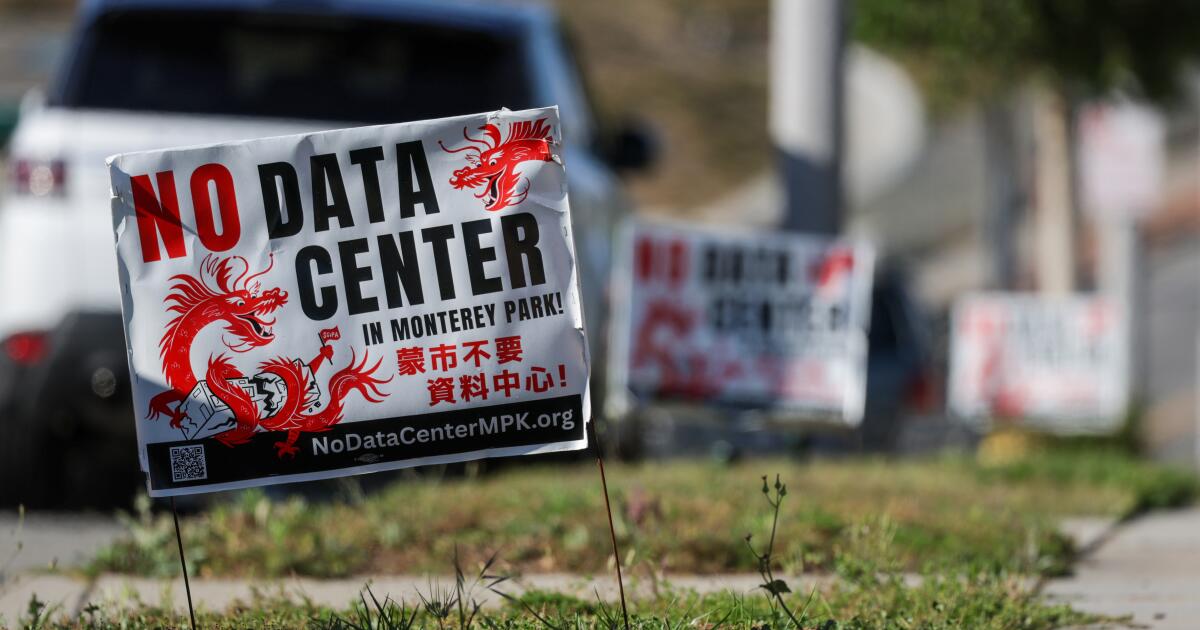
Residents of Monterey Park voted overwhelmingly to ban data centers on election day, making the San Gabriel Valley city the first in the nation to do so by public vote.
As of Wednesday, 86% of votes were in favor of Measure NDC, the city ban, according to the Los Angeles County registrar-recorder/county clerk.
Other cities and towns have passed moratoriums on data centers, as a wave of opposition sweeps the country. But the Monterey Park vote can only be overturned by another ballot measure, making it the most permanent data center ban in a jurisdiction.
Monterey Park’s City Council had already banned data centers by ordinance, after a proposed 247,000-square-foot data center met an outpouring of public anger and concern. The developer withdrew that plan.
That facility would have been less than 500 feet away from the nearest home, and would have used three times the electricity of the entire 60,000-person city. Residents said it would have caused noise and air pollution and driven up electricity rates.
“This ensures long-lasting protections for current and future generations,” Amy Wong, co-founder of the group San Gabriel Valley Progressive Action, said of the vote. “It means that future city councils cannot overturn a data center ban, even if data center developers wanted to spend money to fund pro-data center candidates.”
The measure had no formal opposition. The developer of the proposed facility, investment firm HMC StratCap, said it wouldn’t engage in the ballot fight when it withdrew in March.
The Data Center Coalition, an industry trade group, expressed disappointment in the vote.
“It sends a signal that the area is closed for business, both for data centers and for other significant economic development projects,” state policy director Khara Boender said.
“It deprives local residents of the opportunity to compete for jobs and investment, while also causing the area to relinquish substantial long-term economic investment, high-wage jobs, and critical tax revenue to neighboring areas or other states.”
SGV Progressive Action worked with hyperlocal groups including No Data Center Monterey Park to rally support for the measure.
The group is now focused on stopping data center proposals in the City of Industry and fighting a move by City of Industry, Santa Fe Springs, Vernon and City of Commerce to welcome data centers and other industry with fast-tracked permitting and tax incentives.
City of Industry, in the San Gabriel Valley, and Vernon, south of downtown L.A., are primarily industrial areas, each with around 300 permanent residents. They are employment centers, and tens of thousands of workers commute in daily.
There has been little vocal opposition to data centers among the few residents of these cities. Wong said the protest is primarily coming from the surrounding neighborhoods.
“If a data center gets built in City of Industry, residents across the region would bear the brunt of pollution and increased utility costs,” Wong said, noting that it is surrounded by 16 other cities and unincorporated communities.
Data center proposals have been limited in California compared to Virginia, Texas, Georgia, Illinois and Arizona, which sit at the center of a recent boom in hyperscaler facilities to power artificial intelligence.
California has the third-most data centers in the country, with 300, but high electricity rates, expensive land and regulatory hurdles mean that fewer, and smaller, facilities are currently planned than in other hotspots.
That doesn’t mean opposition hasn’t been fierce. In Coachella and Imperial County, residents are showing up in droves to protest local proposals.
In the San Gabriel Valley, Montebello, El Monte and Baldwin Park have all enacted temporary moratoriums, and Alhambra recently banned data centers as part of a zoning code update.
Wong said she hoped the ballot measure vote would galvanize the opposition. “The vote is a testament to the people power of our region,” she said. “Our region is worth protecting, and we won’t let data centers determine our future.”

A rule intended to prevent rent gouging in the wake of the Eaton and Palisades fires has lapsed in Los Angeles County, possibly exposing some renters to hikes.
The executive order that blocked rent increases was issued by Gov. Gavin Newsom amid the devastating wildfires last year. Under the order, landlords couldn’t increase rents by more than 10% above their prefire levels.
The rule, which was supposed to be temporary and was repeatedly extended, ended Friday after a vote to extend it again failed to garner enough votes. Supervisor Lindsey Horvath, whose district includes Pacific Palisades, sounded the alarm in a motion to extend price protections that failed to pass at the Board of Supervisors’ May 19 meeting.
“These price gouging protections continue to be necessary as construction and rebuilding continue, and as thousands of people remain displaced,” the motion said. “Families which signed short-term leases could face drastic price increases of 50% or more without further price gouging protection.”
Los Angeles County is home to more than 1 million rental properties, though not all of them needed protection from the new rule. There are already stricter rent increase caps for many residences, depending on the location, type and age of the building. Despite the rent control in the region, the people of Los Angeles pay among the highest rents in the country.
It is uncertain whether renters will face rapidly rising rents now that the protection has lapsed. But some real estate experts and policymakers said there was no need for the temporary rule that was part of the governor’s state of emergency.
Supervisors Kathryn Barger, Janice Hahn and Holly Mitchell abstained from voting on the motion to extend the protection, while Supervisors Hilda Solis and Horvath supported it.
“I abstained because I did not see sufficient evidence to justify extending this emergency ordinance, nor did I see evidence to eliminate it entirely,” Hahn said.
Barger’s office said she supported allowing the protections to sunset while waiting to see whether new information emerged.
“Market data already shows countywide rents are only about 2% above pre-emergency levels and rental inventory has grown,” Barger representative Helen E. Chavez Garcia said. “The Supervisor is also mindful of the burden these ongoing protections place on small property owners throughout the county.”
Mitchell did not immediately respond to a request for comment.
There haven’t been steep rent hikes in neighborhoods within three miles of the Palisades fire, according to a Times analysis of data from Zillow, the property listing company.
In ZIP Codes within three miles of the Palisades fire, rent increased 4.8% from December 2024 to April 2025. In areas around the Eaton fire, which destroyed swaths of Altadena, rent jumped 5.2% in the same period.
In L.A. County, ZIP Codes farther from the fires saw only about a 2% increase.
A landlords representative, Jesus Rojas of the Apartment Owners Assn. of Greater Los Angeles, told the supervisors during public comment at the meeting that the county’s rent-gouging rules have “long outlived the emergency they were intended to address” and are now being “wrongfully used to harm thousands of rental housing providers throughout the county.”
“There is no proof that multifamily rental housing providers are hugely increasing rents for impacted homeowners,” Rojas said.
Indeed, there are strong signs that the property market in the Los Angeles area has at last begun to cool.
L.A. metro-area rent prices recently fell to a four-year low, with the median rent slipping to $2,167 in December.
Meanwhile, condominium sales had their slowest start of the year in decades. Condo sales in Los Angeles have plummeted to a 20-year low, with fewer than 2,000 units sold in January and February — the worst start to the year since 2005.
Newsom defended the price-gouging protections shortly after they went into effect.
“In the days following the Los Angeles firestorms, we worked quickly to protect Los Angeles survivors from any form of exploitation,” he said in February 2025. “The state has the tools in place to not only block price gouging during this emergency, but also to prosecute bad actors.”
The Los Angeles County Department of Consumer and Business Affairs said it received more than 2,000 complaints after the fires, alleging that retailers and landlords were taking advantage of people put in hardship by their losses, and sent out more than 2,000 cease-and-desist letters to businesses and landlords for alleged price gouging, said Morine Merritt, who oversees department investigations into consumer and real estate fraud.
“Close to 90% of the complaints that we received involved allegations of rent increases,” Merritt said in an interview. Now that the fire-related protections have expired, existing laws and “regular market conditions determine price increases for goods and services, including rents,” she said.
Crackdowns on fire-related rent gouging have been rare, said Chelsea Kirk of the activist organization the Rent Brigade, which analyzed L.A. County’s rental market in the year after the fires. It reported 18,360 potential examples of price gouging in listings but said that few lawsuits had been filed by authorities so far.
Last week, Rent Brigade announced what it said was the first private civil lawsuit brought by a family that claimed to be rent-gouged in the aftermath of the wildfires. Plaintiffs Randall and Candy Renick, whose Altadena home was damaged, said they were charged nearly three times the maximum permitted rate for nearly 10 months. They seek restitution of $96,000 plus civil penalties and attorneys’ fees.
The rental market has probably stabilized since the fires, Kirk said, but other families may still be “locked into illegal rents” that they agreed to pay when they were in a rush to find housing after they were displaced.


Dear Mr. Pelley:
I meant what I said in my letter last week to the 60 Minutes team: joining 60 Minutes is the honor of my career and I am grateful to be working alongside the people who have contributed to the most important television journalism brand this country has ever produced. While I’m new to 60 Minutes, I’ve devoted my career to investigative journalism and storytelling. I started this job excited to collaborate and to benefit from the wisdom and experience of the 60 Minutes veterans, with you among them. For that reason, one of the first things I did in my new role was call you to talk and invite you to dinner. It is a profound disappointment that you rejected that overture and chose ambush instead. Yesterday, you hijacked my first meeting with staff to disparage me, my qualifications, and my intentions with remarkable incivility and contempt. I welcome a diversity of viewpoints and respectful debate among the team, but this was nothing of the sort. Yesterday’s performative display of hostility enacted in front of the staff instead of in a civil, private conversation-demonstrated that you have no interest in contributing to the future success of the show, or approaching my new tenure with a mind open to collaboration and progress. I am here to deliver first-in-class news programming, not to make headlines about newsroom drama. I am eager to work alongside those who share this goal.
Despite yesterday’s misconduct, I had hoped that in sitting down with you today we could find a path forward together. You made clear that you are not interested in such a path.
Your antipathy to the future of the show has come through loud and clear. And I have heard you. I therefore write on behalf of CBS News, Inc. (“CBS”) to inform you that your employment with CBS is terminated for cause effective immediately. Enclosed is your formal termination letter.
Sincerely,
Nick Bilton
Executive Producer, 60 Minutes
-

 Fitness4 minutes ago
How Jeremy Clarkson Reset His Health and Fitness at 66 – Walking, Pilates and Trying ‘Not to Die’
-
Movie Reviews12 minutes ago
Movie Review: Paul Rudd and Nick Jonas hit the right notes in ‘Power Ballad’
-

 World17 minutes ago
Trump Says Iran Has Agreed to Not Have a Nuclear Weapon
-

 News27 minutes ago
How Each House Member Voted on the Iran War Powers Resolution
-
 Lifestyle1 hour ago
Firings at CBS’ ’60 Minutes’ reflect the fight for media control in the age of Trump
-

 Technology1 hour ago
Microsoft Is Pulling the Plug on Publisher This Fall. These 8 Alternatives Prove You Don't Need It
-

 World1 hour ago
Trump expands Cuba sanctions beyond US companies in major crackdown on foreign enablers
-

 Politics1 hour ago
Bessent flips script on Dem senator with reminder about his son’s past ties to Epstein

