West
Coast Guard rushes to aid people in 'distressed' boat that was 'rapidly sinking'

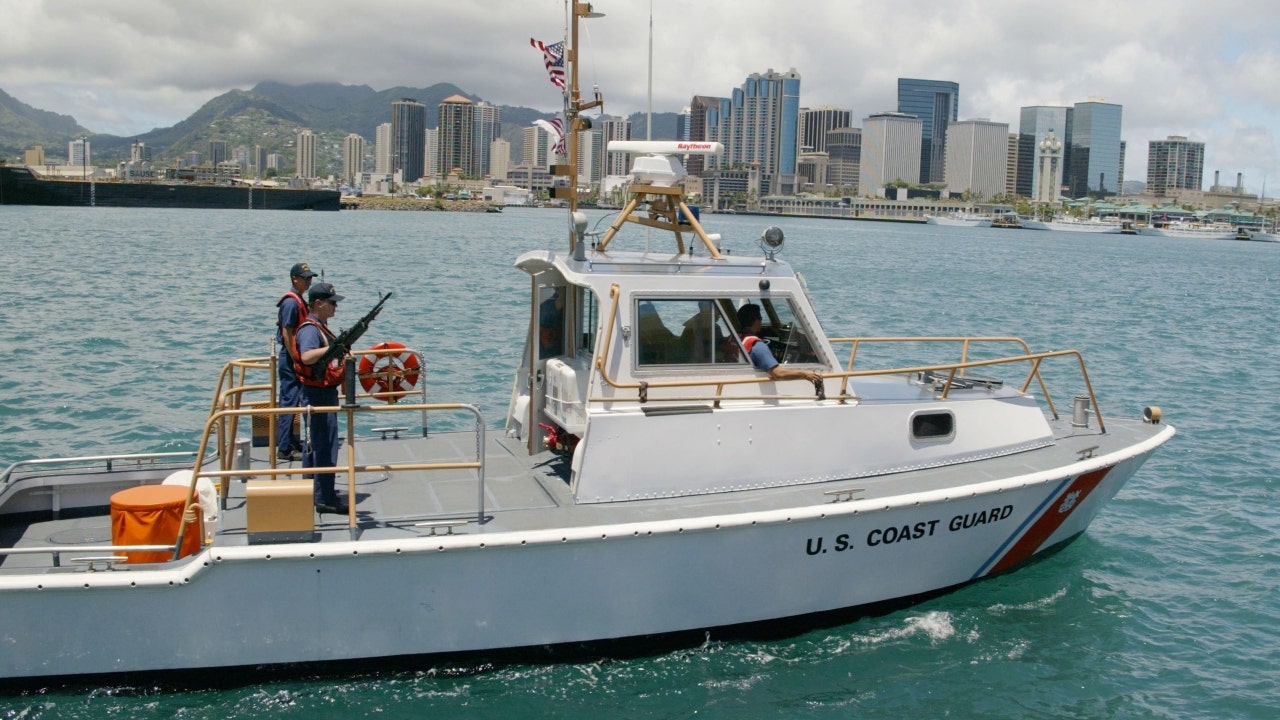
The U.S. Coast Guard and additional agencies saved two adults and three children from a sinking boat in San Diego Bay Tuesday morning.
In a press release, the government agency announced that they rescued the five individuals off a 34-foot recreational boat, named Tuna Trax, near the entrance of the San Diego Bay at 10:44 a.m.
The Coast Guard Sector San Diego Joint Harbor Operations Center received a distress call that all three of the boat’s bilge pumps had failed, and the vessel was taking on water.
The Coast Guard sent a boatcrew to assist the recreational vessel to the rapidly sinking boat, the agency said.
DALI CARGO SHIP DEPARTS BALTIMORE FOR VIRGINIA, NEARLY 3 MONTHS AFTER CRASHING INTO FRANCIS SCOTT KEY BRIDGE
A U.S. Coast Guard boat patrols Honolulu Harbor June 13, 2002. (Phil Mislinski/Getty Images)
The boatcrew assisted the vessel by providing additional pumps to the distressed boat.
The five individuals and the Tuna Trax were safely escorted to Shelter Cove Marina by the Coast Guard and BoatUS, the agency said.
The U.S. Coast Guard reminded all mariners to regularly inspect and maintain their vessels’ safety equipment.
Fox News Digital has reached out to the U.S. Coast Guard San Diego for comment.
Read the full article from Here


San Francisco supervisors authorized a resolution Tuesday urging California lawmakers to expand the city’s automated speed camera program, which currently has 33 cameras operating in the city under a state pilot.
The board’s 10-to-1 vote on Tuesday, with District 10 Supervisor Shamann Walton voting against it, will not add cameras immediately, but formally asks the state to explore changes to the program. The San Francisco Municipal Transportation Agency has identified at least 80 additional high-need locations that could benefit from automated enforcement, according to a report filed with the Public Safety and Neighborhood Services Committee.
Richard Zieman, whose son Andrew, a paraeducator, was killed in November 2021 by a speeding driver outside Sherman Elementary School on Franklin Street, told Mission Local that city officials should do more. “They waited for a tragedy,” Zieman said. Parents and school leaders had repeatedly asked the city to slow traffic on Franklin Street, where drivers barreled downhill toward the Marina, said Zieman.
Supervisor Matt Dorsey, who introduced the resolution, has said the city’s first year of automated speed enforcement shows that the technology works. The SFMTA reported nearly an 80 percent reduction in drivers traveling at least 10 miles per hour over the speed limit at camera locations after the program launched in March 2025. San Francisco was the first city to implement the pilot authorized under Assembly Bill 645.
The pilot, however, is capped by state law at 33 camera locations. Tuesday’s resolution asks California lawmakers to consider allowing more, prioritizing corridors on San Francisco’s High Injury Network, including Franklin Street.
Walk San Francisco, a pedestrian advocacy group which spent roughly eight years advocating for the state legislation that created the pilot, called the resolution an important first step toward broader expansion.
“Thirty-three cameras is nowhere near the number of cameras we need for people to realize that San Francisco is a safe-speed city,” said executive director Jodie Medeiros. “This tool is working. People are lowering their speeds.”
District 6, represented by Dorsey, currently has seven of the city’s 33 cameras, most of them in SoMa. The district also records the highest number of crashes involving injuries or fatalities in San Francisco, making it a focal point in the debate over expanding automated enforcement.
The resolution advanced unanimously from the Board of Supervisors’ Public Safety and Neighborhood Services Committee last week, where Dorsey said the cameras have made streets “feel safer” and argued the early results show “why we should have even more of this life-saving technology.”
Zieman, whose son’s death prompted traffic-calming improvements and eventually a speed camera near Sherman Elementary, said the issue is urgent.
“There are probably other Franklin streets out there,” he said. “I just hope they don’t wait for someone else before they expand the program. It’s too late for Andrew.”

DENVER — Dr. Justina Ford’s name adorns plaques and statues across Denver, where she delivered more than 7,000 babies as the city’s first licensed Black woman physician. Now, an affordable housing building in Five Points, the neighborhood where she lived and worked for 50 years, bears her name.
The newly christened Justina at Five Points, formerly Brunetti Lofts, offers a rare commodity in Denver’s housing market: family-sized affordable housing units.The 23-unit building, built in 2005, has 19 three-bedroom units. Rents range from $840 to $1,893 per month. Residents must make between 30% and 60% of Denver’s area median income, and specific income requirements vary depending on the unit.
“I do believe that in the last, five, ten years, maybe a little longer, housing here in Colorado has just gone crazy. I mean, I have a little two-bedroom townhouse, and I can’t afford to move back in the neighborhood I grew up in because of the pricing. And it’s just crazy,” said Daphne Rice-Allen, chair of the board at the Black American West Museum and Heritage Center, which is housed in Ford’s historic home in Five Points.
Rice-Allen grew up in Clayton, which is northeast of Five Points. This cluster of neighborhoods in north Denver — Five Points, Cole, Whittier and Clayton — were among the areas deemed “hazardous” and “definitely declining” on the city’s 1938 “Residential Security Map,” which redlined neighborhoods with Black, Mexican and lower-income residents.
At that time, Five Points flourished as a cultural and entertainment hub, known as “the Harlem of the West” and serving as “the seat of Denver’s African American community.” Black social clubs, such as the Owl Club, emerged. And Ford, who arrived in Denver in 1902 and was not allowed to work in a hospital, continued to provide medical care out of her house and deliver babies at her patients’ homes.
“This was a family neighborhood, Rice-Allen said about Five Points during that period.
“There were a lot of families that lived in the area and lived in the neighborhood.”
But Five Points’ demographics have changed a lot since Ford died in 1952. About 30% of households in the neighborhood were families in 2020. By 2024, that percentage dropped to about 20%.
The neighborhood experienced a drastic shift in racial demographics as well. In 2000, about 27% of the residents were white, 26% Black and 43% Hispanic. The 2020 census told a different story: 64% white, 10% Black and 17% Hispanic.
What was once a Black cultural hub is now a majority-white neighborhood, which raises concerns about gentrification and displacement of long-time residents. Despite the large supply of affordable housing units in the area — 2,796 in 2024 — about half of renters in Five Points are cost-burdened, meaning they spent more than 30% of their income on housing.


SEATTLE – Wednesday will be another warm day with highs in the mid to upper 80s for parts of western Washington. Eastern and central Washington will reach near 100F with high fire danger. The coast and north interior will be cooler, only in the 60s to 70s.
Wednesday will be another warm day with highs in the mid to upper 80s for parts of western Washington.
Fire Weather Watch
A Fire Weather Watch goes into effect Wednesday evening through Thursday evening for thunderstorms and gusty winds. Lightning strikes could create new fire starts and, with very dry conditions in place, any new fire could spread quickly.
A Fire Weather Watch goes into effect Wednesday evening through Thursday evening for thunderstorms and gusty winds.
What’s next:
An upper level low will move into the Pacific Northwest, bringing scattered showers and a chance of thunderstorms. The heaviest showers will be in the morning hours and will turn more scattered into the evening hours.
An upper level low will move into the Pacific Northwest, bringing scattered showers and chance of thunderstorms.
Looking Ahead:
High pressure will build again Friday and into the weekend, increasing temperatures and sunshine. We will start to see highs reach the upper 80s to low 90s by early next week.
High pressure will build again Friday and into the weekend, increasing temperatures and sunshine.
MORE NEWS FROM FOX 13 SEATTLE
6-year-old Bellingham, WA boy dies from injuries after beach driftwood accident
Grandmother thwarts Pike Place kidnapping, Seattle police make arrest
‘Transfer Fire’ near Lake Chelan, WA hospital prompts evacuation notices
Here’s where WA wildfires are currently burning
Seattle office vacancy crisis shifts tax burden onto homeowners
Thurston County, WA couple desperate to find dog after Rover sitter vanishes
Husband of pregnant wife killed in Seattle sues King County homeless authority
To get the best local news, weather and sports in Seattle for free, sign up for the daily FOX Seattle Newsletter.
Download the free FOX LOCAL app for mobile in the Apple App Store or Google Play Store for live Seattle news, top stories, weather updates and more local and national news.
The Source: Information in this story came from the FOX 13 Seattle Weather Team and the National Weather Service.
-
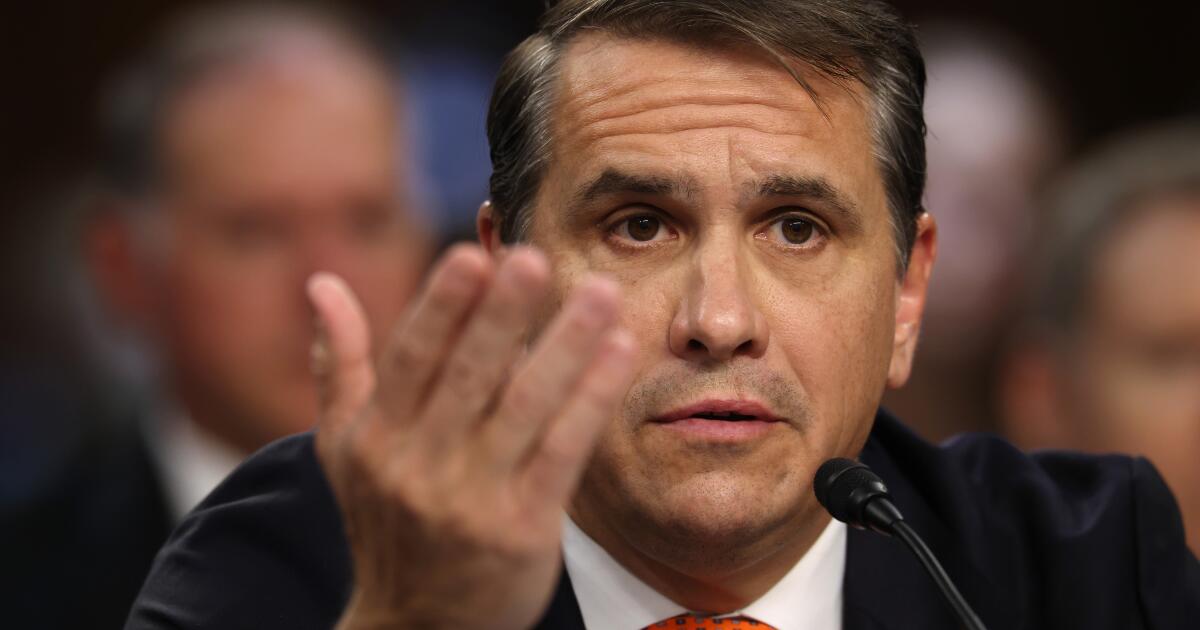 Politics3 minutes ago
Blanche to face questions about his independence at attorney general confirmation hearing
-
 Sports15 minutes ago
How World Cup senior citizens like Lionel Messi have bio-hacked longer careers
-

 World27 minutes ago
Baltic presidents warn of Russian infrastructure attack plans
-
News57 minutes ago
ICE should do traffic stops despite recent shootings, Trump says, seeming to oppose new suspension
-

 Los Angeles, Ca3 hours ago
Southern California hits hottest day of its extreme heat warning
-

 Detroit, MI3 hours ago
Steve Yzerman out as Detroit Red Wings GM, moves to senior advisor role
-
San Francisco, CA3 hours ago
Supervisors urge California to expand S.F. speed-camera program
-

 Dallas, TX3 hours ago
Five teens injured after crashing carjacked vehicle during Dallas police chase


