Business
Labor and business reach deal on law that addresses workplace abuses

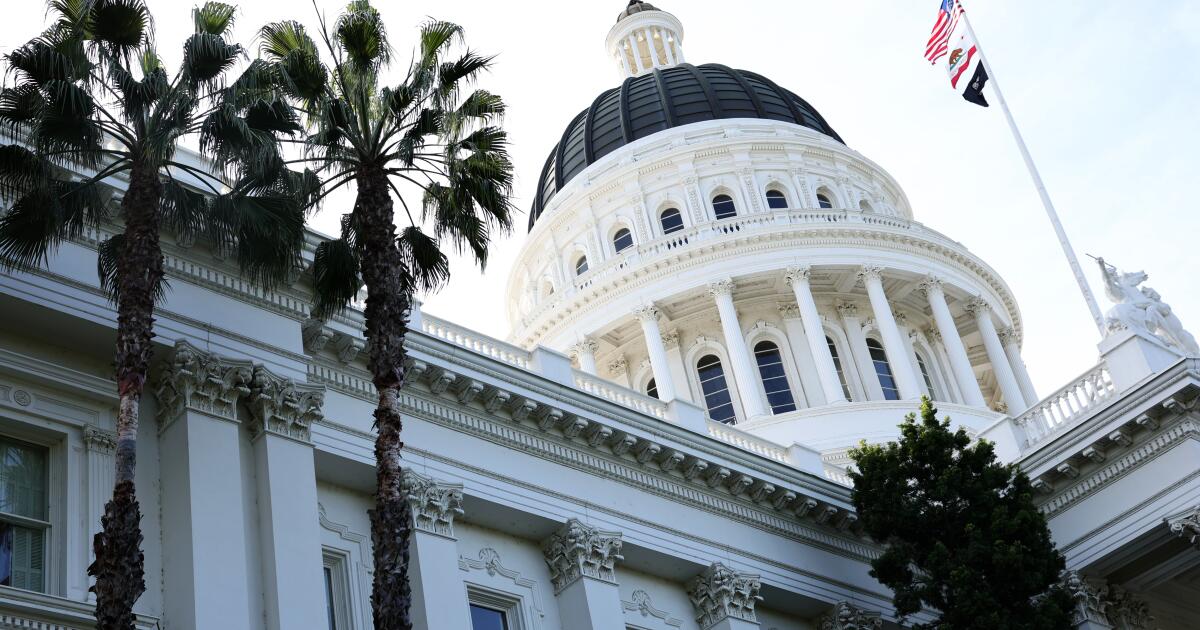
A deal has been struck between business and labor groups that puts an end to a long battle over a unique California law that allows workers who believe they have been victims of wage theft or other workplace abuses to sue employers not only for themselves but also for other workers.
Some of the largest companies in the state had banded together to place a measure on the November ballot that sought to effectively repeal the law, known as the Private Attorneys General Act, or PAGA. But backroom negotiations this month with unions and Democrats who opposed the initiative have resulted in a compromise that takes the initiative off the November ballot.
Instead, the deal reforms PAGA in a way that both businesses and workers say resolves problems with the law.
Concessions to business groups in the deal mainly involve changes to the penalty structure, making it more difficult for lawyers to simply demand a payout from a company. If companies can show they are trying to correct a violation, by giving back pay to workers and agreeing to change the offending practices, their penalties will be low.
“This package provides meaningful reforms that ensure workers continue to have a strong vehicle to get labor claims resolved, while also limiting the frivolous litigation that has cost employers billions,” said Jennifer Barrera, president and chief executive of the California Chamber of Commerce, according to a Tuesday news release from Gov. Gavin Newsom’s office announcing the deal.
Labor groups say the changes will help ensure that bad behavior by employers is halted, rather than simply awarding them a settlement and allowing a company to go back to problematic practices. The deal also allows workers to more quickly be paid back for wage theft and other violations.
“We want things fixed, changes that actually do help workers,” said Lorena Gonzalez, head of the California Labor Federation. “We are happy with the deal.”
The legislative deal would impose a time limit on lawsuits brought: Alleged violations must have occurred within the last year, and the workers bringing the claims must have personally experienced the alleged violations.
The deal also folds in labor-backed Assembly Bill 2288, introduced by Ash Kalra (D-San José), which aims to give PAGA more teeth by giving courts the power to order employers to correct violations.
Various labor organizations praised the deal in a news release, saying that it upholds core tenets of PAGA that aim to let workers hold abusive employers accountable for widespread wage theft, safety violations and misclassification of workers as independent contractors.
“PAGA is one of workers’ strongest protections against wage theft that drains at least $2 billion from workers’ pocketbooks each year. Today’s agreement protects this landmark law’s fundamental strength: workers’ right to access justice through our courts,” Alexandra Suh, co-president of the California Coalition for Worker Power and executive director of Koreatown Immigrant Workers Alliance, said in a statement.
The measure, initially set to appear on the California ballot in November, had been the culmination of long-standing efforts by corporate and industry groups to undo the law.
Business groups had criticized PAGA for causing what they described as a proliferation of frivolous and costly lawsuits that hurt small businesses and nonprofits. According to one study, the mounting lawsuits have cost businesses $10 billion during the last decade.
Under the PAGA law, workers would end up getting less money after a long legal process than if they had filed complaints through state agencies, groups backing the measure had said.
The law has helped workers sue companies such as Walmart, Uber Technologies and Google for workplace violations.
“There is near universal consensus that PAGA is broken and not working for workers or employers,” said Brian Maas, president of the California New Car Dealers Assn., according to a news release from businesses that sought to repeal PAGA. “We need sensible reforms to fix the broken system. We support this legislative reform and encourage lawmakers to swiftly pass the measure.”
Negotiations over PAGA came amid broader discussions around the 2024 ballot as well as budget conversations in Sacramento underway this month. The governor must sign a balanced state budget by June 30, and the deadline to put measures on the November ballot is June 27. Talks are ongoing over another business-backed ballot measure that would make it harder for the state to increase taxes.
Proposed changes to PAGA aim to encourage compliance with labor laws by capping penalties on employers that quickly take steps to fix bad practices. For employers that take steps to comply with the labor code before even receiving notice that they will be sued under PAGA, penalties are capped at 15% of the amount that would have otherwise been awarded. For employers that work to correct violations after receiving a PAGA notice, penalties are capped at 30%.
More of the penalty money would go to workers, with their allocated share increasing from 25% to 35%.
The reform would levy a new, higher penalty of $200 per pay period on employers that act “maliciously, fraudulently or oppressively” in violating labor laws.
Changes also aim to protect smaller companies by creating a process through which they can correct violations through the state labor department, to reduce their litigation costs.
“Small businesses throughout the state have been targeted by frivolous PAGA lawsuits for decades, even forcing some restaurants to shut down,” Jot Condie, president and CEO of the California Restaurant Assn., said in a statement. The reform package will “reduce shakedown lawsuits against small businesses.”
The Legislature will consider the reform legislation agreed to under the deal as early as this week. If the compromise is approved and signed by the governor, the coalition of businesses backing the initiative, called the Fix PAGA coalition, will remove its measure from the ballot.
Labor groups had raised an alarm about the ballot initiative in recent months, arguing that PAGA is a crucial tool for workers, since California struggles to enforce basic labor laws.
Although California has some of the toughest labor laws in the country, a study released last month by a team of researchers from UC San Francisco and Harvard University found that workers routinely experience abuses over pay, work schedules and other issues.
A recent audit of the California labor commissioner’s office found that claims of wage theft filed by California workers are routinely left in limbo for years by state investigators. The labor commissioner’s office would need to hire hundreds of additional staffers to effectively address a massive backlog.
Newsom’s office, as part of the deal, will pursue a budget-related bill to give the California Department of Industrial Relations the ability to expedite hiring in order to improve enforcement of wage theft claims.
Negotiations over the deal have lasted months and appeared to be going nowhere, but Newsom’s office, which was mediating the discussions, stepped in with a firmer hand this month. The deal came together over the last few weeks and was finalized on Monday, said a source familiar with the negotiations.
“Though we’ve successfully negotiated a dangerous measure off the November ballot — we can only hope that this deal encourages more employers to follow the law and pay their workers what they are owed. California’s worker advocate attorneys will continue to work vigilantly to ensure that they do,” said Kathryn Stebner, president of Consumer Attorneys of California.


A big rig crossed the center divider on the 210 Freeway in Irwindale on Saturday morning, killing one and injuring 30, authorities said.
The mass accident took place before 9 a.m. west of Irwindale Avenue, where emergency personnel arrived to find the truck had collided with several vehicles, the Los Angeles County Fire Department said in a social media post.
One person was pronounced dead at the scene and two were critically injured. Eight minors were taken to the hospital and 22 other crash victims declined treatment, the department said.
The California Highway Patrol temporarily shut down all westbound lanes of the freeway, diverting traffic onto Irwindale Avenue, before opening up one lane.
The CHP issued a SigAlert warning of traffic delays on the westbound lanes, with two lanes on the eastbound side of the freeway also temporarily closed.
The cause of the crash is under investigation.

Ford Motor Co. is suing a prominent Los Angeles lemon law firm for allegedly inflating their fees by as much as 7,000%, the company’s latest attempt to crack down on California attorneys who it says are exploiting the state’s unique law to protect consumers from defective cars.
Quill & Arrow, a personal injury firm that represents drivers suing over so-called “lemons” — vehicles with significant, unfixable manufacturing flaws — has long been a thorn in the side of Ford. Since 2021, Ford said its has paid them more than $100 million, roughly half in attorney fees.
That profit, Ford alleges in a federal lawsuit filed Thursday, came from billing records that were “utter fabrications.”
Quill & Arrow used an overseas “army” of low-paid, non-lawyers to help file thousands of lemon lawsuits and then pretended the work was done by California attorneys, who billed as much as $950 per hour, Ford alleged in its complaint.
Ford claims that the bulk of the work was actually done by non-lawyers in countries such as Mexico and the Philippines, who got paid as little as $13 per hour.
Quill & Arrow was founded in 2019 by attorneys Kevin Jacobson and Jonathan Shirian, according to the firm’s website, which touts recovering $500 million in lemon law payouts. The partners called Ford’s lawsuit “nothing more than an attempt to silence firms who would dare to hold them responsible and seek justice for consumers.”
“It grossly mischaracterizes the facts and the claim that Quill & Arrow created fabricated attorney billing records is absurd,” the firm said in a statement.
California’s lemon law, considered one of the strongest consumer protections in the nation, allows drivers to get a refund or replacement of a broken car if the manufacturer can’t fix it. If the driver is not satisfied, they can sue.
If the driver wins, the law allows attorneys to collect their fees from the car maker — rather than take a percentage of the client’s winnings, as is common in personal injury cases. This fee structure, Ford argues, has turned the law into a bonanza for plaintiff attorneys. The longer the case drags on, the company argues, the more the law firm can reap in profit.
Ford alleges the firm intentionally slowed down its clients’ cases to drive up their billable hours, instructing drivers not to communicate with Ford and pushing them toward filing a lawsuit.
“California’s Lemon Laws are in need of reform and the courts need to exercise more oversight, given the fraud we continue to expose,” said Doug Lampe, counsel at Ford, in a statement. The law is “being blatantly abused by the lemon law plaintiffs lawyers, the bar is not policing its own and the courts need to monitor fee awards with far more skepticism and scrutiny.”
The cases, he said, “have become about the lawyers for the lawyers.”
Lemon law cases have exploded in California in the last decade from about 4,500 cases in 2015 to roughly 30,000 in 2024, according to an analysis from the Assembly Judiciary. These cases, officials warned, “are poised to cripple the entirety of California’s civil justice system.”
In 2024, the legislature tightened the state’s lemon law, requiring additional steps before a driver could sue. The bill seems to have put little dent in the caseload: Lemon lawsuits surged to record levels the following year.
Ford’s lawsuit marks the second attempt by one of America’s largest car manufacturers to go on the offense against lemon law attorneys in Southern California.
Ford sued a cohort of local lemon law firms in May 2025, accusing attorneys of collecting at least $100 million in “phantom legal fees” by billing for hours they never worked. The case, which was brought under the Racketeer Influenced and Corrupt Organizations Act, or RICO, alleged lawyers worked together to file a flurry of fraudulent cases with billable hours that defied logic.
A partner at Knight Law Group, an L.A.-based lemon law firm, once billed an “ostensibly heroic but physically impossible” 57.5-hour workday, Ford alleged.
Knight Law Group denied inflating their billing, calling the suit a “thinly veiled attempt to silence firms who would dare to hold them responsible and seek justice for consumers.”
A judge threw out the suit in March on the grounds that lawyers were protected under the 1st Amendment from being sued for the content of their lawsuits unless the case was proved fraudulent. Ford says it plans to appeal.
After Quill found about the Knight Law Group case, Ford alleged, Quill dedicated a team to “scrubbing” their own timesheets of “impossible time entries.”

Ranch dressing is having a moment thanks to the World Cup and Kraft is ready to meet it.
The company said Thursday that it is working on a “TSA Compliant Ranch” for those looking to travel with the quintessentially American condiment. The announcement follows the influx of social media videos showing international soccer fans sampling the dressing for the first time.
“Some visitors leave with souvenirs. Others leave with America’s favorite dressing,” Kraft wrote in a caption accompanying an AI image of a TSA-approved clear bag packed with ranch dressing packets posted to social media. The image showed the bag — complete with a luggage tag resembling a ranch dressing bottle — placed in an airport security screening bin along with other travel essentials.
Additional details will be announced later, the company said.
TSA has also leaned into ranch’s apparent newfound popularity among international travelers, providing some helpful tips (and warnings) on social media.
“If you’re visiting for a very large sporting event & you happen to discover RANCH while you’re here… pls pack it in your CHECKED BAG on your way home,” the agency posted on Instagram Tuesday. It also asked travelers to “avoid chugging your ranch outside security” lines.
“Who knew dip-lomacy could be achieved through addressing the obvious: ranch is the king of condiments,” TSA wrote in the caption accompanying its carousel of humorous ranch-related quips. “If you’re traveling within the U.S., make sure to keep your carry-on sauces to 3.4 oz or less and place any larger containers in your checked bags.”
“Some heroes wear capes. Others bring ranch,” it added.
According to 1987 Times reports, ranch dressing was invented by Steve Henson, who opened the Hidden Valley Guest Ranch in Santa Barbara in the mid-1950s with his wife, Gayle. The unnamed condiment originally mixed herbs and spices with buttermilk and mayonnaise and its popularity with guests led to it being jarred so they could take some home. The more travel-friendly powdered form followed.
-

 Florida1 minute ago
Juneteenth in Fort Myers: See photos of the celebration
-
Georgia6 minutes ago
Georgia Lottery Powerball, Cash 3 results for June 20, 2026
-

 Hawaii13 minutes ago
Waianae encampment deadline extended amid pushback from lawmaker, community
-

 Idaho16 minutes ago
One dead, four injured in US 26 crash near Ririe – East Idaho News
-

 Illinois21 minutes ago
Illinois Prison Closure Deepens Small Town’s Fears
-

 Indiana28 minutes ago
Indiana Republicans nominate Max Engling for secretary of state at GOP Convention in Fort Wayne
-

 Iowa31 minutes ago
Why Iowa State Basketball Will Miss Star Potential of Milan Momcilovic
-

 Kansas36 minutes ago
Salvador Perez attended the Ecaudor-Curaçao match at Arrowhead. So did other royals — from the Netherlands

