Business
Dominic Ng: Philanthropist banker, inclusion practitioner

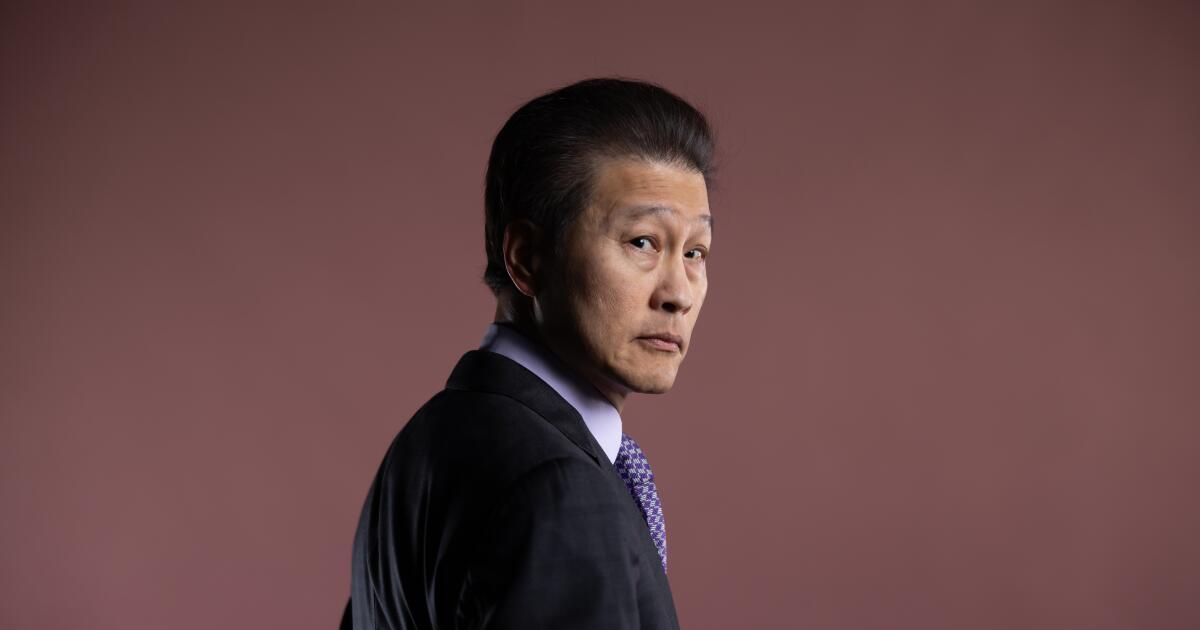
The year 2023 was especially cruel to regional banks in California. Repeated interest rate hikes by the Federal Reserve exposed the poor bets and hubris of regional highfliers like Silicon Valley Bank and First Republic. Those banks capsized, which sparked bank runs, which wiped shareholders out.
One regional bank, however, smoothly sailed on: East West Bank, helmed for more than 30 years by Dominic Ng, who champions the durable power of steady growth. “We’re prudent and cautious, but very entrepreneurial,” he said from his office at East West headquarters in Pasadena. “The way you win in banking is not through shortcuts. It’s a long game.”
‘His leadership has transformed the bank, transformed philanthropy and what business leadership looks like in L.A.’
— Elise Buik, United Way of Greater Los Angeles’ chief executive
The result has been accolades: No. 1 best-performing bank in its size category last year from S&P Global Market Intelligence and No. 1 performing bank in 2023 by trade publication Bank Director. The diversity of its board of directors — Latino, Asian, Black, female and LGBTQ+ all represented — has also won acclaim.
Steady profits enabled East West to become one of Los Angeles’ top civic benefactors. Ng has been especially active with the United Way of Greater Los Angeles for more than 25 years and is credited with championing a strategic change in direction to more effectively serve the city’s desperately poor, while persuading more of the city’s richest residents to pitch in.
Discover the changemakers who are shaping every cultural corner of Los Angeles. This week we bring you The Money, a collection of bankers, political bundlers, philanthropists and others whose deep pockets give them their juice. Come back each Sunday for another installment.
“His leadership has transformed the bank, transformed philanthropy and what business leadership looks like in L.A.,” said Elise Buik, the United Way chapter’s chief executive.
Born to Chinese parents in Hong Kong in 1959, the youngest of six children, Ng has been chief executive of East West Bank since 1992 and expanded on the bank’s original mission of financing Chinese immigrants who in the 1970s found it difficult to qualify for loans through the usual channels. It’s now the largest publicly traded independent bank based in Southern California, serving an economically and ethnically diverse clientele. On the world stage, Ng serves as co-chair of the Asia-Pacific Economic Cooperation Business Advisory Council.
Ng, 65, worries about the future of philanthropy in Los Angeles. He longs for the “good old days” when business chiefs didn’t think twice about pitching in to help the city’s less fortunate.
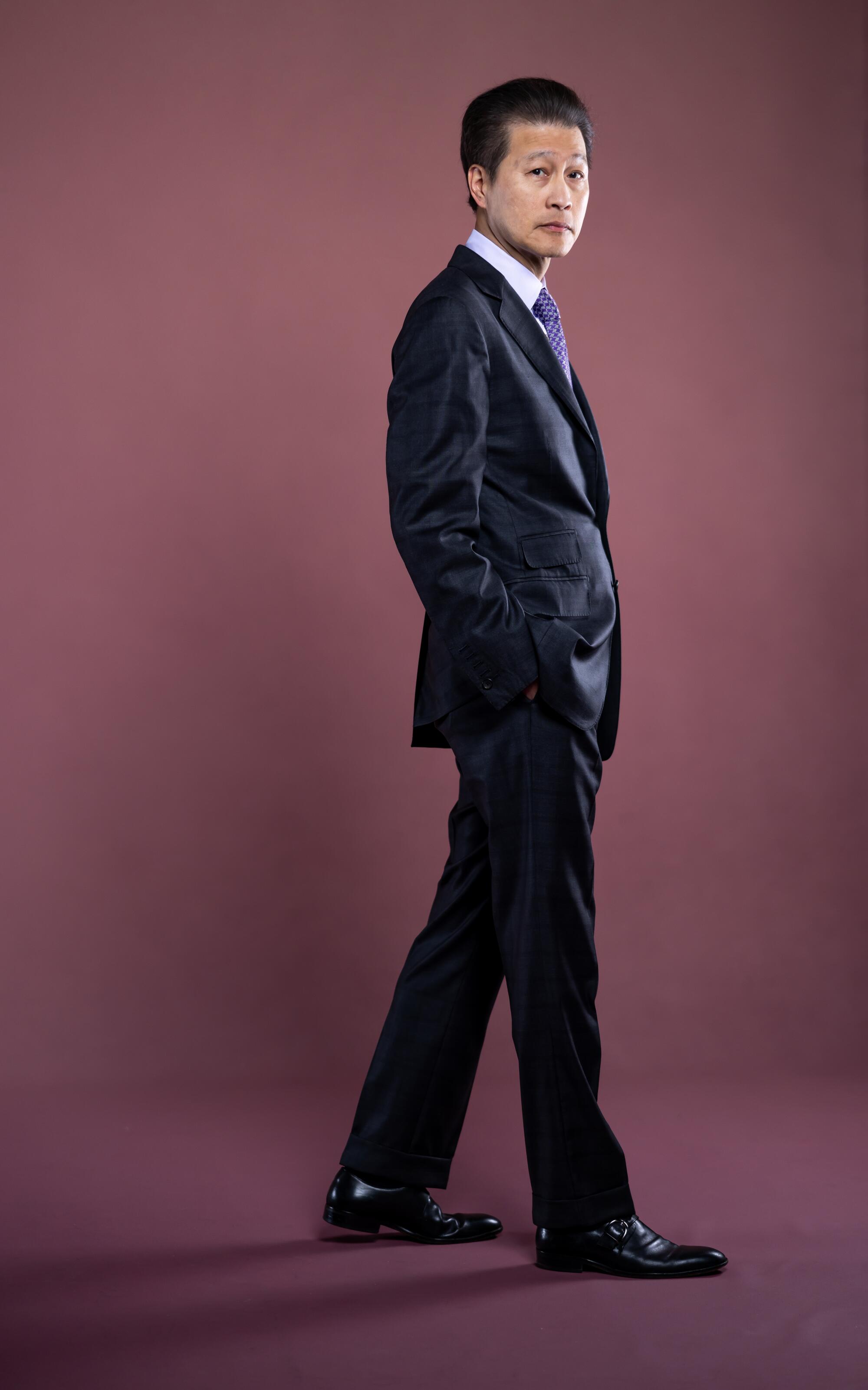
“Today, the pressure is on for [immediate] return to shareholders,” and people running companies have to respond to shareholders who seem to “care less every year” about civic responsibility.
More young, monied tech and finance hotshots would do well to take some cues from business leaders like Ng.
More from L.A. Influential

Business
Music mogul Clive Davis, producer and label executive who signed musicians like Janis Joplin, Bruce Springsteen and Whitney Houston, has died

Music mogul Clive Davis, the celebrated producer and label executive who signed and nurtured genre-defining musicians such as Janis Joplin, Bruce Springsteen and Whitney Houston, died Monday at his home in New York City, according to Davis’ representative Aliza Rabinoff. He was 94.
Davis had recently been hospitalized with an upper respiratory infection.
“To the world, our father was the iconic music legend whose vision, instincts and relentless pursuit of excellence shaped the soundtrack of countless lives,” his family said in a statement. “He discovered, mentored and championed the greatest artists in modern music history, leaving an indelible mark on culture that will endure for generations.
“To his family, Clive was Dad and Granddaddy, the steady presence at the center of our lives, the source of wisdom, strength, encouragement and unconditional love. No matter how extraordinary his professional accomplishments, he never lost sight of what mattered most: the people he loved.”
Known for an unfailing ear for innovative music and an innate ability to navigate the shifting currents of popular music, Davis ruled Columbia, Arista and J Records. He most recently served as the chief creative officer for Sony Music Entertainment.
The Grammy Award-winning producer’s career spanned six decades and was marked with both success and turbulence as he developed an astonishing stable of talent, with Rod Stewart, TLC, Carlos Santana, Aretha Franklin, Barry Manilow, Alicia Keys and Christina Aguilera among others. He also co-founded Bad Boy Records with Sean “Diddy” Combs, home to hip-hop artists such as the Notorious B.I.G.
Admirers said the veteran producer’s longevity as a high-profile record company chief was due largely to his knack for matching artists with can’t-miss songs, which often soared up the charts and raked in Grammy nominations by the armful. His annual pre-Grammy party was a not-to-be-missed industry event, even when it went virtual amid the COVID-19 pandemic in 2021.
Davis’ driving goal was “to find a song that fits naturally, so there’s no sense of artificiality when they sing it,” he told The Times in 2014.
Born April 4, 1932, in Brooklyn, Davis’ parents died when he was still a teen and he moved in with a sister. He received full scholarships to New York University and Harvard Law School and graduated with honors from both. He began his professional career as a corporate lawyer working with CBS Records and was eventually recruited into the label’s executive offices.
The label was then home to a young Bob Dylan, who tangled with Davis when the young folk singer pushed to include a song called “Talkin’ John Birch Society Blues” on his 1963 album “The Freewheelin’ Bob Dylan.”
Davis, as Columbia’s general counsel, felt certain lines in the protest song were libelous and told the infuriated songwriter that it wouldn’t make it onto the record, he wrote in one of his two memoirs. Though furious, Dylan relented.
Davis credited attending the Monterey Pop Festival — the 1967 seminal music festival that featured adventuresome acts such as the Who, Jimi Hendrix and Jefferson Airplane — for opening his eyes to the emerging psychedelic music scene. The festival brought him in contact with Joplin, who then was the lead singer of the rock band Big Brother and the Holding Company. It was his first — and likely his best, he said repeatedly — signing.
During his reign at Columbia/CBS, the company threw open its doors to rock and folk music, issuing early albums from Springsteen, Santana, Aerosmith, Laura Nyro and Billy Joel.
When Springsteen turned in the first recording of his debut album, “Greetings From Asbury Park, N.J.,” Davis asked him if he could come up with some additional material because he didn’t hear any potential hits.
“I went to the beach and wrote ‘Blinded by the Light’ and ‘Spirit in the Night,’” Springsteen said later. “That was a good call. They ended up being two of my favorite songs on the record.”
But Davis’ penchant for spending lavishly caught up with him and he was pushed out of CBS amid accusations that he used company money for his son’s bar mitzvah and other personal expenses — charges that were never proven. He quickly founded Arista Records where his winning streak of mainstream hits continued.
Clive Davis in 2016
(Kirk McKoy / Los Angeles Times)
After signing a 19-year-old Houston, she became one of the most successful female vocalists in recording history. In 1999, he spearheaded Santana’s comeback album, “Supernatural,” returning the guitarist to contemporary pop radio and winning eight Grammys in the process.
His Midas touch was questioned however when the German R&B duo Milli Vanilli achieved international success and a Grammy only to tumble into infamy when it was discovered that neither of the group’s members sang vocals on their music. The duo was later stripped of their Grammy. Davis insisted he was unaware of the deception.
Despite his successes, Davis was forced out of Arista in 2000, officially because at 71 he was past retirement age. But he didn’t let up, creating J Records, a subsidiary of BMG, and scored hits with artists such as Alicia Keys and Busta Rhymes. Four years later, he was named chief executive of BMG North America, which included control of Arista.
He worked closely with several “American Idol” winners and runners-up at the peak of the singing competition’s popularity, including Clay Aiken and Ruben Studdard. In 2007, he openly feuded with original “Idol” winner Kelly Clarkson over creative control of her second album. He publicly apologized but insisted the album could have been far better.
In 2009, Davis performed another feat by returning a slumping Houston to the top of the charts with the comeback album, “I Look to You,” debuting at No. 1 on the Billboard charts. The singer, who was slated to attend his annual pre-Grammy bash, drowned in a bathtub at the Beverly Hilton the night before the event. Toxicology tests later revealed there was cocaine and other drugs in her system.
“For a while, I did believe that she had stopped drugs,” Davis said of Houston’s final years, devoting much of his second memoir to the pop titan. She visited him at home in L.A. just before she died and he came away believing she was clean and primed to mount a comeback. “There was no comprehension on her part or my part that she was flirting with death.”
As a producer, Davis notched four competitive Grammy Awards, two with Santana, one with Clarkson and one with Jennifer Hudson, but shepherded several nominations and wins for artists. He also received the Grammy Trustees Award in 2000 and the President’s Merit Award in 2009.
The Grammy Museum in Los Angeles named its 200-seat venue the Clive Davis Theater and the Rock & Roll Hall of Fame inducted Davis into its non-performers category in 2000. NYU named its art school’s music division the Clive Davis Institute of Recorded Music. He was portrayed by Stanley Tucci in the 2022 biopic “Whitney Houston: I Wanna Dance with Somebody.”
“Clive was one of the first to recognize the invaluable impact that the Grammy Museum could have, not just within the music industry but for music lovers, as well,” Grammy Museum President and Chief Executive Michael Sticka said Monday in a statement. “Not only did he recognize our impact, but he generously supported it as the first person to donate seven-figures to further our mission and work.”
Davis was twice married and published his first memoir, “Clive: Inside the Record Business,” in 1975. He followed it with “The Soundtrack of My Life” in 2013 in which he revealed that he was bisexual. He wrote that he first had a sexual encounter with a man during the disco era in New York City and began leading a “bisexual life” after separating from his second wife, Janet Adelberg, with whom he had two of his four children. He had two long-term partners later in life.
“My family knew and my closest friends knew,” he told Rolling Stone in 2013. “But bisexuality is and was misunderstood: ‘You’re either gay or straight, or you’re lying.’ But that’s not true. Maybe I should have had the courage earlier to air the issue. But I knew I would air it when I wrote my autobiography.”
Davis is survived by his four children; Fred, Lauren, Mitchell and Doug; eight grandchildren; two great grandchildren; and longtime partner Greg Schriefer.
Business
Newsom and L.A. declare state of emergency as Boyle Heights fire continues spewing smoke across region

Gov. Gavin Newsom and L.A. city officials on Saturday declared a state of emergency as firefighters continue to battle a stubborn warehouse fire in Boyle Heights that has sent plumes of irritating smoke across the region.
“While the [Los Angeles Fire Department] continues making progress, this is a major, multi-jurisdictional incident,” Mayor Karen Bass said in a statement. “I’m issuing an emergency declaration to ensure the city has the resources it needs as this operation continues and to keep the community safe.”
The declaration activates the city’s emergency response structure, directs departments to assess damages and costs, and requests state assistance to support firefighting, cleanup, environmental monitoring and community recovery efforts.
Newsom’s declaration, issued at about 9 p.m., allows state agencies to ramp up support for firefighting efforts in Los Angeles.
“While local officials continue to lead this response, the State of California is prepared to help safeguard public health, support emergency operations, and assist impacted residents,” Newsom said in a statement.
The state will deploy technical experts and make ready 5.5 million respirator masks for distribution, along with commercial-grade air purifiers, bottled water and enhanced air-quality monitors.
Los Angeles Fire Department Chief Jamie Moore at a Saturday morning news conference described the blaze that broke out Wednesday as a “very unique fire, a very unique challenge for the Los Angeles Fire Department, for the city of Los Angeles, but also for the County of Los Angeles.”
The 500,000-square-foot commercial building at 1400 S. Los Palos St. stores 85 million pounds of frozen food “like a giant cooler,” he said. The corrugated steel walls are filled with dense foam that is burning slowly and emitting gases despite ongoing water drops from helicopters.
The building is also topped with solar panels that have caught fire.
A Los Angeles Fire Department captain wears a respirator while watching the fire in Boyle Heights on Saturday.
(Myung J. Chun / Los Angeles Times)
Moore cautioned people with lung issues or smoke sensitivity to avoid outdoor activities, but said crews have mitigated hazardous materials at the site, including ammonia. However, officials remain concerned about biohazards potentially posed by spoiled food, including bread, poultry, pork and beef.
“Imagine the food inside your refrigerator with no power, no refrigerant, starting to rot, and then opening up your refrigerator door, that’s about where we are now,” Moore said. “So, once we get this fire put out, the challenge that we have before us is the removal of all that product.”
A shelter-in-place order for residents was lifted on Friday, but many across the region on social media reported smoke smells, haze and poor air quality in the San Gabriel Valley, Northeast Los Angeles, Glendale, Burbank, downtown Los Angeles and many other areas.

-
Share via
Some said the smoke was as bad, if not worse, as during the Eaton fire that burned in Altadena in January 2025.
The city opened a smoke respite shelter at Pecan Recreation Center at 145 S. Pecan St., while the county opened one in City Terrace Park at 1126 N. Hazard Ave.
Bass, who joined Moore and other local officials at two the City Terrace Park press conferences, said she had reached out to Newsom for additional support.
Lineage Logistics is the tenant-operator of the building. In a statement issued late Friday night, company officials said they believe the fire began while third-party contractors were testing the solar array on the roof.
“Lineage’s top priority is the health and safety of the community, and we are continuing to work closely with the Los Angeles Fire Department and other agencies to provide any assistance we can,” the statement said. “We are grateful to Los Angeles’ remarkable firefighters for their ongoing and brave efforts.”
The company said the facility is not used for the storage of hazardous materials, and that there have been no measurable ammonia concentrations recorded in the community since the fire started. Additionally, “Lineage has proactively taken additional steps to pump out the ammonia and transport it offsite, removing the possibility of ammonia posing a risk to the community.”
L.A. County health officer Muntu Davis said the main public health concern was smoke and fine particles that can cause irritation of the ear, nose, throat and lungs, as well as exacerbate heart and lung conditions.
Sensitive individuals were encouraged to wear well-fitting N95 and P100 masks, and to register for emergency notifications at alertla.org.
Will Barrett, assistant vice president for nationwide clean air policy with the American Lung Assn., told The Times that it can be hard to pinpoint exactly what is in the smoke while crews are still working to contain the evolving health risk, but that the most important thing is to avoid exposure.
“Much like recent industrial and wildfire incidents, the makeup of the smoke can include toxic chemicals, fine particles and other serious risks to lung health depending on fire conditions and what is burned,” he said.
On its own, particle pollution can increase the risk of asthma attacks, heart attacks and other medical emergencies, and other chemicals in the air can cause both near- and long-term harms, he said.
Another concern is the possibility that there were lithium-ion batteries within the structure. Batteries are often used to store energy produced by solar panels, although officials could not immediately confirm whether that was the case in Boyle Heights. However, they said the building does house about 60 forklifts that run on lithium-ion batteries, although those are “currently unburned.”
Low-level toxic fumes measured on Thursday included hydrogen fluoride, a byproduct produced by burning lithium-ion batteries, LAFD spokesperson Lyndsey Lantz told The Times.
“It is likely that there were some involved at some point,” she said. “We just don’t have confirmation of where they were or what part of the building they were responsible for.”

A LAFD helicopter surveys the fire at Lineage Logistics cold storage in Boyle Heights on Saturday.
(Myung J. Chun / Los Angeles Times)
The multiday effort has been full of challenges for firefighters with fiery flare-ups.
The fire initially grew into a huge inferno, creating a pillar of thick, black smoke that could be seen for miles. It then reached an ammonia line, triggering several small explosions and a dramatic image of flames shooting through the building’s roof as crews evacuated the area to avoid the fumes.
That caused officials to announce a shelter-in-place order, which was lifted, only to be reinstated on Thursday after a different section of the building caught fire. That new shelter-in-place order was lifted Friday just before 11:30 a.m.
The smoke from the fire also triggered a special particle pollution advisory from the South Coast Air Quality Management District. It was to remain in effect until 12:30 p.m. Saturday.
AQMD officials said they have dispatched air quality inspectors to the area and have been responding to public complaints. The district has also deployed stationary monitors at Eastman Avenue Elementary and Robert Louis Stevenson Middle School to measure hourly particulate matter concentrations.
Additionally, the U.S. Environmental Protection Agency is deploying specialized monitors at various locations around the facility and in the community to measure volatile organic compounds and various other air toxins.
“Residents have lived through days of smoke, shelter-in-place orders, disruptions to daily life, and ongoing questions about what this means for their health and well-being,” Councilmember Ysabel Jurado, who represents Boyle Heights, said during the afternoon press conference. She said she will continue pushing for resources and support for the community. “Boyle Heights deserves clear information, direct support, and full accountability throughout the response, cleanup and recovery process.”
Chief Deputy Jon O’Brien with the Los Angeles County Fire Department said Saturday that deep pockets of smoldering fire remain buried under structural debris and solar panels.
“Our city firefighting brothers and sisters are executing a meticulous, deeply challenging operation to bring the fire under control,” he said.
Last month, Southland residents experienced an industrial incident involving an overheated storage tank of methyl methacrylate at the GKN Aerospace facility in Garden Grove, triggering fears of an explosion or toxic release.
The event led to the evacuation of about 50,000 people.
The near-disaster was a reminder of Southern California’s long history of industrial development, and how close many such facilities are to homes and communities throughout the region.
Assemblymember Jessica Caloza (D-Los Angeles), who represents East L.A., pointed out during the press conference that East L.A. also experienced an oil spill last month.
It occurred when a crew laying fiber-optic cable ruptured a pipeline carrying crude oil from Kern County to the Port of Los Angeles, causing a hazardous-material incident, The Times reported.
“Communities like East L.A., like Boyle Heights, immigrant Latino communities — hardworking, everyday working-class people — bear the brunt of air pollution, of environmental hazards, of all these things that for some reason keep happening in the same neighborhoods,” she said.
At 8 p.m. Saturday, the Los Angeles Fire Department announced it had stopped aerial water drops for the night, but that ground crews would continue fighting the blaze overnight, with the help of the department’s firefighting robot.
The department described the fire as “a complex, long-duration incident that will require sustained operations.”
Times staff writer Richard Winton contributed to this report.
Business
This startup wants to bring driverless freight trucks to California’s roads, but drivers are pushing back

A Bay Area startup is trying to reinvent the semitruck by making the gas-guzzling giants electric, autonomous and designed for efficiency.
Humble Robotics, founded last year in San Francisco, has raised $24 million to develop a cabless freight truck that lacks a steering wheel, gas pedal and driver’s seat.
The company says its reimagined truck could move freight across California and other states while saving money and reducing carbon dioxide emissions.
Humble Robotics emerged from stealth in April with seed funding led by Eclipse Capital, a Palo Alto-based venture capital firm, and Energy Impact Partners.
A rendering of the Humble Hauler, an electric, autonomous freight truck under development by the San Francisco startup Humble Robotics.
(Eyal Cohen)
The company is looking to capitalize on new regulations in California that could pave the way for autonomous trucks to hit public roads in the near future.
But the technology still faces hurdles, experts said, and labor groups including the Teamsters are raising alarms over safety and availability of jobs.
“We’re building an electric autonomous platform for moving freight, and when we were conceiving the company, the goal was to move freight at the lowest possible cost,” said Eyal Cohen, founder and chief executive of Humble Robotics. “We just want to bring everybody along into modernizing this technology.”
Cohen, who has spent nearly two decades working on electric and autonomous vehicles at companies including Uber, Apple and Waabi, said Humble’s driverless truck dubbed the Humble Hauler could begin customer pilots within the year.
In April, the California Department of Motor Vehicles revised its regulations for autonomous vehicles and lifted a ban on autonomous trucks weighing 10,001 pounds or more. Heavy-duty autonomous vehicles, however, are required to begin testing with a human safety driver and must complete 500,000 miles of testing at each stage of certification.
Humble Robotics has not yet applied for a California DMV autonomous vehicle permit and was originally planning testing operations in Texas. Cohen said the company will adapt to the new regulations in California.
“Our focus is now shifting back to our home state of California given these recent changes,” Cohen said. “We look forward to working with the DMV to understand the requirements of these changes and plan our operations in this state.”
Humble Robotics faces competition from other autonomous trucking companies including Pittsburgh-based Aurora and Bay Area-based Kodiak.
Both Kodiak and Aurora are developing self-driving trucks with traditional driver’s components like a steering wheel. By forgoing the front cab, Humble Robotics could face additional regulatory hurdles, said Dan Sperling, founding director emeritus of the Institute of Transportation Studies at UC Davis.
“At what point they would approve a truck without a steering wheel or pedals and without a cab in the vehicle, that’s probably going to be a little longer,” Sperling said. “Without a cab, that means what happens when something goes wrong, you can’t get someone in there to drive it.”
Heavy-duty vehicles without a cab known as automated guided vehicles already exist in controlled environments like marine ports. These vehicles are not fully autonomous, but independently follow a predetermined route.
Cohen said Humble Robotics is working to make cabless vehicles applicable to public roads, particularly those surrounding the busy ports of Los Angeles and Long Beach.
“Humble aims to partner with ports, terminal operators, and intermodal shipping companies for initial deployments,” Cohen said. “We’ve been impressed by the Long Beach Container Terminal’s embrace of state-of-the-art technology.”
The company employs fewer than 50 people and relies on technology similar to what’s used in self-driving cars, including radar, lidar and cameras that provide a 360-degree view around the vehicle. The truck will also use AI to make driving decisions with “intelligent reasoning that adapts to any scenario,” the company’s website says.
“What’s unique at Humble compared to past endeavors is that cameras are the primary mechanism that we use for doing the work, where lidar and radar are more of a backup,” Cohen said.
The company declined to share the production or sale price of the vehicle, and would not disclose its finances.
The Humble Hauler is a Class 8 vehicle, the same group as semitrucks, and has a universal carrying platform that can accommodate typical cargo containers or other loads like a concrete mixer. The truck will have an electric range of 200 miles and a max speed of 55 miles per hour.
Though the Hauler is in the same class as long-haul trucks, Cohen said its primary use case will be for shorter, back-and-forth journeys. Long-haul electric trucks are harder to scale because they require a large, expensive battery.
As of last year in California, nearly one in four new trucks, buses and vans were zero-emission. Zero-emission vehicles made up around 23% of new medium- and heavy-duty truck sales in the state in 2024, according to a release from Gov. Gavin Newsom’s office.
Earlier this year, California’s clean-truck voucher program reserved $165 million to subsidize Tesla’s planned electric semitruck.

A rendering of the Humble Hauler, an electric, autonomous freight truck under development by the San Francisco startup Humble Robotics.
(Eyal Cohen)
“For a lot of moves that we do in freight, like moving back and forth from two points that are only a few miles apart, electric is a really great technology,” Cohen said.
California is among the largest markets for freight trucking, employing more than 130,000 drivers. Eight out of every 1,000 jobs in California belong to a truck driver, according to Fremont Contract Carriers.
That means taking away human driver jobs could be particularly detrimental in the state. Teamsters California, which represents 250,000 workers across dozens of industries, strongly opposed the DMV’s move to lift the ban on autonomous trucks.
“The DMV’s decision to rush forward with driverless heavy‑duty trucks is reckless, and we will use every tool necessary to stop it,” Teamsters California said in a statement. “These rules put our streets, our highways, and our jobs in jeopardy.”
Cohen said he does not believe automated trucking will fully replace human jobs any time soon.
“Obviously people are concerned about autonomous freight and what it means,” he said. “There are millions of Class 8 trucks out there and it’ll take a very long time for all those to become automated. A truck driver today will have a job for the rest of their career.”
Communities in California and beyond are gradually warming up to self-driving cars with the arrival of Waymo and Zoox robotaxis. But autonomous trucks are likely to face more scrutiny, Sperling of UC Davis said.
“There’s an optics issue, and that is if you are driving down the road and see this massive truck next to you with no driver, you’re going to freak out,” Sperling said. “If something goes wrong, the repercussions are massive.”
-
 California2 minutes ago
One child dead, another hospitalized after dog attack at Central Park in California City
-

 Colorado9 minutes ago
Northwest Colorado state parks experiencing water shortages, reduced boating access
-

 Connecticut11 minutes ago
5 Connecticut towns to receive $2M each for infrastructure upgrades
-

 Delaware17 minutes ago
Comcast Xfinity cable down: TV streaming outage hits New Hampshire, Texas, Delaware, Wyoming and Maine
-

 Florida24 minutes ago
Florida man accused of using rifle in threatening another man at Wawa
-

 Georgia27 minutes ago
Three Reasons Why Georgia Tech Can Beat The ACC Best Teams
-

 Hawaii32 minutes ago
Great Waikoloa Rubber Duckie Race Returns on July 4th – Big Island Video News
-
 Idaho39 minutes ago
Idaho family wants millions for Potato Drop injuries

