Seattle, WA
Watch: Seattle Mariners rookie Tyler Locklear slugs first career HR


SEATTLE – Before Thursday night’s game, Seattle Mariners manager Scott Servais had some positive things to say about what he’s seen from rookie Tyler Locklear in his first few games. The 23-year-old first baseman backed up his coach’s words just a few hours later.
Seattle Mariners rookie Tyler Locklear making good early impressions
Locklear belted his first career major league home run in the bottom of the fifth inning off Chicago White Sox left-hander Garrett Crochet. Locklear’s homer was a solo shot and came off an 0-1 changeup from the flame-throwing Crochet. The ball traveled 366 feet and exited the bat at 99.2 mph with a towering 38-degree launch angle, per Statcast.
The home run was the fourth hit of Locklear’s young MLB career, which started Sunday when he debuted against the Kansas City Royals. He’s now had a hit in all four of his starts and four of five games since his promotion.
Here’s what Servais said about what he’s seen so far in Locklear during his pregame press conference: “I like what I’ve seen from Tyler. I think he’s handled things really well. … I think he’s done a really nice job at first base, and that was an area of focus for him when he left spring training. He wanted to get better defensively, be more comfortable around the bag and the different plays and whatnot. He’s looked good over there. I think everybody in the organization always felt he was going to hit, and I think he’s learning a lot getting some exposure at the Major League level. They pitch a little bit different here. You’re going to see more strikes with the breaking ball maybe and the velocity picks up, but he’s handled it really well. I think the one thing I’ve noticed about him, he’s not afraid to make quick adjustments, which is a really good sign for a young player.”
As you can see below, Locklear showed off a bit of the glovework Servais mentioned during Thursday’s game, too.



After so many disappointing seasons with the interior offensive line, the Seattle Seahawks made a commitment last offseason to improve the unit. They started one big step at a time by drafting North Dakota State guard Grey Zabel in the first round, 18th overall pick, of the 2025 NFL Draft. This one was one of the last steps for the Seahawks to create one of the most productive offenses in the NFL.
Zabel wasn’t perfect in his rookie season, but he was good enough to validate the decision to draft him in the first round, and he showed improvement. Zabel is already a favorite among some Seahawks fans and some media outlets as they love his determination and spirit. It was a big jump from the FCS collegiate level to the NFL and this season, he has a chance to show why he might be a top-half-of-the-league guard.
Why Zabel Could Be Ranked Higher?
The Seahawks wanted a determined workhorse when looking for a guard. That’s exactly what they got in Zabel. Last season, he appeared in 1,051 snaps, which is only 10 fewer snaps than right tackle Abraham Lucas, who had the most offensive snaps. Zabel got better as the season progressed. Pro Football Focus gave him an overall grade of 81.5 and a run-block grade of 81.2 in Week 14 through the NFC Championship Game.
There were times last season when he looked like a monster against several defenders. He was pushing some defenders completely out of the way on pulling plays and even ran to defenders after the pass-catcher caught the ball. This is the mentality the Seahawks expect him to have going into his second season in the league. He has more experience and the complete trust of the team to be a franchise player on par with Lucas and left tackle Charles Cross. If he continues to improve, he will be another steal for the Seahawks.
Why Zabel Could Be Ranked Lower?
There were times last season when he didn’t quite catch up to the learning curve of the NFL. Zabel allowed two sacks, four hits and 24 pressures in 2025. The Seahawks expect those numbers to decrease significantly as he is experienced and capable of playing at an efficient level. While Zabel is impressive, he might not be the best player the Seahawks have selected in the 2025 NFL Draft. That honor belongs to slot cornerback Nick Emmanwori, who is stepping up to be the steal of the draft.
Zabel is easily one of the best second-year players and is one of the top offensive linemen, but there are players behind him because they haven’t proven to be consistently explosive for the Seahawks. There is going to be even more pressure on him this upcoming season. The Seahawks hired a more run-friendly coach in Brian Fleury as offensive coordinator. His ranking at the end of the season might be much better if he improves, or worse if he fails to reach expectations.
— Enjoy free coverage of the Super Bowl champions from Seattle Seahawks On SI —
Sign Up For the Seahawks Daily Digest – OnSI’s Free Seattle Seahawks Newsletter
 Add us as a preferred source on Google
Follow

SEATTLE – High pressure continues early this week, leading to more sunshine and warmer afternoon temperatures. Skies will be sunny, warm and dry through the middle of the week.
High pressure continues early this week, leading to more sunshine and warmer afternoon temperatures.
What’s next:
Highs today in the low to mid 80s for parts of western Washington, with highs in central and eastern Washington getting close to 100 degrees. The coast and northern interior will remain in the 70s with mostly sunny skies.
Highs today in the low to mid 80s for parts of western Washington.
Fire Risk Levels
The Fire Risk Levels this week will continue to elevate as we see warming temperatures and increased chance of thunderstorms. East of the cascades is already dry and warm, so the increased chance of new fire starts will be something to watch with the storms.
The Fire Risk Levels this week will continue to elevate as we see warming temperatures and increased chance of thunderstorms. (FOX 13 Seattle)
Looking Ahead:
Temperatures will continue to warm for western Washington through midweek, before we see another low pressure system swing inland Thursday. This low will increase changes of showers and isolated thunderstorms on Thursday, and temperatures will be back to normal for this time of year. This cool down is short-lived as high pressure builds again and highs warm back up into the 80s by the weekend.
Temperatures will continue to warm for western Washington through midweek, before we see another low pressure system swing in Thursday.
MORE NEWS FROM FOX 13 SEATTLE
Seismologists track 100 earthquakes of magnitude 4.5 or greater
6-year-old Bellingham, WA boy dies from injuries after beach driftwood accident
Grandmother thwarts Pike Place kidnapping, Seattle police make arrest
‘Transfer Fire’ near Lake Chelan, WA hospital prompts evacuation notices
Here’s where WA wildfires are currently burning
Seattle office vacancy crisis shifts tax burden onto homeowners
Thurston County, WA couple desperate to find dog after Rover sitter vanishes
Husband of pregnant wife killed in Seattle sues King County homeless authority
To get the best local news, weather and sports in Seattle for free, sign up for the daily FOX Seattle Newsletter.
Download the free FOX LOCAL app for mobile in the Apple App Store or Google Play Store for live Seattle news, top stories, weather updates and more local and national news.
The Source: Information in this story came from the FOX 13 Seattle Weather Team and the National Weather Service.

You easily could have missed it amid all of the attention around this year’s tournament, but in late December FIFA revealed the bids that they received from federations to host the 2031 and 2035 Women’s World Cups. The sole bid for 2031 was a joint proposal from the United States, Mexico, Costa Rica and Jamaica. Although a formal vote still needs to take place to approve the bid, this all but assures the USA of hosting the women’s tournament for the first time since 2003.
As part of the bid, 20 potential host cities were profiled, including Seattle, which was lauded for its long history with women’s soccer and support for collegiate and professional women’s sports.
Local organizers from the 2026 men’s World Cup have already started publicly talking about bringing the women’s tournament here, too.
Here’s what you need to know:
Seattle in strong position to be a 2031 Women’s World Cup host
Seattle is one of 20 U.S. cities profiled in joint bid with Mexico, Costa Rica and Jamaica.
Is the 2031 Women’s World Cup really coming to the United States?
While it’s not official until the FIFA Congress meets in November and votes on the bids, it appears to be a fait accompli at this point. With the tournament growing to 48 teams in 2031 and FIFA desiring to cycle each edition between different continents, no other bids were received for 2031. Similarly, a joint UK/Ireland bid is the sole proposal for 2035 and is expected to be approved at the same FIFA Congress meeting.
However, the vote was originally scheduled to occur at a FIFA meeting in April, but had to be delayed after the Trump administration refused to sign off on required guarantees while attempting to pressure FIFA and U.S. Soccer to adopt draconian anti-transgender athlete policies. Whether either side budges before November remains to be seen.
Why was Canada not included in this bid, unlike the 2026 Men’s World Cup?
Having recently hosted the 2015 Women’s World Cup on their own, Canada Soccer felt that the Concacaf bid would be received more favorably without their involvement, which opened the door to the USA and Mexico inviting smaller Concacaf nations to join them.
What does it mean that Seattle was profiled in the bid book?
The overall proposal lists 35 potential host cities and 49 venues, with a subset of 20 profiled more in-depth. Some of this likely reflects the reuse of content which was already available from the 2026 men’s World Cup bid book, and let’s be honest – it’s a lot easier to hype up the metronatural wonders of Seattle than somewhere like Birmingham or Salt Lake City.
The venues that are profiled were selected to represent “the diversity in geography, scale, and infrastructure readiness”, but all 49 venues will be given equal consideration when it comes time for FIFA to select host cities.

Why is Portland not in the bid?
That’s a good question! The minimum venue size for the women’s tournament is 20,000 and a number of stadiums of similar size to Providence Park are included. I expect that many of the smaller venues will be weeded out during the review process because FIFA wants that sweet, sweet ticket revenue, so perhaps they knew they’d be overshadowed by us.
How likely is Seattle to be selected?
The odds are good! For broadcast purposes, the tournament organizers will want to spread games across time zones and there are only a few West Coast cities in the proposal – Seattle, San Francisco/Bay Area, Los Angeles, and San Diego. Seattle also benefits from being geographically distinct, offering the potential to draw fans from the wider Pacific Northwest area, especially if Canada plays any games at Lumen Field. The rave reviews the stadium and city just received during the 2026 men’s tournament are also going to be a big net positive during the selection process.
Previous Women’s World Cup tournaments have typically included 6 to 10 host cities, but with the event doubling in size from 2019 (when 9 cities were chosen for 24 teams) and global media wanting matches spread out in more timeslots, there will be a need for more venues than ever before. The 2026 Men’s World Cup serves as a model, with 16 host cities for that 48-team tournament. Costa Rica and Jamaica will each have one venue and Mexico has six potential host cities, meaning the US will likely have at least eight host cities, if not more. It is also unlikely that multiple cities in close proximity would be selected – for example, no more than one of the three Florida candidates would likely be selected, if any; and likewise only one of Baltimore or Washington, D.C.
What will the atmosphere be like?
Much of what you’ve witnessed for the 2026 tournament will also feature in 2031. All of the fields will have natural grass surfaces. Host cities will have dedicated fan zones with supporting programming and watch parties, bars will host events, and you can expect a lot of traveling support bringing their own culture and stadium traditions to games.
Will this be another wild goose chase to get overpriced tickets?
Historically, the Women’s World Cup has been significantly more affordable and accessible than the men’s tournament. For example, packages with a ticket to both semifinals and the final in 2019 in France started at €50 (about US$60), and tickets to the 2023 final in Australia started at AUD $40 (about US$28), while group-stage games were even less expensive. The past five women’s finals have sold out, but there was ample time to get tickets in the lead-up to the games without submitting to a lottery to win a chance to wait in a second queue a month later for the possibility of buying a ticket that’s more expensive than your mortgage payment.
But the sport is growing quickly, with a huge influx of money and more sponsor and media attention around the globe, and more federations finally getting serious about investment and promotion for their women’s sides. The experience and demand in 2031 might look completely different from 2023. That said, even with higher demand and price inflation, tickets should not be remotely near the eye-watering dynamic prices being charged for the 2026 tournament, nor as difficult to obtain.
When will we know if Seattle is selected?
The first step won’t come until after the bid is formally approved this winter. Then there will likely be several rounds of review, with some candidate venues dropped after each round. The final venues for 2026 were selected about four years in advance, which means we might get an indication of Seattle’s status in late 2027. Until then, one of the biggest things you can do to help the cause is to continue showing up to other women’s soccer games happening in Seattle.
-

 World4 minutes ago
FBI snares an American heir indicted for allegedly bankrolling anti-cop, pro-Hamas communist revolution
-

 Politics10 minutes ago
Biden special counsel’s ‘runaway train’ scooped up sensitive lawmaker info: ‘Abuse of power’
-

 Health16 minutes ago
‘Miracle on the Hudson’ hero Captain ‘Sully’ Sullenberger reveals Alzheimer’s diagnosis
-

 Sports22 minutes ago
American League stars outshine National League in 96th MLB All-Star game
-

 Technology28 minutes ago
Before you connect another smart TV, tablet or phone, lock it down
-
 Business34 minutes ago
Commentary: Trump greenlights California’s dumbest water project
-
 Entertainment40 minutes ago
‘Hail Satan? Not me.’ Charley Crockett fires satanic duo Twin Temple, so Jack White hires them
-
 Lifestyle46 minutes ago
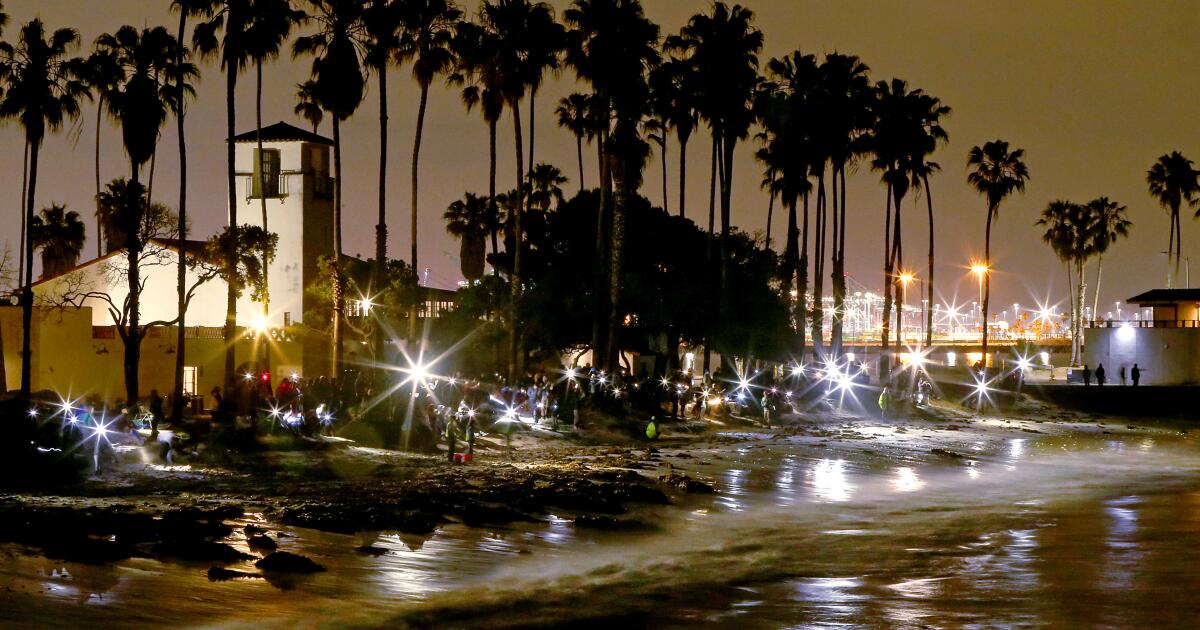
It’s time for the night trip to the beach — the grunion are running

