Vermont
Vermont Police Solve Sad 42-Year-Old Mystery


More than 40 years after some Vermont children waiting for a school bus discovered a dead baby off the side of the road, state police have announced that they found the infant’s parents and that no charges will be filed. The deceased infant was found in Northfield on April 1, 1982, per the AP. Investigators determined that the deceased baby was a recently born boy, but his identity was unknown and an autopsy was unable to determine the cause of death. Evidentiary DNA testing was not available at the time and the case remained unresolved, police said.
In 2020, state police worked with a DNA company to do a genealogical analysis, with the work funded by donations. In 2021, the company provided possible names of the baby’s biological mother and father, who had ties to the Northfield area in 1982.
- The father: Vermont State Police said they contacted the individuals at their home in Maine and obtained DNA from them, which confirmed they were the parents. The father told police he left Vermont for an extended period in 1982 and did not know about the pregnancy or disposal of the deceased baby.
- The mother: She admitted that she unlawfully disposed of the deceased infant. She said she did not know she was pregnant and did not have any symptoms until she began to feel abdominal pain. She labored alone for several hours and lost consciousness, she told police. She said when she came to, she realized she had delivered a baby but the umbilical cord was wrapped around his neck and he did not survive. She said she planned to find a spot in the woods to bury him, but while walking in the woods she thought she heard voices and got scared. She slipped and the baby fell from her arms and she ran, police said.
- No charges: State police met with the county prosecutor about the case, who determined that charges of murder were unwarranted. Charges related to the unauthorized disposal of a dead body are beyond the statute of limitations.
(More cold cases stories.)



Vermont
Hundreds of housing units in the works at closely-watched project in Burlington’s South End – VTDigger

This story, by Report for America corps member Carly Berlin, was produced through a partnership between VTDigger and Vermont Public.
A long-awaited housing development that could bring hundreds of new apartments to a series of empty lots in Burlington’s South End neighborhood is beginning to come together.
The first phase of the major public-private deal, called the South End Coordinated Redevelopment Project, got official sign-off from the Burlington City Council last month. The project’s backers have also scored key funding commitments from Treasurer Mike Pieciak’s office and state housing funding agencies.
The project on Lakeside Avenue is the beginning of “a neighborhood being born out of a big parking lot,” Burlington Mayor Emma Mulvaney-Stanak told city councilors in May.
City officials and developers hope the project could eventually include over a thousand homes, making it one of the largest developments in Vermont – and putting a considerable dent in the Queen City’s housing shortage. Regional planners estimate that Burlington needs to add between 3,500 and 10,500 homes by 2050 to get the housing market to a healthy state.
The development is possible, in part, because of a 2023 zoning change in the formerly industrial area that allows for some of the densest housing development in the state, according to local planners.
 100vw, 1200px”/><figcaption class=) A rendering of the South End Coordinated Redevelopment Project, courtesy of Andrew Foley, development director at Jonathan Rose Companies. Credit: GOA Architecture.
A rendering of the South End Coordinated Redevelopment Project, courtesy of Andrew Foley, development director at Jonathan Rose Companies. Credit: GOA Architecture.
The South End project’s backers include Champlain College, Champlain Housing Trust and Ride Your Bike LLC, the investors behind the nearby Hula coworking campus. They have brought on Jonathan Rose Companies, an affordable housing developer with projects from New York to California, as the lead developer. The South End project is the company’s first in Vermont.
The development agreement signed by city councilors in May greenlights the South End project’s first 204 units, estimated to cost roughly $100 million.
Per Burlington’s inclusionary zoning policy and state rules, at least 20% of the first round of apartments will be set aside as affordable. But the developers hope to secure enough funding to allow them to earmark a third of the 204 apartments with income restrictions, said Andrew Foley, director of development at Jonathan Rose Companies, in an interview. The development agreement offers the developers reduced city fees if the affordable units are priced even more modestly than required.
The lion’s share of the new apartments will be studios and one-bedrooms, Foley said. The building would include common social spaces for neighbors to gather, he added.
Like any large-scale housing project, the developers of the South End apartments are piecing together financing from a wide array of sources. They recently scored an $8 million low-interest loan from Pieciak’s 10% for Vermont program, along with a $6.7 million award from the Vermont Housing and Conservation Board to support 67 affordable apartments – including 10 reserved for people experiencing homelessness.
To build out new roads – along with wastewater connections and stormwater infrastructure meant to cut down on sewer overflows into nearby Lake Champlain – city officials are going after funding from a new state program. The Community and Housing Infrastructure Program, a tax-increment financing tool created by the Legislature last year, would allow the city and the developers to borrow the funds needed to build out the infrastructure against the development’s future property tax revenue.
READ MORE

City officials and the developers are working together to submit an application for this CHIP financing. The South End development could be the first project in the state to utilize the program after its launch in January.
“I think a lot of other potential applicants are kind of saying, ‘I wonder how that South End project works out’ – for us to maybe go first,” Foley said.
With an eye toward lowering the project’s carbon footprint, the development will be all-electric, Foley said. The developers are looking to use mass-timber construction techniques, he added – essentially using large, prefabricated wood panels in place of steel or concrete. They also want to construct a rooftop solar array, employ a geothermal heating and cooling system and promote a “car-light” neighborhood in close proximity to bike paths and transit routes.
The developers hope to close on their construction financing by the end of the year.
“Everyone’s eager to see the construction start and housing built, so we’re trying to move as fast as we can,” Foley said.
Powerball, Mega Millions jackpots: What to know in case you win
Here’s what to know in case you win the Powerball or Mega Millions jackpot.
Just the FAQs, USA TODAY
The Vermont Lottery offers several draw games for those willing to make a bet to win big.
Those who want to play can enter the MegaBucks and Lucky for Life games as well as the national Powerball and Mega Millions games. Vermont also partners with New Hampshire and Maine for the Tri-State Lottery, which includes the Mega Bucks, Gimme 5 as well as the Pick 3 and Pick 4.
Drawings are held at regular days and times, check the end of this story to see the schedule.
Here’s a look at June 2, 2026, results for each game:
Winning Vermont Mega Millions numbers from June 2 drawing
15-26-43-48-60, Mega Ball: 12
Check Vermont Mega Millions payouts and previous drawings here.
Winning Gimme 5 numbers from June 2 drawing
03-05-16-32-37
Check Gimme 5 payouts and previous drawings here.
Winning Pick 3 numbers from June 2 drawing
Day: 2-5-2
Evening: 5-8-6
Check Pick 3 payouts and previous drawings here.
Winning Pick 4 numbers from June 2 drawing
Day: 6-9-7-0
Evening: 3-4-1-3
Check Pick 4 payouts and previous drawings here.
Winning Millionaire for Life numbers from June 2 drawing
16-33-41-50-52, Bonus: 01
Check Millionaire for Life payouts and previous drawings here.
Feeling lucky? Explore the latest lottery news & results
Are you a winner? Here’s how to claim your lottery prize
For Vermont Lottery prizes up to $499, winners can claim their prize at any authorized Vermont Lottery retailer or at the Vermont Lottery Headquarters by presenting the signed winning ticket for validation. Prizes between $500 and $5,000 can be claimed at any M&T Bank location in Vermont during the Vermont Lottery Office’s business hours, which are 8a.m.-4p.m. Monday through Friday, except state holidays.
For prizes over $5,000, claims must be made in person at the Vermont Lottery headquarters. In addition to signing your ticket, you will need to bring a government-issued photo ID, and a completed claim form.
All prize claims must be submitted within one year of the drawing date. For more information on prize claims or to download a Vermont Lottery Claim Form, visit the Vermont Lottery’s FAQ page or contact their customer service line at (802) 479-5686.
Vermont Lottery Headquarters
1311 US Route 302, Suite 100
Barre, VT
05641
When are the Vermont Lottery drawings held?
- Powerball: 10:59 p.m. Monday, Wednesday, and Saturday.
- Mega Millions: 11 p.m. Tuesday and Friday.
- Gimme 5: 6:55 p.m. Monday through Friday.
- Lucky for Life: 10:38 p.m. daily.
- Pick 3 Day: 1:10 p.m. daily.
- Pick 4 Day: 1:10 p.m. daily.
- Pick 3 Evening: 6:55 p.m. daily.
- Pick 4 Evening: 6:55 p.m. daily.
- Megabucks: 7:59 p.m. Monday, Wednesday and Saturday.
- Millionaire for Life: 11:15 p.m. daily
What is Vermont Lottery Second Chance?
Vermont’s 2nd Chance lottery lets players enter eligible non-winning instant scratch tickets into a drawing to win cash and/or other prizes. Players must register through the state’s official Lottery website or app. The drawings are held quarterly or are part of an additional promotion, and are done at Pollard Banknote Limited in Winnipeg, MB, Canada.
This results page was generated automatically using information from TinBu and a template written and reviewed by a Vermont editor. You can send feedback using this form.

BRIDGEWATER CORNERS, Vt. (WCAX) – A Vermont brewery is living up to its name to help celebrate the outdoors.
Long Trail Brewing Company is unveiling its “Reallllly Long Trail Ale Pack” in honor of National Trails Day this weekend. They believe it will be the largest single-unit commercially available beer package in the country.
The design for the packaging is 273 centimeters long, reflecting the 273-mile Long Trail that cuts through the length of Vermont. It also holds 168 beers and needs three people just to carry it. The brewery’s Jordan Kellem hopes it can encourage people to, as they say, “Take a Hike!”
“We’ve been brewing beer for a long time, and it’s increasingly more difficult to stand out. And at the end of the day, we have to remind ourselves we’re in the beer industry and it’s a fun industry to be a part of, so we want to have some fun and do what we do,” Kellem said.
They’re also giving back with $15,000 in donations to local trail systems across the state.
National Trails Day is Saturday, June 7.
Copyright 2026 WCAX. All rights reserved.
-

 Technology16 seconds ago
Microsoft Is Pulling the Plug on Publisher This Fall. These 8 Alternatives Prove You Don't Need It
-

 World7 minutes ago
Trump expands Cuba sanctions beyond US companies in major crackdown on foreign enablers
-

 Politics10 minutes ago
Bessent flips script on Dem senator with reminder about his son’s past ties to Epstein
-

 Health22 minutes ago
New ways to prevent flu revealed in ‘accidental’ lab breakthrough, study finds
-

 Sports25 minutes ago
Russell Wilson announces retirement from NFL after 14 seasons
-

 Technology30 minutes ago
Dark web monitoring: does it put your data at risk?
-
 Business37 minutes ago
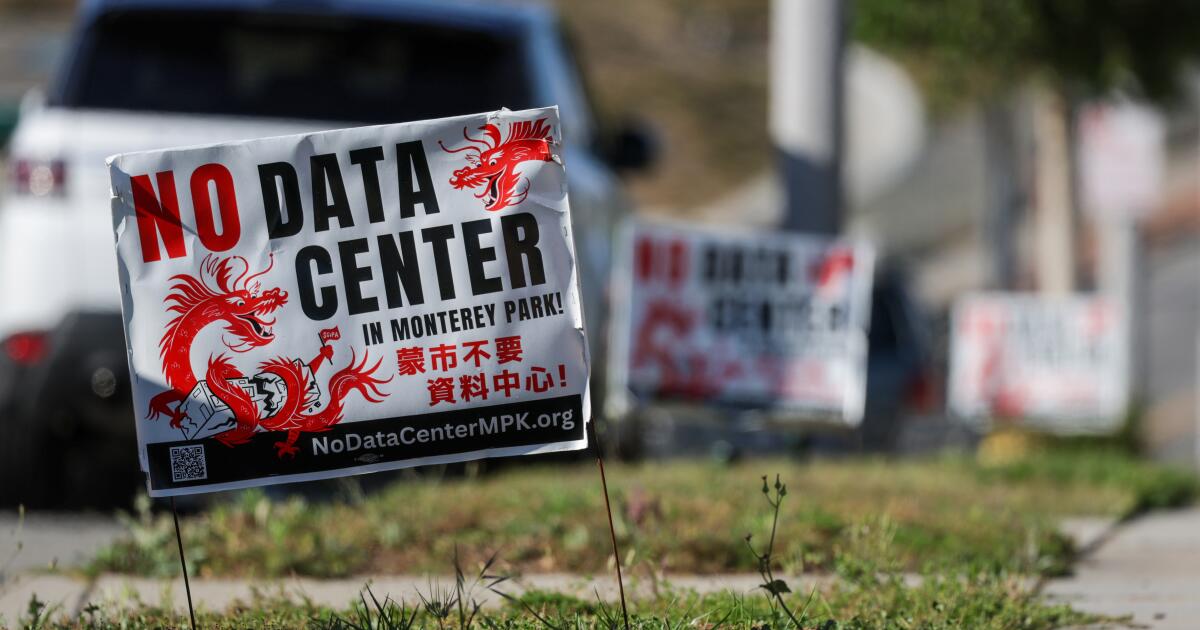
In a first for the country, voters in Monterey Park ban data centers
-
 Entertainment40 minutes ago
Review: Muscling past a flat script, a big-screen ‘Masters of the Universe’ embraces its own silliness

