Connect with us

Finance

Consumers can now get refunds from Buy Now, Pay Later loans, CFPB says

Published

on

Consumers can now get refunds from Buy Now, Pay Later loans, CFPB says

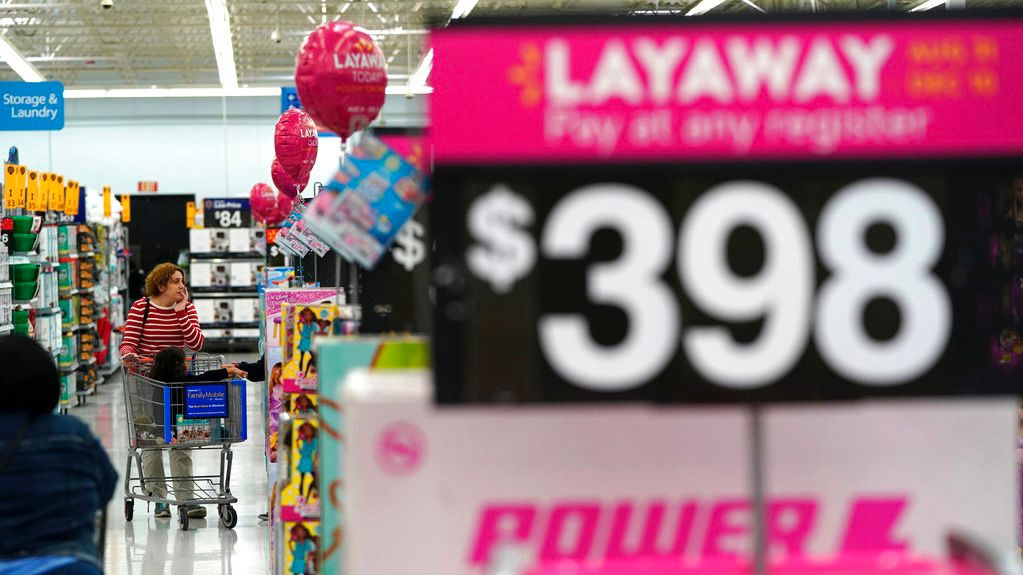
Buy Now, Pay Later programs are effectively the same as credit cards, the Consumer Financial Protection Bureau said Wednesday.

In what it called an interpretive rule, the federal consumer watchdog agency said so-called BNPL lenders are obligated to offer refunds and allow users to dispute charges just like they can with traditional credit cards.


What You Need To Know

  • The Consumer Financial Protection Bureau says Buy Now, Pay Later programs are subject to the same rules as credit cards
  • BNPL lenders are obligated to offer refunds and allow users to dispute charges just like they can with traditional credit cards
  • The CFPB said BNPL programs fall under the purview of the Truth in Lending Act
  • About 14% of U.S. adults said they used BNPL programs in 2023, according to a new survey from the Federal Reserve

“When consumers check out and choose Buy Now, Pay Later, they don’t know if they will get a refund if they return their product or whether the lender will help them if they didn’t get what was promised,” Consumer Financial Protection Bureau Director Rohit Chopra said in a statement.

“Regardless of whether a shopper swipes a credit card or uses Buy Now, Pay Later, they are entitled to important consumer protections under longstanding laws and regulations already on the books.”

The CFPB said it has been investigating the BNPL industry for more than two years and often receives complaints about refunds and disputed transactions in such programs. About 13% of BNPL transactions involve a dispute or return, the agency said.

Advertisement

BNPL programs that let customers pay for products over time without paying interest have grown in recent years. A new Federal Reserve Economic Well-Being of U.S. Households report released this week said 14% of U.S. adults reported using Buy Now, Pay Later programs last year — a 2% increase compared with 2022.

Consumers’ top reasons for using BNPL were wanting to spread out payments (87%) and convenience (82%). More than half of BNPL users said it was the only way they could afford to buy what they did.

The CFPB said BNPL programs are advertised as a payment option at checkout, similar to credit cards. They work as digital accounts that link to a company’s web site or mobile app. Merchants are charged transaction fees, similar to credit cards.

The CFPB said BNPL programs fall under the purview of the Truth in Lending Act, requiring lenders to investigate disputes initiated by consumers and pause payments while they are investigated. The act also ensures lenders credit refunds to consumer accounts and provide billing statements.

“President Biden has encouraged his Administration to do everything possible to crack down on corporate rip-offs,” National Economic Council Deputy Director Jon Donenberg said in a statement about the rule. “The Consumer Financial Protection Bureau is answering that call by making sure Buy Now, Pay Later platforms abide by the law, including providing refunds when products are returned or not delivered.”

Advertisement

The interpretive rule comes less than a week after the Supreme Court preserved the current funding structure for the agency, which was established during the Obama administration to enforce federal protections for consumer financial products.

Finance

Where in California are people feeling the most financial distress?

Published

on

Where in California are people feeling the most financial distress?

Inland California’s relative affordability cannot always relieve financial stress.

My spreadsheet reviewed a WalletHub ranking of financial distress for the residents of 100 U.S. cities, including 17 in California. The analysis compared local credit scores, late bill payments, bankruptcy filings and online searches for debt or loans to quantify where individuals had the largest money challenges.

When California cities were divided into three geographic regions – Southern California, the Bay Area, and anything inland – the most challenges were often found far from the coast.

The average national ranking of the six inland cities was 39th worst for distress, the most troubled grade among the state’s slices.

Bakersfield received the inland region’s worst score, ranking No. 24 highest nationally for financial distress. That was followed by Sacramento (30th), San Bernardino (39th), Stockton (43rd), Fresno (45th), and Riverside (52nd).

Advertisement

Southern California’s seven cities overall fared better, with an average national ranking of 56th largest financial problems.

However, Los Angeles had the state’s ugliest grade, ranking fifth-worst nationally for monetary distress. Then came San Diego at 22nd-worst, then Long Beach (48th), Irvine (70th), Anaheim (71st), Santa Ana (85th), and Chula Vista (89th).

Monetary challenges were limited in the Bay Area. Its four cities average rank was 69th worst nationally.

San Jose had the region’s most distressed finances, with a No. 50 worst ranking. That was followed by Oakland (69th), San Francisco (72nd), and Fremont (83rd).

The results remind us that inland California’s affordability – it’s home to the state’s cheapest housing, for example – doesn’t fully compensate for wages that typically decline the farther one works from the Pacific Ocean.

Advertisement

A peek inside the scorecard’s grades shows where trouble exists within California.

Credit scores were the lowest inland, with little difference elsewhere. Late payments were also more common inland. Tardy bills were most difficult to find in Northern California.

Bankruptcy problems also were bubbling inland, but grew the slowest in Southern California. And worrisome online searches were more frequent inland, while varying only slightly closer to the Pacific.

Note: Across the state’s 17 cities in the study, the No. 53 average rank is a middle-of-the-pack grade on the 100-city national scale for monetary woes.

Jonathan Lansner is the business columnist for the Southern California News Group. He can be reached at jlansner@scng.com

Advertisement
Continue Reading

Finance

Why Chime Financial Stock Surged Nearly 14% Higher Today | The Motley Fool

Published

on

Why Chime Financial Stock Surged Nearly 14% Higher Today | The Motley Fool

The up-and-coming fintech scored a pair of fourth-quarter beats.

Diversified fintech Chime Financial (CHYM +12.88%) was playing a satisfying tune to investors on Thursday. The company’s stock flew almost 14% higher that trading session, thanks mostly to a fourth quarter that featured notably higher-than-expected revenue guidance.

Sweet music

Chime published its fourth-quarter and full-year 2025 results just after market close on Wednesday. For the former period, the company’s revenue was $596 million, bettering the same quarter of 2024 by 25%. The company’s strongest revenue stream, payments, rose 17% to $396 million. Its take from platform-related activity rose more precipitously, advancing 47% to $200 million.

Image source: Getty Images.

Meanwhile, Chime’s net loss under generally accepted accounting principles (GAAP) more than doubled. It was $45 million, or $0.12 per share, compared with a fourth-quarter 2024 deficit of $19.6 million.

Advertisement

On average, analysts tracking the stock were modeling revenue below $578 million and a deeper bottom-line loss of $0.20 per share.

In its earnings release, Chime pointed to the take-up of its Chime Card as a particular catalyst for growth. Regarding the product, the company said, “Among new member cohorts, over half are adopting Chime Card, and those members are putting over 70% of their Chime spend on the product, which earns materially higher take rates compared to debit.”

Chime Financial Stock Quote

Today’s Change

(12.88%) $2.72

Current Price

$23.83

Advertisement

Double-digit growth expected

Chime management proffered revenue and non-GAAP (adjusted) earnings before interest, taxes, depreciation, and amortization (EBITDA) guidance for full-year 2026. The company expects to post a top line of $627 million to $637 million, which would represent at least 21% growth over the 2024 result. Adjusted EBITDA should be $380 million to $400 million. No net income forecasts were provided in the earnings release.

It isn’t easy to find a niche in the financial industry, which is crowded with companies offering every imaginable type of service to clients. Yet Chime seems to be achieving that, as the Chime Card is clearly a hit among the company’s target demographic of clientele underserved by mainstream banks. This growth stock is definitely worth considering as a buy.

Advertisement
Continue Reading

Finance

How young athletes are learning to manage money from name, image, likeness deals

Published

on

How young athletes are learning to manage money from name, image, likeness deals

ROCHESTER, N.Y. — Student athletes are now earning real money thanks to name, image, likeness deals — but with that opportunity comes the need for financial preparation.

Noah Collins Howard and Dayshawn Preston are two high school juniors with Division I offers on the table. Both are chasing their dreams on the field, and both are navigating something brand new off of it — their finances.

“When it comes to NIL, some people just want the money, and they just spend it immediately. Well, you’ve got to know how to take care of your money. And again, you need to know how to grow it because you don’t want to just spend it,” said Collins Howard.


What You Need To Know

  • High school athletes with Division I prospects are learning to manage NIL money before they even reach college
  • Glory2Glory Sports Agency and Advantage Federal Credit Union have partnered to give young athletes access to financial literacy tools and credit-building resources
  • Financial experts warn that starting money habits early is key to long-term stability for student athletes entering the NIL era


Preston said the experience has already been eye-opening.

“It’s very important. Especially my first time having my own card and bank account — so that’s super exciting,” Preston said.

Advertisement

For many young athletes, the money comes before the knowledge. That’s where Glory2Glory Sports Agency in Rochester comes in — helping athletes prepare for life outside of sports.

“College sports is now pro sports. These kids are going from one extreme to the other financially, and it’s important for them to have the tools necessary to navigate that massive shift,” said Antoine Hyman, CEO of Glory2Glory Sports Agency.

Through their Students for Change program, athletes get access to student checking accounts, financial literacy courses and credit-building tools — all through a partnership with Advantage Federal Credit Union.

“It’s never too early to start. We have youth accounts, student checking accounts — they were all designed specifically for students and the youth,” said Diane Miller, VP of marketing and PR at Advantage Federal Credit Union.

The goal goes beyond what’s in their pocket today. It’s about building habits that will protect them for life.

Advertisement

“If you don’t start young, you’re always catching up. The younger you start them, the better off they’re going to be on that financial path,” added Nihada Donohew, executive vice president of Advantage Federal Credit Union.

For these athletes, having the right support system makes all the difference.

“It’s really great to have a support system around you. Help you get local deals with the local shops,” Preston added.

Collins-Howard said the program has given him a broader perspective beyond just the game.

“It gives me a better understanding of how to take care of myself and prepare myself for the future of giving back to the community,” Collins-Howard said.

Advertisement

“These high school kids need someone to legitimately advocate their skills, their character and help them pick the right space. Everything has changed now,” Hyman added.

NIL opened the door. Programs like this one make sure these athletes walk through it — with a plan.

Continue Reading

Trending