Connect with us

Northeast

NY judge tosses order restricting transgender players from using county-run parks

Published

on

NY judge tosses order restricting transgender players from using county-run parks

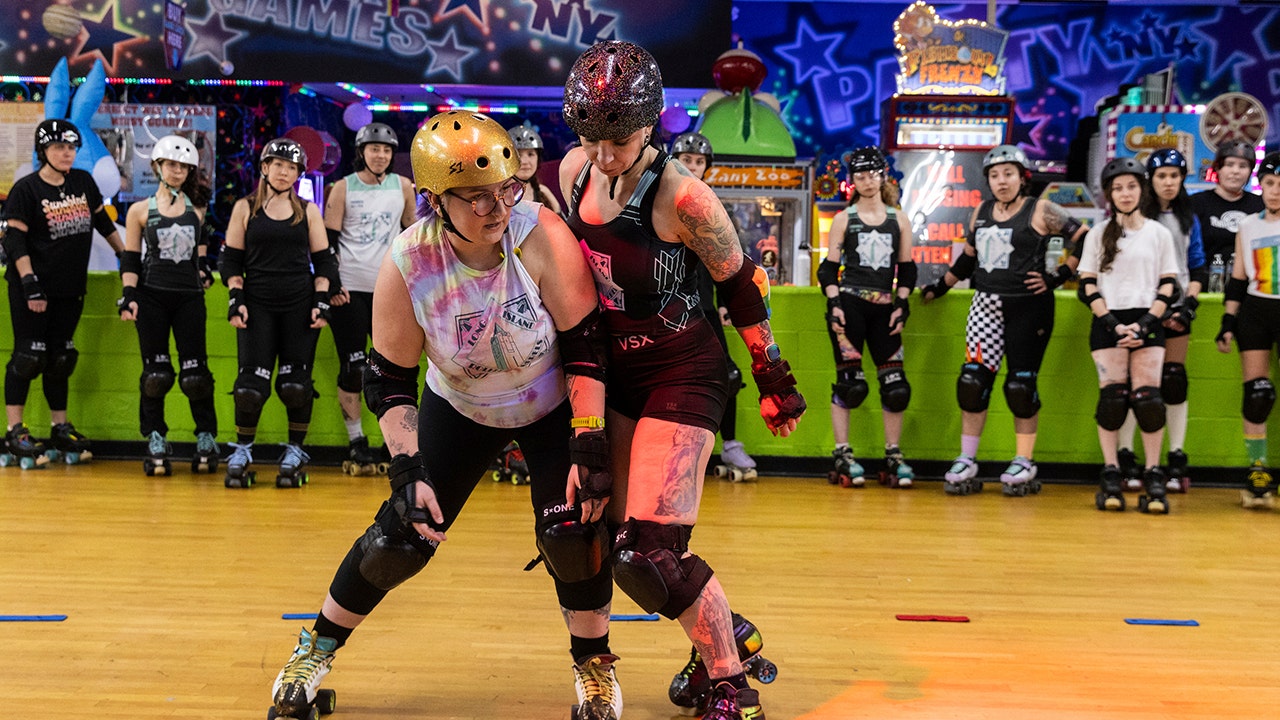
An order restricting transgender athletes from using county-run parks and fields in Long Island, New York, was struck down by a judge on Friday after it was challenged by a roller derby league.  

Nassau County Executive Bruce Blakeman issued an executive order in February denying park permits to any women’s and girl’s teams, leagues or organizations that allow female transgender athletes to participate. Blakeman held a news conference in March with Caitlyn Jenner, the Olympic gold medalist for the men’s decathlon in 1976 prior to a gender transition, who endorsed the ban.

Blakeman’s reasoning for the executive order stemmed from his effort to ensure female athletes could compete in their respective sports fairly, but Judge Francis Ricigliano ruled that he didn’t have the authority to issue the order.

SURF LEGEND BETHANY HAMILTON RIPS CALIFORNIA OFFICIALS AFTER COMPETITION REVERSES STANCE ON TRANS ATHLETES

Members of the Long Island Roller Rebels, practice skills on March 19, 2023, at United Skates of America in Seaford, New York. (AP Photo/Jeenah Moon)

Advertisement

In his 13-page decision, Ricigliano, wrote that Blakeman’s order was aimed at preventing transgender women from participating in girls’ and women’s athletics in county parks, “despite there being no corresponding legislative enactment” providing him with such authority.

“In doing so, this Court finds the County Executive acted beyond the scope of his authority as the Chief Executive Officer of Nassau County,” Ricigliano wrote.

The league’s lawsuit was backed by the New York Civil Liberties Union, which said the decision overturned a harmful policy that attempted to “score cheap political points by peddling harmful stereotypes about transgender women and girls.”

“This is a huge victory for all trans people in Nassau, especially our plaintiffs @LIRollerRebels,” the NYCLU wrote on X, formerly Twitter. 

“This decision sends a strong message that transphobic discrimination cannot and will not stand. We are gratified that the court saw this order for what it was: a harmful, hateful policy that has no place in New York.”

Advertisement

OREGON HIGH SCHOOL TRANSGENDER RUNNER PUTS TOGETHER FAST TIMES AGAINST GIRLS IN SEMIS, SPARKS OUTRAGE

Caitlin Carroll, right, demonstrates skills on Tuesday, March 19, 2023, at United Skates of America in Seaford, N.Y.

Blakeman dismissed the judge’s decision as one that didn’t address the merits of the case. The ruling doesn’t delve into the civil rights arguments raised by both sides, instead focusing on the limitations of the county executive’s powers.

“Unfortunately girls and women are hurt by the court,” he wrote in an emailed statement to The Associated Press.

The Roller Rebels were one of those teams looking for a permit for the county-owned rinks. The league allows anyone who identifies as a woman, and one transgender player is already on their roster. 

Advertisement

State Attorney General Letitia James had previously called for Nassau County to rescind the order, saying anti-discrimination laws are being violated.

Caitlyn Jenner supported the measure. (AP Photo/Noah Berger)

She said that Friday’s ruling is a “major victory.” 

“In New York, it is illegal to discriminate against a person because of their gender identity or expression…My office will keep working to ensure every New Yorker is free to be who they are.”

Advertisement

The issue involving trans women in women’s sports adds to the national discussion surrounding one of the most controversial topics in sports.

Fox News’ Scott Thompson and The Associated Press contributed to this report. 

Read the full article from Here

Continue Reading
Click to comment

Leave a Reply

Your email address will not be published. Required fields are marked *

This site uses Akismet to reduce spam. Learn how your comment data is processed.

Connecticut

New Haven’s Chapel Street shift from one-way to two-way traffic brings confusion, concerns

Published

on

New Haven’s Chapel Street shift from one-way to two-way traffic brings confusion, concerns


Pedestrians dash across Chapel Street where a new two-way traffic pattern has opened between College and York Streets in New Haven, Conn., Thursday, April 23, 2026.

Dave Zajac/Hearst Connecticut Media

NEW HAVEN — Lucy Ballester, the owner of Soap-Edi on Chapel Street in New Haven, said she initially wanted the stretch of the road between in front of her shop to open to two-way traffic. 

Advertisement

She thought the change would bring more customers to her business, which sells bath bombs, soaps and lotions. 

Article continues below this ad

“Now it’s kind of harder for them to get here,” Ballester said, who has been in the space for four years. 

Chapel Street, between College Street and York Street, was converted from one-way traffic to two-way traffic starting April 20. The change is part of a broader effort to improve the safety of Chapel Street, one of New Haven’s longest, busiest and most crash-prone arteries.

Chapel Street goes through at least seven neighborhoods stretching from Fair Haven in the east through Mill River, Wooster Square, Downtown, Dwight and Edgewood, West River and Westville.

On April 23, though, New Haven crossing guards manned crosswalks, guiding pedestrians across the street and stopping traffic. Police officers sat in cars on the corners of Chapel Street where traffic change happened to make sure people weren’t driving in the wrong lane. 

Advertisement

Article continues below this ad

One police officer said he saw 10 people drive in the wrong lane on April 22. By around 11:50 a.m. on April 23, he said he saw four people who drove in the wrong lane. He added a fifth one just moments later when a blue pickup truck turned from College Street into the wrong lane on Chapel Street. 

The police officer laid on the horn at the driver. 

Ballester said there’s more traffic and it is more difficult to get to and leave her shop. She also said her customers said they have to park further away to get to her. She lives in Hamden and usually Ubers to her store or she’ll sometimes drive with her husband.

“I literally don’t even want to deal with it,” Ballester said. 

Advertisement

Article continues below this ad

Ballester said she lost parking spots in front of her store to a loading space, where a truck was unloading food on April 23. 

“(The traffic) just makes the drivers angry,” Ballester said. “Just makes everybody upset.”

Balester said before there was “flow” and the cars were moving more, but now the street is congested. 

Bryn McGuire, who lives in Clinton and drives to New Haven to attend classes at Gateway Community College, said the street seems “more calm” than he remembered it being. He said he’s been visiting New Haven for more than 20 years now. 

Advertisement

Article continues below this ad

“That’s what I’d certainly like to see if it makes it more convenient to get around here, that’s great,” McGuire said. “But I think it’s very much a wait and see.”

He said he wanted to see more pedestrian infrastructure, such as bike lanes. 

Plans call for Chapel Street, which already is a two-way street from Fair Haven to College Street, eventually to be open to two-way traffic all the way to Ellsworth Avenue, where it currently becomes two-way as it crosses Ella T. Grasso Boulevard into Westville.

The announcement came just over a year and a half after New Haven Mayor Justin Elicker, joined by U.S. Sen. Richard Blumenthal, D-Conn., and U.S. Rep. Rosa DeLauro, D-3, announced an $11 million federal grant for the “Chapel Street Safe Streets Project.”

Advertisement

Article continues below this ad

At the time of the announcement, nearly 900 accidents had taken place over four years along Chapel Street between State Street and Ella T. Grasso Boulevard, including three fatalities and 18 serious injuries, according to the University of Connecticut’s Connecticut Crash Data Repository, officials said at the time.

This story includes reporting by staff writer Mark Zaretsky. 


Source link

Advertisement
Continue Reading

Maine

Southern Maine’s 5 boys track teams to watch​

Published

on

Southern Maine’s 5 boys track teams to watch​


South Portland’s Devin Berry, right, and Matthew Berry fly over a hurdle during a 110-meter hurdles heat at the Class A championships in Lewiston last June. Devin Berry is the top returning 110 hurdler in the state. (Russ Dillingham/Staff Photographer)

1. South Portland

South Portland has won the past two Class A outdoor track and field championships — and the most recent indoor title — with a similar recipe. The Red Riots have had one or two individuals who can win events, sometimes multiple events, and then lots of quality depth. They appear to have the same combo working this spring, and that’s why they’re the favorites to three-peat. Bossay Ditanduka emerged this winter as one of the state’s top sprinters. He’s a top-three contender in the 100, 200, 400 and long jump. Devin Berry is Class A’s top returning 110-meter hurdler. Michael Lawlor, a senior, has been a key component to each championship as an 800-meter specialist (third at indoor states this winter) and relay runner. Coach Dave Kahill expects points to come in the hurdles from Caleb Ramsell (also a high jumper and triple jumper), Isaac Arey and Gabe Babineau. Ramsell and Arey were fifth and sixth in the indoor hurdles. Ambrosio Mputu (third indoors in 55), Jared LaRose (also high jump and pole vault), Lamed Khelendende and Remy Kiala add sprint depth. Senior race walker Folsom Lamer and junior Anthony Nielsen (sixth indoors in 800) are scoring threats. Lewiston is South Portland’s highest-rated challenger.

2. Portland

The Bulldogs were fifth last year in Class A and graduated some top performers, like 1,600-meter champ Aran Johnson. It’s unlikely this year’s team will have an individual state champion, but it does have seven returners who have placed at a state meet in Brinelle Kubelo (sixth in 110 hurdles), Aziz Mohamed (fifth outdoors and indoors in 400), Liam Alexander (fifth indoors and outdoors in 800), Owen Blades (seventh outdoors in 800), Cordell Jones (fourth in high jump), Ben Mbongo (eighth indoors and outdoors in long jump), and Griffin Lavertu (1,600 relay). Coach Frank Myatt thinks freshman Josh Muanda (fourth indoors in 400) will be a factor in the sprints. The 3,200 relay team won the event indoors and is the defending outdoor champ.

3. Greely

Coach David Dowling points out that the Rangers graduated four multi-event scorers from last year’s team that won the Class B title by 26 points over Lincoln Academy. So a runaway win probably won’t happen, but Greely did claim this year’s indoor crown and has proven returners. Kannon Crocker won the Class B title in 200 and placed in hurdles. Sophomore Jackson Walton was the indoor long jump champ and sixth in the 200. Those two were on Greely’s second-place 400 relay team last spring. Pole vault should also be a strength, with seniors Nate Kim and Camden Wengler, who were third and sixth indoors after placing fifth and sixth outdoors in 2025. Greely showed its depth by winning the indoor 800 relay and placing second in the 3,200 relay.

Advertisement

4. Bonny Eagle

Deering and Gorham are also in the Class A mix to be a top-five team, but we give a slight edge to the Scots’ well-rounded quality. Junior sprinter Drew Gervais is a threat to win both the 100 and 200, with the top time among returnees in both events. Junior shot putter Wyatt Cyr is coming off a second-place showing indoors with a best throw over 53 feet. He will also compete in discus. Senior Caden Cooper has the third-best returning Class A time in the 300 hurdles. Sophomore Ben Havu is an emerging talent in the javelin (No. 2 Class A returner) and triple jump. Dom Metayer (race walk) and Parker Moore (800 and 1,600) are also scoring threats. The sprint relays look strong. Hurdles and jumps are an area to improve.

5. Freeport

The Falcons placed fifth in Class B last spring and second at this winter’s indoor championship. While Greely’s strength is in the sprints, the Falcons have an excellent distance program led by senior Alex Gilbert, who will likely run the 800, 1,600 and 3,200 at the state meet and place in the top three in each — with wins possible at the longer distances. Junior Ian Guzman won the 800 indoors. Brady Webber is a likely scorer in the hurdles and high jump. Tyler Burns was fifth in the indoor triple jump. Senior Jack Brogan is new to outdoor track after placing third in the indoor 400. Senior Dietrick Schulz qualified for states and finished in the top 12 in both shot put and discus last spring.


Source link

Advertisement
Continue Reading

Massachusetts

Massachusetts tops U.S. in AI job loss risk, Tufts report says

Published

on

Massachusetts tops U.S. in AI job loss risk, Tufts report says


Technology

A new report estimates 7.35% of jobs in Massachusetts are at risk of displacement from artificial intelligence, the highest share in the nation.

Aerials of Seaport District always in a growth mode of construction. (David L Ryan/Globe Staff)

A new Tufts University study finds that Massachusetts is the most vulnerable state in the nation to job disruption from artificial intelligence — a shift researchers say could reshape the state’s workforce and economy.

The report, “Will Wired Belts Become the New Rust Belts? AI and the Emerging Geography of American Job Risk,” released in March, estimates that 7.35% of jobs in Massachusetts are at risk of displacement in the near term due to artificial intelligence, the highest among U.S. states. Boston, one of the nation’s leading innovation hubs, is also among the most exposed cities, with an estimated $20 billion in annual income losses tied to AI-driven job disruption. 

Advertisement

“The jobs loss will be among more educated, typically higher-paying jobs,” said Christina Filipovic, head of research at Digital Planet, the research center at Tufts’ Fletcher School that completed the study. That distinction marks a stark departure from past waves of automation, which primarily displaced lower-wage, manual labor workers.

Which jobs are most at risk? 

The report finds that AI exposure — or how much AI tools can reach or influence a job — is highest in occupations centered around data, analytical or language-based skills, and cognition — the same kinds of knowledge work that dominate Boston’s economy. 

AI job vulnerability, by comparison, goes a step further: it measures how likely AI exposure will lead to job loss or major restructuring.

Highly vulnerable roles in Greater Boston include: software developers, market research analysts and marketing specialists, management analysts, and customer service representatives. Software developers alone could see more than 12,700 jobs affected in the Greater Boston region.

Bhaskar Chakravorti, dean of global business at The Fletcher School, describes the moment as a paradox: “The occupations that are seeing the greatest productivity boosts are also the occupations that are seeing the greatest job risk, and Boston is high in all those areas,” he said.

“Boston is really interesting. It’s almost a Petri dish for how AI is going to increase productivity and also potentially change the way people do work and maybe displace a certain proportion of people,” Chakravorti said.

Advertisement

On the other end, jobs least exposed to AI include roles like cement masons and concrete finishers, cooks, ship engineers, and ambulance drivers — positions that rely more on physical labor than cognitive tasks.

Why Massachusetts stands out

Researchers point to the structure of Massachusetts’ economy as a key reason for its high exposure. The state’s concentration of universities, tech firms, and innovation mean a large share of workers are employed in highly educated, knowledge-based roles susceptible to AI.

“In addition to the high education levels, Boston in particular is such an innovative city … a lot of the tech industry that’s in the area makes Massachusetts a bit more vulnerable,” Filipovic said.

Chakravorti added that the region’s role as a hub for education and research puts it at the center of the transition.

“Boston right now is at the cutting edge of figuring out how much AI to use in the classroom in order to prepare students for jobs that are going to include and involve AI,” he said.

Advertisement

A warning sign for the nation

The implications of AI’s arrival extend far beyond Massachusetts. 

The report estimates that nationwide, between 9.3 million and 19.5 million jobs are at risk of being replaced by AI, with up to $1.5 trillion in annual income loss.

The report identified a group of “Wired Belt” regions — including cities like Philadelphia, Atlanta and Phoenix — that could face similar job disruptions.

“In many ways, Boston is a canary in the coal mine, and we’ll see similar things playing out in knowledge-intensive cities,” Chakravorti said.

The researchers say the goal of the report is not just to measure risk, but to prompt legislative and societal action.

Advertisement

“What we were most curious about was the nature of job loss … and then also to help policymakers at various levels figure out what the best path is forward,” Filipovic said.

Chakravorti was more blunt about the urgency for the city and state to meet the moment.

“We are watching this hurricane hit us … and we are largely sitting on our hands in terms of doing something about it,” he said.

Profile image for Annie Jonas

Annie Jonas is a Community writer at Boston.com. She was previously a local editor at Patch and a freelancer at the Financial Times.

Sign up for the Today newsletter

Get everything you need to know to start your day, delivered right to your inbox every morning.


Source link

Advertisement
Continue Reading
Advertisement

Trending