Lifestyle
With a new jewelry line, Aleali May is designing mini monuments to the self

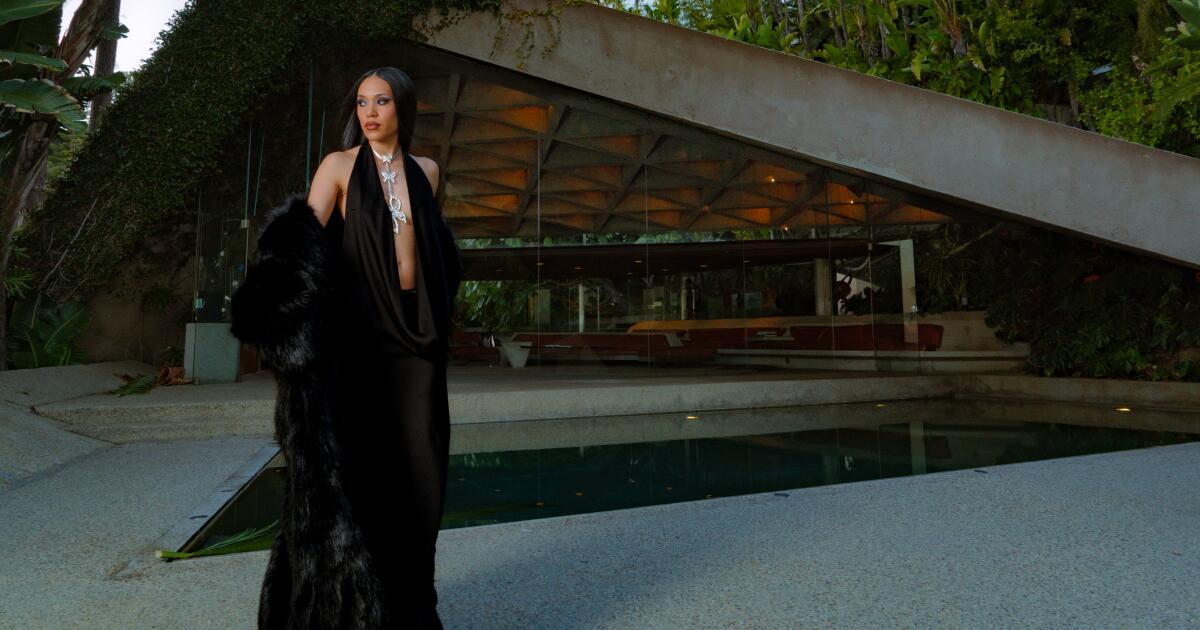
Aleali May loves an Easter egg. And at Paris Fashion Week last year, it was unmissable: a giant, gleaming butterfly hanging above her solar plexus at the Louis Vuitton men’s show by Pharrell Williams. A butterfly is known for its transformative qualities, is symbolic for its hero’s journey — starting as one thing and going through pain and darkness to come out the other side something bigger and more beautiful. The piece is part of a collection, which May designed as the first drop from lab-grown diamond company GRWN, called Metamorphosis. “[It’s] me evolving in the space of jewelry, and me just evolving, honestly,” the creative director and designer says. “This is a moment.”
An obvious centerpiece of the Metamorphosis collection is a choker with a line of three large butterflies dropping down toward the belly button, the last and largest being the size of a child’s hand and positioned at an angle — every inch of the piece decked out in lab-grown diamonds. There is also a smaller necklace that is no less ornate or extravagant: a large butterfly hanging at the tip of one of its wings from a cartoonishly large cable chain worn close to the clavicle. A bracelet is designed in the same vein, featuring a similar large cable chain with blueberry-sized butterfly charms dangling from it. There is a ring that takes up half the space of a finger, going past the knuckle with small butterflies flying throughout its frame. The collection has eight pieces total, including necklaces, hoops, studs, rings, bracelets and lariats, set in sterling silver and recycled 18-karat gold.
Aleali May is the creative director behind a new lab-grown diamond company, GRWN. “[It’s] me evolving in the space of jewelry, and me just evolving, honestly,” she says of her first collection, called Metamorphosis. “This is a moment.”
“Growing up as a young kid of color, hip-hop raised me. I’m thinking gaudy. I’m also thinking simple.”
— Aleali May
May wanted the pieces to feel nostalgic and, essentially, for the girls. She called upon her fashion foremothers — Foxy Brown, Lil’ Kim — taking inspiration from music videos of the late ’90s and early 2000s. Back then, more was more. “Quiet luxury” wasn’t a phrase in our popular consciousness yet — it was all about the drip. “Growing up as a young kid of color, hip-hop raised me,” May says. “I’m thinking gaudy. I’m also thinking simple.”
May tapped her streetwear background to bring a collaborative energy to GRWN. At this point, she’d not only been the architect of her own looks for years — from her days working at iconic concept shop RSVP Gallery in Chicago to 424 on Fairfax — she’d also made streetwear history, becoming the first woman to design a unisex sneaker with Jordan and only the second woman to ever design a sneaker with the brand. Over the last few years, she also started her own line of basics, called Mayde, and collaborated on collections with major brands including Vanson Leathers and Clarks, in addition to working with Sheron Barber Atelier on a collection of diamond-shaped purses, plus a line with jewelry designer Martine Ali.
In her first meeting with the founders of GRWN, father and son Michael and Jordan Pollak, May remembers asking for a sign from the universe. The fact that their first names combined were “Michael Jordan’’ was a detail that was not lost on her. In her conversations with the brand, May felt like these were people who wanted to “build the youth.” It was evoking the education she received while working with Don C and Virgil Abloh at RSVP Gallery, about presenting luxury in a new way. She was interested in the sustainability aspect, and the fact that it was a luxury brand that wanted to connect with people investing in their first major piece of jewelry resonated. (Lab-grown diamonds are a fraction of the price of mined diamonds and, according to the International Gem Society, have less negative impact on the environment. The pieces in the Metamorphosis collection range from $525 to $5000.) The brand’s first collaboration, coming in June, is with online men’s fashion retailer MAD. And though May is tight-lipped about who GRWN will be working with the rest of the year, she says its collaborators are “very much like ourselves: disruptors in a very old industry.”
May’s creative process when designing a necklace or a ring isn’t that different from designing a sneaker — at least not energetically. It all boils down to the unfolding of a narrative. She brings up her Air Jordan 14 Retro Low SP “Fortune” shoe, in which the gold and jade elements were inspired by the first piece of jewelry given to her by her Fillipina grandmother when she was growing up. The shoes feature an all-over sandy suede, with gold and jade accents on the shank plate and outsole. “The story behind the [Air Jordan] 14 is that [the silhouette and design is] based off of Ferrari. Men, when they think of luxury, it’s riding a car. What’s luxe for women? Usually jewelry,” says May.
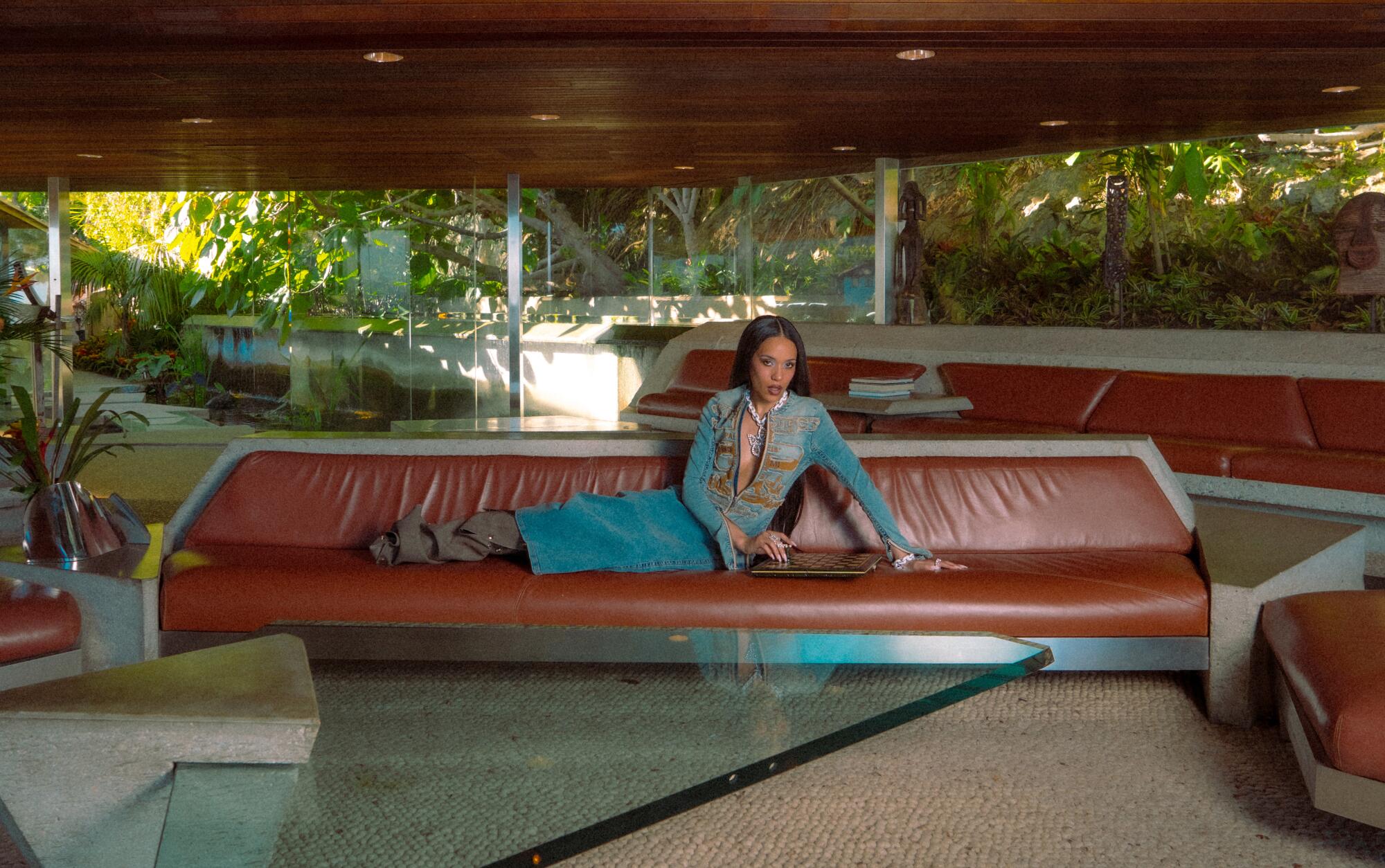
May wears Y/Project dress and shoes and GRWN accessories.
There was an episode of May’s now-defunct web series for Complex, “Get It Together,” where the designer goes to Slauson Super Mall with designer Melody Ehsani. In one scene, she and Ehsani look out over the glass at the iconic L.A. Gold stall, and May paraphrases a quote from one of her favorites, Pimp C, in his intro to the Jay-Z and Rick Ross song “F*ckwithmeyouknowigotit”: “We love these things because we used to be kings and queens.” She’s referring to the glowing gold in the display. To a young Black girl in L.A., this was luxury. To shine not only felt essential, but it was tradition. There are specific pieces May has been wearing for years that we’ve all come to recognize, like the gold Rolex chain with the “A” at the center, made by her jeweler James V Ta in Chinatown. “Being from South Central, if you know ’hood politics, you know that a Rolex chain represents something,” she says.
Working with the GRWN team, May wanted the pieces to be reflective of her and her people — the way her contemporaries shop, the way they accessorize, the way they move were all important considerations in the process. “Growing up in L.A., we always would have stuff from the swap meet,” says Tyler Adams, May’s longtime friend and collaborator turned manager. “That’s just kind of a rite of passage here. You get your name plates, or bamboos, or rings. You’ll get things passed down from your grandparents or your mom or your dad. But she’s always had a crazy jewelry stack. She was wearing the Hermès Clic Clac H bracelets when we were mobbing around, the Cartier Love bracelets. You figured out what jobs you had to do, how you could trade up and get these kinds of things. With [the] culture and industry that we work in, you move into cooler diamond pieces, but she’s always had a jewelry thing.”
Over time, jewelry becomes part of our bodies, like the mole that mysteriously appeared on your chest in your early 30s. I haven’t taken my white gold “JUJU” nameplate off since the day I got it, years and years ago. I can’t imagine a day when I won’t shower with it, go to the gym with it or sleep with it. It’s become part of my identity, a physical feature that’s as illustrative of my essence as my curly hair. A piece of jewelry, when worn especially close, tells our story for us. You know someone’s name, relationship status, religious affiliation and neighborhood or origin from the letters on their nameplate, which finger their ring sits on or the style of chain sandwiched between their necklines. No words necessary.
In May’s first collection for GRWN, you can see a reflection of where the designer is now. “And obviously I was like, let’s get icy,” she says.

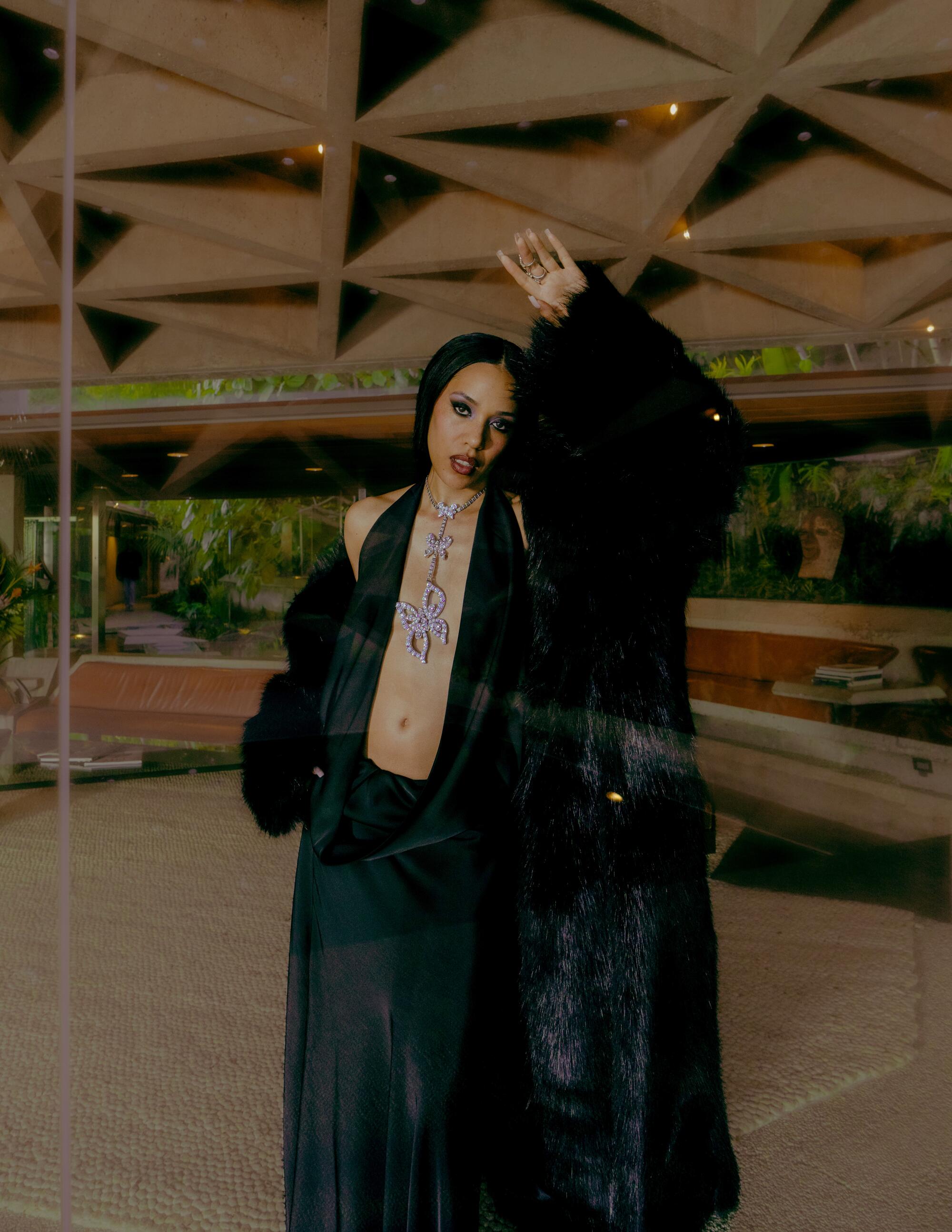
May tends to design things we live in and identify with — sneakers, leather jackets and, now, jewelry.
We’re sitting in the lobby of the 1 Hotel in West Hollywood when I ask Aleali May about her Saturn return. There is a constant hum of people typing on their computers around us while men wearing baseball caps, joggers and long-cut thin cotton tees (the outfit version of a Tesla) pace in circles taking business calls. When May descended the staircase 20 minutes earlier, there was a noticeable vibe shift. She was the only one wearing three different shades of black, Balenciaga Crocs, a Louis Vuitton bag and a Harley Davidson bandanna on top of her waist-length black hair. There is a glint of recognition in her eye when I bring up Saturn. “Mind you, yesterday my home girl was like, ‘Did you get yours?’” A Saturn return is an astrological event that happens when you’re between 27 and 32 years old, when you go through turbulent transformations in your personal life that take you to your breaking point; a time when you’re forced to get real about your needs and desires. May, a Cancer, turns 32 this summer. “Girl. Hm. Yeah. Jeez,” she grunts, as if realizing something. “I’m still evolving every single day. But when I hit 28 is when that shift really started happening for me.”
The shift May is referring to is the one where she began to fully distinguish herself as a designer — not a designer-slash-anything. The South Central native became recognized for her personal style, documented famously on Tumblr and then Instagram. Her look was a mix of streetwear and femme luxury, hundreds of pairs of Jordans and heeled boots sitting side by side in her closet. She once described it to Farfetch as “a mix between streetwear and high-end fashion mixed with ’90s hip-hop/R&B and vampire avant-garde.” Styling jobs would soon follow, for clients including Kendrick Lamar, Lil Yachty, Jaden Smith and Kali Uchis. Modeling jobs came organically (May has a kind of preternatural beauty, and it was her childhood dream to become a model, second only to becoming a fashion designer). She’d also designed some of the most talked-about sneakers in recent memory. Her shoes, a total of five with Jordan, are known for selling out in minutes, and she famously leaned into color, faux fur, texture and print. SSENSE dubbed her the queen of sneakers.
But May’s innate demeanor — one that doesn’t reach too hard but instead sits back and lets people catch up on their own, mostly born out of inherent shyness — oozes with a casual influence, which led the internet and industry to dub her an influencer. It’s a label that’s been hard to shake for May, showing up in articles and on call sheets next to her name for years. “I’ve constantly had to remind people that what I love, what I do, is fashion,” May says. “I am a designer, and I got some ideas.”
May also was 28 when she got the call from GRWN, the timing of which feels significant in retrospect. She had recently made the decision to retire from styling, and called her agency to let them know that she didn’t want to make posts about bags anymore; she wanted to be the one designing the bags.
In her design work, May draws on personal history and L.A. lore. The context clues are familiar, allowing us to recognize something kindred in the details. These are stories and references that we all know but for the first time are experiencing in a package like this one. Her first sneaker, the Air Jordan 1 Retro High OG “Satin Shadow,” infused elements of the L.A. uniform she saw around her growing up, while roping in the things that make up May’s style now: satin inspired by a vintage Raiders or L.A. Kings Starter jacket, the ribbed corduroy from the house shoes her dad would buy at the swap meet, a quilted inside that draws from the iconographic element of a Chanel bag. “I’ve seen her grow in design far beyond colorways or materials, but actual storytelling,” says Frank Cooke, a curator and former Jordan designer who worked with May on her sneaker collaborations. “I think that that’s one thing that kind of separates her from a lot of different collaborators is that she always tries to tell a story.”
The pieces are anchored in the autobiographical. They also lean toward the structural. May tends to design things we live in and identify with — sneakers, leather jackets and, now, jewelry. Her pieces all become mini monuments on their own, but on the body operate like an addition to a house.
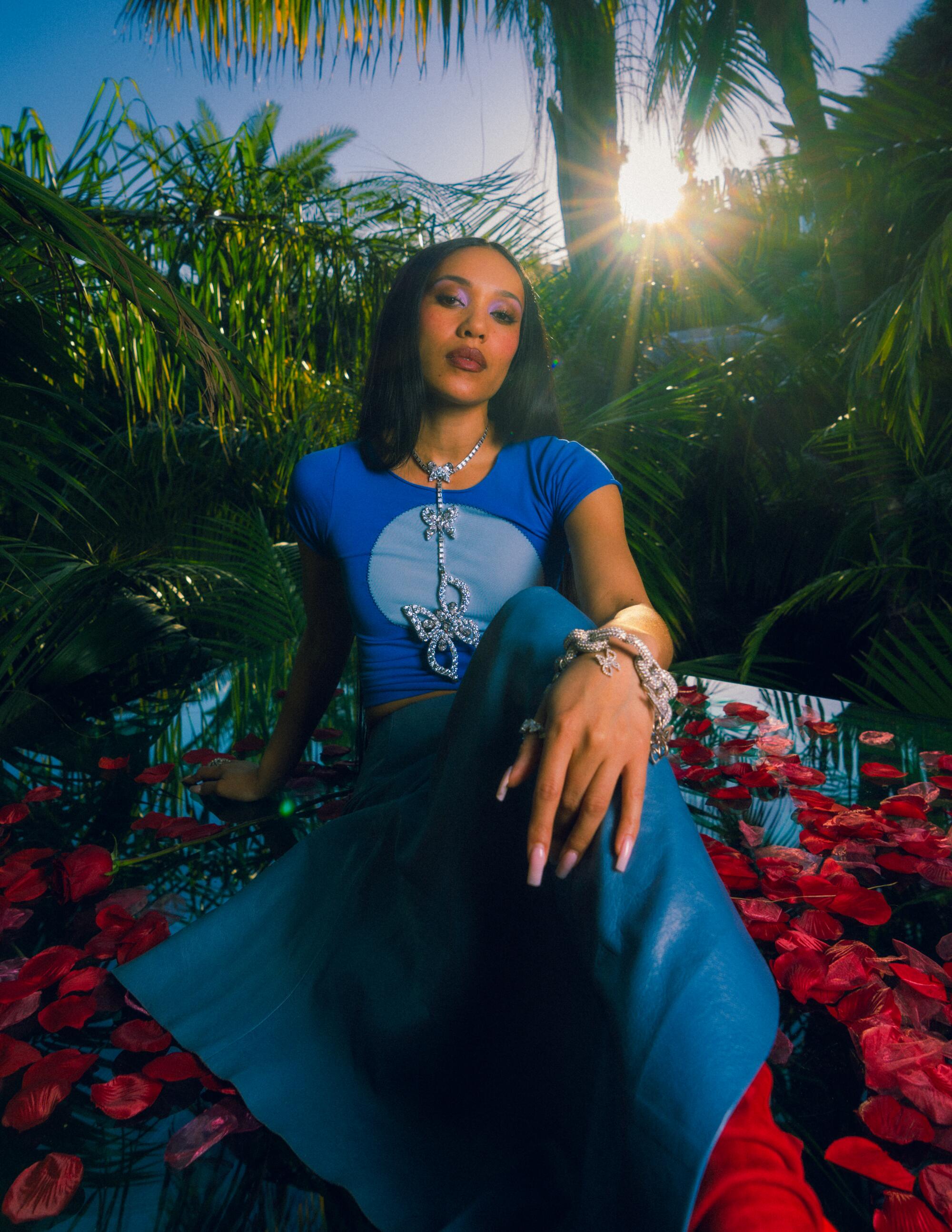
May wears Marni top, bottom, and shoes, with GRWN accessories.
People never seem to recognize this, but May is low-key goth. She speaks with a South Central-inflected monotone in her voice, and is always down to lean into the darker undertones of an outfit, upping the drama with black leather or structural details. She had a goth aunt growing up; she still thinks about her sometimes when constructing a look for the day. “She was the black lipstick, black T-shirt, Doc Martens girl with the glow-in-the-dark nail polish,” May remembers. “Korn posters, Slipknot. When I’m looking at all the people in my life growing up, they all had their own personal style.” This alternative streak lends itself to her designs. Her sneakers attract the type of wearer who is not only comfortable with being different but thrives in it — rocking a dusty rose suede contrasted against a streak of orange in her Air Jordan 6 Retro “Millennial Pinks.” We get the rebellious sense from her pieces that they don’t care whether you understand them .
In 2021, she collaborated with Mattel on an Aleali May Barbie for private auction. An ode to her multitude of designs, the doll was replete with mini re-creations of her “A” chain, a sample leather two-piece set from her personal line, the first shoe she made with Jordan and a bag from the collaboration she did with Martine Ali.
The Harley-Davidson bandanna she’s wearing at the 1 Hotel was inspired by
her father, who goes by Buddha, and is president of the motorcycle club Chosen
Few’s Colorado chapter and was a former member of the Ruff Ryders. May was
influenced by him when designing her collection with Vanson Leathers and Fly
Geenius. She’s always drawing from the root. Her family, her Black and Filipina
background, her pop culture references as a teenager, growing up in L.A., her time in Chicago — they all factor into the personal style and design approach that’s earned her nearly half a million Instagram followers. Every day, a new May. “I am a girl that likes to switch up,” she says. “I might be super goth today, but tomorrow I could be a hipster wearing tie-dye like I need to be walking in Malibu with a denim bucket hat. I like to have different types of jewelry for different occasions and obviously, I’m always putting on an outfit.”
She’s spotted at show after show, often in the front row. Gucci, Louis Vuitton, Rick Owens. Ottolinger, Mugler, Sacai, Balmain, Givenchy, Chanel. Following May along her various fashion week journeys is a good way to gauge what she’s working on, and in the last year, we’ve seen the Metamorphosis collection in almost every public appearance, even if we didn’t know what it was yet. “Need this necklace,” the Instagram comments inquired. “I was at the Gucci show in Milan, and one of the photographers was like, ‘Is that a collab you’re working on? Because we don’t see you pop out like that,’” May remembers. “I’m glad you get the hint. I mean, it is big. You can’t miss it.”
The butterfly is a classic motif in jewelry. Has been for centuries. GRWN’s director of design, Annalisa Cervi, brings up Wallace Chan, a Hong Kong jeweler and visual artist known for his intricate carvings from gemstones that often feature butterflies. In classical jewelry design, the butterfly often is used to communicate an appreciation for Mother Nature, Cervi explains, reflected in its natural cycles and rhythms. In this case, the butterfly was personal to May’s story. In immortalizing it in stone forever, there was an acceptance that once she stepped into this new role, there was no going back to what was.
Butterflies, when spotted in the wild, or tattooed on the torsos of chaotic girls in their 20s, may be regarded as some kind of a sign. We designate a spiritual meaning to these creatures, seeing them as a nod from the ether that it’s time for a change or, better yet, growth. And even more obvious than the meaning behind it is the collection’s flashiness, which forces the wearer to ascend, or move differently. The Metamorphosis Butterfly Diamond Pendant in particular might blind someone on a sunny day. It would call attention on anyone but even more so on May, who pairs it with Rick Owens shoulders, pink leathers, fur hats and full camo fits. “She’s naturally evolving,” May says. “And you’re seeing that.”
A point often pushed by the lab-grown diamond industry is that the stones have the exact same chemical composition as mined diamonds. With mined diamonds, the clarity is up to chance; whether a single 1-carat diamond might be found within 200 million pounds of ore is a gamble. In May’s case, the clarity she was looking for was one she had to grow herself.
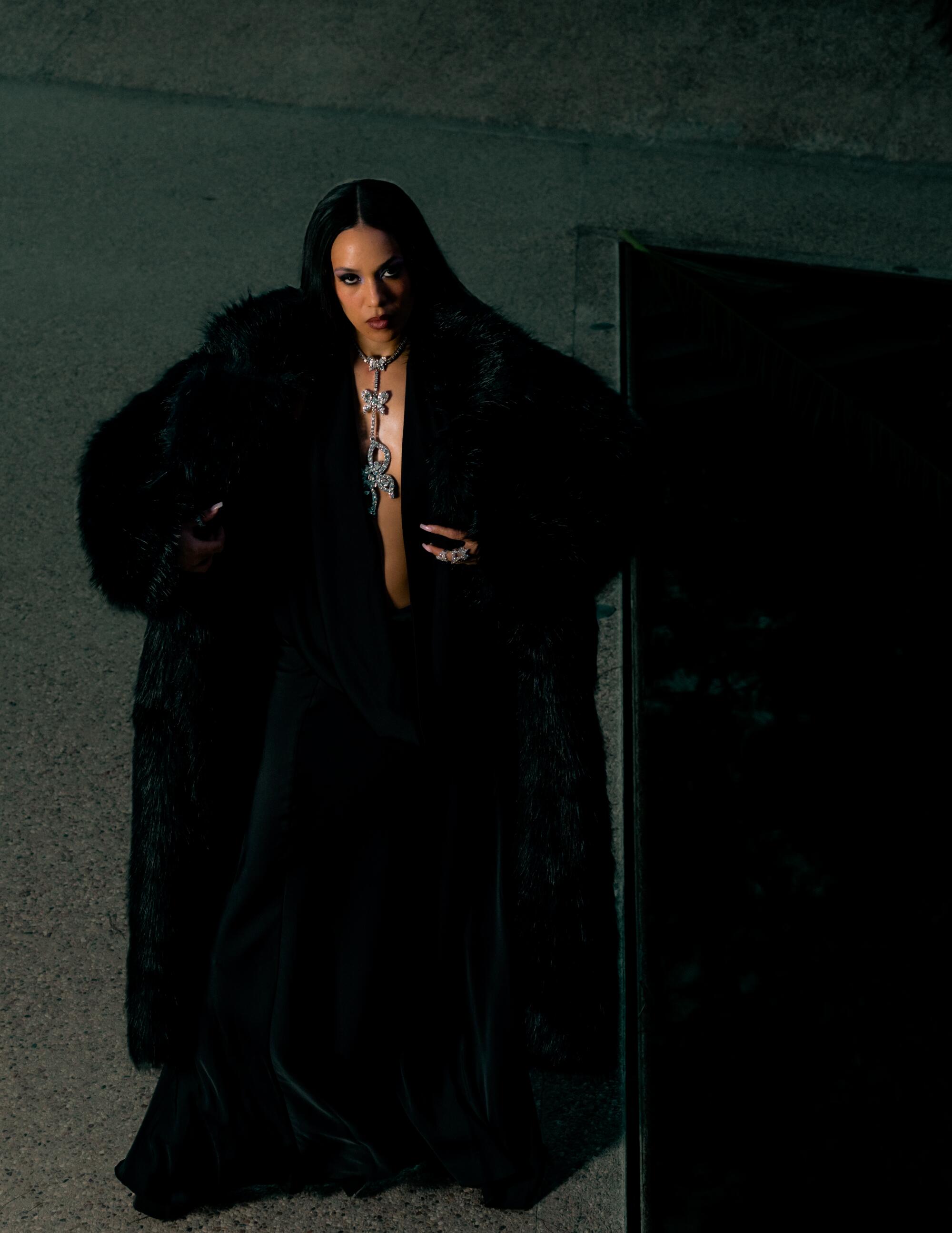
In her design work, May draws on personal history and L.A. lore. The context clues are familiar, allowing us to recognize something kindred in the details.
(Tumi Adeleye)
Production: Mere Studios
Makeup: Laura Dudley
Hair: Adrian Arredondo
Photo Assistant: Qurissy Lopez
Location: Sheats–Goldstein Residence


The Kennedy Center, the facade of which remains covered with a tarp, is seen in Washington, DC, on June 28, 2026. A US federal judge asked on June 24 for an explanation for why a tarpaulin continues to cover the facade of the Kennedy Center where President Donald Trump’s name was recently removed. District Judge Christopher Cooper gave the board of trustees of the performing arts venue until the end of July to explain “the purpose for and status of the tarp and scaffolding that Defendants have erected on the front portico of the Center.”
ALEX WROBLEWSKI/AFP via Getty Images
hide caption
toggle caption
ALEX WROBLEWSKI/AFP via Getty Images
More than two weeks ago, President Trump’s name was removed from the Kennedy Center facade though it is still covered by a tarp and the legal battle continues.
On Monday, a U.S. Department of Justice filing on behalf of the Kennedy Center included some surprises. The document was submitted in response to issues raised by lawyers for ex-officio board member Rep. Joyce Beatty of Ohio who is suing to remove President Trump’s name from the center and stop its closure for renovations.
Among the revelations, the Kennedy Center admitted that, during a board meeting on December 18, 2025, Beatty had been “muted and prevented from speaking.” It was at that meeting that the board voted to add President Trump’s name to the center. The filing later acknowledges the congresswoman was “prevented from voicing her opposition.”
The John F. Kennedy Center for the Performing Arts is a living memorial to its namesake. The guidelines for how the theatre complex spends federal dollars are very specific. Among other rules, it states that “no additional memorials or plaques shall be designated or installed.” Beatty argues adding Trump’s name runs afoul of those rules and that any change requires approval from Congress.
According to one of Beatty’s filings, “There was no advance notice in the agenda that the Board would be considering a name change,” a statement the Kennedy Center now does not deny. The center admits that, prior to voting, there was “no discussion about potential risks or downsides of the vote to adopt a secondary name for the Center.” Nor was there a board discussion “about any potential conflict of interest that might result from the vote.”
The center’s lawyers previously contended that if Trump’s name were to be removed, it would “lose money from donors who support” him and “impede the Center’s fundraising efforts.”
Closing for renovations
Earlier this year, Trump announced on social media that the Kennedy Center would close for two years for renovations. He wrote that he made the decision after “a one year review” with “Contractors, Musical Experts, Art Institutions, and other Advisors and Consultants.”
But, according to the center’s lawyers, Trump’s announcement “was made without presenting any plans, analyses, timelines, or funding information to his cotrustees and without any Board vote.”
The Kennedy Center has long denied reporting by The Washington Post that ticket sales plummeted after President Trump became the Center’s board chair. In Monday’s legal filing, the Center admits that, by October 2025, “nearly half of the Center’s tickets were going unsold.”


Paul Tremblay has made a career of pushing the horror genre – and the novel format – in strange and exciting new directions.
In his latest, Dead but Dreaming of Electric Sheep, the author offers an amalgamation of genre elements that can be best described as psychological-dystopian-science-fiction horror. It’s a mouthful, but the narrative does all of that and more in a way that defies categorization.
Julia Flang is a former semiprofessional gamer working two mediocre jobs she dislikes and living in a modest ranch house in a San Fernando Valley suburb with her retired uncle, whom she calls Uncle Fun. Julia likes movies and gaming but there’s little else going on in her life, so when her estranged mother, the CFO of a large tech company, contacts her with a possible job offer – a “once-in-a-lifetime thing” that pays handsomely just for doing the interview – she hesitantly agrees.

The job is relatively simple and perfect for someone with gaming skills: using a controller built into a phone to get a man, who is stuck in a vegetative state, from California to the East Coast. It will require her to learn how to control his body – walking, moving, sitting, standing, using his arms – so she can maneuver him out of the facility where he is located and into cars and planes and through crowded airports. A fan of movies, Julia decides to call the man Bernie – after the movie Weekend at Bernie’s. When the ethics of the job start to bother her, Julia realizes it’s too late and she must go through with it. However, she’s soon contacted by people interested in sabotaging the whole thing, people who, like her, don’t align with the shady interests of conglomerates and those set to make “gobs of money” from this new, somewhat inhuman technology.

As with every Tremblay novel, any synopsis barely scratches the surface. The novel’s chapters alternate between Julia and you (yes, you). Julia’s chapters are “normal” in the sense that they obey a chronological order and have action, basic descriptions of movement and places, and dialogue. The chapters in second person are like fever dreams from a shadow world; the desperate experiences of a man trapped inside his own body with no control of it, no clue what’s happening to him, and only a few fragmented memories of his life. Also, Tremblay uses a similarly fragmented style of storytelling (including words and sentences trapped in boxes and/or “moving” on the page) to keep things interesting but also confusing and creepy.
This novel operates on several different levels and – planes of existence? Bernie has a head full of AI that controls his body, but his consciousness is still there and struggling to regain control, struggling to remember things. There are monsters, leeches, mysterious rabbits, and eerie shadows in his world, but the true horror comes from the lack of control, from being moved around against his will and having no clue what comes next. Bernie is the embodiment of losing control to AI, and when taken together with the commentary of creativity and AI and the meta interludes in which the author takes a wrecking ball to the fourth wall and addresses readers, this is the best anti-Generative AI story horror has produced so far.
Despite the horror of it, this is a very funny novel. Julia is sarcastic and struggles to keep her comebacks in line, but the conversations she has and messages she writes are always entertaining. However, the humor is far from the crown jewel here. That title belongs to a plethora of big ideas Tremblay juggles. The nature of life, death, and consciousness, the evils of conglomerates, inhuman practices in the name of capitalism, and AI, and even what it means to be human are all explored here: “Is Bernie alive? Is he feeling pain? Is he experiencing everything as a prisoner looking through the bars of his body? Has his consciousness been winnowed to a metaphysical keyhole? Where does consciousness begin or end?” There are no definite answers here, but the way Tremblay infuses humanity, love, the importance of relationships, and humor throughout the narrative provides the kind of answers that can’t and don’t need to be spelled out.
A genre-bender full of big ideas that constantly switches between a world full of real or uncomfortably plausible nightmares and a bizarre hellscape in which loss of self, memory, and autonomy are only the tip of the proverbial iceberg, Dead but Dreaming of Electric Sheep is a horrific and terrifyingly disorienting novel that invites readers to consider a future that already started. Tremblay has always been an innovator, but this beautifully written collection of real and imagined grotesqueries cements him not only as one of the most original and exciting voices in horror but also as one of the smartest, most engaging authors in contemporary fiction.
Gabino Iglesias is an author, book reviewer and professor living in Austin, Texas. Find him on X, formerly Twitter, at @Gabino_Iglesias.

-

 Texas6 minutes ago
Phoenix Merchant Partners and Texas Capital Alternative Asset Management Form Strategic Relationship
-

 Utah9 minutes ago
Therapy dogs offer a welcome break for firefighters battling Utah’s Iron, Cherry fires
-

 Vermont14 minutes ago
She moved from Paris to Vermont and found her ‘dream job’ opening a bakery – The Boston Globe
-

 Virginia21 minutes ago
Reopening date set for Virginia Creeper Trail after months of work
-

 Washington24 minutes ago
Colorado Democrats punish Washington ties in primaries
-

 Wisconsin29 minutes ago
Missing Wisconsin teen Joniah Walker found safe 4 years after disappearing from home
-

 West Virginia36 minutes ago
Transmission line proposals raise ratepayer cost concerns in West Virginia
-

 Wyoming39 minutes ago
Wyoming Department of Health warns of scam callers using official phone number

