Fitness
The Fitness Industry is Worth $22.4 Billion to the U.S. Economy, Says…


These numbers tell a compelling story in concise terms, explains Dunham.
“We use tables to show the importance of the industry and build
content points,” he said. “You’ve got five minutes in front of a
legislator to tell them what’s important. Everything comes from the
data, and all of that is available, but in the end, they want to know
the bottom line.”
The report provides state-by-state statistics, which is designed to
be utilized by Health & Fitness Association members when
communicating with local and state policymakers. These are valuable data
points for grassroots advocacy and networking with industry colleagues.
“Knowing where your allies are can help when there are public policy
or public affairs issues,” he said. “It’s always better to have friends
with you.”
More than 115 attendees from health clubs, studios, and suppliers are
participating in the fly-in, with many leaders hailing the new report.
“When I was hired by the board almost three years ago, one of my
goals was to be able to share real numbers about the value our industry
creates in this country,” said Health & Fitness Association
President & CEO Liz Clark. “This data makes that goal a reality.”
Highlights from the report show that the industry:
- Creates 432,942 direct jobs in the country.
- Pays $10.7 billion in direct wages.
- Pays $5.29 billion in federal taxes.
- Pays $5.35 billion in state and local taxes.
Also figuring into the totals were the contributions of industry
suppliers. According to the report, suppliers are responsible for
creating 60,625 U.S. jobs, paying $4 billion in wages.
In the coming weeks, the report will be available on the Health & Fitness Association website and Club Business International
magazine.
In addition to the JDA report, the Health & Fitness Association provided more statistics from its 2024 U.S. Health and Fitness Consumer Report, which will be released in four installments throughout the rest of the year. The report found that:
- The U.S has more than 72 million health club and studio members.
- The U.S has a higher percentage of active members of fitness facilities than any country other than Sweden.
- Americans pay an average of $59 per month for membership, and 41% of facility users pay $25 or less per month for membership.
“The data from this economic impact study and from our next Consumer Report
show just how important the health and fitness industry is to the
economy of the country as well as to the physical and mental health of
Americans,” Health & Fitness Association Vice President of
Government Affairs Mike Goscinski said. “This data is an essential part
of our campaign to educate Representatives, Senators, and their staff,
about the mental and physical health benefits of exercise—and of the
size and scope of the businesses where consumers exercise.”
The agenda for the historic 2024 Health & Fitness Association
Fly-in and Advocacy Summit, the first under the new association name,
includes education sessions on proposed legislation important to the
industry, including the Personal Health Investment Today (PHIT) Act, the
Cardiac Arrest Survival Act, and the AFFIM act, which promotes military
readiness and retention through community-based fitness initiatives. On
Wednesday, May 8, the 115 attendees will separate into 15 groups to
attend arranged meetings with members of Congress to discuss these bills
and other issues important to the industry.
Also scheduled at the two-day event is a briefing on current polling
for the upcoming presidential election; an Advocacy 101 session for
first timers; a session on the importance of youth fitness; and a
workout organized with members of Congress and their staff who are
participating in the Congressional Physical Activity Challenge
(sponsored by Myzone).
The Health & Fitness Association would like to thank the following sponsors of the 2024 Fly-in and Advocacy Summit.
Premier Level: ABC Fitness, Studio Grow, and Technogym
Industry Leader: Matrix Fitness
Advocate Level: Daxko, Myzone, and ROR Partners
Supporter Level: Alta Technology Group, ClubConnect,
DX Factor, EGYM, FitOn Health, NASM/AFAA, Precor, Tivity, Wellhub
(formerly Gympass), WellnessSpace Brands (formerly Hydromassage), and
Wexer
For more information, visit the 2024 Health and Fitness Fly-in and Advocacy page.



HFA urges targeted trade policies to protect the fitness industry.
This week, HFA submitted comments to the Office of the US Trade Representative (USTR) on two important trade policy dockets that could have significant implications for exercise equipment manufacturers, suppliers, and fitness facility operators.
Section 301 Tariff Proceeding
USTR sought comment on proposed tariffs from its Section 301 forced labor investigation, including possible product exclusions based on domestic availability and economic impact.
HFA submitted comments that advocated excluding exercise/rehabilitation equipment and critical components, citing irreplaceable global supply chains and the industry’s role in public health, chronic disease prevention, and military readiness.
US- China Board of Trade
USTR proposed a new Board to identify non-sensitive products for reciprocal tariff reductions with China.
In comments submitted to USTR, HFA recommended designating exercise equipment as “non-sensitive” and eligible for negotiation, prioritizing products that boost US manufacturing and affordability, and setting criteria recognizing public health, productivity, and military readiness benefits.
The HFA thanks member operators, manufacturers, and suppliers whose data strengthened these submissions. Your efforts are helping HFA advocate for trade policy that supports the fitness industry.


Athletes need to think about stamina and endurance all the time. Whether you’re a runner, a basketball player or a swimmer, your ability to push hard and keep going often determines who wins and who comes out on top.
Advertisement
Cleveland Clinic is a non-profit academic medical center. Advertising on our site helps support our mission. We do not endorse non-Cleveland Clinic products or services. Policy
But endurance and stamina aren’t just important for athletes. They can also affect how easily you tackle everyday activities, like yardwork or helping a friend move.
Exercise physiologist Christopher Travers, MS, explains what sets stamina and endurance apart and how to build up both with a variety of workouts.
How stamina and endurance work together
Stamina and endurance often go hand in hand — but they’re different.
Think of stamina as how hard you can push yourself, and endurance as how long you can maintain that effort.
In car terms, stamina reflects how hard you push on the gas pedal for a quick jump in speed. Endurance reflects how far you can go before running out of fuel.
Together, they help you reach your destination and achieve milestones in your physical performance.
Let’s dig a little bit more into what makes each unique.
What is stamina?
Stamina describes your mental and physical ability to sustain high-intensity effort over a shorter period of time. It’s that quick burst at the starting line, the second-wind sprint you get during the last push of a marathon and the fast acceleration that carries you uphill.
“With stamina, you’re trying to push through at a higher heart rate,” says Travers. “It’s your power, your speed and your repeated burst of effort.”
What is endurance?
Endurance describes your body’s ability to sustain low-to-moderate-intensity activity over very long periods of time. It’s the ability to endure a marathon, miles of cycling and long workout sessions without stopping or decreasing intensity.
“With endurance, you’re learning how to maintain a certain level of intensity for the longest period of time,” says Travers. “You’re focused on your breathing, keeping a steady pace and sticking to correct form so you can go longer without running out of energy.”
How to increase endurance and stamina
Building stamina and endurance involves different approaches to physical fitness. Stamina relies on quick bouts of high-intensity exercises, while endurance is less intense but for longer periods of time.
Working on both simultaneously can improve your performance and make a significant impact on your overall health. Let’s now focus on each one individually.
How to increase stamina
Circuit training is a great way to build stamina because it combines strength and cardio exercises with limited rest. A circuit involves moving through a series of exercises that target different muscle groups with little-to-no break between each one. After completing a circuit, you take a longer recovery before repeating the entire circuit.
“The big thing with stamina workouts is your recovery,” notes Travers. “When you finish an entire circuit made up of several quick exercises, you want a longer recovery so you can come back and do the entire circuit over again at the same high intensity.”
High-intensity interval training (HIIT) can also improve stamina. HIIT alternates short bursts of intense exercise with brief recovery periods, training your body to:
- Work hard even when you’re fatigued
- Recover quickly between exercises
- Tolerate higher levels of exertion
- Use oxygen more efficiently
A stamina workout might combine these approaches by using a circuit of high-intensity exercises followed by a longer recovery period before repeating the circuit.
Exercises commonly used in stamina workouts include:
- Hill sprints
- Box jumps
- Stair climbs
- Mountain climbers
- Jump squats
- Burpees
How to build endurance
To build endurance, you’ll need to learn how to maintain a certain level of intensity for longer stretches of time.
“With endurance, we’re going for that longer, steady state and gradually increasing our time and our distances,” explains Travers. “Endurance requires consistency over weeks and even months.”
It helps to focus on workouts that keep your body moving for extended periods. Cardiovascular exercises are especially effective at building endurance. But strength training can be adapted to improve muscular endurance, training your muscles to work longer before they become fatigued.
When working on endurance, you want to increase the amount of time, distance or reps as you progress through your training.
Common exercises for endurance include:
- Cycling
- Running
- Hiking
- Swimming
- Rowing
- Planks
Final note for the miles ahead
Whether your goal is to move faster, exercise longer or simply keep up with the demands of daily life, stamina and endurance can help you get there. Building both takes consistency and practice. But over time, those efforts can pay off in improved performance, better fitness and greater confidence in what your body can do.
“If you train consistently and you’re seeing progress, both your stamina and endurance are improving,” encourages Travers. “It doesn’t happen overnight. It takes time, practice and attention to your overall health.”
-

 Politics2 minutes ago
Trump reveals who he’s eyeing to replace Lindsey Graham
-

 Health8 minutes ago
Notable figures who died from the same heart condition linked to Lindsey Graham’s death
-

 Sports14 minutes ago
Folarin Balogun admits that red-card reversal affected USA World Cup teammates: ‘A lot of outside noise’
-

 Technology20 minutes ago
Humanoid robots perform live surgery in world first
-
 Business26 minutes ago
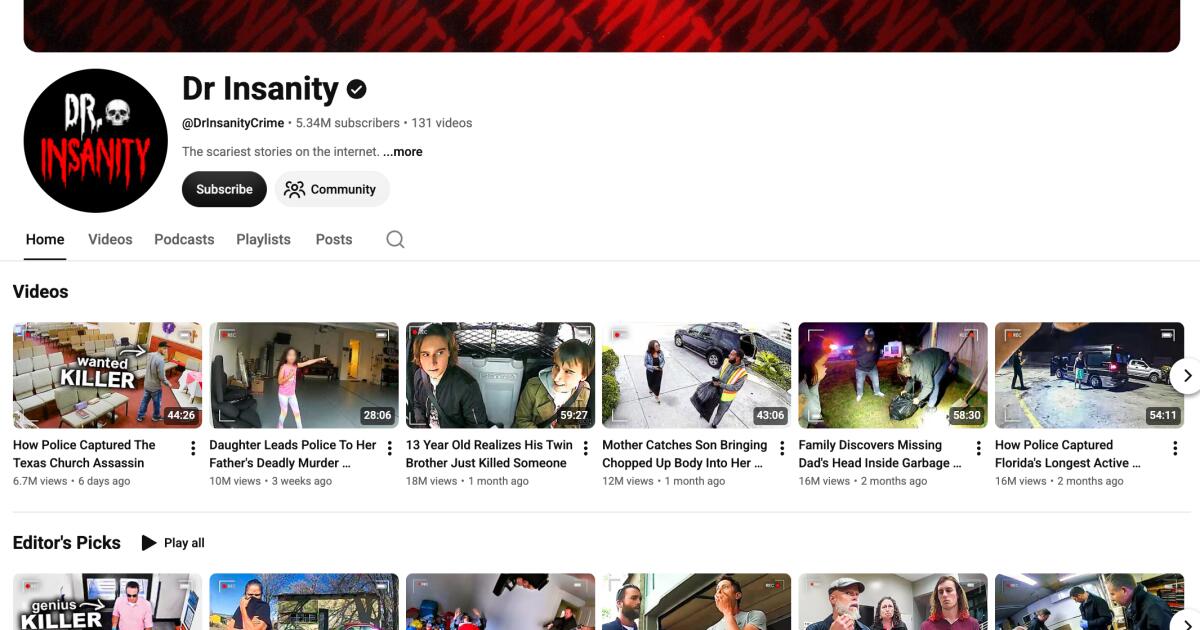
A ‘next generation studio’ for YouTube creators
-
 Entertainment32 minutes ago
Finn Wolfhard is taking ‘control of the narrative’
-
 Lifestyle38 minutes ago
What are your most cherished memories of the 2026 World Cup in L.A.?
-
 Politics44 minutes ago
Commentary: Two Lorenzos from Mexico. One fulfilled his American dream. ICE killed the other

