Austin, TX
Amid Protests of Students, Faculty, and Staff, the State Tightens Its Grip on the University of Texas at Austin


In April, state leaders’ attempted stranglehold over the University of Texas at Austin, Texas’s premier public university, came to a head in several ways. The month began with the university laying off dozens of employees who formerly worked in positions that dealt with diversity, equity, and inclusion (DEI) programs. The month ended with state troopers marching on campus to disrupt anti-war protests at the direction of Gov. Greg Abbott and with the approval of UT Austin President Jay Hartzell.
In this week’s Hotline, we dive into this dark month at Texas’s flagship university.
State, City, & University Police Assail, Arrest Peaceful Anti-War Protesters
Over the past two weeks, hundreds of peaceful protestors, many of them UT students, have been arrested for protesting the war in Gaza and demanding an end to the university’s and the nation’s involvement in the conflict.
Last Wednesday, a coalition of student groups, including the Palestine Solidarity Committee, organized an event on UT’s south lawn to protest the war in Gaza. Event organizers referenced the encampments that have occupied other universities like Columbia, Yale, and Brown, but there was no evidence that this group was connected to groups on those other campuses, apart from the organizing inspiration. The schedule for UT’s event included peaceful actions: teach-ins, pizza breaks, and an art workshop.
A listed demand of the protesters was for the University of Texas to divest from companies that they view as supporting the war in Gaza. The University of Texas’ endowment, totaling $68 billion, is the largest of any public university and the fifth largest of any university system generally. Students have taken issue with the endowment’s investments in companies that manufacture weapons, including Lockheed Martin, Raytheon, BAE Systems, and others. Because weapons produced by these companies and used by the Israeli military have resulted in the deaths of civilians, protestors claim that the University of Texas is complicit in these tragedies and demand divestment.
However, a state law from 2017 that forbids Texas public investments from boycotting Israel seems to forbid such divestment.
Protestors at UT-Austin, who were told by the university to cancel the protest because of a “declared intent to violate our policies and rules, and disrupt our campus operations,” were met with a large police presence, declaring that the protest was unlawful as students didn’t have the proper permits to protest. Campus police officers initially seemed to be willing to negotiate with the protesters, but dialogue seemed to end when Texas Department of Public Safety (DPS) officers arrived at the scene dressed in riot gear. State police quickly moved to break up the protests. Police arrested 57 people present at the protest, including a photographer for FOX 7 News who was covering the incident. All those arrested were released the following morning.
It was later revealed that Hartzell had invited DPS onto campus to break up the peaceful protests. Abbott, who directs DPS, supported the arrests on social media. In his comments, Abbott took issue with the content of the protests, not the manner in which they were done. In the United States, the content of protests is protected by the First Amendment.
Protestors were arrested for trespassing on university campus because they were directed to leave due to not having a permit to hold the event, but the university had previously allowed similar protests to occur in the same location and the same manner without a permit. Similar protests were held at public universities across Texas, including Texas State University and the University of Texas at Dallas, but these protests were not met with a similar police presence.
Protestors reconvened the next day but were not met with a police presence, and the protest continued peacefully as planned. On this second day, the protest was much larger than the day before. At this protest, many community leaders spoke, including Congressman Greg Casar (D-Austin), and condemned the police action. UT-Austin AAUP President Pauline Strong also spoke at the protest. She announced that UT-Austin AAUP was collecting signatures from faculty to call for a vote of no confidence in Hartzell for bringing state police to campus. Thus far, they have collected over 600 signatures.
This week, on Monday, the protests continued and were met by hundreds of law enforcement agents. After protesters refused to vacate the south lawn despite officers’ demands, officers began arresting protestors one by one and soon broke up the encampment. The protesters were assailed with pepper spray and flash bangs.
In response to the events this past Monday, the House Democratic Caucus released a letter explaining to Democratic members what transpired. Ali Zaidi, the executive director of the House Democratic Caucus, penned the letter and was present to observe the Monday protest. Zaidi explained that he and Rep. Gina Hinojosa (D-Austin), who was also in observance of the protest, felt the effects of the pepper spray used on the protestors, despite being yards away. The letter declared, “It is our belief that this behavior by law enforcement created further chaos and harm to the health and well-being of students which must not go unaddressed.”
Students had planned to resume protests Wednesday but postponed the protest until this coming Sunday.
Employees and Students Fight Back Against Anti-DEI Efforts
In a previous edition of the Hotline, we explained how an estimated 60 employees at UT Austin and 20 employees at UT Dallas were either demoted or given termination notices. These affected employees, which included both faculty and staff, previously worked in positions that related to DEI initiatives but had since been reassigned to new positions to comply with Senate Bill 17, which banned DEI initiatives. These layoffs occurred despite the fact that the legislators who sponsored SB 17 publicly made assurances that employees in DEI positions would not be terminated.
Since these terminations and demotions were announced, a wide public outcry, from within the UT community and from without, has emerged, demanding that these termination orders be reversed. During the week following the dismissals, state legislators joined the Texas NAACP and Texas AAUP-AFT at a press conference at the Texas AFL-CIO headquarters denouncing the layoffs. The state legislators present were Rep. Ron Reynolds (D-Missouri City), chairman of the Texas Legislative Black Caucus, Rep. Gina Hinojosa (D-Austin), whose district includes the UT Austin campus, and Rep. Sheryl Cole (D-Austin).

The 60 affected employees mostly occupied student services positions that supported students outside of their academic pursuits. In addition to the affected employees themselves, students are also victims of this move.
Students are fighting back against these layoffs. Over the intervening weeks since the layoffs were first announced student groups, such as Texas Students for DEI, which has been active at campuses across the state in opposition to the state’s attacks against DEI, and individual students began posting the hashtag #NotOurTexas on social media, as a condemnation of the layoffs. Post-It notes with the message #NotOurTexas were also left in prominent locations around UT Austin campus, including the university’s iconic fountain.
This past Monday, a coalition led by the Texas State Employees Union (TSEU), in concert with Texas AAUP-AFT and the Texas AFL-CIO, rallied on UT Austin’s campus to demand that the university’s actions be reversed. Austin City Council members Vanessa Fuentes and Zohaib “Zo” Qadri, whose district includes UT’s campus, as well as Texas AFL-CIO President Rick Levy and UT Austin AAUP executive board member Karma Chavez, spoke at the rally in support of the affected employees. Hundreds of students, faculty, staff, and community members joined the rally.

The next chapter in this saga is uncertain. Many of the affected employees are scheduled to be officially terminated after their mandatory 60-day termination notice expires. Senate Education Committee Chairman Brandon Creighton’s letter to Texas public universities, which kicked off these layoffs, demanded UT Austin send representatives to a committee hearing to detail compliance with Senate Bill 17 in May, but the date of the hearing has not been set. Additionally, the Senate was tasked in Lt. Gov. Dan Patrick’s interim charges with studying the implementation of SB 17. This interim hearing will also likely take place over the summer.


A long holiday weekend and America’s 250th birthday are giving Central Texans even more reasons to celebrate this Fourth of July. From fireworks over Lady Bird Lake and Willie Nelson’s annual picnic to hometown parades and rooftop parties, there are plenty of ways to spend the day around the Austin area.
Here’s a look at some of the biggest events, from Austin’s signature Star-Spangled Fest to neighborhood traditions and Hill Country celebrations. Unless otherwise noted, all events take place Saturday, July 4.
The main events
Star-Spangled Fest
Auditorium Shores & Long Center, 900 W. Riverside Dr.
Austin’s signature Fourth of July celebration stretches from morning to night as the city marks America’s 250th anniversary. The day begins with The Morning Spin from 10 am to 1 pm, featuring house music, craft coffee, cocktails, local vendors, and food trucks. The evening festival returns at 4:30 pm with kids’ activities, food trucks, and performances by Austin soul-funk favorites Tomar & the FCs, country singer Shelby Stone, a Veteran Recognition Celebration, and the Austin Symphony Orchestra’s annual patriotic concert before fireworks over Lady Bird Lake at 9:45 pm. The concert and fireworks will also be simulcast on KMFA 89.5. A number of parking garages are open around the park. General admission is free. VIP Lawn Access starts at $45, while reserved tables and private cabana experiences range up to $2,500. Tickets and VIP packages are available through the Star-Spangled Fest website.
Several downtown hotels and rooftops are offering elevated alternatives to the crowds below along Auditorium Shores.
- P6 at The Line Austin is hosting its “Creole Surf Riot” celebration with live music by Louisiana Surf Department, Creole-inspired food stations, and two complimentary drinks. Early bird tickets start at $75, with general admission at $90.
- The Loren at Lady Bird Lake is celebrating with a waterfront barbecue, curated beverages, and live music by Working Title. Reservations are available from 6-10 pm, with the band performing from 6-11 pm. Admission is $98 per person, plus a 17 percent gratuity. The hotel recommends making reservations in advance, as last year’s Fourth of July celebration sold out.
- Otopia Rooftop at The Otis Hotel in West Campus is hosting a Fourth of July party from 7 -11 pm, featuring specialty cocktails with Still Austin Whiskey Co., a complimentary welcome cocktail, light bites for purchase, and giveaways. Tickets start at $23.18. The rooftop offers skyline views, though organizers note the downtown fireworks display is not visible from the venue.
Willie Nelson’s Fourth of July Picnic
Germania Insurance Amphitheater, 9201 Circuit of the Americas Blvd., Del Valle
Fresh off his 93rd birthday, Willie Nelson returns to Circuit of The Americas for the latest edition of his annual Fourth of July Picnic, a Texas tradition spanning more than five decades. This year’s lineup features Willie Nelson & Family, bluegrass phenom Billy Strings, alternative rock legends Wilco, Rock & Roll Hall of Famer Sheryl Crow, Lukas Nelson, Stephen Wilson Jr., Rodney Crowell, Margo Price, and Lily Meola. The evening concludes with fireworks. Gates open at 2:30 pm and music begins at 3:30 pm. Most tickets are priced around $100, with options ranging from reserved seating to pit tickets and VIP packages. Tickets, VIP packages, and the full event lineup are available on Willie Nelson’s official website.
Hill Country Galleria Independence Day Festival
12700 Hill Country Blvd., Ste. T-100, Bee Cave
Families looking to avoid the downtown crowds can head west for one of the area’s biggest free celebrations honoring America’s 250th birthday. More than 40 artisan vendors, carnival rides, water games, and complimentary face painting fill the afternoon before an evening of live music. School of Rock opens the entertainment at 4 pm, followed by CAZAYOUX, Jeska Forsyth, Jo James, and Austin Latin rock veterans Vallejo. Then fireworks complete the event. Attendees are invited to bring a lawn chair or blanket. The festival runs from 4-10 pm, with fireworks scheduled for about 9:40 pm. Admission and parking are free.
Red, White & Buda
Buda Amphitheater & City Park, 204 San Antonio St., Buda
Buda turns Independence Day into an all-day celebration, beginning with the community’s annual Bike Parade at 9 am. Festivities resume at 4 pm with a DJ, bounce houses, a splash pad, food vendors, a vendor market, cornhole, sand volleyball, and rock climbing. Live music begins with Elle Townley at 6:30 pm, followed by Shinyribs, the Gulf Coast soul and swamp-funk band led by former Gourds frontman Kevin Russell, at 7:40 pm. The evening concludes with fireworks at about 9:15 pm. Admission is free.
Free neighborhood parades and hometown traditions
Northwest Austin Civic Association
Austin’s largest neighborhood Independence Day parade happens in the North Austin Civic Association, at the 53rd annual Fourth of July Parade and Freedom Fest. The festivities begin with a community breakfast at 7:30 am, followed by the parade at 9 am. Austin Mayor Kirk Watson will serve as grand marshal as decorated bicycles, antique cars, marching bands, community groups, and the popular Ladies Lawn Chair Brigade wind through Northwest Hills before the Freedom Fest continues with family activities.
Members of the Northwest Austin Civic Association’s Arm Chair Brigade gather with parade grand marshal Council Member Alison Alter before the neighborhood’s annual Fourth of July parade in Northwest Austin.Alison Alter/Facebook
Cedar Park
Cedar Park’s Sparktacular returns to Milburn Park with live music, carnival rides, inflatables, food trucks, and fireworks at 9:30 pm.
Georgetown
Georgetown’s celebrations last all day with amusement rides and games, a kiddie parade, arts and crafts booths, food vendors, live music, and a fireworks show to round it all out.
Lakeway
Lakeway’s Fourth of July Celebration begins with its annual parade at 8:30 am, followed by family activities before the city’s evening fireworks display.
Leander
Leander is getting things started early with Liberty Fest on July 3. There will be live music and food, plus activities for kids and fireworks to end the day.
Pflugerville
Pflugerville’s Pfireworks lights up Typhoon Texas with live music, food vendors, family activities, and one of the area’s largest fireworks displays.
Round Rock
Just north of Austin, Round Rock’s Frontier Days begins with the annual Sertoma Independence Day Parade at 8:30 am along Mays Street. Giant helium balloons, festive floats, marching bands, and community groups kick off a full day of carnival rides, pig races, live music, and festival food before the evening’s fireworks show.
America250
Want to keep celebrating America’s 250th birthday? The Fourth of July is only the beginning of the nation’s yearlong semiquincentennial celebration.
Texas America250 exhibit
Lorenzo de Zavala State Archives and Library Building, 1201 Brazos St.
This exhibit next to the Texas Capitol spotlights the Lone Star State’s outsized role in American history through historic photographs, maps, artifacts, sheet music, state records, and other treasures from the State Archives. From cowboys to astronauts, and from Beaumont to Big Bend, the exhibit explores how Texas helped shape the nation. The exhibit is on view throughout 2026.
Other things to see at the archives include:
For even more, the Texas America250 events calendar lists celebrations taking place across the state throughout the year.

“We’re thrilled to expand our relationship with the team at NRP and our focus on the Affordable Housing market in
The transaction represents Safehold’s second transaction with NRP in
Safehold established a dedicated Affordable Housing team in 2025 and has continued to expand its investment into the sector. Additional information is available at www.safeholdaffordablehousing.com.
About Safehold:
Safehold Inc. (NYSE: SAFE) is revolutionizing real estate ownership by providing a new and better way for owners to unlock the value of the land beneath their buildings. Having created the modern ground lease industry in 2017, Safehold continues to help owners of high quality multifamily, affordable housing, office, industrial, hospitality, student housing, life science and mixed-use properties generate higher returns with less risk. The Company, which is taxed as a real estate investment trust (REIT), seeks to deliver safe, growing income and long-term capital appreciation to its shareholders. Additional information on Safehold is available on its website at www.safeholdinc.com.
About The NRP Group:
The NRP Group is a vertically integrated developer, owner, builder, and manager of best-in-class multifamily housing with a mission to create exceptional rental housing communities for individuals and families, regardless of income. Since its founding in 1994, NRP has developed more than 62,000 apartment homes and currently manages over 30,000 residential units. Through its disciplined approach to vetting opportunities, NRP has established a track record of delivering impressive returns for investors. The company’s formidable size and depth of talent provide the experience and infrastructure necessary to execute developments of varying degrees of complexity and scope in both urban-infill and suburban locations, including market-rate, affordable, mixed-income, and senior housing. The NRP Group has been consistently named a largest developer and builder in the U.S. on the NMHC “Top 50” lists, the Top 5 on the Multi-Housing News’ “Top Multifamily Developers” list, named a Top Affordable Housing Developer by Affordable Housing Finance, and has won three NAHB Pillar awards since 2020 for Development, Construction and Ones to Watch. The NRP Group has become the top multifamily developer in the U.S. that creates both affordable and market-rate housing at a national scale. Based on over 30 years of experience and expertise, NRP provides construction and property management services to outside owners and developers. For additional information, visit www.nrpgroup.com.

View original content to download multimedia:https://www.prnewswire.com/news-releases/safehold-closes-second-affordable-housing-ground-lease-in-texas-302809796.html
SOURCE Safehold

AUSTIN (Nexstar) – During a Texas Senate Business and Commerce hearing Wednesday, lawmakers heard invited testimony examining soaring property and casualty insurance costs. Testimony focused on the need for more affordable options and the need to address the role of AI.
Increased costs
Amanda Crawford, the Commissioner of Insurance at the Texas Department of Insurance (TDI), acknowledged the reality of rising insurance costs for everyday Texans.
“The past few years have been very, very difficult. The average annual homeowner premium in Texas has increased from under $2,000 in 2020 to over $3,500 today. It’s a 79% increase in six years. That is a tremendous burden for Texans, especially for a necessary product like home insurance,” Crawford told lawmakers Wednesday.
Crawford went on to clarify that this increase can be attributed to increases in home values and claim costs related to severe weather.
“Annual homeowners’ losses averaged 5.5 billion from 2015 to 2020, rising to 9.1 billion from 2021 to 2025.” Crawford went on to say that “Last year alone, the National Weather Service recorded 902 hailstorms in Texas. The next closest state, Kansas, had 375.”
Holding insurance companies accountable
Crawford clarified that the TDI requires insurance companies to elaborate on their filings to ensure that Texans are not subject to unfair practices and prices.
“My expectations are that every rate filing submitted to TDI gets a careful review. We examine every statutory filing for statutory compliance. We verify the math, we scrutinize assumptions, we make them show their work”
According to the Texas Insurance Code, the rate review process conducted by the TDI does not explicitly focus on affordability.
“There is not a purpose in there around affordability. It is about driving market competition. It’s about making sure they’re not excessive, but then they’re also adequate. And it’s about having market forces drive the rates that are filed. So I think that’s an interesting perspective when you look at it, because that really frames the whole rate review process as it has been put into law.”
Insurance company officials say they are also focused on affordable costs.
“Our industry is not just saying, hey, legislators go fix all this. We are working all the time to bring down costs. It’s a good business decision because it helps us be more competitive,” said Scot Kibbe, the Vice President for State Government Relations at the American Property College for Insurance Association.
Concerns of price surveillance
Senator Nathan Johnson, D-Dallas, questioned whether insurance companies may be using technological advances, such as AI, to participate in price surveillance, a tactic to maximize profits.
“It sounds like, to some extent, every industry, with the advent of technological advantages we didn’t use to have, is able to create a special price just for you to find out your breaking point,” Johnson said.
David Bolduc with the Office of Public Insurance Counsel noted that there are protections in statute against companies charging different prices for the same coverage. But he added that the practice can be difficult to detect.
“I don’t know that TDI has the ability to monitor that. I mean, we hear about it,” Bolduc said in response to Johnson. “I think, if you could do something in statute that would allow us to report it, or would allow TDI to take action about it, that might be useful in terms of monitoring it,” Bolduc added.
Earlier this month, the TDI released a “use of artificial intelligence” bulletin to set expectations on how “regulated entities will govern the development, acquisition, and the use of AI technologies in their operations.”
Crawford says this bulletin will help address price surveillance concerns by reminding companies of Texas Insurance codes related to unfair discrimination and deceptive practices.
“That’s one of the reasons for putting out the AI bulletin, the expectations and the consumer protection around the use of that data, and what they are using that for,” Crawford said.
Potential solutions
Bolduc called on lawmakers to reexamine AI’s role in the industry. He also asked lawmakers to look into making coverage changes more transparent.
“It might be useful to continue looking for ways to be transparent about coverage changes. Notices of material change don’t seem to be working particularly well in the sense that we get a lot of phone calls from people saying they don’t understand what happened to them,” Bolduc said Wednesday.
Billy Crocker, Senior Vice President of Alliant Insurance Services, says the best way to fix pricing is to drive up competition between insurance companies.
“I think creating a lot of competition is the best way to drive this down, both for personal and business lines,” Crocker told lawmakers. “And then that brings the opportunity for access.”
-
 Politics2 minutes ago
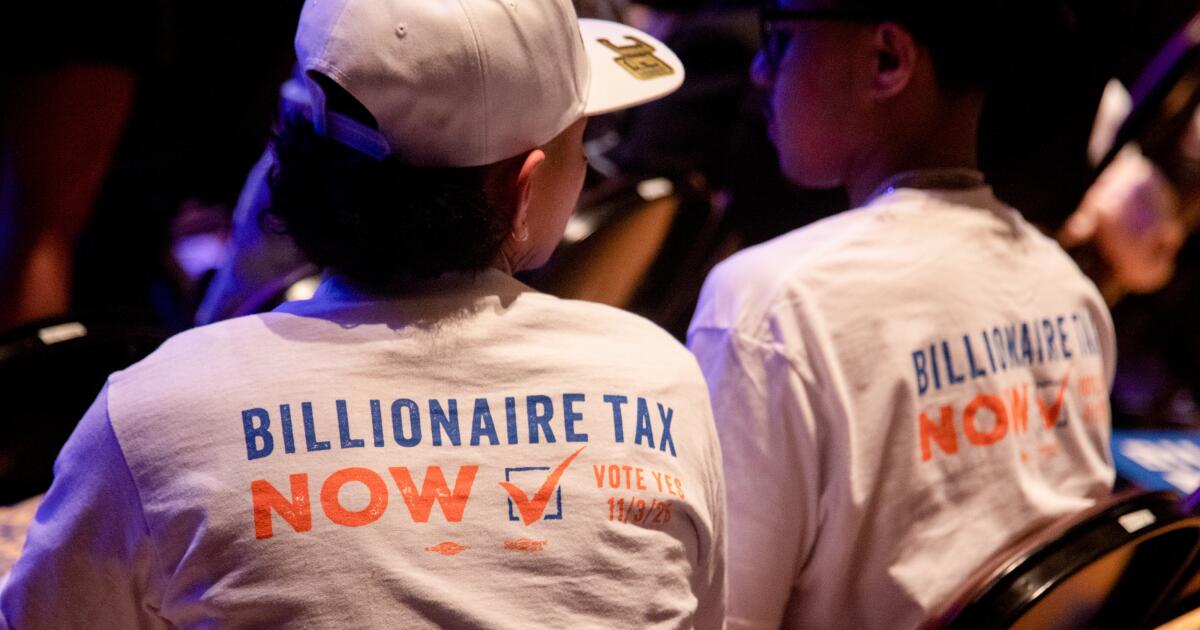
Controversial billionaire tax proposal will appear on November ballot
-
 Sports10 minutes ago
Shohei Ohtani is the first Dodger to be named 2026 All-Star
-

 World20 minutes ago
Who will control Africa’s AI infrastructure and at what cost
-
 News47 minutes ago
The Supreme Court says the U.S. can turn away asylum seekers at the border
-

 Los Angeles, Ca2 hours ago
Jury says it is deadlocked in trial of man accused in Palisades Fire
-

 Detroit, MI2 hours ago
Scene active as police shoot, kill man on Detroit’s west side
-

 San Francisco, CA3 hours ago
Civil grand jury report warns of wildfire risk at SF’s Glen Canyon Park
-

 Dallas, TX3 hours ago
Ivory Coast advances at World Cup, how to buy Ivory Coast tickets

