Lifestyle
What is it like to live in an L.A. hotel? Here’s a glimpse

This story is part of Image’s April issue, “Reverie” — an invitation to lean into the spaces of dreams and fantasy. Enjoy the journey.
On the afternoon of Sunday, Feb. 25, I drive to West Hollywood to spend a night at a hotel. I want to imagine what it would be like to live in one. There is too much noise in my head, and I am trying to clear it. I keep picturing a clean, fresh hotel room, a kind of blank slate — a chance to start anew, step into another life. I decide to keep a time log and write a diary entry for the 19 hours I am about to spend living out this experiment.
3:10 p.m.
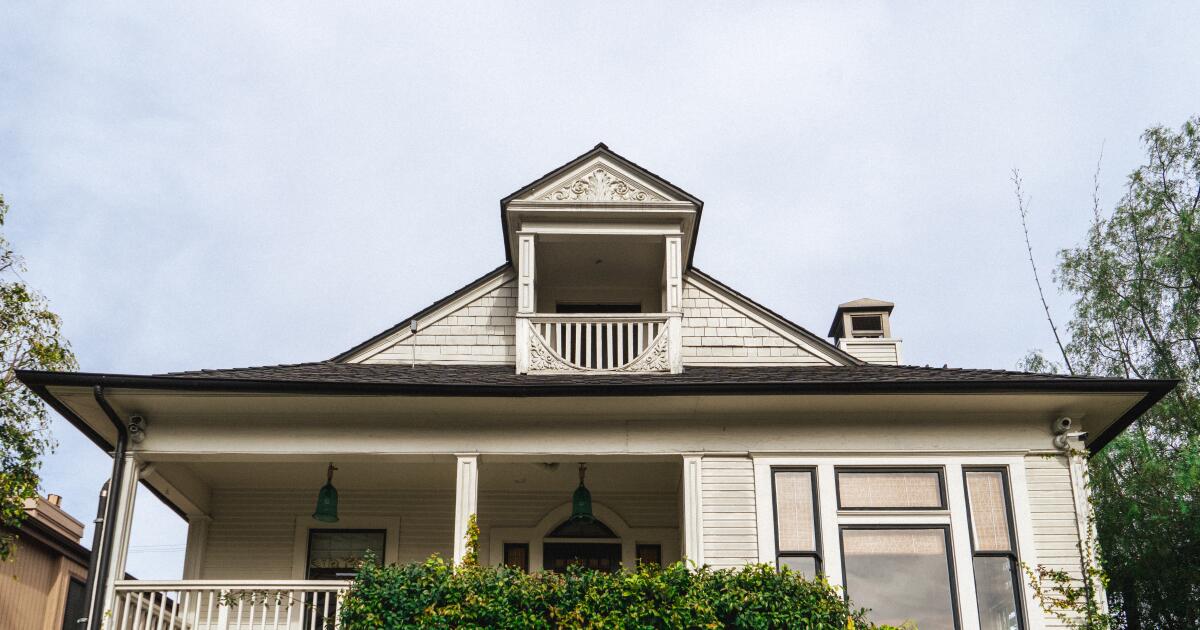
I arrive at the hotel. It is called Hotel 850 SVB, a name that I have a hard time remembering and sometimes call SVB 850 when I tell friends. One of them observes that it sounds like a vaccine. SVB stands for San Vincente Boulevard. The hotel is a white wooden house covered in green vines. In the early 1900s, it housed railroad workers who were building a railroad between Hollywood and Santa Monica boulevards. In 2018, hotelier Jeff Klein, the same owner of the Sunset Tower Hotel and the private club San Vicente Bungalows, opened Hotel 850 SVB, a hotel he has described as having “a soul, like a beautiful home.”
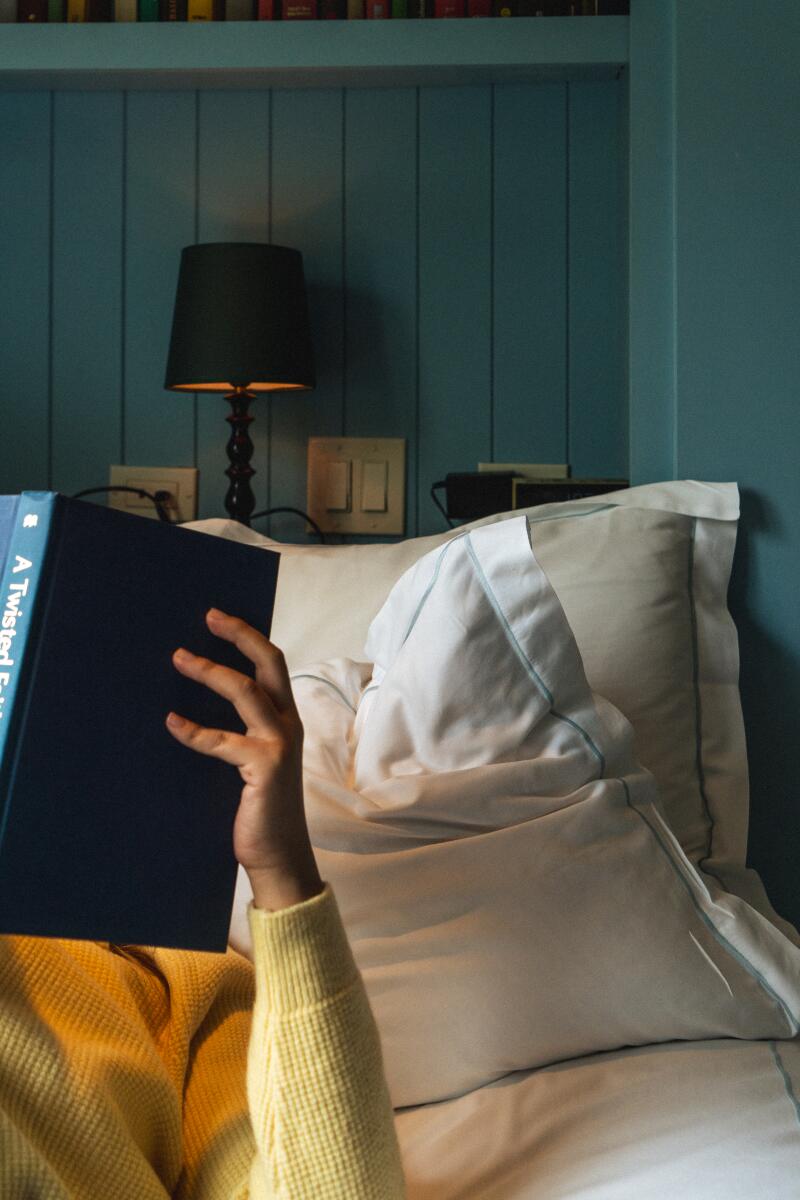
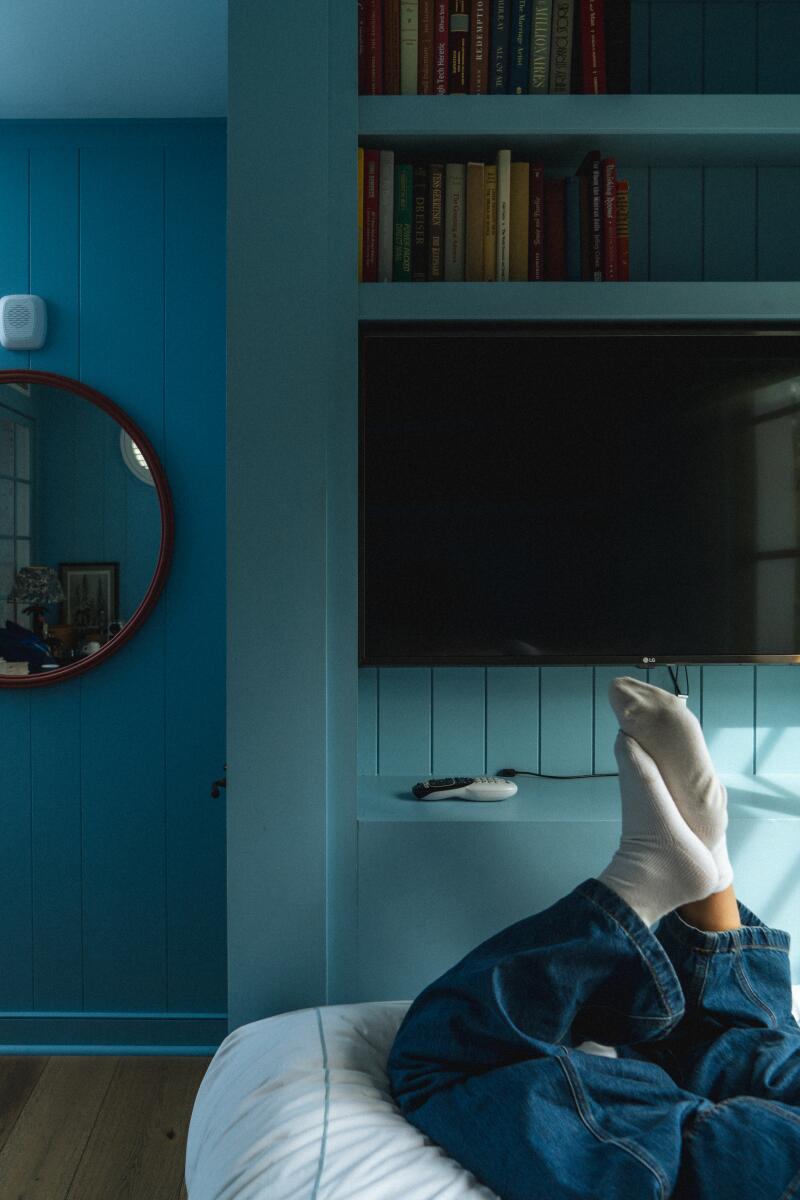
A bellman named Winston checks me in. He welcomes me to “Hotel 850.” I have booked the Carriage Room, inspired by the carriage houses designed to fit single horse-drawn carriages. It’s the room that books up fastest, perhaps because it is the cheapest, but it is also the most charming, with its walls all painted blue and bookshelves framing the bed.
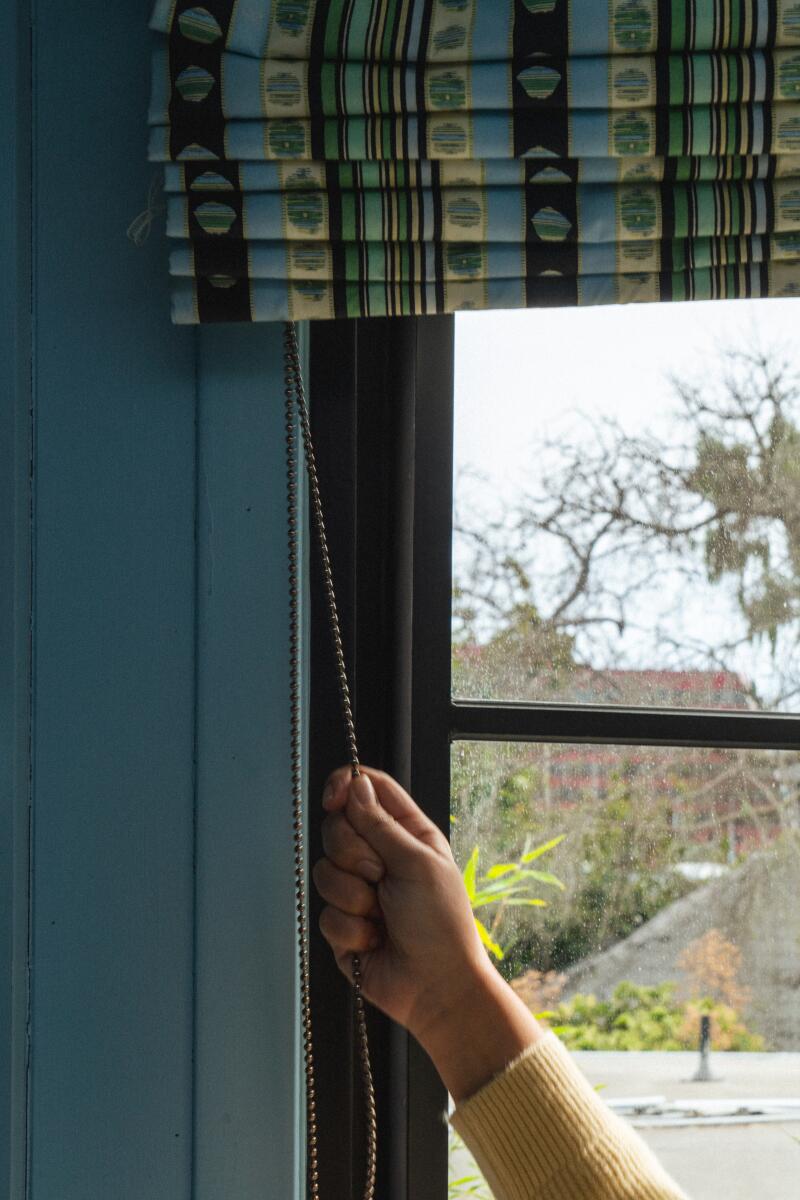
When I walk into my 200-square-foot room, I take off my shoes and put on the white hotel slippers. The things I encounter in the room give me ideas and expand the possibilities of what I can do: do yoga before bed on the blue mat, iron my shirts (which I never do), drink a bottled 1934 Cosmo for $18, read books with names like “The Millionaires.” Maybe it’s all that blue or the circular window, but when I lie on the bed, I feel like I’m on a ship.
4 p.m.
I realize it sounds silly to say I’m living in a hotel for less than 24 hours. Most people who’ve claimed to live in hotels have done so for at least a few months or often years. In this town, those people are often actors who come to stay for transient periods of time for film productions or simply like the luxuries of a hotel. Marilyn Monroe lived on and off at the Beverly Hills Hotel ; a TikTok video says the hotel still sprays her suite, 1A, with Chanel No. 5 to summon her scent. Elizabeth Taylor lived for a year at the Hotel Bel-Air. Robert De Niro, Keanu Reeves and Lindsay Lohan all lived at Chateau Marmont. Lohan was staying at the Chateau while playing the role of Taylor in “Liz & Dick” when she was apparently forced out by hotel management after 57 days for not paying her bill of $46,350.04. I prefer a story I find in the Daily Mail that says Katharine Hepburn checked into Chateau Marmont with a luggage of men’s clothes, “wearing an eye patch.”
4:45 p.m.
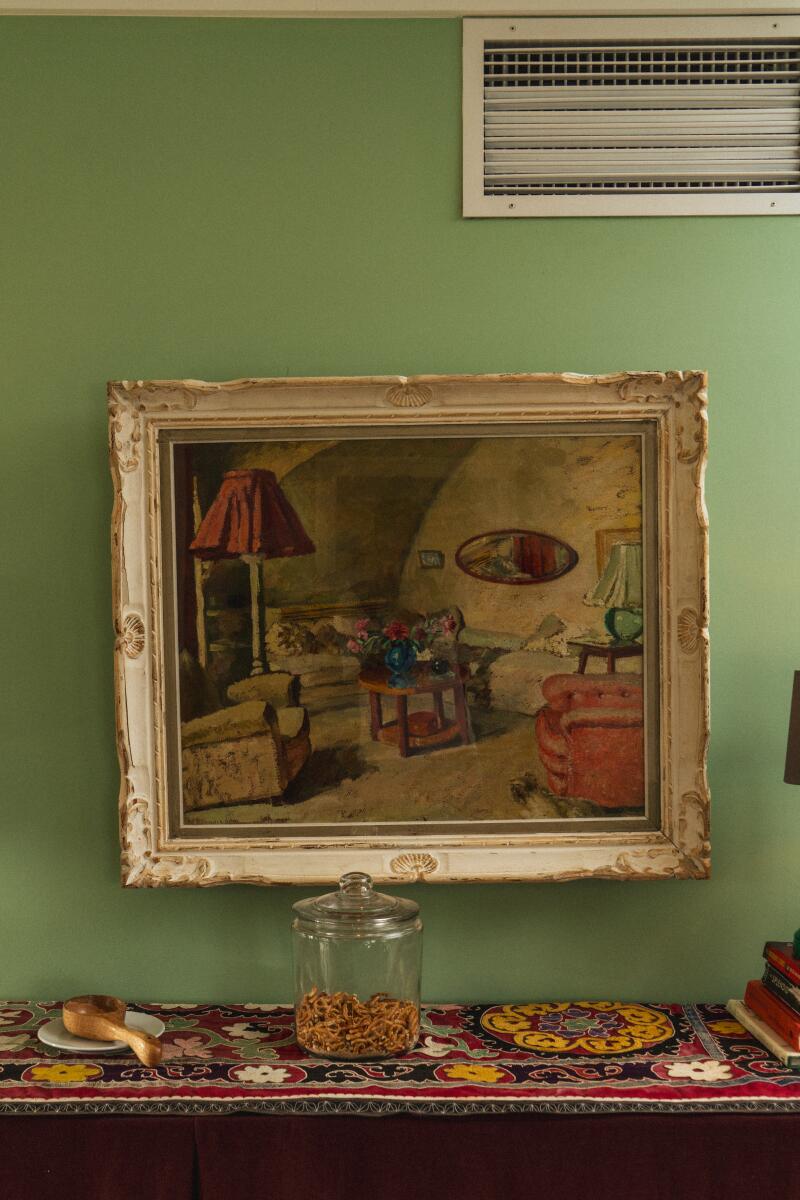
I walk out to the hotel lounge area, which is on the same floor as my room, in my slippers. The lounge is more like a living room, with mismatched couches, Louis Armstrong playing in the background, and a glass jar with pretzels for the taking. Any time a guest exits their room and comes to the lounge to grab a water or sit on the patio, I say hello. I receive a few smiles from these strangers but never hear their voices in exchange. I think I see an actor I recognize. I Google: older white actor who wears round glasses. Pictures of John Lennon populate.
A housekeeper wearing a baby-pink dress says hello and asks me how I am. She elegantly lays out the complimentary happy hour drinks on the dining room table that’s already adorned with a vase of purple orchids. After she is finished, I take an authentic Bavarian beer from the metal bucket filled with ice. I flip through Variety magazine. Four sips in, I’m given the illusion of suddenly being on vacation. I am relaxed, charmed by the chair to my right covered in a print of violet flowers.
The hotel guests here are not like those I read about who lived at famed hotels. They are not like the ones at the Chelsea Hotel in New York who were bohemian, wrote songs and plays, did drugs in the bathrooms and started fires. “They just let anybody in over there, that hotel is dangerous,” Andy Warhol wrote in his diary about the Chelsea Hotel in October 1978, “it seems like somebody’s killed there once a week.”
A hotel is a house where you can misbehave (or at least give in to what you wouldn’t do) and indulge in the out of the ordinary. Ideally this doesn’t involve killing someone. The classic example is the “Eloise” books, where a 6-year-old girl lives at the Plaza Hotel and drinks Champagne and gin, wears furs, eats meringue glacée and watches TV with a parasol “in case there’s some sort of glare.” (Eloise might have been based on Liza Minnelli, who lived in hotels with her mother, Judy Garland.) Maybe it’s because I’m 33, or because Hotel 850 is made to look like an eccentric aunt’s house, but rather than dreaming of debauchery, I’m looking at the red striped armchair and imagining what it would look like in my living room. I’m imagining the day I have walls tall and big enough to hold a vintage poster like the one in the room. I’m in a hotel, playing house.
5:25 p.m.
The truth is I did live in a hotel once. When my family moved from Brazil to Miami when I was 14 years old, we lived at the Sonesta Hotel for three months. I made new friends in high school by inviting them over for slumber parties that involved ordering movies on demand and room service. Aside from that, there was nothing too remarkable about the experience, and after a while, we got tired of the bland furniture.
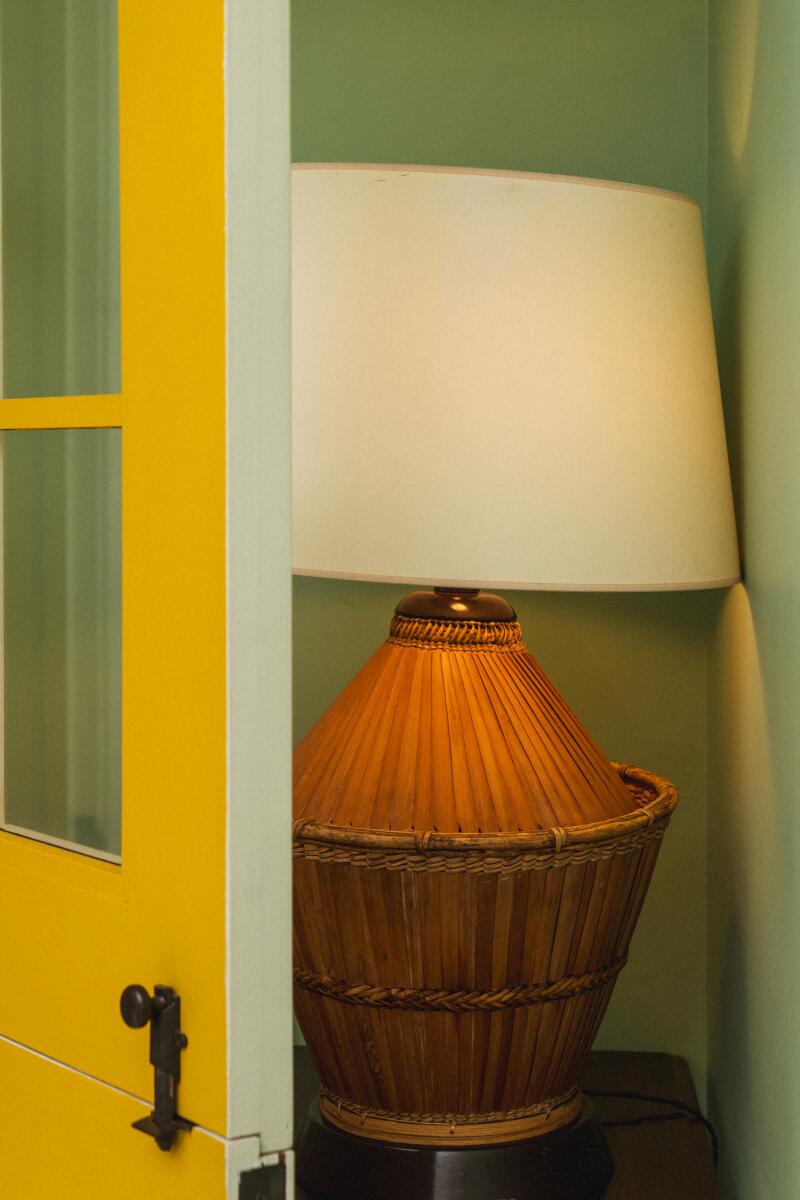
I think I would get less tired of the furniture here. The designer, Rita Konig, deliberately resisted “beige and boring” hotel aesthetics. In my room — because it is now my room — there is a table lamp with a giraffe for a base. It is a lamp that Konig replicated from her own home.
6 p.m.
In the days leading up to my stay at Hotel 850, I read “The Hotel” by Sophie Calle, a book documenting the week the artist spent working as a chambermaid at a hotel in Venice, Italy. Each time she cleans a room, she fusses through the guests’ belongings and photographs them: a stethoscope and rosary on the bedside table, a torn-up postcard, a lobster claw under the bed sheets, a pair of black heels in the trash, white underwear hanging to dry and diaries detailing “excellent lasagna,” hot baths, small bridges and good soup. She lets the objects speak for themselves but admits when she is “bored” by her findings.
I go back to my room to get ready to leave for dinner. I imagine what Calle would see and fixate on: that I brought three pens in different colors (green, pink and blue), that I color-coordinate them in my agenda (“dry cleaning” is in blue, “pick up pie” is in green, “6:30 p.m. massage” is in pink), and that I use hand cream that’s a blend of mandarin, lime, geranium and rosemary. She would note that I wear contacts, comb my hair in the shower and take thyroid medication. I want her to be interested in me but I don’t think she would be.
8 p.m.
I end up, unintentionally, at another hotel for dinner, where the bartender explains to me that the red, green and white dollops on the flatbread represent the Lebanese flag. Later, I eat Meyer lemon ice cream and share the sidewalk with one of those delivery robots for restaurants; it outpaces me. It is Sunday in WeHo, which is to say, it might as well be Saturday, and a bar is playing a techno remix of “Respect.”
When I come back to my room, I write this diary entry as if I am a tourist, registering my evening in L.A. When you’re traveling and staying at a hotel, every detail becomes important and worth recording. Life is finally observed and savored.
8:30 p.m.


I shower — admittedly it’s the moment I am looking forward to the most, when I get to test out the little shampoos and conditioners and liquid soaps. The shower products are all lemon-scented, and the body lotion is a strong rose that takes me several strokes to blend into my skin. There is a poet named Adília Lopes who likes to use hotel bath products at home because it gives her the sensation of being in a hotel without leaving her home. The containers at Hotel 850 are too big for taking; they are not souvenirs.
Winston, the bellman, had mentioned in passing that I would be most welcome to make myself some tea at night in the shared kitchen. Since I somehow feel that this is an experience not to be missed, I go to the all-yellow kitchen to make myself rooibos tea. I am shy about being caught in my pajamas, so I wear my coat.
Maybe the moment I am looking forward to the most is actually getting in bed, slipping my bare feet under the freshly ironed sheets. I do this while I drink my rooibos tea and watch a boring episode of “Friends.” If I could steal one thing from a hotel, I think it would be the sheets.
8:30 a.m.
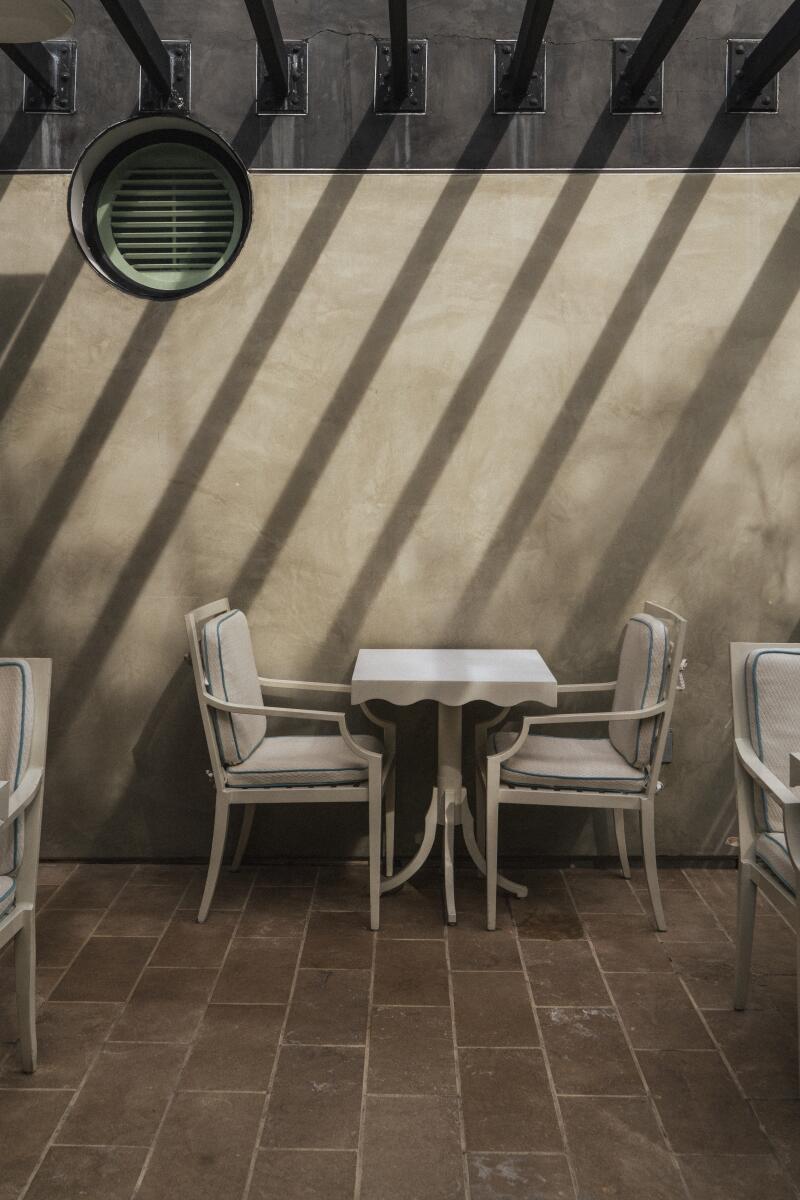

At breakfast, there are three Frenchmen. One of them is upset because he woke up at 6 a.m. While I eat my yogurt, I fantasize that if they ask me where I’m visiting from, I will lie. I decide I will tell them I am visiting from New York, that it is my first time in Los Angeles. But they never ask me. I begin to wonder what would happen if I stayed longer, what persona I would gradually adapt, what alternate life I would build.
But I have to check out and head to work. Before leaving my room, I do one last scan. I never did the yoga or ironed my clothes or drank the Cosmo.
“Safe travels,” the bellman says on my way out. I drive home.



Paul Tremblay has made a career of pushing the horror genre – and the novel format – in strange and exciting new directions.
In his latest, Dead but Dreaming of Electric Sheep, the author offers an amalgamation of genre elements that can be best described as psychological-dystopian-science-fiction horror. It’s a mouthful, but the narrative does all of that and more in a way that defies categorization.
Julia Flang is a former semiprofessional gamer working two mediocre jobs she dislikes and living in a modest ranch house in a San Fernando Valley suburb with her retired uncle, whom she calls Uncle Fun. Julia likes movies and gaming but there’s little else going on in her life, so when her estranged mother, the CFO of a large tech company, contacts her with a possible job offer – a “once-in-a-lifetime thing” that pays handsomely just for doing the interview – she hesitantly agrees.

The job is relatively simple and perfect for someone with gaming skills: using a controller built into a phone to get a man, who is stuck in a vegetative state, from California to the East Coast. It will require her to learn how to control his body – walking, moving, sitting, standing, using his arms – so she can maneuver him out of the facility where he is located and into cars and planes and through crowded airports. A fan of movies, Julia decides to call the man Bernie – after the movie Weekend at Bernie’s. When the ethics of the job start to bother her, Julia realizes it’s too late and she must go through with it. However, she’s soon contacted by people interested in sabotaging the whole thing, people who, like her, don’t align with the shady interests of conglomerates and those set to make “gobs of money” from this new, somewhat inhuman technology.

As with every Tremblay novel, any synopsis barely scratches the surface. The novel’s chapters alternate between Julia and you (yes, you). Julia’s chapters are “normal” in the sense that they obey a chronological order and have action, basic descriptions of movement and places, and dialogue. The chapters in second person are like fever dreams from a shadow world; the desperate experiences of a man trapped inside his own body with no control of it, no clue what’s happening to him, and only a few fragmented memories of his life. Also, Tremblay uses a similarly fragmented style of storytelling (including words and sentences trapped in boxes and/or “moving” on the page) to keep things interesting but also confusing and creepy.
This novel operates on several different levels and – planes of existence? Bernie has a head full of AI that controls his body, but his consciousness is still there and struggling to regain control, struggling to remember things. There are monsters, leeches, mysterious rabbits, and eerie shadows in his world, but the true horror comes from the lack of control, from being moved around against his will and having no clue what comes next. Bernie is the embodiment of losing control to AI, and when taken together with the commentary of creativity and AI and the meta interludes in which the author takes a wrecking ball to the fourth wall and addresses readers, this is the best anti-Generative AI story horror has produced so far.
Despite the horror of it, this is a very funny novel. Julia is sarcastic and struggles to keep her comebacks in line, but the conversations she has and messages she writes are always entertaining. However, the humor is far from the crown jewel here. That title belongs to a plethora of big ideas Tremblay juggles. The nature of life, death, and consciousness, the evils of conglomerates, inhuman practices in the name of capitalism, and AI, and even what it means to be human are all explored here: “Is Bernie alive? Is he feeling pain? Is he experiencing everything as a prisoner looking through the bars of his body? Has his consciousness been winnowed to a metaphysical keyhole? Where does consciousness begin or end?” There are no definite answers here, but the way Tremblay infuses humanity, love, the importance of relationships, and humor throughout the narrative provides the kind of answers that can’t and don’t need to be spelled out.
A genre-bender full of big ideas that constantly switches between a world full of real or uncomfortably plausible nightmares and a bizarre hellscape in which loss of self, memory, and autonomy are only the tip of the proverbial iceberg, Dead but Dreaming of Electric Sheep is a horrific and terrifyingly disorienting novel that invites readers to consider a future that already started. Tremblay has always been an innovator, but this beautifully written collection of real and imagined grotesqueries cements him not only as one of the most original and exciting voices in horror but also as one of the smartest, most engaging authors in contemporary fiction.
Gabino Iglesias is an author, book reviewer and professor living in Austin, Texas. Find him on X, formerly Twitter, at @Gabino_Iglesias.


Give a girl a bow and arrow, take her to the woods, and anything feels possible.
That’s what I was thinking as I positioned myself in front of bales of hay in an open field at the Woodley Park Archery Range in Van Nuys. Channeling my inner Katniss, I took a “power stance:” shoulders back, legs slightly bent, bow cradled in my upper body. I slid a small but fierce-looking arrow bearing orange feathers onto the bow “nock,” filled my lungs with air, then heaved the tense bowstrings back to my jaw, one eye closed and the other narrowed in concentration.
Then I did what often feels impossible for me: I let go.
-
Share via
The arrow hurdled forward, unleashing an audible woosh followed by a distant thwack. I missed my target entirely, stabbing the hunk of hay more than a foot away from the bull’s-eye. But the feeling of release as the bowstrings were left vibrating in my arms was palpable, intensely satisfying.
This was Mindful Archery.

Angie Fadel, founder of Soulcare, leads Mindful Archery.
(Eric Thayer / Los Angeles Times)
The seemingly militaristic act of archery and peaceful meditation may seem diametrically opposed. But at Angie Fadel Soulcare, they make perfect sense together. Fadel leads workshops in Mindful Archery that combine meditation, somatic practices such as breathwork, immersive nature therapy and archery instruction.
The idea, Fadel says, is for participants to gather in a healing nature setting while becoming mindful of something they want to either let go of (an unfulfilling job or toxic relationship, for example) or something they’re aiming for and want to bring into their lives. Fadel leads a short guided meditation at the start of the workshop for participants to relax and get grounded, followed by a nature walk so they can further sink into the moment and become clear on what, exactly, their targets will be for the day — what they’ll be shooting for, or at. Then participants draw their individual targets on paper with colored markers that Fadel provides.

Attendees hold up their targets during a Mindful Archery class.
(Eric Thayer / Los Angeles Times)
One target might look like an abstract drawing representing a feeling, another might be a jumble of words and symbols such as “Love,” “$” and “Health.” Or an illustration of Donald Trump, as one past archer aimed for.
“I’ve seen everything,” Fadel says. “People have put their parents, their exes, people have put rapists — the most damaging things that have happened to them — on a target because if you can hit that thing, it feels better in your body. The same thing happens when you hit something good, it’s a hopeful mechanism in the body.”
Fadel’s archery instruction is as much about how the sport feels in the body as it is about technical precision. The slow and steady, intentional steps of deep breathing, taking aim and shooting at a carefully considered target is a powerful act, she says.
“Even if the arrow doesn’t go where you want, there’s this immediate thing that happens in your body that feels good,” Fadel says. “When you let go of that string, there’s an energy, there’s a movement — actual, physical energy moves. Something magical happens. It helps the things that are stuck in the body get unstuck. It’s somatic. Then it’s an extra bonus if you do hit your target, because the slap of the paper feels even better.”

Angie Fadel readies bows.
(Eric Thayer / Los Angeles Times)
Fadel, who lives in Portland, Ore., and calls herself “a soul-collaborator,” has a masters in spiritual companionship and spent a decade working as a pastor in a Portland church helping members find untraditional spiritual paths. She’s also been an archer for more than 15 years. She came to both practices — spiritual companionship and archery — separately before they organically entwined. Midway through pursuing her master’s in 2011 she discovered a friend was a master archer. She’d always wanted to learn archery, since she was a kid growing up in rural Washington, and she persuaded him to give her a lesson.
“It was just one lesson, but it changed my life,” Fadel says. “I was doing something that I’d always dreamed of doing. It unlocked something I didn’t realize could be unlocked.”

Targets pinned to a hay bale allow participants to take aim at what they want to bring into their lives.
(Eric Thayer / Los Angeles Times)
Fadel found archery increasingly therapeutic. She was doing a lot of introspective Jungian journaling at the time. As life challenges came up in her journaling — the stress of school or a difficult roommate, “or just society as a whole,” she says — she’d put them on targets in the form of words. Shooting at them helped her process the conflict. She thought the beneficial side effects of archery were particular to her, however. Then she took a struggling friend out for her first archery lesson and the response was profound.
“I realized, you know what? This works. I can take you from never touching a bow to your leaving with your nervous system relaxed. I thought: I have to figure out how to give this to other people.”
Now with Soulcare, Fadel conducts multiple types of archery workshops in Portland and around the country, including in Colorado, Texas and throughout California. She comes to Los Angeles to lead workshops several times a year. One workshop is a Mindful Archery class, not to be confused with her other course Meditative Archery, which involves Jungian journaling; and there’s a one-on-one archery session with spiritual guidance.
Empowering women and minorities, Fadel says, is a key part of her archery workshops.
“An archery range can be a very white, male-dominated space,” she says. “And the stance, with a bow and arrow in your hand, shooting — it’s very male. And [men] don’t have any problem, most of the time, taking up space. So it is a practice to remind ourselves, as a queer woman, a trans person, nonbinary person, anybody that’s kind of othered in our society, to be able to take up space. To adopt a power stance and be, like, I’m allowed to be here.”
Inside the Mindful Archery workshop
Our workshop began with gentle stretching in an open field. It was a cool, overcast day and as the wind rustled the tree leaves, a baby coyote raced across the lawn in the distance. During introductions, attendees shared why they were here.

Archery is about “letting go” and here, a student lets her arrow fly.
(Eric Thayer / Los Angeles Times)
“I’m actually a very anxious person,” said Rachel Clipper, 26, “so I’m always looking for something to help me feel more grounded and promote mind-body connection.”
Kati Lee, 29, said that as a “‘Hunger Games’ girlie,” she’d always thought archery was cool. “But what drew me to keep coming back was the mindful part of it,” she said. “My favorite part is that we make our own targets.”
During the nature walk, we ambled down a tangle of dirt trails as Fadel pointed out wild rose bushes, Aspen trees and elderberry, giving a recipe for syrup. When we came to a body of water in a clearing — the Woodley Park Wetlands — we watched as a majestic-looking cormorant stretched its wings in the distance.
“Think about what would feel good to either annihilate,” Fadel said as we returned to the range. “Or bring in, or let go of, or make peace with. You can put all of it on your target.”
And so we did. We hunkered down at a picnic table by the archery range for crafting and snacks that Fadel provided, every one of us falling into silent sketching and scribbling as we munched on peanuts and granola bars. It felt like summer camp.
Lee set her markers down. “Done,” she said, contemplating her target. It was adorned with words such as “Health,” “Love,” “Family” and “Friends” inside concentric hearts.
Yvonne Golomb, 70, said she’d done archery as a high school student in gym class. She was shy back then, but archery had made her feel bold. Now that she’s retired, she’s craving that feeling again and is returning to the sport for sustenance.
“It’s this nice memory, it made me feel strong, it was freeing,” she said. “Now that I’m retired I’m exploring it. I wanted to bring back those memories.”
When it was time for our archery lesson, Fadel conducted one last somatic exercise to loosen us up. She had us tap up and down our body parts, from our feet to our ears, before shaking out any remaining stress.
Then she coached us, individually, as we took aim at our targets in sets of three.
“Breathe, zero in on your target, OK, now smooth …,” she said, hovering over one attendee.
May Claire La Plante, 31, said she was doing archery today, in an “adaptive stance” Fadel had taught her, to build up her arm strength after a surgery.

Kati Lee, right, and Tristan Gonzales affix their targets during a Mindful Archery class.
(Eric Thayer / Los Angeles Times)
“I was feeling very frustrated that I couldn’t get it at the beginning,” La Plante said. “I didn’t even finish my arrows. But getting back up and the act of trying again — despite the injury and all the baggage that comes with it — is really empowering.”
“Bull’s-eye!” Clipper cheered nearby, her anxiety seemingly dissipated. She’d hit her target, dead center. What was on it? A labyrinth-like spiral of words with “Peace,” “Love” and “Creative Control” at the epicenter.
I wasn’t having as much luck and was missing my target repeatedly.
“Try loosening your grip,” Fadel coached. She adjusted my stance. “Now breathe.”
It seemed counterintuitive to slacken my grip given such a precise goal — to land a slender arrow in the epicenter of a black dot. But I did, letting the edge of the bow sit loosely, even wobbly, between my fingers. I took aim and shot. This time the arrow flew strong and straight.

One participant hit the bull’s-eye, which calls for “peace” and “love,” dead center.
(Eric Thayer / Los Angeles Times)
Another round later and it landed smack on the paper target, just above my bull’s-eye.
“See?” Fadel said, elated. “Archery isn’t about doing it right, it’s about repetition. The more you can be in your body, and relaxed with the repetition, the better you are. Rarely do I have someone not hit their target at least one time.”
She squinted at my target, then turned to me.
“It’s because they’re relaxed and it’s because they trust me,” she added. “And they learn to trust themselves more.”
-
 Business5 minutes ago
Disneyland to offer $59 evening tickets next month
-
 Entertainment8 minutes ago
After Amazon drops OpenAI movie ‘Artificial,’ film finds new home at Neon
-

 Lifestyle13 minutes ago
ICICLE: Capturing Interest in Chinese Brands
-
 Politics20 minutes ago
Newsom signs off on 100% California tax for money from Trump’s $1.8-billion ‘slush fund’
-
 Science23 minutes ago
After bold pledge, EPA shelves microplastics testing in U.S. drinking water
-
 Sports28 minutes ago
Walter Alston, Dave Roberts and everyone in between: The 10 managers in L.A. Dodgers history
-

 World38 minutes ago
World’s oceans experience hottest June ever, scientists say more heat ahead
-
 News1 hour ago
What the Supreme Court did on the final day of its term

