Minneapolis, MN
Effort to revive Minneapolis 2040 plan moves forward in Minnesota House | Finance & Commerce


A version of the bill that would exempt cities’ comprehensive plans from certain lawsuits under the Minnesota Environmental Review Act has made its way into the state and local government supplemental budget bill.
This policy would exempt comprehensive plans from being sued under MERA for creating dense housing and would be retroactive to March 2018. The policy was amended into the supplemental budget bill on April 18 with a unanimous voice vote by the State and Local Government Finance and Policy Committee. Advocates for the bill say they are waiting to see what the Senate does with the policy, but they are “cautiously optimistic.”
The retroactive nature of the policy would create protection for the city of Minneapolis’ 2040 Comprehensive Plan, a plan that removed single-family-only zoning and has been cited by researchers as being a reason for Minneapolis keeping its rent increases lower than the rest of the nation. However, a lawsuit against the plan, under MERA, brought its implementation to a halt.
Rep. Sydney Jordan, the sponsor of the original bill House File 4028, said in an interview with Finance & Commerce that she was “nervous” about the bill’s status because the Legislature is “full of ups and downs.” She said, however, that she’s grateful the bill was included in the state and local government supplemental budget bill because of the issues facing Minneapolis.
“It was a bill that was necessary for my city that I represent,” Jordan said. “I felt it was important, especially because my city was trying to make sure we were permitting housing and permitting density, which is much more beneficial for the environment than promoting less-dense sorts of development.”
The bill would provide shelter for all cities in the Twin Cities metro that are planning for density under MERA, not just Minneapolis, said PeggySue Imihy Bean, the president of the American Planning Association Minnesota Chapter.
Jordan said that there is more work that needs to be done to the policy and that there are more stops for the state and local government supplemental budget bill. But she said she is confident the needs can be addressed by the end of session.
The Senate version of the bill, Senate File 4183, made it through its committee assignments, receiving a vote from the Transportation Committee, the Environment, Climate and Legacy Committee, and was laid over for possible inclusion in the omnibus bill by the State and Local Government and Veterans Committee at its March 26 Committee meeting.
Sam Richie, a lobbyist for the Minnesota chapter of the American Planning Association, said he and others who are pushing the policy feel “cautiously optimistic” about the Senate including it in the omnibus bill. Richie said he thinks they have support from legislators, but said he is waiting for something to be in writing.
Jack Perry, a lawyer at Taft Stettinius & Hollister LLP who represents the groups that brought the lawsuit against the Minneapolis 2040 Plan, said he is “confident” the bill will not pass the Senate.
When probed on what would happen to the lawsuit if the exemption is included in the final omnibus bill and signed by Gov. Tim Walz, Perry said the question was “phony” because he doesn’t think the bill will get “anywhere near Walz’s desk.”
Perry called the city of Minneapolis “radical intransigents” and compared it to the character Veruca Salt from the 1971 film “Willy Wonka and the Chocolate Factory” who insists her parents give her whatever she wants.
“I don’t think there’s the votes in the House,” he said. “I don’t think there’s votes in the Senate because people do not want to reward Veruca Salts.”
Lawmakers consider exempting comprehensive plans from environmental lawsuits
Local officials lobbied hard against statewide zoning bill



Minneapolis, MN
People facing drug addiction in Minneapolis voice difficulties amid planned crackdown

On Friday afternoon, a Minneapolis police car drove slowly down Blaisdell Avenue towards Lake Street.
In response, a group of several dozen people moved further down the street, congregating at the KFC at the intersection. Minutes later, they returned to a spot that three of them admitted to be a spot to hang out, purchase and use fentanyl.
“The majority of us are addicted to fentanyl. The majority of us don’t want to be,” a man who wanted to go by Alon said. “It’s just really difficult getting off without having someone to hold our hand and guide us in the right direction.”
Alon said that he fell into a pattern of fentanyl use after becoming homeless. It was a similar story for Jeremiah and Mohamed, who told WCCO that they didn’t know where they were going to sleep on Friday night. But Blaisdell Avenue and Lake Street had become a reliable place to spend the day.
“It’s a place to go. A lot of times people don’t have a place to go,” Mohamed said.
Both men said that drugs are abused on the block, but claimed that no one else in the neighborhood was getting hurt.
“[There’s] not a lot of crime going on as far as like harming other people. We’re harming ourselves doing these drugs,” Jeremiah said.
The city would likely designate the area as an open-air drug market. Just this week, Mayor Jacob Frey was joined by local law enforcement and Native American organizations to announce a crackdown on drug users and sellers in these kinds of public spaces.
“You can get services that we will offer and you can get better. We’ll make sure that those services are readily accessible,” Frey said. “But if you don’t accept those services, you can’t continue to hurt our neighborhoods and make our streets less safe.”
The announcement comes as concerns continue to grow over public fentanyl use, discarded needles and criminal activity in areas like Cedar Avenue and Highway 55. City officials emphasized that enforcement will be paired with efforts to connect people to resources. Those with the city say they will continue helping individuals find housing and addiction treatment while expanding access to Brixadi, a medication that helps reduce opioid cravings and withdrawal symptoms.
Naomi Wilson, a community organizer who has criticized Frey’s approach towards drug markets and homeless encampments in the past, said that “criminalization” will only create more harm, and that the city should explore designating safe, public areas for drug use while creating more stable housing options.
“All we are asking from the mayor is to partner with advocates to partner with City Council on an interim step that’s not criminalization,” Wilson said. “I think the issue is that with all the fencing around the city, people don’t have anywhere to be. They don’t have anywhere where they can be safe at nighttime.”
On social media, Councilmember Jason Chavez likened Mayor Frey’s announcement to the city starting a “War on Drugs.”
“Our community has told us what it actually needs. A safe location, safe outdoor spaces, tiny home villages, real pathways off the street, and housing first, a compassionate approach, not another arrest that leaves someone with a record, further from housing, further from a job, and further from the stability they need to get well,” Chavez posted online.
He ignored a request for comment from WCCO.
On Blaisdell Avenue, Jeremiah was blunt. He said he knew city services were available, noting that many simply weren’t interested.
“Whether people are a drug addict or just lazy, they don’t tend to go for it. But they’re [services] definitely available,” Jeremiah said.
During Thursday’s announcement, Frey argued that the goal is not criminalization.
“After years of outreach, we cannot stand by while drug use continues to harm our neighbors,” Frey said.
Minneapolis, MN
Minneapolis police officer was fired in February for liking pro-lynching comment, department document shows

The Minneapolis Police Department fired an officer in February for liking a comment on social media supporting the lynching of a Black man, according to Internal Affairs documents.
The comment in question was made in March 2024 in a Facebook group called Minneapolis Police Officers and Civilian Employees, Current and Retired, which has no official affiliation with the department, police said.
In response to a news article about a suspect accused of killing a police officer, someone commented, “Get a [r]ope and find a tree,” and Klimmek liked the comment from his personal account, the MPD investigation found. The suspect appeared to be Black.
Klimmek admitted to liking the comment in an investigative interview, but said he did not know the phrase carried any racial connotations. He said he liked it because, “I was probably supportive of that post, uh, the death penalty for someone who murdered a police officer,” MPD documents show.
WCCO has reached out to the Police Officers Federation of Minneapolis for comment.
“Officer Klimmek’s claim of not knowing that the phrase, ‘Get a rope and find a tree’ is affiliated with an unquestionably violent history of racism and slavery, and his claimed lack of knowledge demonstrates how out of touch he is with history,” then-Chief Brian O’Hara wrote in his findings. “The public cannot trust his judgment, and I cannot trust his judgment.”
In his investigative interview, Klimmek “did not express any remorse for his actions,” the department said, and he “just does not understand or appreciate his role in upholding the public trust or the betrayal of that trust inherent in the comment that he liked.”
O’Hara said Klimmek’s conduct “has had a serious negative impact on the professionalism of the MPD and has demonstrated a serious lack of integrity, ethics and character related to his fitness to hold his position.”
He added later in the document that “officers do not have the power of ‘judge, jury, and executioner.’ Even if Officer Klimmek believes in the death penalty, which he is certainly entitled to, officers must respect due process and conduct themselves accordingly so as to not call into question their fitness to serve.”
The department terminated Klimmek on Feb. 20 for violating its social media conduct policies. He received one-on-one social media policy training in 2015, the investigation noted.
Minneapolis Police Department records show three previous disciplinary measures for Klimmek, all suspensions. In 2020, he stood by while a security officer punched a handcuffed suspect in the stomach. In 2021, he ran a red light and caused a crash. And in 2024, he failed to properly search a suspect and allowed him to bring a loaded handgun into the Hennepin County Jail.
The department’s online dashboard shows at least 20 complaints against Klimmek since 2012, four of which are still open.
O’Hara noted in his decision that Klimmek’s actions came after the murder of George Floyd and investigations by both the Minnesota Department of Human Rights and U.S. Department of Justice that found a pattern of racial discrimination by the department.
O’Hara himself resigned in May after an internal investigation found he interfered with a probe into his own actions.

This weekend downtown Minneapolis is hosting the Taste of Minnesota, offering free music performances and more than 100 food trucks and artist vendors. FOX 9’s Leon Purvis is onsite with a preview of what’s to come.
-

 Finance5 minutes ago
Las Cruces finance director gets national honor for ‘exceptional contributions’
-

 Fitness12 minutes ago
10 minutes of swimming might not sound worth it – but I tried it for 2 weeks and found the benefits of a quick dip
-

 Movie Reviews20 minutes ago
The Revisionist – Film Review – Eye For Film
-
World30 minutes ago
150 people from 50 countries become US citizens at Mount Vernon on America’s 250th birthday
-
 Lifestyle1 hour ago
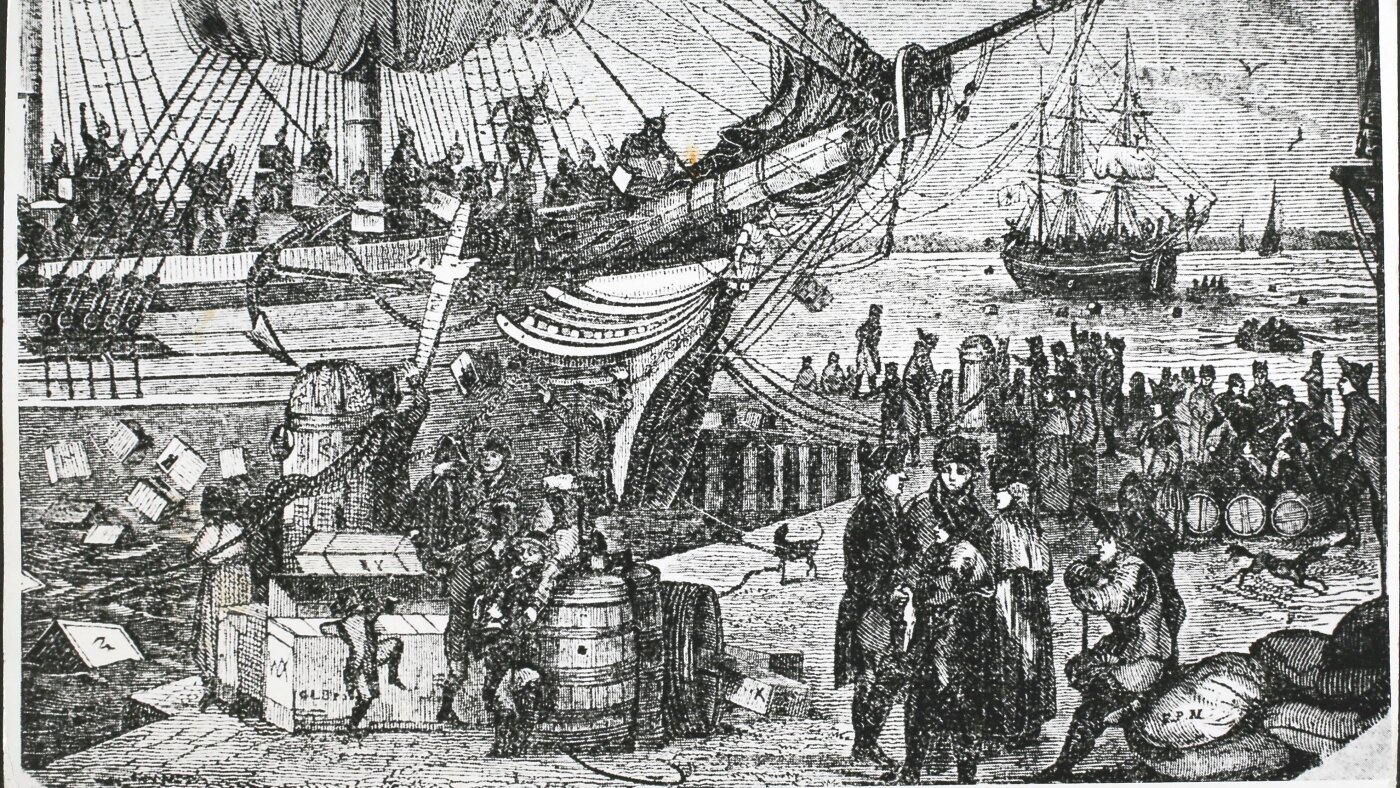
But first, coffee: The drink that energized the American Revolution
-

 Technology1 hour ago
NASA launched an emergency mission to stop the Swift Observatory from crashing to Earth
-

 World1 hour ago
Tens of thousands of far-left protesters clash with police in anti-conservative party riots
-

 Politics1 hour ago
Trump set to deliver ‘historic’ speech celebrating America’s 250th anniversary

