California
Crime and fentanyl hit California’s king of burgers

/cloudfront-eu-central-1.images.arcpublishing.com/prisa/ISYNVMNJZJE4TBRFGFYGXKDPIQ.jpg?ssl=1 "Crime and fentanyl hit California’s king of burgers")
Californians are pretty particular when it comes to their burgers. Whether it is based on the market, internet or random street surveys, the answer from the majority is overwhelming: In-N-Out is their favorite burger joint. A far cry from the household names and numbers of global companies like McDonald’s, Five Guys or Burger King, this chain operates only 400 restaurants in eight of the country’s 50 states, mostly in the West, and only serves a dozen or so regular products. In its 75 years of existence, its success has been slow but steady and, without leaving family hands, it has never closed any restaurants (with one curious exception: the first, the original one, was demolished for the construction of a highway, but was relocated very close by). However, now neither its burgers and shakes nor the handsome profits they generate have managed to stall the closure of one of its establishments for the first time. Crime in Northern California’s Bay Area has forced Oakland’s only restaurant to call it a day.
In-N-Out is so popular in California (also in Texas, Arizona, Nevada and it soon will be in New Mexico and Tennessee) that reports of this first shutdown have made headlines in the local news. Rumors surfaced in late January, but were not confirmed until late March, when their Oakland location bid farewell on the 25th at 1 a.m., after a non-stop day of serving their famous double burgers and Animal Fries, French fries with fried onions, melted cheese and their secret and delicious Animal Sauce. By March 31, the famous yellow sign and decorative elements were gone. Only a white building remained.
The famous hamburger restaurant has been forced to close following a surge in robberies, especially violent ones. Despite its tremendous success, it has not been able to endure the rampant crime in the area. With more than 27,000 employees nationwide — it is believed to be one of the best companies to work for — and around 20% margin on its products (at highly affordable prices, especially as California is one of the most expensive places on the planet), the company had an estimated revenue of $575 million last year. Its stores are not franchised: since being founded by Harry and Esther Snyder in 1948, they have been owned by the Snyder family, whose sole heiress, granddaughter Lynsi Snyder, has amassed a fortune of nearly $7 billion, according to Forbes. The increase in the minimum wage in the restaurant industry in California, which was raised to $20 an hour on April 1, has also not affected the chain’s revenues for the time being.
The Oakland establishment, near San Francisco, was still making a profit and was therefore the first to close (in these 75 years many of them have been relocated, but have never closed). “We feel the frequency and severity of the crimes being encountered by our customers and associates leave us no alternative,” regretted the chain’s chief operating officer, Denny Warnick, in a statement published by Associated Press. “Despite taking repeated steps to create safer conditions, our customers and associates are regularly victimized by car break-ins, property damage, theft, and armed robberies,” bemoaned Warnick, who said they could no longer ask anyone to come to the establishment, not even “to visit or work in an unsafe environment.” Employees have been relocated to nearby establishments or, for those who preferred, have had the opportunity to depart with a severance payment.
Despite the fact that the U.S. has seen violent crime rates falling for more than two years (down more than 8.3% in 2023, according to CNN data, which cites the FBI), Oakland has experienced an uptick in violent crime, up as much as 21% last year over 2022. In addition, fentanyl is on the loose in the area. The terrible opiate, 50 times more powerful than heroin, whose use has now been declared an epidemic, is rampant in the city. The drug is fast acting and cheap, and it is estimated that one person in the country dies every five minutes from its use. It has already killed more Americans than the Vietnam War and Afghanistan combined. In Oakland, news of seizures and overdoses is continuous, and muggings and robberies have been linked to the drug.
This has prompted businesses such as Starbucks and the supermarket Target to close in the area; another fast-food chain, Denny’s, has announced that it will be the next to leave. The mayor of Oakland, Sheng Thao, said on local television that they have placed more police on patrol, but they understand that more needs to be done. In addition to being the only one in the city, this shut-down In-N-Out site was very close to Oakland Airport, a key Bay Area hub, as it is just 20 minutes from downtown San Francisco and has a throughput of about 11 million passengers annually. When landing, visitors will no longer be grabbing burgers on their way in.
Sign up for our weekly newsletter to get more English-language news coverage from EL PAÍS USA Edition



Fireworks Safety Guide
Essential safety tips for buying, handling, and watching fireworks to ensure a safe celebration.
With July 4 falling on a Saturday this year, many businesses and organizations are taking the day off Friday, July 3, to mark America’s 250th birthday. From banking to mail service, here’s what’s open and closed for the holiday weekend.
Most federal offices closed, mail service to continue
Non-essential federal offices will be closed on July 3. However, mail service will continue as normal, and post offices are scheduled to remain open.
Most California government offices to remain open
Most California government offices will be open on July 3, with some exceptions.
DMV offices throughout the state will be open. However, the Employment Development Department will be closed.
DMV offices that offer Saturday hours will be closed on July 4.
Private parcel services to remain open
UPS and FedEx are both scheduled to operate normally on July 3, but will suspend service on July 4.
Stock markets closed
Both the New York Stock Exchange and Nasdaq will be closed on July 3.
Most banks to stay open
While most banks were expected to operate normally on July 3, some may operate under modified holiday hours. All banks will be closed on July 4.
Online banking services should remain operational.
Grocery stores
Most major grocery chains will be open on both July 3 and July 4. Trader Joe’s locations will be open for regular business on July 3 but will close early at 5 p.m. on the Fourth of July.
Retailers
Many major retail stores, such as Walmart and Target, plan to operate under normal business hours on both July 3 and 4. All Costco warehouse stores operate under normal business hours on July 3, but will close on July 4.
Restaurants
Most major restaurant chains remain open on July 4, but some will have limited hours. All Raising Cane’s locations will close on July 4.

Bruce Lee Day aims to honour the San Francisco-born martial arts legend as a cultural bridge and Asian-American icon.
Published On 2 Jul 2026
Martial arts icon Bruce Lee will become the first Chinese American in California history to be honoured with an annual namesake day.
California Governor Gavin Newsom signed a law on Tuesday afternoon, officially designating May 17 as Bruce Lee Day.
Recommended Stories
list of 4 itemsend of list
Lee was born in San Francisco in 1940 and returned to the city on May 17, 1959, aged 18, after spending his childhood in Hong Kong.
His daughter, Shannon Lee, CEO of the Bruce Lee Foundation, said the honour reflects her father’s enduring legacy as a bridge between cultures.
“From young people who found confidence and possibility in his philosophy, to families who finally saw themselves represented on screen, to athletes who still draw on his teachings of discipline and inner strength, his reach is profound,” she said in a statement.
State Assembly member Matt Haney, who represents San Francisco, called Lee the “epitome of the best of California”.
“At a time when Asian Americans were too often absent from or stereotyped on screen, Bruce Lee helped generations see themselves represented with strength and dignity,” he said.
The Bruce Lee Foundation and Asian-American groups hope Bruce Lee will be celebrated each year with voluntary activities, including cultural exhibits, public events and classroom lessons.
Born to Chinese parents touring the US with an opera, Lee held birthright citizenship. He moved to Hong Kong as an infant, became a child actor, and studied Chinese kung fu before returning to the US in 1959.
He enrolled at the University of Washington in Seattle in 1961, but dropped out to teach martial arts.
In the 1960s, Lee appeared in Hollywood, most notably as Kato in the TV series The Green Hornet, but said studios typecast him in racist roles and paid him less than white actors.
He returned to Hong Kong and starred in martial arts films, including The Big Boss and Fist of Fury.
Lee died tragically in 1973 at the age of 32 after an allergic reaction to pain medication.
His name and likeness remain widely popular.
Fans gather on his birthday, and a treatment he wrote for a television series inspired the HBO Max show “Warrior”.

See the best High Desert fireworks through the years
Fireworks have long lit up the California High Desert, from community shows in Victorville and Apple Valley to backyard celebrations that filled the night sky. Revisit Fourth of July moments through the years.
Each year, fireworks light up the sky across the United States for the nation’s Independence Day. With 2026 marking the nation’s 250th birthday, fireworks shows may be a bigger draw.
With California being so fire-prone, the state has strict fireworks laws, but does that mean that people won’t enjoy fireworks without risking jail time on July 4?
Are fireworks illegal in California?
The California Department of Forestry and Fire Protection, or CalFire, is the agency in charge of managing fireworks and classifying which ones are safe to light.
The California Fireworks Law was passed in 1938 and designated the Office of the State Fire Marshal as the only fireworks classification authority in the state, according to CalFire.
The fire marshal’s office classifies fireworks through lab analysis and field testing. It also requires that all parties dealing in fireworks, such as pyrotechnic operators, manufacturers, and retailers, have licensing.
Along with the aforementioned law, the State’s Explosive Law authorizes the fire marshal to “adopt regulations for the safe use, handling, storage and transportation of explosives,” CalFire says.
“Safe and Sane” fireworks are less likely to cause injury and generally mean that the fireworks do not explode or fly, according to the City of Fontana.
There are almost 300 communities in the state that allow “Safe and Sane” fireworks.
It is illegal in the state to sell, transport, or use fireworks that don’t carry the “Safe and Sane” seal or use any in a nonpermitted community. If convicted, you can face a fine up to $50,000, a year in jail or both, according to CalFire.
All other fireworks are considered illegal in the state and are prohibited from being operated by unauthorized parties in most jurisdictions.
Some illegal fireworks include:
- Wire Core Sparklers
- Sky rockets
- Bottle rockets
- Roman candles
- Aerial shells
- Firecrackers
- Other fireworks that explode, go into the air, or move on the ground in an “uncontrollable manner.”
How to safely use fireworks
CalFire has put out a list of safety tips to avoid injury when handling fireworks.
CalFire recommends:
- Use only State Fire Marshal-approved fireworks
- Verify local ordinances before purchasing or using fireworks.
- Always read the directions on labels.
- Children should always have an adult present.
- Only use fireworks outdoors.
- Avoid using fireworks near dry grass or other flammable materials.
- Only light one firework at a time.
- Have a bucket of water and a hose nearby in case of fire.
- During a drought, it is recommended that you use a bucket of reused water to submerge your firework after use to ensure it’s completely extinguished.
- Never place any part of your body directly over a fireworks device when lighting the fuse.
- Back up several feet immediately after lighting a firework.
- Never point or throw fireworks at another person.
- Never attempt to relight or fix fireworks.
- Never experiment with fireworks.
- Do not wear loose-fitting clothing while lighting fireworks.
- Never carry fireworks in your pockets.
Ernesto Centeno Araujo covers breaking news for the Ventura County Star. He can be reached at ecentenoaraujo@vcstar.com, 805-437-0224 or @ecentenoaraujo on Instagram and X.
-
 Entertainment1 minute ago
Argentine club queen Six Sex wants you to get free
-

 Lifestyle8 minutes ago
Why Chanel Is Acquiring Charvet
-
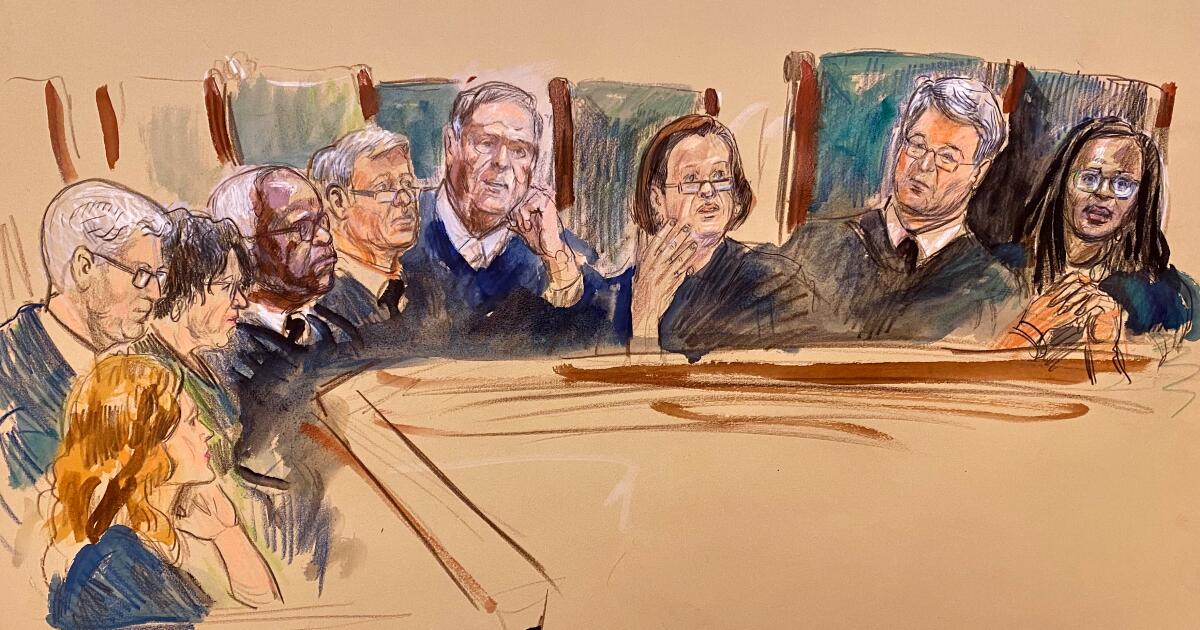 Politics11 minutes ago
How Roberts led a fractured Supreme Court to wins for the right and defeats for Trump
-
 Science16 minutes ago
Contributor: Alcohol should be stigmatized like smoking
-
 Sports23 minutes ago
Thousand Oaks native Claire Liu finally reaches Wimbledon’s third round, will face Coco Gauff
-

 World31 minutes ago
Could water become a flashpoint between Islamabad and New Delhi?
-
 News56 minutes ago
Ukraine latest / Limits of military might / Can major powers regain dominance? : Sources & Methods
-

 Los Angeles, Ca2 hours ago
Juvenile charged with murder after 4-month-old Claremont infant thrown to her death

