California Gov. Gavin Newsom’s hub for tackling the homelessness crisis shifted the blame to local municipalities after a state audit report found the council failed to track how billions of dollars have been spent trying to tackle the crisis in the last five years.
A senior spokesperson for the California Interagency Council on Homelessness (CICH), which coordinates homeless programs across the state, told Fox News Digital on Wednesday the audit’s findings “highlight the significant progress made in recent years to address homelessness at the state level, including the completion of a statewide assessment of homelessness programs.”
The spokesperson added local governments “are primarily responsible for implementing these programs and collecting data on outcomes that the state can use to evaluate program effectiveness.”
GOV. GAVIN NEWSOM FACES RECKONING WITH $73B BUDGET DEFICIT LAWMAKERS SAY HE HELPED CREATE
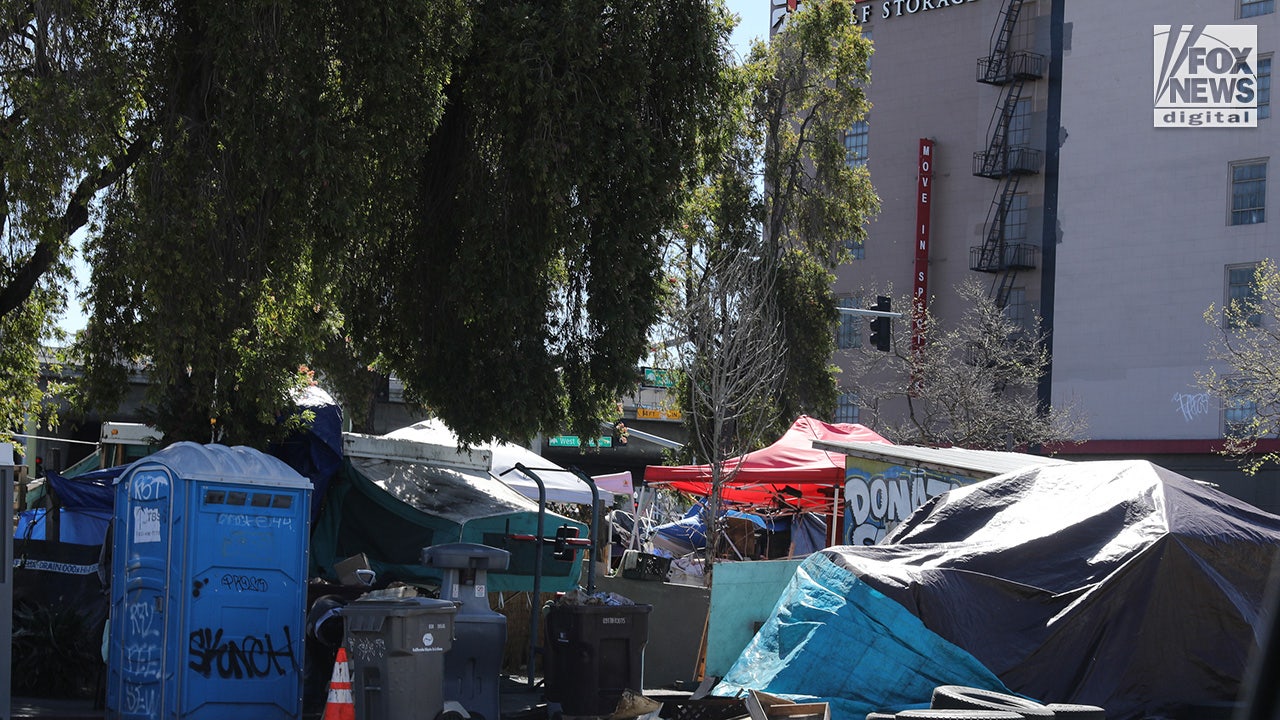
Homeless encampments line the streets in Oakland, California, on March 15.(DWS for Fox News Digital)
Advertisement
“The Council continues to improve its ability to ensure that taxpayer dollars are spent judiciously and effectively, including by providing technical support to local jurisdictions to help align data standards and reporting,” the spokesperson said.
But the state auditor found that nine state agencies have collectively spent $24 billion in state funding over the past five years administering at least 30 programs dedicated to tackling the homelessness crisis, and said Newsom’s homeless council “is responsible for coordinating, developing, and evaluating the efforts of these nine agencies.”
The state’s independent audit, released Tuesday, noted CICH is required by law to report its finances related to all state‑funded homelessness programs, but stopped doing so in 2021.
Over the past five years, the CICH didn’t consistently track whether the money actually improved the situation, the audit concluded. It also failed to collect and evaluate outcome data for these programs due to the lack of a consistent method.
In a letter to the governor, the state auditor wrote that “the state must do more to assess the cost-effectiveness of its homelessness programs.”
Advertisement
DESANTIS RIPS CALIFORNIA, NEW YORK POLICIES ALLEGEDLY FUELING RETAIL THEFT IN ANNOUNCING NEW FLORIDA CRACKDOWN
Oakland, California, remains plagued by homelessness as nearby businesses close their doors due to safety concerns.(DWS for Fox News Digital)
Despite billions spent on homelessness and housing programs during the 2018-2023 fiscal years, the problem didn’t improve in many cities, according to the state auditor’s report. Since 2013, homelessness has jumped more than 53%. In 2023, the state estimated about 180,000 people in the state are homeless, which is more than anywhere else in the U.S.
“Further, it has not aligned its action plan for addressing homelessness with its statutory goals, nor has it ensured that it collects accurate, complete, and comparable financial and outcome information from homelessness programs,” according to the state audit.
ATTACKS AGAINST CHURCHES DOUBLED IN 2023, REPORT WARNS: ‘GROWING DISDAIN FOR CHRISTIANITY’
Advertisement
Homelessness in California under Gov. Gavin Newsom has increased from 151,000 in 2019 to 181,000 in 2024.(Fox)
Some data regarding the number of program participants and bed inventory in the state system might not be accurate or reliable, the audit found.
The CICH was created in 2017 to help track the state’s homelessness data, but it has produced only one report on homeless spending since its inception.
The Associated Press contributed to this report.
Advertisement
Jamie Joseph is a writer who covers politics. She leads Fox News Digital coverage of the Senate.
San Francisco kicked off Pride weekend with the return of the Market Street Pride lasers, while the Golden State Valkyries celebrated Pride Night alongside the ValQueeries, an LGBTQ fan group building community through basketball.
A year ago, the Denver Broncos had some questions about the future of their center position. However, during the bye, the Broncos answered those questions by extending one their starter.
Advertisement
Even with that extension, the Broncos still have some questions about the position’s future, partly due to the structure of the deal they granted and the position’s depth.
Advertisement
Our last installment in this positional series was at offensive guard, where the Broncos are very strong and deep. As we continue breaking down each position on the Broncos’ roster ahead of training camp, let’s examine where things stand at center.
Starter
Luke Wattenberg
Advertisement
Wattenberg is the starter and will remain so after the big extension Denver gave him in November 2025. Before the extension, his play was solid, but afterward, he looked like a top 10 center in the NFL — then he suffered a shoulder injury.
Advertisement
Wattenberg’s long-term place with the Broncos will depend entirely on his play, as his four-year, $48 million deal is structured so that Denver can get out of it after the 2027 season. It’s essentially a two-year deal for about $25 million.
If Wattenberg isn’t cutting it or can’t stay healthy, the Broncos could move on and save themselves $23 million. He’s missed six games to injury since becoming the starter in 2024, so the Broncos’ depth could be tested with Wattenberg as the guy.
Advertisement
Backup
Denver Broncos center Alex Forsyth (54) during the game Arizona Cardinals during the second quarter at Empower Field at Mile High. | Ron Chenoy-Imagn Images
Alex Forsyth
The backup spot is held by Forsyth, a solid run blocker who struggles in pass protection. He has seen the field some over the last two years. When Forsyth stepped in for Wattenberg late last season, he looked much the same as he did in the same role in 2024.
Advertisement
There are still questions about Forsyth, not only with his play but also with the fact that he is entering the final year of his rookie deal as a 2023 seventh-round draft pick. Denver could be looking for a new backup center after this season, as he could decide he wants a chance to start elsewhere and walk in free agency, especially with six career starts on his resume.
Advertisement
Wattenberg will be the starter for 2026 and 2027, so long as he avoids the injury bug. He hasn’t been able to stay on the field since taking over for Lloyd Cushenberry III as the starter in 2024, so if the best predictor of future outcomes is past outcomes, the Broncos had better be prepared for Forsyth to see the field at some point in 2026.
The Others
Advertisement
Washington Commanders guard Michael Deiter (60) against the Arizona Cardinals at State Farm Stadium. | Mark J. Rebilas-Imagn Images
Gavin Ortega and Michael Deiter
Oretega is an undrafted rookie the Broncos brought in, and he has a chance to compete for a practice squad spot. The Broncos brought Deiter in last year after injuries to Wattenberg and Forsyth.
There isn’t a spot for either of these players on the 53-man roster, barring preseason injuries, and it can be tough to keep two centers on the practice squad, even if the players have guard versatility.
Advertisement
The Takeaway
While the Broncos have the starting job locked up with Wattenberg for the next two years, their depth is still questionable. Forsyth hasn’t shown the development you want to see, and will be a free agent after this season.
Denver could find itself looking for a center in the 2027 NFL draft to develop in case Wattenberg’s play drops off, or if he isn’t able to sustain the high level of play he displayed after getting his extension late last year.
Sign up for our free Denver Broncos On SI newsletter, and get breaking Broncos news delivered to your inbox daily!