World
Systemic Bias? Top Reuters Editors Share Disturbing Content Online – Algemeiner.com


Friends and family mourn Israeli military reservist Sergeant First Class Hadar Kapeluk, 23 who was killed in the southern Gaza Strip, amid the ongoing ground operation of the Israeli army against Palestinian Islamist group Hamas, at his funeral at the Mount Herzl military cemetery in Jerusalem, January 23, 2024. REUTERS/Ronen Zvulun
Two top news editors at Reuters have shared unsettling social media posts throughout the Israel-Hamas war, HonestReporting revealed last week, casting doubt on their adherence to journalistic impartiality.
The revelation, which comes after a series of exposés by HonestReporting about the news agency’s Gaza-based photojournalists who had either infiltrated into Israel with Hamas on October 7 or praised its terrorists, raises concerns that anti-Israel bias in the wire service hasn’t plagued only its bottom ranks.
The online posts, by Reuters Executive Editor Simon Robinson and Global Foreign Policy Editor Samia Nakhoul, have been visible to many Reuters journalists who follow the two senior editors on LinkedIn and social media platform X. Yet the message of these posts is not a call for fair and balanced reporting on Israel, nor is it a demand for journalists’ objectivity.
On March 3, Robinson posted on his LinkedIn a 7,500-word anti-Israel essay from the London Review of Books that includes criticism of Western media coverage of the Jewish state.
Titled “The Shoah after Gaza,” the essay by Indian author Pankaj Mishra asks questions like: “How can the Western political and journalistic mainstream ignore, even justify, its [Israel’s] clearly systematic cruelties and injustices?”
It also includes claims such as: “The liquidation of Gaza … is daily obfuscated, if not denied, by the instruments of the West’s military & cultural hegemony,” including “prestigious news outlets deploying the passive voice while relating the massacres carried out in Gaza.”
Another paragraph reads: “Why have Western politicians and journalists kept presenting tens of thousands of dead and maimed Palestinians as collateral damage, in a war of self-defence forced on the world’s most moral army, as the IDF claims to be?”
And there’s also, as the title suggests, an inevitable shoehorning of the Holocaust: “A strenuously willed affiliation with the Shoah has also marked and diminished much American journalism about Israel.”
When @Reuters‘ Executive Editor posts on his LinkedIn a 7,500-word anti-Israel essay from @LRB that includes criticism of Western media coverage of Israel, what sort of message does that send his Reuters staff?
Clue: It’s not a call for fair and balanced reporting on Israel. 🧵 pic.twitter.com/8ax1onYXvi
— HonestReporting (@HonestReporting) March 4, 2024
As of last week, the post was still visible on Robinson’s profile, with comments ranging from “excellent article” to “that article is horrifically anti-Israel,” and “Why can’t you call for fair and balanced reporting on Israel?”
But the senior editor — who is also Reuters’ Deputy Editor-in-Chief — has kept silent. Perhaps Robinson felt safe in posting that article because earlier in the war, his colleague Nakhoul had seemingly set the tone.
On November 25, she reposted on X a message by BBC journalist Nada Abdelsamad, who had been investigated by her network over accusations of praise for the deadly October 7 Hamas attack on southern Israel that sparked the war.
In the Arabic message reposted by Nakhoul, Abdelsamad says she has sued the BBC over “professional abuse against me.”

According to The Telegraph, Abdelsamad had been exposed by the Committee for Accuracy in Middle East Reporting and Analysis (CAMERA) after retweeting a video of Israelis hiding in fear on October 7, entitled: “settlers hiding inside a tin container in fear of the Palestinian resistance warriors.”
The Telegraph added that it came with a hashtag translated as “promise of the hereafter,” a Quranic reference to the killing of the Jews.
Doesn’t Nakhoul think a journalist who publicly voices such sentiment should be held to account?
An earlier repost by Nakhoul may provide an answer.
On November 3, she reposted a tweet that defended Abdelsamad, claiming “Her sin was to RE-tweet, in the chaotic early hours of 7/10, a news post referring to Hamas fighters as “resisters.”

So does Nakhoul think it’s okay for a journalist to do what Abdelsamad had done?
And would she care to explain that to her Jewish-Israeli colleagues?
What sort of message do Robinson and Nakhhoul’s posts send their subordinates, who look up to them as responsible leaders, mentors, and guides?
As Reuters fails to get to grips with HonestReporting’s exposé of a terror-praising Gaza journalist and others who had called on Gazans to infiltrate Israel on October 7, could it be that something is systemically rotten in the once-respected wire service?
HonestReporting is a Jerusalem-based media watchdog with a focus on antisemitism and anti-Israel bias — where a version of this article first appeared.


As Israel’s war on Lebanon rages, hundreds gather in Rmeileh by Sidon Gate to watch the 2026 World Cup. Organised by influencer Bilal Haddad, the fan zone offers food trucks, shisha and family activities, giving people a rare chance to relax. Al Jazeera’s Justin Salhani went to check it out.
Published On 20 Jun 2026

WASHINGTON (AP) — Mark Schiefelbein has been based in Washington, D.C., with AP for about three years, and before that spent a decade in Beijing at AP’s China bureau.
Here’s what he had to say about this extraordinary photo.
Why this photo?
This was an event that had never happened before in the 250-year history of the United States and may never happen again: a night of mixed martial-arts cage match brawls on the South Lawn of the White House, with bloodied competitors battling it out in front of the president, vice president, and other leaders of the country. AP had other photographers ringside at the event focusing more on the fights themselves. So I felt my role was to capture the context of the evening — the location, the people in attendance, the environment.
How I made this photo
A small group of other photographers and I, the White House press pool, had been allowed to photograph part of the evening from a position in the stands directly opposite the White House. I was carrying four cameras with a variety of lenses from 12 mm to 300 mm. This let me capture everything from ultra-wide views of the “claw” structure built for the fights, to close-ups of leaders and celebrities in attendance. I had been following Diego Lopes with my longest lens as he moved around the ring celebrating his win over Steve Garcia. When I saw him start to climb onto the cage, I immediately realized there might be a possibility of a picture like this and zoomed out to capture more of the scene.
An octagon on the White House lawn for Trump’s 80th birthday and the nation’s 250th, in photos
Why this photo works
The White House is surely one of the most recognizable buildings in the world. The columns of the South Portico, the fighter standing with arms and legs spread wide in celebration, and the octagon padding of the UFC ring tell an entire story as your eyes move from top to bottom of the frame. With Lopes standing with his back to the camera, facing the White House, it becomes less a photo of him and more about the evening, the event, and the spectacle. It was fortunate that it was after nightfall, so things that might have been distracting, like the Marine Band and spectators seated behind the ring, are mostly in the dark. Only the key elements – the White House, Lopes, and the ring are lit up.
—
For more extraordinary AP photography, click here.
World
British Prime Minister Keir Starmer faces potential leadership challenge from newly-elected Andy Burnham

NEWYou can now listen to Fox News articles!
Andy Burnham has officially won his special election and regained a seat in Parliament, setting him up to challenge the deeply unpopular Keir Starmer as the leader of the Labour party and as prime minister.
Burnham, currently the mayor of Greater Manchester in northwest England, won a seat in Makerfield and came away with 55% of the vote in a field of more than a dozen candidates, according to The Associated Press. The runner-up was Rob Kenyon of Reform UK, a right-wing populist party, who received more than 9,000 fewer votes than Burnham.
Burnham last served as a member of Parliament in 2017 but strongly implied in his victory speech that he is returning with the intention to lead the United Kingdom.
“Everyone knows that politics isn’t working. Everyone can feel that the country isn’t where it should be. Tonight could, just could, be the turning point,” he said, according to the AP. “This result will bring about a country that works fairly for everywhere and for everybody.”
TRUMP ALLY NIGEL FARAGE DEALS MAJOR BLOW TO STARMER IN LOCAL UK ELECTIONS AS RESIGNATION CALLS MOUNT
Britain’s Labour party candidate Andy Burnham speaks to supporters after the Makerfield by-election in Ashton in Makerfield, England, on Friday, June 19, 2026. (Jon Super/AP)
This special election, called by-elections in Britain, was unusually significant because the area’s Labour MP, Josh Simons, intentionally resigned to allow Burnham to win the seat and pursue leadership.
The potentially outsized impact of this election was juxtaposed with the strange scene that unfolded when all the candidates gathered on Friday morning to hear the results. Burnham stood in between an independent candidate dressed in a fox costume and another candidate known as “Count Binface”.
As his name suggests, “Count Binface,” whose real name is Jonathan David Harvey, was wearing a trash can on his head and regularly runs in U.K. elections to advocate for increased voter turnout.
Starmer congratulated Burnham in a social media post on X, saying voters “chose Labour’s campaign of hope and optimism over division and hate.”
When asked about Burnham’s intentions to oust him as leader, Starmer said he will fight to remain prime minister, a position he has held for nearly two years.
“I’ve said repeatedly I’m not going to walk away from that,” Starmer told reporters.
Labour party candidate Andy Burnham, center, stands with other candidates on the podium at the Edge Wigan, awaiting the Makerfield by-election result announcement in Wigan, England, on Friday, June 19, 2026. (Jon Super/AP)
AS EPSTEIN-LINKED APPOINTMENT SPARKS BACKLASH, UK PM STARMER FACES PARTY REVOLT AMID RESIGNATION CALLS
Starmer led the Labour party to a landslide victory in July 2024 and ever since, his popularity has been eroding thanks to a persistently high cost of living, an anemic economy and a scandal over his willingness to accept gifts from wealthy donors.
Last September, Starmer was slammed for appointing Peter Mandelson as the British ambassador to the United States, when it was known as early as 2019 that Mandelson had a friendship with convicted child sex offender Jeffrey Epstein. Following an enormous public backlash, Mandelson was quickly dismissed from his post.
With Starmer as leader, Labour is increasingly losing liberal-minded voters to the Green Party, while also facing stronger challenges by Reform UK, a Nigel Farage-led party that advocates against mass migration and in favor of tighter border controls. Farage, an ally of U.S. President Donald Trump, said he was disappointed by Burnham’s victory.
Burnham is expected to head to London to be sworn in as soon as Monday. Under the British parliamentary system, the governing party can hold leadership elections in the middle of the term. The winner of such a contest can become prime minister without there having to be a national election.
British Prime Minister Keir Starmer awaits Switzerland’s Federal President Guy Parmelin on the sidelines of the G7 summit, in Evian-les-Bains, France, on Tuesday, June 16, 2026 (Isabel Infantes/Pool Reuters via AP)
CLICK HERE TO DOWNLOAD THE FOX NEWS APP
Under Labour rules, a lawmaker can challenge the leader if they win the backing of a fifth of their party’s members in the House of Commons. Burnham has enough lawmakers on board to trigger a leadership contest, according to a report from The New Statesman.
According to the AP, Culture Secretary Lisa Nandy said Burnham and Starmer will “have a conversation about what comes next” in the next few days.
The Associated Press contributed to this report.
-

 Health16 seconds ago
Measles-infected traveler may have exposed passengers at LAX and nearby hotel, health officials warn
-

 Sports7 minutes ago
World Cup Red Cards: 2026 Has More Red Cards Than Each Of Last 2 World Cups
-

 Technology10 minutes ago
China’s brain chip breakthrough raises big questions
-
 Business15 minutes ago
Ranch lovers can soon travel with a TSA-friendly kit of the popular American dressing
-
 Entertainment22 minutes ago
At the Fonda, Jane Remover’s violent yearning heralds a new kind of stardom
-
 Lifestyle25 minutes ago
Beer, with a twist? SoCal dads find solidarity through an unexpected activity
-
 Politics30 minutes ago
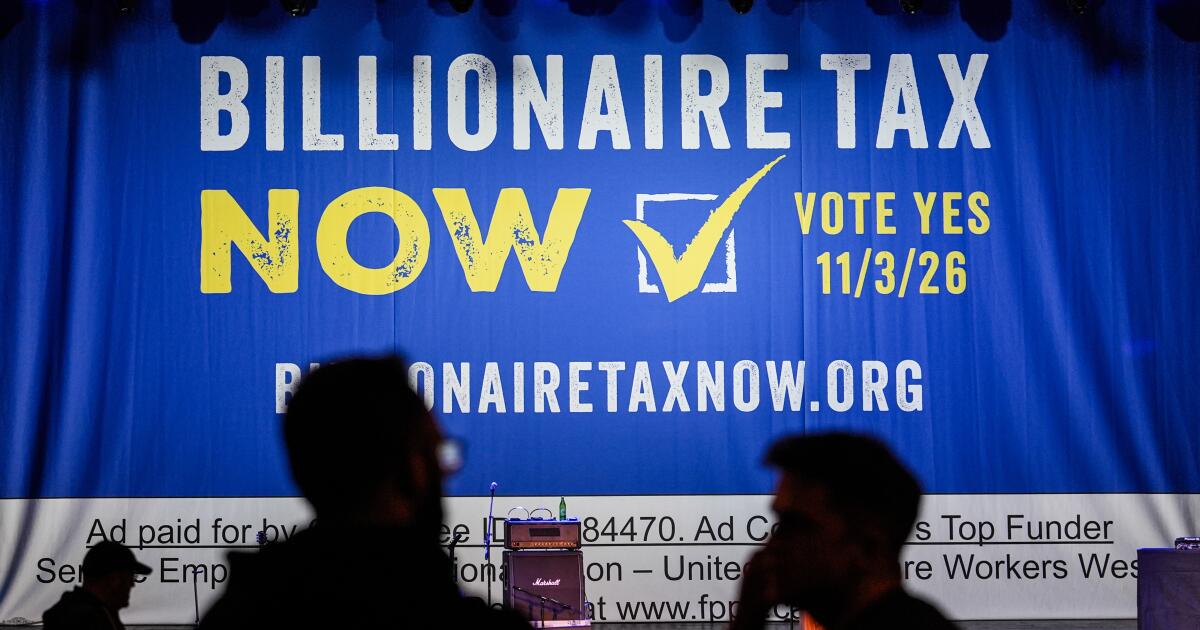
Billionaire tax proposal faces hurdles as it moves closer to November ballot
-
 Science37 minutes ago
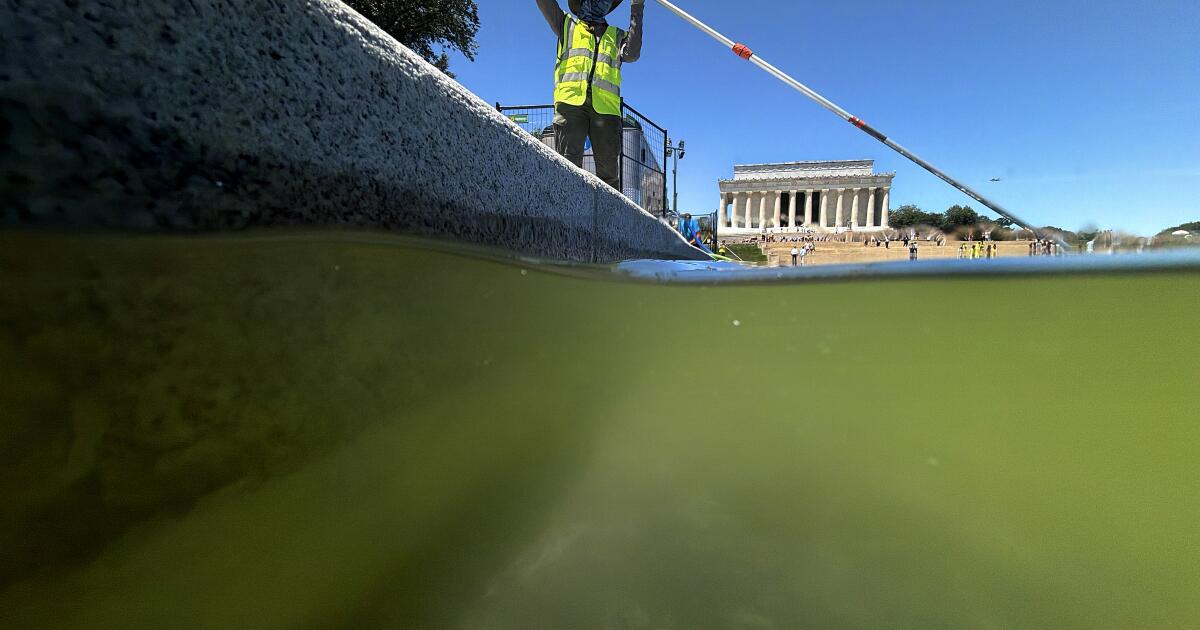
Here’s why the Lincoln Memorial Reflecting Pool went green so fast

