Business
Laid-off food workers claim their 'right to return' to jobs was violated at Hotel Figueroa

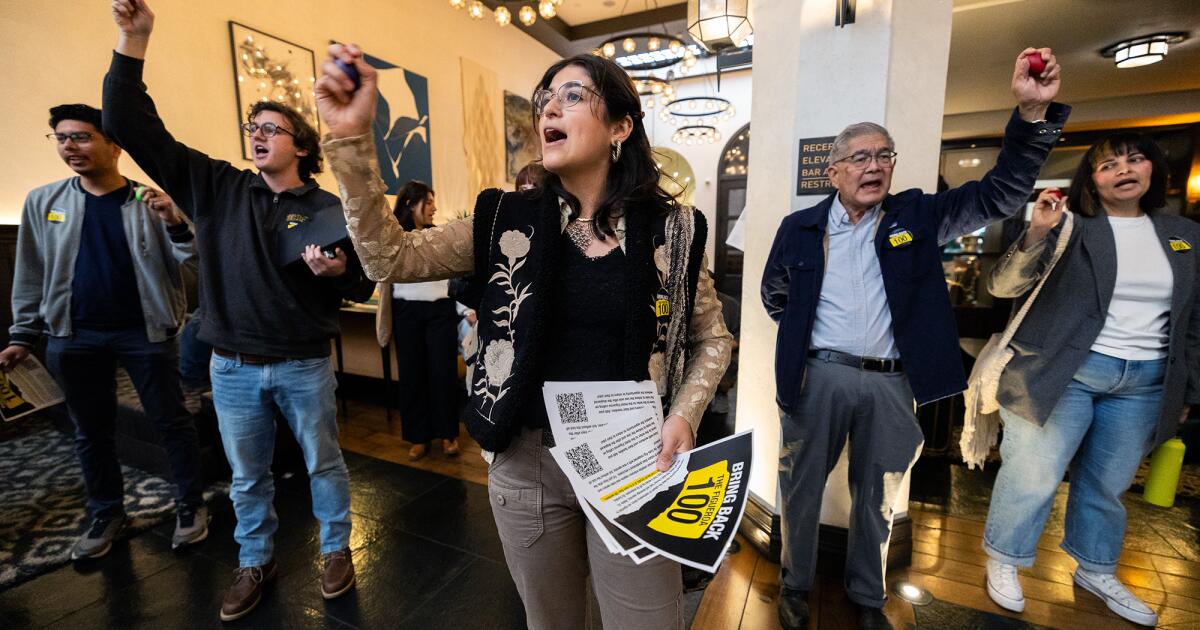
Two days after the food hospitality operator at a fashionable downtown hotel shuttered its restaurants and laid off its food and beverage employees, a new third-party management company moved in and hired a whole new set of workers, according to a complaint filed with the Los Angeles city attorney’s office.
The laid-off food and beverage laborers had attempted to unionize months earlier. They allege that Hotel Figueroa and hospitality operator the Botanical Group left them out of the hiring, potentially violating a city “right to return” law that requires that new hotel owners or new operators retain the site’s employees for a transitional period, according to the complaint.
A Feb. 21 letter addressed to the city attorney’s office asks for an investigation. A spokesperson for the office confirmed receipt of the complaint but wouldn’t comment further on the matter.
“The company closed without retaining workers in violation of the recall law,” said Kurt Petersen, co-president of Unite Here Local 11, which is aiding the hotel workers in their effort. ”It is beyond outrageous to see wealthy companies … treat their long-standing workers like they are disposable.”
The hotel is denying the premise of the workers’ complaint.
In a prepared statement, a spokesperson for Hotel Figueroa said its ownership is “acting in accordance” with the Los Angeles Hotel Worker Retention Ordinance, which requires that new hotel owners or operators retain the site’s employees for a transitional period. The 2006 ordinance initially applied only to hotels in the LAX corridor. In 2022, a new hotel worker protection ordinance expanded the existing law to include all city hotels with more than 50 guestrooms.
The retention rule is intended to protect laid-off hotel workers so that if a hotel undergoes a change in control, the successor hotel employer is required to hire previous employees for a 90-day transition period and may not discharge these employees without cause.
Pastor Mike Kinman, right, walks out of the Hotel Figueroa after demonstrating in support of restaurant workers who were laid off.
(Brian van der Brug / Los Angeles Times)
The Hotel Figueroa spokesperson said there isn’t a new food and beverage operator in place, but that they are instead working with a “consultant to provide limited F&B [food and beverage] service.” Several former staff members of the former third-party management group returned to the hotel’s food and beverage outlets, she said, and they expect more will return in the next few weeks.
When asked how many non-managerial staff had been hired back, the spokesperson said the company wouldn’t comment further.
The Botanical Group did not respond to emails and message for comment.
The 2006 retention ordinance was drafted in response to mass firings that occurred in 2000 at a Wyndham hotel near LAX. The hotel closed and laid off more than 200 employees. The hotel reopened as the Radisson Hotel LAX about a year later but did not hire all of the former Wyndham workers, even though more than 100 of them submitted applications.
Since then, the law has been invoked a handful of times, said Maria Hernandez, a spokeswoman with Unite Here Local 11.
On a recent Friday afternoon, a bartender at the reopened Bar Magnolia said he and the other bartenders present were new to the job, as well as other non-management employees. The space once occupied by Sparrow Italia, which served coastal Italian dishes and cocktails in an indoor-meets-outdoor setting, remained closed.
A dishwasher, line cook and prep cook interviewed previously about Hotel Figueroa also said they had been laid off and not rehired by the new operator.
Rev. Edgar Rivera Colon, left, exhorts patrons to support the rehiring of more than 100 workers who lost their jobs.
(Brian van der Brug / Los Angeles Times)
Workers sought to organize
Tension between the former hospitality group Noble 33 and its employees at Hotel Figueroa started soon after the third-party management took over food and beverage operations for the hotel in 2021, according to workers and union organizers who spoke with The Times.
Workers said they were forced to take on multiple tasks without more pay as their colleagues left and management failed to back-fill positions.
On Dec. 8, back-of-house food and beverage workers who worked for Noble 33 notified their management that they intended to form a union, and submitted cards to do so.
Six days later, hospitality operator Noble 33 announced it would close Sparrow Italia, Café Fig, Bar Magnolia, the Cafeteria and La Casita at Driftwood at the famed hotel, a historic building in downtown L.A. that for the last two decades built a following for its Mediterranean-inspired space and stylish dining rooms.
Rev. Andrew Schwiebert, center, talks with diners as he and dozens of others participate in a “water-in” at the Café Fig.
(Brian van der Brug / Los Angeles Times)
Noble 33 followed through on the closure. On Feb. 11, the company laid off an estimated 100 non-management employees and closed the Hotel Figueroa’s restaurants.
Maria Ibarra, a cook for Noble 33 at the hotel, said she was laid off and not rehired. She now faces unemployment.
“The owners thought they could just replace us overnight and that we would give up and walk away,” Ibarra said. “My co-workers and I will not do that. We have rights.”
Wednesday, Unite Here Local 11, workers and religious leaders called for a boycott of the hotel and hospitality group, at a morning press conference in front of Hotel Figueroa.
The group also delivered a letter signed by nearly 500 people demanding that the hotel bring back the laid-off workers.
“We call on you to immediately offer to return the workers to their employment at the hotel and compensate them for time missed,” the letter said.
The boycott is just the latest move taken by workers and the union.
On Friday, nearly 40 people picketed at Hotel Figueroa — seven of them hotel housekeepers alongside about 30 community members and religious leaders with Clergy and Laity United for Economic Justice, a faith-based advocacy group based near downtown. They shouted “Bring them back” and held a sign that read “Bring back the Fig 100.”

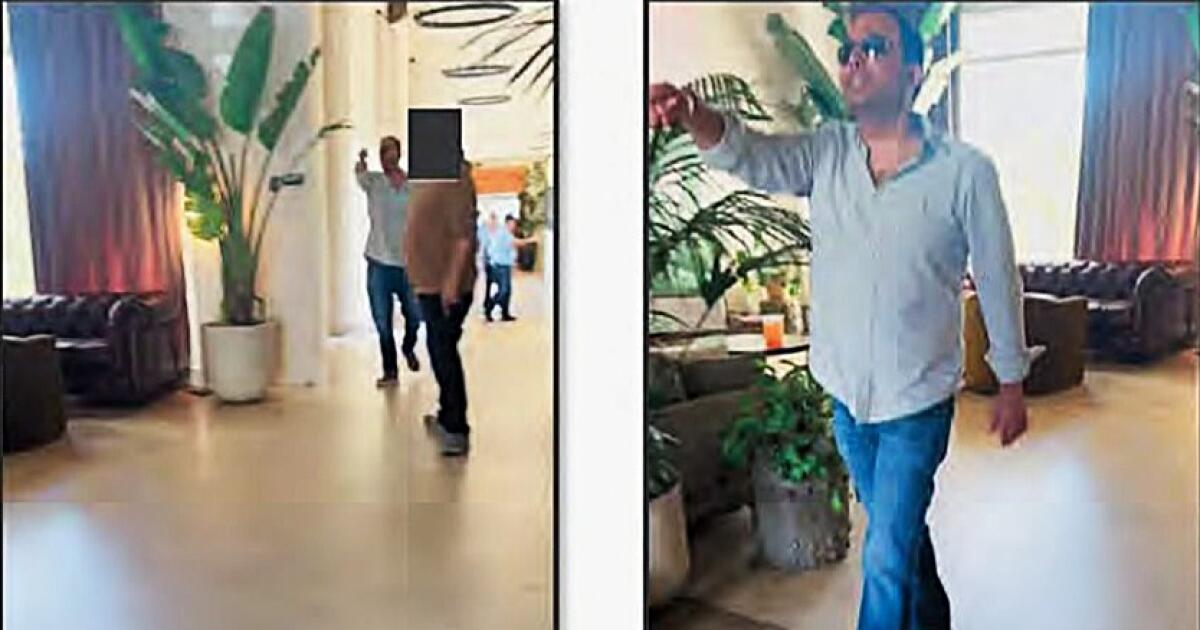
An Orange County real estate investor accused of criminally defrauding an Arizona bank of nearly $100 million pleaded not guilty Monday and remains in custody.
Mahender Makhijani, 44, of Corona del Mar — who also was ordered by an arbitrator to pay $1.34 billion in a separate civil fraud case — was arraigned in Santa Ana federal court on two charges.
He is accused of bank fraud and making a false statement to a bank in a June 8 case involving a $100 million real estate loan made by Phoenix-based Western Alliance Bank. He was taken into custody on June 10.
Makhijani is accused of providing bogus collateral for the October 2024 loan now in default. In a civil lawsuit, Western Alliance said the outstanding balance as nearly $99 million.
Prosecutors say he falsified title insurance policies that showed the bank would have a first lien on the underlying collateral if the loan went bad, when in fact it did not.
A trial was set for August 11 before U.S. District Judge David O. Carter in Santa Ana.
Michael Schachter, his criminal defense attorney, did not respond to messages seeking comment.
In the civil case, an arbitrator in May ordered Makhijani to pay Laguna Beach real estate mogul Mohammad Honarkar $1.34 billion after ruling he had fraudulently induced him into a 2021 joint venture — and then wrested control and lost to creditors more than two dozen properties Honarkar had owned.
Makhijani has not been criminally charged in that case, but prosecutors alleged in an affidavit in support of the bank fraud charges that he used “force and threats” in his dealings with Honarkar and others — including taking over the landmark Hotel Laguna in 2023 that Honarkar was renovating.
Prosecutors sought to hold Makhijani without bail after his arrest.
The affidavit noted he is a legal Indian immigrant with a home and bank accounts in that country, has access to private jets and threatened to “run away” if caught in a difficult situation.
The request was denied and he was granted $500,000 bail.
However, Makhijani remains in custody after a hearing sought by prosecutors last month before Magistrate Judge Autumn Spaeth.
The judge declined to accept a $450,000 cashier’s check submitted by a Makhijani associate for the bail, finding insufficient proof the source of the funds was legitimate, according to court records.
Makhijani is not prominent outside Orange County real estate circles, but he established a thriving distressed-assets business over the last decade that attracted prominent Southern California real estate investors.
Prosecutors said it paid for a lifestyle that included two multimillion-dollar homes in Corona del Mar, a luxury apartment in Newport Beach and various luxury vehicles.
As of last month, prosecutors had not fully traced his assets, which they believe are not held in his name and some of which may be in India.
The businessman employed an array of shell companies and strawmen to sign documents on his behalf, and to stand in for him as operators of his companies, according to the affidavit.
Makhijani told an associate he took extra precautions because wanted to insulate himself from litigation and that “they were sharks in the distressed world who took advantage of people,” the affidavit stated.
Business
Many indie festival films struggle to get distribution. Alamo Drafthouse is trying to change that
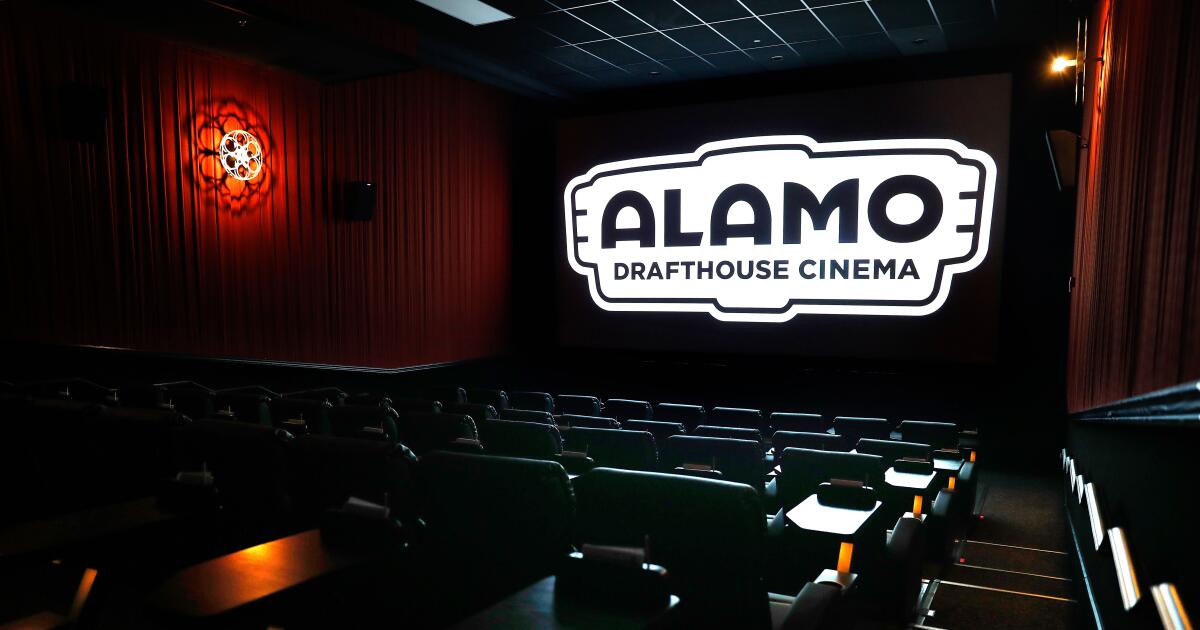
Dine-in movie theater chain Alamo Drafthouse Cinema is launching a new initiative to show unreleased independent films that had successful festival runs, a move that comes as specialty films have struggled to gain distribution.
The Alamo Exclusives program, announced Wednesday, will give limited theatrical runs to films that showed at festivals including Sundance, the Toronto International Film Festival, Tribeca Festival and South by Southwest festival, as well as Alamo’s own Fantastic Fest.
The idea is to help showcase films that received critical acclaim, but did not secure distribution or acquisition deals. The chain will not acquire these films, but instead will enter into agreements with filmmakers to exhibit their films on Alamo Drafthouse screens. By showing these films to audiences on the big screen, these films could get the momentum they need for further opportunities.
The program’s first film will be the documentary “Butthole Surfers: The Hole Truth and Nothing Butt,” which debuted last year at South by Southwest and chronicles the history of the punk rock band.
The film will be shown in Alamo Drafthouse theaters for a limited time later this summer.
The Austin-based chain, which is owned by Sony Pictures, has a long history of curating indie films for its audiences, giving Alamo Drafthouse confidence that its viewers want to see these kinds of movies, company chief executive Michael Kustermann said in a statement.
“Time and again, they’ve shown they’ll come out to support bold, original films when given the opportunity,” he said. The new Alamo Exclusives “gives us another way to champion filmmaker-driven films that deserve to be discovered and connect them with the wider Alamo Drafthouse audience.”
The initiative comes at a difficult time for indie films. Since the pandemic upended the movie business, traditional studios and distributors have had less appetite for risk, including betting on smaller indie films out of festivals.
And as the 2023 dual writers’ and actors’ strikes thinned out theatrical lineups, that aversion to uncertainty became a push for reliable and profitable hits.
“Too many incredible films premiere at festivals and then never receive the theatrical life they deserve,” Lisa Dreyer, director of Fantastic Fest and film innovation at Alamo, said in a statement. “We are actively searching for films across all genres, from horror to comedy, to everything in-between, to champion in this new, exciting way.”

The recall of a popular chip brand over salmonella concerns was recently upgraded to the U.S. Food and Drug Administration’s highest level, just ahead of the Fourth of July holiday and countless backyard barbecues.
On June 24, the FDA designated the recall of several varieties of Zapp’s and Dirty brand potato chips as Class I, meaning it’s “a situation in which there is a reasonable probability that the use of or exposure to a violative product will cause serious adverse health consequences or death.”
FDA has classified the following items as Class I:
Zapp’s
- 1.5-ounce Zapp’s Bayou Blackened Ranch Kettle Chips
- 2.5- and 8-ounce Zapp’s Bayou Blackened Ranch Potato Chips
- 1.5- and 8-ounce Zapp’s Big Cheezy Potato Chips
Dirty
- 1.5- and 2-ounce Dirty Brand Salt and Vinegar Potato Chips
- 2-ounce Dirty Maui Onion Chips
- 2-ounce Dirty Sour Cream and Onion Potato Chips
The chips are produced by Utz Quality Foods, LLC, which on April 28 issued a recall after learning “that a seasoning containing dry milk powder, sourced from California Dairies, Inc. and supplied by a third-party supplier, may contain the presence of Salmonella.”
Salmonella can lead to sometimes deadly infections in elderly people, young children and those with weakened immune systems, according to the FDA.
More than 680,000 bags are included in the recall.
Anyone who has these products should not eat them and should discard them immediately.
What to look for
Salmonella is a foodborne illness that can be fatal to young children, pregnant women, older adults and people with weakened immune systems, according to the National Institutes of Health.
Symptoms may develop 12 to 72 hours after infection, according to the FDA.
The FDA said that people with strong immune systems infected with salmonella may experience fever, diarrhea (which may be bloody), nausea, vomiting and abdominal pain. The illness can last four to seven days.
In rare cases, the infection may produce more severe illnesses such as arterial infections, endocarditis and arthritis, the agency added.
What to do if infected
If you contract salmonella, the Centers for Disease Control and Prevention recommends drinking plenty of fluids to prevent dehydration.
The CDC advises consulting a doctor before taking antidiarrheal medicine or antibiotics. If severe symptoms continue after two days, seek medical help, the agency says.
Because those with diarrhea can spread salmonella to others, it’s also recommended to avoid sharing food or preparing meals for others, sexual contact and swimming in public pools, and to stay home while sick.
Times staff writer Jasmine Mendez contributed to this report.
-
Business3 minutes ago
Orange County real estate investor pleads not guilty in $100 million bank fraud case
-
 Entertainment10 minutes ago
Tom Sandoval’s ex Victoria Robinson accuses him of abuse; her restraining order is denied
-
 Politics18 minutes ago
Trump heads to NATO as tensions simmer with Europe
-
 Science25 minutes ago
New FireSat satellites promise faster wildfire detection over California and beyond
-
 Sports28 minutes ago
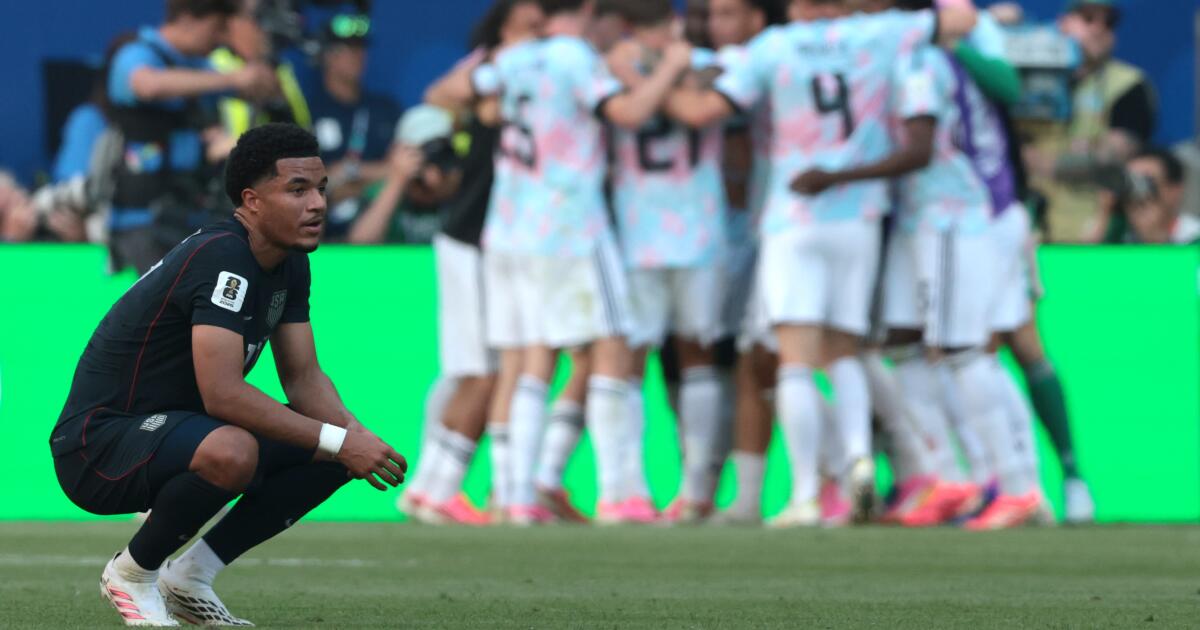
U.S. hopes of a historic World Cup run on home soil shattered in loss to Belgium
-

 World40 minutes ago
Cuba sees nationwide power blackout for third time in six months
-
 News1 hour ago
The U.S. men’s run at the World Cup ends with a 4-1 Round of 16 loss to Belgium
-

 Los Angeles, Ca2 hours ago
L.A. man who violently crashed into Border Patrol agents sentenced to 5 years in prison

