Boston, MA
Pay for play is here, and college football is changing rapidly. Where does that leave Boston College? – The Boston Globe


Boston College has âkind of plateaued at seven wins, six wins,â the reporter noted. No one protested the thought. âCan BC win the ACC,â he continued, âand make the playoffs, and win a national championship?â
A what? Here?
The Eagles have had trouble keeping fans in the seats for all four quarters at Alumni Stadium, much less challenging for a spot in the expanded college football playoff. What would make anyone think theyâre about to start dropping elbows on the superheavyweights of the sport?
âBC ââ OâBrien began, and paused as the room broke out into laughter. A national championship. Good one.
âTomorrow,â a wise guy cracked.
What was OâBrien supposed to say? Boston College hasnât won nine games since 2008. They havenât gone above .500 in the ACC since 2009. Since 2008, they are 3-40 against ranked opponents, and only 12 of those losses finished closer than two scores.
No doubt BC football is accomplishing its baseline goals of pride, hard work, and community service. The Eagles even won a bowl game last year, for the second time since 2007. But this is a college football world that has left programs like it in the dust.
A new era
The NCAAâs amateurism model is eroding. Pay for play is here. The transfer portal and name, image, and likeness collective system have brought free agency. Players could soon be considered employees, should the courts continue to rule in favor of unionization efforts at Dartmouth. NCAA president Charlie Baker recently renewed his call for a new tier of Division 1 that would let the elite schools pay their athletes. As an ACC member, BC would ostensibly be considered one of the elites.
But that might be in name only. Its NIL collective, Friends of the Heights, wants to do its part, but it wonât be paying top dollar for game-changing players.
âA good QB in the portal costs $1 million, $1.5, $2 million,â Nebraska coach Matt Rhule said in November.
Coincidentally OâBrien, who was Ohio Stateâs offensive coordinator for three weeks after leaving the Patriots, was set to coach one of those quarterbacks. Will Howard, who won a Big 12 championship at Kansas State, left when that school landed a local five-star freshman (Avery Johnson). Howard could have declared for the NFL and was projected as a mid-round pick, but instead chose the Buckeyes from a handful of seven-figure Power Five starting jobs.
OâBrien said he wants to embrace the new era, but âif the first question out of a guyâs mouth is âHow much are you going to pay me?ââ he said, âthat guy might not be the best fit for Boston College.â
BC may be behind its peers, but it isnât poor. ESPN reported BC was boosting its coaching âsalary pool,â which has been among the lowest in the ACC, to the upper half of the conference. Evidence for that is the hire of OâBrien, who reportedly made $5 million a year while coaching the Houston Texans. BC also pilfered Floridaâs strength coach, OâBrien associate Craig Fitzgerald.
âIf the first question out of a guyâs mouth is âHow much are you going to pay me?,â that guy might not be the best fit for Boston College.ââ
Bill O’Brien
Friends of the Heights is trying to do its part, while combating financial fatigue among donors who already give and old-school attitudes among those who believe a four-year scholarship at a high-academic school is enough compensation.
âWho says there arenât four- and five-star athletes who want to come to Boston College?â said Scott Mutryn, one of the organizationâs four board members. âBC hasnât given them a reason to come in the last however many years.â
A puncherâs chance
The hope is that they get a few more like Matt Ryan â the quarterback when BC last challenged for the ACC title â and Zay Flowers, both of whom turned modest recruiting buzz into major shine.
In 2019, Flowers was a three-star recruit, just another 5-foot-11, 170-pound speedster from South Florida. There, players of his ilk grow like citrus fruits. He chose BC over Appalachian State, Bowling Green, Buffalo, and Cincinnati. He was ranked No. 1,188 nationally (per 247Sports) and the 135th-best wideout.
He left BC last season ranked No. 1 in career catches (200), receiving yards (3,056) and receiving touchdowns (29). He went No. 22 to Baltimore in the 2023 NFL draft as the third receiver and second ACC player chosen.
Ryan, who wasnât even mentioned in a February 2003 school press release touting BCâs signing class, was a tall, skinny, triple-option QB with a good arm out of Philadelphia. He was also recruited by Iowa, Georgia Tech, UConn, and Purdue. He developed into a third overall pick (Atlanta, 2008) and NFL MVP (2016).
OâBrien, who once led a scandal-plagued Penn State to a winning record (15-9 in two seasons), has punched above his weight before. On3 national reporter Andy Staples pegged BCâs potential as âdecent-to-goodâ under the coach.
âThe NIL thing is tough,â Staples told the Globe. âTheyâll have to ID who they really want to retain and focus on them. But they may have to accept that if a guy blows up, theyâll lose him [as a transfer]. Theyâll have to be a great evaluation/development program, which is what BC was under Tom Coughlin, Tom OâBrien or [Jeff Jagodzinski]. The difference is now that the guys they do a great job developing may leave after their first good year.â
They can compete in the ACC, Staples says, if OâBrien can get the best out of a quarterback like the âsuper funâ Thomas Castellanos.

James thinks BC has a puncherâs chance.
âWhen you look at the last few years, thereâs been a team every year where Iâm betting everyone didnât say, âHey, theyâre going to be in the championship.â I think weâre there. I think it goes to what made Bill a great candidate, is his understanding of what that needs to look like for us to be successful.â
He can be the X-factor?
âYeah. Yeah,â James said. âAgain, like I said, I think the trump card is our education, incorporating the Jesuit values, and our incredible professional network we have here.â
It is true that toughness and cohesiveness can turn expected losses into surprise wins. Mutryn, whose decision to leave his hometown Cleveland for Chestnut Hill was solidified by the 1993 upset win over No. 1 Notre Dame, is asking donors to believe.
âI think itâs a shame and a disservice to [say] you canât win at BC. You can,â said Mutryn, who also works as a BC radio sideline reporter. âItâs not that long ago that you had successful basketball programs that were in the tournament, vying for Sweet 16s, and a top-25 football program and a national championship hockey team. Thereâs no reason why that canât be the mold.â
Granted, times have changed. But BC, he believes, can play with the big boys â if the BC community rallies.
âThere are a lot of very, very successful businesses run by people who are BC grads,â Mutryn said. âSure itâs crazy. Iâm probably going to be mocked and ridiculed for this, but I truly believe it can happen.
âYou can pay for the most successful team ⦠but if your culture isnât strong enough to overcome any sort of adversity, it doesnât matter how much you pay. You can have $100 million to hire the best team you can. If thereâs no identity or culture, that teamâs never going to succeed.
âAre we going to raise $100 million? Probably not. But weâre going to raise money. Weâre going to give athletes the chance to capitalize on their name, image and likeness so they can stay at Boston College, get a degree at Boston College, have a great experience at Boston College and pay that forward five, 10 or however many years down the line.â
By then, OâBrien hopes to have rewarded the faithful. How, he canât say.
âLook, I think that â again, Boston College is a place where you can do a lot of great things,â OâBrien said. âI am not into the prediction â thatâs really not what I do. What I will promise you is we will field a very competitive football team, with a bunch of guys who will play hard and be tough and carry on the tradition [of] these guys who played here and played tough, tough football.
âWill we win the national championship every year? Who knows. Why not? I donât know. Iâm not a predictor. Iâm not a genie. Iâm just telling you that we will show up every Saturday and play to the best of our ability.â
The audience that day in February seemed satisfied. He was selling hard work and hope.
OâBrien and James repeated the mantra several times: Come to BC and play good football, get a great education, and give back to the community.
Great education, good football.
Is that all there is for BC?
Mutryn acknowledged there is skepticism among even the most generous donors, and that itâs difficult to ask for more money for a program that, by measure of its record, is stuck in neutral.
To them, he says: Wouldnât you rather be a part of it?
Hey, no matter what happened last year, or for the last 15 years, hope springs eternal.
âBut itâs not hope if you have a vision and a plan,â Mutryn said. âYou choose to be a believer or not a believer. Iâd rather believe in something and be wrong, than not believe in something and be right.â
Matt Porter can be reached at matthew.porter@globe.com. Follow him @mattyports.

Boston, MA
‘Enough is enough’: Weekend violence in Boston sparks calls for change, from more police to community investment – The Boston Globe

“We are all saying today, enough is enough,” City Councilor Brian Worrell said Monday at a news conference in Roxbury. “We are calling for everyone to put down the guns, stop the community violence.”
He joined City Councilor Miniard Culpepper and others in calling for more resources to support grassroots organizations that work to reduce violence across Boston’s most historically underserved neighborhoods.
Culpepper said police are part of the solution, but real change comes from within impacted communities, and it doesn’t happen overnight.
Instead of taking a reactive approach, “we have to be consistent out there in the streets, promoting a culture of peace among our young people,” said Randy Muhammad, founder of 10,000 Fearless Peacemakers, a Dorchester-based group. “We need to be proactively in the community, building those relationships.”
Meanwhile, leadership of Boston’s largest police union decried a staffing crisis that has left the department lacking the manpower to properly respond to calls, especially on a busy weekend like July 4.
“Until we take back our streets, enforce the law, and have enough officers to do so, we’re just gambling that somebody won’t lose their life or get hurt,” said Larry Calderone, president of the Boston Police Patrolmen’s Association. “That should be an embarrassment to the city of Boston elected officials and the leadership of this department.”
Calderone described an incident early Sunday in Dorchester when disorderly revelers threw fireworks at the police. A crowd of several hundred people was effectively blocking traffic at the intersection of Franklin Hill Avenue and Shandon Road.
“While officers were attempting to gain control of the crowd and restore order, numerous individuals threw beverages, miscellaneous objects, and ignited fireworks in the direction of responding officers,” according to a police report provided by the department.
Calderone said three injured officers were sent to the hospital for treatment.
He argued that reductions in overtime spending have exacerbated the problem.
The department’s massive overtime budget, long a point of contention among police reform advocates, regularly places officers among the city’s highest-paid employees. Department officials said during a City Council hearing in May that they were working to minimize overtime shifts without letting staffing drop below necessary levels.
A Roxbury resident told the Globe on Sunday that she had called the police multiple times about noise complaints as a raucous block party continued into the early morning hours, but a dispatcher responded that officers were busy. Gunshots broke out around 3:15 a.m. in the area, killing one person and injuring several others, according to police.
“We’re woefully understaffed. We’re outnumbered on the street,” Calderone said in an interview Monday.
However, Police Commissioner Michael Cox refuted the union’s complaints. He said there were many factors that contributed to the recent violence.
“The lawless behavior of this weekend is a combination of large crowds, alcohol, illegal fireworks and firearms, and we will hold those responsible accountable,” he said in a statement Monday evening. “There is no correlation between overtime and crime.”
Cox said his department remains focused on strengthening relationships with the community, ongoing efforts that help prevent crime. He also said they’re continually adding new officers to the force and rising to the challenge amid a slew of major events this summer, including World Cup games, the country’s 250th anniversary and an upcoming Tall Ships festival.
“Thanks to the work of our officers and partnership with the public, crime is heading in the right direction,” he said. “As we work through the duration of an incredibly busy summer, public safety and officer wellness are our priorities.”
Overall, gun violence in Boston is rare and homicides are down compared to this time last year. But the numbers lose meaning when residents feel unsafe, said Steve Wilson of the Ella J. Baker House Violence Reduction Taskforce.
“Right now, to people that look like me, it doesn’t feel like the safest city in America,” he said. “So the work’s being done, and we’re going to continue the work.”
City officials often tout a holistic approach to crime-fighting, which means addressing the root causes of violence and investing in impacted neighborhoods. Mayor Michelle Wu recently announced her latest summer safety plan, offering paid summer jobs to Boston Public Schools students.
In a statement Monday, City Councilor Erin Murphy said she’s requesting a hearing on the safety plan. She also joined Councilor Ed Flynn in calling for a public safety summit.
Officials have not yet identified either of the weekend homicide victims. No arrests have been announced in the shootings.
“This weekend’s violence is a heartbreaking reminder that every life lost leaves behind families and communities who are forever changed,” said Clementina Chery, president and CEO of the Louis D. Brown Peace Institute. “Every homicide creates a ripple that extends far beyond the crime scene, and adds another family to a club that no one wants to join.”
Lea Skene can be reached at lea.skene@globe.com. Follow her on X @lea_skene.

Clarity hasn’t exactly defined Jaylen Brown’s career.
There were boos on draft night, but not because people hated that he was picked. It was widely reported that if the Boston Celtics picked Kris Dunn that night, they’d include Dunn in a trade for Jimmy Butler, which is what fans wanted. When Brown was picked, the boos were more for Danny Ainge not making the deal.
In January of 2022, Brown tweeted “the energy is about to shift.” The Celtics went on a nine-game winning streak and everyone pounced on that tweet as something prescient, but Brown himself said it had nothing to do with basketball. He was tweeting about Mercury being in retrograde.
The energy is about to shift
— Jaylen Brown (@FCHWPO) January 31, 2022
Brown is even confused about his own history, like in 2018 when he was moved to the bench. Brown said on a podcast earlier this year that then coach Brad Stevens benched Brown for Gordon Hayward, when Hayward was actually benched too. He claims a fan petition forced the team to reconsider, but it was really a Marcus Smart injury and that petition had barely a dozen signatures.
Now, on his way out of Boston, we can’t even come to a consensus on how good he really is. Did Boston just inexplicably trade a superstar to a rival, or are the Sixers picking up a good player who’s just being paid like a superstar?
We’ve had 10 years to figure him out, and we still can’t do it.
That’s actually a compliment to Brown, who has spent his decade as a pro smashing through perceptions. His early years were spent mainly as a straight-line driver who simply preferred to challenge athleticism with athleticism and see who came out on top. He spent time as a cutter and a corner specialist, leading some to believe that his basketball life would be spent as an elite three-and-D kind of guy who dunked on people on fast breaks.
But every time someone put Brown in a box, he would bust out of it by adding something new to his game. I can speak from personal experience that any conclusions drawn about Brown in the early days were simply opportunities to be embarrassed later. He figured out how to change his pace, how to dribble more effectively, how to create space to launch open jumpers. He learned how to attack double teams, how to facilitate, and yes, how to drive and finish with his left.
If there’s one thing to point to as a hallmark of Brown’s time on the parquet in Boston, it’s that he found room to improve every summer. He found ways to challenge himself, find a limit, and bust through it. Brown has been on a constant quest for self-improvement since he got into the league, and he has been rewarded with accomplishments that will certainly lead to a number retirement and a Hall of Fame induction some day.
Through it all, Brown seemed to simply want more credit for what he was accomplishing. There always seemed to be a “yeah, but” to his big moments. There has always been a mitigating factor or a comparison to make when it was Brown’s turn to step into the spotlight. He’d bristle at questions that framed Jayson Tatum as above him in any way, insisting that they shared the same responsibilities. He was noticeably shocked when he was named Eastern Conference Finals MVP in 2024, noting later that “I don’t never win sh–.”
He carried that on to win Finals MVP and a championship, which normally erases a lot of the criticism of a player, but Brown has never been able to shake the negative comments. Boston’s flameout in the second round against the Knicks in 2025 could easily be attributed to Kristaps Porzingis’ illness and Mitchell Robinson’s return changing the matchups, but Brown took a lot of the blame. Even after this past season’s vast overachievements, Brown is taking it on the chin on the way out the door for how they lost.
The criticisms can be harsh, and they often go overboard, but they aren’t fabricated. He has been prone to fits of trying to do too much; the confidence that has become such a strength has led him astray a little too often. There have been tough turnovers and forced shots mixed in with the great finds and clutch makes. Brown has seemingly been on a lifelong quest to prove people wrong, going back to the teacher who told him she’d visit him in jail. It has, indeed, sometimes gotten the best of him. But it has more often brought out the best in him.
And he has consistently brought his best for the city of Boston. Even the most ardent Brown detractor has to admit that he has changed so many young lives for the better. He has spent countless hours in the community, going well beyond the team-mandated appearances. Brown has been present in the communities who need the most hope, and he’s delivered on a promise to uplift them. While the debate rages about whether Boston’s basketball team will ultimately be better without Brown, the Boston’s communities are unquestionably worse off.
There’s still so much confusion surrounding the Brown trade. Everyone is still trying to parse out why it happened and guess why it happned so frantically. Brown himself still isn’t sure how things took such a hard turn. The only thing that’s clear is that he’s going to play for someone else after ten years in Boston. He leaves just high enough on all-time lists to be called a Celtics legend, but low enough where people will debate it.
We may never settle on a clear definition of what Brown’s time in Boston was, but it brought more success than most teams enjoy. The NBA is full of franchises that would eagerly sign up for the same 10 years Boston just got with Brown, warts and all. For all the ups and downs, successes and failures, and debate around Jaylen Brown in Boston, it should be clear to everyone on his way out of town that he was one of the best to wear a Celtics uniform.
Follow

June 23, 2016 — The beginning: The Celtics took Brown out of California with the third pick in the 2016 NBA Draft, a selection that wasn’t entirely popular at the time.
When then-owner Wyc Grousbeck announced the pick at an event for season-ticket holders, he was booed by fans that either wanted Providence’s Kris Dunn or for the team to package the pick in a trade for a star.
“Fourteen years, that’s probably the worst [reception] that I’ve gotten,” Grousbeck said. “We’re a bunch of fans who bought this team, and being a fan means you’re emotional, you’re emotionally invested in this team, and no problem. I actually believe [if] they knew what I knew, and we’re in the room, I think most of them might have done the same thing [in drafting Brown].”
Oct. 26, 2016 — Debut in green: Brown played his first game for the Celtics in the 2016-17 opener, scoring 9 points on 3 of 4 shooting in a win over the Nets. He’d go on to make his first start on Nov. 3, scoring 19 points in a loss to the Cavaliers.
Brown made 20 starts in his rookie year, helping Boston to a 53-29 record and a trip to the Eastern Conference finals. He was named to the All-Rookie second team.
Oct. 17, 2017 — The Jays Era begins: The Celtics made another big pick at No. 3 in 2017, drafting Jayson Tatum to begin a partnership that lasted nearly a decade.
The two made their regular-season debut together (and started together) in the 2017-18 opener, a game remembered more for Gordon Hayward’s devastating leg injury in his own Celtics debut.
Brown had a career-high 25 points in the loss on the road to Cleveland. Tatum had 14.
April 17, 2018 — Playoff breakout: After the Celtics went 55-27 and finished second in the East, Boston beat Milwaukee in seven games in the first round, winning Game 2 behind 30 points from Brown. He became the youngest Celtic ever to score 30 in a playoff game in the process.
The Celtics lost to the Cavaliers in seven games in the Eastern Conference finals.

Oct. 21, 2019 — A big contract and a big breakthrough — The Celtics signed Brown to a four-year, $115 million extension before the 2019-20 season, a move that was widely considered an overpay after Brown struggled during the previous season.
Brown responded with a breakout year, averaging career-highs in points (20.3), rebounds (6.4), and assists (2.1) as he and Tatum took the reins after Kyrie Irving’s departure.
Brown narrowly missed out an on All-Star appearance that year, but earned those honors in five of the next six seasons.
Feb. 24, 2021 — First All-Star Game: A few weeks after crossing the 40-point threshold for the first time with 42 against the Grizzlies, Brown made his first All-Star team. He finished that season averaging 24.7 points, 6 rebounds, and 3.4 assists.
Boston struggled through that season, going just 36-36 in a pandemic-shortened year. The Celtics lost to the Nets in five games in the first round of the playoffs without Brown, who tore a ligament in his wrist with just a few games left in the year.
Jan. 2, 2022 — First 50-point game: Brown had two career outings in the first eight days of 2022, pouring in a career-high 50 points in a win over the Magic before notching his first career triple-double in a Jan. 8 win over the Knicks.
Jan. 31, 2022 — An energy shift: The Celtics’ first few months under Ime Udoka were underwhelming, with Boston mired in the doldrums of .500 basketball. In the hours before the Celtics took on the Heat at TD Garden, Brown authored a brief but now-iconic tweet: “The energy is about to shift.”
He was right. The Celtics went 25-6 over the rest of the season to finish second in the East.
June 2, 2022 — First Finals appearance: After helping lead the Celtics through the Eastern Conference playoffs, taking out the Nets (sweep), Bucks (seven games), and Heat (seven games), Brown and Boston took on the Warriors in the 2022 NBA Finals.
Brown was one of the stars of a stunning road comeback in Game 1 with 24 points, 7 rebounds, and 5 assists as the Celtics rallied from a 12-point fourth-quarter deficit to steal the opener.
Brown played pretty well in the six-game series, averaging 23.5 points, 7.3 rebounds, and 3.7 assists, but it wasn’t enough to keep Boston from falling to Golden State in six games.

May 10, 2023 — All-NBA honors: Brown was named All-NBA for the first time after the 2022-23 season, earning second team honors after averaging a career-best 26.6 points along with 6.9 rebounds and 3.5 assists.
He had at least 30 points in more than half of Boston’s games as the Celtics went 57-25 in their first season under Joe Mazzulla.
That season ended in playoff disappointment, though, as Boston fell into an 0-3 hole against Miami in the Eastern Conference finals, rallied to force a Game 7, then fell flat in the decider at TD Garden.
Brown struggled in that series against the Heat, averaging just 19 points and shooting a ghastly 7 of 43 (16.3 percent) from 3-point range. He was particularly bad in that Game 7, going 8 of 23 from the field and turning it over eight times.
July 25, 2023 — A record contract: Following a few weeks of silence after he became eligible for a super-max extension, Brown inked a five-year, $304 million deal that was, at the time, the richest in NBA history.
“We’ve got a lot of work to do,” Brown said. “So, let’s get started.”
May 21, 2024 — A clutch shot: After the star-studded Celtics — who added Kristaps Porzingis and Jrue Holiday in the offseason — romped to a 64-18 record and the East’s No. 1 seed in 2023-24, they brushed aside the Heat and Cavaliers, each in five games, to reach the Eastern Conference finals.
Game 1 of that series against the Pacers looked to be spinning away from Boston, which trailed by 3 points with 8 seconds to go.
Then Brown delivered the biggest clutch moment of his Celtics career to date, burying a tough, heavily-contested 3-pointer from the corner to send the game to overtime.
“Before the inbound I was just talking to myself, if I get this shot, it’s going in,” Brown said. “I was telling myself the whole time, if you get it, it’s going up, and it’s going in. I happened to create some space on that backside and was able to make a big time play.
The Celtics won in overtime, then swept the Pacers to return to the NBA Finals. Brown was named Eastern Conference finals MVP after averaging 29.8 points, 5 rebounds, and 3 assists in the series.
June 17, 2024: NBA champion and Finals MVP — The Celtics’ dominant run to the title finished in Game 5 against the Mavericks, with Brown scoring 21 points as Boston won its 18th championship.
After averaging 20.8 points, 5.4 rebounds, and 5 assists in the series, Brown was named NBA Finals MVP, joining a short list of Celtics to win the award with John Havlicek, Jo Jo White, Cedric Maxwell, Larry Bird (twice), and Paul Pierce.
“All of the moments where we came up short, felt like we let the city down, let ourselves down, all of that compiled is how we get to this moment,” Brown said. “And it makes it feel even that much better that we had to go through the journey, the heartbreak, the embarrassment, the loss, to get to the mountaintop.”

May 12, 2025: A dynamic shift — The Celtics were favorites to return to the NBA Finals in 2025, but blew the first two games of a second-round series to the Knicks at home, then lost superstar Jayson Tatum to an Achilles tear in a devastating Game 4.
For the first time, Brown became Boston’s undisputed first option. He stepped up in a big way two days later despite a torn meniscus, racking up 26 points, 12 assists, and 8 rebounds in a Game 5 win to keep the Celtics alive.
It wasn’t enough, though, as Boston was blown out in Game 6, and the franchise’s core was torn down with the summer exodus of Holiday, Porzingis, Al Horford, and Luke Kornet.
“Losing to the Knicks feels like death, but I was always taught that there’s life after death, so we’ll figure out whatever’s next,” Brown said, “I know, Boston, it looks gloomy right now with JT being out and us at the end of the year, but there’s a lot to look forward to, and I want the city to feel excited about that — that this is not the end. I’m looking forward to what’s next.”
Oct. 22, 2025 — A superstar season begins: With Tatum sidelined, Brown had to shoulder the scoring load for 2025-26. He did just that.
Brown averaged 28.7 points, 6.9 rebounds, and 5.1 assists — all career highs — to lead the Celtics to 56 wins. He scored 40-plus points on seven occasions, including a career high-tying 50 against the Clippers in January.
Brown earned second team All-NBA honors for the second time in his career and finished sixth in MVP voting.
May 2, 2026 — One last playoff disappointment: After going up, 3-1, over the 76ers in the first round, the heavily-favored Celtics cratered, blowing that lead for the first time in franchise history and losing Game 7 at home.
Brown started the series hot, but shot just 41.8 percent from the field in the final three games. That Game 7, it turns out, was his last game as a Celtic.
Brown also made some headlines after calling the campaign his “favorite season” despite a first-round exit, a minor controversy that dragged into the summer.
June 23, 2026 — The Giannis trade: Things got uncomfortable as the NBA Draft approached, when it emerged that the Celtics were aggressively pursuing a trade for Bucks superstar Giannis Antetokounmpo. Boston’s offer centered around Brown, but it wasn’t enough to land the two-time MVP, who headed to Miami instead.
That left the Celtics to try to repair the relationship with Brown, who knew the team was actively trying to trade him.
“I don’t love the fact, anytime it’s a big public thing,” said president of basketball operations Brad Stevens.
July 1, 2026 — Traded to Philadelphia: The Celtics agreed to ship Brown to Philadelphia in exchange for Paul George, two first-round picks, and two second-rounders.
Amin Touri can be reached at amin.touri@globe.com.
-
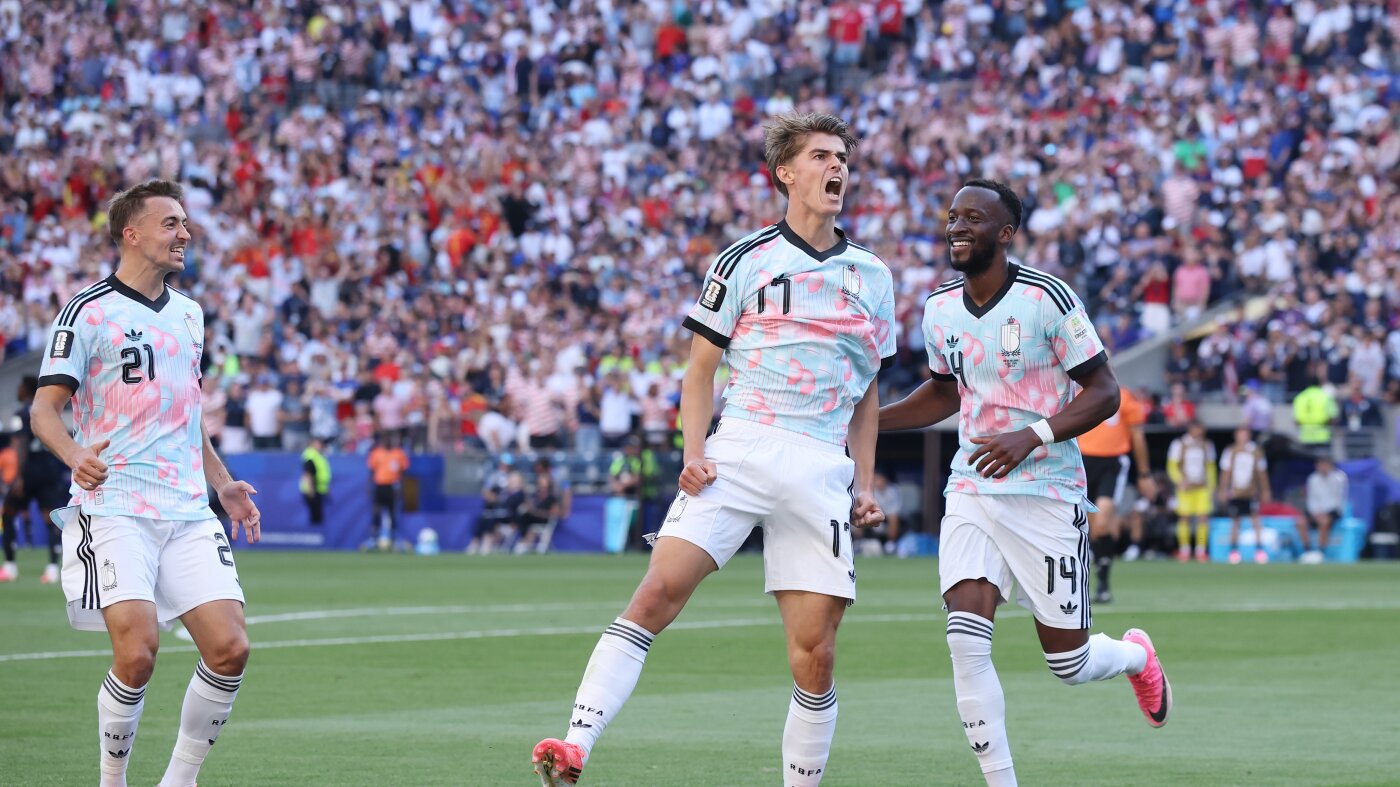 News16 minutes ago
The U.S. men’s run at the World Cup ends with a 4-1 Round of 16 loss to Belgium
-

 Los Angeles, Ca2 hours ago
L.A. man who violently crashed into Border Patrol agents sentenced to 5 years in prison
-

 Detroit, MI2 hours ago
Fans pack Detroit’s Campus Martius for USA-Belgium World Cup match
-

 San Francisco, CA2 hours ago
Terrified passengers film Waymo autonomous vehicle driving into live fireworks in San Francisco
-

 Dallas, TX2 hours ago
WATCH: USA vs. Belgium watch party at FIFA Fan Festival Dallas
-

 Miami, FL2 hours ago
Tim Hardaway Jr. returns home as Miami Heat sign veteran guard:
-

 Boston, MA2 hours ago
‘Enough is enough’: Weekend violence in Boston sparks calls for change, from more police to community investment – The Boston Globe
-

 Denver, CO2 hours ago
Kalshi Promo Code DENVER: Trade $10, Get $10 World Cup Bonus for USA-Belgium – Denver Stiffs

