Northeast
NY National Guard members, Border Patrol agent identified in deadly Texas helicopter crash by Mexican border

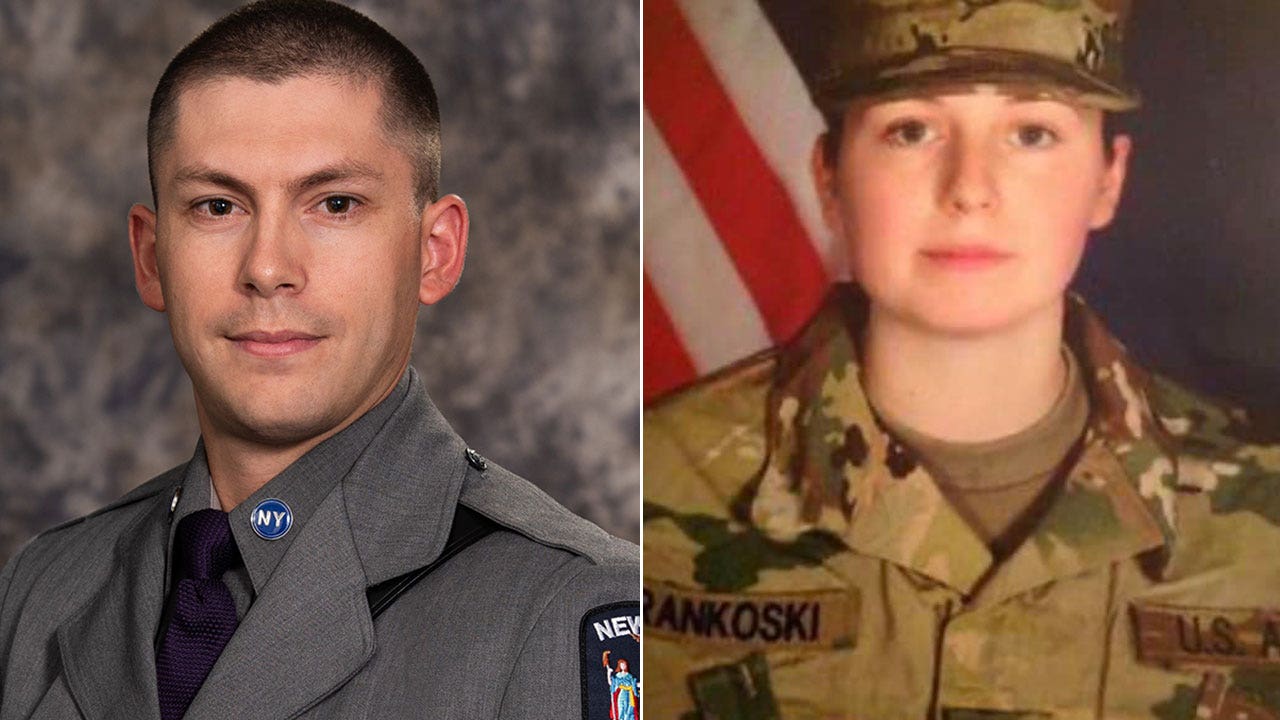
Two New York National Guard members and a Border Patrol agent have been identified as the three people killed in a U.S. military helicopter crash in Texas along the U.S.-Mexico border.
New York State Trooper John M. Grassia III and New York National Guard helicopter pilot Casey Frankoski had already been identified as among the deceased by local agencies on Saturday, while Homeland Security Secretary Alejandro Mayorkas on Sunday identified the third person killed in Friday’s crash as Border Patrol Agent Chris Luna.
“We are devastated by the tragic death of Border Patrol Agent Chris Luna, a heroic public servant who lost his life Friday in a helicopter crash while on a Border Patrol mission in Texas. Two National Guardsmen were also killed, and one National Guardsman was seriously injured,” Mayorkas said. “Every single day, our Border Patrol Agents place themselves in harm’s way so that the rest of us can be safe and secure. My thoughts, and the deepest condolences of our Department, are with Agent Luna’s family, loved ones, and colleagues, and with those of the National Guardsmen who lost their lives. We hope for the injured servicemember’s swift recovery, and hold our National Guard colleagues and their families in our thoughts as well.”
Grassia, 30, was killed on Friday in a helicopter crash while flying over the U.S.-Mexico border in Texas serving with the National Guard, the New York State Troopers Police Benevolent Association said in a Facebook post on Saturday, sending thoughts and prayers to Grassia’s family, friends and coworkers.
MEXICAN CARTEL MEMBERS LAUGH AFTER NATIONAL GUARD HELICOPTER CRASHES, KILLS 3
“Trooper Grassia, who was dedicated to serving and protecting not only the citizens of New York State but also the citizens of the entire United States, will be remembered for his ultimate sacrifice,” the post said. “Trooper Grassia joined the New York State Police in April 2022 and was most recently assigned to Troop G. Funeral arrangements are pending.”
Frankoski also “tragically lost her life in a helicopter crash on Friday while patrolling the US-Mexico border,” according to the mayor of Rensselaer, New York, located across the Hudson River opposite the state capital of Albany.
New York State Trooper John M. Grassia III and New York National Guard pilot Casey Frankoski were among three killed in a U.S. military helicopter crash near the Mexico border. (New York State Troopers Police Benevolent Association/ Troy Police Department)
“A proud native of Rensselaer and distinguished graduate of Columbia High School, Casey was not only an excellent student but also excelled in sports and community service before joining the New York National Guard,” Mayor Michael Stammel wrote. “Casey comes from a family deeply rooted in public service, and her legacy as an American hero resonates throughout our community. Casey’s father is retired Rensselaer Police Chief James Frankoski and a part of our Rensselaer family. Our heartfelt condolences go out to the Frankoski family as we collectively mourn the loss of a beloved city native and dedicated patriot. Please keep all of the victims and families in your prayers.”
Rensselaer would be lowering its flags in Frankoski’s honor, the mayor said.
“Our hearts are heavy as we mourn the loss of Army National Guard helicopter pilots Casey Frankoski and John Grassia Jr, who tragically lost their lives in a helicopter crash over the border of Texas and Mexico on Friday during an operation,” the Troy Police Department in New York also wrote in a Facebook post.
A National Guard helicopter seen after crashing in La Grulla, Texas on Friday. (Fox News)
“On behalf of the Troy Police Department, we extend our deepest condolences to the family, friends, and colleagues of Casey Frankoski and John Grassia Jr during this difficult time. Their service and sacrifice will never be forgotten. Our thoughts and prayers are with all those affected by this tragic event.”
A UH-72 Lakota helicopter assigned to the federal Southwest border support mission crashed Friday afternoon while conducting aviation operations near Rio Grande City, Texas, according to a statement released by Joint Task Force North. The cause was under investigation.
NATIONAL GUARD HELICOPTER CRASHES NEAR SOUTHERN BORDER IN TEXAS, MULTIPLE FATALITIES REPORTED
Starr County Judge Eloy Vera, the county’s top official, said those on board included one woman and three men. He said the person who was injured was in critical condition.
Gen. Daniel Hokanson, head of the National Guard Bureau, in a post on X, sent his condolences to the families, loved ones, friends and colleagues of the three people killed, and prayers for the injured soldier’s speedy recovery.
Authorities in La Grulla, Texas, at the site of a National Guard helicopter crash. (Fox News)
“We mourn these heartbreaking deaths,” Hokanson’s post said. “They are a tragic loss beyond words. All of these people represent selfless service & the best of America.”
The site of the crash is in Texas’ Rio Grande Valley. The Starr County Sheriff’s Office posted on Facebook on Friday that it was assisting with a “downed helicopter incident” on the east side of the county. Vera said the scene had been secured by the sheriff’s office and that federal officials were on the way.
The Associated Press contributed to this report.
Read the full article from Here

Pittsburg, PA
Delta-8 is unregulated and untested. Here’s what to know about the synthetic cannabis.

Delta-8 is unregulated and untested, and more and more users are paying the price.
Health experts say the drug often contains chemicals and toxins, resulting in psychotic episodes and, in some cases, long-term damage.
Should Delta-8 be banned?
Walk into any of the now-hundreds of vape shops in the Pittsburgh region and just about any gas station, and it’s yours for the asking: Delta-8.
It’s an unregulated, quasi-legal form of synthetic cannabis. It’s supposed to be less potent than regular marijuana, but with some users, it’s resulted in psychotic episodes involving hallucinations, hospital admissions or even violence.
“You have no idea where it’s made, what it’s made with, what’s actually in it,” addiction psychiatrist Elizabeth McCord said.
Three years ago, a then-21-year-old University of Pittsburgh student took Delta-8 and went on a rampage. He stabbed Al Carlson, a random stranger in the city’s Shadyside neighborhood, seven times, leaving him for dead.
After his arrest, Jasper Hilliard told police he had been in an altered state, hearing voices. And in court, both the defense and prosecution experts said Hilliard acted in a “substance-induced state of psychosis.”
Still, Judge Edward Borkowski found him guilty last week of attempted homicide, saying even under the influence, Hilliard could still form intent to kill. Carlson agreed, but Hilliard’s father said his son wouldn’t have attacked but for the drug.
“My son was peaceful and non-violent for his entire life up to the day the crime happened, and it only happened because, like thousands of people in Pittsburgh, he took Delta-8,” Jasper’s father, Thomas Hilliard, said on June 16.
Delta-8 adverse reactions
The Food and Drug Administration has tracked 104 reports of adverse reactions from Delta-8, involving hallucinations, confusion, vomiting and loss of consciousness and has issued a public warning. The FDA points to the unregulated, untested nature of the drug and the unmonitored use of chemicals and potential toxins in the synthesis process.
McCord says every dose of Delta-8 is a crapshoot.
“It’s manufactured through chemical conversion rather than grown naturally, so you are exposing yourself to harmful chemicals,” McCord said. “It’s so unregulated that you’re also ingesting toxins.”
But since it’s so readily available, people assume it’s safe — especially in the ingestible form as gummies — which McCord says is an invitation to young people who may be susceptible to long-term brain damage.
“You go to a gas station or head shop, and you see Delta-8,” McCord said. “It looks like candy, and that’s predatory marketing toward young individuals.”
Delta-8 in Pennsylvania
But even though 22 states have now banned or severely restricted the sale of Delta-8, Pennsylvania is not one of them. A federal ban is scheduled to go into effect in November. And under proposed legislation to legalize recreational marijuana, synthetic cannabis would be subject to testing, and only authorized dealers could sell it.
This would take it out of vape shops and gas stations, but too late to prevent the tragedy involving Carlson and Tom Hilliard’s son.
“I’m surprised the state of Pennsylvania hasn’t done something already,” Tom Hilliard said.

HARTFORD, Conn. (WTNH) — Five Connecticut towns will collectively receive $10 million in grants for infrastructure upgrades, according to a Monday announcement by Gov. Ned Lamont.
The Connecticut Department of Housing (DOH) is awarding $10.7 million to Coventry, Guilford, Ledyard, Mansfield and Thomaston to modernize and rehabilitate housing for low- and moderate-income residents, the announcement said.
The funds are being released through the DOH’s Community Development Block Grant’s small cities program, with funding from the U.S. Department of Housing and Urban Development. To be eligible, a municipality must have fewer than 50,000 residents.
Cost Breakdown
Coventry: $2 million
Town of Coventry plans to use funds to upgrade, with a focus on making Orchard Hill Estates compliant with the Americans with Disabilities Act (ADA).
Guilford: $2 million
The Town of Guilford plans to use funds to design and build future affordable housing projects, consisting of up to 16 rental units and 8 homes.
Ledyard: $2 million
The Town of Canton requested funding for the first phase of affordable housing for people in Ledyard and the surrounding area. Habitat for Humanity of Eastern Connecticut is in the pre-development phase of the Colby Drive and plans to create 38 units.
Mansfield: $2.2 million
Funding will be used for upgrades to Wright’s Village, including roof replacements and sidewalk repairs.
Thomaston: $2.5 million
Funds will be used to make Green Manor ADA-compliant, including the installation of a new emergency call aid system.
Download the News 8 app to get breaking news and weather alerts.
Watch News 8 on WTNH.com or the free WTNH News 8 streaming app on Roku, Apple TV, Amazon Fire TV and select Samsung Smart TVs.

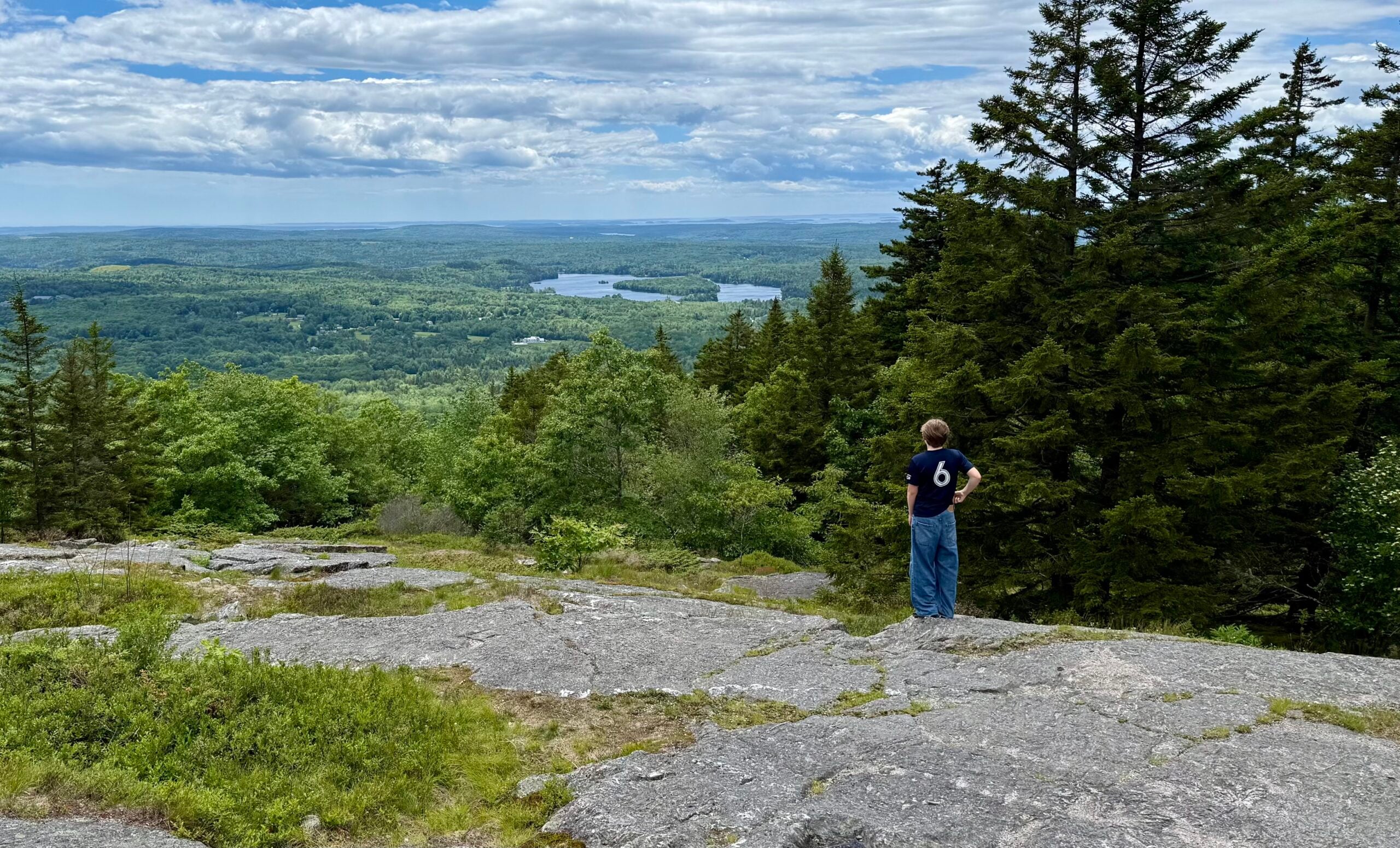
“Do you ever think we could find some woods to walk in?” my outdoorsy 12-year-old asks me, every now and again. As a kid growing up in New York City, Anton appreciates all the skate parks and bagel shops, but he also really craves nature, like in his bones.

So, when school got out, I offered to take him for a weekend in Maine, a place with not only woods but also lakes and rocks and periwinkles that come out of their shells when you hum. We were both really excited.

The first night, we were lucky enough to snag a room at Aragosta, a beautiful small hotel in Deer Isle that Alison had recommended.

The chef-owner, Devin Finigan, is famous for her seasonal tasting menus, but we focused on the breakfast that came with the room, including these Maine blueberry pancakes. I don’t even usually like pancakes and these blew my mind.

We also played a LOT of chess on our little travel board.

After breakfast, we set out to hike up Blue Hill Mountain.
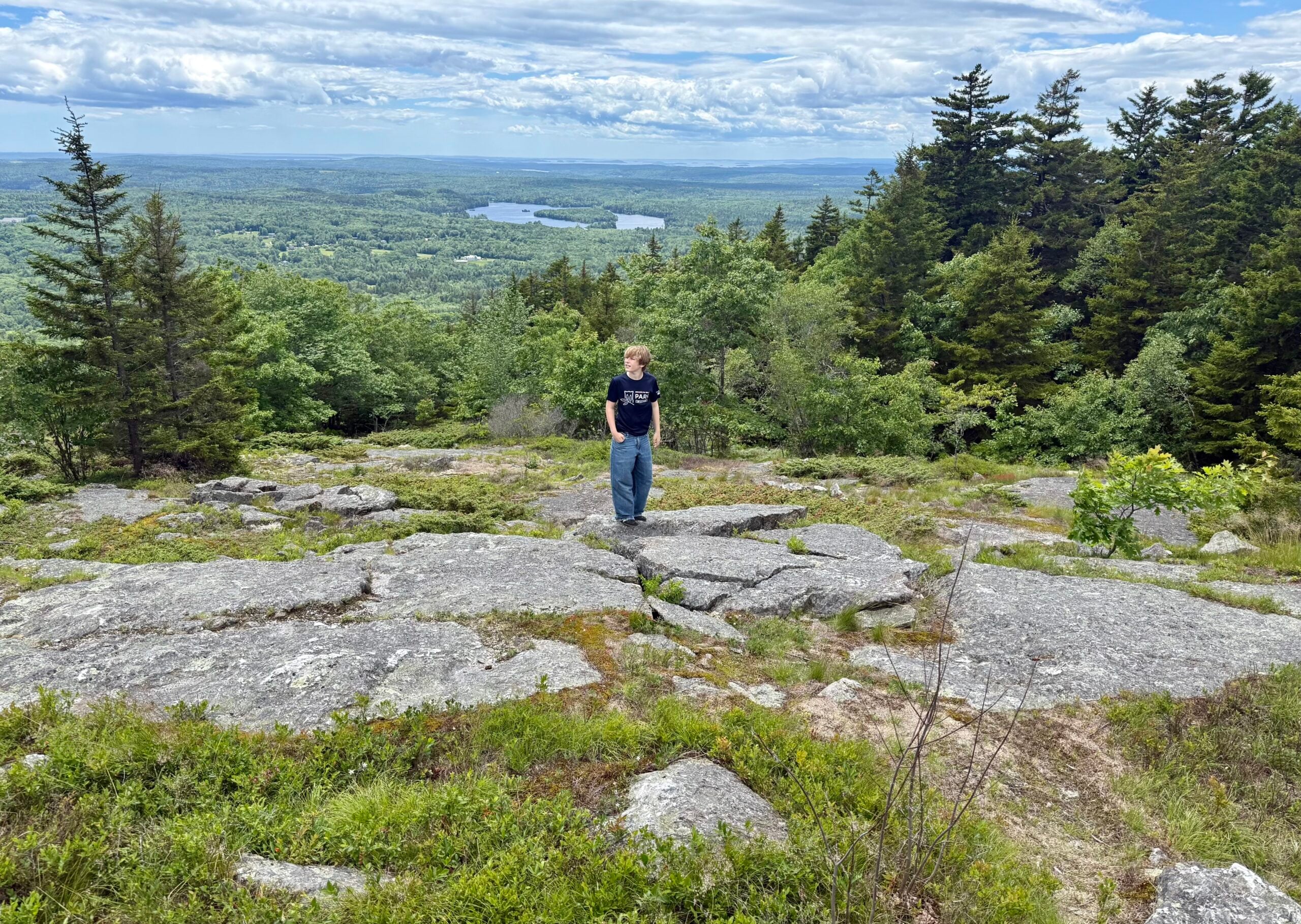
Here’s the summit!

In the afternoon, we explored the charming fishing village of Stonington…

…then joined my friend Julie (of Rudy Jude fame) and her family for dinner at the Burnt Cove Boil.

Basically, a crab gets plonked down in front of you, followed by a corn on the cob, then a lobster, then a classic ice-cream sandwich. Julie and her husband Anthony taught us how to get all the meat out. (Their kids were already pros.)

Afterward, the four boys scrambled around on the rocks, while the adults chatted. It’s always such a treat to hang out with people who live in the place you’re visiting, don’t you think? Julie and Anthony described how they brought their recently hatched chicks into their home to keep them warm, and all the peeping was sooooo loud — and then a cricket got into the house and added to the noise and no one could find it and everyone was going nuts, haha. Very different from city life!

The next day, Anton and I stayed at the lovely Asticou Hotel near Acadia National Park.

We drove to a couple trailheads but they were PACKED — you had to stand in a long line, just to start the hike! Luckily, we found a quieter area and took a long walk around Jordan Pond, playing Would You Rather and Categories along the way. Do you have any favorite travel games?


Finally, we skimmed stones on our last afternoon before heading back to Brooklyn.

Epic travel buddy
Oh, Maine, what a magical place! Not pictured, of course: traffic, grumpy preteen moments, locking our keys in the rental car, etc., but all that’s to be expected.
Have you been to Maine? Do you live there? What parts do you love? Any pro tips? I’d love to hear. xoxo
P.S. Our Maine trip — and another amazing hotel — when the boys were much younger, and a Maine home with a bedroom looking over water.
-

 Minneapolis, MN55 seconds ago
Federal judge blocks DOJ investigation into Minnesota state, city leaders
-

 Indianapolis, IN4 minutes ago
Graham Rahal: Indianapolis Has a Crime Problem
-

 Pittsburg, PA9 minutes ago
Delta-8 is unregulated and untested. Here’s what to know about the synthetic cannabis.
-

 Augusta, GA16 minutes ago
Augusta election leaders meet to discuss lawsuit from Dr. Lori Myles
-

 Washington, D.C19 minutes ago
Reflecting pool to be drained again as Trump claims five vandalism arrests
-

 Cleveland, OH24 minutes ago
Cleveland Browns News and Rumors June 22, 2026: Not Just Org Chart Noise
-

 Austin, TX31 minutes ago
Barton Springs Pool to reopen June 23
-

 Alabama34 minutes ago
Petition calls on State of Alabama to fund fix for Prichard sewer system after spills

