West
Reparations expert says San Francisco's apology to Black residents 'doesn’t mean anything' without action

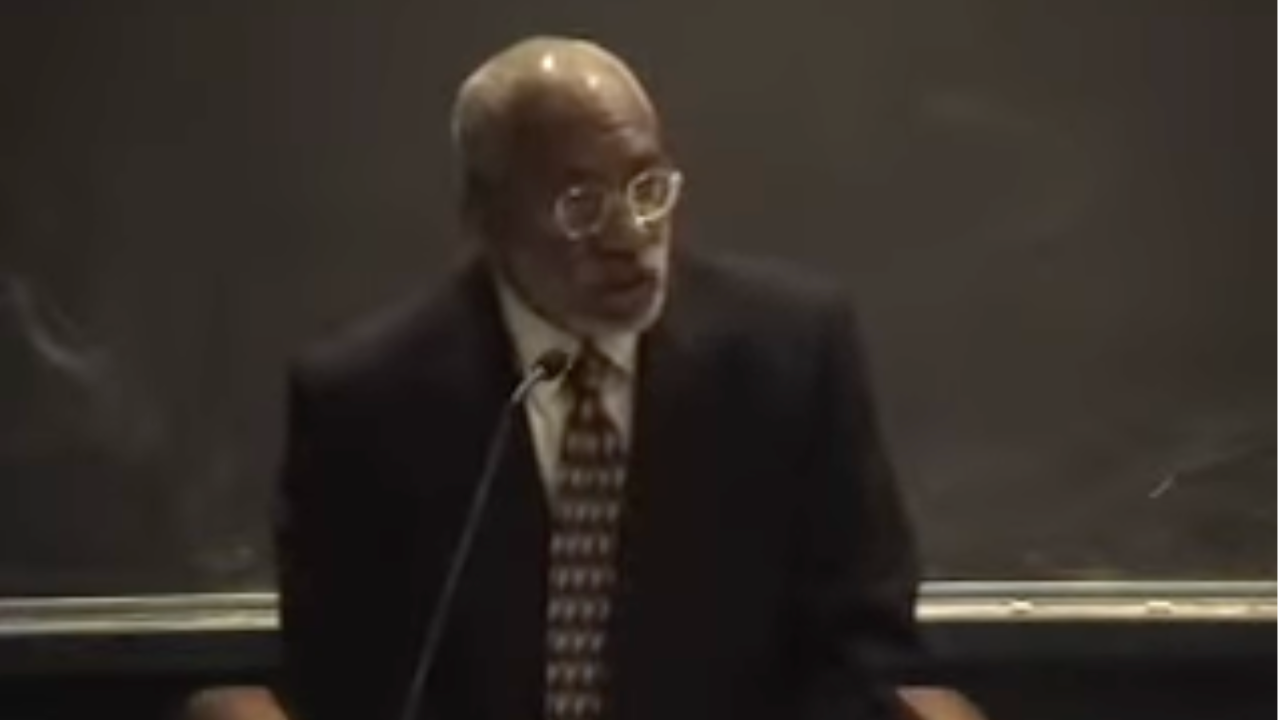
A reparations expert says that San Francisco’s apology to Black residents won’t mean anything if it is not backed with actions.
“Reparations are the redemptive act that makes the rhetoric of an apology meaningful,” Reparations scholar Roy Brooks, a law professor at the University of San Diego, told USA Today.
“You can’t just say you’re sorry and walk away,” Brooks added, telling USA Today that “an apology alone was not sufficient.”
Brooks edited the 1999 book “When Sorry Isn’t Enough: The Controversy Over Apologies and Reparations for Human Injustice.”
San Francisco voted Tuesday to formally apologize to Black residents after decades of “institutional racism.”
SAN FRANCISCO’S PROPOSED REPARATIONS PLAN COULD COST CITY $100 BILLION: REPORT
All 11 of the San Francisco Board of Supervisors signed on as sponsors of the resolution to apologize for the city’s complicity in “systemic and structural discrimination.”
Reparations scholar Roy Brooks, a professor of law at the University of San Diego, said that San Francisco’s apology to Black residents won’t mean anything if it is not backed with actions. (YouTube screenshot)
When the San Francisco African American Reparations Advisory Committee published its final recommendations last July, it said that “the City and County of San Francisco and its agencies must issue a formal apology for the past harms, and commit to making substantial ongoing, systemic, and programmatic investments in Black communities to address historical harms.”
CIVIL RIGHTS ATTORNEY ARGUES CASH PAYMENTS TO DESCENDANTS OF SLAVES ‘RECOGNIZE THE HARM DONE’ FROM SLAVERY
The resolution comes after the committee argued the city owed millions of dollars in compensation to Black residents for decades of discrimination. The committee proposed that eligible Black adult residents receive $5 million in cash payments and a guaranteed income of nearly $100,000 a year to address the racial wealth gap in the city.
According to the L.A. Times, the city’s mayor, London Breed, said that $5 million payments could amount to $100 billion, far more than the city’s $14 billion annual budget. The Times added that Breed is not committed to cash reparations.
According to USA Today, Brooks said implementing financial reparations could be a challenge for municipalities due to budget constraints, so, they are “leaning on rehabilitative reparations that are less costly.”
San Francisco Mayor London Breed. (Tayfun Coskun/Anadolu Agency via Getty Images)
Brooks commented on Evanston, Illinois’ form of reparations that offered housing assistance to Black residents as recourse for generations of past property undervaluation by “White appraisers that slowed Black families’ efforts to accumulate generational wealth.”
“These are not cash payments, which is what most people think about,” Brooks said.
He added, “But they’ve actually done something.”
Evanston’s city council was the first in the nation to pass a reparations plan, pledging $10 million over 10 years to Black residents.
Evanston Mayor Daniel Biss said that his city showed how reparations could be a “tangible” reality.
The San Francisco supervisors stated that the apology was just the start of reparations for Black residents in the city.
DESCENDANTS OF ENSLAVED WHO BUILT MISSOURI UNIVERSITY WANT OVER $70 BILLION FOR UNPAID SLAVE LABOR
Although the city officials voted unanimously to formalize an apology, some slammed the measure before it passed as insufficient due to other reparations being put on hold due to budget issues.
A person wears a Reparations Rally hat during a rally for reparations at the African Burial Ground National Monument on July 23, 2021 in New York City. (Getty Images)
While recognizing that the apology is an important step, Supervisor Shamann Walton reportedly said more work needs to be done.
“This historic resolution apologizes on behalf of San Francisco to the African American community and their descendants for decades of systemic and structural discrimination, targeted acts of violence, atrocities,” Walton said to CBS News. “We have much more work to do but this apology most certainly is an important step.”
Rev. Amos C. Brown, a member of the San Francisco reparations advisory committee and the official who proposed for the city to formally pass the apology, also said it’s not enough.
“An apology is just cotton candy rhetoric,” Brown said. “What we need is concrete actions.”
“People want an apology,” supervisor Dean Preston said. “But they also want a commitment not to repeat harms.”
Preston said that while city officials support issuing the apology, they still want to build “unaffordable housing for mostly wealthy, White people” on public land.
Read the full article from Here

Alaska
I Took My First Alaskan Cruise—Here Are 7 Packing Mistakes You Should Avoid, and What to Bring Instead From $6
:max_bytes(150000):strip_icc()/tl-upcycle-i-took-my-first-alaskan-cruise-here-are-7-packing-mistakes-you-should-avoid-and-what-to-bring-instead-tout-a648e8cb19fa4f50879919933ca6b4ed.jpg?ssl=1 "I Took My First Alaskan Cruise—Here Are 7 Packing Mistakes You Should Avoid, and What to Bring Instead From")

For Dana Kennedy, the state director at the Arizona branch of the American Association of Retired Persons, aging is not only a political issue, but a personal one. A social worker by profession, Kennedy brings her own experience of caring for aging family members and clients to her work advocating for Arizona seniors at the state Capitol and beyond.
Kennedy sat down with the Arizona Capitol Times to discuss the biggest issues impacting aging Arizonans and her personal connections to her advocacy work.
The questions and answers have been edited lightly for style and clarity.
Can you tell me a bit about your career trajectory?
I became a social worker in Orange County, California, during the Orange County bankruptcy. I did home health and hospice, so I basically connected family members to the services to help keep them in their own home. With the county going bankrupt, people were going to have to pay for (services), so I made the tough decisions (about whether) they were able to stay safe in their own home or not. That’s when I realized our long-term care system was broken. With a bachelor’s degree in social work, you really need to get your master’s, but I wanted to focus on macro policy and help solve our long-term care policy problem. So I ended up going to Boston University, and I got my master’s in social work. In both undergrad and grad school, I got certificates in gerontology, the study of aging. I’ve always been an aging nerd. I became an AARP member when I was 20. After graduate school, I went to (Washington) D.C., and that’s a very broken system as well. I wanted to work on long-term care policy, and people are like, that’s not a sexy issue, that’s never going to happen. Fast forward to being the state director at AARP, it’s my dream job.
What do the day-to-day responsibilities look like in your role?
It changes all the time. Within one week I have been at the Capitol doing a press conference regarding a bill that we were trying to get unstuck, then the following weekend I was in Long Beach representing AARP at the National Conference for Mayors. Then the following week I was down at the Corporation Commission because we’re intervening in the rate case. So I can go anywhere from working with mayors to working with state legislators to working on utility issues. At the same time, I’m also a caregiver. I just lost my dad, but I was flying back and forth to California to help my dad transition to hospice and then pass away, and I’m bringing my mom out next week for a clinical trial at Banner Alzheimer’s Institute. So I work on all these really important issues, but at the same time I’m helping myself as well as our staff navigate aging issues, because we’re all going through it. And if we’re not going through it, we will one day. So it’s really a fascinating job, and it’s everything that I ever wanted to do.
What initially drew you to issues affecting seniors?
I’m the first person in my family to go to college … and I worked my way through college. I was a paid caregiver, and I took care of a person who became disabled giving birth to her first child. She was in a wheelchair, and then her mom had a stroke, so I took care of both of them. It was such a hands-on experience. At the same time, my great-grandfather came to live with me and my mom when I was in high school. I watched the role reversal of what my family went through, (where the children) act like the parent, even though they’re not the parent. It didn’t really work out with my great-grandfather living with my grandparents, so he came to live with my mom and myself. So I always had this desire to work with aging, and I really wanted to work with families to help them deal with the transition of dealing with aging parents, that role reversal.
Can you talk a bit about how your personal experiences with aging family members inform the work you do?
It’s so important. (My great-grandfather) lived to be 99 years old, and he was completely cognitively intact until his last day. But I helped my family navigate him being able to make his own decisions. I know what’s best for my family. It doesn’t mean that my family is going to take my advice. That’s where it gets really hard with parents and the aging population because they still have autonomy until they’re not able to make decisions. When you go from mild cognitive impairment to all the sudden moderate cognitive impairment to severe cognitive impairment, then it’s that slippery slope of wondering, how do I take their keys away? They need somebody to come into the home to help with transferring, but they don’t want anybody to come into the home. And they get to make that decision until they’re not able to. I think (my experience) allows me to understand that everybody gets to make their own decisions, but at the end of the day, we need to make sure that they have the tools to be able to make that decision.
What is the most pressing issue impacting Arizona’s aging population?
It’s a national issue, and it’s Social Security. The Social Security solvency issue is front and center. We’ve all heard that Social Security is always going to be there. But Congress has kicked the ball down the road all these years, and all of a sudden we’re at a critical point. What’s going to happen if Congress doesn’t act? There’s going to be an automatic cut to Social Security. We have a population issue. People pay into Social Security, it’s a pay as you go system, and people aren’t having as many babies and we’re also not allowing immigrants into this country right now. So we need people to continue to pay into Social Security.
What has been your biggest accomplishment in this role?
There’s a few things that I’m really proud of. During COVID, we were the very first state in the nation to get visitation policies for people in long-term care facilities, and I’m really proud of that. We worked with Governor (Doug) Ducey on that. Families were locked out and residents were locked in and it was really hard. I’m also really proud that you know we got the (Medicare Drug Price Negotiation Program), which lowers the cost of prescription drugs for everybody. We also supported Proposition 104. That was a city tax issue, and it was when I first started at AARP, but that provided $31.5 billion in transportation infrastructure over 30 years. People don’t realize that transportation is such an important issue as you age. Most likely you’re going to lose your keys one day. What happens when you lose your keys and you can no longer drive? You become socially isolated. Social isolation is like smoking a pack of cigarettes every single day, it’s really damaging.
What has been the most challenging part of this role?
I don’t understand why I have such a hard time getting some bills passed. (This session) we wanted to allow cameras in a long-term care facility and (that bill) died. Three years in a row it died. That for me is a really hard pill to swallow. I’ve done three full distance Iron Men, so I don’t give up. I’m persistent. I have a very, very strong mental game and giving up is just not in my DNA. If there’s a will, there’s a way, and I’m going to find it. As long as I have to read another report of somebody being abused and neglected in a long-term care facility, I will continue to advocate to be able to provide tools to stop that abuse and neglect.

California property owners can expect the nation’s steepest insurance premium hikes this year.
Nevertheless, that surge will leave California property owners paying below U.S. norms, according to my trusty spreadsheet‘s peek at a report by policy tracker Insurify. Its numbers reflect what private insurers charge to cover properties across all 50 states and Washington, D.C.
For Californians, that means an estimated 16% jump in premiums for 2026. It’s the biggest jump in the country, four times the 4% hike a typical American faces.
Years of rising property damage are largely behind this, with the 2025 Los Angeles wildfires as the latest example.
After California, Nebraska is seeing a 13% increase, followed by New Mexico at 11% and Georgia at 10%. Meanwhile, policies are actually getting cheaper in Hawaii and Massachusetts (down 2%) and Maine (down 1%).
Relative bargain
Please do not be mad at me for relaying this insurance math.
Even after the 2026 increase, California property insurance remains a relative bargain compared with the rest of the country.
Lower California rates are one reason why many property owners have trouble finding coverage. State insurance regulation has made it difficult for insurers to raise their rates, even as their costs and risks surge.
Owners who cannot obtain insurance coverage most often use the state’s FAIR Plan. Those premiums are expected to rise by 29% next year.
Note that Insurify projects the average annual premium in California for 2026 will be $2,843, ranking 21st-highest among all states.
Do you know of many housing-related expenses where you can say California prices are 7% below the national norm?
The most expensive premiums are found in Florida at $8,458 per year, followed by Oklahoma at $5,205, Louisiana at $5,035, Nebraska at $4,560 and Texas at $4,529. These states face high risks from hurricanes, tornadoes or hail.
The cheapest insurance is in Vermont at $1,094 annually, followed by Maine at $1,359 and Utah at $1,370.
Even cheaper?
Keep in mind, the average Californian is insuring a very expensive property.
California insurance policies commonly cover $488,000 in repairs, according to Insurify. This is the second-highest amount among the states and 43% above the national average of $342,000.
Only Hawaii is higher at $500,000. The lowest policy coverage is in Oklahoma at $292,000.
Stack up what homeowners pay against how much coverage they get, and California’s pricing looks even more reasonable.
This premium-to-coverage ratio indicates that the typical Californian pays 0.6% of the coverage offered. That ranks No. 30 among the states and is one-third below the nation’s 0.9% ratio.
The highest ratios are in Florida (2.6%), Oklahoma (1.8%), Louisiana (1.7%) and Texas (1.4%). The lows were in Vermont, Alaska, the District of Columbia, New Hampshire and New Jersey, all at 0.4% or less.
Loss likelihood
If you own property in California, you probably already know this, but here’s a reminder of a never-ending risk: natural disasters.
My trusty spreadsheet also reviewed data from various government and industry sources to see how often disasters strike – and how much those ugly events cost. The incidents tracked include wildfires, floods, earthquakes, hurricanes, tornadoes, blizzards and hail.
To grade the 50 states and the District of Columbia on their relative natural disaster risks, five measures were developed that account for the frequency and damage of calamities, weighted against population and geographic size.
When you add it all up, California ranks third for the likelihood of expensive disasters.
Florida is the riskiest state, followed by Hawaii, California, Louisiana and Tennessee.
If you want a safer place, consider Alaska, Nevada, Utah, Arizona, or Wisconsin.
Of course, this is just a simple way to look at a complex problem that befuddles property owners, insurance companies and policymakers alike.
Clearly, these aren’t just California headaches. One-third of Americans live in 10 states with the highest risk.
How often
The history of disasters offers us clues as to where the next one may hit.
Look at the five measures used to create the risk rankings, starting with how often these disasters actually happen.
Using the number of federal disasters declared over the past decade and dividing that by each state’s square miles, California comes in at No. 9.
By this measure, the most disaster-prone are D.C., Rhode Island, Hawaii, Connecticut and Washington state. The least are Ohio, Wisconsin, Pennsylvania, Alaska and Michigan.
Next is the number of major storms per square mile.
California is much lower on this list, ranking 41st. The stormiest are D.C., New Jersey, Maryland, Hawaii and Rhode Island. The calmest are Alaska, Oregon, Nevada, Utah and Idaho.
The price tag
Think about what it costs to clean up after disasters. This is a major driver of home insurance premiums.
First, look at the dollar amount of damages divided by the number of people in each state. California ranks ninth-highest for disaster costs per person.
The biggest bills? Louisiana, Hawaii, Texas, Florida and Colorado. The smallest? Delaware, Rhode Island, Massachusetts, Connecticut and New Jersey.
Next, check out the cost per storm. California’s disasters are the fifth most expensive.
The most expensive storms happen in Florida, Louisiana, Texas and Oregon. The least expensive are in Delaware, Montana, Wyoming, Rhode Island and Kentucky.
Finally, if you look at insurance losses per person, California ranks fourth highest.
The largest insurance losses are in Colorado, Nebraska and Florida. After California, Wyoming is next. The lowest losses are in Utah, Hawaii, Nevada, Alaska and Oregon.
Clearly, the property-loss odds are stacked against Californians.
Skipping the costs
Some property owners take one look at their insurance bill and decide to go without.
LendingTree, using Census housing cost data, estimates 11% of California property owners have no homeowner’s insurance policy.
That’s the 11th-lowest level of no coverage among the states. The national rate is 14%.
West Virginia has the highest share of owners without coverage at 24%, followed by New Mexico at 23% and Louisiana at 21%. The fewest uninsured homes are in Colorado, Oregon and New Hampshire at 10%.
So why do so many Californians still pay for coverage?
Contemplate the estimated California premium against statewide household income to see that the cost is relatively affordable.
This 2.8% insurance-cost burden ranks No. 25 among the states. It’s also one-fifth of the nation’s 3.6%.
The highest burden? Florida at 11%, and Louisiana and Oklahoma at 8%. Lows? Vermont, New Hampshire, Utah and Maine, all 1%.
Jonathan Lansner is the business columnist for the Southern California News Group. He can be reached at jlansner@scng.com
- Try Jonathan Lansner’s Substack collection of economic trends. CLICK HERE!
-

 Cleveland, OH2 minutes ago
‘Very special’ wedding moved to Cleveland Clinic so father can attend days after quadruple bypass
-

 Austin, TX5 minutes ago
Multiple agencies responding to ‘major’ crash on FM 973 in Manor
-

 Alabama10 minutes ago
Unsettled Through Friday – Alabama Emergency Management Agency (EMA)
-
:max_bytes(150000):strip_icc()/tl-upcycle-i-took-my-first-alaskan-cruise-here-are-7-packing-mistakes-you-should-avoid-and-what-to-bring-instead-tout-a648e8cb19fa4f50879919933ca6b4ed.jpg?w=400&resize=400,240&ssl=1 "I Took My First Alaskan Cruise—Here Are 7 Packing Mistakes You Should Avoid, and What to Bring Instead From")
:max_bytes(150000):strip_icc()/tl-upcycle-i-took-my-first-alaskan-cruise-here-are-7-packing-mistakes-you-should-avoid-and-what-to-bring-instead-tout-a648e8cb19fa4f50879919933ca6b4ed.jpg?w=80&resize=80,80&ssl=1 "I Took My First Alaskan Cruise—Here Are 7 Packing Mistakes You Should Avoid, and What to Bring Instead From") Alaska17 minutes ago
Alaska17 minutes agoI Took My First Alaskan Cruise—Here Are 7 Packing Mistakes You Should Avoid, and What to Bring Instead From $6
-

 Arizona20 minutes ago
Dana Kennedy: A caregiver advocating for Arizona’s aging population | Arizona Capitol Times
-

 Arkansas25 minutes ago
Washington isn’t watching Arkansas? Pete Buttigieg says it should be.
-

 California32 minutes ago
Is California home insurance cheap, considering the risks?
-

 Colorado35 minutes ago
1 injured in shooting outside Colorado Springs nightclub; suspect sought

