Detroit, MI
2 new measles cases identified in metro Detroit


METRO DETROIT (WXYZ) — More measles have been confirmed in two metro Detroit municipalities — Wayne and Washtenaw counties.
The cases were confirmed Sunday by Wayne County Public Health (WCPH) and the Washtenaw County Health Department (WCPHD).
The Wayne County case, WCPH said, stems from an adult following international travel.
“WCPH is working closely with the Michigan Department of Health and Human Services to identify anyone who might have been exposed through this case. Possible contacts of the individual are being notified,” WCPH says.
If you were at any of the following locations during the times indicated, please get vaccinated at contact WCPH at PHECC@waynecounty.com and include your name, phone number and address:
- WellStreet/Beaumont Urgent Care: 23100 Michigan Ave in Dearborn on February 27 between 2:00 p.m. and 5:30 p.m.
- CVS Pharmacy: 2701 S. Telegraph Rd in Dearborn on February 27 between 4:00 p.m and 6:30 p.m.
- Henry Ford GoHealth Urgent Care: 26763 Ford Rd in Dearborn Heights on February 29 between 11:30 a.m. and 4:00 p.m.
- Corewell Emergency Department: 18101 Oakwood Blvd in Dearborn on February 29 between 3:00 p.m. and 8:00 p.m.
Washtenaw County Health officials are asking anyone who visited the waiting and triage areas of Trinity Health Ann Arbor’s Emergency Department on March 1 between 10:30 a.m. and 1:30 p.m. to get vaccinated for measles immediately.
“Anyone present at the above time and date should receive the MMR (Measles, Mumps and Rubella) vaccine within 72 hours (no later than Monday March 4, 2024) if they are not already considered immune to measles,” WCPHD said.
Measles, a highly contagious, vaccine-preventable disease, has serious possible complications that include hospitalization, long-term illness, and death. Globally, measles cases are rising.
“Measles spreads through infectious droplets or by airborne spread when an infected person breathes, coughs, or sneezes. Measles is so contagious that ninety percent of unvaccinated people who are exposed to measles will become infected. Infected people can spread measles before noticing symptoms, including from four days before through four days after the rash appears. Measles virus can stay in the air for up to two hours after an infected person leaves an area. Symptoms of measles usually begin 7-14 days after exposure but can appear up to 21 days after exposure immediately,” WCPH said.
If you think you may have been exposed, please lookout for the following symptoms:
- High fever (may spike to over 104˚F).
- Cough.
- Runny nose.
- Red, watery eyes (conjunctivitis).
- Tiny white spots on the inner cheeks, gums, and roof of the mouth (Koplik Spots) two to three days after symptoms begin.
- A rash that is red, raised, blotchy; usually starts on face, spreads to trunk, arms and legs three to five days after symptoms begin.
If you are experiencing any of these symptoms, immediately contact the your local health department. It is also important to contact your healthcare provider and to inform them before obtaining care to prevent exposure to others.
“Vaccination is the single best way to protect yourself, your family, and the people you spend your days with,” said Dr. Abdul El-Sayed, Wayne County Health Officer. “Given the growing risk of measles because of outbreaks in Europe and elsewhere, we highly recommend you verify your and your family’s vaccination status immediately—and get vaccinated if you or they have not been.” To verify their vaccination status, residents are encouraged to contact their health care provider or WCPH.
If received within six days of exposure, post-exposure treatment may prevent measles.
“A single dose of measles vaccine is about 93% effective at preventing measles, while two doses are about 97% effective. It is also effective if used within 72 hours of a measles exposure to prevent illness. However, some individuals with weakened immune systems may not be eligible to receive this vaccine. Getting vaccinated not only protects the individual receiving the vaccine but can also protect vulnerable individuals in our communities from being exposed to this illness,” WCPH said.
Vaccines are available via primary care providers and pharmacies at no-cost, in most cases.
Click the following to learn more about the measles and vaccines:
Children can receive vaccines at no-cost from a participating provider through the ‘Vaccines for Children’ program.



Detroit, MI
First responders honored after rescuing 12 people from capsized sailboats near Belle Isle

DETROIT – Detroit first responders and several private citizens are being credited with helping rescue a dozen people after multiple sailboats capsized in the Detroit River near Belle Isle during severe weather last week.
The incident occurred shortly after 7:30 p.m. on June 10 as a line of thunderstorms moved through southeast Michigan, bringing strong winds to the area.
According to the Detroit Fire Department, crews were dispatched to Belle Isle near the beach following reports of overturned boats and people in the water.
Firefighters, EMS personnel, Engine 27, and Fireboat 2, known as the Sivad Johnson, responded to the scene.
When crews arrived, they found multiple small sailboats overturned in the river.
Officials said 20 people aboard seven sailboats were involved in the incident.
Twelve people were rescued from the water, while eight others safely returned aboard two boats that remained upright.
Fireboat 2 rescued four people from the water.
The Detroit Police Department Harbormaster rescued two more, while a private boater assisted three people. Another three were brought to safety by a nearby boat club vessel.
The operator of the sailing group said as many as 26 people were on the water before the storm arrived, with six making it back to shore on their own before rescue efforts began.
Despite the dangerous conditions, no serious injuries were reported. Officials said all rescued individuals declined medical treatment.
Authorities praised the coordinated response among firefighters, police officers, boat club members, and private boaters who assisted during the emergency.
“Be aware of your surroundings,” said Detroit Fire Department Fireboat Operator Daniel Familant. “To be honest, we do make a lot of the saves by the private boaters out there that are fishing or just having a good time, and people were out there screaming, ‘Help, help,’ and there they go, so everyone helps out. It’s an all-hands effort.”
Emergency crews remained on scene until everyone involved was accounted for.
Officials noted that one member of the Fireboat 2 crew was serving on the vessel for the first time during the rescue operation.
Copyright 2026 by WDIV ClickOnDetroit – All rights reserved.


Archbishop Edward Weisenburger and Fr. Mario Amore on restructuring
Archbishop Edward Weisenburger and Fr. Mario Amore on the archdiocese restructuring on Nov. 17, 2025 in Detroit
The list of Catholic parishes targeted for the possible stoppage of weekend Masses has grown to about 90 parishes across southeast Michigan, according to the latest proposed models the Archdiocese of Detroit has released as part of its major restructuring process.
The archdiocese released on Thursday the models for potential parish groupings for the six remaining planning areas in the archdiocese, and 32 parishes wouldn’t have weekend Mass under at least one of the models. Previously released models showed that 58 other parishes could stop holding weekend Mass.
The Archdiocese of Detroit recently completed listening sessions meant to garner feedback on the models, but parishioners can still share input through a survey that is open until July 31.
The archdiocese has been divided into 15 planning areas, or geographic areas, and three or four models are being proposed for each planning area, said the Rev. Mario Amore, executive director of parish renewal for the Archdiocese of Detroit.
The models have different proposed groupings of parishes ― called pastorates ― in which a grouping would share a pastor and potentially other priests. In some cases, selected churches in the grouping would no longer hold Saturday Vigil or Sunday Mass.
The models released on Thursday are for planning areas 6, 7, 8, 11, 14 and 15, which include parts of Wayne, Oakland and Macomb counties and parishes in St. Clair and Lapeer counties.
Sixteen of the parishes wouldn’t have weekend Mass under any of the models, including St. Alphonsus-Clement Parish in Dearborn, Our Lady of Loretto Parish in Redford Township and Our Lady of Hope Parish in St. Clair Shores.
The models are part of the archdiocese’s biggest restructuring plan in years. Announced last fall, Archbishop Edward Weisenburger said the archdiocese can’t maintain the roughly 200 existing parish buildings and is working to “right-size” the archdiocese, along with its personnel and financial resources.
Holly Fournier, a spokesperson for the Archdiocese of Detroit, emphasized that the models are just draft proposals “intended to solicit feedback from parishioners.” She said no decisions have been made regarding pastorate groupings, weekend Mass schedules or any other aspect of the restructuring process.
The Rev. Mario Amore, executive director of parish renewal for the Archdiocese of Detroit, said in May that parishioners understand that the archdiocese “needs to do something” about its challenges. But when it becomes personal for people, it’s “very difficult,” he said.
“And there’s a lot of human emotions, and … we need to honor that,” Amore said. “We need to be attentive to that, and no one’s saying that it’s an easy process, and it’s not a process that … we’re happy that we need to undertake, but it is one that we do need to undertake.”
What the latest Wayne County models show
Planning Area 6, which is in the southern section of Wayne County, excluding the Downriver area, includes 16 parishes. Eight of them would stop holding Saturday Vigil or Sunday Mass under at least one of the models for the planning area.
They include St. Mary, Cause of Our Joy in Westland, St. Richard in Westland, St. Aloysius in Romulus, St. Sabina in Dearborn Heights, St. Linus in Dearborn Heights, Divine Child in Dearborn, St. Alphonsus -St. Clement in Dearborn and St. Kateri Tekakwitha in Dearborn.
Planning Area 7, which includes the northwest portion of Wayne County, has 15 parishes, four of which wouldn’t hold weekend Mass under at least one model. They include Our Lady of Loretto in Redford Township, St. John XXIII in Redford Township, St. Priscilla in Livonia and Resurrection in Canton Township.
What the latest Oakland and Macomb Co. models show
Planning Area 8, which is in southern Oakland County, has 13 parishes, six of which wouldn’t have weekend Mass under at least one of the models. They include St. William in Walled Lake, St. Gerald in Farmington, Prince of Peace in West Bloomfield, St. Joseph in South Lyon, Church of the Transfiguration in Southfield and Our Lady of Albanians in Southfield.
Planning Area 11, which includes the southeastern section of Macomb County, the Grosse Pointe communities and one parish in Detroit, has 14 parishes. Seven of them wouldn’t have weekend Mass under at least one model. They include Our Lady of Hope in St. Clair Shores, St. Lucy in St. Clair Shores, St. Basil the Great in Eastpointe, St. Margaret of Scotland in St. Clair Shores, Holy Innocents-St. Barnabas in Roseville, St. Matthew in Detroit and St. Clare of Montefalco in Grosse Pointe Park.
What the models in St. Clair, Lapeer counties show
Planning Area 14, which is in St. Clair County, has 12 parishes, five of which wouldn’t have Saturday Vigil or Sunday Mass in at least one model. They include Sacred Heart in Yale, St. Edward on the Lake in Lakeport, Holy Trinity in Port Huron, St. Christopher in Marysville and Immaculate Conception in Ira Township.
Planning Area 15, which is in Lapeer County and part of northern Macomb County, includes ten parishes. Two wouldn’t hold weekend Mass under at least one model. They include St. Mary Burnside in North Branch and St. Cornelius in Dryden.
asnabes@detroitnews.com

Carl’s Chop House, 3020 Grand River in Detroit, 1923-2008
It was one of the most prominent restaurants in Detroit throughout the 20th century. Carl’s Chop House served Detroit for decades, from the Great Depression through the new Millennium.
Founder Carl Rosenfield first opened as the Grand River Chophouse in the early 1920s and he moved the business across the street and renamed it Carl’s in the 1930s. The often-repeated story goes that he won the full ownership of a bar from his partner in a poker game and turned it into Carl’s Chop House.
Prior to his restaurant success, Rosenfield was a well-known tire merchant. At one point, Rosenfield also owned a lighthouse near Port Sanilac.
As a restaurateur, Rosenfield persevered through many trials, including the Great Depression and a beef shortage during World War II, which left the steakhouse to serve chicken, lobster, sturgeon and “a lot of fish I never heard of,” he was quoted as saying.
A sirloin steak dinner was $1 when Carl’s Chop House opened.
By the 1960s, business was booming, and the restaurant was serving thousands of customers daily and had plans to expand the 850-seat dining room to 1,200. By then, steak dinners were up to $6.
They bounced up to $10 in the 1970s when longtime Detroit News restaurant reporter and critic Molly Abraham included Carl’s in a column, pointing out that even though the restaurant was a bit out of fashion — it had been open for more than 50 years by then — she describes the place as having “an infectiously festive, informal atmosphere.”
Along with the steaks, convivial atmosphere and firm handshakes, Carl’s Chop House was known for always being open, even on Sundays. The only day of the year it was closed was Christmas Day, Dec. 25, which was also Rosenfield’s birthday.
Rosenfield, who would support local farmers by purchasing cattle and other livestock from the Michigan State Fair, was still working at the restaurant in the 1980s when he was in his 90s. He died in 1991 at age 95.
The new owners of Carl’s Chop House ushered it into the next century for another generation to enjoy.
It wasn’t the same without its namesake proprietor, who was known for an absolutely crushing handshake, however. In 2008, owner Frank Passalacqua filed an application with the state for a topless permit, hoping to turn the property, which was now a neighbor of MotorCity Casino, from a steakhouse to a strip club.
Passalacqua, who was more successful at Mario’s Italian restaurant in the Cass Corridor, said he was losing $1 million a year on Carl’s. The gentleman’s club idea never materialized. Carl’s closed in 2008 and the building was demolished in 2010.
mbaetens@detroitnews.com
-

 Politics20 seconds ago
Top GOP lawmaker rallies around conservative school board member facing calls to resign
-

 Sports8 minutes ago
2026 World Cup Odds: How Far Can Mexico Go After Winning Group A?
-

 Technology15 minutes ago
6 in 10 identity crimes now begin with a new account
-
 Business18 minutes ago
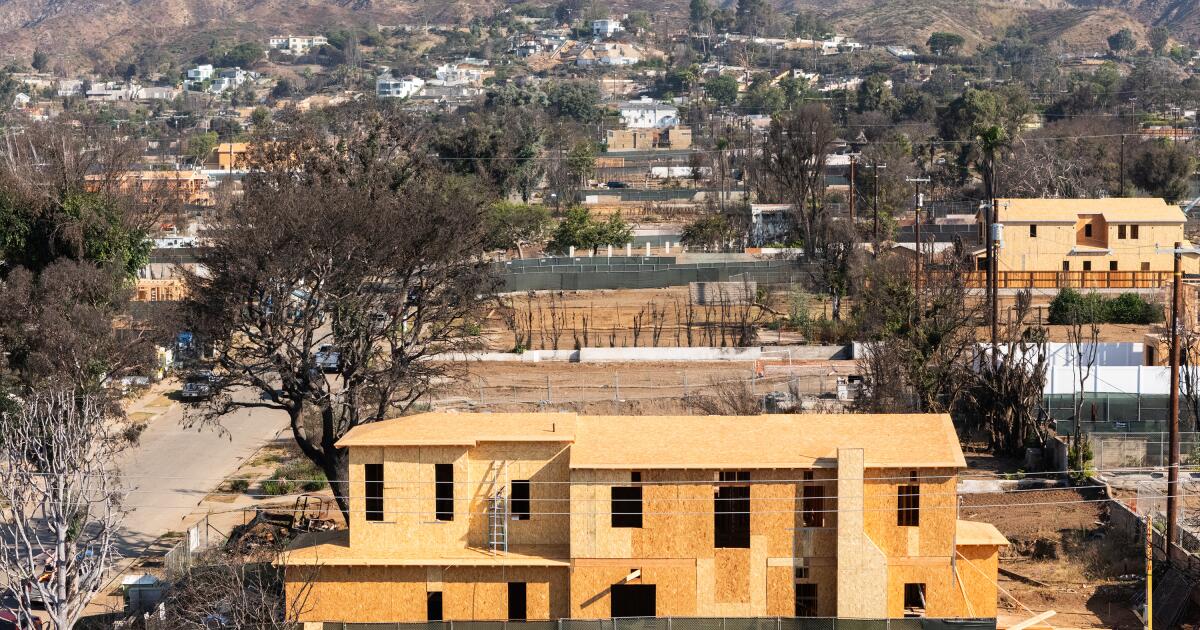
January 2025 wildfire victims seek tougher penalties against State Farm over claims handling
-
 Entertainment23 minutes ago
Review: ‘Sugar,’ with Colin Farrell as an alien private eye, gets a new and improved second season
-
 Politics33 minutes ago
Political watchdog fines Newsom for failing to report $5.5M in solicited donations on time
-
 Sports45 minutes ago
Goalkeeper Raúl Rangel’s elite play and South Korea’s mistake help Mexico advance
-

 World53 minutes ago
US-Iran talks postponed as Israel attacks Lebanon

