Rhode Island
How many cops from Rhode Island went to controversial New Jersey seminar? ACLU wants to know. – Rhode Island Current


The ACLU of Rhode Island Monday announced it filed open records requests with every police department across the state to find out if any of its officers attended a 2021 training seminar in New Jersey that encouraged insubordination and unconstitutional tactics.
Last December, the New Jersey Comptroller’s Office released a report indicating some Rhode Island police officers participated in the privately-run six-day seminar operated by Street Cop in Atlantic City. It notes that speakers disparaged marginalized groups of people and often made lewd gestures related to genitalia.
Instructors reportedly used words such as “retard” and “bitch” in describing people, according to the report. One showed an offensive meme featuring a monkey in a shirt after describing a motor vehicle stop of a “75 year old Black man coming out of Trenton.”
Attendees were also provided with a “Reasonable Suspicion Factors Checklist,” which warned officers that a person smoking during a traffic stop suggests criminal activity. Stretching was also seen as something a criminal would do when stopped, according to the New Jersey report.
Public agencies in Rhode Island also provided direct payment to Street Cop between 2020 and 2023, but the report did not say which departments contributed or how much. New Jersey Monitor reported that agencies in its state paid at least $75,000 in taxpayer funds to cover conference costs.
In a statement sent to New Jersey Monitor last December, Street Cop founder Dennis Benigno said his firm planned to “impose stricter standards on colloquial and jocular language occasionally used by some instructors” before the state comptroller’s office issued its report. Video from the conference shows Benigno himself used obscenity-laced language.
Street Cop filed for bankruptcy in late January.
“The New Jersey report is eye-opening and extraordinarily disturbing. Rhode Islanders deserve to know which police departments sent officers, however unwittingly, to learn how to engage in unconstitutional traffic stops and searches, and whether steps will be taken to retrain them,” ACLU of Rhode Island Executive Director Steven Brown said in a statement.
The ACLU on Feb. 22 asked the Rhode Island Police Officers Commission on Standards and Training (POST) to investigate and disclose which police departments sent officers to the seminar.
Commission Chairman Michael Winquist, who is also chief of police for the city of Cranston, responded via letter the next day saying “the actions you are requesting are outside the POST’s scope of authority.”
“Undoubtedly, all POST members would never condone any training that promotes unconstitutional or discriminatory policing practices at the Rhode Island Police Municipal Training Academy, for probationary police officers, or otherwise,” Winquist wrote.
Rhode Island Police Chiefs Association Executive Director Sidney Wordell told Rhode Island Current the ACLU’s letter was forwarded to local departments.
“We will certainly as an association make sure everyone follows up,” he said. “But at the end of the day, department policy will dictate how they respond.”
GET THE MORNING HEADLINES DELIVERED TO YOUR INBOX



(WJAR) — While Rhode Island prepares for its 50th Pride celebration, many are looking back on the history of the event and remembering the people who launched the movement.
“Being in the first parade in 1976, it was the bicentennial year,” said Billy Mencer Ackerly. “It was absolutely very scary and we didn’t know what was going to happen.”
Mencer Ackerly was among a group of between 70 and 100 people who marched in Providence’s first pride parade in June of 1976, at the time of the nation’s bicentennial celebration.
“People on the sidelines were still looking at us like we just came off of a spaceship,” Mencer Ackerly said. “It was almost like they didn’t believe that we would have enough courage to be able to say who we were.”
Billy Mencer Ackerly was among a group of between 70 and 100 people who marched in Providence’s first pride parade in June of 1976, at the time of the nation’s bicentennial celebration. (WJAR)
For some, it was a chance to come out and be seen. For others, like Billy’s family members who took part in the parade, it was an opportunity to show their support.
“My mother was in a car with two other mothers, and it was driven by a gay guy. And on each side of the car it said, ‘I’m proud to say my child is gay,’” Mencer Ackerly said. “It was the best thing my mother ever did for me.”
But the parade itself was almost shut down before it began.
“They were denied the parade by the police chief who said there would be no parade in providence over his dead body,” retired judge and former civil rights attorney Stephen Fortunato said.
First, the bicentennial commission rejected a proposal to include the pride parade in the bicentennial celebrations.
“They can be gay. I have no qualms about their activity or their private habits. We denied endorsement primarily because their activities do not sufficiently relate to the bicentennial,” said Patrick Conley in 1976. He was the Chairman of the Bicentennial Commission at the time.
Stephen Fortunato, who was a civil rights attorney at the time, took on the case.
“This group was ostracized, hated, discriminated against,” Fortunato said. “These civil rights and civil liberties cases depend on the courage of individual people or groups of people like the gay community at the time.”

Billy Mencer Ackerly’s mother, among other mothers, were in a car that read ‘I’m proud to say my child is gay’ during the first parade.
They took the case to federal court and won, paving the way for not just one parade, but five decades of love, acceptance and visibility.
“This movement is based on love,” said Rodney Davis, the current president of Rhode Island Pride. “I want people to come and experience themselves. Their whole selves, who they are.”
This year, organizers are honoring those who came before as well as the tens of thousands of people who show up every year to continue to carry the torch.
“Our theme for this year is ‘We are the people,’ because without everyone America isn’t America,” Davis said.
NBC 10 asked Davis what he hopes to see in the future.
“I want to get to a point where we don’t have to fight to exist,” Davis said. “It’s gotten better, but it’s not there yet.”
Since 1976, Mencer Ackerly has attended Rhode Island’s Pride celebration nearly every year. This coming weekend, he’s once again looking forward to participating.
“When I’m in the parade, I will also be thinking of all those ’76ers that have passed away over the years and about their bravery and their courage,” Mencer Ackerly said. “And I just believe they’ll be clapping up in heaven and celebrating for all of us.”
This year’s PrideFest kicks off Saturday morning at 10:00 a.m. at District Park in Providence.

(WJAR) — Tucked away in the woods of Exeter, a small museum is preserving stories that long predate Rhode Island’s founding, and even the arrival of European settlers in New England.
The Tomaquag Museum is Rhode Island’s only Indigenous-led museum and one of the oldest tribal museums in the United States.
For more than six decades, it has worked to preserve and share the history, culture and resilience of Native peoples across Southern New England.
A historic image from the Tomaquag Museum. (Tomaquag Museum)
“Tomaquag Museum is very unique in that it was founded by women,” said Executive Director Loren Spears.
The museum traces its roots back to 1958, when anthropologist Eva Butler and Narragansett Wampanoag elder Princess Red Wing set out to preserve Indigenous history through an Indigenous lens.
The collection originally began in Tomaquag Valley in Hopkinton, which inspired the museum’s name.
A member of the Narragansett Native American Tribe, Spears said the museum’s mission is to ensure Native voices remain part of the historical narrative.
A painting at the Tomaquag Museum that depicts a harsh scene. (WJAR)
“There is no U.S. history without First Peoples’ history,” she said.
The Narragansett Tribe, based primarily in Charlestown, has a history in the region stretching back more than 30,000 years.
Before English colonization, the Narragansetts were among the most influential Indigenous nations in Southern New England.
A display on historic documents at the Tomaquag Museum. (WJAR)
“We’ve had this interrelationship and this history the whole time and have contributed to the creation and formation of this nation in different kinds of ways,” Spears said.
Today, the museum houses thousands of cultural belongings and hundreds of thousands of archival materials documenting Indigenous communities throughout the region.
Among the artifacts on display is an American flag that flew in Afghanistan in honor of the Narragansett Tribe.
“People are often like, ‘Why is there a flag here?’” Spears said. “It’s here because this exact flag flew in Afghanistan in honor of the Narragansett Tribe.”
A U.S. dollar bill signed by Lynn Malerba, the first female chief of the Mohegan Tribe in modern times and the 45th Treasurer of the United States. (WJAR)
The museum also showcases a U.S. dollar bill signed by Lynn Malerba, the first female chief of the Mohegan Tribe in modern times and the 45th Treasurer of the United States.
“You can’t get any more American than a dollar bill,” Spears said. “To be able to see that an Indigenous woman is the one that signed that as the treasurer, we think is pretty remarkable.”
Visitors can explore the museum’s exhibit, “Revolution to Reclamation: Freedom Through Indigenous Sovereignty,” which includes hands-on activities designed for families and children.
Guests can create corn husk dolls, play traditional games, and learn about Native cultures through interactive displays.
Tomaquag Museum Executive Director Loren Spears and NBC 10’s Abbey Buttacavoli at the museum. (WJAR)
In 2016, the museum received the National Medal for Museum and Library Service, the nation’s highest honor for museums and libraries.
The museum is also preparing for a major new chapter. Within the next few years, Tomaquag plans to relocate to a new facility on the campus of the University of Rhode Island, with hopes of breaking ground by the end of 2026.
“There’s an importance to having Indigenous voice in the room and being part of the story,” Spears said.

Ethan McDermott, 22, was arrested shortly after midnight Friday as a “result of an investigation into a motor vehicle crash on Route 146,” the Rhode Island State Police said in a media release.
McDermott was also charged with reckless driving and other offenses against public safety and refusal to submit to a chemical test, according to the release.
-

 Politics3 minutes ago
Top GOP lawmaker rallies around conservative school board member facing calls to resign
-

 Sports11 minutes ago
2026 World Cup Odds: How Far Can Mexico Go After Winning Group A?
-

 Technology18 minutes ago
6 in 10 identity crimes now begin with a new account
-
 Business21 minutes ago
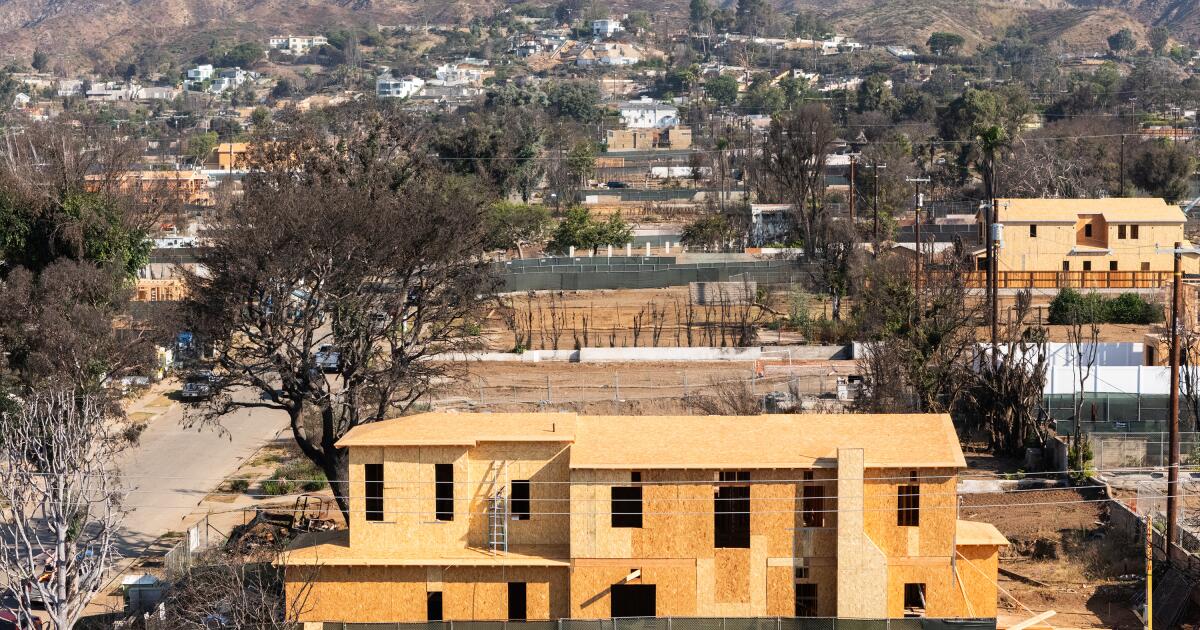
January 2025 wildfire victims seek tougher penalties against State Farm over claims handling
-
 Entertainment26 minutes ago
Review: ‘Sugar,’ with Colin Farrell as an alien private eye, gets a new and improved second season
-
 Politics36 minutes ago
Political watchdog fines Newsom for failing to report $5.5M in solicited donations on time
-
 Sports48 minutes ago
Goalkeeper Raúl Rangel’s elite play and South Korea’s mistake help Mexico advance
-

 World56 minutes ago
US-Iran talks postponed as Israel attacks Lebanon

