Business
The battle brewing over California workers' unique right to sue their bosses

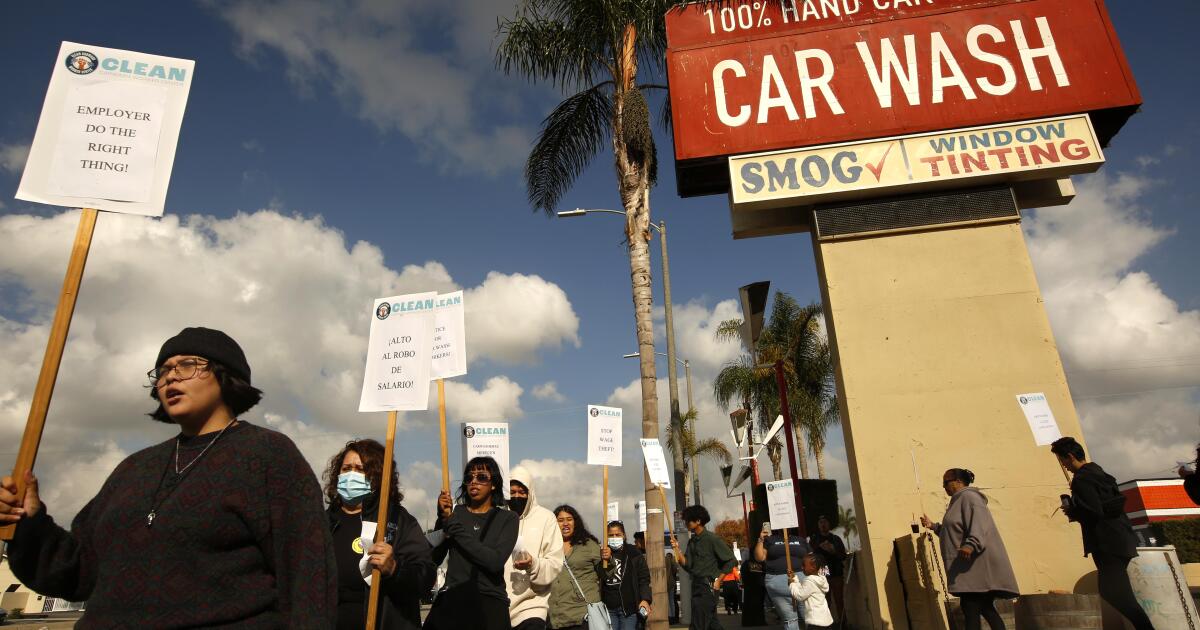
California workers who believe they have been victims of wage theft or other workplace abuses have for more than two decades relied on a unique state law that lets them sue employers not only for themselves but also for other workers.
Now a battle is shaping up over the law, known as the Private Attorneys General Act, or PAGA. An initiative seeking to replace PAGA will appear on the ballot in California in November, the culmination of long-standing efforts by corporate and industry groups to undo the law.
Two reports released last week offer dueling narratives about whether PAGA helps or hurts workers — marking the opening of a potentially expensive fight over the landmark law that relatively few know about.
Labor researchers say that the ballot measure, if approved, would harm employees, particularly people with low-wage jobs, by taking away their ability to file what are essentially class-action suits against employers that allege labor law violations. The ballot measure also would weaken the state’s already strained system for enforcing workplace laws, the researchers say.
But the business coalition backing the ballot initiative, called the Fair Play and Employer Accountability Act, counters that the labor law has resulted in a proliferation of lawsuits that small businesses and nonprofits have little ability to fight. Workers end up getting less money after a long legal process than if they had filed complaints through state agencies, the initiative’s proponents say.
Worker advocates have long complained that chronic understaffing at state agencies responsible for investigating employee complaints means that allegations about wage theft and other violations can take years to be resolved. So workers turn to the courts.
Luz Perez Bautista and her mother, Maria de la Luz Bautista-Perez, were among three named plaintiffs who sued Juul Labs Inc. in federal court in 2020 for allegedly misclassifying some 450 campaign staffers working on a ballot measure the company was promoting to allow the sale of electronic cigarettes in San Francisco. The workers were all classified as independent contractors rather than employees, which saddled them with expenses that employees wouldn’t have to pay.
Juul was sued in 2020 by three workers, who alleged they were misclassified as independent contractors rather than employees, using a California law that allows employees to sue companies on behalf of other workers.
(Ted Shaffrey / Associated Press)
Workers were made to travel long distances between campaign offices without pay, were not given lunch breaks and were terminated abruptly, Perez Bautista said, speaking at a news conference last week to unveil a report by the UCLA Labor Center as well as researchers at advocacy groups PowerSwitch Action, and the Center for Popular Democracy.
Because the workers had signed arbitration agreements, without PAGA they would not have had the legal standing to take Juul and the nonprofit it created for the campaign to court. Through their PAGA claim workers secured a $1.75-million settlement.
“It is important for other workers to see that … you can hold your boss accountable,” Bautista-Perez said at the news conference.
The report argues broadly that eliminating workers’ ability to pursue private lawsuits would leave them more vulnerable to having their wages stolen by employers and other abuses of their rights.
PAGA plays a “vital role” in bringing bad actors into compliance, said Tia Koonse, legal and policy research manager at the UCLA Labor Center.
Koonse and other authors of the report said the ballot initiative is disingenuously framed as a push to reform PAGA and bolster other enforcement mechanisms.
“By cloaking policies that hurt workers in language that says they’re helping workers, corporations are making it sound like what is down is up,” said Minsu Longiaru, senior staff attorney for PowerSwitch Action.
Other mechanisms to enforce California labor laws are insufficient on their own, including wage claims and whistleblower complaints investigated by state agencies, the report argues, because the sheer number of labor violations dwarfs the state’s capacity to enforce them.
Each year, the $40 million recovered in approximately 30,000 wage claims filed with the state labor commissioner represents roughly 2% of the estimated $2 billion California workers lose to wage theft, according to the report.
An analysis of California Labor & Workforce Development Agency data by the report’s authors found that 91% of PAGA claims allege wage theft, primarily overtime violations and failure to pay for all hours worked, although some involved violations of earned sick leave rights. Other forms of wage theft include paying workers less than minimum wage, denying workers meal breaks or rest periods and requiring employees to finish tasks before or after their shifts.
The initiative at the center of discussion, the Fair Play and Employer Accountability Act, got the green light to be placed on the November 2024 ballot almost two years ago.
It proposes to remove the law’s powerful private right of action, which empowers workers to file lawsuits against their employers, suing for both back wages and civil penalties on behalf of themselves, other employees and the state of California. Official language for the measure states it would eliminate “employees’ ability to file lawsuits for monetary penalties for state labor law violations.”
Backers emphasize it also offers replacement provisions that would bolster state agency enforcement of workplace rules.
Replacement provisions include doubling penalties for employers “willfully” violating labor law, requiring 100% of monetary penalties to be awarded to harmed employees (rather than the current division of 25% to the employee and 75% to the state of California), and requiring that the state provide employers with resources to help with coming into compliance.
“Today’s PAGA system is completely broken and does not work well for employees or employers,” said Jennifer Barrera, president of the California Chamber of Commerce, in announcing a report released last week by backers of the ballot initiative, called the Fix PAGA coalition.
Barrera said that because one employee can sue on behalf of others, it allows lawyers to stack charges and extract high penalties from employers with few barriers because PAGA claims don’t require the same type of notification and certification of workers allegedly affected that a class-action suit would require.
“The statutory framework of PAGA is what creates the abuse,” she said in an interview.
Barry Jardini, executive director of the California Disability Services Assn., said that members of the trade group, many of which are nonprofits reliant on state or federal funding, are increasingly burdened by PAGA claims. He said 20 of some 85 members who responded to a recent survey said they dealt with PAGA claims in 2023.
Jardini said that disability service businesses have struggled to provide true “responsibility-free” 10-minute rest breaks in accordance with labor laws because often workers “can’t just walk away” from clients especially if they are out and about instead of at home. He said employers have looked for creative solutions, such as paying employees extra for working through breaks or tacking on breaks at the beginnings or ends of shifts rather than the middle, but these fixes aren’t legal substitutes for rest breaks workers are entitled to.
“We run into a bit of a legal rock and a hard place,” he said. “We do have a conflict with the law in terms of some of our services. Once that becomes known, it’s relatively easy for an attorney to try to solicit a client that works in this industry that is maybe ripe for PAGA claims.”
The claims sap resources and lead to program closures because “providers with very thin margins are using up their reserves on settling these claims,” Jardini said. “Other times providers are unable to give wage increases to their staff. And at the end of the day it impacts people with disabilities.”
Some disagree that there is rampant of abuse of PAGA. UCLA Labor Center researchers published a report in February 2020 finding no evidence that PAGA unleashed a flood of frivolous litigation, as its detractors complain, and that it had demonstrably enhanced Labor Code compliance among employers.
In response to criticisms outlined by the recent UCLA Labor Center report, Kathy Fairbanks, a spokesperson for the coalition, pointed to findings in the coalition’s report, which argues that PAGA is too slow to resolve claims, leaves workers with little compensation, and enriches lawyers while saddling businesses with costly suits.
Fairbanks said that workers get about one-third of the compensation and that PAGA cases take twice as long compared with cases adjudicated by state agencies. That is because “lawyers take massive fees and are getting rich while workers get very little,” Fairbanks said.
Lorena Gonzalez Fletcher, head of the powerful California Labor Federation, agreed that PAGA is at times abused by “unscrupulous attorneys,” but said repealing the law is not a solution.
“There’s massive wage theft that goes unaccounted for, and to take away this tool from the tool box would be damaging to workers and a gift for corporate America,” said Gonzalez, who formerly served as a state assembly member known for writing labor-friendly legislation.
If approved by voters, the ballot measure “would leave workers with dwindling opportunities to enforce labor law.”
Gonzalez said it is well understood that state labor agencies are subject to short staffing and ebbs and flows of political desire to take on major cases. Although it’s not ideal to have to rely on private attorneys to help enforce the law, PAGA provides an important avenue for enforcement, she said.
The initiative doesn’t mandate or otherwise clear the way for increased funding for enforcement agencies, Gonzalez said.
To suggest the business lobby, through the ballot initiative, is asking for changes that will actually improve labor law enforcement “doesn’t pass the smell test,” she said.
Backers of the ballot initiative are open to working on a legislative compromise to avert a costly battle, spokesperson Fairbanks said. But any sort of deal would have to be reached before the end of June — the deadline to pull measures off the November ballot. The Fix PAGA coalition reports having banked some $15 million in campaign contributions so far.
Business groups have sought to shrink PAGA’s reach in state and federal courts with limited success in recent years.
In June 2022, the U.S. Supreme Court, considering the California case Viking River Cruises Inc. vs. Moriana, ruled that PAGA violated the rights of employers and that the claims of other employees would have to be dismissed because the employee sent to arbitration would no longer have standing to pursue that litigation.
But in a concurring opinion, it also affirmed that interpretation of PAGA was a matter of state, not federal, law and in effect kicked the matter back to California.
State appellate courts consistently have held that PAGA claims by workers cannot be forced into arbitration because they are brought as if the individual is operating on the state’s behalf.
In July 2023, the California Supreme Court rejected an argument by Uber that sought to limit the ability of its drivers to take employment-related disputes to court, unanimously determining that a driver could not sign away the right to represent their peers in a lawsuit.
The decision didn’t end the debate, however, with other cases bouncing around the courts.
A federal appeals court, citing the Uber case, ruled Feb. 12 that a PAGA suit against Lowe’s Home Centers for allegedly underpaying workers who took sick leave could stand.
Judge William Fletcher wrote in the ruling that a state court “has the authority to correct a misinterpretation of that state’s law by a federal court,” including the U.S. Supreme Court.


An electric Tesla Semi truck crashed into two vehicles in Dayton, Nev., over the weekend, killing two people and raising questions about the truck’s safety features.
The Lyon County Sheriff’s Office responded to a major collision around 7 a.m. on Sunday at the intersection of Highway 50 and Traditions Parkway about 40 miles east of Reno, the office said.
The office confirmed a semi-truck was involved in the accident, and footage of the scene shows it was a Tesla Semi.
It is the first known crash involving a Tesla Semi, an electric Class 8 truck that Tesla is building in Nevada and plans to ramp up production of. As interest in Tesla’s electric passenger vehicles wanes, the company is betting on the truck to give it a needed boost.
The trucks do not have the Full Self-Driving mode available in Tesla cars, but Tesla’s website says they come standard “with active safety features that pair with advanced motor and brake controls to deliver traction and stability in all conditions.”
According to the Lyon County Sheriff’s Office, preliminary statements obtained at the scene suggest the truck driver may have fallen asleep behind the wheel.
The crash is under investigation by the Nevada State Police Highway Patrol, which said additional information may be released next week.
The Record-Courier identified the victims as Sergio and Jennifer Villanueva, a couple who got married in 2022.
Tesla has not clarified if its semitruck has an automatic emergency braking system. Federal regulators are currently weighing a mandate for emergency braking systems in vehicles more than 10,000 pounds.
Decades of Hollywood empire-building ended with a quake in 2017 when Australian media mogul Rupert Murdoch decided to sell much of his Fox entertainment holdings amid the rise of Netflix and other tech giants.
This week, another titan who has been instrumental in shaping American media and telecommunications began to unwind his Hollywood holdings.
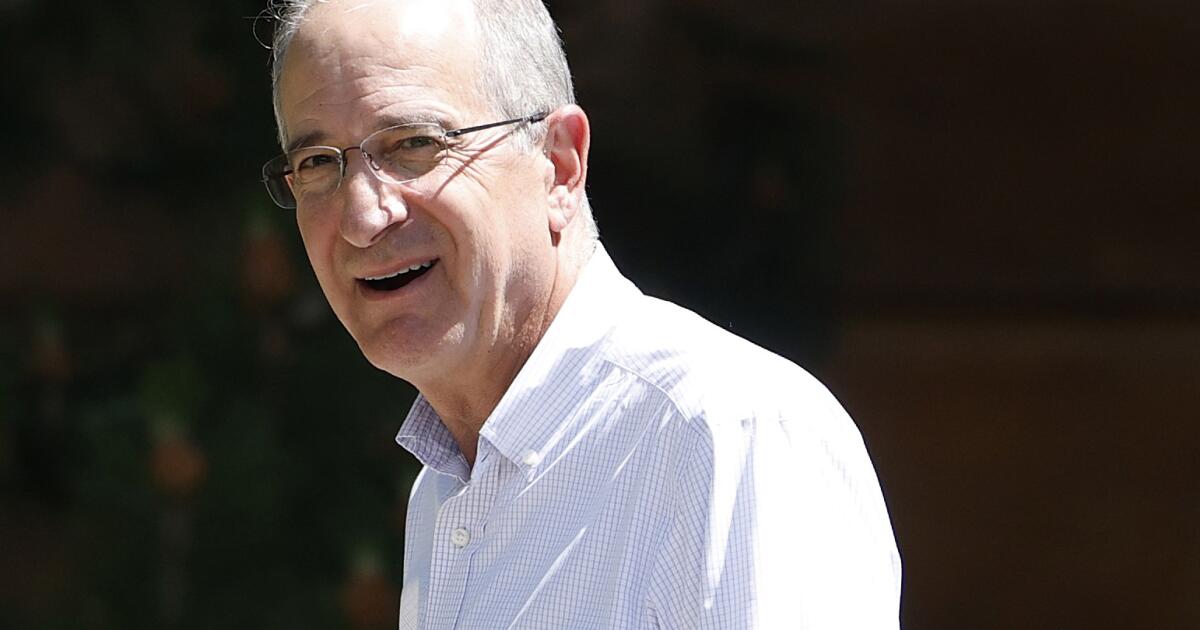
Brian L. Roberts — who with his father built Comcast into a cable TV and internet colossus — announced his company would spin off its prestigious NBCUniversal unit into a separate publicly traded company sometime next year.
The move reverses Roberts’ purchase of NBCUniversal in 2011 — a bold bet that created a behemoth with popular programming and cable pipes to pump that content into consumer homes.
Comcast’s breakup marks the close of a Hollywood era, one dominated for 40 years by a class of maverick moguls: Murdoch, CNN founder Ted Turner, Viacom’s Sumner Redstone, cable titan John Malone and the Philadelphia-based Roberts family.
Now, a new crop of leaders has emerged, reflecting Silicon Valley’s vast influence over the film and and TV business, which has been upended by streaming and, now, artificial intelligence.
“There was a time that Murdoch, Malone and Brian were really industry leaders who could affect change,” said Bank of America managing director Jessica Reif Ehrlich in an interview. “That’s not true any longer.”
Analysts widely believe Monday’s announcement is a prelude to eventual sales of both Comcast and NBCUniversal, a theory that Comcast rejects.
Roberts, 67, told analysts he will remain involved in both NBCUniversal and Comcast after the separation. Still, he plans to relinquish his chief executive role after 25 years and a half century at Comcast. Roberts has picked trusted associates to run each firm, and his family will continue to hold controlling shares of both companies.
But the shift underscores a dramatic loss of clout by Comcast and other traditional media enterprises. Netflix, Apple, Amazon and Google’s YouTube have diminished the industry’s financial pillars — box office receipts and cable programming fees — and given consumers control over when and how they watch programming.
Murdoch was the first to flee. In 2014, he was rebuffed in his $80-billion bid to beef up his 21st Century Fox by buying HBO, CNN and other Time Warner assets. Murdoch’s defeat led to the Fox asset sale to Walt Disney Co.
Last fall, Comcast made a run for the same properties with a plan to unite NBCUniversal with Warner Bros.
Instead, 43-year-old tech scion David Ellison — with help from his billionaire father, Oracle software co-founder Larry Ellison — scooped up the prize for a staggering $111 billion.
The pending blockbuster merger of Ellison’s Paramount Skydance and Warner Bros. Discovery is expected to reshape the industry and leave NBCUniversal increasingly vulnerable to a takeover.
“It looks like Comcast’s NBCUniversal was left standing on the dance floor without a partner,” MoffettNathanson media analyst Robert Fishman wrote in a Tuesday note to investors.
Paramount’s play for Warner Bros. came a month after Ellison finalized his family’s purchase of cash-strapped Paramount from Shari Redstone. The one-two acquisition punch would propel the Ellison family to top-tier moguls with influence over CNN, CBS News, HBO, Turner Classic Movies and two historic Hollywood studios.
“It’s a flagging industry. … The industry will have to consolidate to survive,” said C. Kerry Fields, a USC Marshall School of Business economics professor. “Those who have content plus [streaming] distribution are going to be the winners.”
Roberts knows distribution. His father in 1963 bought his first cable TV system in Tupelo, Miss. It was a quirky bet for Ralph Roberts, who figured his belts and suspenders business would soon be toast as beltless polyester pants became the rage.
Brian Roberts joined Comcast as a high school intern, setting up supermarket promotions. In 1975, he became a trainee cable installer, climbing poles and stringing cables. He joined Comcast full time in 1981 after graduating the Wharton School at the University of Pennsylvania.
For more than 30 years, he worked in tandem with his dad. With key associates, they built the nation’s foremost cable TV service — then the entertainment gateway — and grew stronger by offering internet, phone and then wireless service.
Analysts credit the 2011 purchase of NBCUniversal as a huge success; Comcast rescued a company that was on the ropes due to General Electric’s under-investment.
Over the years, Comcast rebuilt NBC and Spanish-language Telemundo, writing big checks for the best sports rights, including the FIFA World Cup, NFL, NBA and Major League Baseball.
Comcast also recognized value in theme parks and invested heavily, building Universal Studios as a formidable rival to Disney. NBC finished the season in first-place among traditional TV broadcasters and its L.A. film studio is an industry leader.
But the world has changed.
“One of the defining characteristics of this company has always been our willingness to look ahead, embrace change, and position ourselves for the future,” Roberts told analysts during a Monday call.
Reif Ehrlich, the Bank of America analyst, said Comcast needed to do something — or watch its stagnant stock sink farther.
Wall Street has punished the company amid steep losses in its cable TV and broadband internet units, and because NBCUniversal has historically generated its biggest profits from its cable channels.
In January, Comcast spun off those networks, including CNBC, MS NOW, USA Network and Golf Channel, to create a new entity called Versant.
But the move failed to boost Comcast’s battered stock, which dropped 3.3% on Wednesday to $23.73.
Five years ago, Comcast stock topped $50 a share.
“It was just a very challenged market on both sides, and it’s getting worse, not better,” Reif Ehrlich said.
Comcast faces competitors beyond traditional telecommunications firms, including AT&T and T-Mobile. SpaceX’s Starlink provides satellite internet service.
NBCUniversal must jockey alongside other well-capitalized players, including Amazon, Netflix and Disney. NBC’s streaming service, Peacock, has struggled to get traction. It counted 46 million paying subscribers as of the first quarter, a fraction of Netflix’s 325 million and the nearly 132 million subscribers of Disney+.
“It’s kind of a subscale player,” Reif Ehrlich said. “It’s just a real battle, and NBC has expensive sports rights.”
Roberts conceded the difficult landscape on the analyst call.
“The world is changing faster than ever,” Roberts said. “Technology, consumer behavior, competition, capital requirements are all evolving at an unprecedented pace … When we acquired NBCUniversal, more than 15 years ago, the industry looked very different.”
He will retain control for at least three years. The NBCUniversal spin-off is envisioned as a tax-free transaction for shareholders, providing a short-term buffer from deal-making to preserve that structure.
NBCUniversal could be up for grabs by 2029 — a pivotal year when the NFL is expected to open negotiations for a new round of broadcast rights. That auction is expected to draw heavy interest from Amazon and other streamers — not just veterans Fox, NBC, Disney’s ESPN and Paramount’s CBS.
“Brian Roberts has already proven his willingness to play the long game and with continued control should be the end decision maker,” Fishman said.
Much like Murdoch, who is now 95 and partially retired.
“Rupert was the smartest guy in Hollywood — he got out at the top,” Reif Ehrlich said.
He entrusted power to his 54-year-old son, Lachlan, who has been busy remaking Fox after the 2019 sale to Disney, which included Fox’s film and TV studios, streaming service Hulu and the FX and National Geographic channels. Fox also unloaded its regional cable sports networks — a savvy move before that business cratered.
The Murdochs kept Fox Sports, the Fox broadcast network, TV stations, Fox News Channel and the studio lot.
The company has been expanding. Lachlan Murdoch led Fox’s purchase of Tubi, which provides free TV channels and movies for smart televisions, keeping Fox in the streaming game. The company launched Fox News and weather products, and subscription service Fox One, which streams the company’s sports and news.
Earlier this month, Lachlan Murdoch stunned the industry by agreeing to pay $22 billion for Roku, a leading streaming platform that reaches 100 million viewers worldwide. Murdoch called the proposed purchase “a defining moment for Fox.”

Ethics experts sounded the alarm Wednesday after new financial disclosure reports revealed that President Trump’s income ballooned to $2.2 billion in 2025, with $1.4 billion coming from various new cryptocurrency-related businesses.
“It’s bribery. It’s graft. It’s exploitation of public power for private financial gain,” said Kathleen Clark, a law professor at Washington University and an expert in government ethics. “Trump has — with the acquiescence of a somnolent, GOP-controlled Congress and the active assistance of John Roberts’ Supreme Court — transformed the presidency into a massive corruption racket.”
Trump reported income of over $600 million in 2024. But after he entered the White House in 2025, he reported that his income had soared to more than $2.2 billion.
The 2025 annual disclosure report filed with the Office of Government Ethics shows that Trump ramped up his real estate business in countries across the globe, particularly in the Middle East, at a time when his government was negotiating over vital issues of military aid and economic tariffs. The president also expanded his dealings in the relatively new realm of cryptocurrency.
According to the 927-page report, Trump made $635 million in royalties from Celebration Coins and more than $500 million from his World Liberty Financial crypto firm. He drew in millions from a raft of Trump-branded merchandise including God Bless the USA Bibles and sneakers depicting him with his hand raised in a fist. He also brought in $10.4 million from a property in the United Arab Emirates and $9 million from a property in Saudi Arabia.
Noah Bookbinder, an ethics expert and former president of Citizens for Responsibility and Ethics, a nonprofit watchdog group in Washington, described Trump’s business dealings while in the White House as “entirely unprecedented, certainly in modern history, but I think by most ways of measuring, in all of American history.”
“This is corruption,” Bookbinder said. “You have a president who has been quite transparently using the presidency in ways that benefit his business interests and intertwining the presidency and business interests.”
But the president and the White House brushed aside ethics concerns about the money Trump is making.
Trump told reporters Wednesday that he made a lot of money before he came to the White House, he had “big institutions” run his money, and that he had benefited, like every other American, as the stock market went up.
“We’re all profiting,” he said. “I’m profiting because I have a lot of money and a lot of cash.”
In a statement, White House spokesperson Anna Kelly said: “Neither the President nor his family has ever engaged — or will ever engage — in conflicts of interest. … All actions by President Trump and his administration are taken in the best interest of the American people.”
Although the report does not show exactly how much Trump is earning — it provides details of revenue, rather than profit — the scale of the president’s cryptocurrency dealings elevated ethics watchdogs’ long-standing concerns.
Jordan Libowitz, a vice president at Citizens for Responsibility and Ethics, said the most concerning detail of the new report is the hundreds of millions of dollars coming in from various crypto ventures partnered with companies that the American public knows little about.
“At a time when his own administration itself is setting regulation for these types of companies,” Libowitz said, “there’s just this massive opportunity for corruption when foreign governments and foreign nationals can pour tens of millions of dollars into the president’s pocket.”
As a real estate mogul, Trump has long invested in hotels, condominiums and golf courses. But cryptocurrency, Libowitz said, offers vastly more potential for corruption.
“There’s only so many hotel rooms you can book, so many rounds of golf, but there’s no limit with crypto,” Libowitz said. “You can just buy his meme coin and he gets a cut, so you kind of take out the middleman, but also the cap or the amount of money you can funnel to the president.”
Libowitz said it was also problematic for Trump to expand his real estate empire in foreign countries, particularly in the Middle East.
“Now it seems that almost all his new developments are in foreign countries, and that opens up, if you’re building this giant resort, you’re going to need help from the local government, whether it’s tax breaks or utility issues, or building a road, or speeding up permits,” Libowitz said. “These are ways that foreign governments can do favors for the American president.”
In the half a century before Trump was elected, ethics experts say, presidents from Nixon to Obama publicly released their tax returns, sold properties or put the proceeds in a blind trust managed by someone they did not know.
“They weren’t doing it because they legally had to, but because they thought it was the right thing to do,” Libowitz said.
Ever since Trump was first elected in 2016 and opted to not sell his businesses or put them in blind trusts, ethics experts have urged Congress to impose more aggressive financial oversight over money in politics.
“Congress needs to update the law, and basically, mandate blind trusts and sale of assets and disclosure of tax returns,” Libowitz said.
Noting that the Constitution’s Emoluments Clause explicitly states that the president cannot accept things of value from foreign or domestic governments, ethics experts say Trump is flouting the law and Congress has chosen to not enforce it.
Richard Painter, a law professor at the University of Minnesota and former White House ethics lawyer under President George W. Bush, said Congress needed to close loopholes that exempt presidents from federal conflict of interest laws as well as enforce the Foreign Emoluments Clause.
“Nobody holding a position of trust with the United States government can accept emoluments, profits and benefits from foreign governments, and that is flatly prohibited under the United States Constitution,” Painter said. “Now, if the United Arab Emirates put money into Liberty Financial, as I understand they did … and then Trump makes money off Liberty Financial, that’s a Foreign Emoluments Clause problem.”
Congress, he said, should empower an independent prosecutor to investigate such conflicts.
“The problem with the Foreign Emoluments Clause is how do we enforce it?” Painter said. “The founders and head of the Congress enforced it by impeaching anybody who took a bunch of foreign government money, but I guess that system’s not working. That’s a serious problem.”
-
 California2 minutes ago
California returns stretch of coast to Indigenous tribes. ‘This is beyond huge’
-

 Colorado7 minutes ago
Douglas County, Colorado, celebrates Independence Day without fireworks
-

 Connecticut14 minutes ago
Connecticut 250, 251, 252, 253 . . . – New Haven Independent
-

 Delaware17 minutes ago
Wilmington fire displaces 20, damages 6 homes on Clayton Road; cause under investigation
-

 Florida22 minutes ago
USF Health brings emergency pregnancy training to rural Florida without maternal care
-

 Georgia29 minutes ago
Middle Georgia looks to see a scorcher for the Fourth of July
-

 Hawaii32 minutes ago
Car drives into Sunshine Market in Honolulu
-

 Idaho37 minutes ago
Obituary for Eugene Merland Ricks – East Idaho News

