


House Speaker Rachel Talbot Ross attended conferences in five foreign countries last year and paid for the trips through a special type of political action committee that operates with few spending restrictions.
Sen. Jeff Timberlake accepted two $25,000 donations for his political action committee from business executives in the real estate industry, donations so large they would have been banned by a short-lived state law repealed last year. Timberlake said the supporters are family friends who have never asked for a political favor.
Talbot Ross and Timberlake, as well as more than a dozen fellow lawmakers who have their own committees, do not appear to have broken any rules based on a review of recent donation and expense reports filed with the state. But disclosures in the reports highlight the widely diverging uses of the money and the loose regulations around Maine’s so-called leadership PACs, which traditionally have been used by lawmakers to help elect political allies and build up one’s influence.
Unlike candidates running for office, the PACs can accept unlimited donations from businesses, special interest groups or individuals. And other than a prohibition against using the money to enrich the lawmaker or family members and not being able to spend the money on their own campaigns, the money can be spent any way the lawmakers wish.
Campaign finance reform advocates successfully fought in 2021 to add some restrictions to leadership PACs, citing the common practice of corporations and special interest groups giving large sums of money to influential lawmakers serving on or leading legislative committees that have direct oversight over their industries.
The rules took effect Jan. 1, 2023, and banned businesses from contributing to leadership PACs and set a $475 annual limit for individual contributors. But the limits lasted less than six months. A Republican lawmaker filed a lawsuit challenging the restrictions and lawmakers passed emergency legislation to repeal the new rules as of last June.
Anna Kellar, executive director of Maine Citizens for Clean Elections, a nonprofit trying to reduce the influence of money in politics, said leadership PACs are a loophole in state finance law. Individuals are limited in how much money they can donate to a candidate’s campaign, but they can give an unlimited amount of money to that lawmaker’s political action committee after they are elected.
“We’ve been trying different ways to chip away at this,” Kellar said. “It’s an ongoing problem and a source of influence. It’s a loophole that’s against the spirit of how we approach campaign finance laws in this state.”
State rules vary on lawmaker PACs. Twenty-three states prohibit candidates from taking donations from business groups, according to the National Council of State Legislatures.
Leadership PACs are common nationally when prospective candidates seek to quietly gauge interest in a campaign for president, said Jim Melcher, political science professor at the University of Maine at Farmington. But in Maine they’re typically used by sitting lawmakers to climb the ranks.
HOW THEY WORK
Any PAC that includes a sitting legislator as a decision maker or officer is labeled a leadership PAC, and the act of creating one is often a signal that a lawmaker is angling for a leadership position.
Traditionally, the PACs raise money to help other like-minded candidates win elections. The hope is that if those candidates are elected, they will reward the lawmaker with the PAC by supporting their efforts to rise to a leadership post.
New leadership PACs have been created for the 2024 cycle by Assistant Senate Majority Leader Mattie Daughtry, D-Brunswick; Assistant Senate Minority Leader Lisa Keim, R-Dixfield; and Rep. Marc Malon, D-Biddeford. Sen. James Libby, R-Standish, established a leadership PAC last summer and currently has nearly $11,000 of cash on hand.
Typical spending activity includes donations to candidates or political parties, independent expenditures on behalf of or against a candidate, or other typical campaign costs such as accessing voter lists, hiring staff, buying fuel, food, postage, office supplies and hosting fundraising events.
Some previous Democratic House speakers have used their leadership PACs to raise money for state and local party committees, while also spending to support individual Democrats and even Democratic-leaning independents.
Ryan Fecteau, who served as speaker from 2021 to 2022, donated $15,000 to the House Democratic Campaign Committee in the run up to the 2020 elections. Sarah Gideon, speaker from 2017 to 2020, gave more than $57,000 to the same committee over her final two years and $10,000 to the national Democratic Legislative Campaign Committee.
Any state legislator using their PACs for other purposes – including paying for foreign travel – could be opening themselves up to political attacks and questions from donors, Melcher said. While such spending does not violate any laws or rules, it could “raise eyebrows among some people, either rightly or wrongly,” he said.
“It’s the sort of thing someone can use against you, especially if it was something that sounded like a junket,” Melcher said. “Given this is state government, it’s hard to see why someone would take money to travel outside of the United States.”
FOREIGN TRAVEL
A look at the five top leadership PACs ahead of this year’s election, when all 186 seats in the Legislature will be up for grabs, reveals a range of activity, from foreign travel by Talbot Ross to sizable contributions to other lawmakers from industries with bills pending before legislative committees.
One Maine lawmaker, Rep. Laurel Libby, R-Auburn, who is especially good at fundraising, has used PAC funds to buy firearms that are raffled off to supporters as fundraisers.

Speaker of the House Rachel Talbot Ross in the House chamber at the State House in Augusta. Gregory Rec/Staff Photographer
The top House Democrat, Talbot Ross is termed out of her seat after this year’s session and is registered to run for state Senate this fall.
According to a Portland Press Herald/Maine Sunday Telegram analysis of several years’ worth of financial activity of nearly 20 leadership PACs active in the 2024 cycle, only Talbot Ross’ PAC, A House United, reported using money for foreign travel. Her destinations, all in 2023, included France, Ireland, Puerto Rico, Brazil, England and Canada, costing the PAC at least $5,000.
A House United, which has raised $65,000 since it was formed in July 2021, finished 2023 with a $67.17 deficit after spending more than $38,352 – mostly on food and travel – and raising only $4,000, of which $2,500 came from Talbot Ross’ longtime partner, Dawud Ummah, a farmer who lives in Turner.
Talbot Ross said in a written statement that she traveled overseas for conferences organized by the National Conference of State Legislatures, the Council on State Governments and the Center for Black Health and Equity.
“As Speaker, I am invited to represent Maine at a number of events both nationally and abroad,” Talbot Ross said in an email. “These conferences were also attended by my colleagues in both the House and the Senate, Maine leaders, and legislators and leaders from around the country. I raise private funds through my leadership PAC, as have all other leaders, to offset some of these expenses.”
Spokesperson Mary-Erin Casale said Talbot Ross was in Paris from July 16-21 for NCSL’s executive leadership program annual conference; in Toronto from Aug. 18-22 for CSG’s Eastern Regional Conference as a panelist; in Dublin from Aug. 23-27 for NCSL’s legislative study tour; in San Juan from Sept. 5-9, for the State of Black Health 2023 National Conference; and in Rio de Janeiro from Sept. 19-23 for the NCSL leaders symposium. An Oct. 5 charge to her PAC by Stay Central in Edinburgh, United Kingdom, was actually associated with her trip to Ireland and the result of a delay in credit card processing, Casale said.
Talbot Ross’ written statement said that her spending, which also includes extensive in-state travel and restaurant charges, helps other legislators, too.
“I also raise funds to help other legislators access events and learning opportunities that would otherwise be completely unaffordable,” she said. “And, of course, I raise money to support the caucus, legislators and candidates throughout the state.”
None of the PAC’s $38,000 in spending in 2023, which is an off-year for state elections, went directly to candidates or campaigns.
In 2022, the PAC donated $6,700 to candidates: $850 each to seven other Democratic House candidates and $250 each to Rep. Deqa Dhalac’s campaign in the Democratic stronghold of South Portland, Gov. Janet Mills’ reelection campaign, the Maine State Democratic Committee and the Lincoln County Democratic Committee.
Talbot Ross’ PAC also paid for multiple hotel rooms over the last two years in South Portland and Portland, where she owns a home. Casale said Talbot Ross resides in Portland but did not directly answer a question about the hotel rooms, except to say she also pays for other legislators’ travel expenses.
“She raises money for her PAC from private donations that are publicly disclosed on Ethics reports,” she said, “and disburses those funds on permissible uses – that includes but is not limited to travel for herself, for other members of the legislature, professional development opportunities (again for herself and others), fundraising events and other expenses associated with her work in the Legislature or on the campaign trail.”
TOP DOG
The most prolific user of leadership PACs in recent years has been Rep. Laurel Libby. The Auburn Republican controls two leadership PACs, Dinner Table Action and Fight for Freedom. She also founded an independent group, Speak Up for Life, which fought unsuccessfully last session to stop expanding access to abortions.
Dinner Table Action, which has taken in nearly $658,000 since 2021, raised more than $167,000 last year alone and spent about $41,725, making it the top spender last year. Fight for Freedom raised $45,757 and spent $17,840, the third highest.
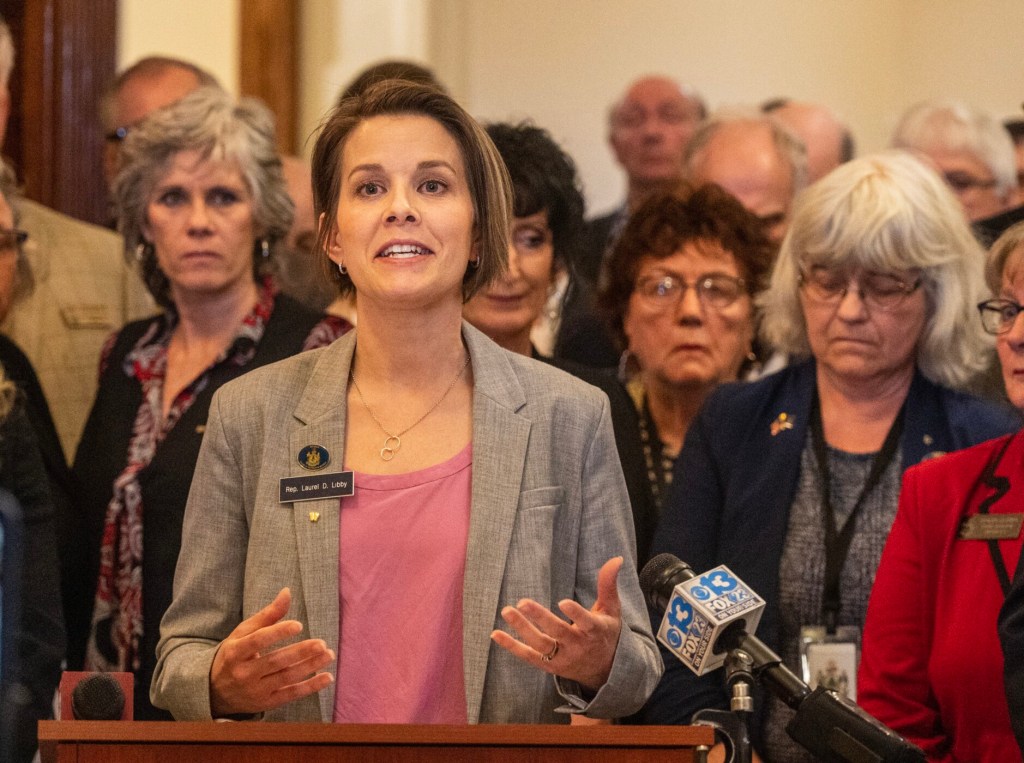
State Rep. Laurel Libby, R-Auburn, speaks during a news conference at the State House in April. Joe Phelan/Kennebec Journal
In 2022, Dinner Table Action spent about $270,000 to support Republican candidates, either through direct contributions to campaigns or through independent expenditures for campaign ads, mailers, field work, phone banks and texting.
Libby said Dinner Table Action supports candidates and causes that advance “limited government, free enterprise, personal responsibility and individual liberty.” Both PACs also seek to train community activists, so they can engage with the electoral and legislative process.
“Both provide an avenue for Maine people who make their voices heard and to participate in electing the government they want to see here in Maine,” Libby said.
Dinner Table Action was formed in 2021 and Fight for Freedom in 2022. Libby ran unsuccessfully to be the House minority leader after the 2022 elections, losing to Rep. Billy Bob Faulkingham, R-Winter Harbor.
Libby filed the lawsuit challenging the new restrictions with the help of the Institute for Free Speech, a national group that opposes bans on corporate contributions.
Alex Titcomb, treasurer of the PACs, said Speak Up for Life is a grassroots campaign against abortion that is also raising funds for Fight For Freedom.
Dinner Table Action has received a mix of funding from local people and other state or national PACs, such as Make Liberty Win. Dinner Table Action has also received a $25,000 donation from the Maine Republican Party and $10,000 from We the People, a PAC controlled by Faulkingham.
Titcomb said Dinner Table Action has a steady stream of donors through membership fees, which run $120 a year or $240 per election cycle. In 2023, he said the PAC had 800 different donors, far more than any other leadership PAC.
Over the past year, Libby has used PAC funds to purchase plane tickets for two conferences put on by Club for Growth, a conservative nonprofit that advocates for lower taxes and regulations, in Colorado Springs and Washington, D.C.
Libby’s group also raises money by holding a monthly raffle for a firearm. Dinner Table Action purchased a handgun from an Augusta gun dealer on Oct. 24 – the day before the mass shooting in Lewiston left 18 people dead and 13 injured.
“We did proceed with the raffle as planned,” Libby said. “It’s tragic what happened (in Lewiston). At the same time, folks are eager to make sure their 2nd Amendment rights remain intact.”
Titcomb said Dinner Table Action typically offers 375 tickets for $10 each for the firearm raffle, many of which are purchased by members.
INFLUENCE
While briefly banned last year, it’s not uncommon for businesses or industry groups to make donations to lawmakers who serve on committees that regulate their commercial activity.
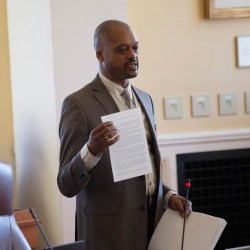
Sen. Craig Hickman, D-Winthrop, speaks on the floor of the Maine Senate in April 2022. Derek Davis/Staff Photographer
Hickman Cultivating Leadership, a PAC controlled by Sen. Craig Hickman, D-Winthrop, has received contributions from people involved in the cannabis and alcohol industries. The PAC controlled by Timberlake, R-Turner, has received donations from casino operators and the alcohol industry. Both senators serve on the Veterans and Legal Affairs Committee, which oversees those industries.
Hickman, who co-chairs the VLA, which would also take up any new proposed restrictions on leadership PACs, didn’t respond to interview requests last week.
Timberlake downplayed any concerns about industry players buying influence. “You’re not going to buy a vote for $500,” he said. “It just doesn’t do it.”
Timberlake’s leadership PAC received a $25,000 donation from Gary Bahre, an executive at the real estate development firm Speedway Inc., and a $25,000 from Sandra Bahre, an executive at the property management firm Madison Avenue Associates.
Timberlake said they are close family friends who have long supported his efforts to get Republicans elected to the Legislature.
“They don’t get involved in politics at all,” he said. “They have never ever asked me to do a thing.”
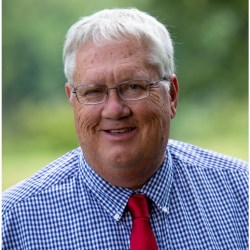
Sen. Jeff Timberlake, R-Turner. Courtesy of Maine Legislature
Expenses for Timberlake’s PAC include a lot of fuel expenses and some meals, which Timberlake said involved team meetings with candidates or to discuss strategy. He said he doesn’t use PAC funds for personal travel or expenses.
“I wouldn’t buy myself a cup of coffee with my PAC money. It’s not the way I function,” he said.
Rep. Josh Morris, R-Turner, formed a leadership PAC in 2021 called Taking Care of Maine Business. He also ran unsuccessfully for the House minority leader post in 2022, losing to Faulkingham.
Morris said he no longer harbors leadership ambitions, but he continues to help other Republicans get elected through his PAC, which has raised over $63,000 since 2021.
His finance reports show $475 donations for about 11 candidates late last year, including Faulkingham’s reelection campaign, totaling over $5,200. In 2022, he spent about $35,800 supporting Republican candidates through either direct donations or independent expenditures for digital banner and texting campaigns.
Morris also financed an out-of-state trip through his PAC so he could attend an annual convention of the American Legislative Exchange Council, or ALEC, a conservative group that offers model legislation for state lawmakers.
“I have always been for less regulation and less coercion from government,” Morris said. “What I have found is that the people who give money (do so) because they already support your position and they want to help that person continue to promote those positions. That’s been my experience.”
MORE RULES?
Lawmakers repealed the restrictions last year, passing an emergency measure easily in both chambers. The bill passed the House unanimously, without a roll call vote, and breezed through the Senate 29-5.
When lawmakers repealed the restrictions, they required the Maine Commission on Governmental Ethics and Election Practices to work with the attorney general’s office to recommend a new set of restrictions – ones that wouldn’t interfere with the existing rules for caucus or party PACs.
The commission issued its report to the Veterans and Legal Affairs Committee in December, about a month before its deadline, and followed up with a presentation to the committee last month.
The ethics commission recommended reinstating the ban on business entity contributions to candidates and leadership PACs, while continuing to allow those entities to contribute to the four so-called caucus PACs that are controlled by political leaders in each chamber, and party committees.
But recommendations have not been submitted as a bill – and they may not be.
Timberlake, who sponsored the emergency bill to repeal the restrictions, said he was not aware of any efforts by the committee to present any bill based on the new recommendations. Neither Hickman, who sponsored the amendment calling for the ethics commission to recommend new rules, nor fellow committee co-chair, Rep. Laura Supica, D-Bangor, responded to interview requests last week.
Kellar said their group will continue to advocate for reasonable restrictions on who can donate and how much can be donated as one way to reduce the influence of donors and special interest groups.
“They’re sitting on it,” Kellar said of the legislative committee. “They haven’t introduced this as a bill. We’re hoping they will take it back up again so we can close this loophole.”
« Previous
Related Stories



Invalid username/password.
Please check your email to confirm and complete your registration.
Use the form below to reset your password. When you’ve submitted your account email, we will send an email with a reset code.