Technology
Apple Pay is down for Chase customers, and perhaps others

/cdn.vox-cdn.com/uploads/chorus_asset/file/2401914/poynt_apple_pay.0.png?ssl=1 "Apple Pay is down for Chase customers, and perhaps others")
It appears that Apple Pay is down, particularly for Chase customers — Verge staffers have had their cards declined while trying to pay with Chase cards using Apple Pay, while using the same physical card works just fine. Several people on Threads confirmed the same issue when I asked — although people with non-Chase banks like Citi appear to be using Apple Pay just fine.
Apple’s system status page says that Apple Pay and Wallet have a maintenance in progress which started at 12PM — which is a pretty weird time to start a maintenance that disrupts payments. The page also says that “Some Maryland Users may have issues,” but we’ve had reports in both New York and LA, so it appears we’re all into crab cakes and football today.
For what it’s worth, the Chase customer service line is currently up to 15-minute wait times, and agents are telling people that Apple Pay is “going through maintenance” to receive “an unexpected upgrade,” which is a delightful euphemism. Sadly, no one seems to know when things will be fixed. We’ve reached out to Apple for comment; we’ll update if we hear anything.


Apple’s big developer conference is today, and protesters are using the occasion to call on the company to remove “nudify apps” from the App Store and pull “known” child sexual abuse material from iCloud.
Outside the visitors center at Apple’s Cupertino campus, protesters have put up a large sign saying “Apple is powered by child sexual abuse” and asking incoming CEO John Ternus, “What will you do?” The protesters come from UltraViolet, a women’s advocacy group, and Heat Initiative, a group that aims to “hold tech companies accountable for enabling and profiting from child sexual abuse.”
Apple and Google came under significant scrutiny earlier this year for continuing to keep apps like xAI’s Grok on their app stores even though users were able to make nonconsensual sexualized deepfakes. In pamphlets distributed at the protest, the organizations say that “at least 47 nudify apps have been found on Apple’s App Store” and that “Apple has made an estimated $117 million minimum from nudify apps,” including “an estimated $35+ million from Grok alone,” citing data from the Tech Transparency Project. UltraViolet also has a website dedicated to its protest today.
Apple previously scrapped plans to scan photos saved to iCloud for child sexual abuse imagery over privacy concerns.
Apple didn’t immediately reply to a request for comment.

NEWYou can now listen to Fox News articles!
You fire up your VPN, connect to a server and pull up the streaming service or website you were trying to reach. A few seconds later, you see the dreaded message: blocked. So you try again. Still blocked. Then you switch servers. Same result.
If this sounds familiar, you are not alone. VPN blocking has become much more aggressive over the past few years. The old VPN tricks that once worked reliably no longer always get the job done.
The good news is that there is usually one specific reason your VPN keeps failing. Even better, most people never think to address it.
Join CyberGuy Live: Lock Down Your Phone in 30 Minutes (Saturday, June 13, 10 am ET)
- Your phone holds your email, passwords, photos, banking apps and personal data. In this free, live online class, Kurt the CyberGuy will walk you step by step through simple phone security fixes you can do in real time. You’ll learn how to improve your privacy settings, spot the latest phone scams, use trusted security tools and walk away with a simple checklist to stay protected. Register here: CyberGuyLive.com.
STUCK BEHIND A VPN WALL? LET’S FIND A WAY AROUND IT
A VPN with modern protocols, obfuscation and DNS leak protection can help users avoid blocked connections and protect privacy. (Kurt “CyberGuy” Knutsson)
Why your VPN keeps getting blocked by websites
Platforms block VPNs in a couple of main ways. The most common method is IP address detection. VPN providers use large pools of IP addresses. However, over time, those addresses get flagged and added to blocklists.
That creates a cat-and-mouse game. Cheaper VPNs often lose that fight because they do not have the resources to rotate and refresh their IP pools often enough.
Beyond IP detection, some websites and networks use deep packet inspection, also known as DPI. This technology can identify VPN traffic even when the IP address itself has not been flagged yet.
Corporate networks, schools and countries with heavy internet restrictions often rely on this method. It can even catch some respected VPN services off guard.
Premium VPN providers avoid many of these issues because the service is built around a more advanced protocol that addresses the problem closer to the source.
Quick checks before you blame your VPN
Before you assume your VPN has failed, try a few simple checks. First, close and reopen the app or browser you are using. Then, make sure your VPN app is updated because older versions may not handle blocked networks as well.
THIS CHROME VPN EXTENSION SECRETLY SPIES ON YOU
Also, check whether your browser has location permissions turned on. If a website can access your device location, it may still figure out where you are, even while your VPN is connected.
The VPN fix most people miss
Here is where most people go wrong. When their VPN gets blocked, they do the obvious thing. They switch servers. Sometimes that works for a little while. However, if the real issue is DPI rather than IP blacklisting, changing servers will not solve the problem. That is because the traffic pattern itself gives you away.
The fix is obfuscation. In other words, your VPN needs to disguise its traffic so it looks like regular web browsing instead of VPN activity. Surprisingly, many VPN users have never heard of obfuscation. Even some VPN providers do not make it easy to use.
Obfuscated servers make your VPN traffic look like ordinary HTTPS web traffic. To a network monitoring tool or a streaming platform’s detection system, your connection looks like a regular browser session. There is no obvious VPN fingerprint to flag.
Obfuscation can help VPN traffic look like ordinary web browsing, reducing the chances that websites or networks will block the connection. (Kurt “CyberGuy” Knutsson)
A premium VPN handles this automatically. Its Lightway protocol is built with obfuscation in mind and adapts depending on the network you are using. You do not have to dig through settings or manually turn anything on.
If a network is aggressively blocking VPN traffic, Lightway adjusts to help get around it without making you do the hard work.
IS YOUR VPN ENOUGH WITHOUT ANTIVIRUS PROTECTION?
Why DNS leaks can expose your real location
There is one more thing worth checking: your Domain Name System (DNS) settings. Even when your VPN connection is active, DNS leaks can reveal your real location. A DNS leak happens when your device sends domain name requests outside the encrypted VPN tunnel. That means websites may see your actual internet provider and location, even though your IP address appears to be somewhere else.
In other words, your VPN may look connected, but part of your browsing activity may still be pointing back to your real internet provider.
Here is the simple way to check:
- Connect to your VPN.
- Open a browser and go to a trusted DNS leak test site.
- Run the test.
- Look at the results. If you see your regular internet provider, your VPN may be leaking DNS requests. If you see your VPN provider’s servers or a location tied to the VPN server, that is what you want.
You may also want to run a WebRTC leak test, especially if you use Chrome, Edge or Firefox. WebRTC is a browser feature that can sometimes reveal your real IP address. To check, stay connected to your VPN, open a WebRTC leak test page and look for your real public IP address. If your real IP appears, your browser may be leaking identifying information.
A premium VPN routes DNS queries through its own encrypted servers and includes built-in DNS leak protection. As a result, most users do not need to troubleshoot this manually. Still, running a quick leak test gives you peace of mind that your VPN is doing what it should.
Why choosing the right VPN makes a difference
Free VPNs and many budget options often share server infrastructure. That means their IP addresses can get flagged and blacklisted quickly.
Their servers may also be overcrowded. Their protocols may be outdated. Many also lack meaningful obfuscation, which leaves your VPN traffic easier to detect.
A premium VPN maintains thousands of servers across 110+ countries and works to keep those servers accessible, even on networks that try hard to block VPN traffic. It also offers a 30-day money-back guarantee, so you can try it and see whether it solves the blocking issues you keep running into.
ROUTER VPNS VS DEVICE VPNS: WHICH PRIVACY SOLUTION IS BEST FOR YOU?
Kurt “CyberGuy” Knutsson types on a laptop while explaining how shared VPN IPs can trigger blocks by banks, email providers and streaming sites, and how a dedicated IP can prevent this. (Kurt “CyberGuy” Knutsson)
What this means to you
If your VPN keeps getting blocked, the problem may go deeper than the server you picked. The website, streaming platform or network may be detecting the way your VPN traffic looks.
That is why obfuscation can make such a big difference. It helps your connection blend in with regular web traffic, which can reduce the chances of being flagged.
DNS leak protection also helps because your location can still slip through if your device sends requests outside the VPN tunnel.
In other words, a stronger VPN can help you stay connected, private and secure with far less frustration.
For the best VPN software, see my expert review of the best VPNs for browsing the web privately on your Windows, Mac, Android and iOS devices at CyberGuy.com.
Kurt’s key takeaways
When your VPN keeps getting blocked, switching servers may feel like the easiest fix. Sometimes it works for a short time. However, it often acts more like a temporary patch than a real solution. The better answer is to use a VPN with modern protocols, obfuscation and strong DNS leak protection. That combination helps hide the telltale signs that make websites and networks block VPN traffic in the first place. With a premium VPN, that technology works behind the scenes. You connect through the app, and the VPN handles the harder technical work for you. The result is a simpler experience: a more private, secure and open internet without constantly fighting blocked connections.
CLICK HERE TO DOWNLOAD THE FOX NEWS APP
Have blocked VPN connections made you rethink which VPN you use? Let us know by writing to us at CyberGuy.com.
Sign up for my FREE CyberGuy Report
- Get my best tech tips, urgent security alerts and exclusive deals delivered straight to your inbox.
- For simple, real-world ways to spot scams early and stay protected, visit CyberGuy.com – trusted by millions who watch CyberGuy on TV daily.
- Plus, you’ll get instant access to my Ultimate Scam Survival Guide free when you join.
Copyright 2026 CyberGuy.com. All rights reserved.

We’ve seen Axiom Space and Prada’s collaboration on the Axiom Extravehicular Mobility Unit (AxEMU) spacesuit. Now the company has revealed the Liquid Cooling and Ventilation Garment (LCVG) that astronauts will wear underneath it when Artemis IV returns humans to the Moon in 2028.
The LCVG is the all-important base layer that will keep the crew cool and comfortable while inside the AxEMU and on spacewalks. Cold water is circulated through tubes embedded in the suit to whisk heat away from astronauts’ bodies. And, should the primary system fail, there is a backup, unlike older cooling suits. The LCVG also houses the ventilation system that supplies fresh oxygen to the AxEMU helmet and directs exhaled CO2 to a scrubber for recirculation.
The collaboration between Axiom Space and Prada isn’t the first time NASA has gotten involved with a project that blended high-tech materials and manufacturing with high-fashion design. It also funded the BioSuit concept created by MIT professor Dava Newman with help from renowned architect Guillermo Trotti.
-
 Business3 minutes ago
Musicians shortchanged by AI deals with labels, lawsuit alleges
-
 Entertainment6 minutes ago
Of course, Supergirl can have pierced ears. James Gunn explains it again for those who forgot ‘Superman’
-
 Lifestyle11 minutes ago
L.A. Affairs: I’m a black woman. He’s a white guy with a pickup truck. Here’s what happened
-
 Politics18 minutes ago
Disability rights advocates protest Newsom’s proposed cuts to in-home support services
-
 Sports26 minutes ago
‘It would be a fun year.’ Rams all for Aaron Donald returning to pair with Myles Garrett
-

 World36 minutes ago
UN questions legality of Israeli forced evacuation orders in Lebanon
-
 News1 hour ago
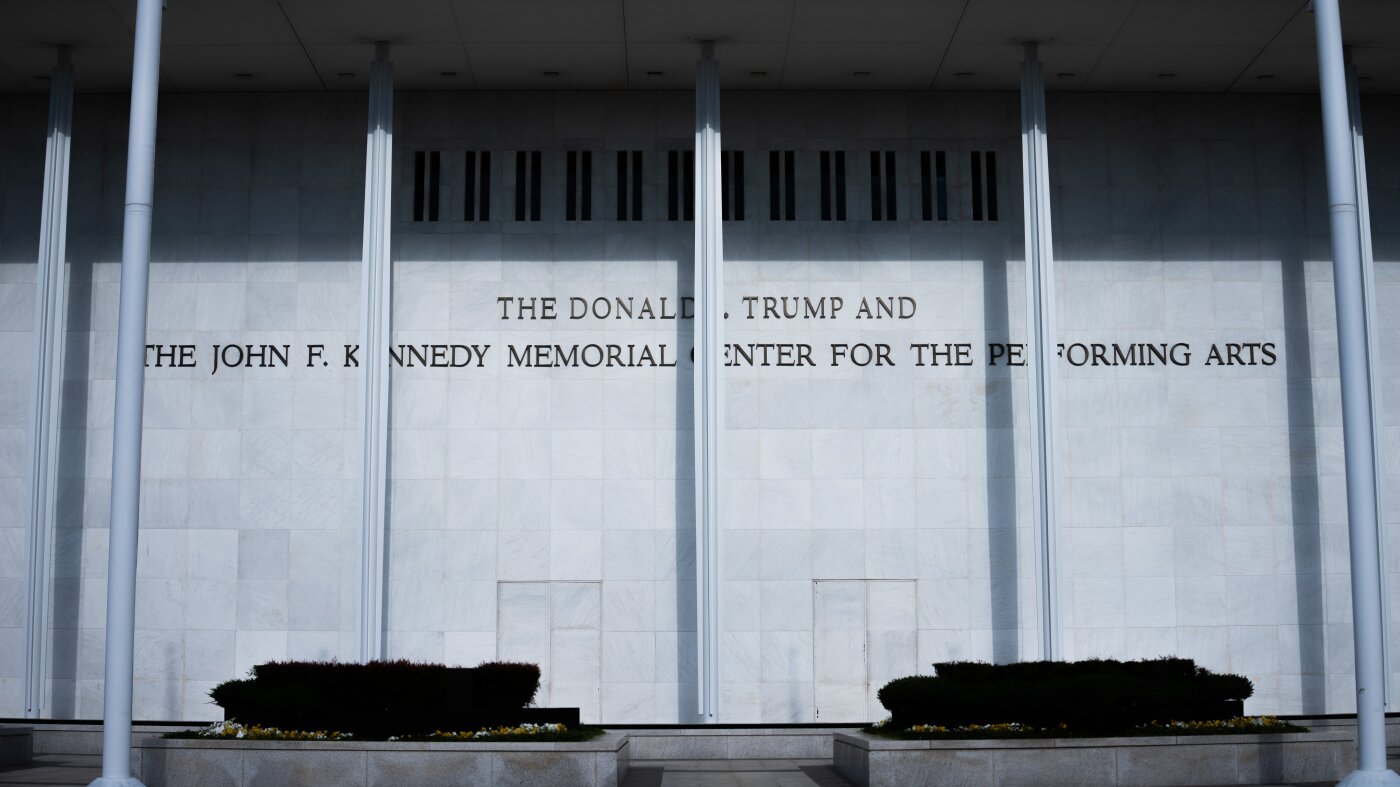
Former Kennedy Center curator talks about the venue’s future
-

 New York2 hours ago
Keeping an Eye Out for Rabid Raccoons

