Idaho
Will Idaho's push for mandatory minimum criminal sentences for fentanyl be a deterrent? – Idaho Capital Sun


Growing up on the Boise Bench, Rob Crisler was taller than most of his 12-year-old classmates and one of the few biracial students at his school. For fun, he painted designs on his shirts and hats. However, his family said local law enforcement quickly began associating him and his artwork with gangs, leading to him feeling frequently singled out.
From his teenage years until his late 40s, Crisler struggled with addiction, and he spent years in the Idaho correctional system on drug charges. In between his time in corrections, he would volunteer for the ACLU of Idaho to advocate for criminal justice reform, often testifying in front of Idaho legislators on initiatives such as increasing public defense funding; ban the box, a campaign aimed to remove the check box that asks applicants if they have a criminal record on hiring applications; and ending mandatory minimum sentences. These issues held personal significance to him as he struggled to secure employment because of his felony convictions and often chose plea bargains to avoid serving a mandatory minimum sentence.
But Crisler struggled with recovery, and in October, he died from a fentanyl overdose.
“I can’t imagine what he could have accomplished if he hadn’t spent years locked up in prison, a lot of it on charges that he had to take a plea bargain,” his mother, Cheryl Van De Grift-Edson, told the Idaho Capital Sun.
Despite spending years in the Idaho correctional system on plea deals, time in prison did not rehabilitate Crisler, his mother said. Instead, he struggled with mental health issues and regularly faced homelessness.
Van De Grift-Edson hopes to continue her son’s advocacy in criminal justice, particularly as Republicans in the Idaho Legislature push House Bill 406 through the final stages of the legislative process. The bill would add fentanyl to the list of substances subject to mandatory minimum sentences.
Many Idaho officials say the bill embodies the state’s “tough on crime” policies.
“Part of the reason Idaho is a great state is because we’ve made strong, clear policy decisions that we don’t support drug dealers by making it easier for them to do business in Idaho,” bill sponsor Sen. Todd Lakey, R-Nampa, said during a hearing in the Senate Judiciary and Rules Committee. “We’re not talking about eliminating fentanyl in Idaho, we’re talking about reducing the flood.”
But critics of the legislation, including academics, criminal justice advocates and members of both political parties, argue that those policies are ineffective, impede judicial discretion, and marginalize certain groups including drug users, victims of human trafficking and women.
Deterrence? Experts versus sponsors
In the midst of the war on drugs, the Idaho Legislature in 1992, following the lead of other states, introduced measures to deter drug trafficking within the state. These policies sought to enforce mandatory minimum sentences based on the quantities of heroin, cocaine, methamphetamine and marijuana carried by individuals.
What does House Bill 406 say?
House Bill 406 would implement mandatory minimum sentences for “those who traffic fentanyl.”
This means that if someone were found guilty of trafficking fentanyl in Idaho, a mandatory minimum sentence would include three years in prison and a minimum $10,000 fine for possessing 4 to 13 grams, or 100-249 pills; five years in prison and a minimum $15,000 fine for 14 to 27 grams, or 250-499 pills; and 10 years in prison and a minimum $25,000 fine for more than 38 grams, or 500 pills or more.
The bill also adds provisions for the crime of a “drug-induced homicide,” meaning a person could be charged with a felony if they supply drugs that later kills someone.
During the 2023 legislative session, at least 46 states introduced or enacted similar legislation to set penalties for fentanyl possession, according to the National Conference on State Legislatures.
As reported by the New York Times, states in 2023 including Virginia codified fentanyl as “a weapon of terrorism.” In Iowa, lawmakers enacted laws that impose up to 10 years in prison for the sale or manufacture of less than five grams of fentanyl. Arkansas and Texas also joined 30 states, including Pennsylvania, Colorado and Wyoming, to enact drug-induced homicide statutes, allowing the prosecution for murder in cases where people share drugs socially that contain lethal fentanyl doses.
But studies show that practices based on deterrence, like mandatory minimums, aren’t effective, according to Boise State University professor Linsey Belisle.
“Generally speaking, research finds mandatory minimum sentencing practices are largely ineffective at reducing crime and have greatly contributed to mass incarceration,” Belisle said in an email.
In at least 29 states, there has been movement to ease some mandatory minimum policies — an effort that in 2019, Idaho participated in with bipartisan support that did not make it past the House.
But today, sponsors, with the support of Idaho law enforcement, argue that adding fentanyl to the list is the next step to deter people from trafficking fentanyl in Idaho.
During the Senate Judiciary and Rules Committee hearing, Sen. James Ruchti, D-Pocatello, questioned the bill’s co-sponsor, Rep. Ted Hill, R-Eagle, about whether he thinks it’s important to base legislation on data or if he feels comfortable with basing the effectiveness of the mandatory minimum sentences on anecdotal evidence.
“Would you agree with me that we’re the policy makers, and so when we make these decisions for the state of Idaho, that could put more people in our prisons … that it’s important that we have done our homework and we’ve based it on data, facts and science?” Ruchti asked.

In response, Hill said he did not refer to data when drafting this bill, but that he trusts law enforcement workers’ support for mandatory minimum sentences.
“Is there a metric that I can give you a number for?” Hill said. “All you got to do is look at the TV, drive through L.A… It’s one of the worst places I’ve ever seen. So that’s my metric, and it’s a pretty accurate one. I just can’t give any number. It’s a visual measurement.”
In a meeting with the Idaho Press Club on Tuesday, Idaho Gov. Brad Little said he was surprised that bill sponsors could not point to evidence on the effectiveness of mandatory minimums, but that he understands the message behind the legislation.
“The one thing that the sponsors want to do is send a message to the various people that are doing the trafficking to not come to Idaho to do it,” Little said. “Are there going to be some unintended consequences? I worry about that, and I’ll have discussions when it gets closer to my desk.”
‘I don’t have any choice’: judge transcripts show distaste for mandatory minimums
David High, a former Idaho deputy attorney general, also opposes mandatory minimum sentences. His son, who has been in prison three times on drug charges, pleaded down a mandatory minimum sentence in his most recent conviction.
“It was very offensive to me that the sentence was, in essence, pronounced by the prosecutor, not by the judge,” High said in an interview. “The judge had no discretion to the minimum, and to me that is simply wrong.”
While judges under their judicial code of ethics cannot provide feedback on legislation that impacts their profession, Idaho judges throughout the years have spoken against mandatory minimum sentences while sentencing people on drug crimes.
“I don’t have any choice,” First District Judge Steve Verby said in 2012 while sentencing a North Idaho man to prison after he pleaded guilty to attempting to manufacture methamphetamine.
“The Legislature has said, regardless of what kind of a person that individual is, regardless of their good works, regardless of what should be done under the circumstances, regardless of the fact that use of certain illicit drugs becomes an addiction of which the person is powerless to control, regardless of the fact that there are other methods of dealing with this type of addiction, the Legislature has said, ‘Judge, thou shalt put people in prison, regardless of what you want to do and regardless of what should be done.’ And I have no control. I cannot give you less than two years mandatory minimum.”
In another case, Sixth District Judge Robert Naftz said in a 2016 sentencing for a man who pleaded guilty to trafficking heroin, that he is “not a fan of mandatory sentences.”
“I really do think you’re an example of why mandatory sentences should be abolished by the Legislature and sentencing discretion be placed back in the hands of the judge,” he told the defendant. “This is not a one-sentence-fits-all world. It requires the common sense of judges who can carefully weigh the mitigating and aggravating factors to impose sentences that best protects society, punishes, deters, and rehabilitates, but until that changes, this is what we’re left with.”
House Minority Leader Ilana Rubel, D-Boise, who previously spearheaded legislation to ease mandatory minimum policies in Idaho for seven years, said during the House debate that the bill “reeked of injustice.”
Idaho House passes bill to enforce mandatory minimum sentences on fentanyl
“Judicial discretion does not mean you’re soft on anything,” she told the Sun. “All it does is it gives the judges the flexibility to lock up the people who really need to be locked up and to occasionally have the option to not wake up people when they don’t think they need to be locked up.”
Rubel worked on her previous legislation with Boise-based criminal defense lawyer, Scott McKay, who in an interview, told the Sun he agreed that mandatory minimum sentences often prompt his clients—many of whom are heavy drug users with illegal drug possession charges—to choose plea bargains. And those individuals, he said, are not members of the cartel or drug kingpins.
“Fentanyl is a terrible drug,” he said. “With that said, we can trust Idaho’s judges to deal with people who are trafficking fentanyl.”
Human trafficking victims, women among most vulnerable, opponents say
Many criminal justice academics have argued that mandatory minimum policies exacerbate racial and social disparities and fail to advance community safety. In Idaho, criminal justice advocates also argue that victims of human trafficking and women are among the most vulnerable to the legislation.
Jennifer Zielinski, the executive director of the Idaho Anti-Trafficking Coalition, told the Sun that the nonprofit estimates about 70 to 75% of its clients have been used as drug mules, meaning they have been forced to transport or deal drugs. The coalition’s clients include people of all ages and diverse gender identities, she said.
Implementing mandatory minimum sentences would target many victims of human trafficking rather than their abusers who coerce them into dealing drugs, she said.
Many human trafficking victims end up convicted of crimes, she said, pointing out that many victims coerced into drug dealing face life-threatening situations, with threats to their lives or their families if they disclose their human trafficking situation to law enforcement. Additionally, traffickers often are the ones bailing their victims out of jail, she said.
“We know that mandatory minimums have already been critical for victims,” Zielinski said. “They are convicted of the crimes, and if they’re drug related, these are the individuals who are dealing with those consequences and sitting in prison and serving that time with a criminal record.”
Erica Marshall, the executive director of the Idaho Justice Project and a defense attorney, agreed with Zielinski, adding that the bill would incarcerate more women who struggle with addiction and are victims of crimes themselves whether it be sexual abuse, domestic abuse, or victims of human trafficking.
“For two of the last three years, Idaho has been the only state in the country where the most people in our prisons are there for a drug crime rather than a violent offense,” she told the Sun. “In every other state, the most people in prison are there for violent crimes. This percentage is even worse for women.”
Idaho has had the highest incarceration rate for women in the nation since 2019, and the state’s incarceration rate for women is nearly three times the national average, according to data from the Federal Bureau of Justice Statistics.
“Eighty percent of women in jail in America are moms, and we know that a child is six times more likely to be incarcerated themselves when they have lost a parent to incarceration,” Marshall said. “If we really want to decrease drug use in our state, we need more resources allocated to prevention and treatment for substance use disorder.”
Flawed, bad policy: Former prosecutor speaks against ‘drug-induced homicide’ provision
In addition to concerns about who would be most impacted by the bill, Right on Crime state director Jean Fisher testified against the bill, noting that her main concern is the “drug-induced homicide” provision.
Fisher, a former Ada County prosecutor, told the Sun the provision does not belong in House Bill 406.

“(The bill) says that if you deliver any controlled substance drug and that person dies, you could be charged for drug-induced homicide,” she said. “That could be any drug such as cocaine, heroin, marijuana. It doesn’t really have anything to do with fentanyl.”
Fisher said the provision is unnecessary, noting that manslaughter laws are already in place if someone wanted to build a case where someone was intentionally harming or passing drugs.
There are at least 25 states with “drug-induced homicide” laws, many of which include exceptions for juveniles and provide for good Samaritan — meaning individuals who are experiencing or witnessing an overdose are immune from arrest when they summon emergency services.
Under House Bill 406, Fisher is concerned the drug-induced homicide provision would disincentivize people from calling emergency services while witnessing an overdose out of fear of prosecution.
“I don’t think that people who share cocaine, who don’t know that it’s laced with fentanyl, and their buddy dies, that that person should be subject to a homicide conviction,” she said.
Senate Bill 406 is making its way through the final stages of the legislative process. After passing the Idaho House of Representatives in a 54-13 vote on Jan. 29 and receiving a 6-3 vote with a passing recommendation from the Senate Judiciary and Rules Committee on Wednesday, the bill is now set to advance to the Senate floor.
GET THE MORNING HEADLINES DELIVERED TO YOUR INBOX






STORY AND PHOTOS BY KAREN BOSSICK
Greg McReynolds stood before the Sun Valley Forum and took his audience on a journey that began–not with dams or politics–but with volcanoes.
“The Idaho that you see is a marvel, but it wasn’t always like this,” said McReynolds, executive director of Idaho Rivers United.
Travel east from Sun Valley and you’ll hit Craters of the Moon, he explained. It’s only about 20,000 years old, and it reveals the bones of Idaho — a massive field of basalt, the leavings of ancient volcanoes and a magma sea where molten rock scratched a barren scar across the West from the Sierras to the Rockies.
|
The Shoshone-Bannock still use traditional spears and other tools to fish near the present-day site of the Sawtooth Fish Hatchery. |
Then came salmon.
The nitrogen and carbon that built the forests surrounding the Wood River Valley came from salmon, McReynolds told the audience. Salmon that swam from Idaho to the Pacific Ocean where they gained strength and weight, then came home.
Millions of salmon for millions of years–so vast in number that their nutrients reside in every tree, every blade of grass, every insect, every animal — and even in those who now call Idaho home.
McReynolds, who grew up in Pocatello and spent a decade with Trout Unlimited, painted a picture of a species that has survived drought and flood, four glacial cycles and a time when the ocean was 100 meters lower than current sea level.

These two attendees are celebrating Idaho salmon, which swim 900 miles, climbing 6,500 feet over eight dams and through eight reservoirs, to return to Idaho from the Pacific Ocean. |
Just north of Sun Valley, over Galena Summit, lies the headwaters of the Salmon River — the top end of the last best salmon habitat left in the Lower 48.
Scientists estimate that upwards of 16 million salmon used to swim up the Columbia River, and more than half returned to natal waters in the Snake Basin. Now, only a handful make it home each year.
“If you were to be there in August or September, a single redd would stand out like a beacon in the river,” McReynolds said. “You might see a massive female fanning the gravel into a nest for her eggs. You might stand in the willows and watch, lost in the thought of her incredible journey.”
The story of why so few wild fish remain is simple, he said. Four dams along the Lower Snake River in eastern Washington create a 140-mile chain of slack water. They allow fish passage, but they are particularly deadly to young salmon migrating downstream. The dams provide barging and some electricity, but they are driving the most important salmon run in the contiguous United States to extinction.
|
In 1934, Idaho Fish and Game blew up the Sunbeam Dam east of Stanley to allow fish passage after the dam’s fish ladders fell into disrepair. |
McReynolds took his audience back to March 1945. American troops were still fighting in Europe and the Pacific, but the war’s end was in sight and Congress was starting to think about what came next.
Before the war, unemployment had topped 20 percent. The American war machine had built millions of tanks, guns, planes and ships but almost nothing for domestic use. With 7 million service members about to come home looking for work, Congress passed the Rivers and Harbors Act, authorizing construction of those four lower dams to create a chain of flat water extending 450 miles from the Columbia River to Lewiston, Id.
“The legislation aimed to create an inland port and generate electricity. But, in truth, the goal was not dams or electricity or ports,” McReynolds said. “The goal was jobs and progress.”
In 1945, less than half the homes west of the Mississippi had a telephone. In the Pacific Northwest, many rural areas were still using oil lamps. Many roads were still dirt.
|
Fish can be seen in the Upper Salmon River as it runs near Stanley, but the prized red kokanee salmon are few and far between. |
The project, authorized in 1945 and completed in 1975, was built by men and women who were incredibly proud of their work, McReynolds said.
“They were not content to pass off oil lamps and dirt roads to their children and grandchildren,” he said. “They electrified the Northwest. They did not accept the status quo and they changed the world in ways that were wonderful and terrible.”
They brought jobs and power and an inland port. But wild salmon began a downward trajectory.
In the 50 years since completion of the Lower Snake dams, McReynolds said, Americans have continually lowered their expectations year by year, decade by decade, generation by generation until today, when catching a single wild steelhead or seeing a single wild Chinook spawning in the headwaters of the Salmon River bowls us over.
Wild salmon and steelhead have declined by 90 percent since the dams were completed. Snake River populations have continued to plummet despite $25 billion spent in mitigation by electric ratepayers.
“I’m going to say it again because it’s a big number,” McReynolds said. “Twenty-five billion dollars. And wild fish are still on a downward trajectory.”
Extinction has already claimed several populations and is assuredly coming for the remaining wild Snake River stocks, he said.
Congressionally authorized treaties of 1855 that guaranteed salmon to tribes are being violated, McReynolds said. Communities like Riggins and Salmon, Idaho, that once had thriving economies based around robust salmon returns are now a mere shadow of their potential.
A report from Headwaters Economics released earlier in the week showed that the economies of Lewiston and Clarkston, the inland port cities at the heart of the hydro system, are lagging behind the rest of the region. The industries most closely associated with the dams — shipping and agriculture — are declining, while those not reliant on the status quo are growing.
Meanwhile, the electricity from the dams is decreasing in volume and reliability. Long-term drought and needed flows for salmon mitigation are driving down power output. Over the last few years, the dams have averaged less than 700 megawatts of electrical output — less than a medium-sized solar facility, barely enough to run a large data center.
“In 1945, the Army Corps and Bonneville Power said they could overcome the impacts on salmon with hatcheries,” he said. “But in reality, the salmon were sacrificed for economic progress. And 90 years on, we can see that not only did we sacrifice salmon, but the economic boom didn’t last either.”
Idaho Rivers United and its partners are committed to not only removing the dams but replacing them with better, more modern solutions, he said.
“The Snake Basin isn’t just a salmon sanctuary,” he said. “It’s a people sanctuary too.”
McReynolds pointed to a proposal put forward by Republican Congressman Mike Simpson of Idaho, who envisioned a grand bargain: Dam removal paired with massive regional investment. Simpson proposed $150 million for waterfront redevelopment in Lewiston, $14 billion for power replacement, $2 billion for transmission upgrades, $1.2 billion for clean water and $4 billion for farmers’ transportation.
“These are the kinds of investments that changed the world 90 years ago,” McReynolds said.
Since the construction of the Lower Snake dams, McReynolds noted, we’ve put a man on the moon, mapped the human genome and witnessed the birth of the internet and artificial intelligence. The world is fundamentally changed.
“The Lower Four are an anchor holding us back,” McReynolds said. “The future is abundant electricity. The future is new modes of transportation. It is creating the kind of jobs that can’t be outsourced or done with AI. The future is once again investing in the infrastructure of tomorrow. And it is abundant salmon in Idaho.”

RIRIE — Idaho State Police is investigating a fatal two-vehicle crash that occurred Saturday afternoon on U.S. Highway 26 west of Ririe.
Troopers say the crash happened around 4:30 p.m. near milepost 349 on westbound U.S. Route 26, just south of Ririe.
A 2007 Toyota Tundra driven by a 37-year-old man from Ammon was pulling a utility trailer westbound, according to Idaho State Police. Three juveniles were also in the vehicle.
A 2017 Honda Accord, driven by a 44-year-old woman from Idaho Falls, was also traveling westbound when ISP says the driver attempted to make a left turn and was struck by the Toyota.
The driver of the Honda died at the scene from her injuries.
The driver of the Toyota and the three juvenile passengers were taken by ambulance to a local hospital. All occupants in the Toyota were wearing seatbelts. Authorities say the Honda driver was not wearing a seatbelt.
The westbound left lane was blocked for about three hours while investigators worked the scene.
The crash remains under investigation.
=htmlentities(get_the_title())?>%0D%0A%0D%0A=get_permalink()?>%0D%0A%0D%0A=htmlentities(‘For more stories like this one, be sure to visit https://www.eastidahonews.com/ for all of the latest news, community events and more.’)?>&subject=Check%20out%20this%20story%20from%20EastIdahoNews” class=”fa-stack jDialog”>

The vastness of the American West offers plenty of space to store old cars and a dry environment that keeps rust at bay. But this week, car enthusiasts got an unfortunate reminder that large salvage yards are vulnerable to another threat: wildfires.
L&L Classic Auto in Wendell, Idaho, claims to have over 8,000 cars on site ranging from the 1920s to the 1980s. Most are parts cars that are considered beyond saving, but that still makes them a valuable resource for keeping other cars on the road or, for those willing to make the trek to rural Idaho, a neat history lesson. Earlier this week, a wildfire dubbed the Median Fire descended on Wendell and the salvage yard.
Exploring the LARGEST CLASSIC-CAR JUNKYARD with Freiburger, a D/F Extra
On Wednesday, David Freiburger, who has visited L&L numerous times for video shoots over the years, posted on Facebook that the fire had reached the trove of vintage cars, citing reports from sources on the ground. A later update said that “all the people are okay,” but that “the junkyard took a big hit.”
The Median Fire is estimated at 8,600 acres in size, according to Idaho News 6. As of late Wednesday, Bureau of Land Management officials said the fire’s forward progress had stopped. The fire was burning in grass and brush and driven by wind, moving east after being initially reported about four miles northwest of Wendell at 11:55 a.m. on Wednesday, and crossing State Highway 46, along which L&L is located.
Median Fire Destroys Salvage Yard, Scorches 8,600 Acres in Magic Valley
A full assessment of the damage will have to wait until after the fire is put out, but photos accompanying Freiburger’s Facebook post showing burning cars and clouds of smoke enveloping the salvage yard do not look good.
At risk is a collection of cars as varied as it is numerous. During a visit in early 2025, Freiburger spotted plenty of ’60s classics, lots of decommissioned work vehicles with fantastic hand-painted lettering, plus more esoteric stuff like a 1972 AMC Matador fastback, an International slant-four engine (essentially half of a V8), and a Checker Aerobus. That’s a stretched, eight-door wagon designed for airport transportation in the days before E-Series shuttle buses. The important thing is that nobody was hurt, but hopefully some of this stuff survived the fire as well.
-

 Missouri6 minutes ago
MoDOT scheduled road work across Northwest Missouri for June 22–28
-
 Montana9 minutes ago
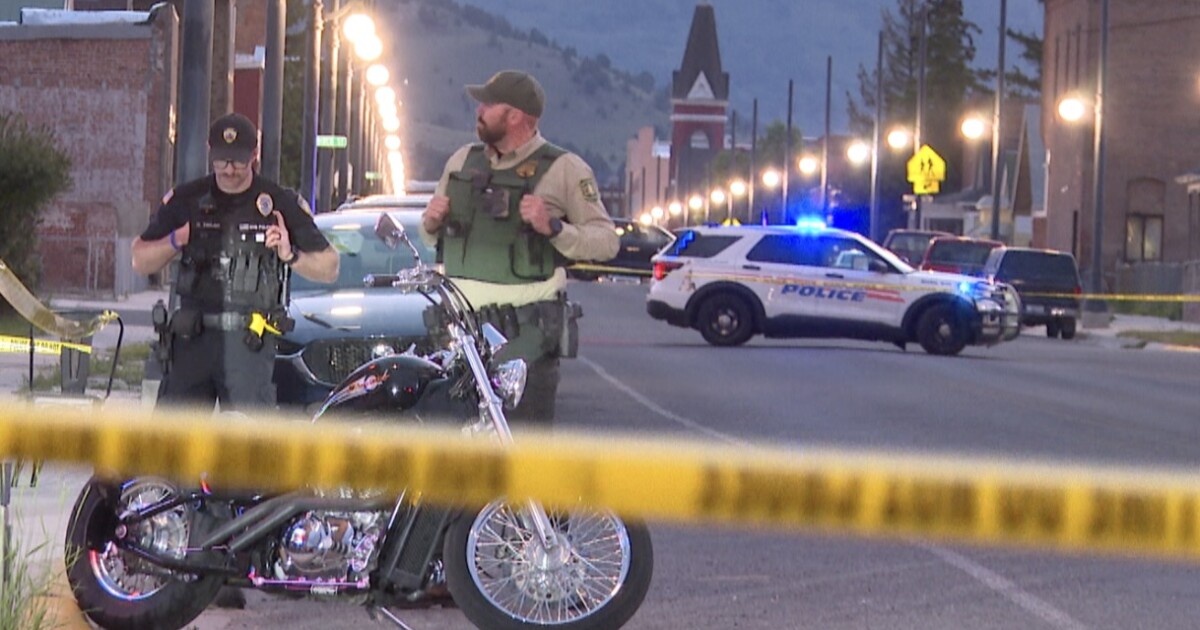
Anaconda shaken by second bar shooting within a year
-

 Nebraska12 minutes ago
Defensive Back Brennan Drummond Commits to Nebraska
-

 Nevada21 minutes ago
Desert state booms as workers flock from California amid game-changing discovery: ‘Remarkable’
-

 New Hampshire24 minutes ago
Police investigating after woman found dead in home in Hampstead, NH – Boston News, Weather, Sports | WHDH 7News
-

 New Jersey29 minutes ago
3 killed after plane taking off from NJ crashes near Maryland homes
-

 New Mexico36 minutes ago
Osha Canyon Fire – June 21 Update
-

 North Carolina39 minutes ago
More than 100 vendors celebrate Father’s Day at Highland Brewing

