Kansas
Kansas woman found with over 100,000 fentanyl pills, sentenced to 20 years in prison


WICHITA, Kan. (KWCH) – A Kansas woman has been sentenced to 20 years in federal prison after being caught with a large amount of fentanyl pills.
According to court documents, 51-year-old Mana Elena Reyes from Wichita pleaded guilty to one count of possession with intent to distribute fentanyl.
Reyes had multiple discussions between April and May of 2023 with a person she was unaware was an undercover officer with the Sedgwick County Sheriff’s Office. During the conversations, she discussed purchasing and selling methamphetamine and fentanyl.
The Kansas Highway Patrol conducted a traffic stop and searched Reyes’ vehicle, where they found approximately 115,000 fentanyl pills and over 4,000 grams of methamphetamine. They also found heroin, fentanyl powder and cocaine.
Copyright 2026 KWCH. All rights reserved. To report a correction or typo, please email news@kwch.com



Editor’s note: Follow LIVE World Cup coverage today
Lionel Messi’s World Cup journey continues! Argentina came from the depths of desperation to shock Egypt on Tuesday afternoon and advance to the quarterfinals at the 2026 World Cup.
Egypt took a 2-0 lead late into the second half, but Argentina scored twice in four minutes, including the equalizer by Messi to level the match, and again in the second minute of stoppage time to win the game 3-2.
Argentina will face the winner of Switzerland and Colombia, who will face off on Tuesday afternoon.
Argentina’s quarterfinal matchup will take place on Saturday, July 11 at Arrowhead Stadium in Kansas City, Mo.
Here’s everything you need to know to buy Argentina quarterfinals tickets in Kansas City:
Shop Argentina World Cup quarterfinals tickets
Argentina World Cup quarterfinals tickets
As of publication, the cheapest tickets to Argentina’s next match are starting at $1,733. If you want to get closer to the match, lower level tickets are starting at $2,374.
Argentina World Cup quarterfinals game information
- When: Saturday, July 11
- Where: GEHA Field at Arrowhead Stadium in Kansas City, Mo.
- What time: 9 p.m. ET
- TV – English : FOX – Fubo
- TV – Spanish: Telemundo – Fubo
- Tickets: Starting at $1,733
Argentina World Cup schedule, results
- June 16 – Argentina vs. Algeria – WIN 3-0
- June 22 – Argentina vs. Austria – WIN 2-0
- June 27 – Argentina vs. Jordan – WIN 3-1
- July 3 – Argentina vs. Cape Verde (round of 32) – WIN 3-2
- July 7 – Argentina vs. Egypt (round of 16) – WIN 3-2
- Saturday, July 11 – Argentina vs. TBD (quarterfinals) at 9 p.m. in Kansas City, Mo. – Get tickets
Get Argentina World Cup tickets
When are the semifinals for the FIFA World Cup?
The semifinals will take place on Tuesday, July 14 and Wednesday, July 15. The two games will take place at AT&T Stadium in Arlington, Texas and Mercedes-Benz Stadium in Atlanta.
We don’t know which teams will face off in the semifinals just yet, but the bracket is set so once the quarterfinal matchups are set, we will have a clearer picture. Until then, you can shop the semifinal game tickets below:
- Tuesday, July 14 – Winner of France/Morocco vs. TBD at 3 p.m. ET in Arlington, Texas – Get tickets
- Wednesday, July 15 – Winner of Norway/England vs. TBD at 3 p.m. ET in Atlanta – Get tickets
When is the 2026 FIFA World Cup Final?
The final match of the 2026 FIFA World Cup will take place on Sunday, July 19 at MetLife Stadium just outside of New York City.
As of publication, the cheapest available tickets for the 2026 FIFA World Cup Final start at $10,338. If you want to get closer to the action, lower-level (category 1) tickets are starting at $21,783.
Get 2026 World Cup Final tickets

LOWER SWATARA, Pa. (WHP) — Police are searching for a teenager from Kansas who was reported missing Monday while visiting family in the Middletown area.
Lower Swatara Township officials said Jamilian Jones,16, was last seen around 1 p.m. in Harrisburg near 18th and Forester streets after being dropped off by a family member.
Officials said Jones was last seen wearing a purple Ed Hardy sweatshirt and blue jeans.
Anyone with information regarding her whereabouts should contact Lower Swatara Township Police at 717-558-6900.

KSHB 41 reporter Megan Abundis covers Kansas City, Missouri, including neighborhoods in the southern part of the city. She also focuses on issues regarding scams. Share your story idea with Megan.
—
The Veterans Community Project completed its new outreach center in Kansas City, marking the latest milestone for the organization that began in 2016 with a vision to address veteran homelessness.
KSHB 41
Brandonn Mixon, chief project officer and co-founder of Veterans Community Project, said the growth reflects the support of the local community.
Veterans Community Project opens new, expanded Kansas City outreach center
“Going back to this just kind of a vision in 2016 with a group of combat veterans, to literally changing what veteran’s homeless looks like on a national scale, but it’s literally because of the Kansas City community,” Mixon said.
Mixon said the new building is already fulfilling its purpose of bringing veterans together.
“That’s what’s been great about this, Mixon said. “We’re seeing a big influx of veterans coming in and saying,’Hey I’m a veteran, how do I get involved? What can I do in KC? I want to be around other veterans.”‘ And that’s really what this building is doing,” Mixon said.
KSHB 41

The new outreach center evaluates and helps veterans with many things, including help at the center with military documentation, commissary, rent and bills, bus passes, resume writing, education, a Medicare broker and a workforce representative. In just a few months, the organization has helped 35 people find jobs.
Air Force veteran Terrion Lacy is a veteran with a new job. Lacy served from 1987 to 1994 as a radio communications analyst specialist.
Veterans’ Community Project helped him with his home and bills, a new car, and stable employment.
KSHB 41
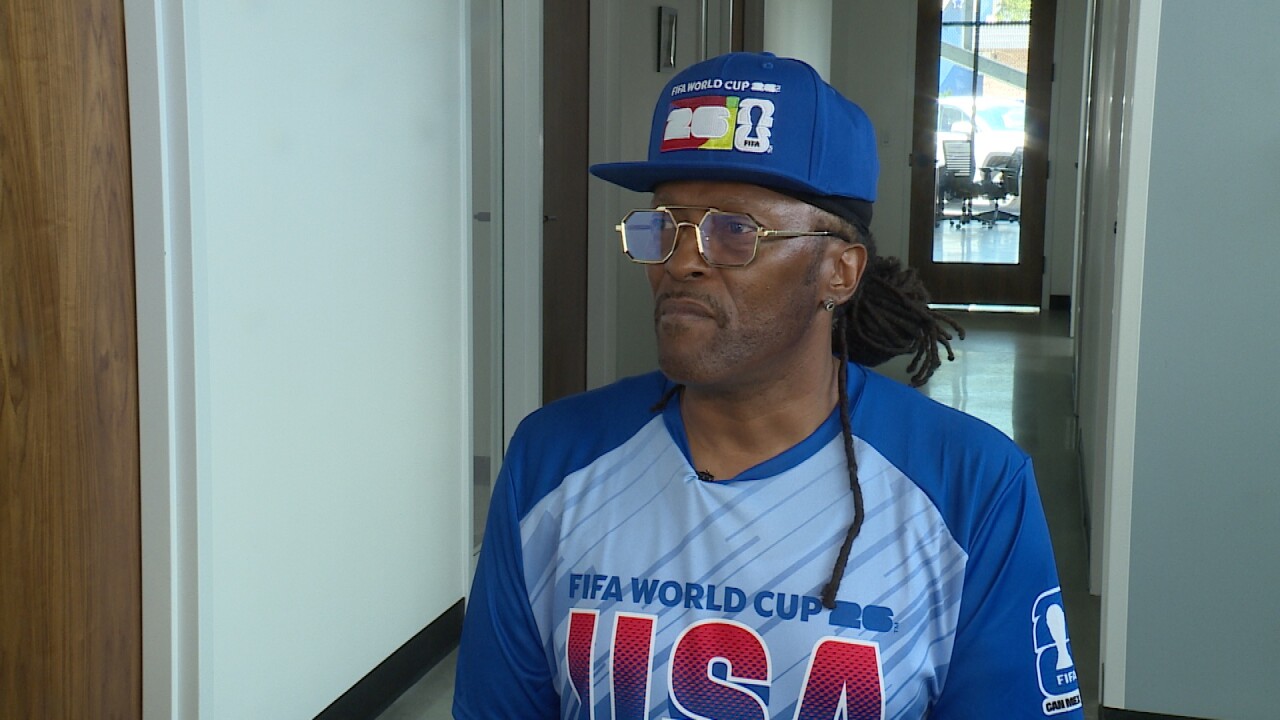
“I needed help with my rent,” Lacy said.
Since starting his new job, Lacy has earned a role connected to the World Cup.
“Since I have been in my job, I’ve gotten two promotions,” Lacy said. “That extra boost of confidence continues to help me keep the optimism I already have.”
Lacy encouraged other veterans to seek out help through the organization.
“I am always optimistic, and even if you’re not as optimistic as me, I’m going to tell you, you need to come down here, because they will help you find some,” Lacy said. “If the walk leads you here, you can really believe you’re going to get help.”
Veterans’ Community Project now operates tiny home communities in Kansas City, St. Louis, Glendale, Milwaukee, Sioux Falls, Longmont, and recently announced a new projet in Dallas.
The organization also is planning a $2.5 million expansion of its headquarters, which had been operating out of a former auto shop garage.
“When it gets hot in there, its 90 degrees,” Mixon said.
Mixon said the space has become inadequate.
“To be honest with you, we outgrew our original building a long time ago, but at the end of the day, it’s about serving veterans,” Mixon said.
KSHB 41

The expansion, funded through donations, will repair the roof and HVAC system and create new offices to support the organization’s continued national growth.
“We have to expand before we keep going into other markets,” Mixon said. “Thank you for believing in us, thank you for giving us the opportunity to change lives and have these stories and I look forward to doing more in the future.”
Lacy said the outreach center offers something essential for veterans looking to rebuild.
“Any veteran that wants to better themselves, wants to find the community, this is where you get that at,” Lacy said.
This story was reported on-air by a journalist and has been converted to this platform with the assistance of AI. Our editorial team verifies all reporting on all platforms for fairness and accuracy.
—

-

 Alaska6 minutes ago
Alaska, Trump Administration Settle Biden-Era Oil, Gas Plan Case
-

 Arizona9 minutes ago
Man, woman found dead near Arizona-Utah border; suspect arrested
-

 Arkansas14 minutes ago
Sanders Appoints Steve Kueter to the Arkansas Game and Fish Commission • Arkansas Game & Fish Commission
-

 California21 minutes ago
California Film Tax Credits For ‘Shrek’, Disney & Ben Affleck Movies
-

 Colorado21 minutes ago
Colorado Peak Claims Another Life
-

 Connecticut29 minutes ago
Here’s How Much Rain Fell in Your Town
-

 Delaware36 minutes ago
Coastal Delaware Restaurant Week raises funds for local first responders – Milford LIVE! – Local Delaware News, Kent and Sussex Counties
-

 Florida39 minutes ago
US appeals court strikes down key part of Florida law restricting campus race and gender discussions

